

The DOI matches its Crossref record; 36 of the 38 references it cites were found in a registry or an index.
Health Impacts of Climate Change in Pacific Island Countries: A Regional Assessment of Vulnerabilities and Adaptation Priorities
Open accessAbstract
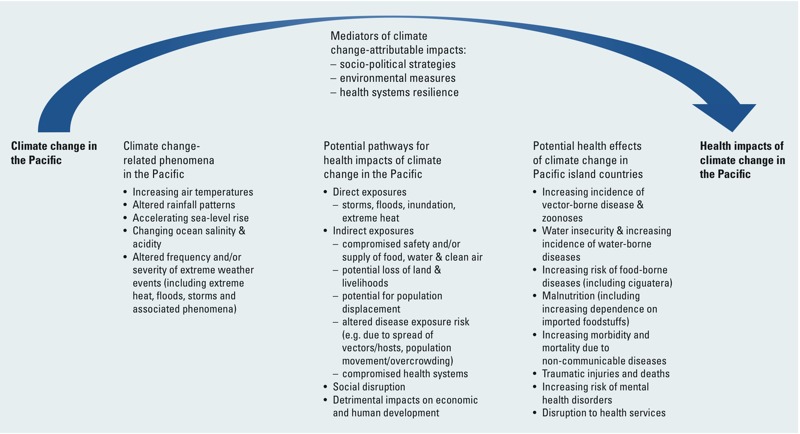
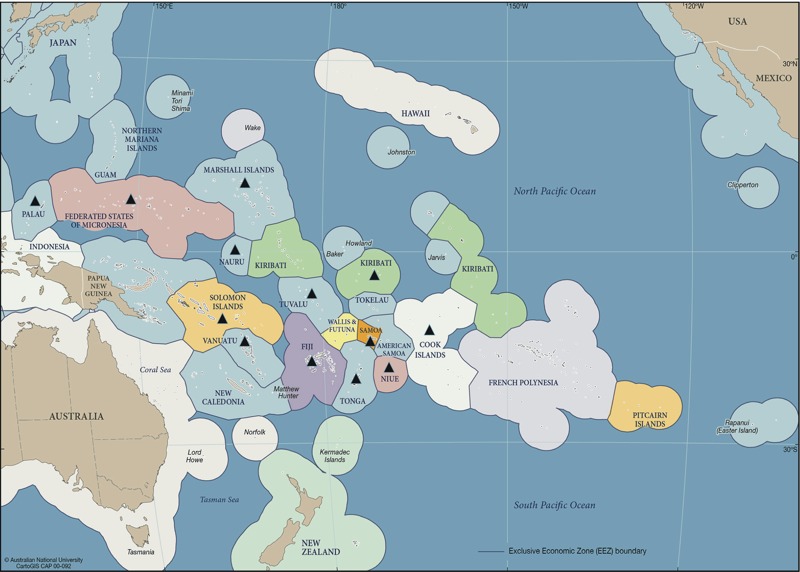
BACKGROUND: Between 2010 and 2012, the World Health Organization Division of Pacific Technical Support led a regional climate change and health vulnerability assessment and adaptation planning project, in collaboration with health sector partners, in 13 Pacific island countries-Cook Islands, Federated States of Micronesia, Fiji, Kiribati, Marshall Islands, Nauru, Niue, Palau, Samoa, Solomon Islands, Tonga, Tuvalu, and Vanuatu. OBJECTIVE: We assessed the vulnerabilities of Pacific island countries to the health impacts of climate change and planned adaptation strategies to minimize such threats to health. METHODS: This assessment involved a combination of quantitative and qualitative techniques. The former included descriptive epidemiology, time series analyses, Poisson regression, and spatial modeling of climate and climate-sensitive disease data, in the few instances where this was possible; the latter included wide stakeholder consultations, iterative consensus building, and expert opinion. Vulnerabilities were ranked using a "likelihood versus impact" matrix, and adaptation strategies were prioritized and planned accordingly. RESULTS: The highest-priority climate-sensitive health risks in Pacific island countries included trauma from extreme weather events, heat-related illnesses, compromised safety and security of water and food, vector-borne diseases, zoonoses, respiratory illnesses, psychosocial ill-health, non-communicable diseases, population pressures, and health system deficiencies. Adaptation strategies relating to these climate change and health risks could be clustered according to categories common to many countries in the Pacific region. CONCLUSION: Pacific island countries are among the most vulnerable in the world to the health impacts of climate change. This vulnerability is a function of their unique geographic, demographic, and socioeconomic characteristics combined with their exposure to changing weather patterns associated with climate change, the health risks entailed, and the limited capacity of the countries to manage and adapt in the face of such risks. Citation: McIver L, Kim R, Woodward A, Hales S, Spickett J, Katscherian D, Hashizume M, Honda Y, Kim H, Iddings S, Naicker J, Bambrick H, McMichael AJ, Ebi KL. 2016. Health impacts of climate change in Pacific island countries: a regional assessment of vulnerabilities and adaptation priorities. Environ Health Perspect 124:1707-1714; http://dx.doi.org/10.1289/ehp.1509756.
Overview
The claims and statistics of this paper haven’t been checked yet.
Run the check — free, no account needed. It reads the open-access text and checks the sources it cites.
Integrity signals
Registry
Cites
Statistics
Figures
Verification
Claims the paper makes
The claims and statistics of this paper haven’t been checked yet.
Run the check — free, no account needed. It reads the open-access text and checks the sources it cites.
Claims other papers make about this one
Each is checked against this paper’s own text: does it say what the citing paper says it does?
The source backs part of the claim, not all of it — or backs it for a different population, condition or comparison.
In the citing paper
“Mental health was identified as a high-priority climate-sensitive health risk in eight out of the 13 countries [99].”
From Climate Change and Mental Health: A Scoping Review (2021) · cites this paper as [99]
Experimental — accuracy not yet measured
Self-check
Percentages, sums and reported differences re-computed from the paper’s own numbers.
The self-check needs the paper’s full text.
Citations
Cites
IPCC--Intergovernmental Panel on Climate Change
Fu, Q., Manabe, S., & Johanson, C. M. (2008) · Choice Reviews Online · doi:10.5860/choice.45-5008 · Cited by 3,303
Managing the health effects of climate change
Costello, A., Abbas, M., Allen, A., Ball, S., Bell, S., Bellamy, R., Friel, S., Groce, N., Johnson, A., Kett, M., et al. (2009) · The Lancet · doi:10.1016/s0140-6736(09)60935-1 · Cited by 3,102 · cited 2×
“Introduction Climate change is widely acknowledged to be one of the most serious global threats to future human population health and international development (Costello et al. 2009; Stephenson et al. 2013; Woodward et al. 2014).”
BackgroundHeat Stress and Public Health: A Critical Review
Kovats, S. R., & Hajat, S. (2007) · Annual Review of Public Health · doi:10.1146/annurev.publhealth.29.020907.090843 · Cited by 2,011 · cited 12×
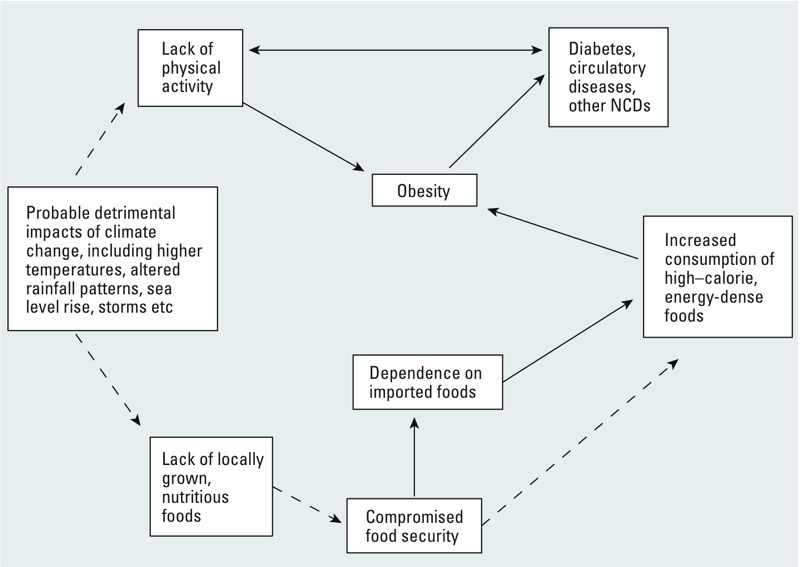
“A number of climate-sensitive health risks may be considered to cut across categories: for example, there may be direct mental health consequences of extreme weather events; NCDs may be affected indirectly through disruption of food supplies, or more diffusely through socio-political strategies related to climate chan…”
BackgroundInfluentialThe Effects of Climate Change on Cardiac Health
De Blois, J., Kjellstrom, T., Agewall, S., Ezekowitz, J. A., Armstrong, P. W., & Atar, D. (2015) · Cardiology · doi:10.1159/000398787 · Cited by 1,697
Climate change and mental health: a causal pathways framework
Berry, H. L., Bowen, K., & Kjellstrom, T. (2010) · International Journal of Public Health · doi:10.1007/s00038-009-0112-0 · Cited by 1,035 · cited 2×
“These aspects include high fertility rates and overcrowding in atoll nations such as Kiribati which, combined with limited land area, low elevation, and the threat posed by rising seas, may lead to forced relocation, which brings with it a particular suite of health complications (McMichael et al. 2012; Berry et al. 2…”
BackgroundClimate change-induced migration and violent conflict
Reuveny, R. (2007) · Political Geography · doi:10.1016/j.polgeo.2007.05.001 · Cited by 1,005 · cited 2×
“There is some evidence that this forced migration—both internal and external—is already taking place (Birk and Rasmussen 2014; Locke 2009), and the physical and psychosocial health consequences of this phenomenon must not be underestimated (Butler et al. 2014; Reuveny 2007).”
BackgroundAdaptation planning for climate change: concepts, assessment approaches, and key lessons
Füssel, H. (2007) · Sustainability Science · doi:10.1007/s11625-007-0032-y · Cited by 869 · cited 1×
“Thus, the theoretical requirement for “additionality” mentioned in the international climate change and health literature with respect to adaptation (Füssel 2007) was considered significantly less important for health systems support in the Pacific than pragmatic, realistic measures that would both…”
BackgroundGlobalization, Climate Change, and Human Health
McMichael, A. J. (2013) · New England Journal of Medicine · doi:10.1056/nejmra1109341 · Cited by 668 · cited 4×
“Environmental Health Perspectives • volume 124 | number 11 | November 2016 1707 ResearchA Section 508–conformant HTML version of this article is available at http://dx.doi.org/10.1289/ehp.1509756.”
BackgroundInfluentialSelf-citationClimate change: present and future risks to health, and necessary responses
McMichael, A. J., & Lindgren, E. (2011) · Journal of Internal Medicine · doi:10.1111/j.1365-2796.2011.02415.x · Cited by 498 · cited 2×
“A changing climate has significant and diverse impacts on human health (McMichael and Lindgren 2011; Woodward et al. 2014).”
BackgroundSelf-citationAn Ill Wind? Climate Change, Migration, and Health
McMichael, C., Barnett, J., & McMichael, A. J. (2012) · Environmental Health Perspectives · doi:10.1289/ehp.1104375 · Cited by 339 · cited 2×
“These aspects include high fertility rates and overcrowding in atoll nations such as Kiribati which, combined with limited land area, low elevation, and the threat posed by rising seas, may lead to forced relocation, which brings with it a particular suite of health complications (McMichael et al. 2012; Berry et al. 2…”
BackgroundSelf-citationClimate change and health: on the latest IPCC report
Woodward, A. J., Smith, K. R., Campbell-Lendrum, D., Chadee, D. D., Honda, Y., Liu, Q., Olwoch, J., Revich, B., Sauerborn, R., Chafe, Z. A., et al. (2014) · The Lancet · doi:10.1016/s0140-6736(14)60576-6 · Cited by 311 · cited 4×
“Introduction Climate change is widely acknowledged to be one of the most serious global threats to future human population health and international development (Costello et al. 2009; Stephenson et al. 2013; Woodward et al. 2014).”
BackgroundInfluentialSelf-citationFriel, S., Bowen, K., Campbell-Lendrum, D. H., Frumkin, H., McMichael, A. J., & Rasanathan, K. (2011) · Annual Review of Public Health · doi:10.1146/annurev-publhealth-071910-140612 · Cited by 168 · cited 2×
“…on climate change and NCDs is relatively scant and has hitherto focused primarily on the implications of heat for individuals with preexisting NCDs (Friel et al. 2011; Kjellstrom and McMichael 2013; Kovats and Hajat 2008; Shubair et al. 2013), in the Pacific region, there is a very real concern…”
BackgroundSelf-citationKjellstrom, T., & McMichael, A. J. (2013) · Global Health Action · doi:10.3402/gha.v6i0.20816 · Cited by 158
Self-citationPrimary, secondary and tertiary effects of eco-climatic change: the medical response
Butler, C. D., & Harley, D. (2010) · Postgraduate Medical Journal · doi:10.1136/pgmj.2009.082727 · Cited by 121 · cited 2×
“…events such as cyclones), secondary or indirect effects (e.g., the increasing geographic range of, and population exposed to, vectors that spread disease), and tertiary, diffuse, and/ or delayed effects (e.g., disruptions to health and social services) (Butler and Harley 2010; McMichael 2013).”
BackgroundMethods of assessing human health vulnerability and public health adaptation to climate change
Kovats, S. R., Ebi, K. L., Menne, B., Campbell-Lendrum, D. H., Canziani, O., Githeko, A. K., Kuhn, T. K., SUEUR, D. L., Martens, P. N., Aj, M., et al. (2003) · LSHTM Research Online (London School of Hygiene and Tropical Medicine) · Cited by 121
Self-citationClimate change‐induced migration in the Pacific Region: sudden crisis and long‐term developments 1
Locke, J. T. (2009) · Geographical Journal · doi:10.1111/j.1475-4959.2008.00317.x · Cited by 118
Climate-Change Migration in the Pacific
Campbell, J. R. (2014) · The Contemporary Pacific/The contemporary Pacific (Online) · doi:10.1353/cp.2014.0023 · Cited by 106 · cited 1×
“It must also be acknowledged that PICs are very likely to be among the first communities to be forced to relocate because of anthropogenic climate change (Campbell 2014).”
Backgroundde Oliveira, J. A. P., Doll, C. N. H., Moreno‐Peñaranda, R., & Balaban, O. (2014) · Springer eBooks · doi:10.1007/978-94-007-5784-4 · Cited by 91
Health risks of climate change: act now or pay later
Haines, A., Ebi, K. L., Smith, K. R., & Woodward, A. J. (2014) · The Lancet · doi:10.1016/s0140-6736(14)61659-7 · Cited by 75 · cited 2×
“There is thus a clear and relatively urgent need for these and other hazards (such as the health effects of heat and extreme weather events) to be considered in the context of climate change in the Pacific and to be anticipated accordingly (Haines et al. 2014).”
BackgroundSelf-citationProtecting human health in a changing world: the role of social and economic development.
Woodward, A. J., Hales, S., Litidamu, N., Phillips, D. G., & Martin, J. M. (2000) · Europe PMC (PubMed Central) · Cited by 65
Self-citationBirk, T., & Rasmussen, K. (2014) · Natural Resources Forum · doi:10.1111/1477-8947.12038 · Cited by 62 · cited 2×
“There is some evidence that this forced migration—both internal and external—is already taking place (Birk and Rasmussen 2014; Locke 2009), and the physical and psychosocial health consequences of this phenomenon must not be underestimated (Butler et al. 2014; Reuveny 2007).”
BackgroundBowen, K., Ebi, K. L., Friel, S., & McMichael, A. J. (2013) · Global Health Action · doi:10.3402/gha.v6i0.21820 · Cited by 54 · cited 2×
“There is some indication, however faint, that it may yet prove somewhat easier to achieve coherence in climate change and health governance in relatively cohesive Pacific island communities with shared traditional values, than in other countries at varying levels of development but with looser or weaker social capital…”
BackgroundSelf-citationPublic health vulnerability to climate change in Brazil
Confalonieri, U., Marinho, D., & Rodriguez, R. (2009) · Climate Research · doi:10.3354/cr00808 · Cited by 53 · cited 8×
“The climate change and health vulnerability assessment and adaptation planning project in the Pacific is similar in some respects to the corresponding work being carried out in other regions (Brooks and Adger 2003; Confalonieri et al. 2009; Wolf et al. 2014).”
BackgroundResultInfluentialAssessment of the Health Impacts of Climate Change in Kiribati
McIver, L. J., Woodward, A. J., Davies, S., Tibwe, T., & Iddings, S. (2014) · International Journal of Environmental Research and Public Health · doi:10.3390/ijerph110505224 · Cited by 52 · cited 4×
“The sophistication of the modeling undertaken ranged from simple reviews of disease burdens and weather patterns in Kiribati (McIver et al. 2014) to Poisson regression models in FSM (McIver et al. 2015a) and similar techniques, combined with spatial modeling, for multiple climate-sensitive diseases…”
BackgroundMethodInfluentialSelf-citationHealthy Islands in the Western Pacific--international settings development
Galea, G. (2000) · Health Promotion International · doi:10.1093/heapro/15.2.169 · Cited by 49 · cited 2×
“The Madang Commitment included further recommendations related to vulnerability assessments and adaptation planning, framing these within the Healthy Islands vision for health systems development in the Pacific (Galea et al. 2000; WHO 2009).”
BackgroundHealth Systems and Noncommunicable Diseases in the Asia-Pacific Region
Mannava, P., Abdullah, A., James, C. D., Dodd, R., & Annear, P. L. (2013) · Asia Pacific Journal of Public Health · doi:10.1177/1010539513500336 · Cited by 44
Health co-benefits of policies to tackle climate change
Ganten, D., Haines, A., & Souhami, R. L. (2010) · The Lancet · doi:10.1016/s0140-6736(10)62139-3 · Cited by 43 · cited 2×
“One of the most promising areas of potential benefit, from both an economic and a social perspective, lies in co-benefits— the health gains anticipated from action on climate change mitigation—which are most pertinent in relation to NCDs (Ganten et al. 2010).”
BackgroundPopulation, development, and climate change: links and effects on human health
Stephenson, J., Crane, S. F., Lévy, C., & Maslin, M. A. (2013) · The Lancet · doi:10.1016/s0140-6736(13)61460-9 · Cited by 35 · cited 2×
“Introduction Climate change is widely acknowledged to be one of the most serious global threats to future human population health and international development (Costello et al. 2009; Stephenson et al. 2013; Woodward et al. 2014).”
BackgroundBrown, H., Spickett, J. T., & Katscherian, D. (2014) · International Journal of Environmental Research and Public Health · doi:10.3390/ijerph111212896 · Cited by 27 · cited 5×
“Its use was based on precedents in Australia (Brown et al. 2014) and growing evidence of its utility in this context in Pacific island countries such as Vanuatu”
BackgroundMethodInfluentialSelf-citationAssessment of Climate-sensitive Infectious Diseases in the Federated States of Micronesia
McIver, L. J., Hashizume, M., Kim, H., Honda, Y., Pretrick, M., Iddings, S., & Pavlin, B. I. (2014) · Tropical Medicine and Health · doi:10.2149/tmh.2014-17 · Cited by 24 · cited 8×
“The sophistication of the modeling undertaken ranged from simple reviews of disease burdens and weather patterns in Kiribati (McIver et al. 2014) to Poisson regression models in FSM (McIver et al. 2015a) and similar techniques, combined with spatial modeling, for multiple climate-sensitive diseases in Fiji (McIver et…”
BackgroundMethodInfluentialSelf-citationProtecting Health from Climate Change in the WHO European Region
Wolf, T., Martínez, G. S., Cheong, H., Williams, E., & Menne, B. (2014) · International Journal of Environmental Research and Public Health · doi:10.3390/ijerph110606265 · Cited by 22 · cited 2×
“The climate change and health vulnerability assessment and adaptation planning project in the Pacific is similar in some respects to the corresponding work being carried out in other regions (Brooks and Adger 2003; Confalonieri et al. 2009; Wolf et al. 2014).”
BackgroundResultSmall Island States - canaries in the coal mine of climate change and health.
Hanna, E. G., & McIver, L. J. (2014) · CABI eBooks · doi:10.1079/9781780642659.0181 · Cited by 21 · cited 6×
“Recognizing the risks to health posed by climate change, the World Health Organization (WHO) Regional Offices for the Western Pacific and South-East Asia issued a joint Regional Framework for Action to Protect Human Health from the Effects of Climate Change in the Asia-Pacific Region (WHO 2007; Hanna and McIver 2014)…”
BackgroundInfluentialSelf-citationHealth Impacts of Climate Change in Vanuatu: An Assessment and Adaptation Action Plan
Spickett, J. T., Katscherian, D., & McIver, L. J. (2013) · Global Journal of Health Science · doi:10.5539/gjhs.v5n3p42 · Cited by 19 · cited 12×
“Between 2010 and 2012, the WHO Division of Pacific Technical Support, with support from the Western Pacific Regional Office (WPRO) and funding from the governments of the Republic of Korea and Japan, led a regional climate change and health vulnerability and adaptation project involving 11 PICs: Cook Islands, Federate…”
BackgroundMethodInfluentialSelf-citationThe 2014 WHO conference on health and climate
Neira, M. (2014) · Bulletin of the World Health Organization · doi:10.2471/blt.14.143891 · Cited by 9 · cited 2×
“Finally, recognizing that PICs are among many countries in the world battling climate change as one of a number of significant impediments to social, economic, and health development, WHO is in the process of providing detailed guidance, in the form of frameworks, to assist member states in scaling up essential public…”
BackgroundHealth Impacts of Climate Change in the Solomon Islands: An Assessment and Adaptation Action Plan
Spickett, J. T., & Katscherian, D. (2014) · Global Journal of Health Science · doi:10.5539/gjhs.v6n5p261 · Cited by 7 · cited 4×
“These included highly focused, largely quantitative assessments in the Marshall Islands and FSM, as distinct from a more deliberative, qualitative process employed in Nauru, Solomon Islands, and Vanuatu, where a modified environmental health impact assessment approach was employed (Spickett and Katscherian 2014; Spick…”
BackgroundMethodInfluentialSelf-citationClimate Change and Type 2 Diabetes
Shubair, M. M., Haider, M., & Bassa, M. (2013) · Journal of Endocrinology and Diabetes Mellitus · Cited by 5
Research works printed but not linked: 2
- Butler CD, Bowles DC, McIver L, Page L, 2014, Mental health, cognition and the challenge of climate change., 251
- McIver, 2012, Climate change & health in Fiji: environmental epidemiology of infectious diseases & potential for climate-based early warning systems., Fiji J Pub Health, 1, 7
Cited by
Sorted by citations
Romanello, M., Di Napoli, C., Drummond, P., Green, C., Kennard, H., Lampard, P., Scamman, D., Arnell, N., Ayeb-Karlsson, S., Ford, L. B., et al. (2022) · The Lancet · doi:10.1016/s0140-6736(22)01540-9 · Cited by 1,710
Self-citationClimate Change and Mental Health: A Scoping Review
Charlson, F., Ali, S., Benmarhnia, T., Pearl, M., Massazza, A., Augustinavicius, J., & Scott, J. G. (2021) · International Journal of Environmental Research and Public Health · doi:10.3390/ijerph18094486 · Cited by 507
“Mental health was identified as a high-priority climate-sensitive health risk in eight out of the 13 countries [99].”
BackgroundThe health impacts of climate-related migration
Schwerdtle, P., Bowen, K., & McMichael, C. (2018) · BMC Medicine · doi:10.1186/s12916-017-0981-7 · Cited by 260
“relating to mental health issues such as population pressures and health system deficiencies [17].”
BackgroundDannenberg, A. L., Frumkin, H., Hess, J. J., & Ebi, K. L. (2019) · Climatic Change · doi:10.1007/s10584-019-02382-0 · Cited by 169
Self-citationLau, C. L., Watson, C., Lowry, J. H., David, M., Craig, S. B., Wynwood, S. J., Kama, M., & Nilles, E. J. (2016) · PLoS neglected tropical diseases · doi:10.1371/journal.pntd.0004405 · Cited by 157
“Many of the risk factors and environmental drivers identified in our study provide significant cause for concern about future risk of leptospirosis in Fiji, as well as other Pacific Islands with similar environments.”
BackgroundInfluential
Metadata
- Authors
- McIver, L., Kim, R., Woodward, A., Hales, S., Spickett, J., Katscherian, D., Hashizume, M., Honda, Y., Kim, H., Iddings, S., Naicker, J., Bambrick, H., McMichael, A. J., & Ebi, K. L.
- Affiliations
- Australian National University (AU)
- World Health Organization (CH)
- University of Auckland (NZ)
- University of Otago (NZ)
- Curtin University (AU)
- Nagasaki University (JP)
- University of Tsukuba (JP)
- Seoul National University (KR)
- Western Sydney University (AU)
- University of Washington (US)
- Corresponding author
- McIver, Lachlan
- ORCID
- Venue
- Environmental Health Perspectives
- Publisher
- American Chemical Society (ACS)
- Published
- 2015-12-08
- Volume
- 124
- Issue
- 11
- Pages
- 1707-1714
- ISSN
- 0091-6765 (ISSN-L)
- 1552-9924
- PMC
- PMC5089897
- OpenAlex
- W2423872746
- Cited by
- 238
- References
- 38
- Citations by year
- 2026: 19 · 2025: 26 · 2024: 27 · 2023: 20 · 2022: 27 · 2021: 28 · 2020: 20 · 2019: 23 · 2018: 22 · 2017: 17 · 2016: 8
- FWCI
- 9.83
- Type
- journal article
- Language
- en
- Open access
- gold
- doi.org
- Licence
- Locations
- Environmental Health Perspectives (publishedVersion, cc-by-sa)
- PubMed Central (publishedVersion, public-domain)
- PubMed (publishedVersion)
- QUT ePrints (Queensland University of Technology) (submittedVersion)
- eSpace (Curtin University) (submittedVersion)
- ANU Open Research (Australian National University) (submittedVersion)
- Seoul National University Open Repository (Seoul National University) (submittedVersion)
- Funders
- World Health Organization
- Topics
- Physical Sciences › Environmental Science › Health, Toxicology and Mutagenesis › Climate Change and Health Impacts
- Physical Sciences › Environmental Science › Global and Planetary Change › Climate Change and Environmental Impact
- Social Sciences › Sociology and Political Science › Climate Change Communication and Perception
- Keywords
- health impacts of climate change, climate change vulnerability, climate change adaptation, Pacific Island countries, heat-related illness, vector-borne diseases, zoonoses, respiratory diseases, non-communicable diseases, food and water security, health system capacity, adaptation planning
- MeSH terms
- Adaptation, Physiological, Health Status Indicators, Humans, Pacific Islands, Socioeconomic Factors, Poisson Distribution, Climate Change, Public Health Surveillance
About these checks
Registry, retraction, Cites and statistics results are computed, not judged, with one exception: a printed reference that no index lists is read once by a model before it counts as a citation error. Claims are extracted by a model and kept only when their quote appears verbatim in the text; each cited source is then checked, with a model’s help, for whether it says what the claim relies on. Those verdicts can be wrong — read the claim’s quote and the cited source before relying on one.
Statistics and arithmetic are recomputed, not judged.
Confidence bands are shown only for fields calibrated on our annotated test set. None is calibrated yet, so no band is shown.
What counts as a claim ›How we measure confidence ›How we check this ›
Are you an author, or do you see a problem with this page? Request a review
