

The DOI matches its Crossref record; 75 of the 75 references it cites were found in a registry or an index.
Molecular Mechanisms of the Diabetogenic Effects of Arsenic: Inhibition of Insulin Signaling by Arsenite and Methylarsonous Acid
Open accessAbstract
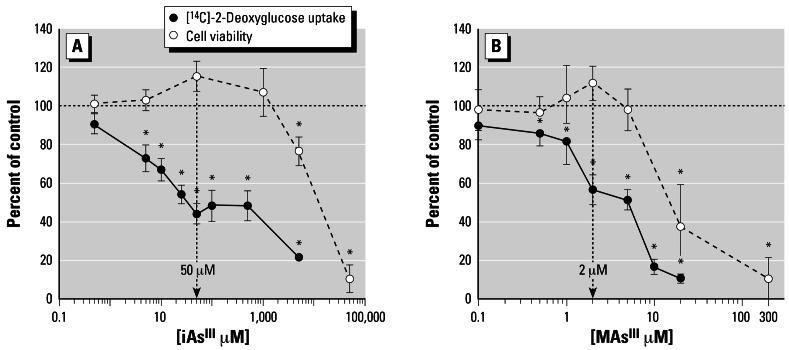
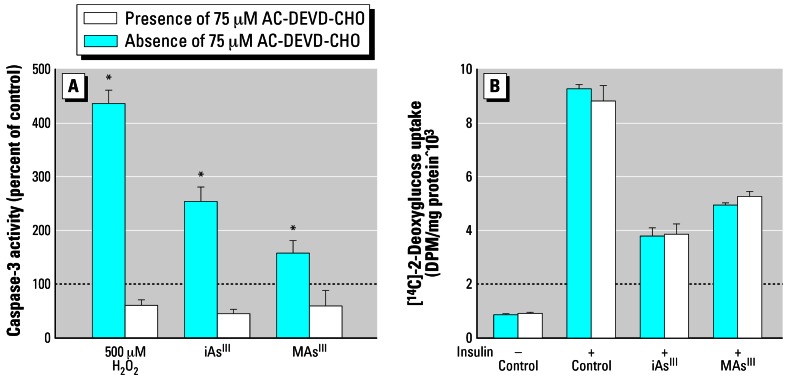
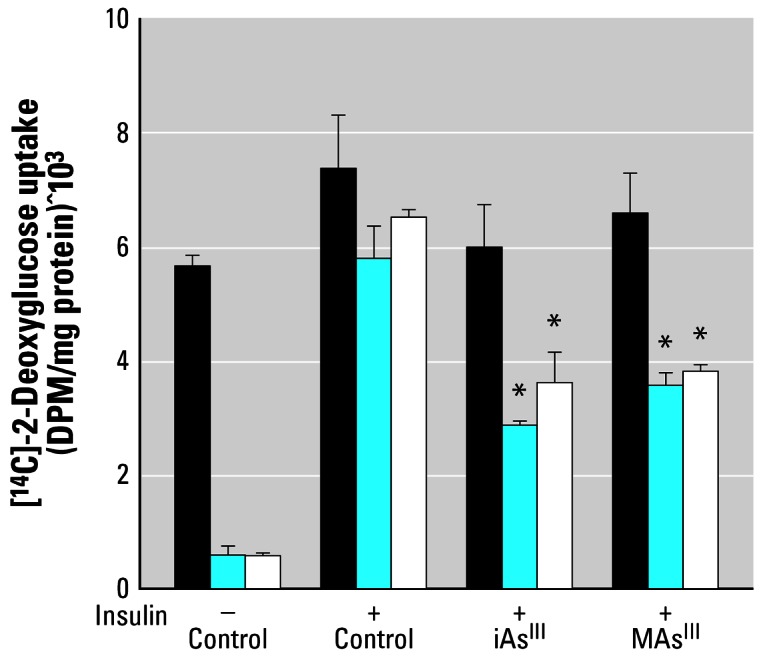
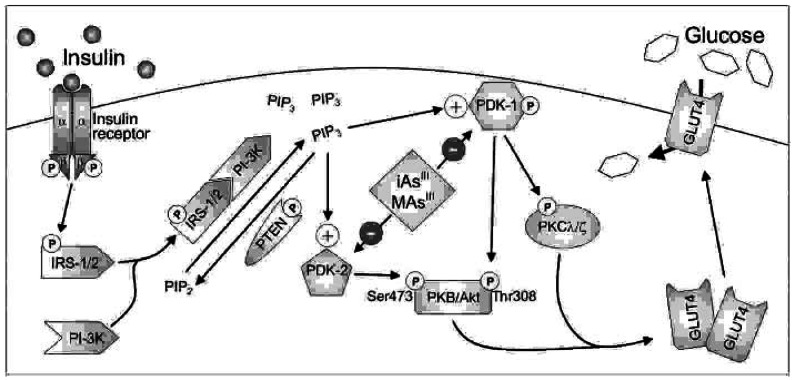
Background: Increased prevalences of diabetes mellitus have been reported among individuals chronically exposed to inorganic arsenic (iAs). However, the mechanisms underlying the diabetogenic effects of iAs have not been characterized. We have previously shown that trivalent metabolites of iAs, arsenite (iAsIII) and methylarsonous acid (MAsIII) inhibit insulin-stimulated glucose uptake (ISGU) in 3T3-L1 adipocytes by suppressing the insulin-dependent phosphorylation of protein kinase B (PKB/Akt). Objectives: Our goal was to identify the molecular mechanisms responsible for the suppression of PKB/Akt phosphorylation by iAsIII and MAsIII. Methods: The effects of iAsIII and MAsIII on components of the insulin-activated signal transduction pathway that regulate PKB/Akt phosphorylation were examined in 3T3-L1 adipocytes. Results: Subtoxic concentrations of iAsIII or MAsIII had little or no effect on the activity of phosphatidylinositol 3-kinase (PI-3K), which synthesizes phosphatidylinositol-3,4,5-triphosphate (PIP3), or on phosphorylation of PTEN (phosphatase and tensin homolog deleted on chromosome ten), a PIP3 phosphatase. Neither iAsIII nor MAsIII interfered with the phosphorylation of 3-phosphoinositide-dependent kinase-1 (PDK-1) located downstream from PI-3K. However, PDK-1 activity was inhibited by both iAsIII and MAsIII. Consistent with these findings, PDK-1-catalyzed phosphorylation of PKB/Akt(Thr308) and PKB/Akt activity were suppressed in exposed cells. In addition, PKB/Akt(Ser473) phosphorylation, which is catalyzed by a putative PDK-2, was also suppressed. Notably, expression of constitutively active PKB/Akt restored the normal ISGU pattern in adipocytes treated with either iAsIII or MAsIII. Conclusions: These results suggest that inhibition of the PDK-1/PKB/Akt-mediated transduction step is the key mechanism for the inhibition of ISGU in adipocytes exposed to iAsIII or MAsIII, and possibly for impaired glucose tolerance associated with human exposures to iAs.
Overview
The claims and statistics of this paper haven’t been checked yet.
Run the check — free, no account needed. It reads the open-access text and checks the sources it cites.
Integrity signals
Registry
Cites
Statistics
Figures
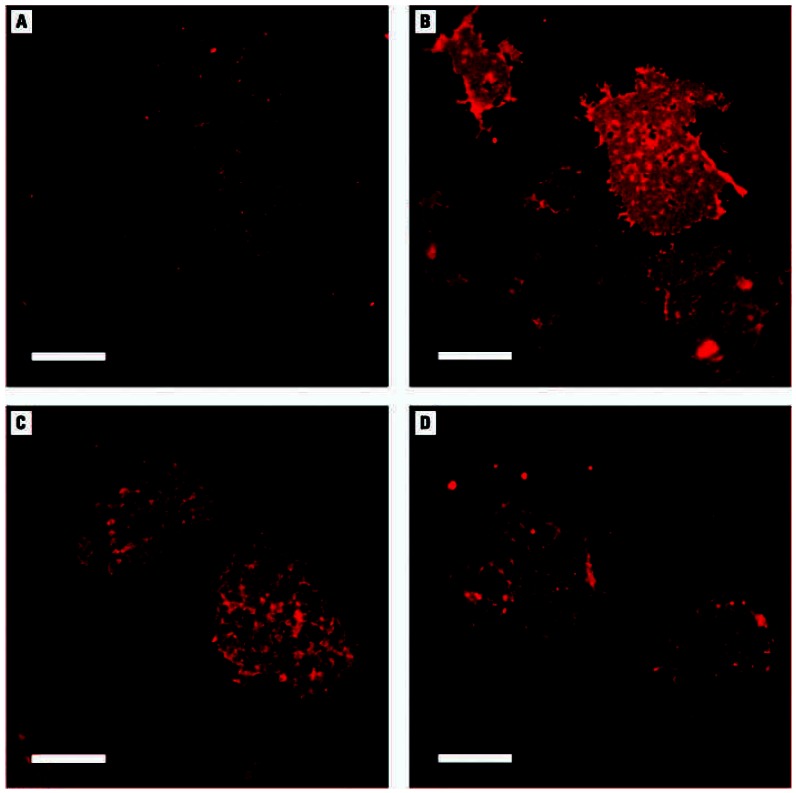
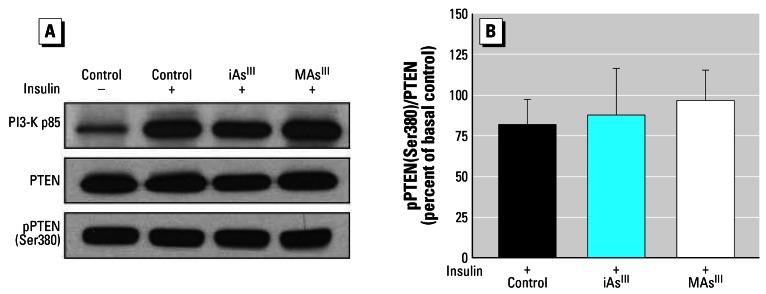
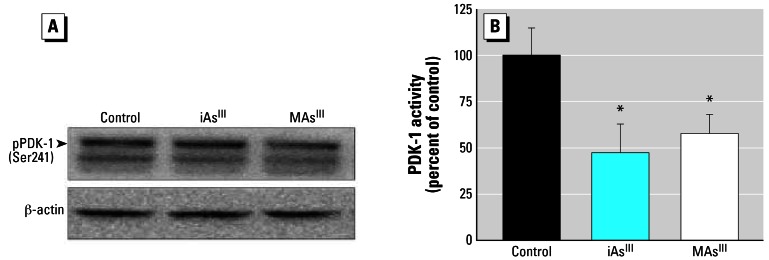
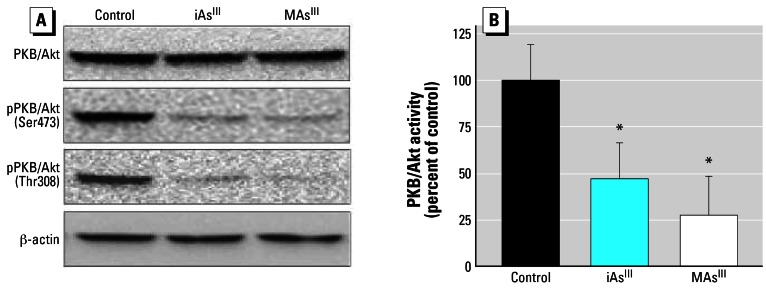
Verification
Claims the paper makes
The claims and statistics of this paper haven’t been checked yet.
Run the check — free, no account needed. It reads the open-access text and checks the sources it cites.
Claims other papers make about this one
Each is checked against this paper’s own text: does it say what the citing paper says it does?
The source backs part of the claim, not all of it — or backs it for a different population, condition or comparison.
In the citing paper
“Besides being well-known carcinogen, arsenic also causes a number of noncancerous multisystemic diseases including cardiovascular disease, dermal disease, hypertension, and diabetes mellitus [73, 74].”
From Arsenic Contamination of Groundwater: A Review of Sources, Prevalence, Health Risks, and Strategies for Mitigation (2014) · cites this paper as [73]
Experimental — accuracy not yet measured
Self-check
Percentages, sums and reported differences re-computed from the paper’s own numbers.
The self-check needs the paper’s full text.
Citations
Cites
Carmichael, J., DeGraff, W., Gazdar, A. F., Minna, J. D., & Mitchell, J. B. (1987) · PubMed · Cited by 3,813
Maehama, T., & Dixon, J. E. (1998) · Journal of Biological Chemistry · doi:10.1074/jbc.273.22.13375 · Cited by 3,104
White, M. F., & Kahn, C. R. (1994) · Journal of Biological Chemistry · doi:10.1016/s0021-9258(17)42297-6 · Cited by 1,707
Kohn, A. D., Summers, S. A., Birnbaum, M. J., & Roth, R. A. (1996) · Journal of Biological Chemistry · doi:10.1074/jbc.271.49.31372 · Cited by 1,284
Protein Kinase C Isotypes Controlled by Phosphoinositide 3-Kinase Through the Protein Kinase PDK1
Good, J. A. L., Ziegler, W. H., Parekh, D. B., Alessi, D. R., Cohen, P., & Parker, P. J. (1998) · Science · doi:10.1126/science.281.5385.2042 · Cited by 1,113
Overall evaluations of carcinogenicity: an updating of IARC Monographs volumes 1 to 42.
(1987) · PubMed · Cited by 850
Alessi, D. R., Deák, M., Casamayor, A., Caudwell, F. B., MORRICE, N. A., Norman, D. G., Gaffney, P. R. J., Reese, C. B., MacDougall, C. N., Harbison, D., et al. (1997) · Current Biology · doi:10.1016/s0960-9822(06)00336-8 · Cited by 755
The Tumor Suppressor PTEN Is Phosphorylated by the Protein Kinase CK2 at Its C Terminus
Torres, J., & Pulido, R. (2001) · Journal of Biological Chemistry · doi:10.1074/jbc.m009134200 · Cited by 630
Regulation of protein kinase C ζ by PI 3-kinase and PDK-1
Chou, M. M., Hou, W., Johnson, J. E., Graham, L. K., Lee, M. H., Chen, C., Newton, A. C., Schaffhausen, B. S., & Toker, A. (1998) · Current Biology · doi:10.1016/s0960-9822(98)70444-0 · Cited by 608
The Cellular Metabolism and Systemic Toxicity of Arsenic
Thomas, D. J., Stýblo, M., & Lin, S. (2001) · Toxicology and Applied Pharmacology · doi:10.1006/taap.2001.9258 · Cited by 592
Self-citation
Cited by
Sorted by citations
Metabolism disrupting chemicals and metabolic disorders
Heindel, J. J., Blumberg, B., Cave, M., Machtinger, R., Mantovani, A., Mendez, M. A., Nadal, A., Palanza, P., Panzica, G., Sargis, R., et al. (2017) · Reproductive Toxicology · doi:10.1016/j.reprotox.2016.10.001 · Cited by 1,101
Shankar, S., Shanker, U., & Shikha (2014) · The Scientific World Journal · doi:10.1155/2014/304524 · Cited by 616
“Researchers have pointed out that trivalent arsenicals (AsIII, MMAIII, and DMAIII) can induce diabetes via distortion of glucose metabolism based on intact pancreatic islets from mice [75, 76].”
BackgroundEndocrine-Disrupting Chemicals: Associated Disorders and Mechanisms of Action
Coster, S. D., & Larebeke, N. V. (2012) · Journal of Environmental and Public Health · doi:10.1155/2012/713696 · Cited by 622
Arsenic Exposure and Prevalence of Type 2 Diabetes in US Adults
Navas‐Acién, A. (2008) · JAMA · doi:10.1001/jama.300.7.814 · Cited by 467
Arsenic and selenium toxicity and their interactive effects in humans
Sun, H., Rathinasabapathi, B., Wu, B., Luo, J. H., Pu, L.-P., & Ma, L. Q. (2014) · Environment International · doi:10.1016/j.envint.2014.04.019 · Cited by 420
Maull, E. A., Ahsan, H., Edwards, J., Longnecker, M. P., Navas‐Acién, A., Pi, J., Silbergeld, E. K., Stýblo, M., Tseng, C., Thayer, K. A., et al. (2012) · Environmental Health Perspectives · doi:10.1289/ehp.1104579 · Cited by 345
Self-citationMechanisms pertaining to arsenic toxicity
Kaur, T., Singh, A. P., & Goel, R. K. (2011) · Toxicology International · doi:10.4103/0971-6580.84258 · Cited by 329
Metabolism, toxicity and anticancer activities of arsenic compounds
Khairul, I., Wang, Q. Q., Jiang, Y. H., Wang, C., & Naranmandura, H. (2017) · Oncotarget · doi:10.18632/oncotarget.14733 · Cited by 305
Heavy metals, islet function and diabetes development
Chen, Y., Yang, C., Huang, C. F., Hung, D. Z., Leung, Y., & Liu, S. (2009) · Islets · doi:10.4161/isl.1.3.9262 · Cited by 259
Razo, L. M. D., García-Vargas, G. G., Valenzuela, O. L., Hernández-Castellanos, E., Sánchez-Peña, L. C., Currier, J. M., Drobná, Z., LOOMIS, D. P., & Stýblo, M. (2011) · Environmental Health · doi:10.1186/1476-069x-10-73 · Cited by 242
Self-citationHutcheson, R., & Ročić, P. (2012) · Experimental Diabetes Research · doi:10.1155/2012/271028 · Cited by 201
Feng, W. H., Cui, X., Liu, B., Liu, C., Xiao, Y., Lü, W., Guo, H., He, M., Zhang, X., Yuan, J., et al. (2015) · PLoS ONE · doi:10.1371/journal.pone.0123742 · Cited by 186
Arsenic Exposure, Arsenic Metabolism, and Incident Diabetes in the Strong Heart Study
Kuo, C.-C., Howard, B. V., Umans, J. G., Gribble, M. O., Best, L. G., Francesconi, K. A., Goessler, W., Lee, E. T., Güallar, E., & Navas‐Acién, A. (2015) · Diabetes Care · doi:10.2337/dc14-1641 · Cited by 164
Fu, J., Woods, C. G., Yehuda‐Shnaidman, E., Zhang, Q., Wong, V. A., Collins, S., Sun, G., Andersen, M. E., & Pi, J. (2010) · Environmental Health Perspectives · doi:10.1289/ehp.0901608 · Cited by 173
Paul, D. S., Hernández‐Zavala, A., Walton, F. S., Adair, B. M., Dědina, J., Matoušek, T., & Stýblo, M. (2007) · Toxicology and Applied Pharmacology · doi:10.1016/j.taap.2007.01.010 · Cited by 145
Self-citationMetabolism of arsenic in human liver: the role of membrane transporters
Drobná, Z., Walton, F. S., Paul, D. S., Xing, W., Thomas, D. J., & Stýblo, M. (2009) · Archives of Toxicology · doi:10.1007/s00204-009-0499-7 · Cited by 134
Self-citationPaul, D. S., Walton, F. S., Saunders, R. J., & Stýblo, M. (2011) · Environmental Health Perspectives · doi:10.1289/ehp.1003324 · Cited by 129
Self-citationArsenic induces diabetic effects through beta-cell dysfunction and increased gluconeogenesis in mice
Liu, S., Guo, X., Wu, B., Yu, H., Zhang, X., & Li, M. (2014) · Scientific Reports · doi:10.1038/srep06894 · Cited by 127
Kawakami, T., Hanao, N., Nishiyama, K., Kadota, Y., Inoue, M., Sato, M., & Suzuki, S. (2011) · Toxicology and Applied Pharmacology · doi:10.1016/j.taap.2011.10.004 · Cited by 126
Influence of arsenate and arsenite on signal transduction pathways: an update
Druwe, I. L., & Vaillancourt, R. R. (2010) · Archives of Toxicology · doi:10.1007/s00204-010-0554-4 · Cited by 118
Bailey, K. A., Wu, M. C., Ward, W. O., Smeester, L., Rager, J. E., García-Vargas, G. G., Razo, L. M. D., Drobná, Z., Stýblo, M., & Fry, R. C. (2013) · Journal of Biochemical and Molecular Toxicology · doi:10.1002/jbt.21462 · Cited by 110
Self-citationIslam, M. R., Khan, I. A., Hassan, S. M. N., McEvoy, M., D’Este, C. A., Attia, J., Peel, R., Sultana, M., Akter, S., & Milton, A. H. (2012) · Environmental Health · doi:10.1186/1476-069x-11-38 · Cited by 109
McKim, J. M. (2014) · Critical Reviews in Toxicology · doi:10.3109/10408444.2013.861797 · Cited by 108
Human exposure to heavy metals: toxicity mechanisms and health implications
Ohiagu, F. O., Chikezie, P. C., Ahaneku, C. C., & Chikezie, C. M. (2022) · Material Science & Engineering International Journal · doi:10.15406/mseij.2022.06.00183 · Cited by 115
Association of Low to Moderate Levels of Arsenic Exposure With Risk of Type 2 Diabetes in Bangladesh
Pan, W., Seow, W. J., Kile, M. L., Hoffman, E. B., Quamruzzaman, Q., Rahman, M., Mahiuddin, G., Mostofa, G., Lu, Q., & Christiani, D. C. (2013) · American Journal of Epidemiology · doi:10.1093/aje/kwt195 · Cited by 107
Douillet, C., Currier, J., Saunders, J., Bodnar, W. M., Matoušek, T., & Stýblo, M. (2013) · Toxicology and Applied Pharmacology · doi:10.1016/j.taap.2012.12.007 · Cited by 104
Self-citationArsenic-induced alteration in the expression of genes related to type 2 diabetes mellitus
Díaz‐Villaseñor, A., Burns, A. L., Hiriart, M., Cebrián, M. E., & Ostrosky‐Wegman, P. (2007) · Toxicology and Applied Pharmacology · doi:10.1016/j.taap.2007.08.019 · Cited by 105
The role of arsenic in obesity and diabetes
Farkhondeh, T., Samarghandian, S., & Azimi–Nezhad, M. (2019) · Journal of Cellular Physiology · doi:10.1002/jcp.28112 · Cited by 103
Chen, Y., Ahsan, H., Slavkovich, V. N., Peltier, G. L., Gluskin, R. T., Parvez, F., Liu, X., & Graziano, J. H. (2010) · Environmental Health Perspectives · doi:10.1289/ehp.0901559 · Cited by 100
Medda, N., Patra, R., Ghosh, T. K., & Maiti, S. (2020) · Biological Trace Element Research · doi:10.1007/s12011-020-02044-8 · Cited by 98
Xue, P., Hou, Y., Zhang, Q., Woods, C. G., Yarborough, K., Liu, H., Sun, G., Andersen, M. E., & Pi, J. (2011) · Biochemical and Biophysical Research Communications · doi:10.1016/j.bbrc.2011.03.024 · Cited by 97
Toxic and essential metals: metabolic interactions with the gut microbiota and health implications
Zhu, Q., Chen, B., Zhang, F., Zhang, B., Guo, Y., Pang, M., Huang, L., & Wang, T. (2024) · Frontiers in Nutrition · doi:10.3389/fnut.2024.1448388 · Cited by 101
Persistent organic pollutants, mitochondrial dysfunction, and metabolic syndrome
Lim, S. K., Cho, Y. M., Park, K. S., & Lee, H. K. (2010) · Annals of the New York Academy of Sciences · doi:10.1111/j.1749-6632.2010.05622.x · Cited by 100
James, K. A., Marshall, J. A., Hokanson, J. E., Meliker, J. R., Zerbe, G. O., & Byers, T. (2013) · Environmental Research · doi:10.1016/j.envres.2013.02.005 · Cited by 86
The Duality of Arsenic Metabolism: Impact on Human Health
El‐Ghiaty, M. A., & El‐Kadi, A. O. S. (2022) · The Annual Review of Pharmacology and Toxicology · doi:10.1146/annurev-pharmtox-051921-020936 · Cited by 92
p16INK4a reporter mice reveal age-promoting effects of environmental toxicants
Sorrentino, J. A., Krishnamurthy, J., Tilley, S. L., Alb, J. G., Burd, C. E., & Sharpless, N. E. (2013) · Journal of Clinical Investigation · doi:10.1172/jci70960 · Cited by 85
Arsenic Inhibits Myogenic Differentiation and Muscle Regeneration
Yen, Y.-P., Tsai, K., Chen, Y., Huang, C.-F., Yang, R., & Liu, S. (2010) · Environmental Health Perspectives · doi:10.1289/ehp.0901525 · Cited by 81
Polluted Pathways: Mechanisms of Metabolic Disruption by Endocrine Disrupting Chemicals
Mimoto, M. S., Nadal, Á., & Sargis, R. M. (2017) · Current Environmental Health Reports · doi:10.1007/s40572-017-0137-0 · Cited by 79
Huang, Y.-L., Hsueh, Y., Huang, Y., Yip, P.-K., Yang, M.-H., & Chen, C. (2009) · The Science of The Total Environment · doi:10.1016/j.scitotenv.2008.12.061 · Cited by 78
Stýblo, M., Venkatratnam, A., Fry, R. C., & Thomas, D. J. (2021) · Archives of Toxicology · doi:10.1007/s00204-021-03028-w · Cited by 85
Self-citationArsenic exposure induces glucose intolerance and alters global energy metabolism
Kirkley, A. G., Carmean, C. M., Ruíz, D., Ye, H., Regnier, S. M., Poudel, A., Hara, M., Kamau, W., Johnson, D. N., Roberts, A. A., et al. (2017) · American Journal of Physiology-Regulatory, Integrative and Comparative Physiology · doi:10.1152/ajpregu.00522.2016 · Cited by 74
Hou, Y., Xue, P., Woods, C. G., Wang, X., Fu, J., Yarborough, K., Qu, W., Zhang, Q., Andersen, M. E., & Pi, J. (2012) · Environmental Health Perspectives · doi:10.1289/ehp.1205731 · Cited by 72
Arsenic Exposure and Incidence of Type 2 Diabetes in Southwestern American Indians
Kim, N. H., Mason, C. C., Nelson, R. G., Afton, S. E., Essader, A. S., Medlin, J. E., Levine, K. E., Hoppin, J. A., Lin, C., Knowler, W. C., et al. (2013) · American Journal of Epidemiology · doi:10.1093/aje/kws329 · Cited by 70
Okeke, E. S., Okagu, I. U., Okoye, C. O., & Ezeorba, T. P. C. (2022) · Toxicology · doi:10.1016/j.tox.2022.153112 · Cited by 69
Arsenic and diabetes: Current perspectives
Huang, C. F., Chen, Y. W., Yang, C., Tsai, K., Yang, R., & Liu, S. (2011) · The Kaohsiung Journal of Medical Sciences · doi:10.1016/j.kjms.2011.05.008 · Cited by 70
Soto-Peña, G. A., & Vega, L. (2008) · Toxicology and Applied Pharmacology · doi:10.1016/j.taap.2008.02.029 · Cited by 66
Rejoinder: Arsenic Exposure and Prevalence of Type 2 Diabetes
Navas‐Acién, A., Silbergeld, E. K., Pastor‐Barriuso, R., & Güallar, E. (2009) · Epidemiology · doi:10.1097/ede.0b013e3181afef88 · Cited by 64
Arsenic exposure and non-carcinogenic health effects
Castillo, M. M., García-Montalvo, E. A., Arellano-Mendoza, M. G., Sánchez-Peña, L. C., Jasso, L. E. S., Vega, J. A. I., Valenzuela, O. L., & Hernández‐Zavala, A. (2021) · Human & Experimental Toxicology · doi:10.1177/09603271211045955 · Cited by 63
Yang, B., Fu, J., Zheng, H., Xue, P., Yarborough, K., Woods, C. G., Hou, Y., Zhang, Q., Andersen, M. E., & Pi, J. (2012) · Toxicology and Applied Pharmacology · doi:10.1016/j.taap.2012.09.012 · Cited by 63
Currier, J. M., Ishida, M. C., Horta, C. G., Sánchez‐Ramírez, B., Ballinas‐Casarrubias, L., Gutiérrez‐Torres, D. S., Cerón, R. H., Morales, D. V., Terrazas, F. A. B., Razo, L. M. D., et al. (2014) · Environmental Health Perspectives · doi:10.1289/ehp.1307756 · Cited by 59
Self-citationKim, Y., & Lee, B.-K. (2011) · The Science of The Total Environment · doi:10.1016/j.scitotenv.2011.06.003 · Cited by 57
Calatayud, M., Devesa, V., Montoro, R., & Vélez, D. (2011) · Toxicology Letters · doi:10.1016/j.toxlet.2011.04.023 · Cited by 56
Self-citationWang, J. P., Wang, S. L., Lin, Q., Zhang, L., Huang, D., & Ng, J. C. (2008) · Environment International · doi:10.1016/j.envint.2008.07.015 · Cited by 55
Exposure to Endocrine-Disrupting Chemicals and Type 2 Diabetes Mellitus in Later Life
Lin, J., & Yin, R. (2022) · Exposure and Health · doi:10.1007/s12403-022-00486-0 · Cited by 55
Martin, E. M., Horta, C. G., Rager, J. E., Bailey, K. A., Sánchez‐Ramírez, B., Ballinas‐Casarrubias, L., Ishida, M. C., Gutiérrez‐Torres, D. S., Cerón, R. H., Morales, D. V., et al. (2015) · Toxicological Sciences · doi:10.1093/toxsci/kfu318 · Cited by 54
Self-citationChen, B., Arnold, L. L., Cohen, S. M., Thomas, D. J., & Le, X. C. (2011) · Toxicological Sciences · doi:10.1093/toxsci/kfr246 · Cited by 54
Self-citationSamadder, A., Das, J., Das, S., De, A. K., Saha, S. K., Bhattacharyya, S. S., & Khuda‐Bukhsh, A. R. (2012) · Toxicology and Applied Pharmacology · doi:10.1016/j.taap.2012.12.018 · Cited by 53
Is Arsenic Exposure a Risk Factor for Metabolic Syndrome? A Review of the Potential Mechanisms
Pánico, P., Velasco, M., Salazar, A. M., Picones, A., Ortiz-Huidobro, R. I., Guerrero‐Palomo, G., Salgado-Bernabé, M. E., Ostrosky‐Wegman, P., & Hiriart, M. (2022) · Frontiers in Endocrinology · doi:10.3389/fendo.2022.878280 · Cited by 55
Sargis, R. M. (2014) · Diabetes & Metabolism Journal · doi:10.4093/dmj.2014.38.1.13 · Cited by 52
Martin, E. M., Stýblo, M., & Fry, R. C. (2017) · Epigenomics · doi:10.2217/epi-2016-0097 · Cited by 49
Self-citationEffects of arsenic on adipocyte metabolism: Is arsenic an obesogen?
Ceja-Galicia, Z. A., Daniel, A., Salazar, A. M., Pánico, P., Ostrosky‐Wegman, P., & Díaz‐Villaseñor, A. (2017) · Molecular and Cellular Endocrinology · doi:10.1016/j.mce.2017.05.008 · Cited by 48
Renu, K., Madhyastha, H., Madhyastha, R., Maruyama, M., Arunachlam, S., & Gopalakrishnan, A. V. (2017) · Toxicology Letters · doi:10.1016/j.toxlet.2017.11.032 · Cited by 47
Hassan, F. I., Niaz, K., Khan, F., Maqbool, F., & Abdollahi, M. R. (2017) · EXCLI journal · doi:10.17179/excli2017-222 · Cited by 47
Estañ, M. C., Calviño, E., de Blas, E., Boyano-Adánez, M. D. C., Mena, M. L., Gómez-Gómez, M. M., Rial, E., & Aller, P. (2012) · Biochemical Pharmacology · doi:10.1016/j.bcp.2012.09.022 · Cited by 44
Urinary arsenic and insulin resistance in US adolescents
Peng, Q., Harlow, S. D., & Park, S. K. (2015) · International Journal of Hygiene and Environmental Health · doi:10.1016/j.ijheh.2015.03.006 · Cited by 42
Khan, F., Momtaz, S., Niaz, K., Hassan, F. I., & Abdollahi, M. R. (2017) · Food and Chemical Toxicology · doi:10.1016/j.fct.2017.07.021 · Cited by 42
Hernández‐Zavala, A., Valenzuela, O. L., Matoušek, T., Drobná, Z., Dědina, J., García-Vargas, G. G., Thomas, D. J., Razo, L. M. D., & Stýblo, M. (2008) · Environmental Health Perspectives · doi:10.1289/ehp.11503 · Cited by 41
Self-citationDouillet, C., Huang, M. C., Saunders, R. J., Dover, E. N., Zhang, C., & Stýblo, M. (2016) · Archives of Toxicology · doi:10.1007/s00204-016-1890-9 · Cited by 40
Self-citationEnvironmental arsenic as a disruptor of insulin signaling.
Paul, D. S., Devesa, V., Hernández‐Zavala, A., Adair, B. M., Walton, F. S., Drobná, Z., Thomas, D. J., & Stýblo, M. (2008) · PubMed · Cited by 40
Self-citationMetabolic Derangement by Arsenic: a Review of the Mechanisms
Bibha, K., Akhigbe, T. M., Hamed, M. A., & Akhigbe, R. E. (2023) · Biological Trace Element Research · doi:10.1007/s12011-023-03828-4 · Cited by 39
Arsenic Exposure and Type 2 Diabetes: MicroRNAs as Mechanistic Links?
Beck, R., Stýblo, M., & Sethupathy, P. (2017) · Current Diabetes Reports · doi:10.1007/s11892-017-0845-8 · Cited by 39
Self-citationImpact of in vitro heavy metal exposure on pancreatic β-cell function
Dover, E. N., Patel, N. Y., & Stýblo, M. (2018) · Toxicology Letters · doi:10.1016/j.toxlet.2018.09.015 · Cited by 39
Self-citationZhang, Q., Hou, Y., Wang, D., Xu, Y., Wang, H. H., Liu, J., Xia, L., Li, Y., Tang, N., Zheng, Q., et al. (2020) · Environmental Pollution · doi:10.1016/j.envpol.2020.114968 · Cited by 38
Díaz‐Villaseñor, A., Cruz, L., Cebrián, A., Hernández‐Ramírez, R. U., Hiriart, M., García-Vargas, G. G., Bassol, S., Sordo, M., Gandolfi, A. J., Klimecki, W. T., et al. (2013) · PLoS ONE · doi:10.1371/journal.pone.0051642 · Cited by 37
Circulating miRNAs Associated with Arsenic Exposure
Beck, R., Bommarito, P. A., Douillet, C., Kanke, M., Razo, L. M. D., García-Vargas, G. G., Fry, R. C., Sethupathy, P., & Stýblo, M. (2018) · Environmental Science & Technology · doi:10.1021/acs.est.8b06457 · Cited by 36
Self-citationCurrier, J. M., Douillet, C., Drobná, Z., & Stýblo, M. (2016) · Journal of Environmental Sciences · doi:10.1016/j.jes.2016.06.018 · Cited by 35
Self-citationPark, S., & Lee, B.-K. (2012) · Archives of Environmental Contamination and Toxicology · doi:10.1007/s00244-012-9808-x · Cited by 35
The gut microbiome and arsenic-induced disease—iAs metabolism in mice
Yang, Y., Chi, L., Lai, Y., Hsiao, Y.-C., Ru, H., & Lü, K. (2021) · Current Environmental Health Reports · doi:10.1007/s40572-021-00305-9 · Cited by 34
Sanchez, T. R., Hu, X. Y., Zhao, J., Tran, V., LoIacono, N. J., Go, Y., Goessler, W., Cole, S. A., Umans, J. G., Jones, D. P., et al. (2021) · Environment International · doi:10.1016/j.envint.2021.106810 · Cited by 35
Zhang, C., Fennell, E. M. J., Douillet, C., & Stýblo, M. (2017) · Archives of Toxicology · doi:10.1007/s00204-017-2076-9 · Cited by 32
Self-citationYadav, S., Anbalagan, M., Shi, Y., Wang, F., & Wang, H. (2012) · Toxicology in Vitro · doi:10.1016/j.tiv.2012.10.012 · Cited by 31
Acute and long-term effects of arsenite in HepG2 cells: modulation of insulin signaling
Hamann, I., Petroll, K., Hou, X., Anwar‐Mohamed, A., El‐Kadi, A. O. S., & Klotz, L. (2014) · BioMetals · doi:10.1007/s10534-014-9714-y · Cited by 30
Arsenite in drinking water produces glucose intolerance in pregnant rats and their female offspring
Bonaventura, M. M., Bourguignon, N. S., Bizzozzero-Hiriart, M., Rodríguez-Muñoz, D., Ventura, C., Cocca, C., Libertun, C., & Lux-Lantos, V. A. (2016) · Food and Chemical Toxicology · doi:10.1016/j.fct.2016.12.025 · Cited by 30
Cortés, S., Zúñiga-Venegas, L. A., Pancetti, F. C., Covarrubias, A., Ramírez-Santana, M., Adaros, H., & Muñoz, L. (2021) · International Journal of Environmental Research and Public Health · doi:10.3390/ijerph18041419 · Cited by 29
Adjusting for Urinary Creatinine Overestimates Arsenic Concentrations in Diabetics
Yassine, H. N., Kimzey, M. J., Galligan, M. A., Gandolfi, A. J., Stump, C. S., & Lau, S. S. (2011) · Cardiorenal Medicine · doi:10.1159/000334225 · Cited by 28
Hagland, H. R., Nikolaisen, J., Hodneland, L., Gjertsen, B. T., Bruserud, Ø., & Tronstad, K. J. (2007) · Expert Opinion on Therapeutic Targets · doi:10.1517/14728222.11.8.1055 · Cited by 27
Tokar, E. J., Kojima, C., & Waalkes, M. P. (2013) · Archives of Toxicology · doi:10.1007/s00204-013-1141-2 · Cited by 26
Huang, M. C., Douillet, C., & Stýblo, M. (2019) · Archives of Toxicology · doi:10.1007/s00204-019-02526-2 · Cited by 26
Self-citationNon-monotonic dose-response effects of arsenic on glucose metabolism
Gong, Y., Liu, J., Xue, Y., Zhuang, Z., Qian, S., Zhou, W., Li, X., Qian, J., Ding, G., & Sun, Z. (2019) · Toxicology and Applied Pharmacology · doi:10.1016/j.taap.2019.114605 · Cited by 25
Inappropriately sweet: Environmental endocrine-disrupting chemicals and the diabetes pandemic
Schulz, M. C., & Sargis, R. M. (2021) · Advances in pharmacology · doi:10.1016/bs.apha.2021.04.002 · Cited by 28
Sanchez-Soria, P., Broka, D. M., Quach, S., Hardwick, R. N., Cherrington, N. J., & Camenisch, T. D. (2014) · Journal of Toxicology and Health · doi:10.7243/2056-3779-1-1 · Cited by 25
Pan, W., Kile, M. L., Seow, W. J., Lin, X., Quamruzzaman, Q., Rahman, M., Mahiuddin, G., Mostofa, G., Lu, Q., & Christiani, D. C. (2013) · PLoS ONE · doi:10.1371/journal.pone.0070792 · Cited by 25
Yu, Y., Fu, X., Ran, Q., Yang, K., Wen, Y., Li, H., & Wang, F. (2017) · Biochimie · doi:10.1016/j.biochi.2017.09.005 · Cited by 25
RetractedThe Metabolic Syndrome: A Modern Plague Spread by Modern Technology
Spalding, A. C., Kernan, J., & Lockette, W. E. (2009) · Journal of Clinical Hypertension · doi:10.1111/j.1751-7176.2009.00191.x · Cited by 25
Changes in Serum Adiponectin in Mice Chronically Exposed to Inorganic Arsenic in Drinking Water
Song, X., Li, Y., Liu, J., Ji, X., Zhao, L., & Wei, Y. (2017) · Biological Trace Element Research · doi:10.1007/s12011-017-0950-1 · Cited by 23
Preventive and Therapeutic Strategies for Acute and Chronic Human Arsenic Exposure
Flora, S. J. S. (2019) · Springer eBooks · doi:10.1007/978-981-13-8587-2_13 · Cited by 23
Sánchez-Rodríguez, B. L., Maldonado, I. C., Pedroza‐Escobar, D., Delgadillo‐Guzmán, D., & Soto-Jiménez, M. F. (2023) · Scientific Reports · doi:10.1038/s41598-023-36166-5 · Cited by 21
Mechanism for Arsenic-Induced Toxic Effects
Ghosh, J., & Sil, P. C. (2015) · Elsevier eBooks · doi:10.1016/b978-0-12-418688-0.00008-3 · Cited by 21
Niyomchan, A., Watcharasit, P., Visitnonthachai, D., Homkajorn, B., Thiantanawat, A., & Satayavivad, J. (2015) · Toxicology Letters · doi:10.1016/j.toxlet.2015.05.008 · Cited by 20
Xu, H., Lauer, F. T., Liu, K. J., Hudson, L. G., & Burchiel, S. W. (2016) · Toxicology Letters · doi:10.1016/j.toxlet.2016.02.014 · Cited by 18
Metadata
- Authors
- Paul, D. S., Harmon, A. W., Devesa, V., Thomas, D. J., & Stýblo, M.
- Affiliations
- University of North Carolina at Chapel Hill (US)
- Department of Nutrition and
- Environmental Protection Agency (US)
- Corresponding author
- Stýblo, Miroslav
- Venue
- Environmental Health Perspectives
- Publisher
- American Chemical Society (ACS)
- Published
- 2007-01-29
- Volume
- 115
- Issue
- 5
- Pages
- 734-742
- ISSN
- 0091-6765 (ISSN-L)
- 1552-9924
- PMC
- PMC1867998
- OpenAlex
- W1987873876
- Cited by
- 161
- References
- 75
- Citations by year
- 2026: 3 · 2025: 2 · 2024: 6 · 2023: 11 · 2022: 8 · 2021: 11 · 2020: 5 · 2019: 8 · 2018: 5 · 2017: 15 · 2016: 9 · 2015: 12 · 2014: 9 · 2013: 11 · 2012: 13
- FWCI
- 5.54
- Type
- journal article
- Language
- en
- Open access
- gold
- doi.org
- Licence
- public-domain
- creativecommons.org/licenses/by/4.0/ (vor, 3987 d)
- Locations
- Environmental Health Perspectives (publishedVersion, public-domain)
- Europe PMC (PubMed Central) (publishedVersion, public-domain)
- PubMed Central (publishedVersion, public-domain)
- PubMed (publishedVersion)
- Funders
- U.S. Environmental Protection Agency
- National Institutes of Health (DK56350)
- National Institute of Diabetes and Digestive and Kidney Diseases (T32DK007686, 5 T32 DK07686, DK56350, P30DK056350)
- Topics
- Physical Sciences › Environmental Science › Environmental Chemistry › Arsenic contamination and mitigation
- Physical Sciences › Environmental Science › Health, Toxicology and Mutagenesis › Heavy Metal Exposure and Toxicity
- Life Sciences › Biochemistry, Genetics and Molecular Biology › Molecular Biology › Metabolism, Diabetes, and Cancer
- Keywords
- inorganic arsenic, arsenite, diabetogenic effect, insulin signaling, insulin-stimulated glucose uptake, adipocytes, 3T3-L1 cells, Akt/protein kinase B, PDK1, phosphatidylinositol 3-kinase, PTEN, phosphatidylinositol 3,4,5-trisphosphate, chronic arsenic exposure, diabetes mellitus, arsenic metabolites
- MeSH terms
- Animals, Arsenicals, Diabetes Mellitus, Glucose, Insulin, Microscopy, Fluorescence, Phosphorylation, Immunoblotting, Signal Transduction, 3T3 Cells, Protein Serine-Threonine Kinases, Adipocytes, Arsenites, Phosphatidylinositol 3-Kinases, Proto-Oncogene Proteins c-akt, PTEN Phosphohydrolase, Glucose Transporter Type 4, Mice, 3-Phosphoinositide-Dependent Protein Kinases
About these checks
Registry, retraction, Cites and statistics results are computed, not judged, with one exception: a printed reference that no index lists is read once by a model before it counts as a citation error. Claims are extracted by a model and kept only when their quote appears verbatim in the text; each cited source is then checked, with a model’s help, for whether it says what the claim relies on. Those verdicts can be wrong — read the claim’s quote and the cited source before relying on one.
Statistics and arithmetic are recomputed, not judged.
Confidence bands are shown only for fields calibrated on our annotated test set. None is calibrated yet, so no band is shown.
What counts as a claim ›How we measure confidence ›How we check this ›
Are you an author, or do you see a problem with this page? Request a review
