

Behavior of rigid pavements containing recycled concrete aggregate exposed to magnesium sulfates attack
Open accessThe DOI matches its Crossref record; 30 of the 30 references it cites were found in a registry or an index; none of the 27 sources its claims cite is checked for support yet.
Abstract
The concept of sustainability has gradually expanded within engineering fields, mainly due to its role in conserving natural raw materials by replacing them with recycled materials. One practical example is the replacement of natural aggregate with recycled concrete aggregate (RCA) in rigid pavements, which helps reduce waste. However, the performance of RCA under varying environmental conditions remains unclear and requires extensive research. The study aims to examine the effect of external sulfate attack on concrete mixes containing different proportions of recycled concrete aggregate and silica fume. This study partially replaced natural coarse aggregate with recycled coarse aggregate at ratios of 50%, 75%, and 100%, and cement was partially replaced with 10% silica fume. Four mixes were prepared, including a Control mix (C), (A1) mix, (A2) mix, and (A3) mix. Workability was measured through a slump test, followed by casting 48 cubes with dimensions of 15 cm. Half of the cubes (24) were immersed in water, while the other half were placed in water and 5% magnesium sulfate solution for 28 and 120 days. Density and compressive strength tests were conducted on all samples at these curing durations. The study compared the results of samples immersed in water with those submerged in the water and magnesium sulfate solution to determine the degree of sulfate impact. Results showed that silica fume positively affected sulfate resistance and significantly improved RCA mixes in the later ages. Nonetheless, the control mixes exhibited greater strength than the RCA mixes., particularly the (A3) mix. The role of silica fume was evident from the results, and the study also highlighted the performance of recycled aggregate under external sulfate attack in specific terms.
Overview
CoChat Summary
TL;DR
This study tested concrete mixes with 0%, 50%, 75%, and 100% recycled concrete coarse aggregate (RCA) plus 10% silica fume under water curing and 5% MgSO₄ exposure for 28 and 120 days. Increasing RCA reduced slump, density, and compressive strength, while silica fume improved later-age sulfate resistance but did not eliminate the inferior performance of full RCA replacement.
Key findings
- Slump decreased with RCA content: 50 mm for the control, 45 mm at 50% RCA, 37 mm at 75% RCA, and 30 mm at 100% RCA; the paper reports a 40% reduction between the control and the 100% RCA mix.
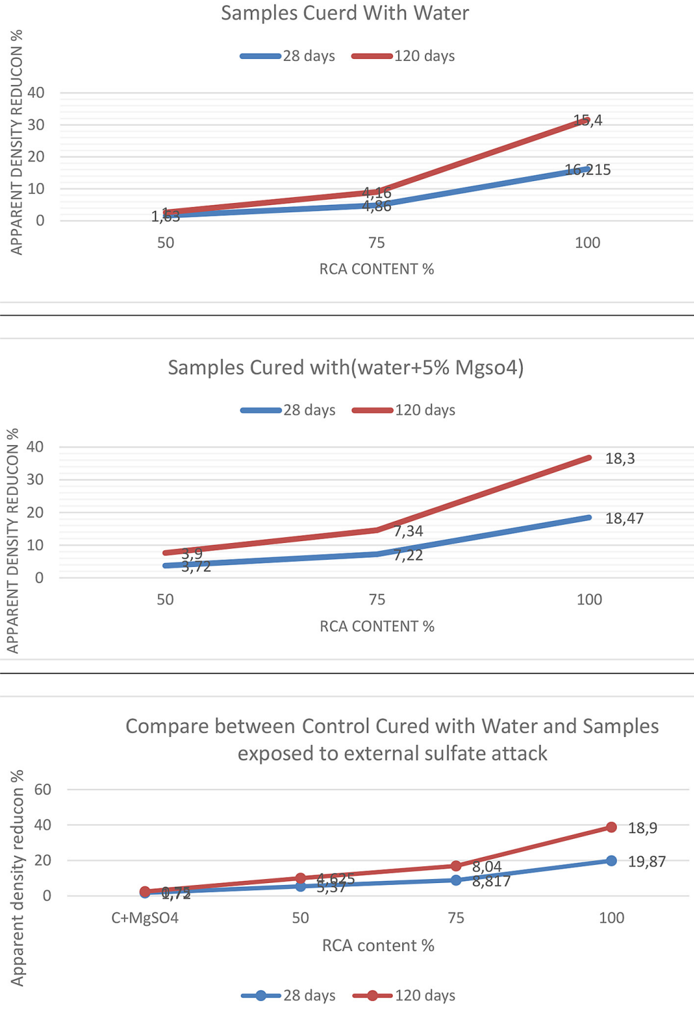
- Density was lower for RCA mixes, with A3 (100% RCA) lowest. Water-cured A3 vs. control density reductions were 16.215% at 28 days and 15.4% at 120 days; under sulfate exposure, A3 vs. control reductions were 18.47% at 28 days and 18.3% at 120 days. Control density under sulfate vs. water decreased 1.72% at 28 days and 0.75% at 120 days.
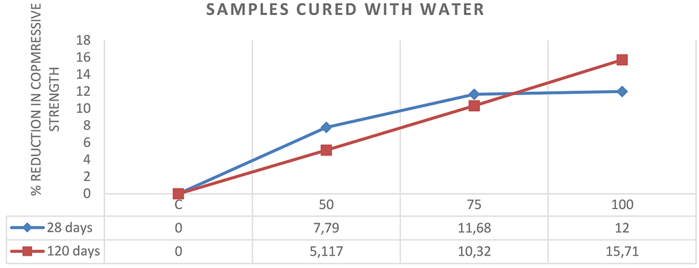
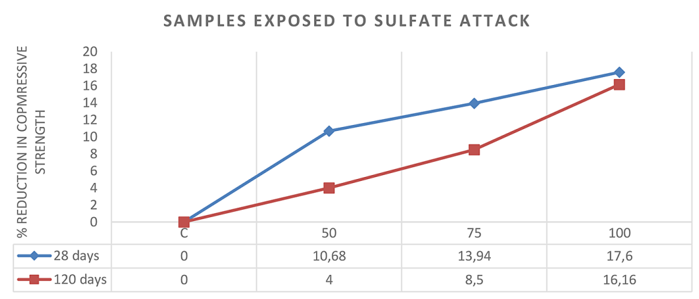
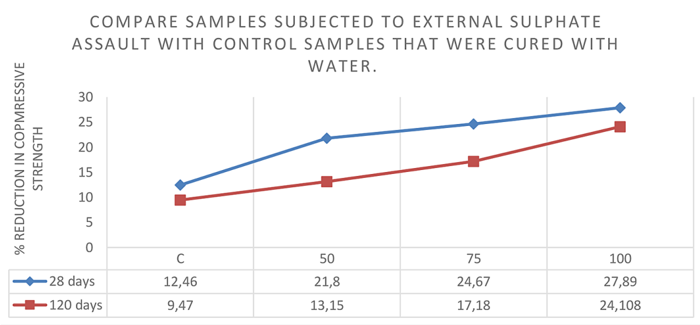
- Compressive strength: control water-cured was 38.5 MPa at 28 days and 55.5 MPa at 120 days; A3 water-cured was 33.88 MPa and 46.78 MPa. Water-cured RCA mixes declined vs. control by 7.79%, 11.68%, and 12% at 28 days and 5.117%, 10.32%, and 15.71% at 120 days for A1, A2, and A3. Under sulfate attack, control decreased 12.46% at 28 days and 9.47% at 120 days vs. water-cured control; A3 sulfate vs. control sulfate decreased 17.6% at 28 days and 16.16% at 120 days. Silica fume benefits were evident after 120 days.
- SPSS three-way ANOVA is reported to show significant effects of curing method, age, and mix, with the control mix best and A1 closest among the RCA mixes.
Methods
- Four mixes were prepared: Control (C), A1 (50% RCA + 10% silica fume), A2 (75% RCA + 10% silica fume), and A3 (100% RCA + 10% silica fume), using sulfate-resistant Portland cement type V, a reference w/c of 0.408, 315 kg/m³ cement, and a design compressive strength of 35 MPa per ACI PRC-325.9-15.
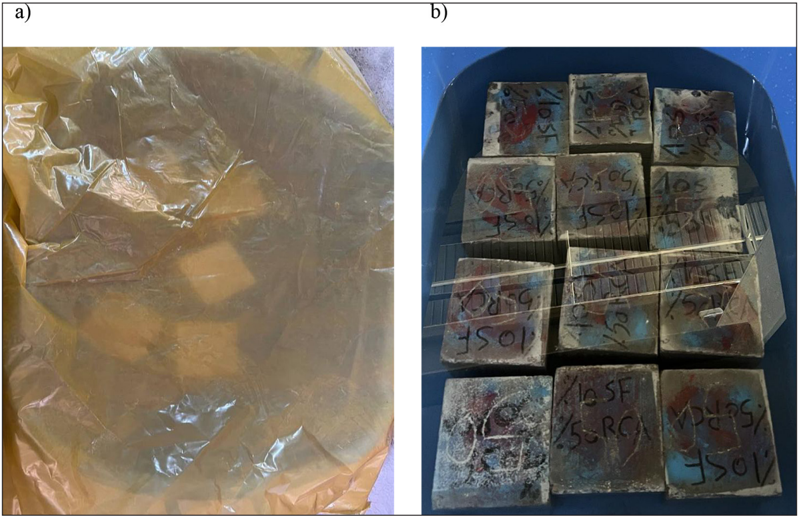
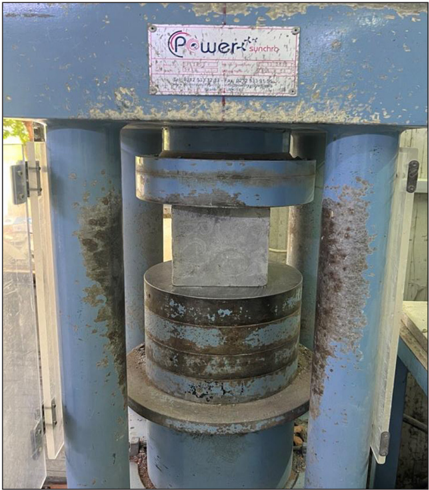
- Forty-eight 150-mm cubes were cast; half were water-cured and half exposed to a 5% MgSO₄ solution for 28 and 120 days, with the solution replenished every four weeks. Tests included slump, density (ASTM C642-97), and compressive strength (BS EN 12390-3).
- Compressive strength data were analyzed with SPSS using three-way ANOVA.
Limitations
- The paper does not state a limitations section.
- Evident from the text: the ANOVA table reports no F or significance values, has error df = 0, and shows R² = 1.000, while descriptive statistics list N = 1 per treatment-age-mix cell; the reported significance claims are therefore not statistically interpretable.
- Evident from the text: mix labeling is inconsistent—the slump section refers to “A1” as containing 100% RCA, while the mix design defines A1 as 50% RCA and A3 as 100% RCA—and some reported percentages conflict, such as A3 sulfate density reductions given as 18.47%/18.3% in the density section but 11.68%/12% in the conclusions.
Model-written summary. Check it against the paper before relying on it.
Integrity signals
Registry
Cites
Statistics
Figures
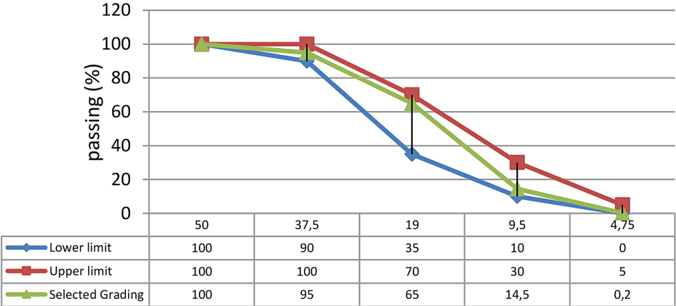
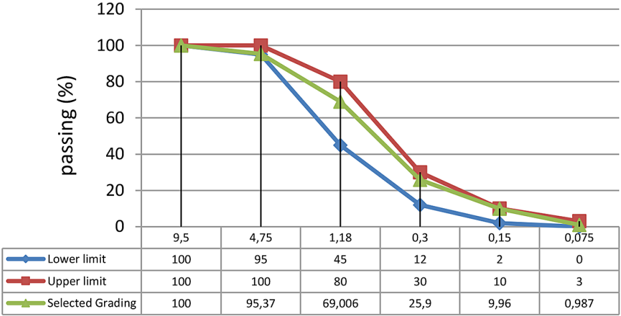
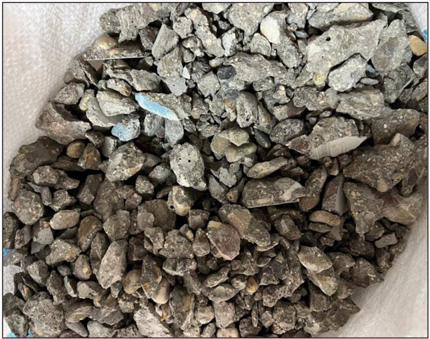
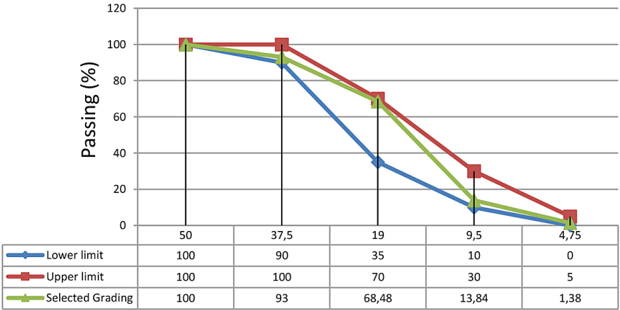
Verification
Claims the paper makes
0 Valid · 0 Not valid · 18 Not checked · 25 Own results and interpretations
A result the paper reports from its own data — it cites no other source for it, so there is none to check. The quote shows it is in the paper.
In the paper
“among the CRCA mixes, mix A1 was closest to the control mix and the best among the CRCA mixes.”
§ Behavior of rigid pavements containing recycled concrete aggregate exposed to magnesium sulfates attack > Compressive strength test
plain- Asserted: passes — The authors put it forward as true.
- Checkable: passes — It can be checked against evidence.
- Load-bearing: passes — The paper’s conclusions depend on it.
- Based: passes — The paper gives a reason why it holds.
A result the paper reports from its own data — it cites no other source for it, so there is none to check. The quote shows it is in the paper.
In the paper
“The mix (A3) showed the most severe decrease among the RCA mixes relative to the control mix exposed to sulfate assault, with a strength reduction of 17.6% at 28 days and 16.16% at 120 days.”
§ Behavior of rigid pavements containing recycled concrete aggregate exposed to magnesium sulfates attack > CONCLUSIONS AND DISCUSSIONS
plainstates a cause- Asserted: passes — The authors put it forward as true.
- Checkable: passes — It can be checked against evidence.
- Load-bearing: passes — The paper’s conclusions depend on it.
- Based: passes — The paper gives a reason why it holds.
A result the paper reports from its own data — it cites no other source for it, so there is none to check. The quote shows it is in the paper.
In the paper
“The variation in mixes led to differences in resistance, with the control mix showing the best results.”
§ Behavior of rigid pavements containing recycled concrete aggregate exposed to magnesium sulfates attack > Compressive strength test
plain- Asserted: passes — The authors put it forward as true.
- Checkable: passes — It can be checked against evidence.
- Load-bearing: passes — The paper’s conclusions depend on it.
- Based: passes — The paper gives a reason why it holds.
A result the paper reports from its own data — it cites no other source for it, so there is none to check. The quote shows it is in the paper.
In the paper
“The results in Tables 9 and 10 indicate that the curing method significantly affected the strength, as exposure to external salt attacks negatively impacted the concrete's durability.”
§ Behavior of rigid pavements containing recycled concrete aggregate exposed to magnesium sulfates attack > Compressive strength test
hedgedstates a cause- Asserted: passes — The authors put it forward as true.
- Checkable: passes — It can be checked against evidence.
- Load-bearing: passes — The paper’s conclusions depend on it.
- Based: passes — The paper gives a reason why it holds.
A result the paper reports from its own data — it cites no other source for it, so there is none to check. The quote shows it is in the paper.
In the paper
“All mixtures subjected to external sulfate attack exhibited a reduction in density relative to the water-treated combinations.”
§ Behavior of rigid pavements containing recycled concrete aggregate exposed to magnesium sulfates attack > CONCLUSIONS AND DISCUSSIONS
plainstates a cause- Asserted: passes — The authors put it forward as true.
- Checkable: passes — It can be checked against evidence.
- Load-bearing: passes — The paper’s conclusions depend on it.
- Based: passes — The paper gives a reason why it holds.
11 more claims
Create a free account to see all 43 claims and to verify the 12 references still open.
- It may state two separate claims as one. 16
- The quote only partly states this claim. 1
- Probably not a substantial claim. 12
Self-check
Percentages, sums and reported differences re-computed from the paper’s own numbers.
Each contradiction between two passages listed here was confirmed by an independent check.
Rated minor: it would not touch a result — a value no result rests on, a p-value that stays on the same side of the significance level, or a conflict that is clerical, resolved elsewhere in the paper, or outside its own findings.
In the paper
§ Behavior of rigid pavements containing recycled concrete aggregate exposed to magnesium sulfates attack > Slump test
“We can observe that the slump in the control mix (C) was 50 mm, while the slump in the blend (A1) containing 100% RCA was 30 mm.We notice that the reduction percentage between the two mixes was 40%.When comparing the control mix (C) with the mix (A2) containing 50% RCA, it was found that the percentage decreased to 10%.As for mix A3, which includes 75% RCA, the slump reduction percentage compared to the control mix (C) was 26%.”
§ Behavior of rigid pavements containing recycled concrete aggregate exposed to magnesium sulfates attack > Proportions of the mixture
“Four mixes were designed: the Control mix (C), mix (A1) containing 50% RCA + 10% SF, mix (A2) containing 75% RCA + 10% SF, and mix (A3) containing 100% RCA + 10% SF.”
Rated minor: it would not touch a result — a value no result rests on, a p-value that stays on the same side of the significance level, or a conflict that is clerical, resolved elsewhere in the paper, or outside its own findings.
In the paper
§ Behavior of rigid pavements containing recycled concrete aggregate exposed to magnesium sulfates attack > CONCLUSIONS AND DISCUSSIONS
“The advantages of silica fume were evident after 120 days; it enhanced the strength of mixes involving recycled concrete aggregate (RCA) while decreasing compressive strength and density with age.”
§ Behavior of rigid pavements containing recycled concrete aggregate exposed to magnesium sulfates attack > Additional information
“| (C) | 28 120 | 38.5 55.5 | 33.7 50.24 |”
Rated minor: it would not touch a result — a value no result rests on, a p-value that stays on the same side of the significance level, or a conflict that is clerical, resolved elsewhere in the paper, or outside its own findings.
In the paper
§ Behavior of rigid pavements containing recycled concrete aggregate exposed to magnesium sulfates attack > CONCLUSIONS AND DISCUSSIONS
“The slump rate decreased as the proportion of replacement with RCA increased, with the (A3) mixture exhibiting the least reduction.”
§ Behavior of rigid pavements containing recycled concrete aggregate exposed to magnesium sulfates attack > CONCLUSIONS AND DISCUSSIONS
“| RCA% | 0% | 50% | 75% | 100% | | --- | --- | --- | --- | --- | | Slump (mm) | 50 | 45 | 37 | 30 |”
Citations
Cites
318-19 Building Code Requirements for Structural Concrete and Commentary
(2019) · American Concrete Institute eBooks · doi:10.14359/51716937 · Cited by 1,289
Mechanical properties of recycled aggregate concrete under uniaxial loading
Xiao, J., Li, J., & Zhang, C. (2005) · Cement and Concrete Research · doi:10.1016/j.cemconres.2004.09.020 · Cited by 1,175
Recycled Concrete Aggregates: A Review
McNeil, K., & Kang, T. H.-K. (2013) · International Journal of Concrete Structures and Materials · doi:10.1007/s40069-013-0032-5 · Cited by 491
Strength and durability of concrete containing recycled concrete aggregates
Thomas, J., Thaickavil, N. N., & Wilson, P. M. (2018) · Journal of Building Engineering · doi:10.1016/j.jobe.2018.05.007 · Cited by 445
Life cycle assessment of recycled aggregate concrete on its environmental impacts: A critical review
Xing, W., Tam, V. W., Le, K. N., Hao, J. L., & Wang, J. (2022) · Construction and Building Materials · doi:10.1016/j.conbuildmat.2021.125950 · Cited by 223
Berredjem, L., Arabi, N., & Molez, L. (2020) · Construction and Building Materials · doi:10.1016/j.conbuildmat.2020.118421 · Cited by 176
Influence of silica fume on mechanical and physical properties of recycled aggregate concrete
Çakır, Ö., & Sofyanlı, Ö. Ö. (2015) · HBRC Journal · doi:10.1016/j.hbrcj.2014.06.002 · Cited by 173
Li, Y., Wang, R., Li, S., Zhao, Y., & Qin, Y. (2018) · Construction and Building Materials · doi:10.1016/j.conbuildmat.2018.01.084 · Cited by 142
Multi-parameter study of external sulfate attack in blended cement materials
Bonakdar, A., & Mobasher, B. (2009) · Construction and Building Materials · doi:10.1016/j.conbuildmat.2009.08.009 · Cited by 100
Durability study of concrete incorporating dredged sediments
Achour, R., Zentar, R., Abriak, N.-E., Rivard, P., & Gregoire, P. (2019) · Case Studies in Construction Materials · doi:10.1016/j.cscm.2019.e00244 · Cited by 62
Research works printed but not linked: 2
- Amudhavalli N.K., Mathew J. (2020). Effect of silica fume on strength and durability parameters of concrete. International Journal of Engineering Sciences, 3(1). http://ijeset.com/media/4N5-IJE- SET0202520.pdf
- Hasan, M. J., & Al-Shamaa, M. F. K. (2018). Effect bubbles on the behavior of reinforced reactive pow- der concrete deep beams. International Journal of Civil Engineering and Technology (IJCIET), 9(12), 592-602.
Cited by
Topylko, N., & Novytskyi, Y. (2026) · Journal of Ecological Engineering · doi:10.12911/22998993/235739
Metadata
- Authors
- Ibrahim, D. Z. Z., & ALShamaa, M. F. K.
- Venue
- Journal of Ecological Engineering
- Published
- 2025-05-01
- Volume
- 26
- Issue
- 5
- Pages
- 358-371
- ISSN
- 2081-139X (ISSN-L)
- 2299-8993
- OpenAlex
- W4408489399
- Cited by
- 1
- References
- 30
- Citations by year
- 2026: 1
- FWCI
- 0.28
- Type
- journal article
- Language
- en
- Open access
- gold
- doi.org
- Licence
- cc-by
- creativecommons.org/licenses/by/4.0/ (vor)
- creativecommons.org/licenses/by/4.0/ (am)
- creativecommons.org/licenses/by/4.0/ (tdm)
- Locations
- Journal of Ecological Engineering (publishedVersion, cc-by)
- Topics
- Physical Sciences › Engineering › Building and Construction › Recycled Aggregate Concrete Performance
- Physical Sciences › Engineering › Civil and Structural Engineering › Concrete and Cement Materials Research
- Physical Sciences › Engineering › Building and Construction › Materials Engineering and Processing
- Keywords
- concrete pavements, recycled concrete aggregate, magnesium sulfate attack, sulfate resistance, silica fume, partial replacement of natural aggregate, compressive strength, density, concrete durability, sustainable construction materials
About these checks
Registry, retraction, Cites and statistics results are computed, not judged, with one exception: a printed reference that no index lists is read once by a model before it counts as a citation error. Claims are extracted by a model and kept only when their quote appears verbatim in the text; each cited source is then checked, with a model’s help, for whether it says what the claim relies on. Those verdicts can be wrong — read the claim’s quote and the cited source before relying on one.
A language model drew the claims from the paper on 2026-11-27, under version 3 of the claim definition (model deepseek-v4.1-flash, prompt extract-v3).
A second model labelled each claim on 2026-11-27 (model jev-1.13-20260917, definition revision gold-guideline-v0.2).
Statistics and arithmetic are recomputed, not judged.
Confidence bands are shown only for fields calibrated on our annotated test set. None is calibrated yet, so no band is shown.
What counts as a claim ›How we measure confidence ›How we check this ›
Are you an author, or do you see a problem with this page? Request a review
Data sources
Bibliographic data: Semantic Scholar, OpenAlex, Crossref.
Contains information from the Semantic Scholar Academic Graph Datasets, made available under the ODC Attribution License (ODC-BY 1.0).
Semantic Scholar’s data is described in: Kinney, R., et al. (2023). The Semantic Scholar Open Data Platform. arXiv:2301.10140.
