

The DOI matches its Crossref record; 55 of the 55 references it cites were found in a registry or an index.
A cortical network processes auditory error signals during human speech production to maintain fluency
Open accessAbstract
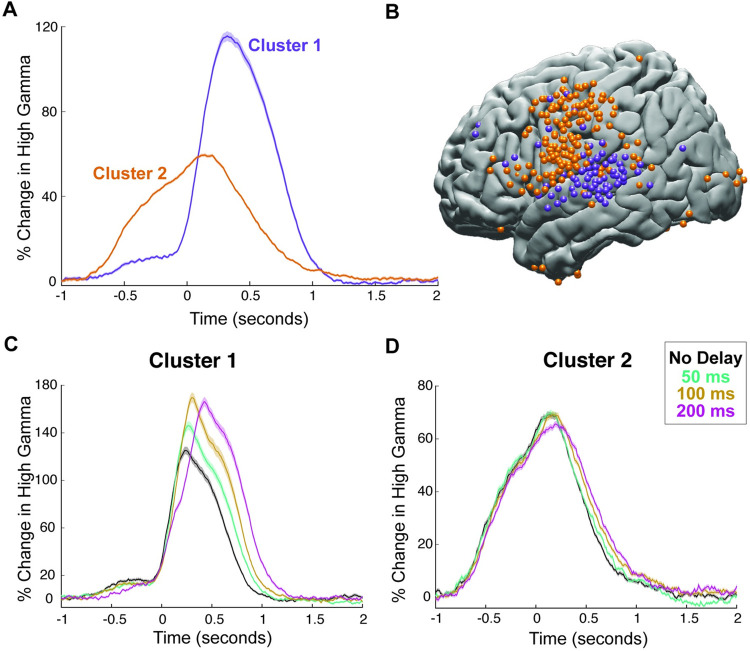
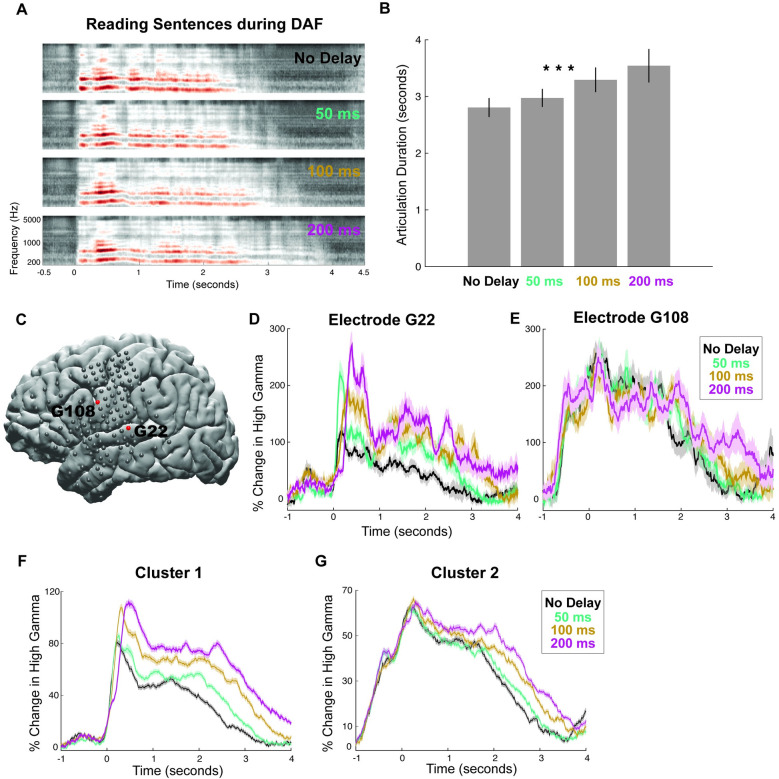
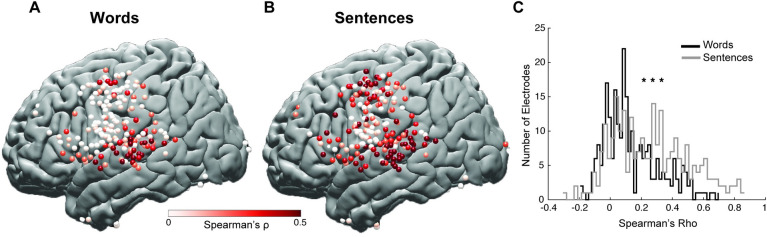
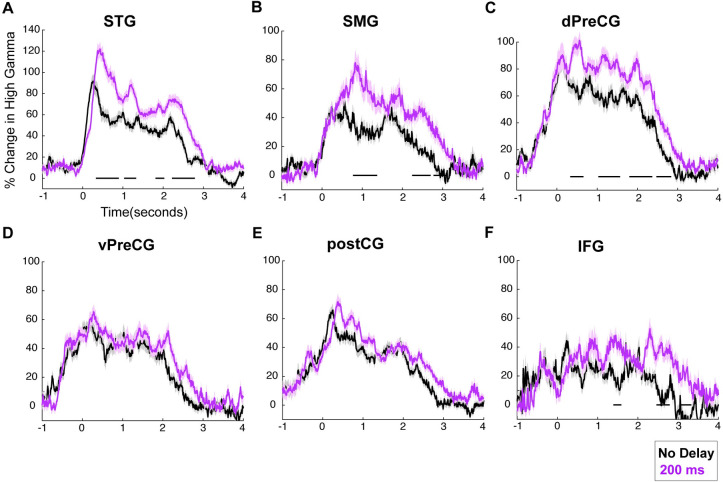
Hearing one’s own voice is critical for fluent speech production as it allows for the detection and correction of vocalization errors in real time. This behavior known as the auditory feedback control of speech is impaired in various neurological disorders ranging from stuttering to aphasia; however, the underlying neural mechanisms are still poorly understood. Computational models of speech motor control suggest that, during speech production, the brain uses an efference copy of the motor command to generate an internal estimate of the speech output. When actual feedback differs from this internal estimate, an error signal is generated to correct the internal estimate and update necessary motor commands to produce intended speech. We were able to localize the auditory error signal using electrocorticographic recordings from neurosurgical participants during a delayed auditory feedback (DAF) paradigm. In this task, participants hear their voice with a time delay as they produced words and sentences (similar to an echo on a conference call), which is well known to disrupt fluency by causing slow and stutter-like speech in humans. We observed a significant response enhancement in auditory cortex that scaled with the duration of feedback delay, indicating an auditory speech error signal. Immediately following auditory cortex, dorsal precentral gyrus (dPreCG), a region that has not been implicated in auditory feedback processing before, exhibited a markedly similar response enhancement, suggesting a tight coupling between the 2 regions. Critically, response enhancement in dPreCG occurred only during articulation of long utterances due to a continuous mismatch between produced speech and reafferent feedback. These results suggest that dPreCG plays an essential role in processing auditory error signals during speech production to maintain fluency.
Overview
The claims and statistics of this paper haven’t been checked yet.
Free: it reads the open-access text and checks the first 5 claims that cite a source we can check. Create a free account to check every claim.
Integrity signals
Registry
Cites
Statistics
Figures




Verification
Claims the paper makes
The claims and statistics of this paper haven’t been checked yet.
Free: it reads the open-access text and checks the first 5 claims that cite a source we can check. Create a free account to check every claim.
Claims other papers make about this one
Each is checked against this paper’s own text: does it say what the citing paper says it does?
The check wasn’t confident either way, so it gives no verdict — never disputed.
In the citing paper
“The supplementary motor area (SMA) is another important region in the speech production network165,169 that is involved in speech initiation170.”
From The speech neuroprosthesis (2024) · cites this paper as [169]
Experimental — accuracy not yet measured
Self-check
Percentages, sums and reported differences re-computed from the paper’s own numbers.
The self-check needs the paper’s full text.
Citations
Cites
Controlling the False Discovery Rate: A Practical and Powerful Approach to Multiple Testing
Benjamini, Y., & Hochberg, Y. (1995) · Journal of the Royal Statistical Society Series B: Statistical Methodology · doi:10.1111/j.2517-6161.1995.tb02031.x · Cited by 109,482 · cited 1×
“Multiple comparisons were then corrected using the false discovery rate (FDR) method [30].”
MethodA fast diffeomorphic image registration algorithm
Ashburner, J. (2007) · NeuroImage · doi:10.1016/j.neuroimage.2007.07.007 · Cited by 8,122 · cited 1×
“Electrodes were then projected to the surface of cortex (preoperative segmented surface) to correct for edema induced shifts following previous procedures [27] (registration to the MNI space was based on a nonlinear DARTEL algorithm [28]).”
MethodThe cortical organization of speech processing
Hickok, G., & Poeppel, D. (2007) · Nature Reviews Neuroscience · doi:10.1038/nrn2113 · Cited by 5,495
Makris, N., Kennedy, D. N., McInerney, S., Sorensen, A. G., Wang, R., Caviness, V. S., & Pandya, D. N. (2005) · Cerebral Cortex · doi:10.1093/cercor/bhh186 · Cited by 1,146
Coupling Between Neuronal Firing, Field Potentials, and fMRI in Human Auditory Cortex
Mukamel, R., Gelbard, H., Arieli, A., Hasson, U., Fried, I., & Malach, R. (2005) · Science · doi:10.1126/science.1110913 · Cited by 1,035
Different Origins of Gamma Rhythm and High-Gamma Activity in Macaque Visual Cortex
Ray, S., & Maunsell, J. H. R. (2011) · PLoS Biology · doi:10.1371/journal.pbio.1000610 · Cited by 1,012
Corollary discharge across the animal kingdom
Crapse, T. B., & Sommer, M. A. (2008) · Nature Reviews Neuroscience · doi:10.1038/nrn2457 · Cited by 789
Sensorimotor Integration in Speech Processing: Computational Basis and Neural Organization
Hickok, G., Houde, J., & Rong, F. (2011) · Neuron · doi:10.1016/j.neuron.2011.01.019 · Cited by 786
Sensorimotor Adaptation in Speech Production
Houde, J. F., & Jordan, M. I. (1998) · Science · doi:10.1126/science.279.5354.1213 · Cited by 762
The DIVA model: A neural theory of speech acquisition and production
Tourville, J. A., & Guenther, F. H. (2011) · Language and Cognitive Processes · doi:10.1080/01690960903498424 · Cited by 748
Research works printed but not linked: 3
- E. Lombard, 1911, Le signe de l’elevation de la voix, Ann Mal de L’Oreille et du Larynx, 101
- O. Bloodstein, 1969, A handbook on stuttering
- D Thoenissen, 2002, Movement preparation and motor intention: an event-related fMRI study, J Neurosci, 22, 9248
Cited by
Advances in human intracranial electroencephalography research, guidelines and good practices
Mercier, M. R., Dubarry, A.-S., Tadel, F., Avanzini, P., Axmacher, N., Cellier, D., Vecchio, M. D., Hamilton, L. S., Hermes, D., Kahana, M. J., et al. (2022) · NeuroImage · doi:10.1016/j.neuroimage.2022.119438 · Cited by 229
A Neurosurgical Functional Dissection of the Middle Precentral Gyrus during Speech Production
Silva, A. B., Liu, J. R., Zhao, L., Levy, D. F., Scott, T. L., & Chang, E. F. (2022) · The Journal of Neuroscience · doi:10.1523/jneurosci.1614-22.2022 · Cited by 111
“In a study where participants were played a time-lagged version of their speech while they continued to produce a given word or phrase, the midPrCG increased activity, suggesting a potential role in auditory-motor integration (Ozker et al., 2022).”
BackgroundSilva, A. B., Littlejohn, K. T., Liu, J. R., Moses, D. A., & Chang, E. F. (2024) · Nature Reviews Neuroscience · doi:10.1038/s41583-024-00819-9 · Cited by 103
“…it is also vital to better understand non-direct articulatory control of speech, such as which cortical regions are important for speech planning 47,165,166 , including semantic 68,167 and phonological representations 58,168 that may be important for forming imagined or attempted speech targets.”
A neural speech decoding framework leveraging deep learning and speech synthesis
Chen, X., Wang, R., Khalilian-Gourtani, A., Yu, L., Dugan, P. C., Friedman, D. J., Doyle, W., Devinsky, O., Wang, Y., & Flinker, A. (2024) · Nature Machine Intelligence · doi:10.1038/s42256-024-00824-8 · Cited by 151
“Although our current focus was not real-time decoding, we were able to synthesize speech from neural signals with a delay of under 50 ms (Supplementary Table 1), which provides minimal auditory delay interference and allows for normal speech production 34,35 .”
Self-citationBeyond Broca: neural architecture and evolution of a dual motor speech coordination system
Hickok, G. S., Venezia, J. H., & Teghipco, A. (2022) · Brain · doi:10.1093/brain/awac454 · Cited by 95
Zada, Z., Goldstein, A., Michelmann, S., Simony, E., Price, A. R., Hasenfratz, L., Barham, E., Zadbood, A., Doyle, W., Friedman, D. J., et al. (2024) · Neuron · doi:10.1016/j.neuron.2024.06.025 · Cited by 99
Self-citationKnowns and unknowns about the neurobiology of stuttering
Neef, N. E., & Chang, S. (2024) · PLoS Biology · doi:10.1371/journal.pbio.3002492 · Cited by 76
Lin, K., Jie, B., Dong, P., Ding, X., Bian, W., & Liu, M. (2022) · Frontiers in Neuroscience · doi:10.3389/fnins.2022.933660 · Cited by 54
“Also, the precentral gyrus identified by our method processes auditory error signals during speech production to maintain fluency (Ozker et al., 2022), and the orbitofrontal cortex plays an important role in decision-making and emotion processing (Bechara et al.”
MethodA corollary discharge circuit in human speech
Khalilian-Gourtani, A., Wang, R., Chen, X., Yu, L., Dugan, P. C., Friedman, D., Doyle, W., Devinsky, O., Wang, Y., & Flinker, A. (2024) · Proceedings of the National Academy of Sciences · doi:10.1073/pnas.2404121121 · Cited by 37
Self-citationMaternal Tobacco Use During Pregnancy and Child Neurocognitive Development
Puga, T. B., Dai, H. D., Wang, Y., & Theye, E. (2024) · JAMA Network Open · doi:10.1001/jamanetworkopen.2023.55952 · Cited by 34
Speech-induced suppression and vocal feedback sensitivity in human cortex
Özker, M., Yu, L., Dugan, P. C., Doyle, W., Friedman, D. J., Devinsky, O., & Flinker, A. (2024) · eLife · doi:10.7554/elife.94198 · Cited by 23
“Behavioral and neural data from the DAF experiment were used in a previous publication from our group ( Ozker et al., 2022 ).”
BackgroundMethodInfluentialSelf-citationDistributed feedforward and feedback cortical processing supports human speech production
Wang, R., Chen, X., Khalilian-Gourtani, A., Yu, L., Dugan, P. C., Friedman, D. J., Doyle, W., Devinsky, O., Wang, Y., & Flinker, A. (2023) · Proceedings of the National Academy of Sciences · doi:10.1073/pnas.2300255120 · Cited by 28
Self-citationNeurocomputational modeling of speech motor development
Meier, A. M., & Guenther, F. H. (2023) · Journal of Child Language · doi:10.1017/s0305000923000260 · Cited by 27
Abbasi, O., Steingräber, N., Chalas, N., Kluger, D. S., & Groß, J. (2023) · PLoS Biology · doi:10.1371/journal.pbio.3002178 · Cited by 19
Deep speech-to-text models capture the neural basis of spontaneous speech in everyday conversationsPreprint
Goldstein, A., Wang, H., Niekerken, L., Zada, Z., Aubrey, B., Sheffer, T., Nastase, S. A., Gazula, H., Schain, M., Singh, A., et al. (2023) · bioRxiv (Cold Spring Harbor Laboratory) · doi:10.1101/2023.06.26.546557 · Cited by 22
Self-citationSpatiotemporal Mapping of Auditory Onsets during Speech Production
Kurteff, G., Field, A. M., Asghar, S., Tyler‐Kabara, E. C., Clarke, D., Weiner, H. L., Anderson, A. E., Watrous, A. J., Buchanan, R. J., Modur, P. N., et al. (2024) · Journal of Neuroscience · doi:10.1523/jneurosci.1109-24.2024 · Cited by 14
Meng, K., Goodarzy, F., Kim, E., Park, Y. J., Kim, J. S., Cook, M. J., Chung, C. K., & Grayden, D. B. (2023) · Journal of Neural Engineering · doi:10.1088/1741-2552/ace7f6 · Cited by 17
“The fact that artificial sounds were successfully synthesized in both cases might relate to recent evidence supporting the coexistence of two distinct speech coordination systems [46, 58] and the concentric organization of face representations centered around the tongue in the PreCG, which sharply contrasts with the l…”
BackgroundSpeech sequencing in the human precentral gyrus
Liu, J. R., Zhao, L., Hullett, P. W., & Chang, E. F. (2025) · Nature Human Behaviour · doi:10.1038/s41562-025-02250-1 · Cited by 21
“…also been implicated in several other roles related to speech perception and production, including auditory processing 39,58,59 , reading 60,61 , writing 30,62 , motor learning 63 , error monitoring 64 , direct laryngeal control 13,41,42 and potential non-primary motor association functions 52 .”
Speaker-induced Suppression in EEG during a Naturalistic Reading and Listening Task
Kurteff, G., Lester‐Smith, R. A., CCC-SLP, Martinez, A., Currens, N., Holder, J., Villarreal, C., Mercado, V. R., Truong, C., Huber, C., et al. (2023) · Journal of Cognitive Neuroscience · doi:10.1162/jocn_a_02037 · Cited by 10
Robustness and adaptability of sensorimotor skills in expert piano performance
Yasuhara, M., Uehara, K., Oku, T., Shiotani, S., Nambu, I., & Furuya, S. (2024) · iScience · doi:10.1016/j.isci.2024.110400 · Cited by 10
“In contrast, pianists but not non-mu-siciansstruckthekeyharderin responseto theperturbation, whichallowsforelevatingeithersomatosensoryor auditory gaininmotion.”
Li, G., Zhong, D., Zhang, N. J., Dong, J., Yan, Y., Xu, Q., Xu, S., Yang, L., Hao, D., & Li, C. R. (2024) · Neuroscience · doi:10.1016/j.neuroscience.2024.07.025 · Cited by 7
Vissani, M., Bush, A., Lipski, W. J., Bullock, L., Fischer, P., Neudorfer, C., Holt, L. L., Fiez, J. A., Turner, R., & Richardson, R. M. (2025) · Nature Communications · doi:10.1038/s41467-025-58781-8 · Cited by 13
Yao, Y., Guo, L.-L., Gao, J.-Q., Jin, X.-J., Wang, K., Chen, J.-H., Zhang, Y.-H., Che, C., Cai, Z., Gao, J., et al. (2025) · Journal of Autism and Developmental Disorders · doi:10.1007/s10803-025-06914-9 · Cited by 8
“The motor cortex, in addition to Broca’s area, plays a crucial role for speech production, facilitating speech motor planning, articulation, and phonological processing (Dichter et al., 2018 ; Duffy et al., 2021; Ozker et al., 2022; Silva et al., 2022).”
The Pattern and Stages of Atrophy in Spinocerebellar Ataxia Type 2: Volumetrics from ENIGMA ‐Ataxia
Robertson, J. W., Adanyeguh, I. M., Bender, B., Boesch, S., Brunetti, A., Cocozza, S., Coutinho, L., Deistung, A., Diciotti, S., Dogan, I., et al. (2025) · Movement Disorders · doi:10.1002/mds.30143 · Cited by 6
Tian, Q., Li, Q., Lai, H., Shekara, A., Li, J., & Wang, S. (2025) · Journal of Evidence-Based Medicine · doi:10.1111/jebm.12675 · Cited by 7
“The preG is a core node of sensorimotor systems and plays a key role in motor planning, control, and execution [78], such as walking execution and speech production [79], as well as auditory processing [80].”
Hickok, G. S. (2024) · BMC Neuroscience · doi:10.1186/s12868-024-00868-x · Cited by 4
“Interestingly, delayed auditory feedback seems to drive activity in the dorsal, laryngeal pitch-related pathway more strongly and faster than the ventral pathway [16].”
BackgroundMeykadeh, S., Khadem, A. A., Sulpizio, S., & Sommer, W. (2023) · Journal of Neurolinguistics · doi:10.1016/j.jneuroling.2023.101162 · Cited by 4
Decoding Imagined Speech Reveals Speech Planning and Production MechanismsPreprint
Orpella, J., Mantegna, F., Assaneo, M. F., & Poeppel, D. (2022) · SSRN Electronic Journal · doi:10.1101/2022.05.30.494046 · Cited by 11
Understanding how the human brain tracks emitted speech sounds to execute fluent speech production
Callan, A. M., & Callan, D. E. (2022) · PLoS Biology · doi:10.1371/journal.pbio.3001533 · Cited by 3
“Ozker and colleagues provide new insights by using electrocorticography (ECoG) that possesses high temporal resolution [4].”
BackgroundRobertson, J. W., Adanyeguh, I. M., Bender, B., Boesch, S., Brunetti, A., Cocozza, S., Coutinho, L., Deistung, A., Diciotti, S., Dogan, I., et al. (2024) · bioRxiv (Cold Spring Harbor Laboratory) · doi:10.1101/2024.09.16.613281 · Cited by 3
Tests of the Influence of DAF (Delayed Auditory Feedback) on Changes in Speech Signal Parameters
Kanty, D., & Staroniewicz, P. (2025) · Applied Sciences · doi:10.3390/app15137524 · Cited by 2
Vocal Error Monitoring in the Primate Auditory Cortex
Eliades, S. J., & Tsunada, J. (2025) · Journal of Neuroscience · doi:10.1523/jneurosci.0090-25.2025 · Cited by 3
Eldeeb, M., Hamouda, N. H., Bushara, E., & Assal, S. I. (2022) · Egyptian Journal of Ear Nose Throat and Allied Sciences · doi:10.21608/ejentas.2022.140724.1517 · Cited by 2
“Moreover, stuttering has been linked to defective auditory feedback[9, 10].”
BackgroundCausal Lesion Evidence for Two Motor Speech Coordination Networks in the BrainPreprint
Burns, W., Strawderman, E., Meyers, S. P., Schmidt, T. J., Walter, K. A., Pilcher, W. H., Mahon, B. Z., & Garcea, F. E. (2025) · bioRxiv (Cold Spring Harbor Laboratory) · doi:10.1101/2025.06.05.658124 · Cited by 2
“…auditory perturbation paradigms probing auditory-to-motor transformations implicate both left dorsal precentral gyrus and superior temporal gyrus [21], while speech perturbation paradigms probing somatosensory-to-motor transformations implicate the ventral precentral gyrus and supramarginal…”
Decoding state specific connectivity during speech production and perceptionPreprint
Esmaeili, Y., Khalilian-Gourtani, A., Devinsky, O., Doyle, W., Dugan, P. C., Friedman, D., & Flinker, A. (2025) · bioRxiv (Cold Spring Harbor Laboratory) · doi:10.1101/2025.10.10.681678 · Cited by 2
Self-citationHierarchical brain organization for voice: large-scale networks, gradients, and feedback
Kovalenko, A., Кастыро, И. В., Samsonov, V. A., Lazareva, L., Kalmykov, I. K., & Elizbaryan, I. (2026) · The European Physical Journal Special Topics · doi:10.1140/epjs/s11734-026-02546-x · Cited by 1
Neural correlates of reading aloud on the autism spectrum
McCabe, C., Cahalan, S., Pincus, M., Rosenberg‐Lee, M., & Graves, W. W. (2025) · Scientific Reports · doi:10.1038/s41598-025-88903-7 · Cited by 2
“However, the preCG has also been associated with the processing of speech and the auditory-motor coordination network 35 and may be involved in processing auditory error signals associated with maintaining fluency during speech 92 .”
Frequency-specific cortico-subcortical interaction in continuous speaking and listeningPreprint
Abbasi, O., Steingräber, N., Chalas, N., Kluger, D. S., & Groß, J. (2024) · eLife · doi:10.7554/elife.97083 · Cited by 1
Bridging verbal coordination and neural dynamicsPreprint
Schwab-Mohamed, I., Mercier, M. R., Trébuchon, A., Morillon, B., Lancia, L., & Schön, D. (2024) · eLife · doi:10.7554/elife.99547.1 · Cited by 1
Frequency-specific cortico-subcortical interaction in continuous speaking and listening
Abbasi, O., Steingräber, N., Chalas, N., Kluger, D. S., & Groß, J. (2024) · eLife · doi:10.7554/elife.97083.2
Bridging verbal coordination and neural dynamics
Schwab-Mohamed, I., Mercier, M. R., Trébuchon, A., Morillon, B., Lancia, L., & Schön, D. (2025) · eLife · doi:10.7554/elife.99547.4
Frequency-specific cortico-subcortical interaction in continuous speaking and listeningPreprint
Abbasi, O., Steingräber, N., Chalas, N., Kluger, D. S., & Groß, J. (2024) · eLife · doi:10.7554/elife.97083.1
Author response: Speech-induced suppression and vocal feedback sensitivity in human cortex
Özker, M., Yu, L., Dugan, P. C., Doyle, W., Friedman, D. J., Devinsky, O., & Flinker, A. (2024) · eLife · doi:10.7554/elife.94198.2.sa0
Self-citationSpeech-induced suppression and vocal feedback sensitivity in human cortexPreprint
Özker, M., Yu, L., Dugan, P. C., Doyle, W., Friedman, D. J., Devinsky, O., & Flinker, A. (2024) · eLife · doi:10.7554/elife.94198.2 · Cited by 4
Self-citationBridging verbal coordination and neural dynamicsPreprint
Schwab-Mohamed, I., Mercier, M. R., Trébuchon, A., Morillon, B., Lancia, L., & Schön, D. (2024) · eLife · doi:10.7554/elife.99547 · Cited by 1
Language-specific Tonal Features Drive Speaker-Listener Neural SynchronizationPreprint
Feng, G., Chen, H., Teng, X., Li, Y., Hsu, S., Tsao, F., & Wong, P. C. M. (2025) · Research Square · doi:10.21203/rs.3.rs-6193510/v1 · Cited by 2
Bridging verbal coordination and neural dynamicsPreprint
Schwab-Mohamed, I., Mercier, M. R., Trébuchon, A., Morillon, B., Lancia, L., & Schön, D. (2025) · eLife · doi:10.7554/elife.99547.2
Abbasi, O., Steingräber, N., Chalas, N., Kluger, D. S., & Groß, J. (2024) · eLife · doi:10.7554/elife.97083.1.sa4
Bridging verbal coordination and neural dynamicsPreprint
Schwab-Mohamed, I., Mercier, M. R., Trébuchon, A., Morillon, B., Lancia, L., & Schön, D. (2025) · eLife · doi:10.7554/elife.99547.3
Loucks, T. M. J., Chon, H., Gurevich, N., Wright, J., Hunter, A., Senthilselvan, A., & Aalto, D. (2025) · Perspectives of the ASHA Special Interest Groups · doi:10.1044/2025_persp-24-00306
Özker, M., Giglio, L., Beyh, A., Forkel, S. J., & Peter Hagoort, A. (2026) · Proceedings of the National Academy of Sciences · doi:10.1073/pnas.2530123123 · Cited by 1
“Anterior earlier electrocorticography findings in epilepsy patients, which showed selective engagement of this region during sentence production under DAF, supporting its role in maintaining speech fluency when dynamic auditory feedback processing is required to produce syllable sequences (29).”
The scaffolding of individual variability in language processing by domain-general neural networksPreprint
Özker, M., Takashima, A., Giglio, L., Hintz, F., Meyer, A., & Hagoort, P. (2026) · bioRxiv (Cold Spring Harbor Laboratory) · doi:10.64898/2026.02.12.705531
Sensory basis of speech motor learning and memory
Rao, N., Gendron, R., Manning, T. F., & Ostry, D. J. (2026) · Proceedings of the National Academy of Sciences · doi:10.1073/pnas.2525468123 · Cited by 1
“However, only STG, supramarginal gyrus, and dorsal precentral gyrus showed error related processing after correcting for differences in speech duration (47).”
Language-Specific Tonal Features Drive Speaker–Listener Neural Synchronization
Hong, C., Teng, X., Li, Y., Hsu, S.-M., Tsao, F., Wong, P. C. M., & Feng, G. (2026) · Journal of Neuroscience · doi:10.1523/jneurosci.1929-25.2026 · Cited by 2
ВПЛИВ АКУСТИЧНОГО СЕРЕДОВИЩА НА СТІЙКІСТЬ ДИКТОРОСПЕЦИФІЧНИХ ОЗНАК МОВЛЕННЯ: ЕФЕКТ ЛОМБАРДА
Римар, І. (2026) · Криміналістичний вісник · doi:10.37025/1992-4437/2026-45-1-118
Metadata
- Authors
- Ozker, M., Doyle, W., Devinsky, O., & Flinker, A.
- Affiliations
- New York University (US)
- Venue
- PLOS Biology
- Publisher
- Public Library of Science (PLoS)
- Published
- 2022-02-03
- Volume
- 20
- Issue
- 2
- Pages
- e3001493
- ISSN
- 1544-9173 (ISSN-L)
- 1545-7885
- PMC
- PMC8812883
- OpenAlex
- W4210592505
- Cited by
- 59
- References
- 54
- Citations by year
- 2026: 6 · 2025: 15 · 2024: 23 · 2023: 8 · 2022: 7
- FWCI
- 6.83
- Type
- journal article
- Language
- en
- Open access
- gold
- doi.org
- Licence
- Locations
- PLoS Biology (publishedVersion, cc-by)
- PubMed Central (publishedVersion, cc-by)
- PubMed (publishedVersion)
- DOAJ (DOAJ: Directory of Open Access Journals) (submittedVersion, cc-by-sa)
- Funders
- National Institute on Deafness and Other Communication Disorders (F32 DC018200)
- National Institute of Neurological Disorders and Stroke (R01NS109367)
- National Science Foundation (CRCNS 1912286)
- Leon Levy Foundation
- Topics
- Life Sciences › Neuroscience › Cognitive Neuroscience › Neurobiology of Language and Bilingualism
- Social Sciences › Psychology › Clinical Psychology › Stuttering Research and Treatment
- Social Sciences › Psychology › Experimental and Cognitive Psychology › Phonetics and Phonology Research
- Keywords
- speech fluency, delayed auditory feedback, auditory cortex, efference copy, speech motor control, stuttering, aphasia, electrocorticography
- MeSH terms
- Electrocorticography, Adult, Auditory Cortex, Auditory Perception, Epilepsy, Female, Humans, Male, Motor Cortex, Speech, Speech Perception, Feedback, Sensory
About these checks
Registry, retraction, Cites and statistics results are computed, not judged, with one exception: a printed reference that no index lists is read once by a model before it counts as a citation error. Claims are extracted by a model and kept only when their quote appears verbatim in the text; each cited source is then checked, with a model’s help, for whether it says what the claim relies on. Those verdicts can be wrong — read the claim’s quote and the cited source before relying on one.
Statistics and arithmetic are recomputed, not judged.
Confidence bands are shown only for fields calibrated on our annotated test set. None is calibrated yet, so no band is shown.
What counts as a claim ›How we measure confidence ›How we check this ›
Are you an author, or do you see a problem with this page? Request a review
Data sources
Bibliographic data: Semantic Scholar, OpenAlex, Crossref.
Contains information from the Semantic Scholar Academic Graph Datasets, made available under the ODC Attribution License (ODC-BY 1.0).
Semantic Scholar’s data is described in: Kinney, R., et al. (2023). The Semantic Scholar Open Data Platform. arXiv:2301.10140.
