

A cortical network processes auditory error signals during human speech production to maintain fluency
Open accessThe DOI matches its Crossref record; 55 of the 55 references it cites were found in a registry or an index.
Abstract
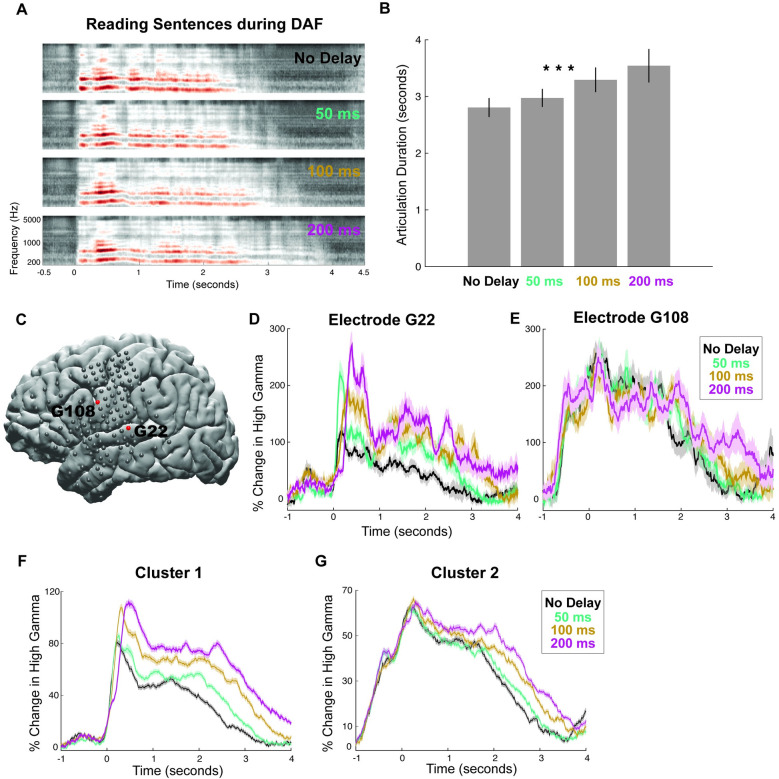
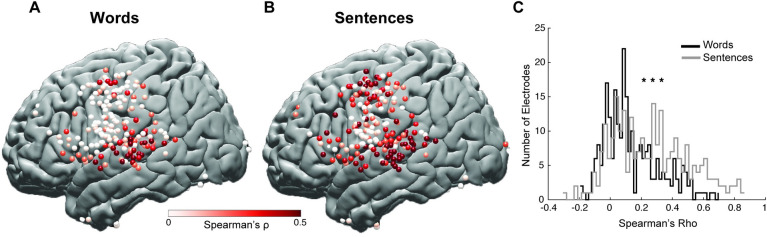
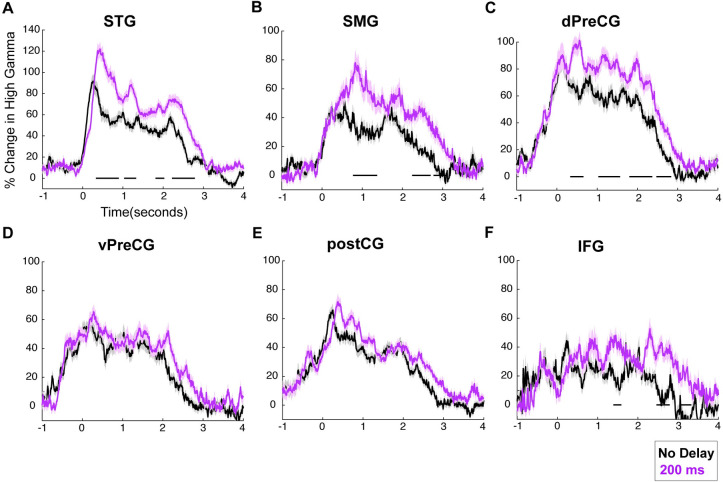
Hearing one’s own voice is critical for fluent speech production as it allows for the detection and correction of vocalization errors in real time. This behavior known as the auditory feedback control of speech is impaired in various neurological disorders ranging from stuttering to aphasia; however, the underlying neural mechanisms are still poorly understood. Computational models of speech motor control suggest that, during speech production, the brain uses an efference copy of the motor command to generate an internal estimate of the speech output. When actual feedback differs from this internal estimate, an error signal is generated to correct the internal estimate and update necessary motor commands to produce intended speech. We were able to localize the auditory error signal using electrocorticographic recordings from neurosurgical participants during a delayed auditory feedback (DAF) paradigm. In this task, participants hear their voice with a time delay as they produced words and sentences (similar to an echo on a conference call), which is well known to disrupt fluency by causing slow and stutter-like speech in humans. We observed a significant response enhancement in auditory cortex that scaled with the duration of feedback delay, indicating an auditory speech error signal. Immediately following auditory cortex, dorsal precentral gyrus (dPreCG), a region that has not been implicated in auditory feedback processing before, exhibited a markedly similar response enhancement, suggesting a tight coupling between the 2 regions. Critically, response enhancement in dPreCG occurred only during articulation of long utterances due to a continuous mismatch between produced speech and reafferent feedback. These results suggest that dPreCG plays an essential role in processing auditory error signals during speech production to maintain fluency.
Overview
The claims and statistics of this paper haven’t been checked yet.
Free: it reads the open-access text and checks the first 5 claims that cite a source we can check. Create a free account to check every claim.
Integrity signals
Registry
Cites
Statistics
Figures




Verification
Claims the paper makes
The claims and statistics of this paper haven’t been checked yet.
Free: it reads the open-access text and checks the first 5 claims that cite a source we can check. Create a free account to check every claim.
Claims other papers make about this one
Each is checked against this paper’s own text: does it say what the citing paper says it does?
The check wasn’t confident either way, so it gives no verdict — never disputed.
In the citing paper
“The supplementary motor area (SMA) is another important region in the speech production network165,169 that is involved in speech initiation170.”
From The speech neuroprosthesis (2024) · cites this paper as [169]
Experimental — accuracy not yet measured
Self-check
Percentages, sums and reported differences re-computed from the paper’s own numbers.
The self-check needs the paper’s full text.
Citations
Cites
Controlling the False Discovery Rate: A Practical and Powerful Approach to Multiple Testing
Benjamini, Y., & Hochberg, Y. (1995) · Journal of the Royal Statistical Society Series B: Statistical Methodology · doi:10.1111/j.2517-6161.1995.tb02031.x · Cited by 109,482 · cited 1×
“Multiple comparisons were then corrected using the false discovery rate (FDR) method [30].”
MethodA fast diffeomorphic image registration algorithm
Ashburner, J. (2007) · NeuroImage · doi:10.1016/j.neuroimage.2007.07.007 · Cited by 8,122 · cited 1×
“Electrodes were then projected to the surface of cortex (preoperative segmented surface) to correct for edema induced shifts following previous procedures [27] (registration to the MNI space was based on a nonlinear DARTEL algorithm [28]).”
MethodThe cortical organization of speech processing
Hickok, G., & Poeppel, D. (2007) · Nature Reviews Neuroscience · doi:10.1038/nrn2113 · Cited by 5,495
Makris, N., Kennedy, D. N., McInerney, S., Sorensen, A. G., Wang, R., Caviness, V. S., & Pandya, D. N. (2005) · Cerebral Cortex · doi:10.1093/cercor/bhh186 · Cited by 1,146
Coupling Between Neuronal Firing, Field Potentials, and fMRI in Human Auditory Cortex
Mukamel, R., Gelbard, H., Arieli, A., Hasson, U., Fried, I., & Malach, R. (2005) · Science · doi:10.1126/science.1110913 · Cited by 1,035
Different Origins of Gamma Rhythm and High-Gamma Activity in Macaque Visual Cortex
Ray, S., & Maunsell, J. H. R. (2011) · PLoS Biology · doi:10.1371/journal.pbio.1000610 · Cited by 1,012
Corollary discharge across the animal kingdom
Crapse, T. B., & Sommer, M. A. (2008) · Nature Reviews Neuroscience · doi:10.1038/nrn2457 · Cited by 789
Sensorimotor Integration in Speech Processing: Computational Basis and Neural Organization
Hickok, G., Houde, J., & Rong, F. (2011) · Neuron · doi:10.1016/j.neuron.2011.01.019 · Cited by 786
Sensorimotor Adaptation in Speech Production
Houde, J. F., & Jordan, M. I. (1998) · Science · doi:10.1126/science.279.5354.1213 · Cited by 762
The DIVA model: A neural theory of speech acquisition and production
Tourville, J. A., & Guenther, F. H. (2011) · Language and Cognitive Processes · doi:10.1080/01690960903498424 · Cited by 748
Motor cortex maps articulatory features of speech sounds
Pulvermüller, F., Huss, M., Kherif, F., Moscoso del Prado Martin, F., Hauk, O., & Shtyrov, Y. (2006) · Proceedings of the National Academy of Sciences · doi:10.1073/pnas.0509989103 · Cited by 658
Neural mechanisms underlying auditory feedback control of speech
Tourville, J. A., Reilly, K. J., & Guenther, F. H. (2008) · NeuroImage · doi:10.1016/j.neuroimage.2007.09.054 · Cited by 649
Nir, Y., Fisch, L., Mukamel, R., Gelbard-Sagiv, H., Arieli, A., Fried, I., & Malach, R. (2007) · Current Biology · doi:10.1016/j.cub.2007.06.066 · Cited by 621
An fMRI investigation of syllable sequence production
Bohland, J. W., & Guenther, F. H. (2006) · NeuroImage · doi:10.1016/j.neuroimage.2006.04.173 · Cited by 542 · cited 1×
“Previous studies reported increased activation in this region when participants produced complex syllable sequences, suggesting a role in the planning and production of long speech utterances with appropriate syllable timing [50].”
BackgroundRedefining the role of Broca’s area in speech
Flinker, A., Korzeniewska, A., Shestyuk, A. Y., Franaszczuk, P. J., Dronkers, N. F., Knight, R. T., & Crone, N. E. (2015) · Proceedings of the National Academy of Sciences · doi:10.1073/pnas.1414491112 · Cited by 487 · cited 1×
“These studies suggested that IFG produces an articulatory code that is subsequently implemented by the motor cortex and reported an approximately 200-millisecond temporal lag between IFG and motor cortex activation [54,55].”
BackgroundSelf-citationNeural substrates of vocalization feedback monitoring in primate auditory cortex
Eliades, S. J., & Wang, X. (2008) · Nature · doi:10.1038/nature06910 · Cited by 479 · cited 1×
“In support of these models, electrophysiological studies in nonhuman primates demonstrated increased activity in auditory neurons when the frequency of the auditory feedback is shifted during vocalization [11].”
Speech Production as State Feedback Control
Houde, J. F., & Nagarajan, S. S. (2011) · Frontiers in Human Neuroscience · doi:10.3389/fnhum.2011.00082 · Cited by 463
Convergent transcriptional specializations in the brains of humans and song-learning birds
Pfenning, A. R., Hara, E., Whitney, O., Rivas, M. V., Wang, R., Roulhac, P. L., Howard, J. T., Wirthlin, M., Lovell, P. V., Ganapathy, G., et al. (2014) · Science · doi:10.1126/science.1256846 · Cited by 463
Contemporary model of language organization: an overview for neurosurgeons
Chang, E. F., Raygor, K. P., & Berger, M. S. (2015) · Journal of Neurosurgery · doi:10.3171/2014.10.jns132647 · Cited by 429 · cited 1×
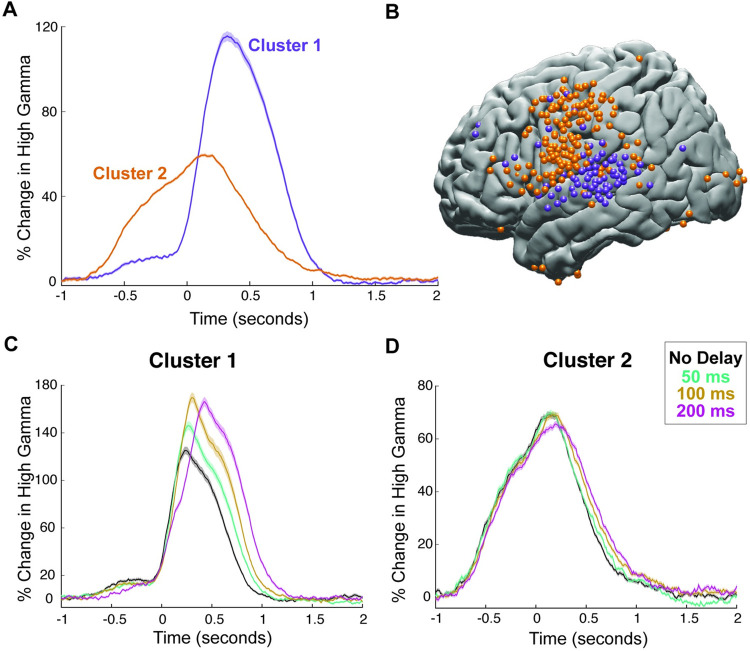
“Neural responses to DAF were enhanced in STG, SMG, and dPreCG, which are anatomically connected by one of the major language pathways known as the superior longitudinal fasciculus [37,38].”
BackgroundEffects of Delayed Speech Feedback
Lee, B. S. (1950) · The Journal of the Acoustical Society of America · doi:10.1121/1.1906696 · Cited by 358
Perceptual calibration of F 0 production: Evidence from feedback perturbation
Jones, J. A., & Munhall, K. G. (2000) · The Journal of the Acoustical Society of America · doi:10.1121/1.1288414 · Cited by 286
Dorsal Premotor Cortex and Conditional Movement Selection: A PET Functional Mapping Study
Grafton, S. T., Fagg, A. H., & Arbib, M. A. (1998) · Journal of Neurophysiology · doi:10.1152/jn.1998.79.2.1092 · Cited by 244
Selective Vocal Effects Of Delayed Auditory Feedback
Fairbanks, G. (1955) · Journal of Speech and Hearing Disorders · doi:10.1044/jshd.2004.333 · Cited by 227
Impaired Speech Repetition and Left Parietal Lobe Damage
Fridriksson, J., Kjartansson, O., Morgan, P. S., Hjaltason, H., Magnusdottir, S., Bonilha, L., & Rorden, C. (2010) · The Journal of Neuroscience · doi:10.1523/jneurosci.1120-10.2010 · Cited by 225 · cited 1×
“In support of these theoretical models, clinical reports demonstrated that posterior STG and SMG damage are implicated in conduction aphasia [40], and patients with conduction aphasia are less affected by DAF [41], indicating the involvement of this regions in feedback processing.”
ResultThe auditory representation of speech sounds in human motor cortex
Cheung, C., Hamilton, L. S., Johnson, K., & Chang, E. F. (2016) · eLife · doi:10.7554/elife.12577 · Cited by 218
The Effect Of Delayed Side-Tone Upon Vocal Rate And Intensity
Black, J. W. (1951) · Journal of Speech and Hearing Disorders · doi:10.1044/jshd.1601.56 · Cited by 202 · cited 1×
“First described in the 1950s, DAF strongly disrupts speech fluency leading to slower speech rate, pauses, syllable repetitions, and increased voice pitch or intensity [18–20].”
BackgroundCivier, O., Tasko, S. M., & Guenther, F. H. (2010) · Journal of Fluency Disorders · doi:10.1016/j.jfludis.2010.05.002 · Cited by 200
Sensory-motor networks involved in speech production and motor control: an fMRI study
Behroozmand, R., Shebek, R., Hansen, D. R., Oya, H., Robin, D. A., Howard, M. A., & Greenlee, J. D. W. (2015) · NeuroImage · doi:10.1016/j.neuroimage.2015.01.040 · Cited by 194
Vowel Category Boundaries Enhance Cortical and Behavioral Responses to Speech Feedback Alterations
Niziolek, C. A., & Guenther, F. H. (2013) · Journal of Neuroscience · doi:10.1523/jneurosci.1008-13.2013 · Cited by 191
Hashimoto, Y., & Sakai, K. L. (2003) · Human Brain Mapping · doi:10.1002/hbm.10119 · Cited by 186 · cited 1×
“Studies have demonstrated enhanced responses in bilateral posterior superior cortices during delayed feedback compared with normal auditory feedback conditions [24–26].”
BackgroundThe Control of Vocal Pitch in Human Laryngeal Motor Cortex
Dichter, B. K., Breshears, J. D., Leonard, M. K., & Chang, E. F. (2018) · Cell · doi:10.1016/j.cell.2018.05.016 · Cited by 183
A Spatial Map of Onset and Sustained Responses to Speech in the Human Superior Temporal Gyrus
Hamilton, L. S., Edwards, E., & Chang, E. F. (2018) · Current Biology · doi:10.1016/j.cub.2018.04.033 · Cited by 180 · cited 1×
“We performed an unsupervised clustering analysis using the NMF algorithm on neural responses across all delay conditions, brain sites, and participants [29,34].”
MethodEffect of delayed auditory feedback on normal speakers at two speech rates
Stuart, A., Kalinowski, J. S., Rastatter, M. P., & Lynch, K. (2002) · The Journal of the Acoustical Society of America · doi:10.1121/1.1466868 · Cited by 170
Behroozmand, R., Karvelis, L., Liu, H., & Larson, C. R. (2009) · Clinical Neurophysiology · doi:10.1016/j.clinph.2009.04.022 · Cited by 166 · cited 1×
“In line with nonhuman primate studies, human neurosurgical recordings as well as neuroimaging studies demonstrated that these feedback-induced vocal adjustments are accompanied by enhanced neural responses in auditory regions [15–17].”
ResultProceedings of the 2004 SIAM International Conference on Data Mining
(2004) · doi:10.1137/1.9781611972740 · Cited by 149
Zollinger, S. A., & Brumm, H. (2011) · Current Biology · doi:10.1016/j.cub.2011.06.003 · Cited by 145
Localization of dense intracranial electrode arrays using magnetic resonance imaging
Yang, A. I., Wang, X., Doyle, W. K., Halgren, E., Carlson, C., Belcher, T. L., Cash, S. S., Devinsky, O., & Thesen, T. (2012) · NeuroImage · doi:10.1016/j.neuroimage.2012.06.039 · Cited by 140 · cited 1×
“Electrodes were then projected to the surface of cortex (preoperative segmented surface) to correct for edema induced shifts following previous procedures [27] (registration to the MNI space was based on a nonlinear DARTEL algorithm [28]).”
MethodSelf-citationStuttering amelioration at various auditory feedback delays and speech rates
Kalinowski, J., Stuart, A., Sark, S., & Armson, J. (1996) · International Journal of Language & Communication Disorders · doi:10.3109/13682829609033157 · Cited by 132 · cited 1×
“Interest-ingly, DAF improves speech fluency in individuals who stutter and is a therapeutic approach in speech therapy for stuttering and Parkinson disease [21–23].”
BackgroundVocal Responses to Perturbations in Voice Auditory Feedback in Individuals with Parkinson's Disease
Liu, H., Wang, E. Q., Metman, L. V., & Larson, C. R. (2012) · PLoS ONE · doi:10.1371/journal.pone.0033629 · Cited by 114 · cited 1×
“Abnormal auditory feedback control has been implicated in various disorders including stuttering, aphasia, Parkinson disease, autism spectrum disorder, and schizophrenia [3–7]; however, the neural underpinnings of this dynamic system remain poorly understood.”
BackgroundCortical processing mechanism for vocalization with auditory verbal feedback
Hirano, S., Kojima, H., Naito, Y., Honjo, I., Kamoto, Y., Okazawa, H., Ishizu, K., Yonekura, Y., Nagahama, Y., Fukuyama, H., et al. (1997) · Neuroreport · doi:10.1097/00001756-199707070-00055 · Cited by 107
Sound representation in higher language areas during language generation
Magrassi, L., Aromataris, G., Cabrini, A., Annovazzi-Lodi, V., & Moro, A. (2015) · Proceedings of the National Academy of Sciences · doi:10.1073/pnas.1418162112 · Cited by 63 · cited 1×
“These studies suggested that IFG produces an articulatory code that is subsequently implemented by the motor cortex and reported an approximately 200-millisecond temporal lag between IFG and motor cortex activation [54,55].”
BackgroundCallan, D. E., Jones, J. A., & Callan, A. M. (2014) · Frontiers in Psychology · doi:10.3389/fpsyg.2014.00389 · Cited by 45
Unnatural practices, unspeakable actions: a study of delayed auditory feedback in schizophrenia
(1997) · American Journal of Psychiatry · doi:10.1176/ajp.154.6.858 · Cited by 37
Swink, S., & Stuart, A. (2012) · Brain and Language · doi:10.1016/j.bandl.2012.04.007 · Cited by 30 · cited 1×
“Our study is one of the few electrophysiological investigations [35,36] and, to our knowledge, the only ECoG investigation of the underlying neural substrates.”
Yamamoto, K., & Kawabata, H. (2014) · Experimental Brain Research · doi:10.1007/s00221-014-4055-1 · Cited by 26
Frontal cortex selects representations of the talker’s mouth to aid in speech perception
Ozker, M., Yoshor, D., & Beauchamp, M. S. (2018) · eLife · doi:10.7554/elife.30387 · Cited by 24
Possible role of abnormal auditory feedback in conduction aphasia
Boller, F., & Marcie, P. (1978) · Neuropsychologia · doi:10.1016/0028-3932(78)90078-7 · Cited by 24 · cited 1×
“In support of these theoretical models, clinical reports demonstrated that posterior STG and SMG damage are implicated in conduction aphasia [40], and patients with conduction aphasia are less affected by DAF [41], indicating the involvement of this regions in feedback processing.”
ResultLin, I.-F., Mochida, T., Asada, K., Ayaya, S., Kumagaya, S.-I., & Kato, M. (2015) · Frontiers in Human Neuroscience · doi:10.3389/fnhum.2015.00510 · Cited by 22
Rhythmic Versus Phonemic Interference in Delayed Auditory Feedback
Kaspar, K., & Rübeling, H. (2010) · Journal of Speech Language and Hearing Research · doi:10.1044/1092-4388(2010/10-0109 · Cited by 19
Dorsal premotor cortex and conditional movement selection: a PET functional mapping study
今水, 寛. (1998) · The Brain & Neural Networks · doi:10.3902/jnns.5.78 · Cited by 14 · cited 1×
“However, dPreCG is well known to be involved in movement planning and execution [48,49].”
BackgroundSpeech-Induced Suppression for Delayed Auditory Feedback in Adults Who Do and Do Not Stutter
Toyomura, A., Miyashiro, D., Kuriki, S., & Sowman, P. F. (2020) · Frontiers in Human Neuroscience · doi:10.3389/fnhum.2020.00150 · Cited by 13 · cited 2×
“A possible control, which we were unable to complete in this study, would be to replay a recording of the participants’ own delayed voice back to them [36] to completely eliminate the possibility of a purely sensory explanation for the observed response enhancement in dPreCG.”
BackgroundHoffman, P. R. (2014) · Journal of Communication Disorders Deaf Studies & Hearing Aids · doi:10.4172/2375-4427.1000106 · Cited by 12 · cited 1×
“Interest-ingly, DAF improves speech fluency in individuals who stutter and is a therapeutic approach in speech therapy for stuttering and Parkinson disease [21–23].”
BackgroundSensitivity of Speech Output to Delayed Auditory Feedback in Primary Progressive Aphasias
Hardy, C. J. D., Bond, R. L., Jaisin, K., Marshall, C. R., Russell, L. L., Dick, K. M., Crutch, S. J., Rohrer, J. D., & Warren, J. D. (2018) · Frontiers in Neurology · doi:10.3389/fneur.2018.00894 · Cited by 12
Correction: The auditory representation of speech sounds in human motor cortex
Cheung, C., Hamilton, L. S., Johnson, K. A., & Chang, E. F. (2016) · eLife · doi:10.7554/elife.17181 · Cited by 10
Takaso (2010) · doi:10.1044/1092-4388(2009/09-0009
Research works printed but not linked: 3
- E. Lombard, 1911, Le signe de l’elevation de la voix, Ann Mal de L’Oreille et du Larynx, 101
- O. Bloodstein, 1969, A handbook on stuttering
- D Thoenissen, 2002, Movement preparation and motor intention: an event-related fMRI study, J Neurosci, 22, 9248
Cited by
Advances in human intracranial electroencephalography research, guidelines and good practices
Mercier, M. R., Dubarry, A.-S., Tadel, F., Avanzini, P., Axmacher, N., Cellier, D., Vecchio, M. D., Hamilton, L. S., Hermes, D., Kahana, M. J., et al. (2022) · NeuroImage · doi:10.1016/j.neuroimage.2022.119438 · Cited by 229
A Neurosurgical Functional Dissection of the Middle Precentral Gyrus during Speech Production
Silva, A. B., Liu, J. R., Zhao, L., Levy, D. F., Scott, T. L., & Chang, E. F. (2022) · The Journal of Neuroscience · doi:10.1523/jneurosci.1614-22.2022 · Cited by 111
“In a study where participants were played a time-lagged version of their speech while they continued to produce a given word or phrase, the midPrCG increased activity, suggesting a potential role in auditory-motor integration (Ozker et al., 2022).”
BackgroundSilva, A. B., Littlejohn, K. T., Liu, J. R., Moses, D. A., & Chang, E. F. (2024) · Nature Reviews Neuroscience · doi:10.1038/s41583-024-00819-9 · Cited by 103
“…it is also vital to better understand non-direct articulatory control of speech, such as which cortical regions are important for speech planning 47,165,166 , including semantic 68,167 and phonological representations 58,168 that may be important for forming imagined or attempted speech targets.”
A neural speech decoding framework leveraging deep learning and speech synthesis
Chen, X., Wang, R., Khalilian-Gourtani, A., Yu, L., Dugan, P. C., Friedman, D. J., Doyle, W., Devinsky, O., Wang, Y., & Flinker, A. (2024) · Nature Machine Intelligence · doi:10.1038/s42256-024-00824-8 · Cited by 151
“Although our current focus was not real-time decoding, we were able to synthesize speech from neural signals with a delay of under 50 ms (Supplementary Table 1), which provides minimal auditory delay interference and allows for normal speech production 34,35 .”
Self-citationBeyond Broca: neural architecture and evolution of a dual motor speech coordination system
Hickok, G. S., Venezia, J. H., & Teghipco, A. (2022) · Brain · doi:10.1093/brain/awac454 · Cited by 95
Metadata
- Authors
- Ozker, M., Doyle, W., Devinsky, O., & Flinker, A.
- Affiliations
- New York University (US)
- Venue
- PLOS Biology
- Publisher
- Public Library of Science (PLoS)
- Published
- 2022-02-03
- Volume
- 20
- Issue
- 2
- Pages
- e3001493
- ISSN
- 1544-9173 (ISSN-L)
- 1545-7885
- PMC
- PMC8812883
- OpenAlex
- W4210592505
- Cited by
- 59
- References
- 54
- Citations by year
- 2026: 6 · 2025: 15 · 2024: 23 · 2023: 8 · 2022: 7
- FWCI
- 6.83
- Type
- journal article
- Language
- en
- Open access
- gold
- doi.org
- Licence
- Locations
- PLoS Biology (publishedVersion, cc-by)
- PubMed Central (publishedVersion, cc-by)
- PubMed (publishedVersion)
- DOAJ (DOAJ: Directory of Open Access Journals) (submittedVersion, cc-by-sa)
- Funders
- National Institute on Deafness and Other Communication Disorders (F32 DC018200)
- National Institute of Neurological Disorders and Stroke (R01NS109367)
- National Science Foundation (CRCNS 1912286)
- Leon Levy Foundation
- Topics
- Life Sciences › Neuroscience › Cognitive Neuroscience › Neurobiology of Language and Bilingualism
- Social Sciences › Psychology › Clinical Psychology › Stuttering Research and Treatment
- Social Sciences › Psychology › Experimental and Cognitive Psychology › Phonetics and Phonology Research
- Keywords
- speech fluency, delayed auditory feedback, auditory cortex, efference copy, speech motor control, stuttering, aphasia, electrocorticography
- MeSH terms
- Electrocorticography, Adult, Auditory Cortex, Auditory Perception, Epilepsy, Female, Humans, Male, Motor Cortex, Speech, Speech Perception, Feedback, Sensory
About these checks
Registry, retraction, Cites and statistics results are computed, not judged, with one exception: a printed reference that no index lists is read once by a model before it counts as a citation error. Claims are extracted by a model and kept only when their quote appears verbatim in the text; each cited source is then checked, with a model’s help, for whether it says what the claim relies on. Those verdicts can be wrong — read the claim’s quote and the cited source before relying on one.
Statistics and arithmetic are recomputed, not judged.
Confidence bands are shown only for fields calibrated on our annotated test set. None is calibrated yet, so no band is shown.
What counts as a claim ›How we measure confidence ›How we check this ›
Are you an author, or do you see a problem with this page? Request a review
Data sources
Bibliographic data: Semantic Scholar, OpenAlex, Crossref.
Contains information from the Semantic Scholar Academic Graph Datasets, made available under the ODC Attribution License (ODC-BY 1.0).
Semantic Scholar’s data is described in: Kinney, R., et al. (2023). The Semantic Scholar Open Data Platform. arXiv:2301.10140.
