

The DOI matches its Crossref record; 61 of the 61 references it cites were found in a registry or an index.
Dynamics and Control of Diseases in Networks with Community Structure
Open accessAbstract
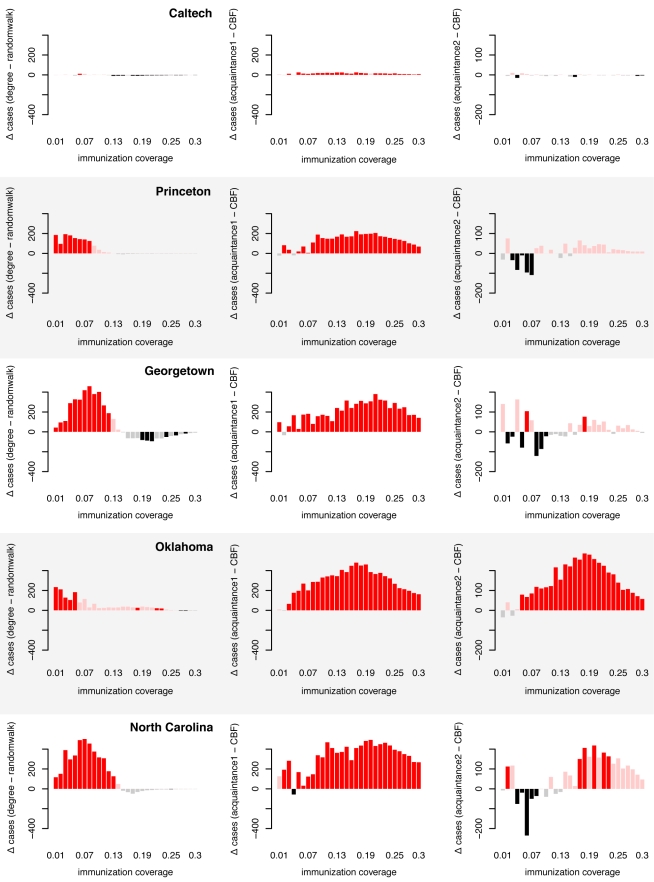
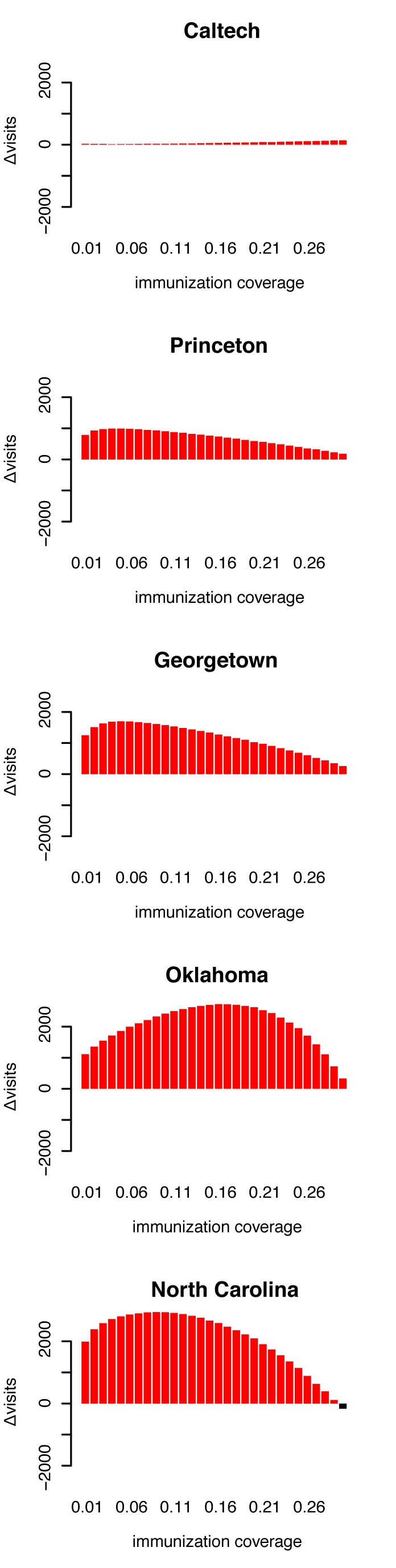
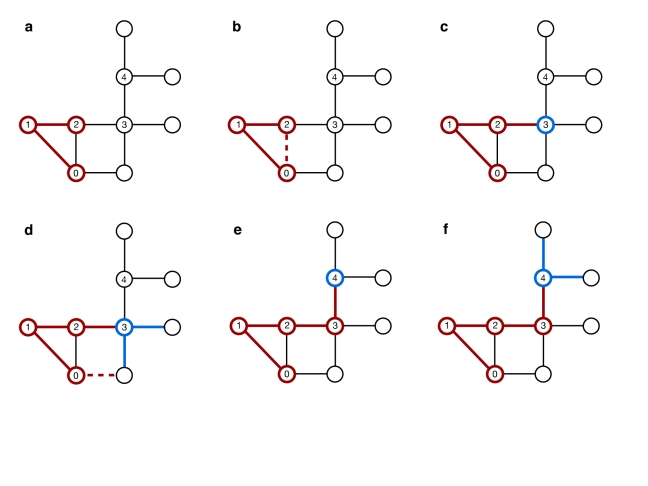
The dynamics of infectious diseases spread via direct person-to-person transmission (such as influenza, smallpox, HIV/AIDS, etc.) depends on the underlying host contact network. Human contact networks exhibit strong community structure. Understanding how such community structure affects epidemics may provide insights for preventing the spread of disease between communities by changing the structure of the contact network through pharmaceutical or non-pharmaceutical interventions. We use empirical and simulated networks to investigate the spread of disease in networks with community structure. We find that community structure has a major impact on disease dynamics, and we show that in networks with strong community structure, immunization interventions targeted at individuals bridging communities are more effective than those simply targeting highly connected individuals. Because the structure of relevant contact networks is generally not known, and vaccine supply is often limited, there is great need for efficient vaccination algorithms that do not require full knowledge of the network. We developed an algorithm that acts only on locally available network information and is able to quickly identify targets for successful immunization intervention. The algorithm generally outperforms existing algorithms when vaccine supply is limited, particularly in networks with strong community structure. Understanding the spread of infectious diseases and designing optimal control strategies is a major goal of public health. Social networks show marked patterns of community structure, and our results, based on empirical and simulated data, demonstrate that community structure strongly affects disease dynamics. These results have implications for the design of control strategies.
Overview
The claims and statistics of this paper haven’t been checked yet.
Run the check — free, no account needed. It reads the open-access text and checks the sources it cites.
Integrity signals
Registry
Cites
Statistics
Figures
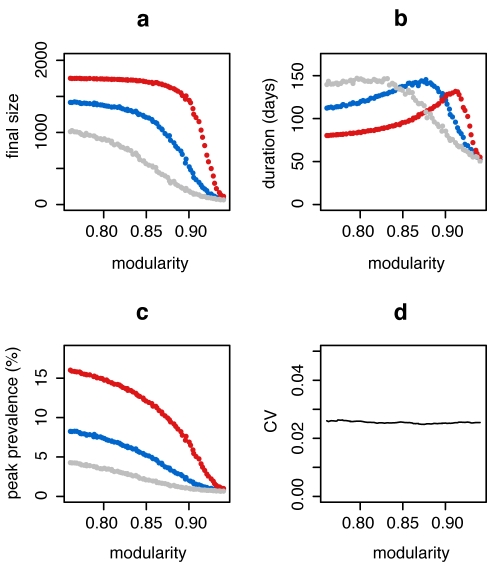
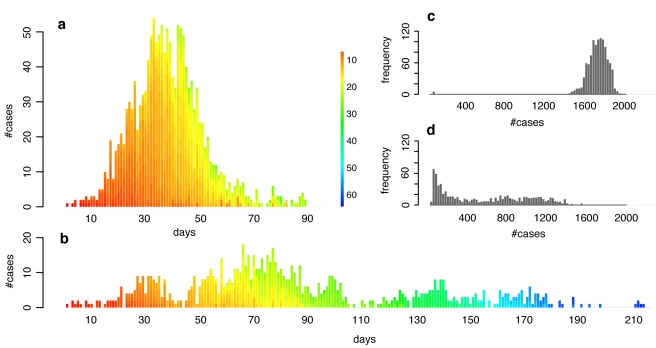
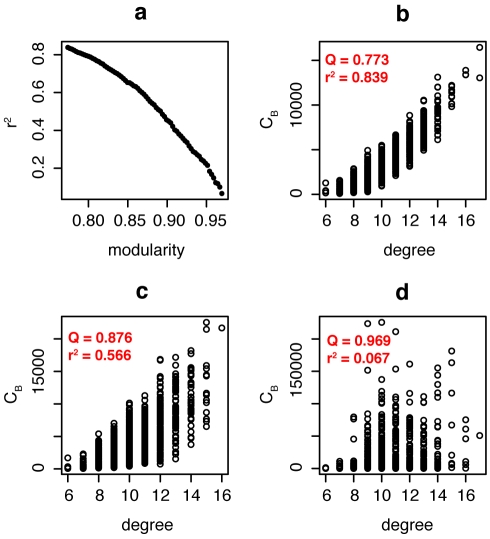
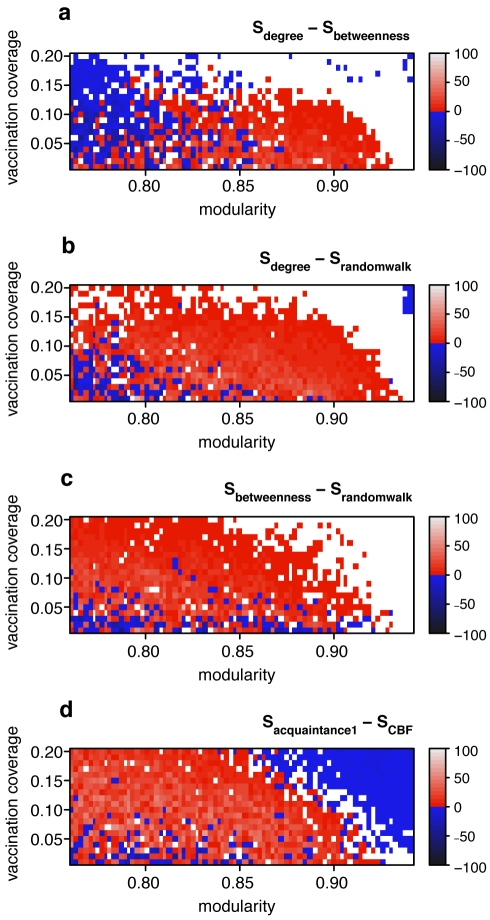
Verification
Claims the paper makes
The claims and statistics of this paper haven’t been checked yet.
Run the check — free, no account needed. It reads the open-access text and checks the sources it cites.
Claims other papers make about this one
Each is checked against this paper’s own text: does it say what the citing paper says it does?
The cited source says what the claim attributes to it.
In the citing paper
“When a population is organised in this fashion the capacity of epidemics to spread is reduced (Keeling 1999; Salathe ´ & Jones 2010).”
From Parasite-stress promotes in-group assortative sociality: The cases of strong family ties and heightened religiosity (2012) · cites this paper as Salathé & Jones 2010
Self-check
Percentages, sums and reported differences re-computed from the paper’s own numbers.
The self-check needs the paper’s full text.
Citations
Cites
Collective dynamics of ‘small-world’ networks
Watts, D. J., & Strogatz, S. H. (1998) · Nature · doi:10.1038/30918 · Cited by 43,060
Social Network Analysis: Methods and Applications
Wasserman, S. S., & Faust, K. (1994) · Cited by 18,005
Centrality in social networks conceptual clarification
Freeman, L. C. (1978) · Social Networks · doi:10.1016/0378-8733(78)90021-7 · Cited by 17,062
Community structure in social and biological networks
Girvan, M., & Newman, M. E. J. (2002) · Proceedings of the National Academy of Sciences · doi:10.1073/pnas.122653799 · Cited by 15,502
Finding and evaluating community structure in networks
Newman, M. E. J., & Girvan, M. (2004) · Physical Review E · doi:10.1103/physreve.69.026113 · Cited by 13,931
Infectious Diseases of Humans: Dynamics and Control
(1992) · Annals of Internal Medicine · doi:10.7326/0003-4819-117-2-174_4 · Cited by 7,819
Error and attack tolerance of complex networks
Albert, R., Jeong, H., & Barabási, A.-L. (2000) · Nature · doi:10.1038/35019019 · Cited by 7,534
Error and attack tolerance of complex networksPreprint
Albert, R., Jeong, H., & Barabási, A.-Ĺ. (2000) · Cited by 6,554
Epidemic Spreading in Scale-Free Networks
Pastor‐Satorras, R., & Vespignani, A. (2001) · Physical Review Letters · doi:10.1103/physrevlett.86.3200 · Cited by 5,785
Uncovering the overlapping community structure of complex networks in nature and society
Palla, G., Derényi, I., Farkas, I., & Vicsek, T. (2005) · Nature · doi:10.1038/nature03607 · Cited by 5,373
Cited by
Sorted by citations
Epidemic processes in complex networks
Pastor-Satorras, R., Castellano, C., Van Mieghem, P., & Vespignani, A. (2015) · Reviews of Modern Physics · doi:10.1103/revmodphys.87.925 · Cited by 3,697
Modelling the influence of human behaviour on the spread of infectious diseases: a review
Funk, S., Salathé, M., & Jansen, V. A. A. (2010) · Journal of The Royal Society Interface · doi:10.1098/rsif.2010.0142 · Cited by 1,322
Self-citationVital nodes identification in complex networks
Lü, L., Chen, D., Ren, X.-L., Zhang, Q.-M., Zhang, Y., & Zhou, T. (2016) · Physics Reports · doi:10.1016/j.physrep.2016.06.007 · Cited by 1,310
Statistical physics of vaccination
Wang, Z., Bauch, C. T., Bhattacharyya, S., d’Onofrio, A., Manfredi, P., Perc, M., Perra, N., Salathé, M., & Zhao, D. (2016) · Physics Reports · doi:10.1016/j.physrep.2016.10.006 · Cited by 973
Self-citationA high-resolution human contact network for infectious disease transmission
Salathé, M., Kazandjieva, M. A., Lee, J. W., Levis, P. A., Feldman, M. W., & Jones, J. H. (2010) · Proceedings of the National Academy of Sciences · doi:10.1073/pnas.1009094108 · Cited by 746
Self-citation
Metadata
- Authors
- Salathé, M., & Jones, J. H.
- Affiliations
- Stanford University (US)
- Corresponding author
- Salathé, Marcel
- Venue
- PLoS Computational Biology
- Publisher
- Public Library of Science (PLoS)
- Published
- 2010-04-08
- Volume
- 6
- Issue
- 4
- Pages
- e1000736
- ISSN
- 1553-734X (ISSN-L)
- 1553-7358
- PMC
- PMC2851561
- OpenAlex
- W2010965902
- Cited by
- 586
- References
- 61
- Citations by year
- 2026: 18 · 2025: 27 · 2024: 34 · 2023: 32 · 2022: 33 · 2021: 50 · 2020: 42 · 2019: 36 · 2018: 53 · 2017: 33 · 2016: 41 · 2015: 44 · 2014: 39 · 2013: 37 · 2012: 36
- FWCI
- 23.57
- Type
- journal article
- Language
- en
- Open access
- gold
- doi.org
- Locations
- PLoS Computational Biology (publishedVersion, cc-by)
- PubMed Central (publishedVersion, cc-by)
- PubMed (publishedVersion)
- Infoscience (Ecole Polytechnique Fédérale de Lausanne) (submittedVersion, cc-by-nc-nd)
- RePEc: Research Papers in Economics (submittedVersion)
- DOAJ (DOAJ: Directory of Open Access Journals) (submittedVersion, cc-by-sa)
- Figshare (submittedVersion, cc-by)
- Infoscience (Ecole Polytechnique Fédérale de Lausanne) (submittedVersion)
- Funders
- National Science Foundation (0619926)
- National Institutes of Health
- National Institute of General Medical Sciences (GM28016, R01GM028016)
- Eunice Kennedy Shriver National Institute of Child Health and Human Development (K01HD051494, K01HD51494)
- Topics
- Physical Sciences › Physics and Astronomy › Statistical and Nonlinear Physics › Complex Network Analysis Techniques
- Physical Sciences › Mathematics › Applied Mathematics › Mathematical and Theoretical Epidemiology and Ecology Models
- Physical Sciences › Mathematics › Modeling and Simulation › COVID-19 epidemiological studies
- Keywords
- disease transmission, community structure, contact networks, epidemic dynamics, vaccination strategies, bridge nodes, limited vaccine supply, disease control, social networks
- MeSH terms
- Algorithms, Computer Simulation, Disease Outbreaks, Humans, Residence Characteristics, Stochastic Processes, Vaccination, Incidence, Databases, Factual, Community-Acquired Infections, Disease Transmission, Infectious, Computational Biology, Host-Pathogen Interactions
About these checks
Registry, retraction, Cites and statistics results are computed, not judged, with one exception: a printed reference that no index lists is read once by a model before it counts as a citation error. Claims are extracted by a model and kept only when their quote appears verbatim in the text; each cited source is then checked, with a model’s help, for whether it says what the claim relies on. Those verdicts can be wrong — read the claim’s quote and the cited source before relying on one.
Statistics and arithmetic are recomputed, not judged.
Confidence bands are shown only for fields calibrated on our annotated test set. None is calibrated yet, so no band is shown.
What counts as a claim ›How we measure confidence ›How we check this ›
Are you an author, or do you see a problem with this page? Request a review
