

The DOI matches its Crossref record; 46 of the 46 references it cites were found in a registry or an index.
Accelerated Profile HMM Searches
Open accessAbstract
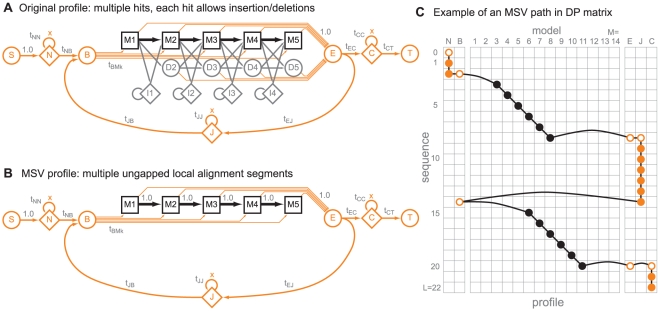
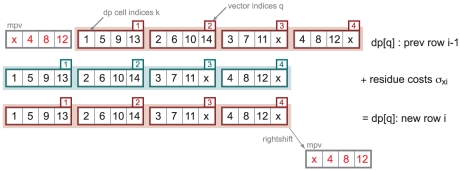
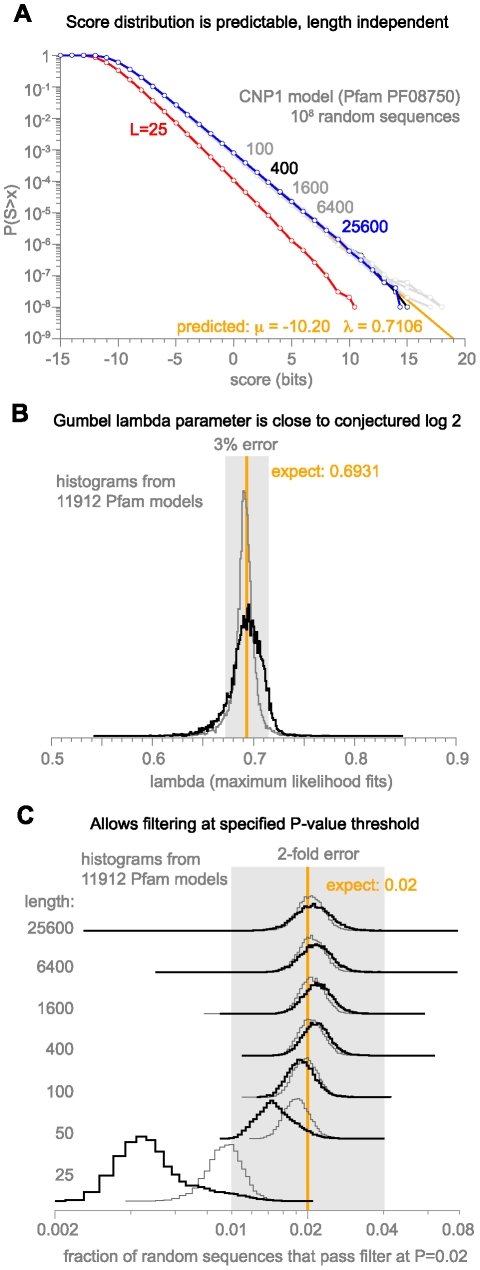
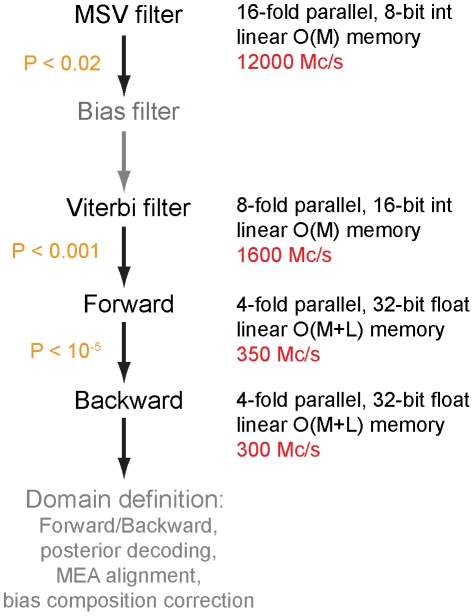
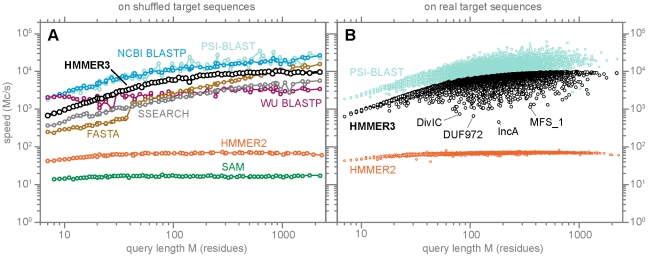
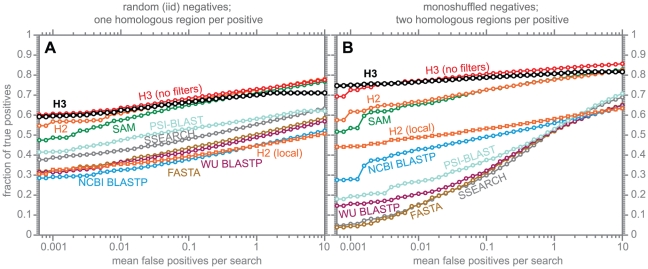
Profile hidden Markov models (profile HMMs) and probabilistic inference methods have made important contributions to the theory of sequence database homology search. However, practical use of profile HMM methods has been hindered by the computational expense of existing software implementations. Here I describe an acceleration heuristic for profile HMMs, the "multiple segment Viterbi" (MSV) algorithm. The MSV algorithm computes an optimal sum of multiple ungapped local alignment segments using a striped vector-parallel approach previously described for fast Smith/Waterman alignment. MSV scores follow the same statistical distribution as gapped optimal local alignment scores, allowing rapid evaluation of significance of an MSV score and thus facilitating its use as a heuristic filter. I also describe a 20-fold acceleration of the standard profile HMM Forward/Backward algorithms using a method I call "sparse rescaling". These methods are assembled in a pipeline in which high-scoring MSV hits are passed on for reanalysis with the full HMM Forward/Backward algorithm. This accelerated pipeline is implemented in the freely available HMMER3 software package. Performance benchmarks show that the use of the heuristic MSV filter sacrifices negligible sensitivity compared to unaccelerated profile HMM searches. HMMER3 is substantially more sensitive and 100- to 1000-fold faster than HMMER2. HMMER3 is now about as fast as BLAST for protein searches.
Overview
The claims and statistics of this paper haven’t been checked yet.
Run the check — free, no account needed. It reads the open-access text and checks the sources it cites.
Integrity signals
Registry
Cites
Statistics
Figures
Verification
Claims the paper makes
The claims and statistics of this paper haven’t been checked yet.
Run the check — free, no account needed. It reads the open-access text and checks the sources it cites.
Claims other papers make about this one
Each is checked against this paper’s own text: does it say what the citing paper says it does?
In the citing paper
“Additional functional analyses are also provided in the form of KEGG orthologue (KO) (23) annotations, which are calculated using HMMER (40) and the KOfam library (using a slightly modified form of the profile hidden Markov model (HMM) database of KEGG orthologues (41)) on the predicted protein sequences.”
From MGnify: the microbiome analysis resource in 2020 (2019) · cites this paper as [40]
In the citing paper
“Although some advanced sequence-based methods can already assist in this task39–41, the availability of predicted structures may help identify meaningful evolutionary relationships.”
From Clustering predicted structures at the scale of the known protein universe (2023) · cites this paper as [40]
In the citing paper
“All counts (TP, FP and FN) were weighted by the reciprocal of their family, superfamily or fold size. In this way, folds, superfamilies and families contribute linearly with their size instead of quadratically36.”
From Fast and accurate protein structure search with Foldseek (2024) · cites this paper as [36]
Self-check
Percentages, sums and reported differences re-computed from the paper’s own numbers.
The self-check needs the paper’s full text.
Citations
Cites
Basic local alignment search tool
Altschul, S. F., Gish, W., Miller, W., Myers, E. W., & Lipman, D. J. (1990) · Journal of Molecular Biology · doi:10.1006/jmbi.1990.9999 · Cited by 98,669
Gapped BLAST and PSI-BLAST: a new generation of protein database search programs
Altschul, S. (1997) · Nucleic Acids Research · doi:10.1093/nar/25.17.3389 · Cited by 73,302
A tutorial on hidden Markov models and selected applications in speech recognition
Rabiner, L. R. (1989) · Proceedings of the IEEE · doi:10.1109/5.18626 · Cited by 22,743
BLAST+: architecture and applications
Camacho, C., Coulouris, G., Avagyan, V., Ma, N., Papadopoulos, J., Bealer, K., & Madden, T. L. (2009) · BMC Bioinformatics · doi:10.1186/1471-2105-10-421 · Cited by 22,074
The Pfam Protein Families Database
Bateman, A. G. (2002) · Nucleic Acids Research · doi:10.1093/nar/30.1.276 · Cited by 14,075
Identification of common molecular subsequences
Smith, T. F., & Waterman, M. S. (1981) · Journal of Molecular Biology · doi:10.1016/0022-2836(81)90087-5 · Cited by 9,962
Biological sequence analysis probabilistic models of proteins and nucleic acids
Durbin, R. M., Eddy, S. R., Krogh, A., & Mitchison, G. (1998) · Cited by 3,565
Self-citationDurbin, R. M., Eddy, S. R., Krogh, A., & Mitchison, G. (1998) · Cambridge University Press eBooks · doi:10.1017/cbo9780511790492 · Cited by 3,255
Self-citationThe Pfam protein families database
Finn, R. D., Mistry, J., Tate, J., Coggill, P., Heger, A., Pollington, J. E., Gavin, O. L., Gunasekaran, P., Ceric, G., Forslund, K., et al. (2010) · Nucleic Acids Research · doi:10.1093/nar/gkp985 · Cited by 2,694
Self-citationInterPro: the integrative protein signature database
Hunter, S., Apweiler, R., Attwood, T. K., Bairoch, A., Bateman, A., Binns, D., Bork, P., Das, U., Daugherty, L., Duquenne, L., et al. (2009) · Nucleic Acids Research · doi:10.1093/nar/gkn785 · Cited by 2,107
Research works printed but not linked: 1
- S Johnson, 2006, Remote Protein Homology Detection Using Hidden Markov Models [Ph.D. thesis]
Cited by
Sorted by citations
Items 501–600 of 1,027
Li, M., Feng, K., Hou, X., Jiang, Q., Xu, Z., Wang, G., Liu, J.-X., Wang, F., & Xiong, A. (2020) · Horticulture Research · doi:10.1038/s41438-019-0235-2 · Cited by 131
Concerted expansion and contraction of immune receptor gene repertoires in plant genomes
Ngou, B. P. M., Heal, R., Wyler, M., Schmid, M. W., & Jones, J. D. G. (2022) · Nature Plants · doi:10.1038/s41477-022-01260-5 · Cited by 134
Influence of Panax ginseng on obesity and gut microbiota in obese middle-aged Korean women
Song, M., Kim, B. S., & Kim, H. (2014) · Journal of Ginseng Research · doi:10.1016/j.jgr.2013.12.004 · Cited by 126
Zhang, X., Tu, B., Dai, L., Lawson, P. A., Zheng, Z., Liu, L., Deng, Y., Zhang, H., & Cheng, L. (2018) · INTERNATIONAL JOURNAL OF SYSTEMATIC AND EVOLUTIONARY MICROBIOLOGY · doi:10.1099/ijsem.0.002966 · Cited by 130
Single-cell enabled comparative genomics of a deep ocean SAR11 bathytype
Thrash, J. C., Temperton, B., Swan, B. K., Landry, Z., Woyke, T., DeLong, E. F., Stepanauskas, R., & Giovannoni, S. J. (2014) · The ISME Journal · doi:10.1038/ismej.2013.243 · Cited by 125
Extreme haplotype variation in the desiccation-tolerant clubmoss Selaginella lepidophylla
VanBuren, R., Wai, C. M., Ou, S., Pardo, J., Bryant, D., Jiang, N., Mockler, T. C., Edger, P. P., & Michael, T. P. (2017) · Nature Communications · doi:10.1038/s41467-017-02546-5 · Cited by 124
Clade-specific chromosomal rearrangements and loss of subtelomeric adhesins in Candida auris
Muñoz, J. F., Welsh, R. M., Shea, T., Batra, D., Gade, L., Howard, D., Rowe, L. A., Meis, J. F., Litvintseva, A. P., & Cuomo, C. A. (2021) · Genetics · doi:10.1093/genetics/iyab029 · Cited by 125
Pineda, S. S., Chaumeil, P.-A., Kunert, A., Kaas, Q., Thang, M. W. C., Le, L., Nuhn, M., Herzig, V., Saez, N. J., Cristofori‐Armstrong, B., et al. (2017) · Bioinformatics · doi:10.1093/bioinformatics/btx661 · Cited by 126
Mirusviruses link herpesviruses to giant viruses
Gaïa, M., Meng, L., Pelletier, E., Forterre, P., Vanni, C., Fernandez-Guerra, A., Jaillon, O., Wincker, P., Ogata, H., Krupovic, M., et al. (2023) · Nature · doi:10.1038/s41586-023-05962-4 · Cited by 108
The last common ancestor of animals lacked the HIF pathway and respired in low-oxygen environments
Mills, D. B., Francis, W. R., Vargas, S., Larsen, M., Elemans, C. P., Canfield, D. E., & Wörheide, G. (2018) · eLife · doi:10.7554/elife.31176 · Cited by 114
Atlas of the Radical SAM Superfamily: Divergent Evolution of Function Using a “Plug and Play” Domain
Holliday, G. L., Akiva, E., Meng, E. C., Brown, S. D., Calhoun, S., Pieper, U., Šali, A., Booker, S. J., & Babbitt, P. C. (2018) · Methods in enzymology on CD-ROM/Methods in enzymology · doi:10.1016/bs.mie.2018.06.004 · Cited by 124
Martinez, J., Klasson, L., Welch, J. J., & Jiggins, F. M. (2020) · Molecular Biology and Evolution · doi:10.1093/molbev/msaa209 · Cited by 124
Oberg, N., Precord, T. W., Mitchell, D. A., & Gerlt, J. A. (2021) · ACS Bio & Med Chem Au · doi:10.1021/acsbiomedchemau.1c00048 · Cited by 126
Accurate extension of multiple sequence alignments using a phylogeny-aware graph algorithm
Löytynoja, A., Vilella, A. J., & Goldman, N. (2012) · Bioinformatics · doi:10.1093/bioinformatics/bts198 · Cited by 123
Yang, Z., Zhang, Y., Wafula, E. K., Honaas, L. A., Ralph, P. E., Jones, S., Clarke, C. R., Liu, S., Su, C., Zhang, H., et al. (2016) · Proceedings of the National Academy of Sciences · doi:10.1073/pnas.1608765113 · Cited by 122
Tonkin‐Hill, G. Q., Trianty, L., Noviyanti, R., Nguyen, H. H. T., Sebayang, B. F., Lampah, D. A., Marfurt, J., Cobbold, S. A., Rambhatla, J. S., McConville, M. J., et al. (2018) · PLoS Biology · doi:10.1371/journal.pbio.2004328 · Cited by 127
Fan, L., Wu, D., Goremykin, V. V., Xiao, J., Xu, Y., Garg, S. G., Zhang, C., Martin, W. F., & Zhu, R. (2020) · Nature Ecology & Evolution · doi:10.1038/s41559-020-1239-x · Cited by 123
The pseudo GTPase CENP-M drives human kinetochore assembly
Basilico, F., Maffini, S., Weir, J. R., Prumbaum, D., Rojas, A. M., Zimniak, T., Antoni, A. D., Jeganathan�, S., Voß, B., van Gerwen, S., et al. (2014) · eLife · doi:10.7554/elife.02978 · Cited by 122
Cui, J., You, C., Zhu, E., Huang, Q., Mā, H., & Chang, F. (2016) · The Plant Cell · doi:10.1105/tpc.15.00986 · Cited by 122
Sacristán, C., Ahmad, M. U. D., Keller, J., Fermie, J., Groenewold, V., Tromer, E. C., Fish, A., Melero, R., Carazo, J. M., Klumperman, J., et al. (2018) · Nature Cell Biology · doi:10.1038/s41556-018-0130-3 · Cited by 107
Assembly of 43 human Y chromosomes reveals extensive complexity and variation
Hallast, P., Ebert, P., Loftus, M. G., Yilmaz, F., Audano, P. A., Logsdon, G. A., Bonder, M. J., Zhou, W., Höps, W., Kim, K., et al. (2023) · Nature · doi:10.1038/s41586-023-06425-6 · Cited by 125
Xing, H., Fu, X., Yang, C., Tang, X., Guo, L., Li, C., Xu, C., & Luo, K. (2018) · Scientific Reports · doi:10.1038/s41598-018-21269-1 · Cited by 121
Low, S. J., Džunková, M., Chaumeil, P.-A., Parks, D. H., & Hugenholtz, P. (2019) · Nature Microbiology · doi:10.1038/s41564-019-0448-z · Cited by 120
Disulfide bond formation in prokaryotes: History, diversity and design
Hatahet, F., Boyd, D. H., & Beckwith, J. (2014) · Biochimica et Biophysica Acta (BBA) - Proteins and Proteomics · doi:10.1016/j.bbapap.2014.02.014 · Cited by 120
mlDEEPre: Multi-Functional Enzyme Function Prediction With Hierarchical Multi-Label Deep Learning
Zou, Z., Tian, S., Gao, X., & Li, Y. (2019) · Frontiers in Genetics · doi:10.3389/fgene.2018.00714 · Cited by 122
Structure and function of the Arctic and Antarctic marine microbiota as revealed by metagenomics
Cao, S., Zhang, W., Ding, W., Wang, M., Fan, S., Yang, B. K., McMinn, A., Wang, M., Xie, B.-B., Qin, Q., et al. (2020) · Microbiome · doi:10.1186/s40168-020-00826-9 · Cited by 120
The evolution of oxygen-utilizing enzymes suggests early biosphere oxygenation
Jabłońska, J., & Tawfik, D. S. (2021) · Nature Ecology & Evolution · doi:10.1038/s41559-020-01386-9 · Cited by 107
Shin, S.-K., Kim, J., Ha, S. M., Oh, H.-S., Chun, J., Sohn, J. R., & Yi, H. (2015) · PLoS ONE · doi:10.1371/journal.pone.0126960 · Cited by 125
Design of highly functional genome editors by modelling CRISPR–Cas sequences
Ruffolo, J. A., Nayfach, S., Gallagher, J. P., Bhatnagar, A., Beazer, J., Hussain, R., Russ, J., Yip, J., Hill, E., Pačesa, M., et al. (2025) · Nature · doi:10.1038/s41586-025-09298-z · Cited by 233
Hopf, T. A., Morinaga, S., Ihara, S., Touhara, K., Marks, D. S., & Benton, R. (2015) · Nature Communications · doi:10.1038/ncomms7077 · Cited by 118
Gene expression and ultrastructure of meso‐ and thermophilic methanotrophic consortia
Krukenberg, V., Riedel, D., Gruber‐Vodicka, H. R., Buttigieg, P. L., Tegetmeyer, H. E., Boëtius, A., & Wegener, G. (2018) · Environmental Microbiology · doi:10.1111/1462-2920.14077 · Cited by 119
Evolutionary trajectory of pattern recognition receptors in plants
(2024) · doi:10.1038/s41467-023-44408-3 · Cited by 119
Lowe, R. G. T., Cassin, A. M., Grandaubert, J., Clark, B. L., de Wouw, A. P. V., Rouxel, T., & Howlett, B. J. (2014) · PLoS ONE · doi:10.1371/journal.pone.0103098 · Cited by 120
Virus-host relationships of marine single-celled eukaryotes resolved from metatranscriptomics
Moniruzzaman, M., Wurch, L. L., Alexander, H., Dyhrman, S. T., Gobler, C. J., & Wilhelm, S. W. (2017) · Nature Communications · doi:10.1038/ncomms16054 · Cited by 112
Peters, R. S., Niehuis, O., Gunkel, S., Bläser, M., Mayer, C., Podsiadłowski, L., Kozlov, A. M., Donath, A., van Noort, S., Liu, S., et al. (2017) · Molecular Phylogenetics and Evolution · doi:10.1016/j.ympev.2017.12.005 · Cited by 119
Universal microbial reworking of dissolved organic matter along environmental gradients
Freeman, E. C., Emilson, E. J. S., Dittmar, T., Braga, L. P. P., Emilson, C. E., Goldhammer, T., Martineau, C., Singer, G. A., & Tanentzap, A. J. (2024) · Nature Communications · doi:10.1038/s41467-023-44431-4 · Cited by 138
Baumgarten, S., Bayer, T., Aranda, M., Liew, Y. J., Carr, A. R., Micklem, G., & Voolstra, C. R. (2013) · BMC Genomics · doi:10.1186/1471-2164-14-704 · Cited by 117
Origin and Evolution of European Community-Acquired Methicillin-Resistant Staphylococcus aureus
Stegger, M., Wirth, T., Andersen, P. S., Skov, R. L., Grassi, A., Martins-Simões, P., Tristan, A., Petersen, A., Aziz, M., Kiil, K., et al. (2014) · mBio · doi:10.1128/mbio.01044-14 · Cited by 118
Dupont, C. L., McCrow, J. P., Valas, R. E., Moustafa, A., Walworth, N. G., Goodenough, U. W., Roth, R. A., Hogle, S., Bai, J., Johnson, Z. I., et al. (2014) · The ISME Journal · doi:10.1038/ismej.2014.198 · Cited by 121
Jing, G., Sun, Z., Wang, H., Gong, Y., Huang, S. W., Ning, K., Xu, J., & Su, X. (2017) · Scientific Reports · doi:10.1038/srep40371 · Cited by 117
Comprehensive classification of the PIN domain-like superfamily
Matelska, D., Steczkiewicz, K., & Ginalski, K. (2017) · Nucleic Acids Research · doi:10.1093/nar/gkx494 · Cited by 113
Alneberg, J., Karlsson, C. M. G., Divne, A., Bergin, C., Homa, F., Lindh, M. V., Hugerth, L. W., Ettema, T. J. G., Bertilsson, S., Andersson, A. F., et al. (2018) · Microbiome · doi:10.1186/s40168-018-0550-0 · Cited by 117
Diversification of Type VI Secretion System Toxins Reveals Ancient Antagonism among Bee Gut Microbes
Steele, M. I., Kwong, W. K., Whiteley, M., & Moran, N. A. (2017) · mBio · doi:10.1128/mbio.01630-17 · Cited by 127
Rapid genome shrinkage in a self-fertile nematode reveals sperm competition proteins
Yin, D., Schwarz, E. M., Thomas, C. G., Felde, R. L., Korf, I. F., Cutter, A. D., Schartner, C., Ralston, E. J., Meyer, B. J., & Haag, E. S. (2018) · Science · doi:10.1126/science.aao0827 · Cited by 106
Yinda, C., Ghogomu, S., Conceição-Neto, N., Beller, L., Deboutte, W., Vanhulle, E., Maes, P., Ranst, M. V., & Matthijnssens, J. (2018) · Virus Evolution · doi:10.1093/ve/vey008 · Cited by 107
Xue, C., Lin, H., Zhu, X., Liu, J., Zhang, Y., Rowley, G., Todd, J. D., Li, M., & Zhang, X. (2021) · Frontiers in Microbiology · doi:10.3389/fmicb.2021.698286 · Cited by 116
Salcher, M. M., Schäfle, D., Kaspar, M., Neuenschwander, S. M., & Ghai, R. (2019) · The ISME Journal · doi:10.1038/s41396-019-0471-3 · Cited by 106
Widespread microbial mercury methylation genes in the global ocean
Villar, É., Cabrol, L., & Heimbürger‐Boavida, L. (2020) · Environmental Microbiology Reports · doi:10.1111/1758-2229.12829 · Cited by 115
de Sousa, J. A. M., Pfeifer, E., Touchon, M., & Rocha, E. P. C. (2021) · Molecular Biology and Evolution · doi:10.1093/molbev/msab044 · Cited by 115
Topological structures and syntenic conservation in sea anemone genomes
Zimmermann, B., Montenegro, J. D., Robb, S. M. C., Fropf, W. J., Weilguny, L., He, S., Chen, S., Lovegrove-Walsh, J., Hill, E. M., Chen, C.-Y., et al. (2023) · Nature Communications · doi:10.1038/s41467-023-44080-7 · Cited by 106
Green, A. G., Elhabashy, H., Brock, K. P., Maddamsetti, R., Kohlbacher, O., & Marks, D. S. (2021) · Nature Communications · doi:10.1038/s41467-021-21636-z · Cited by 114
Finding Protein and Nucleotide Similarities with FASTA
Pearson, W. R. (2003) · Current Protocols in Bioinformatics · doi:10.1002/0471250953.bi0309s04 · Cited by 114
Gene Loss and Adaptation to Hominids Underlie the Ancient Origin of HIV-1
Etienne, L., Hahn, B. H., Sharp, P. M., Matsen, F. A., IV, & Emerman, M. (2013) · Cell Host & Microbe · doi:10.1016/j.chom.2013.06.002 · Cited by 118
NLR-parser: rapid annotation of plant NLR complements
Steuernagel, B., Jupe, F., Witek, K., Jones, J. D. G., & Wulff, B. B. H. (2015) · Bioinformatics · doi:10.1093/bioinformatics/btv005 · Cited by 114
Lateral Gene Transfer Dynamics in the Ancient Bacterial Genus Streptomyces
McDonald, B. R., & Currie, C. R. (2017) · mBio · doi:10.1128/mbio.00644-17 · Cited by 127
Mosaic origin of the eukaryotic kinetochore
Tromer, E. C., van Hooff, J. J. E., Kops, G. J. P. L., & Snel, . (2019) · Proceedings of the National Academy of Sciences · doi:10.1073/pnas.1821945116 · Cited by 106
Phylogenomic Insights into Deep Phylogeny of Angiosperms Based on Broad Nuclear Gene Sampling
Yang, L., Su, D., Chang, X., Foster, C. S. P., Sun, L., Huang, C.-H., Zhou, X., Zeng, L., Mā, H., & Zhong, B. (2020) · Plant Communications · doi:10.1016/j.xplc.2020.100027 · Cited by 115
Li, Y., Zhang, C., Bell, E. W., Yu, D., & Zhang, Y. (2019) · Proteins: Structure, Function, and Bioinformatics · doi:10.1002/prot.25798 · Cited by 94
Diversity and Variability of NOD-Like Receptors in Fungi
Dyrka, W., Lamacchia, M., Durrens, P., Kobe, B., Daskalov, A., Paoletti, M., Sherman, D. J., & Saupe, S. J. (2014) · Genome Biology and Evolution · doi:10.1093/gbe/evu251 · Cited by 114
Czerwinski, M. J., Natarajan, A., Barske, L. A., Looger, L. L., & Capel, B. (2016) · Developmental Biology · doi:10.1016/j.ydbio.2016.09.018 · Cited by 111
Single-Copy Genes as Molecular Markers for Phylogenomic Studies in Seed Plants
Li, Z., Torre, A. R. D. L., Sterck, L., Cánovas, F. M., Ávila, C., Merino, I., Cabezas, J. A., Cervera, M., Ingvarsson, P. K., & de Peer, Y. V. (2017) · Genome Biology and Evolution · doi:10.1093/gbe/evx070 · Cited by 109
Graham, A. M., & Presnell, J. S. (2017) · PLoS ONE · doi:10.1371/journal.pone.0179545 · Cited by 117
Schmidt, O., Weyer, Y., Baumann, V., Widerin, M. A., Eising, S., Angelova, M., Schleiffer, A., Kremser, L., Lindner, H., Peter, M., et al. (2019) · The EMBO Journal · doi:10.15252/embj.2018101433 · Cited by 112
Horizontal gene cluster transfer increased hallucinogenic mushroom diversity
Reynolds, H. T., Vijayakumar, V., Gluck‐Thaler, E., Korotkin, H. B., Matheny, P. B., & Slot, J. C. (2018) · Evolution Letters · doi:10.1002/evl3.42 · Cited by 112
Simon, S., Letsch, H. O., Bank-Aubin, S., Buckley, T. R., Donath, A., Liu, S., Machida, R., Meusemann, K., Misof, B. Y., Podsiadłowski, L., et al. (2019) · Frontiers in Ecology and Evolution · doi:10.3389/fevo.2019.00345 · Cited by 117
Island songbirds as windows into evolution in small populations
Leroy, T., Rousselle, M., Tilak, M.-K., Caizergues, A. E., Scornavacca, C., Recuerda, M., Fuchs, J., Illera, J. C., De Swardt, D. H., Blanco, G., et al. (2021) · Current Biology · doi:10.1016/j.cub.2020.12.040 · Cited by 113
Completion of the gut microbial epi-bile acid pathway
Doden, H. L., Wolf, P. G., Gaskins, H. R., Anantharaman, K., Alves, J. M. P., & Ridlon, J. M. (2021) · Gut Microbes · doi:10.1080/19490976.2021.1907271 · Cited by 117
Tee, H. S., Waite, D. W., Lear, G., & Handley, K. M. (2021) · Microbiome · doi:10.1186/s40168-021-01145-3 · Cited by 114
Giant Starship Elements Mobilize Accessory Genes in Fungal Genomes
Gluck‐Thaler, E., Ralston, T. I., Konkel, Z. M., Ocampos, C. J. G., Ganeshan, V. D., Dorrance, A. E., Niblack, T. L., Wood, C. W., Slot, J. C., Lopez-Nicora, H. D., et al. (2022) · Molecular Biology and Evolution · doi:10.1093/molbev/msac109 · Cited by 116
Annelid functional genomics reveal the origins of bilaterian life cycles
Bump, P. A., Liang, Y., Guynes, K., Carrillo‐Baltodano, A. M., Davies, B. E., Donnellan, R. D., Tan, Y., Moggioli, G., Seudre, O., Tran, M., et al. (2023) · Nature · doi:10.1038/s41586-022-05636-7 · Cited by 112
Genetic determinants of host tropism in Klebsiella phages
Beamud, B., García-González, N., Gómez-Ortega, M., González-Candelas, F., Domingo-Calap, P., & Sanjuan, R. (2023) · Cell Reports · doi:10.1016/j.celrep.2023.112048 · Cited by 113
Lu, D., Wang, F., Amann, R., Teeling, H., & Du, Z. (2023) · Microbiome · doi:10.1186/s40168-023-01559-1 · Cited by 115
Prestat, E., David, M. M., Hultman, J., Taş, N., Lamendella, R., Dvornik, J., Mackelprang, R., Myrold, D. D., Jumpponen, A., Tringe, S. G., et al. (2014) · Nucleic Acids Research · doi:10.1093/nar/gku702 · Cited by 106
Expanding the Imine Reductase Toolbox by Exploring the Bacterial Protein‐Sequence Space
Wetzl, D., Berrera, M., Sandon, N., Fishlock, D., Ebeling, M., Müller, M., Hanlon, S. P., Wirz, B., & Iding, H. (2015) · ChemBioChem · doi:10.1002/cbic.201500218 · Cited by 112
Genomic innovations linked to infection strategies across emerging pathogenic chytrid fungi
Farrer, R. A., Martel, A., Verbrugghe, E., Abouelleil, A., Ducatelle, R., Longcore, J. E., James, T. Y., Pasmans, F., Fisher, M. C., & Cuomo, C. A. (2017) · Nature Communications · doi:10.1038/ncomms14742 · Cited by 107
Chevrette, M. G., Aicheler, F., Kohlbacher, O., Currie, C. R., & Medema, M. H. (2017) · Bioinformatics · doi:10.1093/bioinformatics/btx400 · Cited by 112
Gupta, R. S., Sawnani, S., Adeolu, M., Alnajar, S., & Oren, A. (2018) · Antonie van Leeuwenhoek · doi:10.1007/s10482-018-1047-3 · Cited by 110
Phage-centric ecological interactions in aquatic ecosystems revealed through ultra-deep metagenomics
Kavagutti, V., Andrei, A., Mehrshad, M., Salcher, M. M., & Ghai, R. (2019) · Microbiome · doi:10.1186/s40168-019-0752-0 · Cited by 112
Emergence and spread of a SARS-CoV-2 lineage A variant (A.23.1) with altered spike protein in Uganda
Bugembe, D. L., Phan, M. V. T., Ssewanyana, I., Semanda, P., Nansumba, H., Dhaala, B., Nabadda, S. N., O’Toole, Á., Rambaut, A., Kaleebu, P., et al. (2021) · Nature Microbiology · doi:10.1038/s41564-021-00933-9 · Cited by 104
Gao, S., Páez-Espino, D., Li, J., Ai, H., Liang, J., Luo, Z., Zheng, J. H., Chen, H. H., Shu, W., & Huang, L. (2022) · Nature Communications · doi:10.1038/s41467-022-30049-5 · Cited by 109
Genomes of diverse isolates of the marine cyanobacterium Prochlorococcus
Biller, S. J., Berube, P. M., Berta-Thompson, J. W., Kelly, L., Roggensack, S. E., Awad, L., Roache-Johnson, K. H., Ding, H., Giovannoni, S. J., Rocap, G., et al. (2014) · Scientific Data · doi:10.1038/sdata.2014.34 · Cited by 110
Mishra, N. K., Chang, J., & Zhao, P. X. (2014) · PLoS ONE · doi:10.1371/journal.pone.0100278 · Cited by 111
Acinetobacter baumannii Virulence Is Mediated by the Concerted Action of Three Phospholipases D
Stahl, J., Bergmann, H., Göttig, S., Ebersberger, I., & Averhoff, B. (2015) · PLoS ONE · doi:10.1371/journal.pone.0138360 · Cited by 117
Ovchinnikov, S., Kim, D. E., Wang, R. Y., Liu, Y., DiMaio, F., & Baker, D. A. (2015) · Proteins Structure Function and Bioinformatics · doi:10.1002/prot.24974 · Cited by 111
Identification of Novel Zoonotic Activity of Bartonella spp., France
Vayssier‐Taussat, M., Moutailler, S., Féménia, F., Raymond, P., Croce, O., Scola, B. L., Fournier, P., & Raoult, D. (2016) · Emerging infectious diseases · doi:10.3201/eid2203.150269 · Cited by 117
Natural diversity of cellulases, xylanases, and chitinases in bacteria
Talamantes, D. R., Biabini, N., Dang, H. T., Abdoun, K., & Berlemont, R. (2016) · Biotechnology for Biofuels · doi:10.1186/s13068-016-0538-6 · Cited by 111
Bacterial fermentation and respiration processes are uncoupled in anoxic permeable sediments
Kessler, A. J., Chen, Y.-J., Waite, D. W., Hutchinson, T. F., Koh, S., Popa, M. E., Beardall, J., Hugenholtz, P., Cook, P. L. M., & Greening, C. (2019) · Nature Microbiology · doi:10.1038/s41564-019-0391-z · Cited by 108
The PhytoClust tool for metabolic gene clusters discovery in plant genomes
Töpfer, N., Fuchs, L.-M., & Aharoni, A. (2017) · Nucleic Acids Research · doi:10.1093/nar/gkx404 · Cited by 111
Ouyang, Y., & Norton, J. M. (2019) · Applied and Environmental Microbiology · doi:10.1128/aem.02278-19 · Cited by 127
Nishimura, Y., & Yoshizawa, S. (2022) · Scientific Data · doi:10.1038/s41597-022-01392-5 · Cited by 106
Bazinet, A. L., Cummings, M. P., Mitter, K. T., & Mitter, C. W. (2013) · PLoS ONE · doi:10.1371/journal.pone.0082615 · Cited by 109
Distribution and diversity of enzymes for polysaccharide degradation in fungi
Berlemont, R. (2017) · Scientific Reports · doi:10.1038/s41598-017-00258-w · Cited by 110
Filling gaps in bacterial amino acid biosynthesis pathways with high-throughput genetics
Price, M. N., Zane, G. M., Kuehl, J. V., Melnyk, R. A., Wall, J. D., Deutschbauer, A. M., & Arkin, A. P. (2018) · PLoS Genetics · doi:10.1371/journal.pgen.1007147 · Cited by 110
Bravo, A. G., Zopfi, J., Buck, M., Xu, J., Bertilsson, S., Schaefer, J. K., Poté, J. W., & Cosio, C. (2018) · The ISME Journal · doi:10.1038/s41396-017-0007-7 · Cited by 113
Structural evolution drives diversification of the large LRR‐RLK gene family
Man, J., Gallagher, J. P., & Bartlett, M. E. (2020) · New Phytologist · doi:10.1111/nph.16455 · Cited by 110
Timing the origin of eukaryotic cellular complexity with ancient duplications
Vosseberg, J., van Hooff, J. J. E., Marcet-Houben, M., van Vlimmeren, A., van Wijk, L. M., Gabaldón, T., & Snel, B. (2020) · Nature Ecology & Evolution · doi:10.1038/s41559-020-01320-z · Cited by 110
Microbial production and consumption of hydrocarbons in the global ocean
Love, C. R., Arrington, E. C., Gosselin, K. M., Reddy, C. M., Mooy, B. A. S. V., Nelson, R. K., & Valentine, D. L. (2021) · Nature Microbiology · doi:10.1038/s41564-020-00859-8 · Cited by 110
The Richness and Diversity of Catalases in Bacteria
Yuan, F., Yin, S., Xu, Y., Xiang, L., Wang, H., Li, Z., Fan, K., & Pan, G. (2021) · Frontiers in Microbiology · doi:10.3389/fmicb.2021.645477 · Cited by 130
Silencing of natural transformation by an RNA chaperone and a multitarget small RNA
Attaiech, L., Boughammoura, A., Brochier‐Armanet, C., Allatif, O., Peillard-Fiorente, F., Edwards, R. A., Omar, A. R., MacMillan, A. M., Glover, M., & Charpentier, X. (2016) · Proceedings of the National Academy of Sciences · doi:10.1073/pnas.1601626113 · Cited by 109
Delmont, T. O., Karlusich, J. J. P., Veseli, I., Füssel, J., Eren, A. M., Foster, R. A., Bowler, C., Wincker, P., & Pelletier, É. (2021) · The ISME Journal · doi:10.1038/s41396-021-01135-1 · Cited by 109
Metadata
- Authors
- Eddy, S. R.
- Affiliations
- Howard Hughes Medical Institute (US)
- Corresponding author
- Eddy, Sean R.
- ORCID
- Eddy, Sean R.
- Venue
- PLoS Computational Biology
- Publisher
- Public Library of Science (PLoS)
- Published
- 2011-10-20
- Volume
- 7
- Issue
- 10
- Pages
- e1002195
- ISSN
- 1553-734X (ISSN-L)
- 1553-7358
- PMC
- PMC3197634
- OpenAlex
- W2138122982
- Cited by
- 6,975
- References
- 46
- Citations by year
- 2026: 791 · 2025: 804 · 2024: 768 · 2023: 693 · 2022: 671 · 2021: 706 · 2020: 496 · 2019: 411 · 2018: 386 · 2017: 312 · 2016: 271 · 2015: 258 · 2014: 206 · 2013: 145 · 2012: 52
- FWCI
- 52.51
- Type
- journal article
- Language
- en
- Open access
- gold
- doi.org
- Locations
- PLoS Computational Biology (publishedVersion, cc-by)
- Europe PMC (PubMed Central) (publishedVersion, cc-by)
- PubMed Central (publishedVersion, cc-by)
- PubMed (publishedVersion)
- RePEc: Research Papers in Economics (submittedVersion)
- DOAJ (DOAJ: Directory of Open Access Journals) (submittedVersion, cc-by-sa)
- Funders
- Howard Hughes Medical Institute
- Hebrew University of Jerusalem
- Topics
- Life Sciences › Biochemistry, Genetics and Molecular Biology › Molecular Biology › Genomics and Phylogenetic Studies
- Physical Sciences › Mathematics › Theoretical Computer Science › Algorithms and Data Compression
- Life Sciences › Biochemistry, Genetics and Molecular Biology › Molecular Biology › Fractal and DNA sequence analysis
- Keywords
- profile hidden Markov models, sequence homology search, protein sequence alignment, computational acceleration, heuristic filtering, forward-backward algorithm
- MeSH terms
- Algorithms, Markov Chains, Software, Information Storage and Retrieval, Sequence Alignment, Computational Biology, Databases, Protein
About these checks
Registry, retraction, Cites and statistics results are computed, not judged, with one exception: a printed reference that no index lists is read once by a model before it counts as a citation error. Claims are extracted by a model and kept only when their quote appears verbatim in the text; each cited source is then checked, with a model’s help, for whether it says what the claim relies on. Those verdicts can be wrong — read the claim’s quote and the cited source before relying on one.
Statistics and arithmetic are recomputed, not judged.
Confidence bands are shown only for fields calibrated on our annotated test set. None is calibrated yet, so no band is shown.
What counts as a claim ›How we measure confidence ›How we check this ›
Are you an author, or do you see a problem with this page? Request a review
