

The DOI matches its Crossref record; 46 of the 46 references it cites were found in a registry or an index.
Accelerated Profile HMM Searches
Open accessAbstract
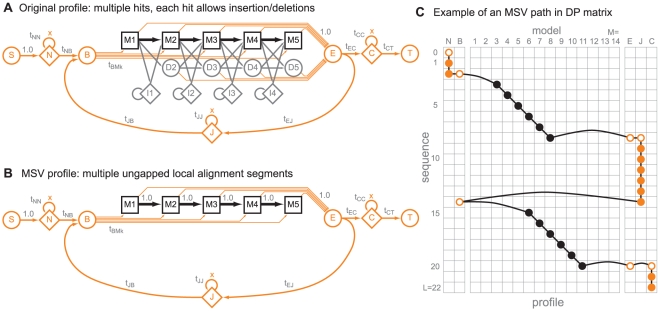
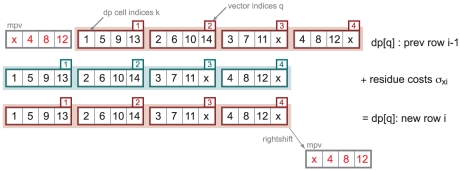
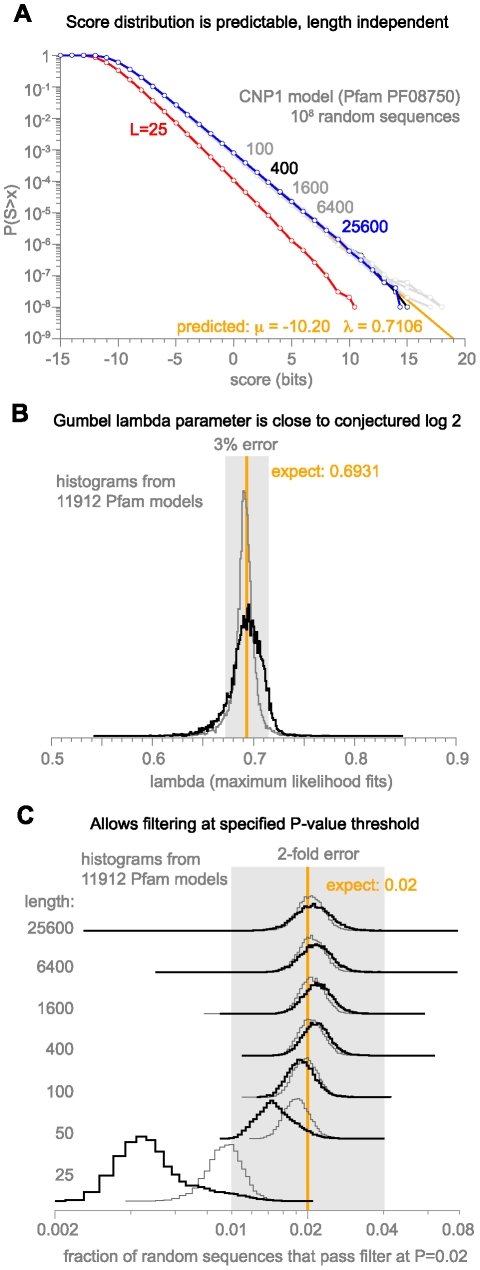
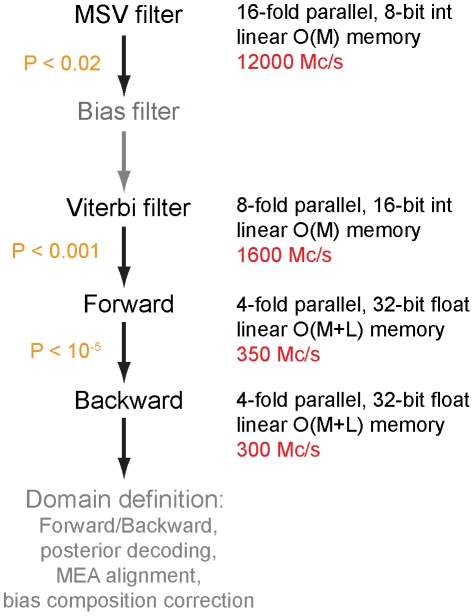
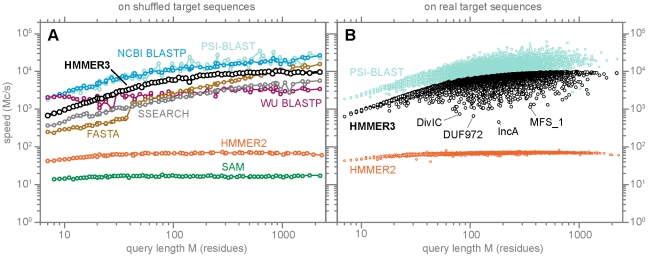
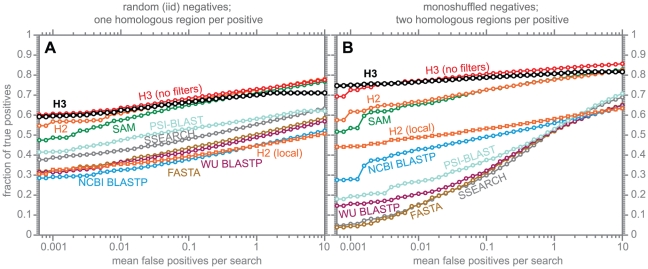
Profile hidden Markov models (profile HMMs) and probabilistic inference methods have made important contributions to the theory of sequence database homology search. However, practical use of profile HMM methods has been hindered by the computational expense of existing software implementations. Here I describe an acceleration heuristic for profile HMMs, the "multiple segment Viterbi" (MSV) algorithm. The MSV algorithm computes an optimal sum of multiple ungapped local alignment segments using a striped vector-parallel approach previously described for fast Smith/Waterman alignment. MSV scores follow the same statistical distribution as gapped optimal local alignment scores, allowing rapid evaluation of significance of an MSV score and thus facilitating its use as a heuristic filter. I also describe a 20-fold acceleration of the standard profile HMM Forward/Backward algorithms using a method I call "sparse rescaling". These methods are assembled in a pipeline in which high-scoring MSV hits are passed on for reanalysis with the full HMM Forward/Backward algorithm. This accelerated pipeline is implemented in the freely available HMMER3 software package. Performance benchmarks show that the use of the heuristic MSV filter sacrifices negligible sensitivity compared to unaccelerated profile HMM searches. HMMER3 is substantially more sensitive and 100- to 1000-fold faster than HMMER2. HMMER3 is now about as fast as BLAST for protein searches.
Overview
The claims and statistics of this paper haven’t been checked yet.
Run the check — free, no account needed. It reads the open-access text and checks the sources it cites.
Integrity signals
Registry
Cites
Statistics
Figures
Verification
Claims the paper makes
The claims and statistics of this paper haven’t been checked yet.
Run the check — free, no account needed. It reads the open-access text and checks the sources it cites.
Claims other papers make about this one
Each is checked against this paper’s own text: does it say what the citing paper says it does?
In the citing paper
“Additional functional analyses are also provided in the form of KEGG orthologue (KO) (23) annotations, which are calculated using HMMER (40) and the KOfam library (using a slightly modified form of the profile hidden Markov model (HMM) database of KEGG orthologues (41)) on the predicted protein sequences.”
From MGnify: the microbiome analysis resource in 2020 (2019) · cites this paper as [40]
In the citing paper
“Although some advanced sequence-based methods can already assist in this task39–41, the availability of predicted structures may help identify meaningful evolutionary relationships.”
From Clustering predicted structures at the scale of the known protein universe (2023) · cites this paper as [40]
In the citing paper
“All counts (TP, FP and FN) were weighted by the reciprocal of their family, superfamily or fold size. In this way, folds, superfamilies and families contribute linearly with their size instead of quadratically36.”
From Fast and accurate protein structure search with Foldseek (2024) · cites this paper as [36]
Self-check
Percentages, sums and reported differences re-computed from the paper’s own numbers.
The self-check needs the paper’s full text.
Citations
Cites
Basic local alignment search tool
Altschul, S. F., Gish, W., Miller, W., Myers, E. W., & Lipman, D. J. (1990) · Journal of Molecular Biology · doi:10.1006/jmbi.1990.9999 · Cited by 98,669
Gapped BLAST and PSI-BLAST: a new generation of protein database search programs
Altschul, S. (1997) · Nucleic Acids Research · doi:10.1093/nar/25.17.3389 · Cited by 73,302
A tutorial on hidden Markov models and selected applications in speech recognition
Rabiner, L. R. (1989) · Proceedings of the IEEE · doi:10.1109/5.18626 · Cited by 22,743
BLAST+: architecture and applications
Camacho, C., Coulouris, G., Avagyan, V., Ma, N., Papadopoulos, J., Bealer, K., & Madden, T. L. (2009) · BMC Bioinformatics · doi:10.1186/1471-2105-10-421 · Cited by 22,074
The Pfam Protein Families Database
Bateman, A. G. (2002) · Nucleic Acids Research · doi:10.1093/nar/30.1.276 · Cited by 14,075
Identification of common molecular subsequences
Smith, T. F., & Waterman, M. S. (1981) · Journal of Molecular Biology · doi:10.1016/0022-2836(81)90087-5 · Cited by 9,962
Biological sequence analysis probabilistic models of proteins and nucleic acids
Durbin, R. M., Eddy, S. R., Krogh, A., & Mitchison, G. (1998) · Cited by 3,565
Self-citationDurbin, R. M., Eddy, S. R., Krogh, A., & Mitchison, G. (1998) · Cambridge University Press eBooks · doi:10.1017/cbo9780511790492 · Cited by 3,255
Self-citationThe Pfam protein families database
Finn, R. D., Mistry, J., Tate, J., Coggill, P., Heger, A., Pollington, J. E., Gavin, O. L., Gunasekaran, P., Ceric, G., Forslund, K., et al. (2010) · Nucleic Acids Research · doi:10.1093/nar/gkp985 · Cited by 2,694
Self-citationInterPro: the integrative protein signature database
Hunter, S., Apweiler, R., Attwood, T. K., Bairoch, A., Bateman, A., Binns, D., Bork, P., Das, U., Daugherty, L., Duquenne, L., et al. (2009) · Nucleic Acids Research · doi:10.1093/nar/gkn785 · Cited by 2,107
Research works printed but not linked: 1
- S Johnson, 2006, Remote Protein Homology Detection Using Hidden Markov Models [Ph.D. thesis]
Cited by
Sorted by citations
Highly accurate protein structure prediction with AlphaFold
Jumper, J., Evans, R., Pritzel, A., Green, T., Figurnov, M., Ronneberger, O., Tunyasuvunakool, K., Bates, R., Žídek, A., Potapenko, A., et al. (2021) · Nature · doi:10.1038/s41586-021-03819-2 · Cited by 43,764
Prokka: rapid prokaryotic genome annotation
Seemann, T. (2014) · Bioinformatics · doi:10.1093/bioinformatics/btu153 · Cited by 18,937
BUSCO: assessing genome assembly and annotation completeness with single-copy orthologs
Simão, F. A., Waterhouse, R. M., Ioannidis, P., Kriventseva, E. V., & Zdobnov, E. M. (2015) · Bioinformatics · doi:10.1093/bioinformatics/btv351 · Cited by 13,344
ColabFold - Making protein folding accessible to all
Mirdita, M., Schütze, K., Moriwaki, Y., Heo, L., Ovchinnikov, S., & Steinegger, M. (2021) · doi:10.1101/2021.08.15.456425 · Cited by 9,391
Pfam: the protein families database
Finn, R. D., Bateman, A., Clements, J., Coggill, P., Eberhardt, R. Y., Eddy, S. R., Heger, A., Hetherington, K., Holm, L., Mistry, J., et al. (2014) · Nucleic Acids Research · doi:10.1093/nar/gkt1223 · Cited by 6,148
Self-citationGTDB-Tk: a toolkit to classify genomes with the Genome Taxonomy Database
Chaumeil, P.-A., Mussig, A. J., Hugenholtz, P., & Parks, D. H. (2019) · Bioinformatics · doi:10.1093/bioinformatics/btz848 · Cited by 5,337
MMseqs2 enables sensitive protein sequence searching for the analysis of massive data sets
Steinegger, M., & Söding, J. (2017) · Nature Biotechnology · doi:10.1038/nbt.3988 · Cited by 4,840
The Pfam protein families database in 2019
El-Gebali, S., Mistry, J., Bateman, A., Eddy, S. R., Luciani, A., Potter, S. C., Qureshi, M., Richardson, L. J., Salazar, G. A., Smart, A., et al. (2019) · Nucleic Acids Research · doi:10.1093/nar/gky995 · Cited by 4,602
Self-citationInfernal 1.1: 100-fold faster RNA homology searches
Nawrocki, E. P., & Eddy, S. R. (2013) · Bioinformatics · doi:10.1093/bioinformatics/btt509 · Cited by 3,688
Self-citationShifting the limits in wheat research and breeding using a fully annotated reference genome
Appels, R., Eversole, K., Stein, N., Feuillet, C., Keller, B., Rogers, J., Pozniak, C. J., Choulet, F., Distelfeld, A., Poland, J., et al. (2018) · Science · doi:10.1126/science.aar7191 · Cited by 3,183
A standardized bacterial taxonomy based on genome phylogeny substantially revises the tree of life
Parks, D. H., Chuvochina, M., Waite, D. W., Rinke, C., Skarshewski, A., Chaumeil, P.-A., & Hugenholtz, P. (2018) · Nature Biotechnology · doi:10.1038/nbt.4229 · Cited by 3,603
Mi, H., Muruganujan, A., Ebert, D., Huang, X., & Thomas, P. D. (2018) · Nucleic Acids Research · doi:10.1093/nar/gky1038 · Cited by 3,030
A Completely Reimplemented MPI Bioinformatics Toolkit with a New HHpred Server at its Core
Zimmermann, L., Stephens, A., Nam, S.-Z., Rau, D., Kübler, J., Lozajic, M., Gabler, F., Söding, J., Lupas, A. N., & Alva, V. (2018) · Journal of Molecular Biology · doi:10.1016/j.jmb.2017.12.007 · Cited by 2,522
Fast Genome-Wide Functional Annotation through Orthology Assignment by eggNOG-Mapper
Huerta-Cepas, J., Forslund, K., Coelho, L. P., Szklarczyk, D., Jensen, L. J., von Mering, C., & Bork, P. (2017) · Molecular Biology and Evolution · doi:10.1093/molbev/msx148 · Cited by 2,709
Phylogenomics resolves the timing and pattern of insect evolution
Misof, B., Liu, S., Meusemann, K., Peters, R. S., Donath, A., Mayer, C., Frandsen, P. B., Ware, J., Flouri, T., Beutel, R. G., et al. (2014) · Science · doi:10.1126/science.1257570 · Cited by 2,694
Potter, S. C., Luciani, A., Eddy, S. R., Park, Y., Lopez, R., & Finn, R. D. (2018) · Nucleic Acids Research · doi:10.1093/nar/gky448 · Cited by 2,607
Self-citationFast and accurate protein structure search with Foldseek
van Kempen, M., Kim, S. S., Tumescheit, C., Mirdita, M., Lee, J., Gilchrist, C. L. M., Söding, J., & Steinegger, M. (2022) · doi:10.1101/2022.02.07.479398 · Cited by 2,598
Fast and accurate protein structure search with Foldseek
van Kempen, M., Kim, S. S., Tumescheit, C., Mirdita, M., Lee, J., Gilchrist, C. L. M., Söding, J., & Steinegger, M. (2024) · Nature Biotechnology · doi:10.1038/s41587-023-01773-0 · Cited by 2,596
The carbohydrate-active enzyme database: functions and literature
Drula, E., Garron, M.-L., Dogan, S., Lombard, V., Henrissat, B., & Terrapon, N. (2022) · Nucleic Acids Research · doi:10.1093/nar/gkab1045 · Cited by 2,439
BUSCO: Assessing Genome Assembly and Annotation Completeness
Seppey, M., Manni, M., & Zdobnov, E. M. (2019) · Methods in molecular biology · doi:10.1007/978-1-4939-9173-0_14 · Cited by 2,242
The Comprehensive Antibiotic Resistance Database
McArthur, A. G., Waglechner, N., Nizam, F., Yan, A., Azad, M. A., Baylay, A. J., Bhullar, K., Canova, M. J., Pascale, G. D., Ejim, L. J., et al. (2013) · Antimicrobial Agents and Chemotherapy · doi:10.1128/aac.00419-13 · Cited by 2,287
BUSCO applications from quality assessments to gene prediction and phylogenomics
Waterhouse, R. M., Seppey, M., Simão, F. A., Manni, M., Ioannidis, P., Klioutchnikov, G., Kriventseva, E. V., & Zdobnov, E. M. (2018) · Molecular Biology and Evolution · doi:10.1093/molbev/msx319 · Cited by 2,214
SMART: recent updates, new developments and status in 2020
Letunić, I., Khedkar, S., & Bork, P. (2020) · Nucleic Acids Research · doi:10.1093/nar/gkaa937 · Cited by 2,182
Huerta‐Cepas, J., Szklarczyk, D., Forslund, S. K., Cook, H., Heller, D., Walter, M. C., Rattei, T., Mende, D. R., Sunagawa, S., Kuhn, M., et al. (2015) · Nucleic Acids Research · doi:10.1093/nar/gkv1248 · Cited by 2,118
Arnison, P. G., Bibb, M. J., Bierbaum, G., Bowers, A. A., Bugni, T. S., Bulaj, G. W., Camarero, J. A., Campopiano, D. J., Challis, G. L., Clardy, J., et al. (2012) · Natural Product Reports · doi:10.1039/c2np20085f · Cited by 2,113
20 years of the SMART protein domain annotation resource
Letunic, I., & Bork, P. (2017) · Nucleic Acids Res. · doi:10.1093/nar/gkx922 · Cited by 1,810
tRNAscan-SE 2.0: improved detection and functional classification of transfer RNA genes
Chan, P. P., Lin, B. Y., Mak, A. J., & Lowe, T. M. (2021) · Nucleic Acids Research · doi:10.1093/nar/gkab688 · Cited by 2,045
Recovery of nearly 8,000 metagenome-assembled genomes substantially expands the tree of life
Parks, D. H., Rinke, C., Chuvochina, M., Chaumeil, P.-A., Woodcroft, B. J., Evans, P. N., Hugenholtz, P., & Tyson, G. W. (2017) · Nature Microbiology · doi:10.1038/s41564-017-0012-7 · Cited by 1,882
Pasolli, E., Asnicar, F., Manara, S., Zolfo, M., Karcher, N., Armanini, F., Beghini, F., Manghi, P., Tett, A., Ghensi, P., et al. (2019) · Cell · doi:10.1016/j.cell.2019.01.001 · Cited by 1,591
CheckV assesses the quality and completeness of metagenome-assembled viral genomes
Nayfach, S., Camargo, A. P., Schulz, F., Eloe‐Fadrosh, E. A., Roux, S., & Kyrpides, N. C. (2020) · Nature Biotechnology · doi:10.1038/s41587-020-00774-7 · Cited by 1,829
Feldgarden, M., Brover, V. V., González‐Escalona, N., Frye, J. G., Haendiges, J., Haft, D. H., Hoffmann, M., Pettengill, J., Prasad, A. B., Tillman, G. E., et al. (2021) · Scientific Reports · doi:10.1038/s41598-021-91456-0 · Cited by 1,758
Brůna, T., Hoff, K. J., Lomsadze, A., Stanke, M., & Borodovsky, M. Y. (2021) · NAR Genomics and Bioinformatics · doi:10.1093/nargab/lqaa108 · Cited by 1,667
One thousand plant transcriptomes and the phylogenomics of green plants
Initiative, O. T. P. T. (2019) · Nature · doi:10.1038/s41586-019-1693-2 · Cited by 1,734
Challenges in homology search: HMMER3 and convergent evolution of coiled-coil regions
Mistry, J., Finn, R. D., Eddy, S. R., Bateman, A. G., & Punta, M. (2013) · Nucleic Acids Research · doi:10.1093/nar/gkt263 · Cited by 1,622
Self-citationA chromosome-based draft sequence of the hexaploid bread wheat ( Triticum aestivum ) genome
The International Wheat Genome Sequencing Consortium (IWGSC), Mayer, K. F. X., Rogers, J., Doležel, J., Pozniak, C., Eversole, K., Feuillet, C., Gill, B., Friebe, B., Lukaszewski, A. J., et al. (2014) · Science · doi:10.1126/science.1251788 · Cited by 1,583
A complete domain-to-species taxonomy for Bacteria and Archaea
Parks, D. H., Chuvochina, M. S., Chaumeil, P.-A., Rinke, C., Mussig, A. J., & Hugenholtz, P. (2020) · Nature Biotechnology · doi:10.1038/s41587-020-0501-8 · Cited by 1,542
Schwengers, O., Jelonek, L., Dieckmann, M. A., Beyvers, S., Blom, J., & Goesmann, A. (2021) · Microbial Genomics · doi:10.1099/mgen.0.000685 · Cited by 1,529
A chromosome conformation capture ordered sequence of the barley genome
Mascher, M., Gundlach, H., Himmelbach, A., Beier, S., Twardziok, S. O., Wicker, T., Radchuk, V., Dockter, C., Hedley, P. E., Russell, J., et al. (2017) · Nature · doi:10.1038/nature22043 · Cited by 1,450
Bengtsson‐Palme, J., Ryberg, M. K., Hartmann, M., Branco, S., Wang, Z., Godhe, A., Wit, P. D., Sánchez‐García, M., Ebersberger, I., Sousa, F., et al. (2013) · Methods in Ecology and Evolution · doi:10.1111/2041-210x.12073 · Cited by 1,399
UBCG: Up-to-date bacterial core gene set and pipeline for phylogenomic tree reconstruction
Na, S.-I., Kim, Y. O., Yoon, S.-H., Ha, S. M., Baek, I., & Chun, J. (2018) · The Journal of Microbiology · doi:10.1007/s12275-018-8014-6 · Cited by 1,371
Potential of fecal microbiota for early-stage detection of colorectal cancer
Zeller, G., Tap, J., Voigt, A. Y., Sunagawa, S., Kultima, J. R., Costea, P. I., Amiot, A., Böhm, J., Brunetti, F., Habermann, N., et al. (2014) · Molecular Systems Biology · doi:10.15252/msb.20145645 · Cited by 1,375
Wirbel, J., Pyl, P. T., Kartal, E., Zych, K., Kashani, A., Milanese, A., Fleck, J. S., Voigt, A. Y., Palleja, A., Ponnudurai, R., et al. (2019) · Nature Medicine · doi:10.1038/s41591-019-0406-6 · Cited by 1,373
Phylotranscriptomic analysis of the origin and early diversification of land plants
Wickett, N. J., Mirarab, S., Nguyen, N., Warnow, T., Carpenter, E., Matasci, N., Ayyampalayam, S., Barker, M. S., Burleigh, J. G., Gitzendanner, M. A., et al. (2014) · Proceedings of the National Academy of Sciences · doi:10.1073/pnas.1323926111 · Cited by 1,252
Functional overlap of the Arabidopsis leaf and root microbiota
Bai, Y., Müller, D. B., Srinivas, G., Garrido‐Oter, R., Potthoff, E., Rott, M., Dombrowski, N., Münch, P. C., Spaepen, S., Remus‐Emsermann, M. N. P., et al. (2015) · Nature · doi:10.1038/nature16192 · Cited by 1,359
Anaerobic oxidation of methane coupled to nitrate reduction in a novel archaeal lineage
Haroon, M. F., Hu, S., Shi, Y., Imelfort, M., Keller, J., Hugenholtz, P., Yuan, Z., & Tyson, G. W. (2013) · Nature · doi:10.1038/nature12375 · Cited by 1,364
VirSorter2: a multi-classifier, expert-guided approach to detect diverse DNA and RNA viruses
Guo, J., Bolduc, B., Zayed, A. A., Varsani, A., Domínguez‐Huerta, G., Delmont, T. O., Pratama, A. A., Gazitúa, M. C., Vik, D. R., Sullivan, M. B., et al. (2021) · Microbiome · doi:10.1186/s40168-020-00990-y · Cited by 1,287
A phylum-level phylogenetic classification of zygomycete fungi based on genome-scale data
Spatafora, J. W., Chang, Y., Benny, G. L., Lazarus, K., Smith, M. E., Berbee, M. L., Bonito, G. M., Corradi, N., Grigoriev, I. V., Gryganskyi, A. P., et al. (2016) · Mycologia · doi:10.3852/16-042 · Cited by 1,311
The InterPro protein families database: the classification resource after 15 years
Mitchell, A., Chang, H.-Y., Daugherty, L. C., Fraser, M., Hunter, S., López, R., McAnulla, C., McMenamin, C., Nuka, G., Pesseat, S., et al. (2014) · Nucleic Acids Research · doi:10.1093/nar/gku1243 · Cited by 1,276
Strains, functions and dynamics in the expanded Human Microbiome Project
Lloyd-Price, J., Mahurkar, A., Rahnavard, G., Crabtree, J., Orvis, J., Hall, A. B., Brady, A., Creasy, H. H., McCracken, C., Giglio, M. G., et al. (2017) · Nature · doi:10.1038/nature23889 · Cited by 1,267
Unusual biology across a group comprising more than 15% of domain Bacteria
Brown, C. T., Hug, L. A., Thomas, B. C., Sharon, I., Castelle, C. J., Singh, A., Wilkins, M. J., Wrighton, K. C., Williams, K. H., & Banfield, J. F. (2015) · Nature · doi:10.1038/nature14486 · Cited by 1,216
HH-suite3 for fast remote homology detection and deep protein annotation
Steinegger, M., Meier, M., Mirdita, M., Vöhringer, H., Haunsberger, S. J., & Söding, J. (2019) · BMC Bioinformatics · doi:10.1186/s12859-019-3019-7 · Cited by 1,145
Anantharaman, K., Brown, C. T., Hug, L. A., Sharon, I., Castelle, C. J., Probst, A. J., Thomas, B. C., Singh, A., Wilkins, M. J., Karaöz, U., et al. (2016) · Nature Communications · doi:10.1038/ncomms13219 · Cited by 1,118
Li, W., O’Neill, K., Haft, D. H., DiCuccio, M. N., Chetvernin, V., Badretdin, A. J., Coulouris, G., Chitsaz, F., Derbyshire, M. K., Durkin, A. S., et al. (2020) · Nucleic Acids Research · doi:10.1093/nar/gkaa1105 · Cited by 1,124
VirSorter: mining viral signal from microbial genomic data
Roux, S., Enault, F., Hurwitz, B. L., & Sullivan, M. B. (2015) · PeerJ · doi:10.7717/peerj.985 · Cited by 1,074
Rfam 12.0: updates to the RNA families database
Nawrocki, E. P., Burge, S., Bateman, A. G., Daub, J., Eberhardt, R. Y., Eddy, S. R., Floden, E. W., Gardner, P. P., Jones, T. A., Tate, J. G., et al. (2014) · Nucleic Acids Research · doi:10.1093/nar/gku1063 · Cited by 1,085
Self-citationIdentification of mobile genetic elements with geNomad
Camargo, A. P., Roux, S., Schulz, F., Babinski, M., Xu, Y., Hu, B., Chain, P., Nayfach, S., & Kyrpides, N. C. (2023) · Nature Biotechnology · doi:10.1038/s41587-023-01953-y · Cited by 1,160
A computational framework to explore large-scale biosynthetic diversity
Navarro-Muñoz, J. C., Mojica, N. S., Mullowney, M. W., Kautsar, S. A., Tryon, J. H., Parkinson, E. I., Santos, E. L. C. D. L., Yeong, M., Cruz‐Morales, P., Abubucker, S., et al. (2019) · Nature Chemical Biology · doi:10.1038/s41589-019-0400-9 · Cited by 1,032
Improved prediction of protein-protein interactions using AlphaFold2
Bryant, P., Pozzati, G., & Elofsson, A. (2021) · doi:10.1101/2021.09.15.460468 · Cited by 1,022
Adeolu, M., Alnajar, S., Naushad, S., & Gupta, R. S. (2016) · INTERNATIONAL JOURNAL OF SYSTEMATIC AND EVOLUTIONARY MICROBIOLOGY · doi:10.1099/ijsem.0.001485 · Cited by 1,051
Generalized biomolecular modeling and design with RoseTTAFold All-Atom
Krishna, R., Wang, J., Ahern, W., Sturmfels, P., Venkatesh, P., Kalvet, I., Lee, G. R., Morey-Burrows, F. S., Anishchenko, I., Humphreys, I. R., et al. (2024) · Science · doi:10.1126/science.adl2528 · Cited by 978
The TOPCONS web server for consensus prediction of membrane protein topology and signal peptides
Tsirigos, K. D., Peters, C., Shu, N., Käll, L., & Elofsson, A. (2015) · Nucleic Acids Research · doi:10.1093/nar/gkv485 · Cited by 939
Finn, R. D., Clements, J., Arndt, W. D., Miller, B. L., Wheeler, T. J., Schreiber, F., Bateman, A. G., & Eddy, S. R. (2015) · Nucleic Acids Research · doi:10.1093/nar/gkv397 · Cited by 911
Self-citationThe CCP 4 suite: integrative software for macromolecular crystallography
Agirre, J., Atanasova, M., Bagdonas, H., Ballard, C. C., Baslé, A., Beilsten‐Edmands, J., Borges, R. J., Brown, D. G., Burgos-Mármol, J. J., Berrisford, J. M., et al. (2023) · Acta Crystallographica Section D Structural Biology · doi:10.1107/s2059798323003595 · Cited by 952
nhmmer: DNA homology search with profile HMMs
Wheeler, T. J., & Eddy, S. R. (2013) · Bioinformatics · doi:10.1093/bioinformatics/btt403 · Cited by 918
Self-citationFungal community analysis by high‐throughput sequencing of amplified markers – a user's guide
Lindahl, B. D., Nilsson, R. H., Tedersoo, L., Abarenkov, K., Carlsen, T., Kjøller, R., Kõljalg, U., Pennanen, T., Rosendahl, S., Stenlid, J., et al. (2013) · New Phytologist · doi:10.1111/nph.12243 · Cited by 934
A genomic catalog of Earth’s microbiomes
Nayfach, S., Roux, S., Seshadri, R., Udwary, D., Varghese, N. J., Schulz, F., Wu, D., Páez-Espino, D., Chen, I.-M. A., Huntemann, M., et al. (2020) · Nature Biotechnology · doi:10.1038/s41587-020-0718-6 · Cited by 890
American Gut: an Open Platform for Citizen-Science Microbiome Research
McDonalda, D., Hyde, E., Debelius, J. W., Morton, J. T., Gonzalez, A., Ackermann, G., Aksenov, A. A., Behsaz, B., Brennan, C., Chen, Y., et al. (2018) · doi:10.1101/277970 · Cited by 878
Ecogenomics and potential biogeochemical impacts of globally abundant ocean viruses
Roux, S., Brum, J. R., Dutilh, B. E., Sunagawa, S., Duhaime, M. B., Loy, A., Poulos, B. T., Solonenko, N., Lara, E., Poulain, J., et al. (2016) · Nature · doi:10.1038/nature19366 · Cited by 863
Wild emmer genome architecture and diversity elucidate wheat evolution and domestication
Avni, R., Nave, M., Barad, O., Baruch, K., Twardziok, S. O., Gundlach, H., Hale, I. L., Mascher, M., Spannagl, M., Wiebe, K., et al. (2017) · Science · doi:10.1126/science.aan0032 · Cited by 824
Pal, C., Bengtsson‐Palme, J., Kristiansson, E., & Larsson, D. G. J. (2015) · BMC Genomics · doi:10.1186/s12864-015-2153-5 · Cited by 833
Improved annotation of protein-coding genes boundaries in metazoan mitochondrial genomes
Donath, A., Jühling, F., Arab, M. A., Bernhart, S. H., Reinhardt, F., Stadler, P. F., Middendorf, M., & Bernt, M. (2019) · Nucleic Acids Research · doi:10.1093/nar/gkz833 · Cited by 802
Rfam 11.0: 10 years of RNA families
Burge, S., Daub, J., Eberhardt, R. Y., Tate, J. G., Barquist, L., Nawrocki, E. P., Eddy, S. R., Gardner, P. P., & Bateman, A. G. (2012) · Nucleic Acids Research · doi:10.1093/nar/gks1005 · Cited by 806
Self-citationantiSMASH 2.0—a versatile platform for genome mining of secondary metabolite producers
Blin, K., Medema, M. H., Kazempour, D., Fischbach, M. A., Breitling, R., Takano, E., & Weber, T. (2013) · Nucleic Acids Research · doi:10.1093/nar/gkt449 · Cited by 810
Disease variant prediction with deep generative models of evolutionary data
Frazer, J., Notin, P., Dias, M., Gomez, A., Min, J. K., Brock, K., Gal, Y., & Marks, D. S. (2021) · Nature · doi:10.1038/s41586-021-04043-8 · Cited by 791
Mutation effects predicted from sequence co-variation
Hopf, T. A., Ingraham, J. B., Poelwijk, F. J., Schärfe, C. P. I., Springer, M., Sander, C., & Marks, D. S. (2017) · Nature Biotechnology · doi:10.1038/nbt.3769 · Cited by 775
Systematic and quantitative view of the antiviral arsenal of prokaryotes
Tesson, F., Hervé, A., Mordret, E., Touchon, M., d’Humières, C., Cury, J., & Bernheim, A. G. (2022) · Nature Communications · doi:10.1038/s41467-022-30269-9 · Cited by 772
New insights from uncultivated genomes of the global human gut microbiome
Nayfach, S., Shi, Z. J., Seshadri, R., Pollard, K. S., & Kyrpides, N. C. (2019) · Nature · doi:10.1038/s41586-019-1058-x · Cited by 737
Minimum Information about an Uncultivated Virus Genome (MIUViG)
Roux, S., Adriaenssens, E. M., Dutilh, B. E., Koonin, E. V., Kropinski, A. M., Krupovìč, M., Kuhn, J. H., Lavigne, R., Brister, J. R., Varsani, A., et al. (2018) · Nature Biotechnology · doi:10.1038/nbt.4306 · Cited by 710
Wu, Y., Tang, Y.-H., Tringe, S. G., Simmons, B. A., & Singer, S. W. (2014) · Microbiome · doi:10.1186/2049-2618-2-26 · Cited by 725
Automated model building and protein identification in cryo-EM maps
Jamali, K., Käll, L., Zhang, R., Brown, A., Kimanius, D., & Scheres, S. H. W. (2024) · Nature · doi:10.1038/s41586-024-07215-4 · Cited by 686
Origin and evolution of the octoploid strawberry genome
Edger, P. P., Poorten, T. J., VanBuren, R., Hardigan, M. A., Colle, M., McKain, M. R., Smith, R. D., Teresi, S. J., Nelson, A. D. L., Wai, C. M., et al. (2019) · Nature Genetics · doi:10.1038/s41588-019-0356-4 · Cited by 705
Cotmore, S. F., Agbandje‐McKenna, M., Chiorini, J. A., Mukha, D. V., Pintel, D. J., Qiu, J., Söderlund‐Venermo, M., Tattersall, P. J., Tijssen, P., Gatherer, D., et al. (2013) · Archives of Virology · doi:10.1007/s00705-013-1914-1 · Cited by 693
Automated model building and protein identification in cryo-EM maps
Jamali, K., Käll, L., Zhang, R., Brown, A., Kimanius, D., & Scheres, S. H. W. (2023) · doi:10.1101/2023.05.16.541002 · Cited by 686
Waite, D. W., Chuvochina, M. S., Pelikan, C., Parks, D. H., Yilmaz, P., Wagner, M., Loy, A., Naganuma, T., Nakai, R., Whitman, W. B., et al. (2020) · INTERNATIONAL JOURNAL OF SYSTEMATIC AND EVOLUTIONARY MICROBIOLOGY · doi:10.1099/ijsem.0.004213 · Cited by 677
Metagenomic compendium of 189,680 DNA viruses from the human gut microbiome
Nayfach, S., Páez-Espino, D., Call, L., Low, S. J., Sberro, H., Ivanova, N. N., Proal, A. D., Fischbach, M. A., Bhatt, A. S., Hugenholtz, P., et al. (2021) · Nature Microbiology · doi:10.1038/s41564-021-00928-6 · Cited by 580
eggNOG v4.0: nested orthology inference across 3686 organisms
Powell, S., Forslund, K., Szklarczyk, D., Trachana, K., Roth, A., Huerta-Cepas, J., Gabaldón, T., Rattei, T., Creevey, C., Kuhn, M., et al. (2014) · Nucleic Acids Research · doi:10.1093/nar/gkt1253 · Cited by 652
PhyloSift: phylogenetic analysis of genomes and metagenomes
Darling, A. E., Jospin, G., Lowe, E., Matsen, F. A., IV, Bik, H. M., & Eisen, J. A. (2014) · PeerJ · doi:10.7717/peerj.243 · Cited by 625
An environmental bacterial taxon with a large and distinct metabolic repertoire
Wilson, M. C., Mori, T., Rückert, C., Uria, A. R., Helf, M. J., Takada, K., Gernert, C., Steffens, U. A. E., Heycke, N., Schmitt, S., et al. (2014) · Nature · doi:10.1038/nature12959 · Cited by 612
Delmont, T. O., Quince, C., Shaiber, A., Esen, Ö. C., Lee, S. T. M., Rappé, M. S., McLellan, S. L., Lücker, S., & Eren, A. M. (2018) · Nature Microbiology · doi:10.1038/s41564-018-0176-9 · Cited by 617
Deep generative models of genetic variation capture the effects of mutations
Riesselman, A. J., Ingraham, J. B., & Marks, D. S. (2018) · Nature Methods · doi:10.1038/s41592-018-0138-4 · Cited by 601
Current challenges and best-practice protocols for microbiome analysis
Bharti, R., & Grimm, D. G. (2021) · Briefings in Bioinformatics · doi:10.1093/bib/bbz155 · Cited by 592
Mutant phenotypes for thousands of bacterial genes of unknown function
Price, M. N., Wetmore, K. M., Waters, R. J., Callaghan, M., Ray, J., Liu, H., Kuehl, J. V., Melnyk, R. A., Lamson, J. S., Suh, Y., et al. (2018) · Nature · doi:10.1038/s41586-018-0124-0 · Cited by 576
A review of methods and databases for metagenomic classification and assembly
Breitwieser, F. P., Lu, J., & Salzberg, S. L. (2017) · Briefings in Bioinformatics · doi:10.1093/bib/bbx120 · Cited by 595
MGnify: the microbiome analysis resource in 2020
Mitchell, A. L., Almeida, A., Beracochea, M., Boland, M., Burgin, J., Cochrane, G., Crusoe, M. R., Kale, V., Potter, S. C., Richardson, L. J., et al. (2019) · Nucleic Acids Research · doi:10.1093/nar/gkz1035 · Cited by 562
Federici, S., Kredo-Russo, S., Valdés-Mas, R., Kviatcovsky, D., Weinstock, E., Matiuhin, Y., Silberberg, Y., Atarashi, K., Furuichi, M., Oka, A., et al. (2022) · Cell · doi:10.1016/j.cell.2022.07.003 · Cited by 542
GToTree: A user-friendly workflow for phylogenomics
Lee, M. D. (2019) · Bioinformatics · doi:10.1093/bioinformatics/btz188 · Cited by 552
Expanded metabolic versatility of ubiquitous nitrite-oxidizing bacteria from the genus Nitrospira
Koch, H., Lücker, S., Albertsen, M., Kitzinger, K., Herbold, C. W., Spieck, E., Nielsen, P. H., Wagner, M., & Daims, H. (2015) · Proceedings of the National Academy of Sciences · doi:10.1073/pnas.1506533112 · Cited by 551
The pangenome of an agronomically important crop plant Brassica oleracea
Golicz, A. A., Bayer, P. E., Barker, G. C., Edger, P. P., Kim, H. R., Martinez, P. A., Chan, C. K., Severn‐Ellis, A. A., McCombie, W. R., Parkin, I. A. P., et al. (2016) · Nature Communications · doi:10.1038/ncomms13390 · Cited by 553
Methylotrophic methanogenesis discovered in the archaeal phylum Verstraetearchaeota
Vanwonterghem, I., Evans, P. N., Parks, D. H., Jensen, P. D., Woodcroft, B. J., Hugenholtz, P., & Tyson, G. W. (2016) · Nature Microbiology · doi:10.1038/nmicrobiol.2016.170 · Cited by 537
Pan-cancer analyses reveal cancer-type-specific fungal ecologies and bacteriome interactions
Narunsky-Haziza, L., Sepich-Poore, G. D., Livyatan, I., Asraf, O., Martino, C., Nejman, D., Gavert, N., Stajich, J. E., Amit, G., González, A., et al. (2022) · Cell · doi:10.1016/j.cell.2022.09.005 · Cited by 538
“The proteins were matched against HMMs for the markers using hmmsearch (Eddy, 2011), aligned with hmmalign, trimmed with clipkit (Steenwyk et al., 2020), and concatenated into super alignment with the PHYling pipeline (https:// github.com/stajichlab/PHYling_unified).”
Method
Metadata
- Authors
- Eddy, S. R.
- Affiliations
- Howard Hughes Medical Institute (US)
- Corresponding author
- Eddy, Sean R.
- ORCID
- Eddy, Sean R.
- Venue
- PLoS Computational Biology
- Publisher
- Public Library of Science (PLoS)
- Published
- 2011-10-20
- Volume
- 7
- Issue
- 10
- Pages
- e1002195
- ISSN
- 1553-734X (ISSN-L)
- 1553-7358
- PMC
- PMC3197634
- OpenAlex
- W2138122982
- Cited by
- 6,975
- References
- 46
- Citations by year
- 2026: 791 · 2025: 804 · 2024: 768 · 2023: 693 · 2022: 671 · 2021: 706 · 2020: 496 · 2019: 411 · 2018: 386 · 2017: 312 · 2016: 271 · 2015: 258 · 2014: 206 · 2013: 145 · 2012: 52
- FWCI
- 52.51
- Type
- journal article
- Language
- en
- Open access
- gold
- doi.org
- Locations
- PLoS Computational Biology (publishedVersion, cc-by)
- Europe PMC (PubMed Central) (publishedVersion, cc-by)
- PubMed Central (publishedVersion, cc-by)
- PubMed (publishedVersion)
- RePEc: Research Papers in Economics (submittedVersion)
- DOAJ (DOAJ: Directory of Open Access Journals) (submittedVersion, cc-by-sa)
- Funders
- Howard Hughes Medical Institute
- Hebrew University of Jerusalem
- Topics
- Life Sciences › Biochemistry, Genetics and Molecular Biology › Molecular Biology › Genomics and Phylogenetic Studies
- Physical Sciences › Mathematics › Theoretical Computer Science › Algorithms and Data Compression
- Life Sciences › Biochemistry, Genetics and Molecular Biology › Molecular Biology › Fractal and DNA sequence analysis
- Keywords
- profile hidden Markov models, sequence homology search, protein sequence alignment, computational acceleration, heuristic filtering, forward-backward algorithm
- MeSH terms
- Algorithms, Markov Chains, Software, Information Storage and Retrieval, Sequence Alignment, Computational Biology, Databases, Protein
About these checks
Registry, retraction, Cites and statistics results are computed, not judged, with one exception: a printed reference that no index lists is read once by a model before it counts as a citation error. Claims are extracted by a model and kept only when their quote appears verbatim in the text; each cited source is then checked, with a model’s help, for whether it says what the claim relies on. Those verdicts can be wrong — read the claim’s quote and the cited source before relying on one.
Statistics and arithmetic are recomputed, not judged.
Confidence bands are shown only for fields calibrated on our annotated test set. None is calibrated yet, so no band is shown.
What counts as a claim ›How we measure confidence ›How we check this ›
Are you an author, or do you see a problem with this page? Request a review
