

Brain rhythms reveal a hierarchical network organization.
Open accessThe DOI matches its Crossref record; 47 of the 50 references it cites were found in a registry or an index.
Abstract
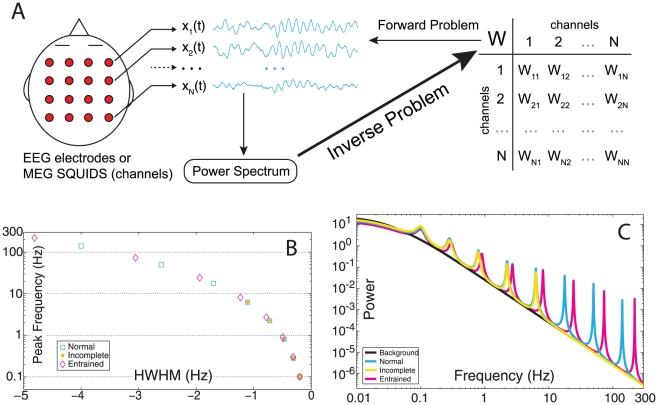
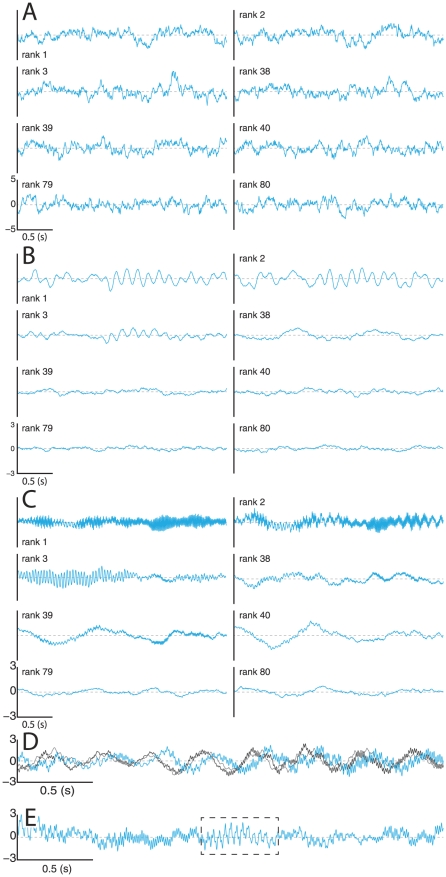
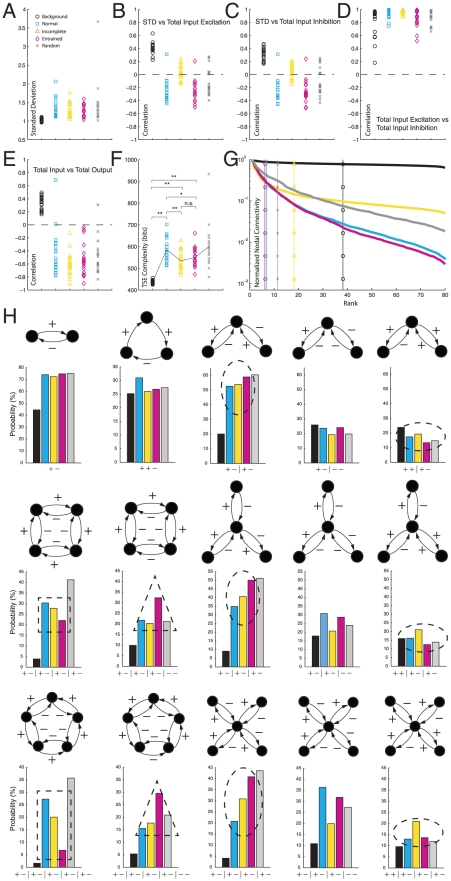
Recordings of ongoing neural activity with EEG and MEG exhibit oscillations of specific frequencies over a non-oscillatory background. The oscillations appear in the power spectrum as a collection of frequency bands that are evenly spaced on a logarithmic scale, thereby preventing mutual entrainment and cross-talk. Over the last few years, experimental, computational and theoretical studies have made substantial progress on our understanding of the biophysical mechanisms underlying the generation of network oscillations and their interactions, with emphasis on the role of neuronal synchronization. In this paper we ask a very different question. Rather than investigating how brain rhythms emerge, or whether they are necessary for neural function, we focus on what they tell us about functional brain connectivity. We hypothesized that if we were able to construct abstract networks, or "virtual brains", whose dynamics were similar to EEG/MEG recordings, those networks would share structural features among themselves, and also with real brains. Applying mathematical techniques for inverse problems, we have reverse-engineered network architectures that generate characteristic dynamics of actual brains, including spindles and sharp waves, which appear in the power spectrum as frequency bands superimposed on a non-oscillatory background dominated by low frequencies. We show that all reconstructed networks display similar topological features (e.g. structural motifs) and dynamics. We have also reverse-engineered putative diseased brains (epileptic and schizophrenic), in which the oscillatory activity is altered in different ways, as reported in clinical studies. These reconstructed networks show consistent alterations of functional connectivity and dynamics. In particular, we show that the complexity of the network, quantified as proposed by Tononi, Sporns and Edelman, is a good indicator of brain fitness, since virtual brains modeling diseased states display lower complexity than virtual brains modeling normal neural function. We finally discuss the implications of our results for the neurobiology of health and disease.
Overview
The claims and statistics of this paper haven’t been checked yet.
Free: it reads the open-access text and checks the first 5 claims that cite a source we can check. Create a free account to check every claim.
Integrity signals
Registry
Cites
Statistics
Figures
Verification
Claims the paper makes
The claims and statistics of this paper haven’t been checked yet.
Free: it reads the open-access text and checks the first 5 claims that cite a source we can check. Create a free account to check every claim.
Claims other papers make about this one
Each is checked against this paper’s own text: does it say what the citing paper says it does?
The source backs part of the claim, not all of it — or backs it for a different population, condition or comparison.
In the citing paper
“Critically, however, there is a hierarchy of resonances in neural systems (Steinke and Galán, 2011; Riddle and Schooler, 2019) such that lower-level resonance (entailing less information integration) may still take place even while higher-level resonances (corresponding to greater degrees of integration) are absent, either temporarily (sleep, seizure, etc.) or permanently (death, in which case”
From The Easy Part of the Hard Problem: A Resonance Theory of Consciousness (2019) · cites this paper as Steinke and Galán, 2011
Experimental — accuracy not yet measured
Self-check
Percentages, sums and reported differences re-computed from the paper’s own numbers.
The self-check needs the paper’s full text.
Citations
Cites
Distributed hierarchical processing in the primate cerebral cortex
Felleman, D. J., & Van Essen, D. C. (1991) · Cerebral Cortex · doi:10.1093/cercor/1.1.1 · Cited by 7,783 · cited 1×
“This is consistent with structural connectivity studies in the macaque showing that 85% of the cortical fiber tracts are bidirectional [40].”
ResultNeuronal Oscillations in Cortical Networks
Buzsáki, G., & Draguhn, A. (2004) · Science · doi:10.1126/science.1099745 · Cited by 6,576 · cited 1×
“We have implemented this algorithm such that reconstructed networks generate brain dynamics in five different scenarios: 1) A power spectrum with evenly spaced frequency bands on a logarithmic scale (‘‘Normal’’ group), a signature of long recordings of ongoing activity from healthy individuals [2].”
MethodSpectral Analysis and Time Series
Preston, D. B. (1983) · Technometrics · doi:10.1080/00401706.1983.10487866 · Cited by 5,011
Buzsáki, G. (2006) · doi:10.1093/acprof:oso/9780195301069.001.0001 · Cited by 4,873 · cited 4×
“systems [1].”
BackgroundResultInfluentialÜber das Elektrenkephalogramm des Menschen
Berger, H. (1929) · Archiv für Psychiatrie und Nervenkrankheiten · doi:10.1007/bf01797193 · Cited by 4,235
Handbook of Stochastic Methods for Physics, Chemistry and the Natural Sciences
Gardiner, C. W. (1985) · Springer Series in Synergetics · doi:10.1007/978-3-662-02452-2 · Cited by 3,703
Excitatory and Inhibitory Interactions in Localized Populations of Model Neurons
Wilson, H. R., & Cowan, J. D. (1972) · Biophysical Journal · doi:10.1016/s0006-3495(72)86068-5 · Cited by 3,623 · cited 1×
“We also note that nonlinear neuronal networks, like those based on the celebrated Wilson-Cowan model [26,27] and the neural-mass models [28–34] frequently possess hyperbolic equilibria.”
BackgroundPreface: Cerebral Cortex Has Come of Age
Goldman-Rakic, P. S., & Rakic, P. (1991) · Cerebral Cortex · doi:10.1093/cercor/1.1.1-a · Cited by 3,393
Statistical Analysis in Climate Research
Storch, H. V., & Zwiers, F. W. (1999) · Cambridge University Press eBooks · doi:10.1017/cbo9780511612336 · Cited by 2,717
High Gamma Power Is Phase-Locked to Theta Oscillations in Human Neocortex
Canolty, R. T., Edwards, E., Dalal, S. S., Soltani, M., Nagarajan, S. S., Kirsch, H. E., Berger, M. S., Barbaro, N. M., & Knight, R. T. (2006) · Science · doi:10.1126/science.1128115 · Cited by 2,650 · cited 1×
“Interactions between frequency bands can also occur in normal individuals but are transient and modulated in different behavioral tasks [16].”
Background
Research works printed but not linked: 4
- Steinke GK Galán RF 2011 Virtual Brain Generator. Available: http://www.case.edu/med/galanlab/software.html. Accessed 26 August 2011 PMC3192826 22022251
- Freyer F Roberts JA Becker R Robinson PA Ritter P 2010 Dynamic mechanisms of multistability in the human alpha rhythm. J Neurosci 31 6353 6361 PMC6622680 21525275
- Perez-Velazquez JL Frantseva MV 2011 The Brain-Behaviour Continuum: The subtle transition between sanity and insanity: World Scientific Publishing Company
- Robinson PA Rennie CJ Gordon E Wright JJ Powles R 2000 Prediction and analysis of electroencephalographic spectra in terms of corticothalamic physiology. International J Psychophysiol 35 22 22
Cited by
Complexity of spontaneous brain activity in mental disorders
Takahashi, T. (2013) · Progress in Neuro-Psychopharmacology and Biological Psychiatry · doi:10.1016/j.pnpbp.2012.05.001 · Cited by 159
“…ntropy. rights reserved. organization that remains little understood (Horwitz, 2003), but which is universally characterized as a scale-free network (Barabasi, 2009; Ravasz and Barabasi, 2003; Steinke and Galan, 2011) that is regarded as fractal (self-similar structure over a range of scales).”
BackgroundThe Easy Part of the Hard Problem: A Resonance Theory of Consciousness
Hunt, T., & Schooler, J. W. (2019) · Frontiers in Human Neuroscience · doi:10.3389/fnhum.2019.00378 · Cited by 134
“Critically, however, there is a hierarchy of resonances in neural systems (Steinke and Galán, 2011; Riddle and Schooler, 2019) such that lower-level resonance (entailing less information integration) may still take place even while higher-level resonances (corresponding to greater degrees of integration) are absent, e…”
BackgroundShine, J. M., Handojoseno, A. M. A., Nguyen, T. N., Tran, Y., Naismith, S. L., Nguyen, H. T., & Lewis, S. J. G. (2013) · Clinical Neurophysiology · doi:10.1016/j.clinph.2013.09.006 · Cited by 144
Measures of entropy and complexity in altered states of consciousness
Mateos, D. M., Erra, R. G., Wennberg, R. A., & Velázquez, J. L. P. (2017) · Cognitive Neurodynamics · doi:10.1007/s11571-017-9459-8 · Cited by 133
“Moreover, several computational studies have revealed as well a lower complexity associated with epilepsy and abnormal cognitive states, like schizophrenia (Steinke and Galán 2011).”
BackgroundAntony, A. R., Alexopoulos, A. V., Gonzalez-Martinez, J. A., Mosher, J. C., Jehi, L. E., Burgess, R. C., So, N. K., & Galán, R. F. (2013) · PLoS ONE · doi:10.1371/journal.pone.0077916 · Cited by 93
“Loss of variability and increased excitability was recently noted in virtual brains modeled to simulate pathological states like epilepsy [23].”
BackgroundSelf-citationFerreri, F., Vecchio, F., Ponzo, D., Pasqualetti, P., & Rossini, P. M. (2013) · Human Brain Mapping · doi:10.1002/hbm.22306 · Cited by 102
Linking human brain local activity fluctuations to structural and functional network architectures
Baria, A. T., Mansour, A., Huang, L., Baliki, M. N., Cecchi, G. A., Mesulam, M. M., & Apkarian, A. V. (2013) · NeuroImage · doi:10.1016/j.neuroimage.2013.01.072 · Cited by 79
“…Tomasi and Volkow, 2011), EEG (von Stein et al., 1999), cultured neuronal networks (Jia et al., 2004; Muramoto et al., 1993), multi-unit activity (Konig et al., 1995), simultaneous single-unit recording and optical imaging (Tsodyks et al., 1999), and computational models (Steinke and Galan, 2011).”
Information gain in the brain's resting state: A new perspective on autism
Pérez Velázquez, J. L., & Galán, R. F. (2013) · Frontiers in Neuroinformatics · doi:10.3389/fninf.2013.00037 · Cited by 52
“Several recent papers have taken advantage of this fact to investigate the link between connectivity and spontaneous activity patterns in a neural network model (Galán, 2008; Barnett et al., 2009; Steinke and Galán, 2011; García Domínguez et al., 2013).”
BackgroundSelf-citationAnalytical Operations Relate Structural and Functional Connectivity in the Brain
Saggio, M. L., Ritter, P., & Jirsa, V. (2016) · PLoS ONE · doi:10.1371/journal.pone.0157292 · Cited by 50
“An iterative minimization procedure which could be used to address this problem is described, for example, by Steinke and colleagues [50].”
MethodGentili, C., Vanello, N., Cristea, I. A., David, D., Ricciardi, E., & Pietrini, P. (2015) · Psychiatry Research Neuroimaging · doi:10.1016/j.pscychresns.2015.03.005 · Cited by 48
“Interestingly, connectivity properties of neural networks have shown properties related to the spectrum profile of brain activity both in simulated (Steinke and Galán, 2011) and in real datasets (Ding et al.”
BackgroundFerreri, F., Vecchio, F., Guerra, A., Miraglia, F., Ponzo, D., Vollero, L., Iannello, G., Määttä, S., Mervaala, E., Rossini, P. M., et al. (2017) · Neuroscience Letters · doi:10.1016/j.neulet.2017.03.021 · Cited by 44
“In theory, the primary motor cortex (M1) output to stereotyped and sequential stimuli may be utilized as a probe of fluctuations in the connectivity strength within the network subtending M1 excitability and its distributed connections [18, 23, 27, 41, 78].”
Consciousness as a global property of brain dynamic activity
Mateos, D. M., Wennberg, R. A., Erra, R. G., & Velázquez, J. L. P. (2017) · Physical review. E · doi:10.1103/physreve.96.062410 · Cited by 40
“Considering the reports that have observed a repertoire of ongoing brain states and common motifs of connections in resting conditions [38, 39, 40], it is tempting to conjecture that nJLZC captures this ongoing recurrent activity that is a feature of the normal, healthy brain, but that is lost during pathological cond…”
BackgroundVecchio, F., Iorio, R. D., Miraglia, F., Granata, G., Romanello, R., Bramanti, P., & Rossini, P. M. (2018) · Experimental Brain Research · doi:10.1007/s00221-018-5200-z · Cited by 40
“2015), and for this reason network excitability instantaneous state is regarded as a possible marker of connectivity strength at a given instant and within a given network (Ferreri et al. 2011, 2012, 2017; Steinke and Galan 2011; Ferreri and Rossini 2013).”
Multiscale Network Organization in the Human Brain
Bassett, D. S., & Siebenhühner, F. (2013) · Wiley eBooks · doi:10.1002/9783527671632.ch07 · Cited by 39
Schmandt, N., & Galán, R. F. (2012) · Physical Review Letters · doi:10.1103/physrevlett.109.118101 · Cited by 35
Self-citationDominguez, L. G., Velázquez, J. L. P., & Galán, R. F. (2013) · PLoS ONE · doi:10.1371/journal.pone.0061493 · Cited by 36
“The approach is based on recent theoretical work from one of our labs [15,16], showing that spontaneous brain activity can be described as a stochastic system driven by Gaussian noise that may be spatially and temporally correlated.”
BackgroundSelf-citationWadhera, T., & Mahmud, M. (2022) · IEEE Journal of Biomedical and Health Informatics · doi:10.1109/jbhi.2022.3232550 · Cited by 29
“revealed the existence of hierarchical brain dynamics and suggested that different hierarchical levels can differentiate healthy and diseased conditions [15].”
BackgroundTomov, P., Pena, R. F. O., Zaks, M. A., & Roque, A. C. (2014) · Frontiers in Computational Neuroscience · doi:10.3389/fncom.2014.00103 · Cited by 33
“…state activity may have an important role to endow the brain with flexibility in dealing with diverse cognitive and behavioral situations (Lakatos et al., 2008; Gong and van Leeuwen, 2009; Lewis et al., 2009; Luczak et al., 2009; Sadaghiani et al., 2010; Destexhe, 2011; Steinke and Galán, 2011).”
BackgroundChowdhury, A., Bianciardi, M., Chapdelaine, E., Riaz, O. S., Timmermann, C., van Lutterveld, R., Sparby, T., & Sacchet, M. D. (2024) · NeuroImage · doi:10.1016/j.neuroimage.2024.120973 · Cited by 38
“…(e.g., EEG) activity may also represent a hierarchical organization of the brain ’ s function (Klimesch, 2012; Snipes et al., 2022; Steinke and Gal ´ an, 2011) – lower-frequency oscillatory alpha-to-beta band activity has been linked to top-down predictive signals and higher…”
Identifying Alzheimer’s disease and mild cognitive impairment with atlas-based multi-modal metrics
Long, Z., Li, J., Fan, J., Li, B., Yu-keng, D., Qiu, S., Miao, J., Chen, J., Yin, J., & Jing, B. (2023) · Frontiers in Aging Neuroscience · doi:10.3389/fnagi.2023.1212275 · Cited by 23
“Interestingly, the connectivity properties of the neural networks have displayed associations with the spectrum profile of brain activities both in resting state and stimulating condition (Steinke and Galán, 2011).”
BackgroundKhanjanianpak, M., Azimi-Tafreshi, N., & Valizadeh, A. (2024) · iScience · doi:10.1016/j.isci.2024.109401 · Cited by 15
On the emergence of cognition: from catalytic closure to neuroglial closure
Velázquez, J. L. P. (2020) · Journal of Biological Physics · doi:10.1007/s10867-020-09543-8 · Cited by 13
“Among them, data that support the view that the inhomogeneous distribution of brain oscillations serves as a mechanism for linking sensorimotor transformations among diverse brain areas [52, 65].”
BackgroundSivakumar, S. S., Namath, A. G., & Galán, R. F. (2016) · Frontiers in Computational Neuroscience · doi:10.3389/fncom.2016.00059 · Cited by 14
“Our lab has previously demonstrated how brain circuit connectivity constrains the activity patterns displayed in brain circuits (Galán, 2008; Steinke and Galán, 2011).”
BackgroundSelf-citationNeuroethics, Painience, and Neurocentric Criteria for the Moral Treatment of Animals
Loveless, S. E., & Giordano, J. J. (2014) · Cambridge Quarterly of Healthcare Ethics · doi:10.1017/s0963180113000698 · Cited by 16
Kodama, N. X., & Galán, R. F. (2019) · Springer series on bio- and neurosystems · doi:10.1007/978-3-030-20965-0_8 · Cited by 12
Self-citationWinters, J. J. (2021) · Frontiers in Human Neuroscience · doi:10.3389/fnhum.2021.768459 · Cited by 15
Lopes, J. B. P., Miziara, I. M., Kahani, D., Cordeiro, L. B., Fonseca, P. R., Lazzari, R. D., Naves, E. L. M., Conway, B. A., & Oliveira, C. S. (2020) · Adaptive Behavior · doi:10.1177/1059712320930753 · Cited by 5
“…Hipp et al., 2012; Lazzari et al., 2015; Lopes et al., 2017; Nemanich et al., 2020; Paulus et al., 2013; Peters & Büchel, 2010; Pfurtscheller, 1977; Pfurtscheller & Lopes da Silva, 1999; Polania et al., 2011; Ramger et al., 2019; Sporns & Honey, 2006; Steinke & Galan, 2011; Truong & Bikson, 2018).”
BackgroundReconsidering Spatial Priors In EEG Source Estimation : Does White Matter Contribute to EEG Rhythms?
Douglas, P. K., & Douglas, D. (2019) · International Winter Conference on Brain-Computer Interface (BCI) · doi:10.1109/iww-bci.2019.8737307 · Cited by 8
Leisman, G., & Koch, P. (2024) · Information · doi:10.3390/info15050284 · Cited by 8
“Small spaces may prevent physical materials from developing macro-awareness [113,114].”
BackgroundOn brain criticality in the context of resonance
Leisman, G. (2023) · Journal of Multiscale Neuroscience · doi:10.56280/1579669390 · Cited by 5
Ross, S. N., & Ware, K. (2013) · Frontiers in Physiology · doi:10.3389/fphys.2013.00334 · Cited by 7
“…it is essential to understand the nervous system’s central role, there is urgency to discover the embedded order that underlies ubiquitous neural oscillations and emergence of chaotic transitions and synchronization (Steinke and Galan, 2011), and dynamics’ related cognitive functions (Tsuda, 2009).”
BackgroundMarconi, P. L., & Penna, M. P. (2021) · Contemporary systems thinking · doi:10.1007/978-3-030-71877-0_7 · Cited by 2
The phase amplitude coupling to assess brain network system integration
Marconi, P. L., Pessa, E., Penna, M. P., & Tambelli, R. (2016) · IEEE International Symposium on Medical Measurements and Applications (MeMeA) · doi:10.1109/memea.2016.7533783 · Cited by 1
“…range below 12 Hz, supporting mostly phenomena detectable as "event related potentials", seem to be more related to the activities of functional integration of the various components of the B-Net (von Stein and Sarnhein, 2000, Yeung et al, 2007; Steinke and Galan, 2011; Meehan and Bressler, 2012).”
BackgroundCutting-Edge Communication: Integrated Satellite-Aerial 6G Networks for Point-to-Point Connectivity
Vennapusa, S. C. R. (2023) · Asian Journal of Applied Science and Engineering · doi:10.18034/ajase.v12i1.93 · Cited by 1
STFEnc: A Novel Deep Encoder for Brain-Computer Interface Based on Interpretable Brain Features
Du, Z., & Lai, Z. (2025) · IEEE International Conference on Acoustics Speech and Signal Processing · doi:10.1109/icassp49660.2025.10889278 · Cited by 1
“This hierarchy is reflected in the characteristics of EEG signals and must be considered in encoding models [10]. the key structural and functional characteristics of the brain, optimizing it for diverse BCI applications.”
Resonating with the World: Thinking Critically about Brain CriticalityPreprint
Leisman, G., & Koch, P. (2023) · Preprints.org · doi:10.20944/preprints202311.1273.v1 · Cited by 1
Marconi, P. L., Bandinelli, P. L., Penna, M. P., & Pessa, E. (2015) · Contemporary systems thinking · doi:10.1007/978-3-319-24391-7_2
TFSICNet: A Neural Feature-based Encoder for Visual and Motor Imagery EEG Data
Du, Z., & Lai, Z. (2024) · IEEE International Conference on Bioinformatics and Biomedicine (BIBM) · doi:10.1109/bibm62325.2024.10821862
“It has been shown [18] that this structure contributes to characteristics of the neural signals, as well.”
Neural Encoding through Hierarchical Amplitude ModulationPreprint
Ruffini, G. (2025) · bioRxiv (Cold Spring Harbor Laboratory) · doi:10.1101/2025.11.03.686310 · Cited by 1
“23 It is believed that oscillatory activity plays a key role in organizing and transmitting information.”
Multifractal Cascade Modeling Reveals Fundamental Limits of Current Neuroimaging Strategies
Mangalam, M. (2025) · Sensors · doi:10.3390/s25237388 · Cited by 1
Epidynamics : seizures in the unfolding of a high codimension singularity
Saggio, M. L. (2018) · theses.fr (ABES) · doi:10.70675/9c5e2f9az0a05z4e15zbfa9zd3c1c14c0106
Metadata
- Authors
- Steinke, G. K., & Galán, R. F.
- Affiliations
- Case Western Reserve University (US)
- Corresponding author
- Galán, Roberto F.
- ORCID
- Galán, Roberto F.
- Venue
- PLoS Computational Biology
- Publisher
- Public Library of Science (PLoS)
- Published
- 2011-10-13
- Volume
- 7
- Issue
- 10
- Pages
- e1002207
- ISSN
- 1553-734X (ISSN-L)
- 1553-7358
- PMC
- PMC3192826
- OpenAlex
- W2087133542
- Cited by
- 42
- References
- 50
- Citations by year
- 2025: 3 · 2024: 4 · 2023: 5 · 2022: 1 · 2021: 2 · 2020: 2 · 2019: 3 · 2018: 2 · 2017: 3 · 2016: 3 · 2015: 2 · 2014: 2 · 2013: 8 · 2012: 2
- FWCI
- 1.93
- Type
- journal article
- Language
- en
- Open access
- gold
- doi.org
- Locations
- PLoS Computational Biology (publishedVersion, cc-by)
- Europe PMC (PubMed Central) (publishedVersion, cc-by)
- PubMed Central (publishedVersion, cc-by)
- PubMed (publishedVersion)
- RePEc: Research Papers in Economics (submittedVersion)
- DOAJ (DOAJ: Directory of Open Access Journals) (submittedVersion, cc-by-sa)
- Figshare (submittedVersion, cc-by)
- Funders
- Alfred P. Sloan Foundation
- Case Western Reserve University
- Mt. Sinai Health Care Foundation
- Topics
- Life Sciences › Neuroscience › Cognitive Neuroscience › Neural dynamics and brain function
- Life Sciences › Neuroscience › Cognitive Neuroscience › Functional Brain Connectivity Studies
- Physical Sciences › Physics and Astronomy › Statistical and Nonlinear Physics › Nonlinear Dynamics and Pattern Formation
- Keywords
- neural oscillations, functional connectivity, network topology, network inference, spindle, sharp waves, schizophrenia, network complexity, brain fitness, network hierarchy, neuronal synchronization
- MeSH terms
- Brain, Electroencephalography, Humans, Models, Theoretical, Probability
About these checks
Registry, retraction, Cites and statistics results are computed, not judged, with one exception: a printed reference that no index lists is read once by a model before it counts as a citation error. Claims are extracted by a model and kept only when their quote appears verbatim in the text; each cited source is then checked, with a model’s help, for whether it says what the claim relies on. Those verdicts can be wrong — read the claim’s quote and the cited source before relying on one.
Statistics and arithmetic are recomputed, not judged.
Confidence bands are shown only for fields calibrated on our annotated test set. None is calibrated yet, so no band is shown.
What counts as a claim ›How we measure confidence ›How we check this ›
Are you an author, or do you see a problem with this page? Request a review
Data sources
Bibliographic data: Semantic Scholar, OpenAlex, Crossref.
Contains information from the Semantic Scholar Academic Graph Datasets, made available under the ODC Attribution License (ODC-BY 1.0).
Semantic Scholar’s data is described in: Kinney, R., et al. (2023). The Semantic Scholar Open Data Platform. arXiv:2301.10140.
