

Brain rhythms reveal a hierarchical network organization.
Open accessThe DOI matches its Crossref record; 47 of the 50 references it cites were found in a registry or an index.
Abstract
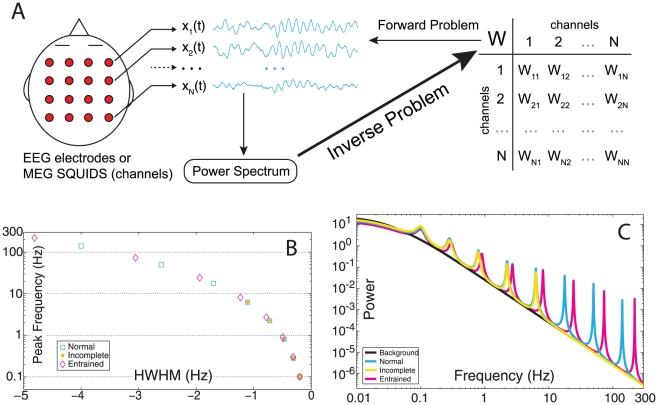
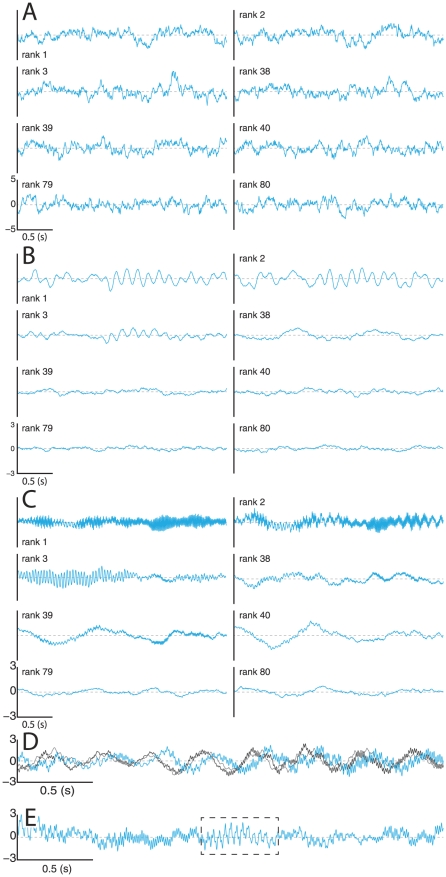
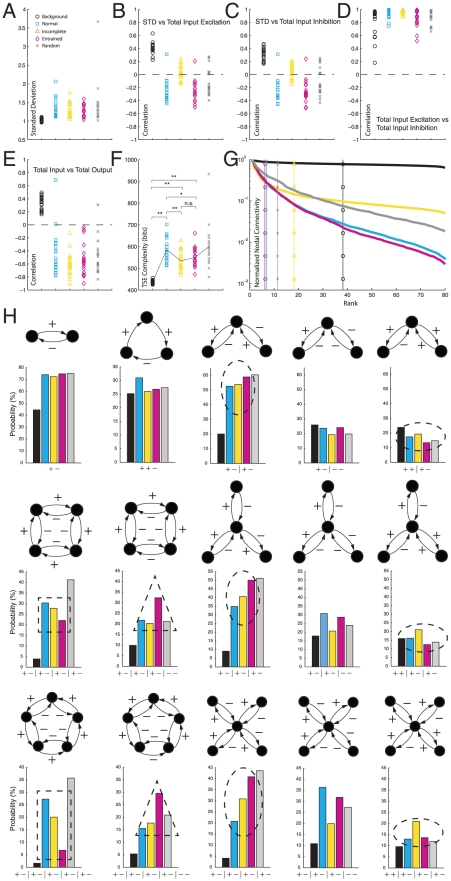
Recordings of ongoing neural activity with EEG and MEG exhibit oscillations of specific frequencies over a non-oscillatory background. The oscillations appear in the power spectrum as a collection of frequency bands that are evenly spaced on a logarithmic scale, thereby preventing mutual entrainment and cross-talk. Over the last few years, experimental, computational and theoretical studies have made substantial progress on our understanding of the biophysical mechanisms underlying the generation of network oscillations and their interactions, with emphasis on the role of neuronal synchronization. In this paper we ask a very different question. Rather than investigating how brain rhythms emerge, or whether they are necessary for neural function, we focus on what they tell us about functional brain connectivity. We hypothesized that if we were able to construct abstract networks, or "virtual brains", whose dynamics were similar to EEG/MEG recordings, those networks would share structural features among themselves, and also with real brains. Applying mathematical techniques for inverse problems, we have reverse-engineered network architectures that generate characteristic dynamics of actual brains, including spindles and sharp waves, which appear in the power spectrum as frequency bands superimposed on a non-oscillatory background dominated by low frequencies. We show that all reconstructed networks display similar topological features (e.g. structural motifs) and dynamics. We have also reverse-engineered putative diseased brains (epileptic and schizophrenic), in which the oscillatory activity is altered in different ways, as reported in clinical studies. These reconstructed networks show consistent alterations of functional connectivity and dynamics. In particular, we show that the complexity of the network, quantified as proposed by Tononi, Sporns and Edelman, is a good indicator of brain fitness, since virtual brains modeling diseased states display lower complexity than virtual brains modeling normal neural function. We finally discuss the implications of our results for the neurobiology of health and disease.
Overview
The claims and statistics of this paper haven’t been checked yet.
Free: it reads the open-access text and checks the first 5 claims that cite a source we can check. Create a free account to check every claim.
Integrity signals
Registry
Cites
Statistics
Figures
Verification
Claims the paper makes
The claims and statistics of this paper haven’t been checked yet.
Free: it reads the open-access text and checks the first 5 claims that cite a source we can check. Create a free account to check every claim.
Claims other papers make about this one
Each is checked against this paper’s own text: does it say what the citing paper says it does?
The source backs part of the claim, not all of it — or backs it for a different population, condition or comparison.
In the citing paper
“Critically, however, there is a hierarchy of resonances in neural systems (Steinke and Galán, 2011; Riddle and Schooler, 2019) such that lower-level resonance (entailing less information integration) may still take place even while higher-level resonances (corresponding to greater degrees of integration) are absent, either temporarily (sleep, seizure, etc.) or permanently (death, in which case”
From The Easy Part of the Hard Problem: A Resonance Theory of Consciousness (2019) · cites this paper as Steinke and Galán, 2011
Experimental — accuracy not yet measured
Self-check
Percentages, sums and reported differences re-computed from the paper’s own numbers.
The self-check needs the paper’s full text.
Citations
Cites
Distributed hierarchical processing in the primate cerebral cortex
Felleman, D. J., & Van Essen, D. C. (1991) · Cerebral Cortex · doi:10.1093/cercor/1.1.1 · Cited by 7,783 · cited 1×
“This is consistent with structural connectivity studies in the macaque showing that 85% of the cortical fiber tracts are bidirectional [40].”
ResultNeuronal Oscillations in Cortical Networks
Buzsáki, G., & Draguhn, A. (2004) · Science · doi:10.1126/science.1099745 · Cited by 6,576 · cited 1×
“We have implemented this algorithm such that reconstructed networks generate brain dynamics in five different scenarios: 1) A power spectrum with evenly spaced frequency bands on a logarithmic scale (‘‘Normal’’ group), a signature of long recordings of ongoing activity from healthy individuals [2].”
MethodSpectral Analysis and Time Series
Preston, D. B. (1983) · Technometrics · doi:10.1080/00401706.1983.10487866 · Cited by 5,011
Buzsáki, G. (2006) · doi:10.1093/acprof:oso/9780195301069.001.0001 · Cited by 4,873 · cited 4×
“systems [1].”
BackgroundResultInfluentialÜber das Elektrenkephalogramm des Menschen
Berger, H. (1929) · Archiv für Psychiatrie und Nervenkrankheiten · doi:10.1007/bf01797193 · Cited by 4,235
Handbook of Stochastic Methods for Physics, Chemistry and the Natural Sciences
Gardiner, C. W. (1985) · Springer Series in Synergetics · doi:10.1007/978-3-662-02452-2 · Cited by 3,703
Excitatory and Inhibitory Interactions in Localized Populations of Model Neurons
Wilson, H. R., & Cowan, J. D. (1972) · Biophysical Journal · doi:10.1016/s0006-3495(72)86068-5 · Cited by 3,623 · cited 1×
“We also note that nonlinear neuronal networks, like those based on the celebrated Wilson-Cowan model [26,27] and the neural-mass models [28–34] frequently possess hyperbolic equilibria.”
BackgroundPreface: Cerebral Cortex Has Come of Age
Goldman-Rakic, P. S., & Rakic, P. (1991) · Cerebral Cortex · doi:10.1093/cercor/1.1.1-a · Cited by 3,393
Statistical Analysis in Climate Research
Storch, H. V., & Zwiers, F. W. (1999) · Cambridge University Press eBooks · doi:10.1017/cbo9780511612336 · Cited by 2,717
High Gamma Power Is Phase-Locked to Theta Oscillations in Human Neocortex
Canolty, R. T., Edwards, E., Dalal, S. S., Soltani, M., Nagarajan, S. S., Kirsch, H. E., Berger, M. S., Barbaro, N. M., & Knight, R. T. (2006) · Science · doi:10.1126/science.1128115 · Cited by 2,650 · cited 1×
“Interactions between frequency bands can also occur in normal individuals but are transient and modulated in different behavioral tasks [16].”
BackgroundNeural synchrony in brain disorders: Relevance for cognitive dysfunctions and pathophysiology
Uhlhaas, P. J., & Singer, W. (2006) · Neuron · doi:10.1016/j.neuron.2006.09.020 · Cited by 2,194
Spectral Analysis and Time Series.
Parzen, E., & Priestley, M. B. (1984) · Journal of the American Statistical Association · doi:10.2307/2288374 · Cited by 1,123
The dynamic brain: from spiking neurons to neural masses and cortical fields
Deco, G., Jirsa, V. K., Robinson, P. A., Breakspear, M., & Friston, K. (2008) · PLoS Computational Biology · doi:10.1371/journal.pcbi.1000092 · Cited by 1,084 · cited 1×
“These approaches, in particular, neural-mass models [29,33,34,44,46,47] are promising to find out the relationship between the functional connectivity matrix investigated here and the physiological parameters referred to above.”
BackgroundSporns, O., & Kötter, R. (2004) · PLoS Biology · doi:10.1371/journal.pbio.0020369 · Cited by 796 · cited 1×
“Along the lines of previous studies [18], we then asked what specific structural motifs (network graphs and subgraphs) may account for the differences in TSE complexity we observed.”
BackgroundKey role of coupling, delay, and noise in resting brain fluctuations
Deco, G., Jirsa, V., McIntosh, A. R., Sporns, O., & Kötter, R. (2009) · Proceedings of the National Academy of Sciences · doi:10.1073/pnas.0901831106 · Cited by 769 · cited 1×
“This challenging task, however, will require a multiscale modeling approach, based on accurate descriptions of the anatomy and physiology of the brain that include synaptic and dendritic filtering, as well as axonal delays, which are known to play an important role in resting brain fluctuations [43].”
BackgroundPower-Law Scaling in the Brain Surface Electric Potential
Miller, K. J., Sorensen, L. B., Ojemann, J. G., & den Nijs, M. (2009) · PLoS Computational Biology · doi:10.1371/journal.pcbi.1000609 · Cited by 742 · cited 1×
“[36] demonstrates that neuronal inputs with Poisson statistics plus synaptic filtering and passive Ohmic filtering in the tissue can account for the power-law drop-off of the spectral background observed in subdural recordings.”
BackgroundHandbook of Stochastic Methods for Physics, Chemistry and the Natural Sciences.
Gardiner, C. W., Bhat, U. N., Stoyan, D., Daley, D. J., Kutoyants, Y. A., & Rao, B. L. S. P. (1986) · Biometrics · doi:10.2307/2531274 · Cited by 717
Sporns, O. (2000) · Cerebral Cortex · doi:10.1093/cercor/10.2.127 · Cited by 710 · cited 7×
“Next, we employed a measure developed by Tononi, Sporns, and Edelman (TSE) to quantify neural complexity based on the covariance matrices of the signals [17], which we analytically derived from each connectivity matrix (Fig.”
BackgroundMethodInfluentialMeasures of degeneracy and redundancy in biological networks
Tononi, G., Sporns, O., & Edelman, G. M. (1999) · Proceedings of the National Academy of Sciences · doi:10.1073/pnas.96.6.3257 · Cited by 632 · cited 1×
“authors [10–13], macroscopic brain activity was modeled as a linear multivariate stochastic system, which in its continuous version in time is equivalent to an Ornstein-Uhlenbeck process [14]”
BackgroundUhlhaas, P. J., Haenschel, C., Nikolic, D., & Singer, W. (2008) · Schizophrenia Bulletin · doi:10.1093/schbul/sbn062 · Cited by 629 · cited 2×
“In addition, since the multi-oscillatory activity of the brain is known to be altered in disease, we also set out to reconstruct virtual brains that reproduce altered EEG and MEG patterns such as those observed in epilepsy [5,7] and schizophrenia [8,9].”
BackgroundStatistical Analysis in Climate Research
Mudelsee, M. (2001) · Computers & Geosciences · doi:10.1016/s0098-3004(00)00143-6 · Cited by 597
Connectivity and complexity: the relationship between neuroanatomy and brain dynamics
Sporns, O., Tononi, G., & Edelman, G. M. (2000) · Neural Networks · doi:10.1016/s0893-6080(00)00053-8 · Cited by 541 · cited 5×
“Next, we employed a measure developed by Tononi, Sporns, and Edelman (TSE) to quantify neural complexity based on the covariance matrices of the signals [17], which we analytically derived from each connectivity matrix (Fig.”
BackgroundInfluentialPropagation and stability of waves of electrical activity in the cerebral cortex
Robinson, P. A., Rennie, C. J., & Wright, J. J. (1997) · Physical Review E · doi:10.1103/physreve.56.826 · Cited by 487
Prediction of electroencephalographic spectra from neurophysiology
Robinson, P. A., Rennie, C. J., Wright, J. J., Bahramali, H., Gordon, E., & Rowe, D. L. (2001) · Physical Review E · doi:10.1103/physreve.63.021903 · Cited by 362 · cited 1×
“We also note that nonlinear neuronal networks, like those based on the celebrated Wilson-Cowan model [26,27] and the neural-mass models [28–34] frequently possess hyperbolic equilibria.”
BackgroundFast Oscillations in Cortical Circuits
Traub, R. D., Whittington, M. A., & Jefferys, J. G. R. (1999) · The MIT Press eBooks · doi:10.7551/mitpress/2962.001.0001 · Cited by 347
Biophysical Mechanisms of Multistability in Resting-State Cortical Rhythms
Freyer, F., Roberts, J. A., Becker, R., Robinson, P. A., Ritter, P., & Breakspear, M. (2011) · The Journal of Neuroscience · doi:10.1523/jneurosci.6693-10.2011 · Cited by 299 · cited 1×
“Recent computational models [37,38] based on experimental observations [39] show that nonlinear thalamocortical coupling may underlie the bistability observed in alpha rhythms, a phenomenon that cannot have Gaussian statistics, and hence, cannot be accounted for by our model.”
BackgroundReliability, synchrony and noise
Ermentrout, G. B., Galán, R. F., & Urban, N. N. (2008) · Trends in Neurosciences · doi:10.1016/j.tins.2008.06.002 · Cited by 262 · cited 1×
“Substantial progress has been made over the last few decades with experiments and computational models in our understanding of the biophysical mechanisms generating brain rhythms, and in particular, on neuronal synchronization [1,3,4,21–24].”
BackgroundSelf-citationNonlinear gain mediating cortical stimulus-response relations
Freeman, W. J. (1979) · Biological Cybernetics · doi:10.1007/bf00337412 · Cited by 260
Galán, R. F., Ermentrout, G. B., & Urban, N. N. (2005) · Physical Review Letters · doi:10.1103/physrevlett.94.158101 · Cited by 259
Self-citationInverse Eigenvalue Problems: Theory, Algorithms, and Applications
Chu, M. T., & Golub, G. H. (2005) · Cited by 250
Unified neurophysical model of EEG spectra and evoked potentials
Rennie, C. J., Robinson, P. A., & Wright, J. J. (2002) · Biological Cybernetics · doi:10.1007/s00422-002-0310-9 · Cited by 238 · cited 1×
“We also note that nonlinear neuronal networks, like those based on the celebrated Wilson-Cowan model [26,27] and the neural-mass models [28–34] frequently possess hyperbolic equilibria.”
BackgroundRole of the temporal domain for response selection and perceptual binding
Engel, A. (1997) · Cerebral Cortex · doi:10.1093/cercor/7.6.571 · Cited by 237 · cited 1×
“In a cognitive context, this inhomogeneous distribution of brain rhythms across nodes supports the idea that oscillations may act as a mechanism for linking perceptual information across sensory and associative areas, as stated by the so-called binding hypothesis [41].”
BackgroundA derivation of a macroscopic field theory of the brain from the quasi-microscopic neural dynamics
Jirsa, V. K., & Haken, H. (1997) · Physica D: Nonlinear Phenomena · doi:10.1016/s0167-2789(96)00166-2 · Cited by 237 · cited 1×
“We also note that nonlinear neuronal networks, like those based on the celebrated Wilson-Cowan model [26,27] and the neural-mass models [28–34] frequently possess hyperbolic equilibria.”
BackgroundTemporal interactions between cortical rhythms
Roopun, A. K. (2008) · frontiers in Neuroscience · doi:10.3389/neuro.01.034.2008 · Cited by 196 · cited 3×
“Substantial progress has been made over the last few decades with experiments and computational models in our understanding of the biophysical mechanisms generating brain rhythms, and in particular, on neuronal synchronization [1,3,4,21–24].”
BackgroundResultBistability and Non-Gaussian Fluctuations in Spontaneous Cortical Activity
Freyer, F., Aquino, K., Robinson, P. A., Ritter, P., & Breakspear, M. (2009) · Journal of Neuroscience · doi:10.1523/jneurosci.0754-09.2009 · Cited by 189 · cited 1×
“Recent computational models [37,38] based on experimental observations [39] show that nonlinear thalamocortical coupling may underlie the bistability observed in alpha rhythms, a phenomenon that cannot have Gaussian statistics, and hence, cannot be accounted for by our model.”
BackgroundOn How Network Architecture Determines the Dominant Patterns of Spontaneous Neural Activity
Galán, R. F. (2008) · PLoS ONE · doi:10.1371/journal.pone.0002148 · Cited by 184 · cited 2×
“A recent paper has taken advantage of this fact to investigate the link between connectivity and spontaneous activity patterns in a neural network model [13].”
BackgroundResultSelf-citationDominguez, Wennberg, R. A., Gaetz, W., Cheyne, D., Snead, O. C., & Velazquez, J. L. P. (2005) · The Journal of Neuroscience · doi:10.1523/jneurosci.1046-05.2005 · Cited by 181 · cited 2×
“In addition, since the multi-oscillatory activity of the brain is known to be altered in disease, we also set out to reconstruct virtual brains that reproduce altered EEG and MEG patterns such as those observed in epilepsy [5,7] and schizophrenia [8,9].”
BackgroundModal analysis of corticothalamic dynamics, electroencephalographic spectra, and evoked potentials
Robinson, P. A., Loxley, P. N., O’Connor, S. C., & Rennie, C. J. (2001) · Physical Review E · doi:10.1103/physreve.63.041909 · Cited by 169 · cited 3×
“In addition, fluctuations around the mean voltage are assumed to be driven by white noise [47].”
BackgroundMechanisms of Cortical Electrical Activity and Emergence of Gamma Rhythm
RENNIE, C. J., Wright, J. J., & Robinson, P. A. (2000) · Journal of Theoretical Biology · doi:10.1006/jtbi.2000.2040 · Cited by 160 · cited 1×
“Previous work by other authors indicates how different levels of organization can be integrated successfully into models of neural activity [29– 31,33,34,44,45], which can explain the emergence of spatiotemporal patterns of EEG activity.”
Backgroundconcatenation underlies interactions between gamma and beta rhythms in neocortex
Roopun, A. K. (2008) · Frontiers in Cellular Neuroscience · doi:10.3389/neuro.03.001.2008 · Cited by 147 · cited 2×
“Substantial progress has been made over the last few decades with experiments and computational models in our understanding of the biophysical mechanisms generating brain rhythms, and in particular, on neuronal synchronization [1,3,4,21–24].”
BackgroundNeurophysical Modeling of Brain Dynamics
Robinson, P. A., RENNIE, C. J., ROWE, D. L., O’Connor, S. C., Wright, J. J., Gordon, E., & Whitehouse, R. W. (2003) · Neuropsychopharmacology · doi:10.1038/sj.npp.1300143 · Cited by 133 · cited 1×
“These approaches, in particular, neural-mass models [29,33,34,44,46,47] are promising to find out the relationship between the functional connectivity matrix investigated here and the physiological parameters referred to above.”
BackgroundWright, J. J., Robinson, P. A., RENNIE, C. J., Gordon, E., Bourke, P. D., Chapman, C., Hawthorn, N., Lees, G. J., & Alexander, D. M. (2001) · Biosystems · doi:10.1016/s0303-2647(01)00148-4 · Cited by 113
Steady states and global dynamics of electrical activity in the cerebral cortex
Robinson, P. A., Rennie, C. J., Wright, J. J., & Bourke, P. D. (1998) · Physical Review E · doi:10.1103/physreve.58.3557 · Cited by 110 · cited 2×
“These approaches, in particular, neural-mass models [29,33,34,44,46,47] are promising to find out the relationship between the functional connectivity matrix investigated here and the physiological parameters referred to above.”
BackgroundCortical Oscillations in Health and Disease
Traub, M., & Whittington, P. (2010) · doi:10.1093/acprof:oso/9780195342796.001.0001 · Cited by 107 · cited 1×
“Substantial progress has been made over the last few decades with experiments and computational models in our understanding of the biophysical mechanisms generating brain rhythms, and in particular, on neuronal synchronization [1,3,4,21–24].”
BackgroundVelázquez, J. L. P., Barceló, F., Hung, Y., Leshchenko, Y., Nenadovic, V., Belkas, J. S., Raghavan, V., Brian, J. A., & Dominguez, L. G. (2009) · International Journal of Psychophysiology · doi:10.1016/j.ijpsycho.2009.05.009 · Cited by 85 · cited 1×
“This is consistent with recent MEG studies revealing decreased functional connectivity, measured as large-scale coordinated dynamics (longrange phase synchronization) in autism-spectrum disorders [35].”
ResultNeural complexity and structural connectivity
Barnett, L., Buckley, C. L., & Bullock, S. (2009) · Physical Review E · doi:10.1103/physreve.79.051914 · Cited by 77 · cited 1×
“Recordings of macroscopic brain activity can be modeled as a linear multivariate stochastic process [12,17].”
BackgroundComplex phase synchronization in epileptic seizures: Evidence for a devil’s staircase
Velázquez, J. L. P., Dominguez, L. G., & Wennberg, R. A. (2007) · Physical Review E · doi:10.1103/physreve.75.011922 · Cited by 13 · cited 2×
“In addition, since the multi-oscillatory activity of the brain is known to be altered in disease, we also set out to reconstruct virtual brains that reproduce altered EEG and MEG patterns such as those observed in epilepsy [5,7] and schizophrenia [8,9].”
Background
Research works printed but not linked: 4
- Steinke GK Galán RF 2011 Virtual Brain Generator. Available: http://www.case.edu/med/galanlab/software.html. Accessed 26 August 2011 PMC3192826 22022251
- Freyer F Roberts JA Becker R Robinson PA Ritter P 2010 Dynamic mechanisms of multistability in the human alpha rhythm. J Neurosci 31 6353 6361 PMC6622680 21525275
- Perez-Velazquez JL Frantseva MV 2011 The Brain-Behaviour Continuum: The subtle transition between sanity and insanity: World Scientific Publishing Company
- Robinson PA Rennie CJ Gordon E Wright JJ Powles R 2000 Prediction and analysis of electroencephalographic spectra in terms of corticothalamic physiology. International J Psychophysiol 35 22 22
Cited by
Complexity of spontaneous brain activity in mental disorders
Takahashi, T. (2013) · Progress in Neuro-Psychopharmacology and Biological Psychiatry · doi:10.1016/j.pnpbp.2012.05.001 · Cited by 159
“…ntropy. rights reserved. organization that remains little understood (Horwitz, 2003), but which is universally characterized as a scale-free network (Barabasi, 2009; Ravasz and Barabasi, 2003; Steinke and Galan, 2011) that is regarded as fractal (self-similar structure over a range of scales).”
BackgroundThe Easy Part of the Hard Problem: A Resonance Theory of Consciousness
Hunt, T., & Schooler, J. W. (2019) · Frontiers in Human Neuroscience · doi:10.3389/fnhum.2019.00378 · Cited by 134
“Critically, however, there is a hierarchy of resonances in neural systems (Steinke and Galán, 2011; Riddle and Schooler, 2019) such that lower-level resonance (entailing less information integration) may still take place even while higher-level resonances (corresponding to greater degrees of integration) are absent, e…”
BackgroundShine, J. M., Handojoseno, A. M. A., Nguyen, T. N., Tran, Y., Naismith, S. L., Nguyen, H. T., & Lewis, S. J. G. (2013) · Clinical Neurophysiology · doi:10.1016/j.clinph.2013.09.006 · Cited by 144
Measures of entropy and complexity in altered states of consciousness
Mateos, D. M., Erra, R. G., Wennberg, R. A., & Velázquez, J. L. P. (2017) · Cognitive Neurodynamics · doi:10.1007/s11571-017-9459-8 · Cited by 133
“Moreover, several computational studies have revealed as well a lower complexity associated with epilepsy and abnormal cognitive states, like schizophrenia (Steinke and Galán 2011).”
BackgroundAntony, A. R., Alexopoulos, A. V., Gonzalez-Martinez, J. A., Mosher, J. C., Jehi, L. E., Burgess, R. C., So, N. K., & Galán, R. F. (2013) · PLoS ONE · doi:10.1371/journal.pone.0077916 · Cited by 93
“Loss of variability and increased excitability was recently noted in virtual brains modeled to simulate pathological states like epilepsy [23].”
BackgroundSelf-citation
Metadata
- Authors
- Steinke, G. K., & Galán, R. F.
- Affiliations
- Case Western Reserve University (US)
- Corresponding author
- Galán, Roberto F.
- ORCID
- Galán, Roberto F.
- Venue
- PLoS Computational Biology
- Publisher
- Public Library of Science (PLoS)
- Published
- 2011-10-13
- Volume
- 7
- Issue
- 10
- Pages
- e1002207
- ISSN
- 1553-734X (ISSN-L)
- 1553-7358
- PMC
- PMC3192826
- OpenAlex
- W2087133542
- Cited by
- 42
- References
- 50
- Citations by year
- 2025: 3 · 2024: 4 · 2023: 5 · 2022: 1 · 2021: 2 · 2020: 2 · 2019: 3 · 2018: 2 · 2017: 3 · 2016: 3 · 2015: 2 · 2014: 2 · 2013: 8 · 2012: 2
- FWCI
- 1.93
- Type
- journal article
- Language
- en
- Open access
- gold
- doi.org
- Locations
- PLoS Computational Biology (publishedVersion, cc-by)
- Europe PMC (PubMed Central) (publishedVersion, cc-by)
- PubMed Central (publishedVersion, cc-by)
- PubMed (publishedVersion)
- RePEc: Research Papers in Economics (submittedVersion)
- DOAJ (DOAJ: Directory of Open Access Journals) (submittedVersion, cc-by-sa)
- Figshare (submittedVersion, cc-by)
- Funders
- Alfred P. Sloan Foundation
- Case Western Reserve University
- Mt. Sinai Health Care Foundation
- Topics
- Life Sciences › Neuroscience › Cognitive Neuroscience › Neural dynamics and brain function
- Life Sciences › Neuroscience › Cognitive Neuroscience › Functional Brain Connectivity Studies
- Physical Sciences › Physics and Astronomy › Statistical and Nonlinear Physics › Nonlinear Dynamics and Pattern Formation
- Keywords
- neural oscillations, functional connectivity, network topology, network inference, spindle, sharp waves, schizophrenia, network complexity, brain fitness, network hierarchy, neuronal synchronization
- MeSH terms
- Brain, Electroencephalography, Humans, Models, Theoretical, Probability
About these checks
Registry, retraction, Cites and statistics results are computed, not judged, with one exception: a printed reference that no index lists is read once by a model before it counts as a citation error. Claims are extracted by a model and kept only when their quote appears verbatim in the text; each cited source is then checked, with a model’s help, for whether it says what the claim relies on. Those verdicts can be wrong — read the claim’s quote and the cited source before relying on one.
Statistics and arithmetic are recomputed, not judged.
Confidence bands are shown only for fields calibrated on our annotated test set. None is calibrated yet, so no band is shown.
What counts as a claim ›How we measure confidence ›How we check this ›
Are you an author, or do you see a problem with this page? Request a review
Data sources
Bibliographic data: Semantic Scholar, OpenAlex, Crossref.
Contains information from the Semantic Scholar Academic Graph Datasets, made available under the ODC Attribution License (ODC-BY 1.0).
Semantic Scholar’s data is described in: Kinney, R., et al. (2023). The Semantic Scholar Open Data Platform. arXiv:2301.10140.
