

The DOI matches its Crossref record; 56 of the 56 references it cites were found in a registry or an index.
DOGS: Reaction-Driven de novo Design of Bioactive Compounds
Open accessAbstract
We present a computational method for the reaction-based de novo design of drug-like molecules. The software DOGS (Design of Genuine Structures) features a ligand-based strategy for automated 'in silico' assembly of potentially novel bioactive compounds. The quality of the designed compounds is assessed by a graph kernel method measuring their similarity to known bioactive reference ligands in terms of structural and pharmacophoric features. We implemented a deterministic compound construction procedure that explicitly considers compound synthesizability, based on a compilation of 25'144 readily available synthetic building blocks and 58 established reaction principles. This enables the software to suggest a synthesis route for each designed compound. Two prospective case studies are presented together with details on the algorithm and its implementation. De novo designed ligand candidates for the human histamine H₄ receptor and γ-secretase were synthesized as suggested by the software. The computational approach proved to be suitable for scaffold-hopping from known ligands to novel chemotypes, and for generating bioactive molecules with drug-like properties.
Overview
The claims and statistics of this paper haven’t been checked yet.
Run the check — free, no account needed. It reads the open-access text and checks the sources it cites.
Integrity signals
Registry
Cites
Statistics
Figures
Verification
Claims the paper makes
The claims and statistics of this paper haven’t been checked yet.
Run the check — free, no account needed. It reads the open-access text and checks the sources it cites.
Claims other papers make about this one
Each is checked against this paper’s own text: does it say what the citing paper says it does?
In the citing paper
“This algorithm applies 58 well-established chemical transformation rules to a set of 25144 readily available synthetic blocks from the Sigma-Aldrich catalog.”
From QSAR without borders (2020) · cites this paper as [154]
Self-check
Percentages, sums and reported differences re-computed from the paper’s own numbers.
The self-check needs the paper’s full text.
Citations
Cites
Lipinski, C. A., Lombardo, F., Dominy, B. W., & Feeney, P. J. (2001) · Advanced Drug Delivery Reviews · doi:10.1016/s0169-409x(00)00129-0 · Cited by 18,139
Lipinski, C. A., Lombardo, F., Dominy, B. W., & Feeney, P. J. (1997) · Advanced Drug Delivery Reviews · doi:10.1016/s0169-409x(96)00423-1 · Cited by 11,484
Partition coefficients and their uses
Leo, A., Hansch, C., & Elkins, D. R. (1971) · Chemical Reviews · doi:10.1021/cr60274a001 · Cited by 4,253 · cited 1×
“A common parameter closely related to lipophilicity is the octanol-water partition coefficient (logP(o/w)) [28].”
BackgroundZINC − A Free Database of Commercially Available Compounds for Virtual Screening
Irwin, J. J., & Shoichet, B. K. (2005) · Journal of Chemical Information and Modeling · doi:10.1021/ci049714+ · Cited by 4,058 · cited 1×
“Louis, MO 63103, USA) catalog containing 56,878 chemical building blocks was downloaded from the ZINC database [16,17].”
MethodLipinski, C. A., Lombardo, F., Dominy, B. W., & Feeney, P. J. (2012) · Advanced Drug Delivery Reviews · doi:10.1016/j.addr.2012.09.019 · Cited by 3,720 · cited 1×
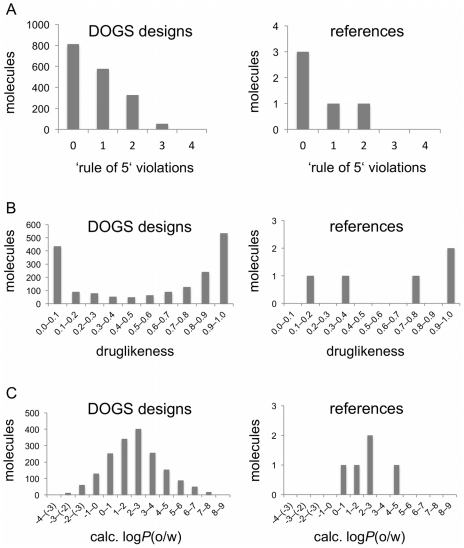
“of Lipinski’s ‘rule of 5’ [25] were recorded for the 1’767 molecules using a descriptor implemented in the software MOE.”
MethodA subset of NSAIDs lower amyloidogenic Aβ42 independently of cyclooxygenase activity
Weggen, S., Eriksen, J. L., Das, P., Sagi, S. A., Wang, R., Pietrzik, C. U., Findlay, K. A., Smith, T. E., Murphy, M. P., Bulter, T., et al. (2001) · Nature · doi:10.1038/35102591 · Cited by 1,388 · cited 1×
“c-Secretase modulators shift the product ratio of APP processing from the highly amyloidogenic Ab42 peptides towards shorter Ab fragments with a lower propensity to aggregate like Ab38 [31,33].”
BackgroundSelf-citationTrypsin Cleaves Exclusively C-terminal to Arginine and Lysine Residues
Olsen, J. V., Ong, S., & Mann, M. (2004) · Molecular & Cellular Proteomics · doi:10.1074/mcp.t400003-mcp200 · Cited by 1,309 · cited 3×
“S1 pocket during peptide bond cleavage [30].”
BackgroundInfluentialThe Chemistry Development Kit (CDK): An Open-Source Java Library for Chemo- and Bioinformatics
Steinbeck, C., Han, Y., Kühn, S., Horlacher, O., Luttmann, E., & Willighagen, E. (2003) · Journal of Chemical Information and Computer Sciences · doi:10.1021/ci025584y · Cited by 1,111 · cited 1×
“2) [23,24].”
Alzheimer's disease: strategies for disease modification
Citron, M. (2010) · Nature Reviews Drug Discovery · doi:10.1038/nrd2896 · Cited by 1,075
Computer-based de novo design of drug-like molecules
Schneider, G., & Fechner, U. (2005) · Nature Reviews Drug Discovery · doi:10.1038/nrd1799 · Cited by 956
Self-citationLewell, X. Q., Judd, D. B., Watson, S. P., & Hann, M. M. (1998) · Journal of Chemical Information and Computer Sciences · doi:10.1021/ci970429i · Cited by 695 · cited 1×
“A prominent example of this kind of rule set is the RECAP [8] (retrosynthetic combinatorial analysis procedure), which is also used by some de novo design tools [9–12].”
MethodSteinbeck, C., Hoppe, C., Kühn, S., Floris, M., Guha, R., & Willighagen, E. (2006) · Current Pharmaceutical Design · doi:10.2174/138161206777585274 · Cited by 463 · cited 1×
“2) [23,24].”
A Potent and Selective Histamine H4 Receptor Antagonist with Anti-Inflammatory Properties
Thurmond, R. L., Desai, P. J., Dunford, P. J., Fung‐Leung, W., Hofstra, C. L., Jiang, W., Nguyen, S. M., Riley, J. P., Sun, S., Williams, K. N., et al. (2004) · Journal of Pharmacology and Experimental Therapeutics · doi:10.1124/jpet.103.061754 · Cited by 354 · cited 1×
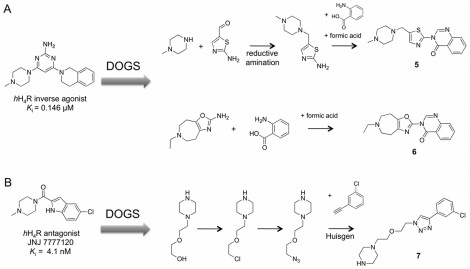
“Compound 7 is a design originating from the hH4R antagonist JNJ7777120 [54] (B).”
BackgroundFeature trees: A new molecular similarity measure based on tree matching
Rarey, M., & Dixon, J. S. (1998) · Journal of Computer-Aided Molecular Design · doi:10.1023/a:1008068904628 · Cited by 329 · cited 1×
“Similar to the FeatureTrees [21] approach, the reduced graph representation employed by DOGS reduces cyclic substructures as”
MethodDiverse compounds mimic Alzheimer disease–causing mutations by augmenting Aβ42 production
Kukar, T. L., Murphy, M. P., Eriksen, J. L., Sagi, S. A., Weggen, S., Smith, T. E., Ladd, T. B., Khan, M. A., Kache, R., Beard, J. D., et al. (2005) · Nature Medicine · doi:10.1038/nm1235 · Cited by 290 · cited 2×
“All subtypes belong to class A (rhodopsin-like) of the G-protein coupled receptor (GPCR) superfamily [35,36].”
BackgroundSelf-citationDe novo design of molecular architectures by evolutionary assembly of drug-derived building blocks
Schneider, G., Lee, M., Ståhl, M., & Schneider, P. (2000) · Journal of Computer-Aided Molecular Design · doi:10.1023/a:1008184403558 · Cited by 252 · cited 1×
“A prominent example of this kind of rule set is the RECAP [8] (retrosynthetic combinatorial analysis procedure), which is also used by some de novo design tools [9–12].”
MethodSelf-citationBioisosteric Replacement and Scaffold Hopping in Lead Generation and Optimization
Langdon, S. R., Ertl, P., & Brown, N. (2010) · Molecular Informatics · doi:10.1002/minf.201000019 · Cited by 234 · cited 1×
“Bioisosteric replacement [29] of functional groups is key to successful de novo design.”
BackgroundStrategic Pooling of Compounds for High-Throughput Screening
Hann, M. M., Hudson, B. D., Lewell, X. Q., Lifely, R., Miller, L., & Ramsden, N. G. (1999) · Journal of Chemical Information and Computer Sciences · doi:10.1021/ci990423o · Cited by 227 · cited 1×
“The set of unwanted substructures is based on definitions described by Hann et al. [1].”
MethodSYNOPSIS: SYNthesize and OPtimize System in Silico
Vinkers, H. M., de Jonge, M. R., Daeyaert, F. F. D., Heeres, J., Koymans, L. M. H., van Lenthe, J. H., Lewi, P. J., Timmerman, H., Aken, K. V., & Janssen, P. A. J. (2003) · Journal of Medicinal Chemistry · doi:10.1021/jm030809x · Cited by 225 · cited 1×
“The software SYNOPSIS [13] follows a conceptually even more elaborate approach by connecting available molecular building blocks using a set of known chemical reactions.”
MethodFragment Based Design of New H4Receptor−Ligands with Anti-inflammatory Properties in Vivo
Smits, R. A., Lim, H. D., Hanzer, A., Zuiderveld, O. P., Guaita, E., Adami, M., Coruzzi, G., Leurs, R., & de Esch, I. J. P. (2008) · Journal of Medicinal Chemistry · doi:10.1021/jm7014217 · Cited by 188
Kim, H. S., Kim, J. J., Lee, B. G., Jung, O. S., Jang, H. G., & Kang, S. O. (2000) · Angewandte Chemie International Edition · doi:10.1002/1521-3773(20001117)39:22 · Cited by 170
Self-citationHartenfeller, M., & Schneider, G. (2010) · Methods in molecular biology · doi:10.1007/978-1-60761-839-3_12 · Cited by 165
Self-citationLipophilicity in Molecular Modeling
Testa, B., Carrupt, P., Gaillard, P., Billois, F., & Weber, P. B. (1996) · Pharmaceutical Research · doi:10.1023/a:1016024005429 · Cited by 164 · cited 2×
“One of the Lipinski guidelines states that a logP(o/w) value greater than five decreases the potential of a molecule to be absorbed [27].”
BackgroundHistamine H3and H4receptors as novel drug targets
Tiligada, E., Zampeli, E., Sander, K., & Stark, H. (2009) · Expert Opinion on Investigational Drugs · doi:10.1517/14728220903188438 · Cited by 141 · cited 1×
“therapy of diseases of the central nervous system, such as epilepsy, schizophrenia and sleep/wake disorders are currently in progress [37].”
BackgroundSelf-citationFlux (1): A Virtual Synthesis Scheme for Fragment-Based de Novo Design
Fechner, U., & Schneider, G. (2005) · Journal of Chemical Information and Modeling · doi:10.1021/ci0503560 · Cited by 108
Self-citationSchneider, E. H., Schnell, D., Papa, D., & Seifert, R. (2009) · Biochemistry · doi:10.1021/bi802050d · Cited by 96
De novodesign: balancing novelty and confined chemical space
Kutchukian, P. S., & Shakhnovich, E. I. (2010) · Expert Opinion on Drug Discovery · doi:10.1517/17460441.2010.497534 · Cited by 93 · cited 1×
“An overview of successful de novo design studies is provided in a recent review article by Kutchukian and Shakhnovich [4].”
MethodSchneider, G., Clément‐Chomienne, O., Hilfiger, L., Schneider, P., Kirsch, S. F., Böhm, H., & Neidhart, W. L. (2000) · PubMed · Cited by 85
Self-citationRecent developments in de novo design and scaffold hopping.
Mauser, H., & Guba, W. (2008) · PubMed · Cited by 76
Sander, K., Kottke, T., Tanrikulu, Y., Proschak, E., Weizel, L., Schneider, E. H., Seifert, R., Schneider, G., & Stark, H. (2009) · Bioorganic & Medicinal Chemistry · doi:10.1016/j.bmc.2009.08.059 · Cited by 72
Self-citationKutchukian, P. S., Lou, D., & Shakhnovich, E. I. (2009) · Journal of Chemical Information and Modeling · doi:10.1021/ci9000458 · Cited by 71 · cited 1×
“For example, some assembly approaches prevent connections between certain atom types, and finally the formation of unwanted substructures [6,7].”
BackgroundConcept of Combinatorial De Novo Design of Drug‐like Molecules by Particle Swarm Optimization
Hartenfeller, M., Proschak, E., Schüller, A., & Schneider, G. (2008) · Chemical Biology & Drug Design · doi:10.1111/j.1747-0285.2008.00672.x · Cited by 69
Self-citationKernel Approach to Molecular Similarity Based on Iterative Graph Similarity
Rupp, M., Proschak, E., & Schneider, G. (2007) · Journal of Chemical Information and Modeling · doi:10.1021/ci700274r · Cited by 68 · cited 1×
“DOGS employs a two-dimensional (2D) graph kernel method (ISOAK [19]) for scoring the designed molecules.”
MethodSelf-citationCostanzo, M. J., Almond, H. R., Hecker, L. R., Schott, M. R., Yabut, S. C., Zhang, H., Andrade‐Gordon, P., Corcoran, T. W., Giardino, E. C., Kauffman, J. A., et al. (2004) · Journal of Medicinal Chemistry · doi:10.1021/jm0303857 · Cited by 68
Flux (2): Comparison of Molecular Mutation and Crossover Operators for Ligand-Based de Novo Design
Fechner, U., & Schneider, G. (2007) · Journal of Chemical Information and Modeling · doi:10.1021/ci6005307 · Cited by 66 · cited 1×
“A prominent example of this kind of rule set is the RECAP [8] (retrosynthetic combinatorial analysis procedure), which is also used by some de novo design tools [9–12].”
MethodSelf-citationPotential utility of histamine H3 receptor antagonist pharmacophore in antipsychotics
von Coburg, Y., Kottke, T., Weizel, L., Ligneau, X., & Stark, H. (2008) · Bioorganic & Medicinal Chemistry Letters · doi:10.1016/j.bmcl.2008.09.012 · Cited by 57
Self-citationFeng, D.-M., Gardell, S. J., Lewis, S. D., Bock, M. G., Chen, Z., Freidinger, R. M., Naylor-Olsen, A. M., Ramjit, H. G., Woltmann, R. F., Baskin, E. P., et al. (1997) · Journal of Medicinal Chemistry · doi:10.1021/jm970493r · Cited by 57 · cited 1×
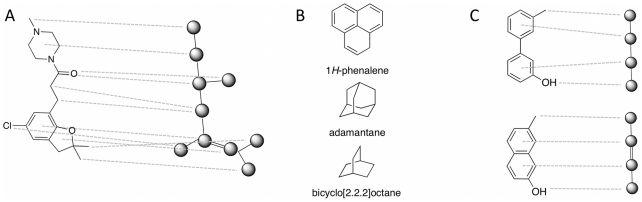
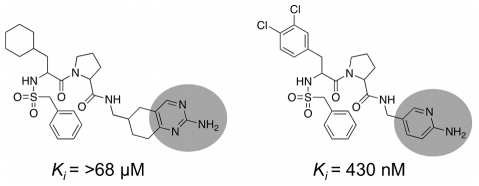
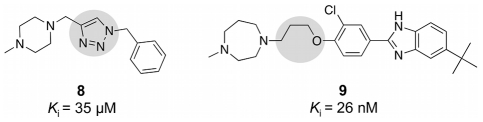
“Known inhibitors of trypsin exhibiting pyrimidin-2-amine [51] (left) and the pyridin-2-amine [52] (right) side-chains (grey circles).”
BackgroundRupp, M., Schroeter, T. S., Steri, R., Zettl, H., Proschak, E., Hansen, K., Rau, O., Schwarz, O., Müller‐Kuhrt, L., Schubert‐Zsilavecz, M., et al. (2009) · ChemMedChem · doi:10.1002/cmdc.200900469 · Cited by 54 · cited 1×
“The graph kernel was originally developed for similarity searching in virtual screening of compound databases, where it has been applied successfully [20].”
MethodSelf-citationMolecular Complexity Analysis of de Novo Designed Ligands
Boda, K., & Johnson, A. P. (2006) · Journal of Medicinal Chemistry · doi:10.1021/jm050054p · Cited by 48 · cited 1×
“Irrespective of the particular technique used, automated de novo design has always been confronted with the issue of synthetic accessibility [1,5].”
MethodIdentification of 2-arylbenzimidazoles as potent human histamine H4 receptor ligands
Lee-Dutra, A., Arienti, K. L., Buzard, D. J., Hack, M. D., Khatuya, H., Desai, P. J., Nguyen, S. M., Thurmond, R. L., Karlsson, L., Edwards, J. P., et al. (2006) · Bioorganic & Medicinal Chemistry Letters · doi:10.1016/j.bmcl.2006.08.117 · Cited by 46
Mathematical Basis of Ring-Finding Algorithms in CIDS
Plotkin, M. (1971) · Journal of Chemical Documentation · doi:10.1021/c160040a013 · Cited by 41
Piperazinyl pyrimidine derivatives as potent γ-secretase modulators
Rivkin, A., Ahearn, S. P., Chichetti, S. M., Kim, Y. R., Li, C., Rosenau, A., Kattar, S. D., Jung, J. O., Shah, S., Hughes, B. L., et al. (2009) · Bioorganic & Medicinal Chemistry Letters · doi:10.1016/j.bmcl.2009.11.101 · Cited by 41 · cited 1×
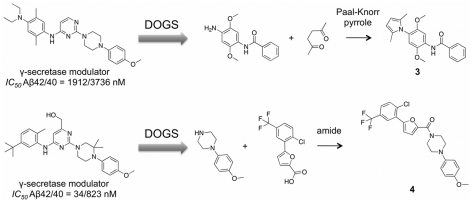
“Molecules 3 and 4 originate from distinct runs based on different reference ligands [53].”
BackgroundReaction-Driven De Novo Design, Synthesis and Testing of Potential Type II Kinase Inhibitors
Schneider, G., Geppert, T., Hartenfeller, M., Reisen, F., Klenner, A., Reutlinger, M., Hähnke, V. D., Hiss, J. A., Zettl, H., Keppner, S., et al. (2011) · Future Medicinal Chemistry · doi:10.4155/fmc.11.8 · Cited by 39
Self-citationHieke, M., Neß, J., Steri, R., Dittrich, M., Greiner, C., Werz, O., Baumann, K., Schubert‐Zsilavecz, M., Weggen, S., & Zettl, H. (2010) · Journal of Medicinal Chemistry · doi:10.1021/jm1003073 · Cited by 36
Self-citationTanrikulu, Y., Proschak, E., Werner, T., Geppert, T., Todoroff, N. K., Klenner, A., Kottke, T., Sander, K., Schneider, E. H., Seifert, R., et al. (2009) · ChemMedChem · doi:10.1002/cmdc.200800443 · Cited by 32
Self-citationNew Orally Active Serine Protease Inhibitors
Senokuchi, K., Nakai, H., Nakayama, Y., Odagaki, Y., Sakaki, K., Kato, M., Maruyama, T., Miyazaki, T., Ito, H., Kamiyasu, K., et al. (1995) · Journal of Medicinal Chemistry · doi:10.1021/jm00014a003 · Cited by 29 · cited 2×
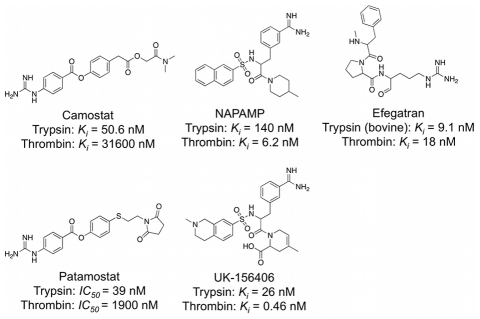
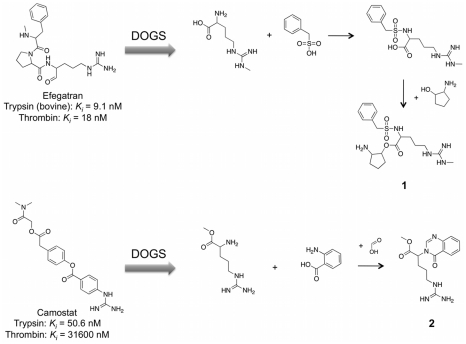
“Five trypsin inhibitors served as reference compounds for DOGS design runs (Camostat [45], NAPAMP [46], Efegatran [47], Patamostat [48,49], UK-156406 [50]).”
BackgroundExploring the chemical space of γ-secretase modulators
Zettl, H., Weggen, S., Schneider, P., & Schneider, G. (2010) · Trends in Pharmacological Sciences · doi:10.1016/j.tips.2010.05.007 · Cited by 26 · cited 2×
“c-Secretase modulators shift the product ratio of APP processing from the highly amyloidogenic Ab42 peptides towards shorter Ab fragments with a lower propensity to aggregate like Ab38 [31,33].”
BackgroundSelf-citationNavigation in Chemical Space: Ligand‐Based Design of Focused Compound Libraries
Schneider, G., & Schneider, P. (2004) · Methods and principles in medicinal chemistry · doi:10.1002/3527603948.ch13 · Cited by 21 · cited 1×
“A second analysis of the drug-likeness of DOGS designs was carried out for the same set of designed compounds using an artificial neural network [26].”
MethodSelf-citationDirect thrombin inhibitors: current status and future prospects
Menear, K. A. (1999) · Expert Opinion on Investigational Drugs · doi:10.1517/13543784.8.9.1373 · Cited by 19 · cited 1×
“Five trypsin inhibitors served as reference compounds for DOGS design runs (Camostat [45], NAPAMP [46], Efegatran [47], Patamostat [48,49], UK-156406 [50]).”
Mašič, L. P., Mlinšek, G., Šolmajer, T., Trampuš-Bakija, A., Stegnar, M., & Kikelj, D. (2003) · Bioorganic & Medicinal Chemistry Letters · doi:10.1016/s0960-894x(03)00030-1 · Cited by 17 · cited 1×
“Known inhibitors of trypsin exhibiting pyrimidin-2-amine [51] (left) and the pyridin-2-amine [52] (right) side-chains (grey circles).”
BackgroundReaction-MQL: Line Notation for Functional Transformation
Reisen, F., Schneider, G., & Proschak, E. (2008) · Journal of Chemical Information and Modeling · doi:10.1021/ci800215t · Cited by 16 · cited 2×
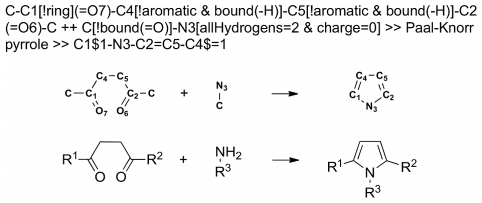
“Reactions were encoded using the formal language Reaction-MQL [15].”
MethodSelf-citationBergner, A., Bauer, M., Brandstetter, H., Stürzebecher, J., & Bode, W. (1995) · Journal of enzyme inhibition · doi:10.3109/14756369509040684 · Cited by 16
Dichloroacetate and cerebral ischaemia therapeutics
Marangos, P. J., Turkel, C. C., Dziewanowska, Z. E., & Fox, A. W. (1999) · Expert Opinion on Investigational Drugs · doi:10.1517/13543784.8.4.373 · Cited by 12
Werner, T., Sander, K., Tanrikulu, Y., Kottke, T., Proschak, E., Stark, H., & Schneider, G. (2010) · ChemBioChem · doi:10.1002/cbic.201000180 · Cited by 11
Self-citationNOCHI, S., Shimomura, N., HATTORI, T., Sato, T., Miyake, Y., & Tanizawa, K. (1989) · Chemical and Pharmaceutical Bulletin · doi:10.1248/cpb.37.2855 · Cited by 7
Miyamoto, K., Hishinuma, I., Nagakawa, J., Nagaoka, N., Yamanaka, T., & Wakabayashi, T. (1988) · Folia Pharmacologica Japonica · doi:10.1254/fpj.91.285 · Cited by 6 · cited 1×
“Five trypsin inhibitors served as reference compounds for DOGS design runs (Camostat [45], NAPAMP [46], Efegatran [47], Patamostat [48,49], UK-156406 [50]).”
Cited by
Sorted by citations
Generating Focused Molecule Libraries for Drug Discovery with Recurrent Neural Networks
Segler, M. H. S., Kogej, T., Tyrchan, C., & Waller, M. P. (2018) · ACS Central Science · doi:10.1021/acscentsci.7b00512 · Cited by 1,537
Molecular de-novo design through deep reinforcement learning
Olivecrona, M., Blaschke, T., Engkvist, O., & Chen, H. (2017) · Journal of Cheminformatics · doi:10.1186/s13321-017-0235-x · Cited by 1,443
“In contrast, the ligand based approach is to generate a large virtual library of chemical structures, and search this chemical space using a scoring function that typically takes into account several properties such as DMPK profiles, synthetic accessibility, bioactivity, and query structure similarity [4, 5].”
BackgroundConcepts of Artificial Intelligence for Computer-Assisted Drug Discovery
Yang, X. Y., Wang, Y., Byrne, R., Schneider, G., & Yang, S. (2019) · Chemical Reviews · doi:10.1021/acs.chemrev.8b00728 · Cited by 1,079
Self-citationMuratov, E. N., Bajorath, J., Sheridan, R. P., Tetko, I. V., Filimonov, D., Poroikov, V., Oprea, T. I., Baskin, I. I., Varnek, A., Roitberg, A., et al. (2020) · Chemical Society Reviews · doi:10.1039/d0cs00098a · Cited by 913
Rethinking drug design in the artificial intelligence era
Schneider, P., Walters, W. P., Plowright, A. T., Sieroka, N., Listgarten, J., Goodnow, R. A., Fisher, J., Jansen, J. M., Duca, J. S., Rush, T. S., et al. (2020) · Nature Reviews Drug Discovery · doi:10.1038/s41573-019-0050-3 · Cited by 894
“…drug design, these generative methods do not learn explicit chemical transformations (for example, forward and/or retrosynthetic reaction schemes) 164 to construct new molecules but instead model the distribution of chemical features of the training data and thereby implicitly capture important…”
BackgroundSelf-citation
Metadata
- Authors
- Hartenfeller, M., Zettl, H., Walter, M., Rupp, M., Reisen, F., Proschak, E., Weggen, S., Stark, H., & Schneider, G.
- Affiliations
- ETH Zurich (CH)
- Goethe University Frankfurt (DE)
- Heinrich Heine University Düsseldorf (DE)
- Corresponding author
- Schneider, Gisbert
- Venue
- PLoS Computational Biology
- Publisher
- Public Library of Science (PLoS)
- Published
- 2012-02-16
- Volume
- 8
- Issue
- 2
- Pages
- e1002380
- ISSN
- 1553-734X (ISSN-L)
- 1553-7358
- PMC
- PMC3280956
- OpenAlex
- W2052933929
- Cited by
- 251
- References
- 56
- Citations by year
- 2026: 3 · 2025: 13 · 2024: 27 · 2023: 16 · 2022: 25 · 2021: 31 · 2020: 25 · 2019: 23 · 2018: 17 · 2017: 9 · 2016: 15 · 2015: 11 · 2014: 12 · 2013: 17 · 2012: 6
- FWCI
- 15.80
- Type
- journal article
- Language
- en
- Open access
- gold
- doi.org
- Locations
- PLoS Computational Biology (publishedVersion, cc-by)
- PubMed Central (publishedVersion, cc-by)
- PubMed (publishedVersion)
- Repository for Publications and Research Data (ETH Zurich) (publishedVersion, cc-by)
- KOPS (University of Konstanz) (submittedVersion, cc-by)
- DOAJ (DOAJ: Directory of Open Access Journals) (submittedVersion)
- Figshare (submittedVersion, cc-by)
- Publication Server of Goethe University Frankfurt am Main (Goethe University Frankfurt) (submittedVersion, cc-by)
- ETH Zürich Research Collection (cc-by)
- Funders
- Deutsche Forschungsgemeinschaft (BM0806)
- Ministry of Education, India
- Topics
- Life Sciences › Pharmacology, Toxicology and Pharmaceutics › Drug Discovery › Computational Drug Discovery Methods
- Physical Sciences › Chemistry › Organic Chemistry › Synthesis and Characterization of Heterocyclic Compounds
- Physical Sciences › Chemistry › Organic Chemistry › Chemical Synthesis and Analysis
- Keywords
- de novo drug design, ligand-based drug design, synthetic building blocks, scaffold hopping, histamine H4 receptor, gamma-secretase, bioactive compounds, drug-likeness
- MeSH terms
- Receptors, Histamine H4, Algorithms, Automation, Computers, Humans, Ligands, Models, Chemical, Receptors, Histamine, Software, Technology, Pharmaceutical, Drug Design, Models, Statistical, Molecular Structure, Computational Biology, Receptors, G-Protein-Coupled, Amyloid Precursor Protein Secretases
About these checks
Registry, retraction, Cites and statistics results are computed, not judged, with one exception: a printed reference that no index lists is read once by a model before it counts as a citation error. Claims are extracted by a model and kept only when their quote appears verbatim in the text; each cited source is then checked, with a model’s help, for whether it says what the claim relies on. Those verdicts can be wrong — read the claim’s quote and the cited source before relying on one.
Statistics and arithmetic are recomputed, not judged.
Confidence bands are shown only for fields calibrated on our annotated test set. None is calibrated yet, so no band is shown.
What counts as a claim ›How we measure confidence ›How we check this ›
Are you an author, or do you see a problem with this page? Request a review
