

Stochastic Dynamics Underlying Cognitive Stability and Flexibility
Open accessThe DOI matches its Crossref record; 96 of the 98 references it cites were found in a registry or an index.
Abstract
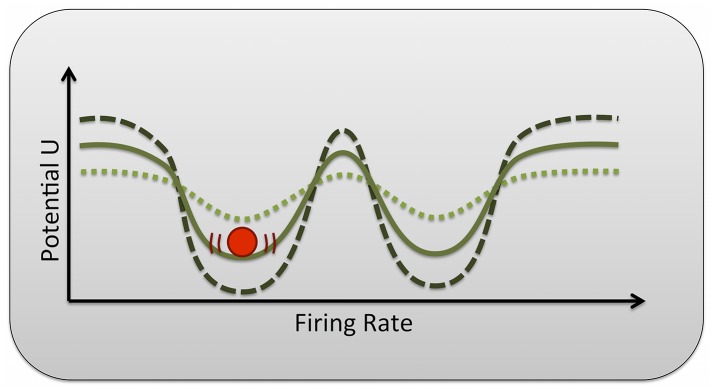
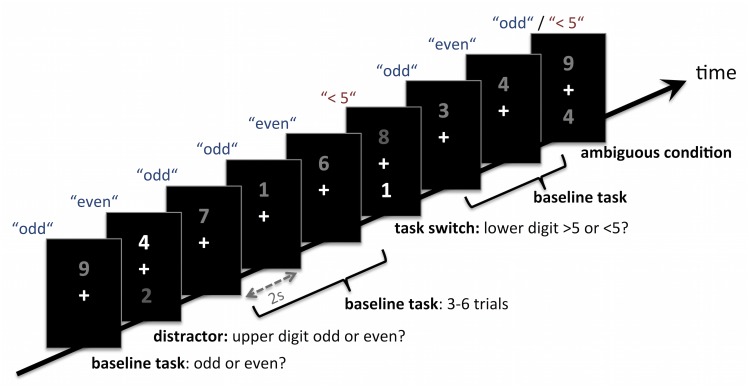
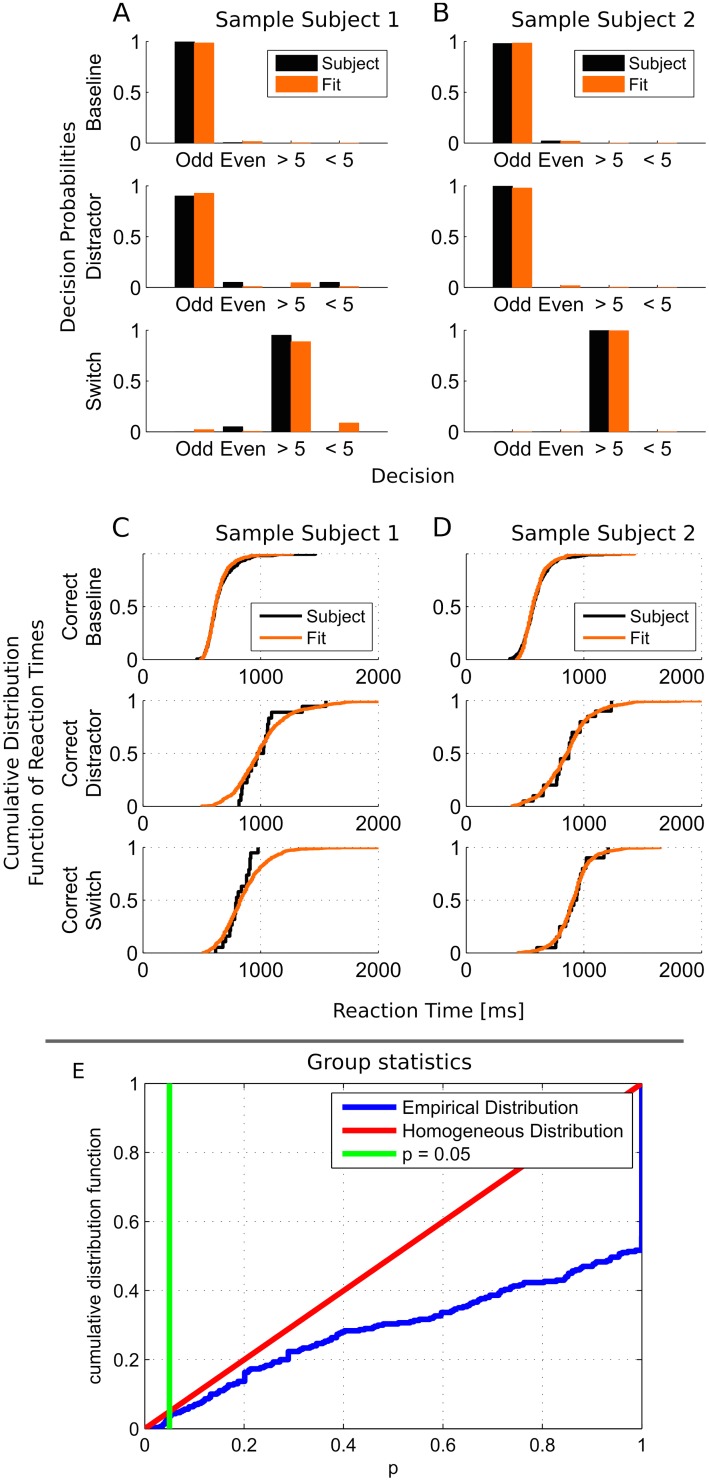
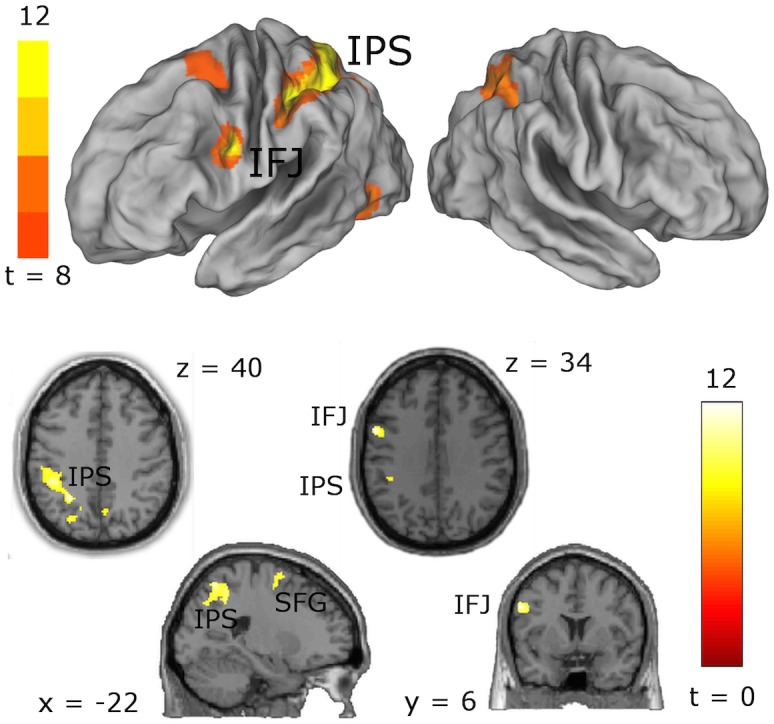
Cognitive stability and flexibility are core functions in the successful pursuit of behavioral goals. While there is evidence for a common frontoparietal network underlying both functions and for a key role of dopamine in the modulation of flexible versus stable behavior, the exact neurocomputational mechanisms underlying those executive functions and their adaptation to environmental demands are still unclear. In this work we study the neurocomputational mechanisms underlying cue based task switching (flexibility) and distractor inhibition (stability) in a paradigm specifically designed to probe both functions. We develop a physiologically plausible, explicit model of neural networks that maintain the currently active task rule in working memory and implement the decision process. We simplify the four-choice decision network to a nonlinear drift-diffusion process that we canonically derive from a generic winner-take-all network model. By fitting our model to the behavioral data of individual subjects, we can reproduce their full behavior in terms of decisions and reaction time distributions in baseline as well as distractor inhibition and switch conditions. Furthermore, we predict the individual hemodynamic response timecourse of the rule-representing network and localize it to a frontoparietal network including the inferior frontal junction area and the intraparietal sulcus, using functional magnetic resonance imaging. This refines the understanding of task-switch-related frontoparietal brain activity as reflecting attractor-like working memory representations of task rules. Finally, we estimate the subject-specific stability of the rule-representing attractor states in terms of the minimal action associated with a transition between different rule states in the phase-space of the fitted models. This stability measure correlates with switching-specific thalamocorticostriatal activation, i.e., with a system associated with flexible working memory updating and dopaminergic modulation of cognitive flexibility. These results show that stochastic dynamical systems can implement the basic computations underlying cognitive stability and flexibility and explain neurobiological bases of individual differences.
Overview
The claims and statistics of this paper haven’t been checked yet.
Free: it reads the open-access text and checks the first 5 claims that cite a source we can check. Create a free account to check every claim.
Integrity signals
Registry
Cites
Statistics
Figures



Verification
Claims the paper makes
The claims and statistics of this paper haven’t been checked yet.
Free: it reads the open-access text and checks the first 5 claims that cite a source we can check. Create a free account to check every claim.
Claims other papers make about this one
Each is checked against this paper’s own text: does it say what the citing paper says it does?
In the citing paper
“Cognitive stability — the opposite of cognitive flexibility — can likewise be beneficial during tasks requiring focused attention and distractor inhibition105.”
From Cognitive and behavioural flexibility: Neural mechanisms and clinical considerations (2021) · cites this paper as [105]
Self-check
Percentages, sums and reported differences re-computed from the paper’s own numbers.
The self-check needs the paper’s full text.
Citations
Cites
Equation of State Calculations by Fast Computing Machines
Metropolis, N., Rosenbluth, A. W., Rosenbluth, M. N., Teller, A. H., & Teller, E. (1953) · The Journal of Chemical Physics · doi:10.1063/1.1699114 · Cited by 37,192
Neural networks and physical systems with emergent collective computational abilities.
Hopfield, J. J. (1982) · Proceedings of the National Academy of Sciences · doi:10.1073/pnas.79.8.2554 · Cited by 19,270 · cited 1×
“Attracting states of neural activity can represent active memories [22,57], the transition from the outer rim of a basin of attraction to its center can explain the auto-associative properties of our memories [58], the transition between different attractor states can model decision-making [59,60], and the passage thr…”
BackgroundMiyake, A., Friedman, N. P., Emerson, M. J., Witzki, A. H., Howerter, A., & Wager, T. D. (2000) · Cognitive Psychology · doi:10.1006/cogp.1999.0734 · Cited by 15,798
Monte Carlo sampling methods using Markov chains and their applications.
Hastings, W. K. (1970) · Biometrika · doi:10.1093/biomet/57.1.97 · Cited by 15,195
Quantum Mechanics and Path Integrals
(1966) · Students Quarterly Journal · doi:10.1049/sqj.1966.0063 · Cited by 9,537
Parallel organization of functionally segregated circuits linking basal ganglia and cortex
Alexander, G. E., DeLong, M. R., & Strick, P. L. (1986) · Annual Review of Neuroscience · doi:10.1146/annurev.ne.09.030186.002041 · Cited by 8,527
Maldjian, J. A., Laurienti, P. J., Kraft, R. A., & Burdette, J. H. (2003) · NeuroImage · doi:10.1016/s1053-8119(03)00169-1 · Cited by 5,085
The Diffusion Decision Model: Theory and Data for Two-Choice Decision Tasks
Ratcliff, R., & McKoon, G. (2008) · Neural Computation · doi:10.1162/neco.2008.12-06-420 · Cited by 3,059 · cited 1×
“These in turn can be linearized to yield drift-diffusion models as they are often used to fit behavioral data [55].”
BackgroundMonsell, S. (2003) · Trends in Cognitive Sciences · doi:10.1016/s1364-6613(03)00028-7 · Cited by 2,984
Cellular basis of working memory
Goldman-Rakic, P. S. (1995) · Neuron · doi:10.1016/0896-6273(95)90304-6 · Cited by 2,663
Cited by
Cognitive and behavioural flexibility: Neural mechanisms and clinical considerations
Uddin, L. Q. (2021) · Nature Reviews Neuroscience · doi:10.1038/s41583-021-00428-w · Cited by 698
Motivation and cognitive control in depression
Grahek, I., Shenhav, A., Musslick, S., Krebs, R. M., & Koster, E. H. W. (2019) · Neuroscience & Biobehavioral Reviews · doi:10.1016/j.neubiorev.2019.04.011 · Cited by 348
Rationalizing constraints on the capacity for cognitive control
Musslick, S., & Cohen, J. D. (2021) · Trends in Cognitive Sciences · doi:10.1016/j.tics.2021.06.001 · Cited by 240
Braun, U., Harneit, A., Pergola, G., Menara, T., Schäfer, A., Betzel, R. F., Zang, Z., Schweiger, J. I., Zhang, X., Schwarz, K., et al. (2021) · Nature Communications · doi:10.1038/s41467-021-23694-9 · Cited by 174
Dynamic graph metrics: Tutorial, toolbox, and tale
Sizemore, A. E., & Bassett, D. S. (2018) · NeuroImage · doi:10.1016/j.neuroimage.2017.06.081 · Cited by 165
Metadata
- Authors
- Ueltzhöffer, K., Armbruster-Genç, D. J. N., & Fiebach, C. J.
- Affiliations
- Goethe University Frankfurt (DE)
- Corresponding author
- Ueltzhöffer, Kai
- Fiebach, Christian J.
- Venue
- PLOS Computational Biology
- Publisher
- Public Library of Science (PLoS)
- Published
- 2015-06-12
- Volume
- 11
- Issue
- 6
- Pages
- e1004331
- ISSN
- 1553-734X (ISSN-L)
- 1553-7358
- PMC
- PMC4466596
- OpenAlex
- W634858973
- Cited by
- 78
- References
- 98
- Citations by year
- 2026: 6 · 2025: 7 · 2024: 15 · 2023: 10 · 2022: 7 · 2021: 13 · 2020: 8 · 2019: 6 · 2018: 2 · 2017: 3 · 2016: 1
- FWCI
- 1.20
- Type
- journal article
- Language
- en
- Open access
- gold
- doi.org
- Licence
- Locations
- PLoS Computational Biology (publishedVersion, cc-by)
- Europe PMC (PubMed Central) (publishedVersion, cc-by)
- PubMed Central (publishedVersion, cc-by)
- PubMed (publishedVersion)
- RePEc: Research Papers in Economics (submittedVersion)
- DOAJ (DOAJ: Directory of Open Access Journals) (submittedVersion, cc-by-sa)
- Figshare (submittedVersion, cc-by)
- Publication Server of Goethe University Frankfurt am Main (Goethe University Frankfurt) (submittedVersion, cc-by)
- Funders
- Deutsche Forschungsgemeinschaft (FI 848/3-1, DFG FI 848/3-1)
- Bundesministerium für Bildung und Forschung (01GQ1003A)
- Topics
- Life Sciences › Neuroscience › Cognitive Neuroscience › Neural and Behavioral Psychology Studies
- Life Sciences › Neuroscience › Cognitive Neuroscience › Neural dynamics and brain function
- Life Sciences › Neuroscience › Cellular and Molecular Neuroscience › Neurotransmitter Receptor Influence on Behavior
- Keywords
- cognitive flexibility, cognitive stability, task switching, distractor inhibition, working memory, drift-diffusion model, winner-take-all networks, attractor dynamics, frontoparietal network, intraparietal sulcus, inferior frontal junction, dopamine, individual differences, reaction time, decision-making
- MeSH terms
- Adult, Brain, Brain Mapping, Cognition, Female, Humans, Magnetic Resonance Imaging, Male, Memory, Short-Term, Models, Neurological, Reaction Time, Task Performance and Analysis, Computational Biology, Young Adult
About these checks
Registry, retraction, Cites and statistics results are computed, not judged, with one exception: a printed reference that no index lists is read once by a model before it counts as a citation error. Claims are extracted by a model and kept only when their quote appears verbatim in the text; each cited source is then checked, with a model’s help, for whether it says what the claim relies on. Those verdicts can be wrong — read the claim’s quote and the cited source before relying on one.
Statistics and arithmetic are recomputed, not judged.
Confidence bands are shown only for fields calibrated on our annotated test set. None is calibrated yet, so no band is shown.
What counts as a claim ›How we measure confidence ›How we check this ›
Are you an author, or do you see a problem with this page? Request a review
How to cite
Cite CoChat for the checks on this page, and the paper for its own findings.
- This page
- CoChat. (2026). Citation check: Stochastic Dynamics Underlying Cognitive Stability and Flexibility. https://app.cochat.ai/papers/10.1371/journal.pcbi.1004331
- The paper
- Ueltzhöffer, K., Armbruster-Genç, D. J. N., & Fiebach, C. J. (2015). Stochastic Dynamics Underlying Cognitive Stability and Flexibility. PLOS Computational Biology. https://doi.org/10.1371/journal.pcbi.1004331
Data sources
Bibliographic data: Semantic Scholar, OpenAlex, Crossref.
Contains information from the Semantic Scholar Academic Graph Datasets, made available under the ODC Attribution License (ODC-BY 1.0).
Semantic Scholar’s data is described in: Kinney, R., et al. (2023). The Semantic Scholar Open Data Platform. arXiv:2301.10140.
