

Meneco, a Topology-Based Gap-Filling Tool Applicable to Degraded Genome-Wide Metabolic Networks
Open accessThe DOI matches its Crossref record; 59 of the 59 references it cites were found in a registry or an index.
Abstract
Increasing amounts of sequence data are becoming available for a wide range of non-model organisms. Investigating and modelling the metabolic behaviour of those organisms is highly relevant to understand their biology and ecology. As sequences are often incomplete and poorly annotated, draft networks of their metabolism largely suffer from incompleteness. Appropriate gap-filling methods to identify and add missing reactions are therefore required to address this issue. However, current tools rely on phenotypic or taxonomic information, or are very sensitive to the stoichiometric balance of metabolic reactions, especially concerning the co-factors. This type of information is often not available or at least prone to errors for newly-explored organisms. Here we introduce Meneco, a tool dedicated to the topological gap-filling of genome-scale draft metabolic networks. Meneco reformulates gap-filling as a qualitative combinatorial optimization problem, omitting constraints raised by the stoichiometry of a metabolic network considered in other methods, and solves this problem using Answer Set Programming. Run on several artificial test sets gathering 10,800 degraded Escherichia coli networks Meneco was able to efficiently identify essential reactions missing in networks at high degradation rates, outperforming the stoichiometry-based tools in scalability. To demonstrate the utility of Meneco we applied it to two case studies. Its application to recent metabolic networks reconstructed for the brown algal model Ectocarpus siliculosus and an associated bacterium Candidatus Phaeomarinobacter ectocarpi revealed several candidate metabolic pathways for algal-bacterial interactions. Then Meneco was used to reconstruct, from transcriptomic and metabolomic data, the first metabolic network for the microalga Euglena mutabilis. These two case studies show that Meneco is a versatile tool to complete draft genome-scale metabolic networks produced from heterogeneous data, and to suggest relevant reactions that explain the metabolic capacity of a biological system.
Overview
The claims and statistics of this paper haven’t been checked yet.
Free: it reads the open-access text and checks the first 5 claims that cite a source we can check. Create a free account to check every claim.
Integrity signals
Registry
Cites
Statistics
Figures
Verification
Claims the paper makes
The claims and statistics of this paper haven’t been checked yet.
Free: it reads the open-access text and checks the first 5 claims that cite a source we can check. Create a free account to check every claim.
Claims other papers make about this one
Each is checked against this paper’s own text: does it say what the citing paper says it does?
The source backs part of the claim, not all of it — or backs it for a different population, condition or comparison.
In the citing paper
“the pathway involved in its synthesis from aspartate was identified in an obligatory symbiont of E. siliculosus algal wall: Candidatus Phaeomarinobacter ectocarpi [23], whereas the PWY-3981 pathway was not evidenced in this brown alga to date [57].”
From Traceability, reproducibility and wiki-exploration for “à-la-carte” reconstructions of genome-scale metabolic models (2018) · cites this paper as [57]
Experimental — accuracy not yet measured
Self-check
Percentages, sums and reported differences re-computed from the paper’s own numbers.
The self-check needs the paper’s full text.
Citations
Cites
What is flux balance analysis?
Orth, J. D., Thiele, I., & Palsson, B. Ø. (2010) · Nature Biotechnology · doi:10.1038/nbt.1614 · Cited by 3,903 · cited 1×
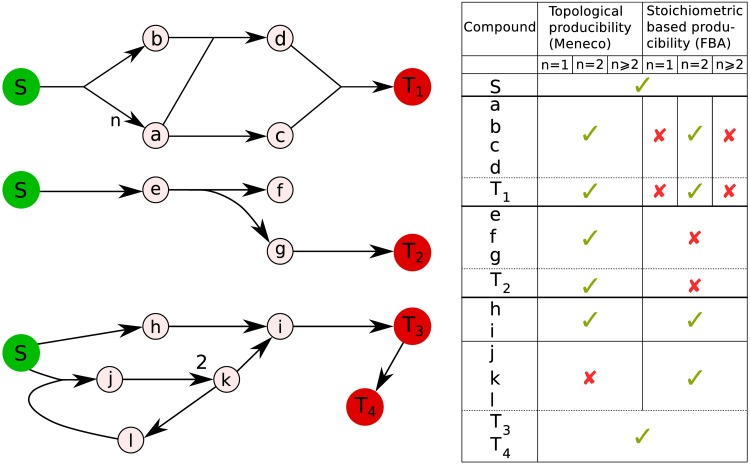
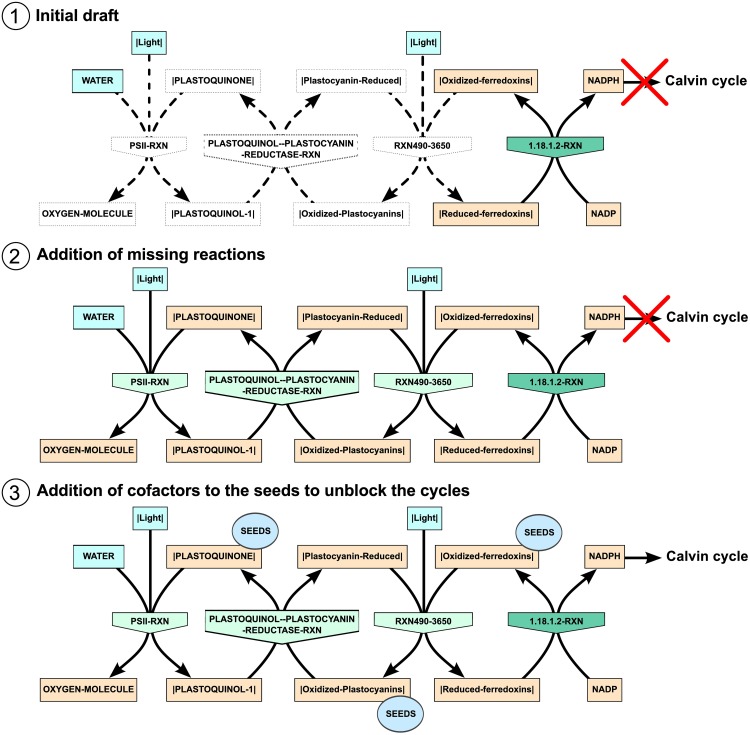
“As described in the third part of Fig 2, this definition excludes the self-production of a compound via cycles as it is allowed in mass-balanced stoichiometric frameworks: Meneco requires the independent production of all inputs in the cycle to “initiate” the reactions [28].”
Caspi, R., Billington, R., Ferrer, L., Foerster, H., Fulcher, C. A., Keseler, I. M., Kothari, A., Krummenacker, M., Latendresse, M., Mueller, L. A., et al. (2016) · Nucleic Acids Research · doi:10.1093/nar/gkv1164 · Cited by 3,395 · cited 3×
“For instance, when comparing the number of reactions in the BioCyc repository [17] version 19.5, we noticed that the 7,296 automatically reconstructed bacterial networks (Tier 3) contained on average 8% fewer reactions than the 27 curated bacterial metabolic networks contained in the manually…”
InfluentialA protocol for generating a high-quality genome-scale metabolic reconstruction
Thiele, I., & Palsson, B. Ø. (2010) · Nature Protocols · doi:10.1038/nprot.2009.203 · Cited by 1,789 · cited 4×
“In this sense, we promote Meneco as a tool to be used as an intermediary step within a workflow consisting of (i) producing a draft GEM [5, 38], (ii) parsimonious gapfilling based on metabolite profiles or RNA-seq datasets with Meneco, (iii) refinement of the model with stoichiometric-based approaches relying on addit…”
InfluentialFeist, A. M., Henry, C. S., Reed, J. L., Krummenacker, M., Joyce, A. R., Karp, P. D., Broadbelt, L. J., Hatzimanikatis, V., & Palsson, B. Ø. (2007) · Molecular Systems Biology · doi:10.1038/msb4100155 · Cited by 1,383 · cited 3×
“Ninety biomass functions for the iJR 904 E. coli GEM [32] were randomly generated.”
COBRApy: COnstraints-Based Reconstruction and Analysis for Python
Ebrahim, A., Lerman, J. A., Palsson, B. O., & Hyduke, D. R. (2013) · BMC Systems Biology · doi:10.1186/1752-0509-7-74 · Cited by 1,378 · cited 1×
“The Flux Balance Analyses studies were performed using the python-based toolbox COBRApy (version 0.3.2) [47] and the GLPK solver.”
InfluentialCaspi, R., Altman, T., Billington, R., Dreher, K., Foerster, H., Fulcher, C. A., Holland, T. A., Keseler, I. M., Kothari, A., Kubo, A., et al. (2014) · Nucleic Acids Research · doi:10.1093/nar/gkt1103 · Cited by 1,204
High-throughput generation, optimization and analysis of genome-scale metabolic models
Henry, C. S., DeJongh, M., Best, A. A., Frybarger, P. M., Linsay, B., & Stevens, R. L. (2010) · Nature Biotechnology · doi:10.1038/nbt.1672 · Cited by 1,090 · cited 3×
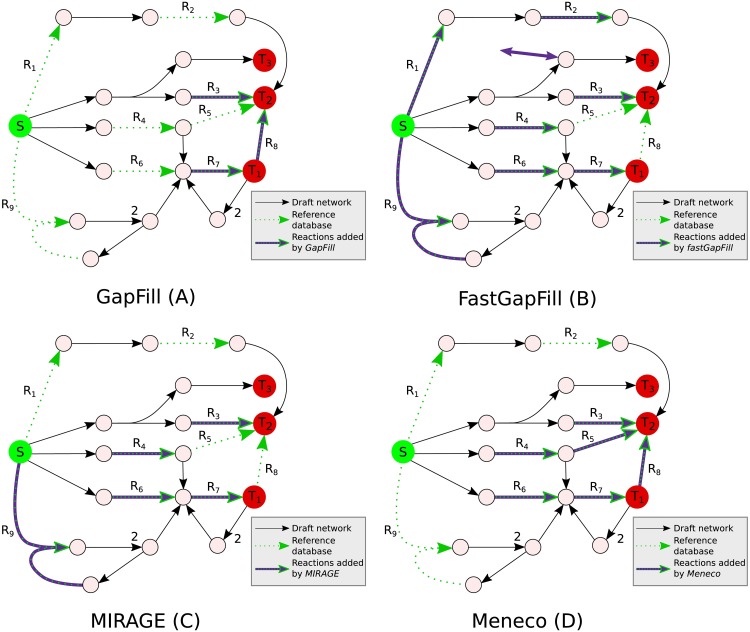
“Identifying these missing reactions constitutes the so-called gap-filling problem ( n.b. considering the diversity of compound producibility and network consistency definitions, we here refer to a family of gap-filling problems rather than a single one) [2].”
Genome-Scale Reconstruction of the Saccharomyces cerevisiae Metabolic Network
Förster, J., Famili, I., Fu, P., Palsson, B. Ø., & Nielsen, J. (2003) · Genome Research · doi:10.1101/gr.234503 · Cited by 1,069
A comprehensive genome-scale reconstruction of Escherichia coli metabolism—2011
Orth, J. D., Conrad, T. M., Na, J., Lerman, J. A., Nam, H., Feist, A. M., & Palsson, B. Ø. (2011) · Molecular Systems Biology · doi:10.1038/msb.2011.65 · Cited by 1,006 · cited 2×
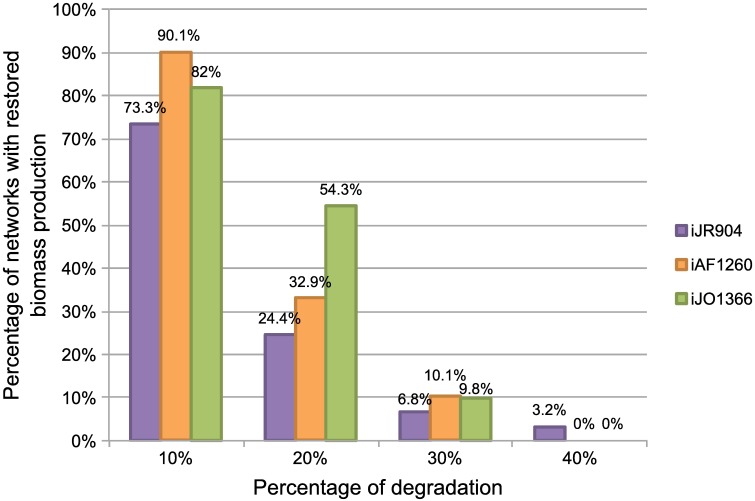
“3,600) additional degraded GEMs of the iAF 1260 [32] and iJO 1366 [33] E. coli networks.”
An expanded genome-scale model of Escherichia coli K-12 (iJR904 GSM/GPR)
Reed, J. L., Vo, T. D., Schilling, C. H., & Palsson, B. O. (2003) · Genome Biology · doi:10.1186/gb-2003-4-9-r54 · Cited by 999 · cited 1×
“We analyzed the following GEMs of E. coli : iJR 904 [44], iAF 1260 [32] and iJO 1366 [33].”
Research works printed but not linked: 1
- Loira N, Zhukova A, Sherman DJ. Pantograph: A template-based method for genome-scale metabolic model reconstruction. Journal of Bioinformatics and Computational Biology. 2015; 13(02): 1550006 Available from: http://www.worldscientific.com/doi/abs/10.1142/S0219720015500067. 25572717 · DOI
Cited by
Zimmermann, J., Kaleta, C., & Waschina, S. (2021) · Genome Biology · doi:10.1186/s13059-021-02295-1 · Cited by 311
From Theory to Practice: Translating Whole-Genome Sequencing (WGS) into the Clinic
Balloux, F., Brønstad Brynildsrud, O., van Dorp, L., Shaw, L. P., Chen, H., Harris, K. A., Wang, H., & Eldholm, V. (2018) · Trends in Microbiology · doi:10.1016/j.tim.2018.08.004 · Cited by 174
Aite, M., Chevallier, M., Frioux, C., Trottier, C., Got, J., Cortés, M. P., Mendoza, S. N., Carrier, G., Dameron, O., Guillaudeux, N., et al. (2018) · PLOS Computational Biology · doi:10.1371/journal.pcbi.1006146 · Cited by 137
“siliculosus algal wall: Candidatus Phaeomarinobacter ectocarpi [23], whereas the PWY-3981 pathway was not evidenced in this brown alga to date [57].”
MetExplore: collaborative edition and exploration of metabolic networks
Cottret, L., Frainay, C., Chazalviel, M., Cabanettes, F., Gloaguen, Y., Camenen, E., Merlet, B., Heux, S., Portais, J.-C., Poupin, N., et al. (2018) · Nucleic Acids Research · doi:10.1093/nar/gky301 · Cited by 134
“Automatic reconstruction tools from genomes (5,18,19) and semi-automatic gap-filling methods (20,21) produce draft reconstructions which need intensive manual curation by several experts (6).”
BackgroundFrioux, C., Singh, D., Korcsmáros, T., & Hildebrand, F. (2020) · Computational and Structural Biotechnology Journal · doi:10.1016/j.csbj.2020.06.028 · Cited by 120
Metadata
- Authors
- Prigent, S., Frioux, C., Dittami, S. M., Thiele, S., Larhlimi, A., Collet, G., Gutknecht, F., Got, J., Eveillard, D., Bourdon, J., Plewniak, F., Tonon, T., & Siegel, A.
- Affiliations
- Centre National de la Recherche Scientifique (FR)
- Institut national de recherche en sciences et technologies du numérique (FR)
- Laboratoire d'informatique de Nantes Atlantique (FR)
- Génétique Moléculaire Génomique Microbiologie (FR)
- Corresponding author
- Prigent, Sylvain
- Siegel, Anne
- ORCID
- Venue
- PLoS Computational Biology
- Publisher
- Public Library of Science (PLoS)
- Published
- 2017-01-27
- Volume
- 13
- Issue
- 1
- Pages
- e1005276
- ISSN
- 1553-734X (ISSN-L)
- 1553-7358
- PMC
- PMC5302834
- OpenAlex
- W2580505401
- Cited by
- 88
- References
- 58
- Citations by year
- 2026: 7 · 2025: 3 · 2024: 9 · 2023: 14 · 2022: 8 · 2021: 12 · 2020: 9 · 2019: 6 · 2018: 12 · 2017: 8
- FWCI
- 3.91
- Type
- journal article
- Language
- en
- Update notices
- new_version (2017-02-10)
- Open access
- gold
- doi.org
- Licence
- Locations
- PLoS Computational Biology (publishedVersion, cc-by)
- PubMed Central (publishedVersion, cc-by)
- PubMed (publishedVersion)
- White Rose Research Online (University of Leeds, The University of Sheffield, University of York) (acceptedVersion)
- HAL (submittedVersion, cc-by)
- HAL (submittedVersion)
- DOAJ (DOAJ: Directory of Open Access Journals) (submittedVersion, cc-by-sa)
- Figshare (submittedVersion, cc-by)
- Chalmers Publication Library (Chalmers University of Technology) (submittedVersion)
- MPG.PuRe (Max Planck Society) (submittedVersion, other-oa)
- Chalmers Research (Chalmers University of Technology) (submittedVersion)
- Funders
- Agence Nationale de la Recherche (IDEALG ANR-10-BTBR-04)
- Topics
- Life Sciences › Biochemistry, Genetics and Molecular Biology › Molecular Biology › Microbial Metabolic Engineering and Bioproduction
- Life Sciences › Biochemistry, Genetics and Molecular Biology › Molecular Biology › Bioinformatics and Genomic Networks
- Life Sciences › Biochemistry, Genetics and Molecular Biology › Molecular Biology › Gene Regulatory Network Analysis
- Keywords
- genome-scale metabolic networks, non-model organisms, combinatorial optimization, answer set programming, Ectocarpus siliculosus, algal-bacterial interactions, Euglena mutabilis, metabolic network reconstruction
- MeSH terms
- Algorithms, Escherichia coli, Software, Genome, Genomics, Databases, Genetic, Metabolic Networks and Pathways, Metabolome, Transcriptome
About these checks
Registry, retraction, Cites and statistics results are computed, not judged, with one exception: a printed reference that no index lists is read once by a model before it counts as a citation error. Claims are extracted by a model and kept only when their quote appears verbatim in the text; each cited source is then checked, with a model’s help, for whether it says what the claim relies on. Those verdicts can be wrong — read the claim’s quote and the cited source before relying on one.
Statistics and arithmetic are recomputed, not judged.
Confidence bands are shown only for fields calibrated on our annotated test set. None is calibrated yet, so no band is shown.
What counts as a claim ›How we measure confidence ›How we check this ›
Are you an author, or do you see a problem with this page? Request a review
How to cite
Cite CoChat for the checks on this page, and the paper for its own findings.
- This page
- CoChat. (2026). Citation check: Meneco, a Topology-Based Gap-Filling Tool Applicable to Degraded Genome-Wide Metabolic Networks. https://app.cochat.ai/papers/10.1371/journal.pcbi.1005276
- The paper
- Prigent, S., Frioux, C., Dittami, S. M., Thiele, S., Larhlimi, A., Collet, G., Gutknecht, F., Got, J., Eveillard, D., Bourdon, J., Plewniak, F., Tonon, T., & Siegel, A. (2017). Meneco, a Topology-Based Gap-Filling Tool Applicable to Degraded Genome-Wide Metabolic Networks. PLoS Computational Biology. https://doi.org/10.1371/journal.pcbi.1005276
Data sources
Bibliographic data: Semantic Scholar, OpenAlex, Crossref.
Contains information from the Semantic Scholar Academic Graph Datasets, made available under the ODC Attribution License (ODC-BY 1.0).
Semantic Scholar’s data is described in: Kinney, R., et al. (2023). The Semantic Scholar Open Data Platform. arXiv:2301.10140.
