

RNA folding using quantum computers
Open accessPublished version of a preprint
The DOI matches its Crossref record; 60 of the 65 references it cites were found in a registry or an index.
Abstract
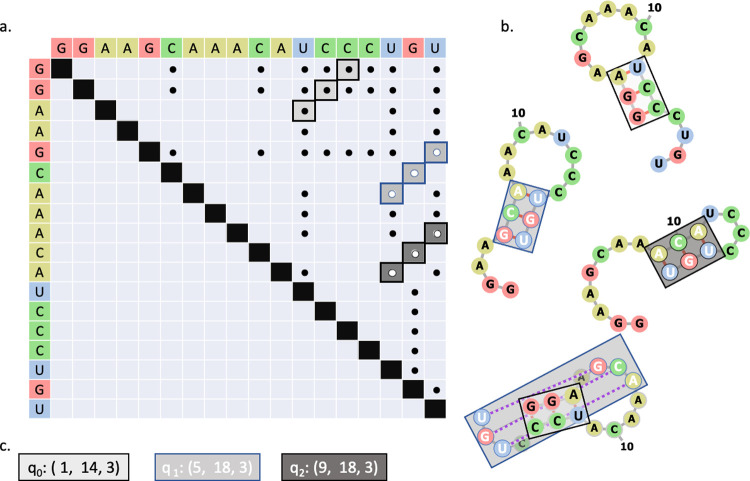
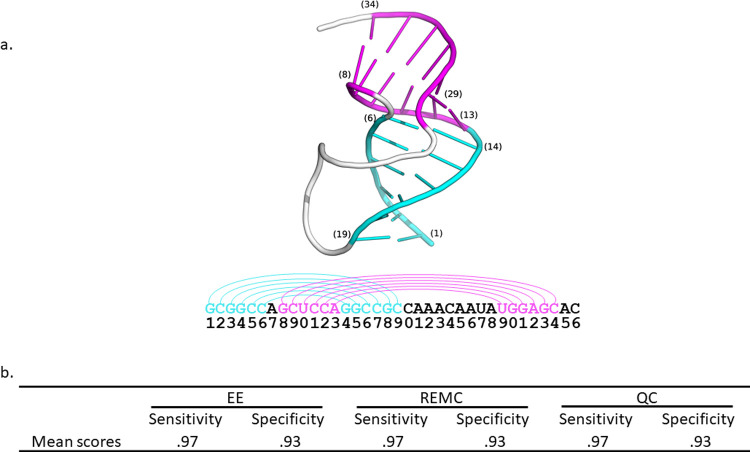
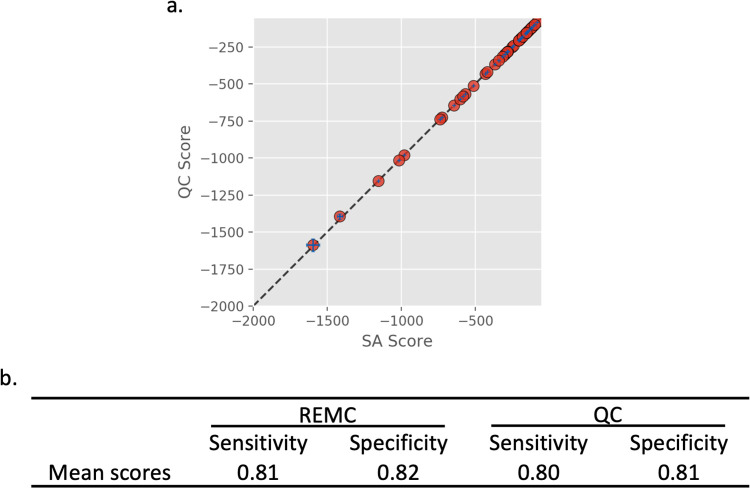
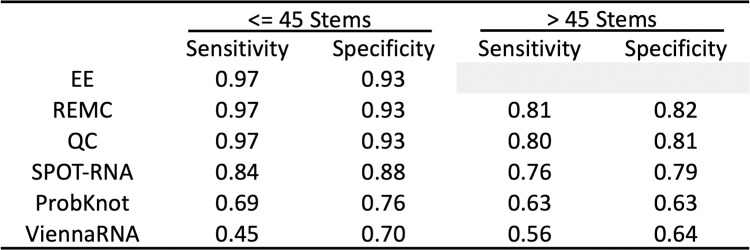
The 3-dimensional fold of an RNA molecule is largely determined by patterns of intramolecular hydrogen bonds between bases. Predicting the base pairing network from the sequence, also referred to as RNA secondary structure prediction or RNA folding, is a nondeterministic polynomial-time (NP)-complete computational problem. The structure of the molecule is strongly predictive of its functions and biochemical properties, and therefore the ability to accurately predict the structure is a crucial tool for biochemists. Many methods have been proposed to efficiently sample possible secondary structure patterns. Classic approaches employ dynamic programming, and recent studies have explored approaches inspired by evolutionary and machine learning algorithms. This work demonstrates leveraging quantum computing hardware to predict the secondary structure of RNA. A Hamiltonian written in the form of a Binary Quadratic Model (BQM) is derived to drive the system toward maximizing the number of consecutive base pairs while jointly maximizing the average length of the stems. A Quantum Annealer (QA) is compared to a Replica Exchange Monte Carlo (REMC) algorithm programmed with the same objective function, with the QA being shown to be highly competitive at rapidly identifying low energy solutions. The method proposed in this study was compared to three algorithms from literature and, despite its simplicity, was found to be competitive on a test set containing known structures with pseudoknots.
Overview
The claims and statistics of this paper haven’t been checked yet.
Free: it reads the open-access text and checks the first 5 claims that cite a source we can check. Create a free account to check every claim.
Integrity signals
Registry
Cites
Statistics
Figures
Verification
Claims the paper makes
The claims and statistics of this paper haven’t been checked yet.
Free: it reads the open-access text and checks the first 5 claims that cite a source we can check. Create a free account to check every claim.
Claims other papers make about this one
Each is checked against this paper’s own text: does it say what the citing paper says it does?
The cited source says what the claim attributes to it.
In the citing paper
“Recently, Fox and his colleagues have shown that the RNA secondary structure prediction issue can be solved as Binary Quadratic Model, which can be addressed using quantum computing [86].”
From Quantum Computing in the Next-Generation Computational Biology Landscape: From Protein Folding to Molecular Dynamics (2024) · cites this paper as [86]
Self-check
Percentages, sums and reported differences re-computed from the paper’s own numbers.
The self-check needs the paper’s full text.
Citations
Cites
Harris, C. R., Millman, K. J., van der Walt, S. J., Gommers, R., Virtanen, P., Cournapeau, D., Wieser, E., Taylor, J., Berg, S., Smith, N. J., et al. (2020) · Nature · doi:10.1038/s41586-020-2649-2 · Cited by 23,826 · cited 3×
“The REMC method was implemented in pure Python and takes advantage of NumPy (44), and Python’s Random and Copy libraries.”
MethodInfluentialHarris, C., Millman, K., van der Walt, S., Gommers, R., Virtanen, P., Cournapeau, D., Wieser, E., Taylor, J., Berg, S., Smith, N., et al. (2020) · RePEc: Research Papers in Economics · Cited by 17,844
Monte Carlo sampling methods using Markov chains and their applications.
Hastings, W. K. (1970) · Biometrika · doi:10.1093/biomet/57.1.97 · Cited by 15,195 · cited 2×
“In each case, if the move improves the objective function, the state is accepted, otherwise the state is accepted subject to the Metropolis-Hastings criteria [51] with a probability proportional to the Boltzmann distribution at a particular temperature.”
BackgroundMethodQuantum supremacy using a programmable superconducting processor
Arute, F., Arya, K., Babbush, R., Bacon, D., Bardin, J. C., Barends, R., Biswas, R., Boixo, S., Brandao, F. G. S. L., Buell, D. A., et al. (2019) · Nature · doi:10.1038/s41586-019-1666-5 · Cited by 7,720 · cited 1×
“To date state-of-the-art quantum devices are able to outperform classical computers in a narrow range of tasks (25,26), however, there have not yet been any concrete demonstrations of quantum advantage for commercial applications primarily due to the fact that QCs are limited in size and capabilities (27).”
BackgroundU1 snRNP regulates cancer cell migration and invasion in vitro
Oh, J.-M., Venters, C. C., Di, C., Pinto, A. M., Wan, L., Younis, I., Cai, Z., Arai, C., So, B. R., Duan, J., et al. (2020) · Nature Communications · doi:10.1038/s41467-019-13993-7 · Cited by 7,157
Lorenz, R., Bernhart, S. H., Höner zu Siederdissen, C., Tafer, H., Flamm, C., Stadler, P. F., & Hofacker, I. L. (2011) · Algorithms for Molecular Biology · doi:10.1186/1748-7188-6-26 · Cited by 5,098 · cited 6×
“Two of the methods, SPOT-RNA [11] and ProbKnot [41], are capable of predicting pseudoknots while the other method, ViennaRNA [42], is not.”
MethodInfluentialOptimal computer folding of large RNA sequences using thermodynamics and auxiliary information
Zuker, M., & Stiegler, P. (1981) · Nucleic Acids Research · doi:10.1093/nar/9.1.133 · Cited by 3,562 · cited 1×
“Classic approaches to sampling RNA secondary structure configurations utilize dynamic programming [9,20,21], while more recent methods have employed simulated annealing and Monte Carlo methods [22–24].”
MethodImproved protein structure prediction using potentials from deep learning
Senior, A. W., Evans, R., Jumper, J., Kirkpatrick, J., Sifre, L., Green, T., Qin, C., Žídek, A., Nelson, A. W. R., Bridgland, A., et al. (2020) · Nature · doi:10.1038/s41586-019-1923-7 · Cited by 3,378
Exchange Monte Carlo Method and Application to Spin Glass Simulations
Hukushima, K., & Nemoto, K. (1996) · Journal of the Physical Society of Japan · doi:10.1143/jpsj.65.1604 · Cited by 2,475
Quantum computational advantage using photons
Zhong, H.-S., Wang, H., Deng, Y.-H., Chen, M.-C., Peng, L.-C., Luo, Y.-H., Qin, J., Wu, D., Ding, X., Hu, Y., et al. (2020) · Science · doi:10.1126/science.abe8770 · Cited by 2,405 · cited 1×
“To date state-of-the-art quantum devices are able to outperform classical computers in a narrow range of tasks (25,26), however, there have not yet been any concrete demonstrations of quantum advantage for commercial applications primarily due to the fact that QCs are limited in size and capabilities (27).”
Background
Research works printed but not linked: 2
- Messenger RNA encoding the full-length SARS-CoV-2 spike glycoprotein. WHO MedNet; 2020.
- Smith-Goodson P. Quantum Computing With Particles Of Light: A $215 Million Gamble. Forbes. Apr 2020.
Cited by
Pal, S., Bhattacharya, M., Lee, S.-S., & Chakraborty, C. (2024) · Molecular Biotechnology · doi:10.1007/s12033-023-00765-4 · Cited by 103
“Recently, Fox and his colleagues have shown that the RNA secondary structure prediction issue can be solved as Binary Quadratic Model, which can be addressed using quantum computing [86].”
The life and death of RNA across temperatures
Becskei, A., & Rahaman, S. (2022) · Computational and Structural Biotechnology Journal · doi:10.1016/j.csbj.2022.08.008 · Cited by 77
Quantum computing in bioinformatics: a systematic review mapping
Nałęcz-Charkiewicz, K., Charkiewicz, K., & Nowak, R. M. (2024) · Briefings in Bioinformatics · doi:10.1093/bib/bbae391 · Cited by 73
“[52] is another paper dealing with the problem of predicting the structure of biological sequences—here the focus is on predicting the secondary structure of RNA, where the task is formulated in the form of a binary quadratic model (BQM).”
BackgroundComputational design of mRNA vaccines
Kim, Y.-A., Mousavi, K., Yazdi, A. K., Zwierzyna, M., Cardinali, M., Fox, D. M., Peel, T., Coller, J., Aggarwal, K., & Maruggi, G. (2023) · Vaccine · doi:10.1016/j.vaccine.2023.07.024 · Cited by 51
Self-citationA primer for quantum computing and its applications to healthcare and biomedical research
Durant, T. J. S., Knight, E., Nelson, B. G., Dudgeon, S. N., Lee, S. J., Walliman, D., Young, H. P., Ohno-Machado, L., & Schulz, W. L. (2024) · Journal of the American Medical Informatics Association · doi:10.1093/jamia/ocae149 · Cited by 55
From GPUs to AI and quantum: three waves of acceleration in bioinformatics
Schmidt, B., & Hildebrandt, A. (2024) · Drug Discovery Today · doi:10.1016/j.drudis.2024.103990 · Cited by 35
D-Wave’s Nonlinear-Program Hybrid Solver: Description and Performance Analysis
Osaba, E., & Miranda-Rodriguez, P. (2025) · IEEE Access · doi:10.1109/access.2025.3525620 · Cited by 41
“The paper ends with Section V, which draws conclusions and outlines potential avenues for future research.”
A biological sequence comparison algorithm using quantum computers
Kösoglu-Kind, B., Loredo, R., Grossi, M., Bernecker, C., Burks, J. M., & Buchkremer, R. (2023) · Scientific Reports · doi:10.1038/s41598-023-41086-5 · Cited by 33
Machine Learning at the Interface of Polymer Science and Biology: How Far Can We Go?
Gianti, E., & Percec, S. (2022) · Biomacromolecules · doi:10.1021/acs.biomac.1c01436 · Cited by 21
mRNA Secondary Structure Prediction Using Utility-Scale Quantum Computers
Alevras, D., Metkar, M., Yamamoto, T., Kumar, V., Friedhoff, T., Park, J.-E., Takeori, M., LaDue, M., Davis, W., & Galda, A. (2024) · 2024 IEEE International Conference on Quantum Computing and Engineering (QCE) · doi:10.1109/qce60285.2024.00064 · Cited by 14
“Previous efforts have focused on developing an objective function to minimize over binary variables, with subsequent optimization carried out on a quantum annealing hardware [14], [15].”
Quantum computing on nucleic acid research: Approaching towards next-generation computing
Chakraborty, C., Bhattacharya, M., Dhama, K., & Lee, S. (2023) · Molecular Therapy — Nucleic Acids · doi:10.1016/j.omtn.2023.06.007 · Cited by 20
“21”
Quantum-Assisted Joint Caching and Power Allocation for Integrated Satellite-Terrestrial Networks
Zhang, Y., Gong, Y., Fan, L., Wang, Y., Han, Z., & Guo, Y. (2024) · IEEE Transactions on Network Science and Engineering · doi:10.1109/tnse.2024.3435444 · Cited by 13
“With these large numbers of qubits, QA has the potential to enhance practical applications such as car manufacturing scheduling [21], RNA folding [22]–[24], and portfolio optimization [25].”
BackgroundA QUBO model of the RNA folding problem optimized by variational hybrid quantum annealing
Zaborniak, T., Giraldo, J., Müller, H. A., Jabbari, H., & Stege, U. (2022) · IEEE International Conference on Quantum Computing and Engineering (QCE) · doi:10.1109/qce53715.2022.00037 · Cited by 19
“[48] which compares the base-pair length of the i-th potential stem to the maximum potential stem length in order to maximize the average stem length.”
BackgroundMethodInfluentialFastHare: Fast Hamiltonian Reduction for Large-scale Quantum Annealing
Thai, P. D., Thai, M. T., Vu, T. N., & Dinh, T. N. (2022) · IEEE International Conference on Quantum Computing and Engineering (QCE) · doi:10.1109/qce53715.2022.00030 · Cited by 13
Quantum Social Computing Approaches for Influence Maximization
Dinh, T. N., Nguyen, A. N., Nguyen, U., & Nguyen, V. G. (2022) · Globecom · doi:10.1109/globecom48099.2022.10000698 · Cited by 13
“QA is the only computing approach that provides a large enough number of qubits for real-world problems from life science [25], portfolio optimization [26], scheduling for car manufacturing [27] and many others [28], [29].”
BackgroundModeling flexible RNA 3D structures and RNA-protein complexes
Loureiro, R. J. S., Maiti, S., Mondal, K., Mukherjee, S., & Bujnicki, J. M. (2025) · Current Opinion in Structural Biology · doi:10.1016/j.sbi.2025.103137 · Cited by 9
Bridging technical innovation and computational advances in studies of RNA–protein assemblies
Ducoli, L., Srinivasan, S., Amjadi, E., & Khavari, P. A. (2026) · Nature Reviews Genetics · doi:10.1038/s41576-026-00931-9 · Cited by 7
“For example, quantum computing offers a powerful way to handle the combinatorially large search space involved in predicting RNA secondary and tertiary structures 286 .”
Poland, G. A., & de la Fuente, J. (2025) · Vaccine · doi:10.1016/j.vaccine.2024.126641 · Cited by 3
Slongo, F., & Micheletti, C. (2025) · Physical Review Research · doi:10.1103/physrevresearch.7.023116 · Cited by 4
Quantum Osteoimmunology: A Paradigm Shift in Understanding and Influencing Bone–Immune Crosstalk
Li, R., Alzaanin, S., Yin, Z., & Smith, P. N. (2025) · ChemMedChem · doi:10.1002/cmdc.202500307 · Cited by 2
Dynamics and Function of sRNA/mRNAs Under the Scrutiny of Computational Simulation Methods
Ormazábal, A., Palma, J., & Pierdominici‐Sottile, G. (2024) · Methods in molecular biology · doi:10.1007/978-1-0716-3565-0_12 · Cited by 2
Haplotype Inference with Pure Parsimony: A Quantum Computing Approach
Nghiem, N.-V.-D., Le, S. V., Nguyen, T. N., & Dinh, T. N. (2024) · International Conference on Communications · doi:10.1109/icc51166.2024.10622443 · Cited by 1
“QA is currently the only quantum computing approach that provides a large enough number of qubits for real-world problems from life science [15], scheduling for car manufacturing [16] and many others [17], [18].”
BackgroundGenerating three-dimensional genome structures with a variational quantum algorithm
Siciliano, A. J., & Wang, Z. (2025) · Briefings in Bioinformatics · doi:10.1093/bib/bbaf663 · Cited by 1
“For example, quantum algorithms have been proposed for de novo genome assembly [ 50–52], mRNA codon optimization [53], the RNA folding problem [54, 55], and protein binding site identification [56].”
Exploring the Boundaries of Modern Quantum Annealers with RNA Structure Prediction
Andrews, B., Abraham, J., Fox, D. M., & Radja, A. (2026) · The Journal of Physical Chemistry B · doi:10.1021/acs.jpcb.5c07902 · Cited by 1
Self-citationQuTIE: quantum optimization for target identification by enzymes
Ngo, H. M., Thai, M. T., & Kahveci, T. (2023) · Bioinformatics Advances · doi:10.1093/bioadv/vbad112 · Cited by 1
“This characteristic enables QA to solve large optimization tasks in bioinformatics such as designing peptides [Mulligan and et al, 2019], RNA folding [Fox and et al, 2022], and DNA sequence assembly [Naecz-Charkiewicz and Nowak, 2022].”
MethodUnderstanding Biomedical Engineering for Quantum Computing
Agrawal, R., & García‐Díaz, V. (2023) · Advances in bioinformatics and biomedical engineering book series · doi:10.4018/979-8-3693-1479-1.ch014 · Cited by 1
A Hybrid Quantum Machine Learning for the Prediction of Protein Folding
Chawhan, P., & Singh, I. (2024) · Studies in autonomic, data-driven and industrial computing · doi:10.1007/978-981-97-5862-3_2
Quantum algorithm for identifying RNA 3D motifs by processing RNA secondary structure graphsPreprint
Fang, J.-K., Guo, F., Ma, T., Zhang, Y., Wang, O., Huang, J.-H., & Li, Y. (2025) · bioRxiv (Cold Spring Harbor Laboratory) · doi:10.1101/2025.04.25.650554
“The application of quantum algorithms to RNA-55 related research [39–41] is gaining significant traction, driven by inherent limitations in classical computational architectures when processing rapidly growing sequenc-58 ing datas.”
Cleavage of MALAT1 RNA by 14-nt sgRNA-guided tRNase ZL
Takahashi, M., & Nashimoto, M. (2025) · PLoS ONE · doi:10.1371/journal.pone.0318968
Applications of Gaussian Boson Sampling to Solve Some Chemistry Problems
Novir, S. B. (2025) · Quantum Reports · doi:10.3390/quantum7040056 · Cited by 1
“…annealing, and adiabatic quantum computing, a quantum annealing machine is the complete kind of analog quantum computer that can resolve certain optimization problems, for instance, optimizing drug design [16–18], traffic, and transportation, without carrying out compu‑ tations on single qubits.”
Hierarchical analysis of RNA secondary structures with pseudoknots based on sections
Masuki, R., Liew, D., & Yong, E. H. (2026) · PLoS Computational Biology · doi:10.1371/journal.pcbi.1013904
Small Molecule Drug Discovery Enhanced by Quantum AI
Karim, M., Sojib, N., Khan, M. Z. I., & Roosan, D. (2026) · Springer eBooks · doi:10.1007/978-3-032-19536-4_8
Beyond the hype: an empirical assessment of quantum computing in bioinformatics
Arcieri, M., Zuliani, P., Carotenuto, G., Carrus, M., & Castrignanò, T. (2026) · Frontiers in High Performance Computing · doi:10.3389/fhpcp.2026.1923360
Metadata
- Authors
- Fox, D. M., MacDermaid, C. M., Schreij, A. M. A., Zwierzyna, M., & Walker, R. C.
- Affiliations
- GlaxoSmithKline (United States) (US)
- GlaxoSmithKline (Italy) (IT)
- University of California San Diego (US)
- Corresponding author
- Walker, Ross C.
- Venue
- PLOS Computational Biology
- Publisher
- Public Library of Science (PLoS)
- Published
- 2022-04-11
- Volume
- 18
- Issue
- 4
- Pages
- e1010032
- ISSN
- 1553-734X (ISSN-L)
- 1553-7358
- PMC
- PMC9022793
- OpenAlex
- W4226331643
- Cited by
- 33
- References
- 60
- Citations by year
- 2026: 5 · 2025: 9 · 2024: 8 · 2023: 6 · 2022: 5
- FWCI
- 2.29
- Type
- journal article
- Language
- en
- Update notices
- new_version (2022-04-21)
- Open access
- gold
- doi.org
- Licence
- Locations
- PLoS Computational Biology (publishedVersion, cc-by)
- bioRxiv (Cold Spring Harbor Laboratory) (acceptedVersion)
- PubMed Central (publishedVersion, cc-by)
- PubMed (publishedVersion)
- RePEc: Research Papers in Economics (submittedVersion)
- DOAJ (DOAJ: Directory of Open Access Journals) (submittedVersion, cc-by-sa)
- Topics
- Life Sciences › Biochemistry, Genetics and Molecular Biology › Molecular Biology › RNA and protein synthesis mechanisms
- Physical Sciences › Mathematics › Theoretical Computer Science › DNA and Biological Computing
- Physical Sciences › Computer Science › Artificial Intelligence › Quantum Computing Algorithms and Architecture
- Keywords
- RNA secondary structure prediction, RNA folding, quantum annealing, Hamiltonian design, parallel tempering, pseudoknot, base pairing, NP-complete problems, quantum computing
- MeSH terms
- Algorithms, Computers, Computing Methodologies, Nucleic Acid Conformation, Quantum Theory, RNA, Computational Biology, RNA Folding
About these checks
Registry, retraction, Cites and statistics results are computed, not judged, with one exception: a printed reference that no index lists is read once by a model before it counts as a citation error. Claims are extracted by a model and kept only when their quote appears verbatim in the text; each cited source is then checked, with a model’s help, for whether it says what the claim relies on. Those verdicts can be wrong — read the claim’s quote and the cited source before relying on one.
Statistics and arithmetic are recomputed, not judged.
Confidence bands are shown only for fields calibrated on our annotated test set. None is calibrated yet, so no band is shown.
What counts as a claim ›How we measure confidence ›How we check this ›
Are you an author, or do you see a problem with this page? Request a review
Data sources
Bibliographic data: Semantic Scholar, OpenAlex, Crossref.
Contains information from the Semantic Scholar Academic Graph Datasets, made available under the ODC Attribution License (ODC-BY 1.0).
Semantic Scholar’s data is described in: Kinney, R., et al. (2023). The Semantic Scholar Open Data Platform. arXiv:2301.10140.
