

Mechanisms Employed by Escherichia coli to Prevent Ribonucleotide Incorporation into Genomic DNA by Pol V
Open accessThe DOI matches its Crossref record; 64 of the 64 references it cites were found in a registry or an index.
Abstract
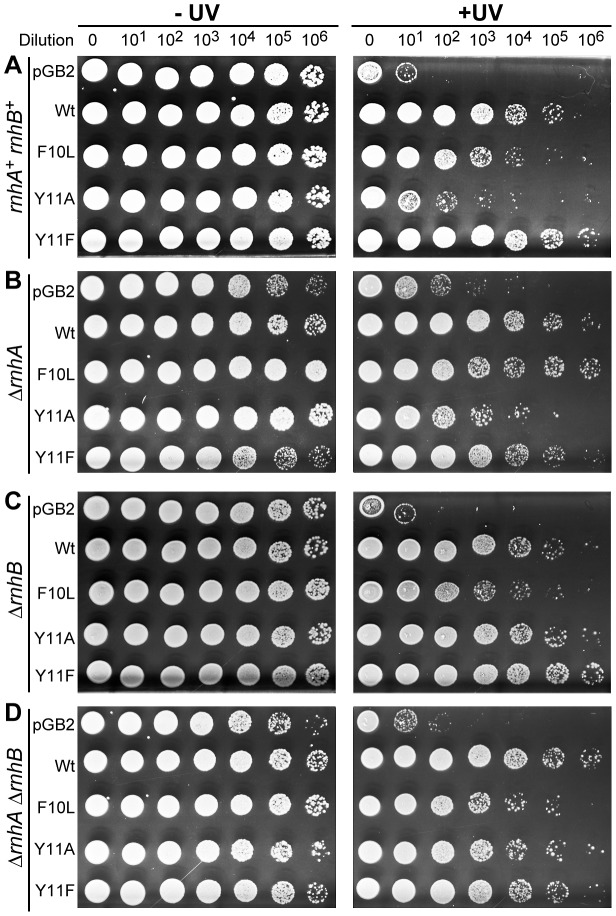
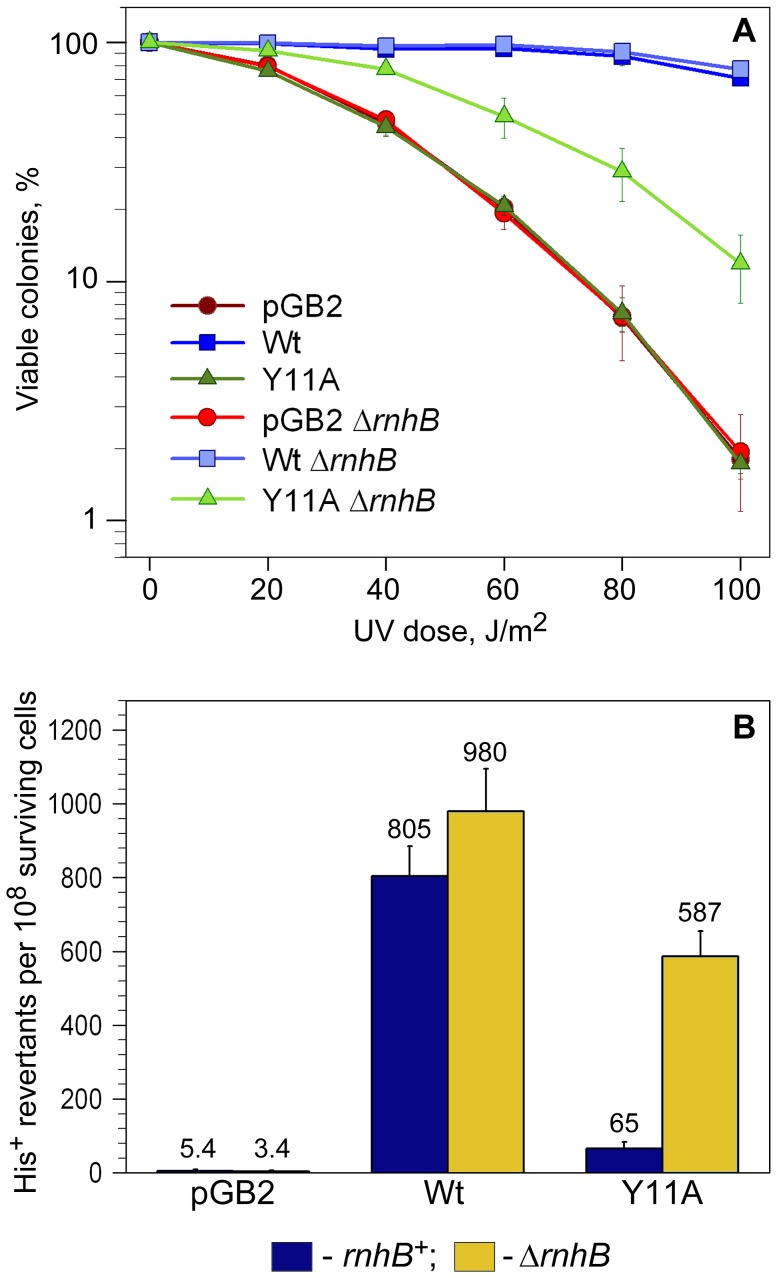
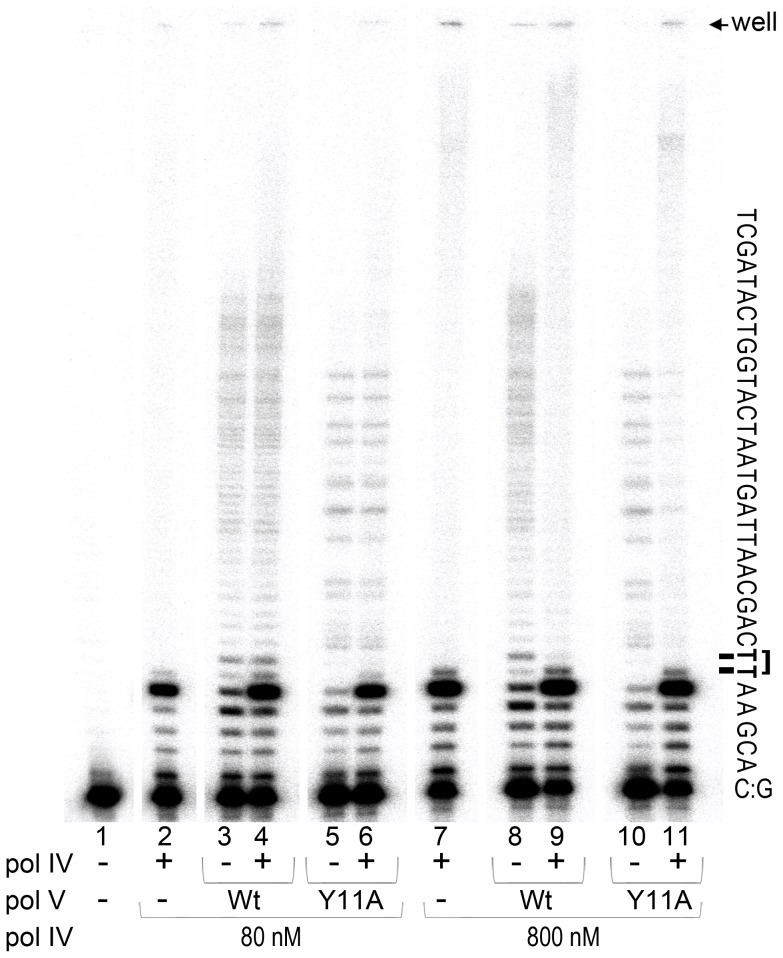
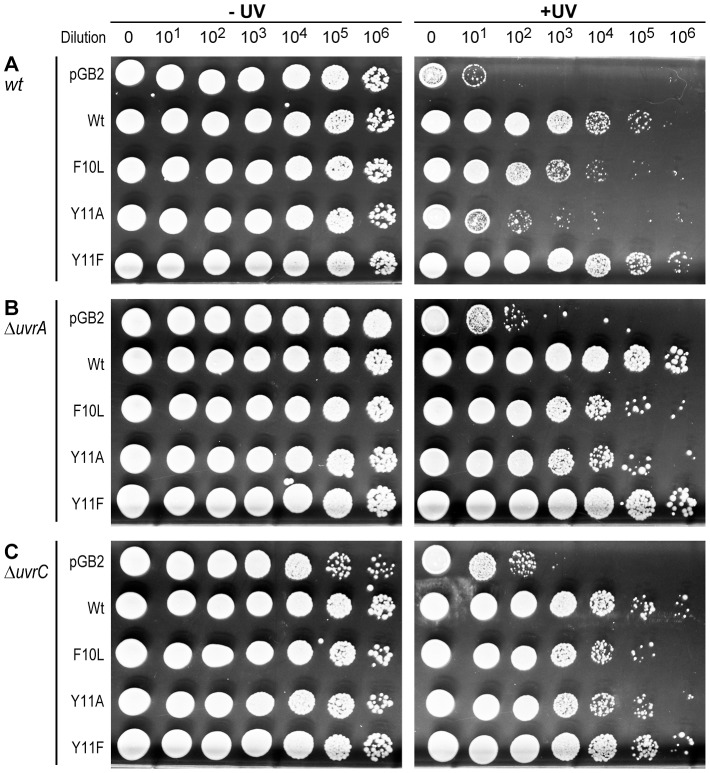
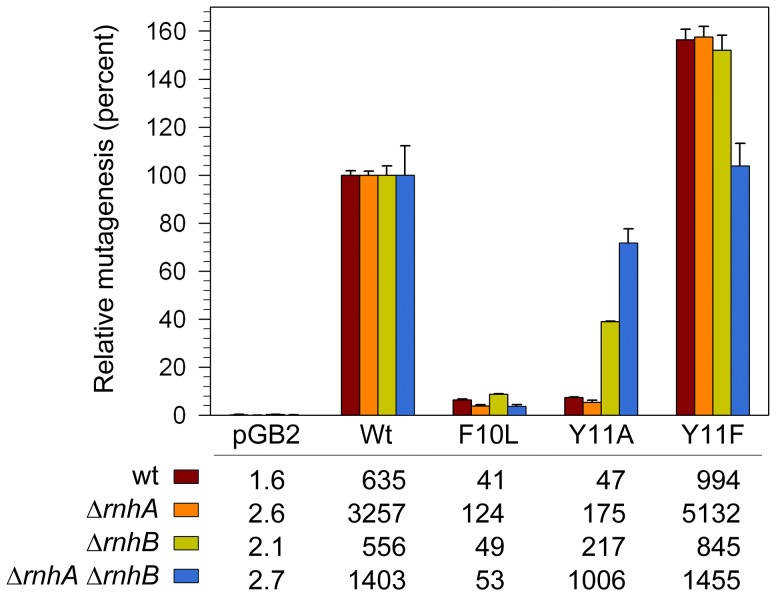
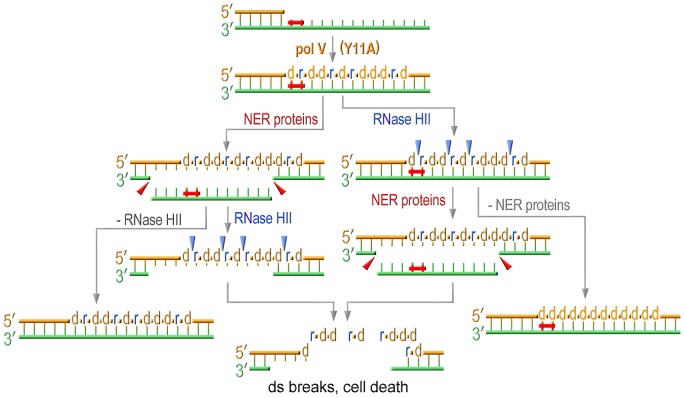
Escherichia coli pol V (UmuD'(2)C), the main translesion DNA polymerase, ensures continued nascent strand extension when the cellular replicase is blocked by unrepaired DNA lesions. Pol V is characterized by low sugar selectivity, which can be further reduced by a Y11A "steric-gate" substitution in UmuC that enables pol V to preferentially incorporate rNTPs over dNTPs in vitro. Despite efficient error-prone translesion synthesis catalyzed by UmuC_Y11A in vitro, strains expressing umuC_Y11A exhibit low UV mutability and UV resistance. Here, we show that these phenotypes result from the concomitant dual actions of Ribonuclease HII (RNase HII) initiating removal of rNMPs from the nascent DNA strand and nucleotide excision repair (NER) removing UV lesions from the parental strand. In the absence of either repair pathway, UV resistance and mutagenesis conferred by umuC_Y11A is significantly enhanced, suggesting that the combined actions of RNase HII and NER lead to double-strand breaks that result in reduced cell viability. We present evidence that the Y11A-specific UV phenotype is tempered by pol IV in vivo. At physiological ratios of the two polymerases, pol IV inhibits pol V-catalyzed translesion synthesis (TLS) past UV lesions and significantly reduces the number of Y11A-incorporated rNTPs by limiting the length of the pol V-dependent TLS tract generated during lesion bypass in vitro. In a recA730 lexA(Def) ΔumuDC ΔdinB strain, plasmid-encoded wild-type pol V promotes high levels of spontaneous mutagenesis. However, umuC_Y11A-dependent spontaneous mutagenesis is only ~7% of that observed with wild-type pol V, but increases to ~39% of wild-type levels in an isogenic ΔrnhB strain and ~72% of wild-type levels in a ΔrnhA ΔrnhB double mutant. Our observations suggest that errant ribonucleotides incorporated by pol V can be tolerated in the E. coli genome, but at the cost of higher levels of cellular mutagenesis.
Overview
The claims and statistics of this paper haven’t been checked yet.
Free: it reads the open-access text and checks the first 5 claims that cite a source we can check. Create a free account to check every claim.
Integrity signals
Registry
Cites
Statistics
Figures
Verification
Claims the paper makes
The claims and statistics of this paper haven’t been checked yet.
Free: it reads the open-access text and checks the first 5 claims that cite a source we can check. Create a free account to check every claim.
Self-check
Percentages, sums and reported differences re-computed from the paper’s own numbers.
The self-check needs the paper’s full text.
Citations
Cites
Molecular Cloning: A Laboratory Manual
Sambrook, J., Fritsch, E., & Maniatis, T. (1989) · UCLA - Biblioteca de Ciencias de la Salud · Cited by 133,589
Construction of Escherichia coli K‐12 in‐frame, single‐gene knockout mutants: the Keio collection
Baba, T., Ara, T., Hasegawa, M., Takai, Y., Okumura, Y., Baba, M., Datsenko, K. A., Tomita, M., Wanner, B. L., & Mori, H. (2006) · Molecular Systems Biology · doi:10.1038/msb4100050 · Cited by 7,858 · cited 1×
“The various alleles were selected by conferring resistance to spectinomycin (20 mg/ml), zeocin (25 mg/ml), chloramphenicol (20 mg/ml) and kanamycin (50 mg/ml) respectively and subsequently confirmed by PCR [54–56].”
Friedberg, E. C., Walker, G. C., Siede, W., Wood, R. D., Schultz, R. A., & Ellenberger, T. (2005) · doi:10.1128/9781555816704 · Cited by 5,683
MUTANTS OF ESCHERICHIA COLI REQUIRING METHIONINE OR VITAMIN B 12
Davis, B. D., & Mingioli, E. S. (1950) · Journal of Bacteriology · doi:10.1128/jb.60.1.17-28.1950 · Cited by 2,881 · cited 1×
“To determine the number of spontaneously arising histidine mutants on the plate, as well as UV-induced mutants, the unirradiated cell culture was seeded on the Davis and Mingioli minimal agar plates [59] plus glucose (0.”
Miller, J. H. (1992) · Medical Entomology and Zoology · Cited by 2,488
Stillman, B. (1995) · Molecular Medicine · doi:10.1007/bf03401885 · Cited by 1,025
Identification of additional genes belonging to the LexA regulon in Escherichia coli
Fernández de Henestrosa, A. R., Ogi, T., Aoyagi, S., Chafin, D., Hayes, J. J., Ohmori, H., & Woodgate, R. (2000) · Molecular Microbiology · doi:10.1046/j.1365-2958.2000.01826.x · Cited by 570 · cited 2×
“The strains employed here carry the lexA51(Def) allele which has a frameshift mutation in the C-terminus of LexA [40], that leads to constitutive expression of all LexA-regulated genes [41], including all three TLS polymerases, pol II, pol IV and pol V.”
Self-citationKato, T., & Shinoura, Y. (1977) · Molecular and General Genetics MGG · doi:10.1007/bf00283484 · Cited by 568 · cited 2×
“Y-family polymerases, pol IV, encoded by the dinB gene [4,5], and pol V, the product of the umuC and umuD genes [6], are devoid of exonucleolytic proofreading and are characterized by lowfidelity DNA synthesis on undamaged DNA [7,8].”
The dinB Gene Encodes a Novel E. coli DNA Polymerase, DNA Pol IV, Involved in Mutagenesis
Wagner, J., Gruz, P., Kim, S.-R., Yamada, M., Matsui, K., Fuchs, R. P. P., & Nohmi, T. (1999) · Molecular Cell · doi:10.1016/s1097-2765(00)80376-7 · Cited by 474
Roles of E. coli DNA polymerases IV and V in lesion-targeted and untargeted SOS mutagenesis
Tang, M., Pham, P., Shen, X., Taylor, J.-S., O'Donnell, M., Woodgate, R., & Goodman, M. F. (2000) · Nature · doi:10.1038/35010020 · Cited by 443 · cited 2×
“The major reaction product observed was located immediately adjacent to the 39 base of the CPD, with a very small band corresponding to nucleotide incorporation opposite the 39T of CPD, as previously reported [18].”
Self-citation
Cited by
Ribonucleotides in DNA: Origins, repair and consequences
Williams, J. S., & Kunkel, T. A. (2014) · DNA Repair · doi:10.1016/j.dnarep.2014.03.029 · Cited by 169
“Tyrosine 11 is the steric gate residue in the active site of Pol V that limits ribonucleotide incorporation, such that the Y11A variant is highly promiscuous for ribonucleotide incorporation in vitro, so much so that it can incorporate multiple consecutive ribonucleotides [69].”
BackgroundRibose-seq: global mapping of ribonucleotides embedded in genomic DNA
Koh, K. D., Balachander, S., Hesselberth, J. R., & Storici, F. (2015) · Nature Methods · doi:10.1038/nmeth.3259 · Cited by 122
Aprataxin resolves adenylated RNA–DNA junctions to maintain genome integrity
Tumbale, P., Williams, J. S., Schellenberg, M. J., Kunkel, T. A., & Williams, R. S. (2014) · Nature · doi:10.1038/nature12824 · Cited by 109
Vaisman, A., McDonald, J. P., Huston, D., Kuban, W., Liu, L., Van Houten, B., & Woodgate, R. (2013) · PLoS Genetics · doi:10.1371/journal.pgen.1003878 · Cited by 70
“umuC_Y11A-dependent spontaneous mutagenesis increased significantly in a DrnhB background and to a much larger extent when both rnhB and rnhA were inactivated [11] (Fig.”
InfluentialSelf-citationRNA intrusions change DNA elastic properties and structure
Chiu, H.-C., Koh, K. D., Evich, M., Lesiak, A. L., Germann, M. W., Bongiorno, A., Riedo, E., & Storici, F. (2014) · Nanoscale · doi:10.1039/c4nr01794c · Cited by 56
Investigating the mechanisms of ribonucleotide excision repair in Escherichia coli
Vaisman, A., McDonald, J. P., Noll, S., Huston, D., Loeb, G., Goodman, M. F., & Woodgate, R. (2014) · Mutation Research - Fundamental and Molecular Mechanisms of Mutagenesis · doi:10.1016/j.mrfmmm.2014.01.005 · Cited by 43
“The involvement of RNase HI in RER in this case, is possible because the sugar discrimination of umuC_Y11A is so low that it is able to catalyze incorporation of multiple ribonucleotides consecutively producing RNA/DNA hybrids which could be processed by RNase HI [5].”
BackgroundMethodSelf-citationRibonucleotide discrimination by translesion synthesis DNA polymerases
Vaisman, A., & Woodgate, R. (2018) · Critical Reviews in Biochemistry and Molecular Biology · doi:10.1080/10409238.2018.1483889 · Cited by 40
“…DeLucia et al. 2006; Jarosz et al. 2006; Niimi et al. 2009; Katafuchi et al. 2010; Sherrer et al. 2010; Brown et al. 2010b; Kirouac et al. 2011; Ketkar et al. 2012; Kuban et al. 2012; McDonald et al. 2012; Vaisman et al. 2012a; Donigan et al. 2014; Ordonez et al. 2014; Ordonez and Shuman 2014).”
BackgroundSelf-citationMutagenic cost of ribonucleotides in bacterial DNA
Schroeder, J. W., Randall, J. R., Hirst, W. G., O’Donnell, M. E., & Simmons, L. A. (2017) · Proceedings of the National Academy of Sciences · doi:10.1073/pnas.1710995114 · Cited by 37
RNA∶DNA Hybrids Initiate Quasi-Palindrome-Associated Mutations in Highly Transcribed Yeast DNA
Kim, N., Cho, J.-E., Li, Y. C., & Jinks-Robertson, S. (2013) · PLoS Genetics · doi:10.1371/journal.pgen.1003924 · Cited by 40
“low discrimination between dNTPs and rNTPs [51].”
Ribonucleotide triggered DNA damage and RNA-DNA damage responses
Wallace, B. D., & Williams, R. S. (2014) · RNA Biology · doi:10.4161/15476286.2014.992283 · Cited by 35
Zatopek, K. M., Potapov, V., Maduzia, L. L., Alpaslan, E., Chen, L., Evans, T. C., Ong, J. L., Ettwiller, L. M., & Gardner, A. F. (2019) · DNA Repair · doi:10.1016/j.dnarep.2019.06.007 · Cited by 31
Ribonucleotides in bacterial DNA
Schroeder, J. W., Randall, J. R., Matthews, L. A., & Simmons, L. A. (2015) · Critical Reviews in Biochemistry and Molecular Biology · doi:10.3109/10409238.2014.981647 · Cited by 31
“Deletion of the rnhB gene (RNase HII) from prokaryotes or inactivation of RNase H2 from eukaryotes shows the accumulation of ribonucleotides in vivo, as judged by alkaline sensitivity of isolated genomic DNA (Lu et al., 2012b; McDonald et al., 2012; Nick McElhinny et al., 2010b; Reijns et al., 2012; Yao et al., 2013).”
BackgroundInfluentialRibonucleotide incorporation into DNA during DNA replication and its consequences
Zhou, Z.-X., Williams, J. S., Lujan, S. A., & Kunkel, T. A. (2021) · Critical Reviews in Biochemistry and Molecular Biology · doi:10.1080/10409238.2020.1869175 · Cited by 30
“The C-family replicative polymerases (Yao et al. 2013) and Y-family TLS polymerases (McDonald et al. 2012; Ordonez et al. 2014) are known to incorporate ribonucleotides.”
BackgroundInfluentialBalachander, S., Gombolay, A. L., Yang, T., Xu, P., Newnam, G., Keskin, H., El-Sayed, W. M. M., Bryksin, A. V., Tao, S., Bowen, N. E., et al. (2020) · Nature Communications · doi:10.1038/s41467-020-16152-5 · Cited by 29
Tannous, E., Kanaya, E. N., & Kanaya, S. (2015) · Scientific Reports · doi:10.1038/srep09969 · Cited by 34
Redundancy in ribonucleotide excision repair: Competition, compensation, and cooperation
Vaisman, A., & Woodgate, R. (2015) · DNA Repair · doi:10.1016/j.dnarep.2015.02.008 · Cited by 29
Self-citationSubstrate Specificity for Bacterial RNases HII and HIII Is Influenced by Metal Availability
Randall, J. R., Hirst, W. G., & Simmons, L. A. (2018) · Journal of Bacteriology · doi:10.1128/jb.00401-17 · Cited by 27
Donigan, K. A., Cerritelli, S. M., McDonald, J. P., Vaisman, A., Crouch, R. J., & Woodgate, R. (2015) · DNA repair · doi:10.1016/j.dnarep.2015.07.002 · Cited by 30
Self-citationRibonucleotide incorporation by yeast DNA polymerase ζ
Makarova, А. V., McElhinny, S. A. N., Watts, B. E., Kunkel, T. A., & Burgers, P. (2014) · DNA repair · doi:10.1016/j.dnarep.2014.02.017 · Cited by 23
“coli is accompanied by frequent ribonucleotide incorporation, and if the dNMP/rNMP discrimination capacity of the machinery is reduced, genome stability is negatively affected [15].”
Background“Life is short, and art is long”: RNA degradation in cyanobacteria and model bacteria
Zhang, J., Hess, W. R., & Zhang, C. (2022) · mLife · doi:10.1002/mlf2.12015 · Cited by 24
“RNase HII is involved in removing the misincorporated rNMPs in genomic DNA 92,93,101 .”
BackgroundInvestigation of bacterial nucleotide excision repair using single-molecule techniques
Houten, B. V., & Kad, N. M. (2014) · DNA repair · doi:10.1016/j.dnarep.2013.10.012 · Cited by 22
“Finally, it has been recently shown that DNA polymerases occasionally insert ribonucleotides into DNA during DNA replication causing a highly mutagenic lesion [35,36].”
BackgroundRNA polymerase drives ribonucleotide excision DNA repair in E. coli
Hao, Z., Gowder, M., Proshkin, S., Bharati, B. K., Epshtein, V., Svetlov, V., Shamovsky, I., & Nudler, E. (2023) · Cell · doi:10.1016/j.cell.2023.04.029 · Cited by 19
Prister, L. L., Ozer, E. A., Cahoon, L. A., & Seifert, H. S. (2019) · Molecular Microbiology · doi:10.1111/mmi.14356 · Cited by 20
“While RNase HII family enzymes can act on R-loops, they are more often involved in removing ribonucleotides during replication (Itaya, 1990; McDonald et al., 2012).”
BackgroundA polar filter in DNA polymerases prevents ribonucleotide incorporation
Johnson, M. K., Kottur, J., & Nair, D. T. (2019) · Nucleic Acids Research · doi:10.1093/nar/gkz792 · Cited by 18
El-Sayed, W. M. M., Gombolay, A. L., Xu, P., Yang, T., Jeon, Y., Balachander, S., Newnam, G., Tao, S., Bowen, N. E., Brůna, T., et al. (2021) · iScience · doi:10.1016/j.isci.2020.102005 · Cited by 12
“…cells (Caldecott, 2014; Cavanaugh et al., 2010; Clausen et al., 2013; Gosavi et al., 2012; Kasiviswanathan and Copeland, 2011; Kennedy et al., 2012; Lemor et al., 2018; McDonald et al., 2012; Nick McElhinny et al., 2010; Potenski and Klein, 2014; Williams and Kunkel, 2014; Williams et al., 2016).”
BackgroundEscherichia coli DNA replication: the old model organism still holds many surprises
Łazowski, K., Woodgate, R., & Fijałkowska, I. J. (2024) · FEMS Microbiology Reviews · doi:10.1093/femsre/fuae018 · Cited by 13
Self-citationWalsh, E. M., Henrikus, S. S., Vaisman, A., Makiela‐Dzbenska, K., Armstrong, T. J., Łazowski, K., McDonald, J. P., Goodman, M. F., van Oijen, A. M., Jonczyk, P., et al. (2019) · DNA repair · doi:10.1016/j.dnarep.2019.102685 · Cited by 11
“RW1044a recA730 lexA51(Def) Δ(umuDC)596::ermGT ΔdinB61::ble ΔrnhA319::cat [25]”
BackgroundInfluentialSelf-citationMcDonald, J. P., Quiros, D. R., Vaisman, A., Mendez, A. R., Reyelt, J., Schmidt, M., Gonzalez, M., & Woodgate, R. (2021) · Molecular Microbiology · doi:10.1111/mmi.14777 · Cited by 7
“RW520a ∆umuDC596::ermGT hisG4(Oc) galK2(Oc) LGI stocks RW584a ∆umuDC596::ermGT lexA51(Def) recA730 hisG4(Oc) galK2(Oc) (McDonald et al., 2012)”
Self-citationTannous, E., & Kanaya, S. (2014) · PLoS ONE · doi:10.1371/journal.pone.0109016 · Cited by 6
Tracking Escherichia coli DNA polymerase V to the entire genome during the SOS response
Faraz, M., Woodgate, R., & Clausen, A. R. (2021) · DNA repair · doi:10.1016/j.dnarep.2021.103075 · Cited by 5
“coli strains in which pol V would be expected to be highly active [recA730 lexA51(Def)] and also deficient in the major ribonucleotide excision repair pathway, due to a deletion of RNase HII (ΔrnhB) [15].”
BackgroundSelf-citationPermanasari, E. D., Yasukawa, K., & Kanaya, S. (2015) · Molecular Biotechnology · doi:10.1007/s12033-015-9846-5 · Cited by 3
You, D., Jongruja, N., Tannous, E., Angkawidjaja, C., Koga, Y., & Kanaya, S. (2014) · Journal of Structural Biology · doi:10.1016/j.jsb.2014.06.005 · Cited by 3
“…and Dirksen, 1982), although quite a few RNases H (RNases H2) have an ability to cleave duplex DNA containing a single ribonucleotide misincorporated during replication at the 50 side of the ribonucleotide (Lazzaro et al., 2012; Reijns et al., 2012; Sparks et al., 2012; McDonald et al., 2012).”
BackgroundRibonucleotide errors, RNase HII, and ribonucleotide excision repair
Cresti, J. R., & Simmons, L. A. (2026) · Critical Reviews in Biochemistry and Molecular Biology · doi:10.1080/10409238.2026.2704628
“Bacterial RER was first explored in E. coli, when it was discovered that the Y11A mutation of the steric gate residue in the translesion polymerase DNA polymerase V (umuC, Pol V) led to increased spontaneous mutagenesis in vitro but not in vivo (McDonald et al. 2012; Vaisman et al. 2013; 2014).”
Specificity and regulation of Escherichia coli Y family DNA polymerase V
Hawver, L. A. (2013) · Digital Repository Service (Northeastern University) · doi:10.17760/d20003244
Łazowski, K., & Makiela‐Dzbenska, K. (2019) · Postępy Biochemii · doi:10.18388/pb.2019_247
Genome instability in bacteria and archaea: Strategies for maintaining genome stability
Golubov, A. (2021) · Elsevier eBooks · doi:10.1016/b978-0-323-85679-9.00004-0
DNA repair | UmuDC Lesion Bypass DNA Polymerase V
Beuning, P. J., Stern, H. R., & Dilworth, R. J. (2020) · Elsevier eBooks · doi:10.1016/b978-0-12-809633-8.21484-2
Metadata
- Authors
- McDonald, J. P., Vaisman, A., Kuban, W., Goodman, M. F., & Woodgate, R.
- Affiliations
- National Institutes of Health (US)
- University of Southern California (US)
- Corresponding author
- Woodgate, Roger
- Venue
- PLoS Genetics
- Publisher
- Public Library of Science (PLoS)
- Published
- 2012-11-08
- Volume
- 8
- Issue
- 11
- Pages
- e1003030
- ISSN
- 1553-7390 (ISSN-L)
- 1553-7404
- PMC
- PMC3493448
- OpenAlex
- W1979994225
- Semantic Scholar
- 13e80ce0d7d27daeea4216085f5eb85b42fb3080
- Cited by
- 38
- References
- 64
- Citations by year
- 2026: 1 · 2024: 1 · 2023: 1 · 2022: 1 · 2021: 4 · 2020: 3 · 2019: 5 · 2018: 1 · 2017: 3 · 2015: 5 · 2014: 9 · 2013: 4
- FWCI
- 2.32
- Type
- journal article
- Language
- en
- Open access
- gold
- doi.org
- Licence
- Locations
- PLoS Genetics (publishedVersion, public-domain)
- Europe PMC (PubMed Central) (publishedVersion, public-domain)
- PubMed Central (publishedVersion, public-domain)
- PubMed (publishedVersion)
- DOAJ (DOAJ: Directory of Open Access Journals) (submittedVersion, cc-by-sa)
- Figshare (submittedVersion, cc-by)
- Funders
- National Institutes of Health (ESO12259, GM21422)
- U.S. Public Health Service (ESO12259)
- National Institute of General Medical Sciences (GM 21422, R37GM021422, R01GM021422)
- National Institute of Child Health and Human Development
- Topics
- Life Sciences › Biochemistry, Genetics and Molecular Biology › Molecular Biology › DNA Repair Mechanisms
- Life Sciences › Biochemistry, Genetics and Molecular Biology › Genetics › Bacterial Genetics and Biotechnology
- Life Sciences › Biochemistry, Genetics and Molecular Biology › Molecular Biology › DNA and Nucleic Acid Chemistry
- Keywords
- Escherichia coli, DNA polymerase V, UmuC, translesion synthesis, ribonucleotide incorporation, nucleotide excision repair, UV mutagenesis, UV resistance, DNA polymerase IV, spontaneous mutagenesis, DNA damage bypass, DNA double-strand breaks, RecA
- MeSH terms
- DNA-Directed DNA Polymerase, DNA Repair, DNA, Bacterial, Escherichia coli, Ribonucleotides, Ultraviolet Rays, Mutagenesis, Genome, Bacterial, Ribonuclease H, Escherichia coli Proteins
About these checks
Registry, retraction, Cites and statistics results are computed, not judged, with one exception: a printed reference that no index lists is read once by a model before it counts as a citation error. Claims are extracted by a model and kept only when their quote appears verbatim in the text; each cited source is then checked, with a model’s help, for whether it says what the claim relies on. Those verdicts can be wrong — read the claim’s quote and the cited source before relying on one.
Statistics and arithmetic are recomputed, not judged.
Confidence bands are shown only for fields calibrated on our annotated test set. None is calibrated yet, so no band is shown.
What counts as a claim ›How we measure confidence ›How we check this ›
Are you an author, or do you see a problem with this page? Request a review
Data sources
Bibliographic data: Semantic Scholar, OpenAlex, Crossref.
Contains information from the Semantic Scholar Academic Graph Datasets, made available under the ODC Attribution License (ODC-BY 1.0).
Semantic Scholar’s data is described in: Kinney, R., et al. (2023). The Semantic Scholar Open Data Platform. arXiv:2301.10140.
