

Mechanisms Employed by Escherichia coli to Prevent Ribonucleotide Incorporation into Genomic DNA by Pol V
Open accessThe DOI matches its Crossref record; 64 of the 64 references it cites were found in a registry or an index.
Abstract
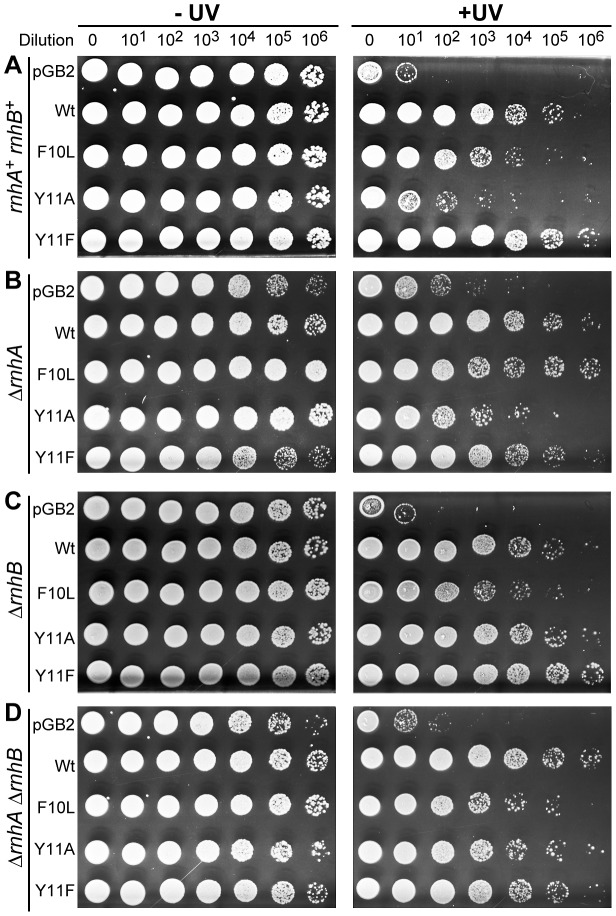
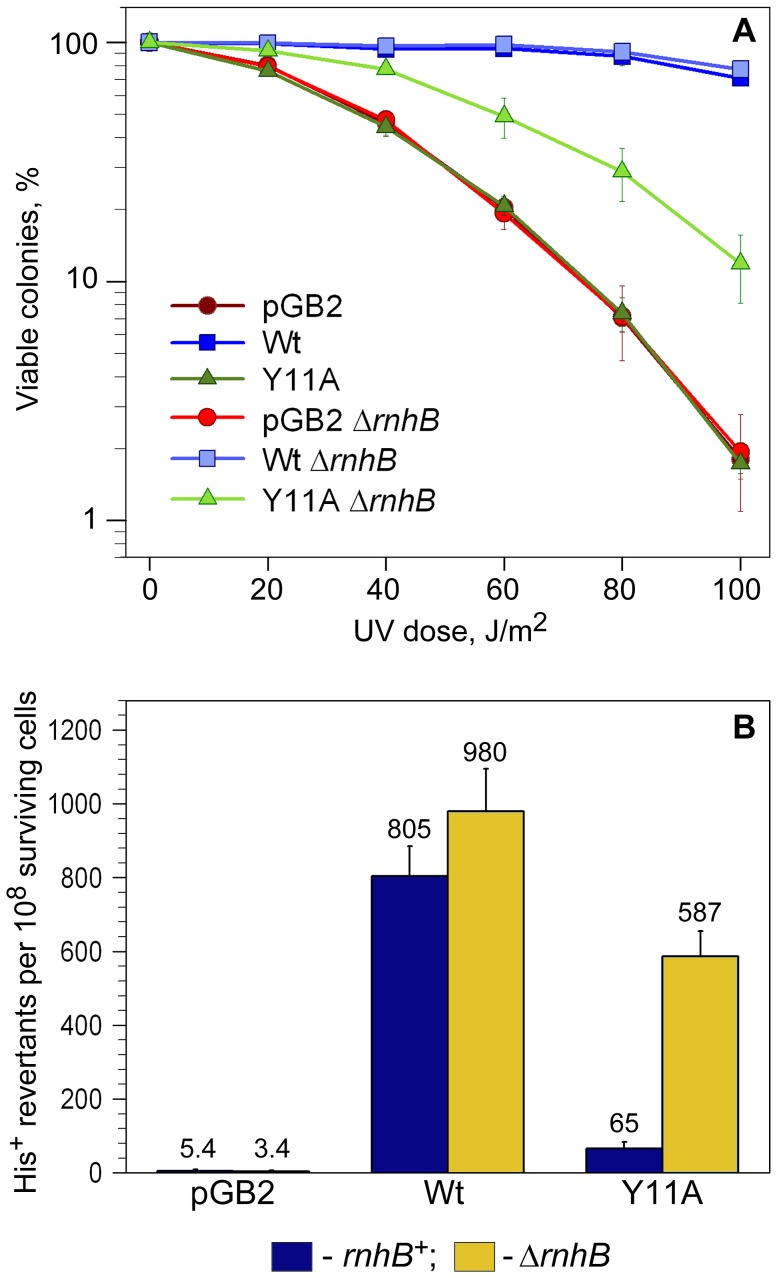
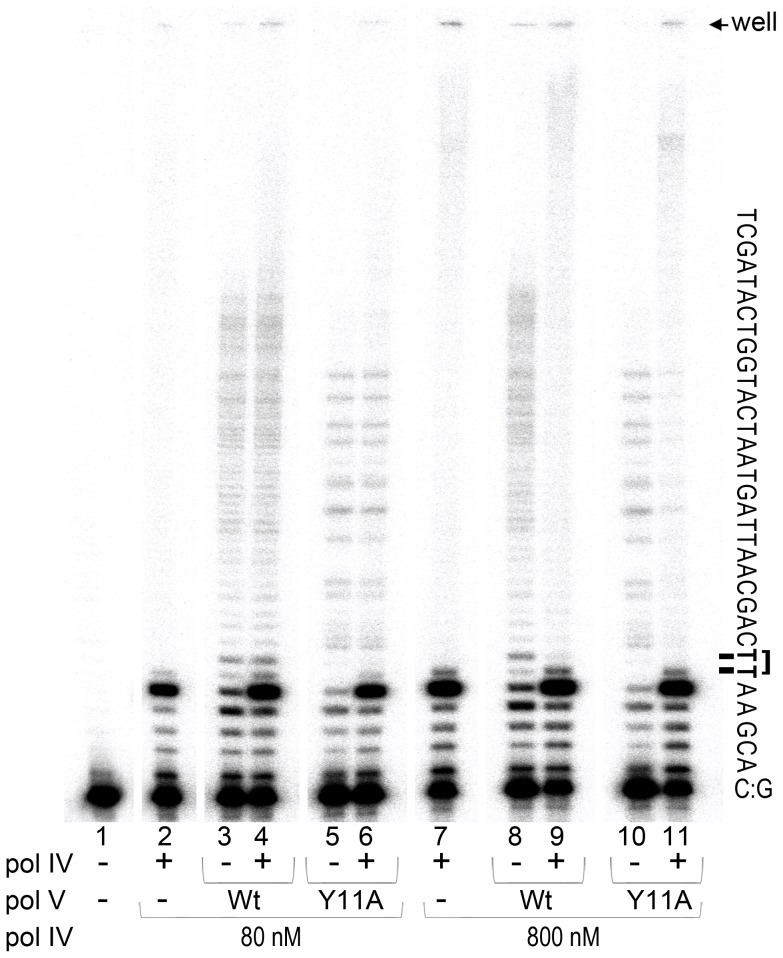
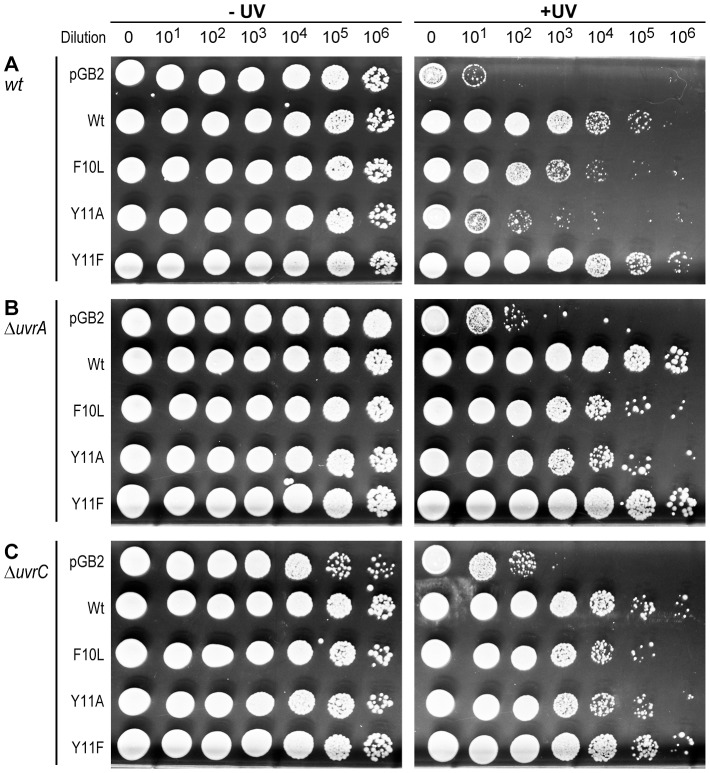
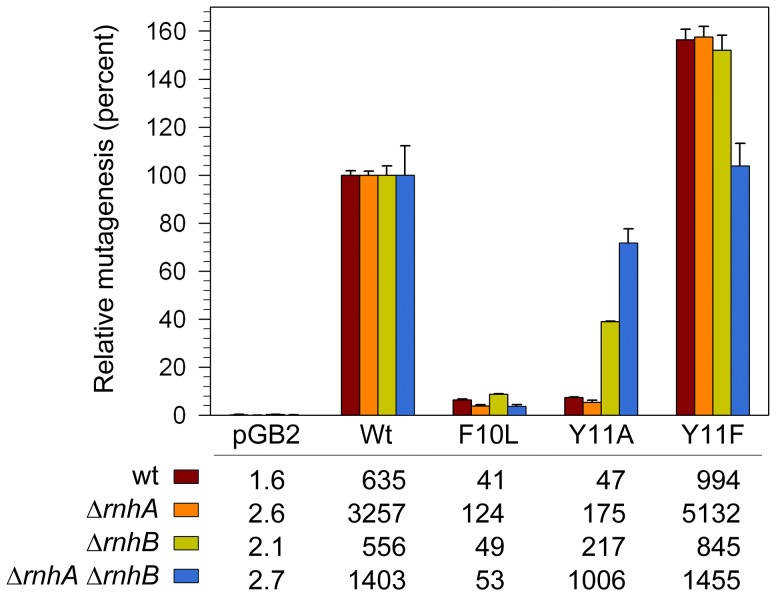
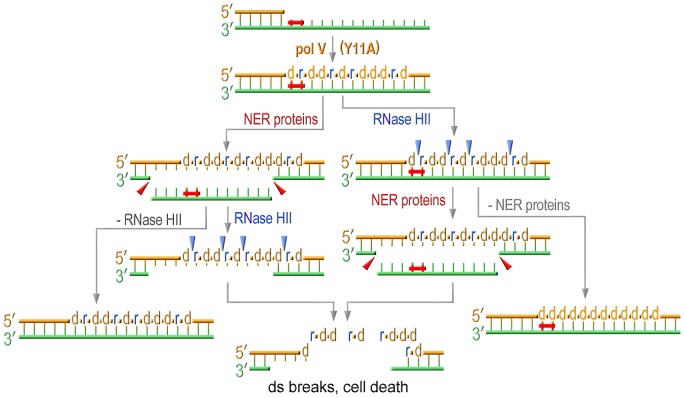
Escherichia coli pol V (UmuD'(2)C), the main translesion DNA polymerase, ensures continued nascent strand extension when the cellular replicase is blocked by unrepaired DNA lesions. Pol V is characterized by low sugar selectivity, which can be further reduced by a Y11A "steric-gate" substitution in UmuC that enables pol V to preferentially incorporate rNTPs over dNTPs in vitro. Despite efficient error-prone translesion synthesis catalyzed by UmuC_Y11A in vitro, strains expressing umuC_Y11A exhibit low UV mutability and UV resistance. Here, we show that these phenotypes result from the concomitant dual actions of Ribonuclease HII (RNase HII) initiating removal of rNMPs from the nascent DNA strand and nucleotide excision repair (NER) removing UV lesions from the parental strand. In the absence of either repair pathway, UV resistance and mutagenesis conferred by umuC_Y11A is significantly enhanced, suggesting that the combined actions of RNase HII and NER lead to double-strand breaks that result in reduced cell viability. We present evidence that the Y11A-specific UV phenotype is tempered by pol IV in vivo. At physiological ratios of the two polymerases, pol IV inhibits pol V-catalyzed translesion synthesis (TLS) past UV lesions and significantly reduces the number of Y11A-incorporated rNTPs by limiting the length of the pol V-dependent TLS tract generated during lesion bypass in vitro. In a recA730 lexA(Def) ΔumuDC ΔdinB strain, plasmid-encoded wild-type pol V promotes high levels of spontaneous mutagenesis. However, umuC_Y11A-dependent spontaneous mutagenesis is only ~7% of that observed with wild-type pol V, but increases to ~39% of wild-type levels in an isogenic ΔrnhB strain and ~72% of wild-type levels in a ΔrnhA ΔrnhB double mutant. Our observations suggest that errant ribonucleotides incorporated by pol V can be tolerated in the E. coli genome, but at the cost of higher levels of cellular mutagenesis.
Overview
The claims and statistics of this paper haven’t been checked yet.
Free: it reads the open-access text and checks the first 5 claims that cite a source we can check. Create a free account to check every claim.
Integrity signals
Registry
Cites
Statistics
Figures
Verification
Claims the paper makes
The claims and statistics of this paper haven’t been checked yet.
Free: it reads the open-access text and checks the first 5 claims that cite a source we can check. Create a free account to check every claim.
Self-check
Percentages, sums and reported differences re-computed from the paper’s own numbers.
The self-check needs the paper’s full text.
Citations
Cites
Molecular Cloning: A Laboratory Manual
Sambrook, J., Fritsch, E., & Maniatis, T. (1989) · UCLA - Biblioteca de Ciencias de la Salud · Cited by 133,589
Construction of Escherichia coli K‐12 in‐frame, single‐gene knockout mutants: the Keio collection
Baba, T., Ara, T., Hasegawa, M., Takai, Y., Okumura, Y., Baba, M., Datsenko, K. A., Tomita, M., Wanner, B. L., & Mori, H. (2006) · Molecular Systems Biology · doi:10.1038/msb4100050 · Cited by 7,858 · cited 1×
“The various alleles were selected by conferring resistance to spectinomycin (20 mg/ml), zeocin (25 mg/ml), chloramphenicol (20 mg/ml) and kanamycin (50 mg/ml) respectively and subsequently confirmed by PCR [54–56].”
Friedberg, E. C., Walker, G. C., Siede, W., Wood, R. D., Schultz, R. A., & Ellenberger, T. (2005) · doi:10.1128/9781555816704 · Cited by 5,683
MUTANTS OF ESCHERICHIA COLI REQUIRING METHIONINE OR VITAMIN B 12
Davis, B. D., & Mingioli, E. S. (1950) · Journal of Bacteriology · doi:10.1128/jb.60.1.17-28.1950 · Cited by 2,881 · cited 1×
“To determine the number of spontaneously arising histidine mutants on the plate, as well as UV-induced mutants, the unirradiated cell culture was seeded on the Davis and Mingioli minimal agar plates [59] plus glucose (0.”
Miller, J. H. (1992) · Medical Entomology and Zoology · Cited by 2,488
Stillman, B. (1995) · Molecular Medicine · doi:10.1007/bf03401885 · Cited by 1,025
Identification of additional genes belonging to the LexA regulon in Escherichia coli
Fernández de Henestrosa, A. R., Ogi, T., Aoyagi, S., Chafin, D., Hayes, J. J., Ohmori, H., & Woodgate, R. (2000) · Molecular Microbiology · doi:10.1046/j.1365-2958.2000.01826.x · Cited by 570 · cited 2×
“The strains employed here carry the lexA51(Def) allele which has a frameshift mutation in the C-terminus of LexA [40], that leads to constitutive expression of all LexA-regulated genes [41], including all three TLS polymerases, pol II, pol IV and pol V.”
Self-citationKato, T., & Shinoura, Y. (1977) · Molecular and General Genetics MGG · doi:10.1007/bf00283484 · Cited by 568 · cited 2×
“Y-family polymerases, pol IV, encoded by the dinB gene [4,5], and pol V, the product of the umuC and umuD genes [6], are devoid of exonucleolytic proofreading and are characterized by lowfidelity DNA synthesis on undamaged DNA [7,8].”
The dinB Gene Encodes a Novel E. coli DNA Polymerase, DNA Pol IV, Involved in Mutagenesis
Wagner, J., Gruz, P., Kim, S.-R., Yamada, M., Matsui, K., Fuchs, R. P. P., & Nohmi, T. (1999) · Molecular Cell · doi:10.1016/s1097-2765(00)80376-7 · Cited by 474
Roles of E. coli DNA polymerases IV and V in lesion-targeted and untargeted SOS mutagenesis
Tang, M., Pham, P., Shen, X., Taylor, J.-S., O'Donnell, M., Woodgate, R., & Goodman, M. F. (2000) · Nature · doi:10.1038/35010020 · Cited by 443 · cited 2×
“The major reaction product observed was located immediately adjacent to the 39 base of the CPD, with a very small band corresponding to nucleotide incorporation opposite the 39T of CPD, as previously reported [18].”
Self-citationA pSC101-derived plasmid which shows no sequence homology to other commonly used cloning vectors
Churchward, G., Belin, D., & Nagamine, Y. (1984) · Gene · doi:10.1016/0378-1119(84)90207-5 · Cited by 427 · cited 1×
“Plasmids The low-copy-number plasmids used for expression of UmuC variants are derived from pGB2 [57].”
Abundant ribonucleotide incorporation into DNA by yeast replicative polymerases
Nick McElhinny, S. A., Watts, B. E., Kumar, D., Watt, D. L., Lundström, E.-B., Burgers, P. M. J., Johansson, E., Chabes, A., & Kunkel, T. A. (2010) · Proceedings of the National Academy of Sciences · doi:10.1073/pnas.0914857107 · Cited by 409 · cited 2×
“, recently reported that RNase H2-dependent repair is necessary for the prevention of replicative stress and genome instability in yeast strains expressing a pol e variant with compromised sugar selectivity [23].”
Nohmi, T., Battista, J. R., Dodson, L. A., & Walker, G. C. (1988) · Proceedings of the National Academy of Sciences · doi:10.1073/pnas.85.6.1816 · Cited by 408 · cited 1×
“activity [13–17], has intrinsically low base substitution fidelity”
Genome instability due to ribonucleotide incorporation into DNA
McElhinny, S. A. N., Kumar, D., Clark, A. B., Watt, D. L., Watts, B. E., Lundström, E.-B., Johansson, E., Chabes, A., & Kunkel, T. A. (2010) · Nature Chemical Biology · doi:10.1038/nchembio.424 · Cited by 394 · cited 1×
“However, in contrast to other studies demonstrating that deletion of RNase H2 increases spontaneous mutagenesis in yeast strains with wildtype DNA polymerases [25,50,51], no increase in spontaneous or UV-induced mutagenesis was observed upon in a DrnhB strain expressing wild-type pol V (Figure 2B and Figure 5).”
Mutagenic Processing of Ribonucleotides in DNA by Yeast Topoisomerase I
Kim, N., Huang, S.-Y. N., Williams, J. S., Li, Y. C., Clark, A. B., Cho, J.-E., Kunkel, T. A., Pommier, Y., & Jinks-Robertson, S. (2011) · Science · doi:10.1126/science.1205016 · Cited by 291 · cited 3×
“The main hallmark of this instability, deletion of 2–5 base pairs in short repetitive sequences, was also demonstrated in strains encoding wild-type pol e and shown to require the endoribonuclease activity of Top1, a topoisomerase that relaxes supercoils by reversibly nicking duplex DNA [27].”
InfluentialA single amino acid governs enhanced activity of DinB DNA polymerases on damaged templates
Jarosz, D. F., Godoy, V. G., Delaney, J. C., Essigmann, J. M., & Walker, G. C. (2006) · Nature · doi:10.1038/nature04318 · Cited by 262
Steinborn, G. (1978) · Molecular and General Genetics MGG · doi:10.1007/bf00270380 · Cited by 234 · cited 1×
“Pol V-dependent TLS is highly error-prone causing the majority of cellular mutagenesis after DNA damage [6,11].”
Dutreix, M., Moreau, P. L., Bailone, A., Galibert, F., Battista, J. R., Walker, G. C., & Devoret, R. (1989) · Journal of Bacteriology · doi:10.1128/jb.171.5.2415-2423.1989 · Cited by 231 · cited 1×
“activity [13–17], has intrinsically low base substitution fidelity”
Mount, D. W. (1977) · Proceedings of the National Academy of Sciences · doi:10.1073/pnas.74.1.300 · Cited by 230 · cited 1×
“The strains employed here carry the lexA51(Def) allele which has a frameshift mutation in the C-terminus of LexA [40], that leads to constitutive expression of all LexA-regulated genes [41], including all three TLS polymerases, pol II, pol IV and pol V.”
UmuC mutagenesis protein of Escherichia coli: purification and interaction with UmuD and UmuD'.
Woodgate, R., Rajagopalan, M., Lu, C., & Echols, H. (1989) · Proceedings of the National Academy of Sciences · doi:10.1073/pnas.86.19.7301 · Cited by 223 · cited 1×
“Pol V, a heterotrimeric UmuD92C complex [12], requiring the presence of a RecA nucleoprotein filament (RecA*) for optimal”
Self-citationKim, S.-R., Matsui, K., Yamada, M., Gruz, P., & Nohmi, T. (2001) · Molecular Genetics and Genomics · doi:10.1007/s004380100541 · Cited by 211 · cited 2×
“When pol IV was present at ,10-fold excess, which is roughly equivalent to the in vivo cellular ratio when maximally expressed during SOS-induction [42,47] (lanes 7–11), significant inhibition of pol V-dependent TLS was observed (compare lanes 9 and 11 with lanes 8 and 10).”
Unlocking the Sugar “Steric Gate” of DNA Polymerases
Brown, J. A., & Suo, Z. (2011) · Biochemistry · doi:10.1021/bi101915z · Cited by 205
Rydberg, B., & Game, J. (2002) · Proceedings of the National Academy of Sciences · doi:10.1073/pnas.262591699 · Cited by 191 · cited 1×
“Previous studies suggest that the 39 cut is made by FEN-1-like proteins [32] and that RNase HII nicking activity is promoted by binding to PCNA [33].”
Enzymatic completion of mammalian lagging-strand DNA replication.
Turchi, J. J., Huang, L., Murante, R. S., Kim, Y., & Bambara, R. A. (1994) · Proceedings of the National Academy of Sciences · doi:10.1073/pnas.91.21.9803 · Cited by 177 · cited 1×
“After dissociation of the cleaved RNA, DNA polymerase fills the resulting gap and DNA ligase seals the nick [30,31].”
MethodRNase H and Postreplication Repair Protect Cells from Ribonucleotides Incorporated in DNA
Lazzaro, F., Novarina, D., Amara, F., Watt, D. L., Stone, J. E., Costanzo, V., Burgers, P. M., Kunkel, T. A., Plevani, P., & Muzi-Falconi, M. (2012) · Molecular Cell · doi:10.1016/j.molcel.2011.12.019 · Cited by 177 · cited 1×
“As a result, cells have evolved various pathways for recognizing and removing aberrant rNTP incorporated into DNA strands [24–27].”
Levels of chromosomally encoded Umu proteins and requirements for in vivo UmuD cleavage
Woodgate, R., & Ennis, D. G. (1991) · Molecular and General Genetics MGG · doi:10.1007/bf00264207 · Cited by 174 · cited 1×
“When pol IV was present at ,10-fold excess, which is roughly equivalent to the in vivo cellular ratio when maximally expressed during SOS-induction [42,47] (lanes 7–11), significant inhibition of pol V-dependent TLS was observed (compare lanes 9 and 11 with lanes 8 and 10).”
Self-citationRecA protein of Escherichia coli has a third essential role in SOS mutator activity
Sweasy, J. B., Witkin, E. M., Sinha, N., & Roegner-Maniscalco, V (1990) · Journal of Bacteriology · doi:10.1128/jb.172.6.3030-3036.1990 · Cited by 170 · cited 1×
“In addition to facilitating TLS, when expressed in a recA730 lexA(Def) background, pol V promotes high levels of spontaneous mutagenesis [15].”
Y-family DNA polymerases in Escherichia coli
Jarosz, D. F., Beuning, P. J., Cohen, S., & Walker, G. C. (2007) · Trends in Microbiology · doi:10.1016/j.tim.2006.12.004 · Cited by 169 · cited 1×
“Y-family polymerases, pol IV, encoded by the dinB gene [4,5], and pol V, the product of the umuC and umuD genes [6], are devoid of exonucleolytic proofreading and are characterized by lowfidelity DNA synthesis on undamaged DNA [7,8].”
Qiu, J., Qian, Y., Frank, P., Wintersberger, U., & Shen, B. (1999) · Molecular and Cellular Biology · doi:10.1128/mcb.19.12.8361 · Cited by 155 · cited 1×
“However, in contrast to other studies demonstrating that deletion of RNase H2 increases spontaneous mutagenesis in yeast strains with wildtype DNA polymerases [25,50,51], no increase in spontaneous or UV-induced mutagenesis was observed upon in a DrnhB strain expressing wild-type pol V (Figure 2B and Figure 5).”
Rangarajan, S., Woodgate, R., & Goodman, M. F. (1999) · Proceedings of the National Academy of Sciences · doi:10.1073/pnas.96.16.9224 · Cited by 153
Self-citationThe active form of DNA polymerase V is UmuD′2C–RecA–ATP
Jiang, Q., Karata, K., Woodgate, R., Cox, M. M., & Goodman, M. F. (2009) · Nature · doi:10.1038/nature08178 · Cited by 147 · cited 6×
“B : Mutagenesis .”
InfluentialSelf-citationItaya, M. (1990) · Proceedings of the National Academy of Sciences · doi:10.1073/pnas.87.21.8587 · Cited by 144 · cited 1×
“Based upon previous studies, the most logical choice was to assay UV-survival in strains lacking the RNase H proteins; RNase HI, the product of the rnhA gene [37] with the capacity to release RNA from RNA/DNA hybrids with multiple sequential rNMPs, and RNase HII encoded by the rnhB gene [38], which differs from the RN…”
PCNA directs type 2 RNase H activity on DNA replication and repair substrates
Bubeck, D., Reijns, M. A. M., Graham, S. C., Astell, K. R., Jones, E. Y., & Jackson, A. P. (2011) · Nucleic Acids Research · doi:10.1093/nar/gkq980 · Cited by 144 · cited 1×
“Previous studies suggest that the 39 cut is made by FEN-1-like proteins [32] and that RNase HII nicking activity is promoted by binding to PCNA [33].”
Discontinuous DNA synthesis by purified mammalian proteins.
Goulian, M., Richards, S. H., Heard, C. J., & Bigsby, B. M. (1990) · Journal of Biological Chemistry · doi:10.1016/s0021-9258(17)44775-2 · Cited by 129 · cited 1×
“After dissociation of the cleaved RNA, DNA polymerase fills the resulting gap and DNA ligase seals the nick [30,31].”
MethodGenetic requirements and mutational specificity of the Escherichia coli SOS mutator activity
Fijalkowska, I. J., Dunn, R. L., & Schaaper, R. M. (1997) · Journal of Bacteriology · doi:10.1128/jb.179.23.7435-7445.1997 · Cited by 116 · cited 1×
“coli chromosome [48].”
Lessons from 50 years of SOS DNA-damage-induced mutagenesis
Schlacher, K., & Goodman, M. F. (2007) · Nature Reviews Molecular Cell Biology · doi:10.1038/nrm2198 · Cited by 112 · cited 1×
“Y-family polymerases, pol IV, encoded by the dinB gene [4,5], and pol V, the product of the umuC and umuD genes [6], are devoid of exonucleolytic proofreading and are characterized by lowfidelity DNA synthesis on undamaged DNA [7,8].”
Self-citationAsai, T., & Kogoma, T. (1994) · Journal of Bacteriology · doi:10.1128/jb.176.7.1807-1812.1994 · Cited by 107 · cited 3×
“In the isogenic DrnhA strain, there was a considerable (3–5-fold) increase in the number of revertants promoted by pol V and variants, presumably because the increased number of R-loops in the DrnhA strain [39] help to hyperactivate the RecA730 protein [49] for its role in pol V-dependent mutagenesis [17].”
RecA acts in trans to allow replication of damaged DNA by DNA polymerase V
Schlacher, K., Cox, M. M., Woodgate, R., & Goodman, M. F. (2006) · Nature · doi:10.1038/nature05042 · Cited by 96 · cited 1×
“The reactions also included a RecA nucleoprotein filament (RecA*), which has no noticeable effect on pol IV, but is required for pol V TLS in vivo [13– 15] and in vitro [16,17,46].”
Self-citationUvm mutants of Escherichia coli K12 deficient in UV mutagenesis
Steinborn, G. (1979) · Molecular and General Genetics MGG · doi:10.1007/bf00425537 · Cited by 93
Pham, P., Rangarajan, S., Woodgate, R., & Goodman, M. F. (2001) · Proceedings of the National Academy of Sciences · doi:10.1073/pnas.111007198 · Cited by 91 · cited 1×
“[18,19].”
Self-citationMechanism of DNA polymerase II-mediated frameshift mutagenesis
Becherel, O. J., & Fuchs, R. P. P. (2001) · Proceedings of the National Academy of Sciences · doi:10.1073/pnas.141113398 · Cited by 91 · cited 1×
“As a result, pol II-dependent replication of both undamaged and damaged DNA is quite accurate with the exception of an N(2)acetylaminofluorene adducts, where it promotes 22 frameshifts [3].”
Isolation of RNase H Genes That Are Essential for Growth of Bacillus subtilis 168
Itaya, M., Omori, A., Kanaya, S., Crouch, R. J., Tanaka, T., & Kondo, K. (1999) · Journal of Bacteriology · doi:10.1128/jb.181.7.2118-2123.1999 · Cited by 89 · cited 1×
“Despite having multiple cellular functions, RNases HI and HII, encoded by the rnhA and rnhB genes respectively [29], are not essential for viability of bacteria, since the double mutants are viable, albeit temperature sensitive [36].”
Cloning and identification of the product of the dnaE gene of Escherichia coli
Welch, M. M., & McHenry, C. S. (1982) · Journal of Bacteriology · doi:10.1128/jb.152.1.351-356.1982 · Cited by 85 · cited 3×
“The rnhB gene encoding RNase HII is located in a multi-gene operon and is immediately upstream of the dnaE gene encoding the catalytic a-subunit of pol III [44].”
InfluentialSedgwick, S. G., & Bridges, B. A. (1972) · Molecular and General Genetics MGG · doi:10.1007/bf00269129 · Cited by 77 · cited 1×
“The UV-induced mutation frequencies were calculated as previously described [60].”
MethodCai, H., Yu, H., McEntee, K., Kunkel, T. A., & Goodman, M. F. (1995) · Journal of Biological Chemistry · doi:10.1074/jbc.270.25.15327 · Cited by 75 · cited 1×
“The B-family pol II which is encoded by the polB gene, is a rare case of a specialized TLS polymerase possessing 39-59 exonuclease activity [2].”
Self-citationdinP, a new gene in Escherichia coli, whose product shows similarities to UmuC and its homologues
Ohmori, H., Hatada, E., Qiao, Y., Tsuji, M., & Fukuda, R. (1995) · Mutation Research Letters · doi:10.1016/0165-7992(95)90024-1 · Cited by 74 · cited 1×
“Y-family polymerases, pol IV, encoded by the dinB gene [4,5], and pol V, the product of the umuC and umuD genes [6], are devoid of exonucleolytic proofreading and are characterized by lowfidelity DNA synthesis on undamaged DNA [7,8].”
Differential correction of lagging-strand replication errors made by DNA polymerases α and δ
Nick McElhinny, S. A., Kissling, G. E., & Kunkel, T. A. (2010) · Proceedings of the National Academy of Sciences · doi:10.1073/pnas.1013048107 · Cited by 74 · cited 1×
“The importance of this pathway in repair of rNMPs incorporated by a DNA polymerase during replication has been emphasized by the observation that the lack of RNase HII in yeast strains expressing a mutant pol e with relaxed sugar selectivity, leads to replicative stress and genome instability [34].”
Itaya, M., & Crouch, R. J. (1991) · Molecular and General Genetics MGG · doi:10.1007/bf00273933 · Cited by 66 · cited 2×
“The various alleles were selected by conferring resistance to spectinomycin (20 mg/ml), zeocin (25 mg/ml), chloramphenicol (20 mg/ml) and kanamycin (50 mg/ml) respectively and subsequently confirmed by PCR [54–56].”
Clark, A. B., Lujan, S. A., Kissling, G. E., & Kunkel, T. A. (2011) · DNA Repair · doi:10.1016/j.dnarep.2011.02.001 · Cited by 59
Isolation and mapping of a mutation in Escherichia coli with altered levels of ribonuclease H
Carl, P. L., Bloom, L., & Crouch, R. J. (1980) · Journal of Bacteriology · doi:10.1128/jb.144.1.28-35.1980 · Cited by 55
Mispaired rNMPs in DNA are mutagenic and are targets of mismatch repair and RNases H
Shen, Y., Koh, K. D., Weiss, B., & Storici, F. (2012) · Nature Structural & Molecular Biology · doi:10.1038/nsmb.2176 · Cited by 50 · cited 1×
“As a result, cells have evolved various pathways for recognizing and removing aberrant rNTP incorporated into DNA strands [24–27].”
DNA polymerase switching: effects on spontaneous mutagenesis in Escherichia coli
Curti, E., McDonald, J. P., Mead, S., & Woodgate, R. (2009) · Molecular Microbiology · doi:10.1111/j.1365-2958.2008.06526.x · Cited by 48 · cited 1×
“The various alleles were selected by conferring resistance to spectinomycin (20 mg/ml), zeocin (25 mg/ml), chloramphenicol (20 mg/ml) and kanamycin (50 mg/ml) respectively and subsequently confirmed by PCR [54–56].”
Self-citationVaisman, A., Kuban, W., McDonald, J. P., Karata, K., Yang, W., Goodman, M. F., & Woodgate, R. (2012) · Nucleic Acids Research · doi:10.1093/nar/gks233 · Cited by 43 · cited 10×
“The sugar selectivity of pol V can be significantly improved by an F10L substitution in the catalytic subunit UmuC and vice versa, a Y11A substitution in UmuC significantly reduces the ability of pol V to select a nucleotide with the correct sugar [20].”
InfluentialSelf-citationBorden, A., O’Grady, P. I., Vandewiele, D., de Henestrosa, A. R. F., Lawrence, C. W., & Woodgate, R. (2002) · Journal of Bacteriology · doi:10.1128/jb.184.10.2674-2681.2002 · Cited by 40
Self-citationRole of DNA Polymerase IV in Escherichia coli SOS Mutator Activity
Kuban, W., Banach-Orlowska, M., Schaaper, R. M., Jonczyk, P., & Fijalkowska, I. J. (2006) · Journal of Bacteriology · doi:10.1128/jb.01088-06 · Cited by 39 · cited 2×
“However, the strain used in the earlier study also expresses pol IV and while it is believed that pol V and pol IV work together to promote spontaneous mutagenesis [43], we could not exclude the possibility that in a similar manner to its negative effect on the TLS of CPDs, pol IV might actually block access of the er…”
Self-citationKarata, K., Vaisman, A., Goodman, M. F., & Woodgate, R. (2012) · DNA repair · doi:10.1016/j.dnarep.2012.01.012 · Cited by 39 · cited 6×
“In vitro replication assays Wild-type pol V, the UmuC_Y11A variant and pol IV, b-clamp and c-complex were purified as previously described [46].”
InfluentialSelf-citationChen, J. Z. (2000) · Nucleic Acids Research · doi:10.1093/nar/28.18.3649 · Cited by 29 · cited 1×
“However, in contrast to other studies demonstrating that deletion of RNase H2 increases spontaneous mutagenesis in yeast strains with wildtype DNA polymerases [25,50,51], no increase in spontaneous or UV-induced mutagenesis was observed upon in a DrnhB strain expressing wild-type pol V (Figure 2B and Figure 5).”
Kuban, W., Vaisman, A., McDonald, J. P., Karata, K., Yang, W., Goodman, M. F., & Woodgate, R. (2012) · DNA repair · doi:10.1016/j.dnarep.2012.06.005 · Cited by 27 · cited 10×
“This phenotype cannot be simply attributed to an inability to traverse the major UV-induced lesion because the highly purified pol VY11A enzyme bypassed the CPD efficiently in vitro [21].”
InfluentialSelf-citationVaisman, A., McDonald, J. P., & Woodgate, R. (2012) · EcoSal Plus · doi:10.1128/ecosalplus.7.2.2 · Cited by 26 · cited 2×
“The vast majority of TLS in Escherichia coli is catalyzed by the LexA-regulated damageinducible polymerases II, IV and V, which alone, or in various combinations, are recruited to the sites of DNA damage [1].”
Self-citationMead, S., Vaisman, A., Valjavec-Gratian, M., Karata, K., Vandewiele, D., & Woodgate, R. (2006) · Molecular Microbiology · doi:10.1111/j.1365-2958.2006.05561.x · Cited by 24 · cited 2×
“coli K-12 strains used in this study are derivatives of RW584 (full genotype: recA730 lexA51(Def) DumuDC596::ermGT thr-1 araD139 D(gpt-proA)62 lacY1 tsx-33 glnV44 galK2 hisG4 rpsL31 xyl-5 mtl-1 argE3 thi-1 sulA211 [52].”
Self-citationGenetic Requirements for High Constitutive SOS Expression inrecA730Mutants of Escherichia coli
Vlašić, I., Šimatović, A., & Brčić-Kostić, K. (2011) · Journal of Bacteriology · doi:10.1128/jb.00368-11 · Cited by 14 · cited 1×
“In the isogenic DrnhA strain, there was a considerable (3–5-fold) increase in the number of revertants promoted by pol V and variants, presumably because the increased number of R-loops in the DrnhA strain [39] help to hyperactivate the RecA730 protein [49] for its role in pol V-dependent mutagenesis [17].”
Structure and Function of RNase H Enzymes
Hollis, T., & Shaban, N. M. (2011) · Nucleic acids and molecular biology · doi:10.1007/978-3-642-21078-5_12 · Cited by 7 · cited 2×
“Despite having multiple cellular functions, RNases HI and HII, encoded by the rnhA and rnhB genes respectively [29], are not essential for viability of bacteria, since the double mutants are viable, albeit temperature sensitive [36].”
Construction of a circular single-stranded DNA template containing a defined lesion
Karata, K., Vidal, A. E., & Woodgate, R. (2009) · DNA repair · doi:10.1016/j.dnarep.2009.03.006 · Cited by 7 · cited 16×
“Wild - type pol V , the UmuC_Y11A variant and pol IV , b - clamp and c - complex were purified as previously described [ 46 ] . pSOcpd plasmid , containing a unique CPD adduct , was also constructed as previously described [ 45 ] .”
InfluentialSelf-citationKanaya, S. (2009) · FEBS Journal · doi:10.1111/j.1742-4658.2009.06906.x · Cited by 4
Cited by
Ribonucleotides in DNA: Origins, repair and consequences
Williams, J. S., & Kunkel, T. A. (2014) · DNA Repair · doi:10.1016/j.dnarep.2014.03.029 · Cited by 169
“Tyrosine 11 is the steric gate residue in the active site of Pol V that limits ribonucleotide incorporation, such that the Y11A variant is highly promiscuous for ribonucleotide incorporation in vitro, so much so that it can incorporate multiple consecutive ribonucleotides [69].”
BackgroundRibose-seq: global mapping of ribonucleotides embedded in genomic DNA
Koh, K. D., Balachander, S., Hesselberth, J. R., & Storici, F. (2015) · Nature Methods · doi:10.1038/nmeth.3259 · Cited by 122
Aprataxin resolves adenylated RNA–DNA junctions to maintain genome integrity
Tumbale, P., Williams, J. S., Schellenberg, M. J., Kunkel, T. A., & Williams, R. S. (2014) · Nature · doi:10.1038/nature12824 · Cited by 109
Vaisman, A., McDonald, J. P., Huston, D., Kuban, W., Liu, L., Van Houten, B., & Woodgate, R. (2013) · PLoS Genetics · doi:10.1371/journal.pgen.1003878 · Cited by 70
“umuC_Y11A-dependent spontaneous mutagenesis increased significantly in a DrnhB background and to a much larger extent when both rnhB and rnhA were inactivated [11] (Fig.”
InfluentialSelf-citationRNA intrusions change DNA elastic properties and structure
Chiu, H.-C., Koh, K. D., Evich, M., Lesiak, A. L., Germann, M. W., Bongiorno, A., Riedo, E., & Storici, F. (2014) · Nanoscale · doi:10.1039/c4nr01794c · Cited by 56
Metadata
- Authors
- McDonald, J. P., Vaisman, A., Kuban, W., Goodman, M. F., & Woodgate, R.
- Affiliations
- National Institutes of Health (US)
- University of Southern California (US)
- Corresponding author
- Woodgate, Roger
- Venue
- PLoS Genetics
- Publisher
- Public Library of Science (PLoS)
- Published
- 2012-11-08
- Volume
- 8
- Issue
- 11
- Pages
- e1003030
- ISSN
- 1553-7390 (ISSN-L)
- 1553-7404
- PMC
- PMC3493448
- OpenAlex
- W1979994225
- Semantic Scholar
- 13e80ce0d7d27daeea4216085f5eb85b42fb3080
- Cited by
- 38
- References
- 64
- Citations by year
- 2026: 1 · 2024: 1 · 2023: 1 · 2022: 1 · 2021: 4 · 2020: 3 · 2019: 5 · 2018: 1 · 2017: 3 · 2015: 5 · 2014: 9 · 2013: 4
- FWCI
- 2.32
- Type
- journal article
- Language
- en
- Open access
- gold
- doi.org
- Licence
- Locations
- PLoS Genetics (publishedVersion, public-domain)
- Europe PMC (PubMed Central) (publishedVersion, public-domain)
- PubMed Central (publishedVersion, public-domain)
- PubMed (publishedVersion)
- DOAJ (DOAJ: Directory of Open Access Journals) (submittedVersion, cc-by-sa)
- Figshare (submittedVersion, cc-by)
- Funders
- National Institutes of Health (ESO12259, GM21422)
- U.S. Public Health Service (ESO12259)
- National Institute of General Medical Sciences (GM 21422, R37GM021422, R01GM021422)
- National Institute of Child Health and Human Development
- Topics
- Life Sciences › Biochemistry, Genetics and Molecular Biology › Molecular Biology › DNA Repair Mechanisms
- Life Sciences › Biochemistry, Genetics and Molecular Biology › Genetics › Bacterial Genetics and Biotechnology
- Life Sciences › Biochemistry, Genetics and Molecular Biology › Molecular Biology › DNA and Nucleic Acid Chemistry
- Keywords
- Escherichia coli, DNA polymerase V, UmuC, translesion synthesis, ribonucleotide incorporation, nucleotide excision repair, UV mutagenesis, UV resistance, DNA polymerase IV, spontaneous mutagenesis, DNA damage bypass, DNA double-strand breaks, RecA
- MeSH terms
- DNA-Directed DNA Polymerase, DNA Repair, DNA, Bacterial, Escherichia coli, Ribonucleotides, Ultraviolet Rays, Mutagenesis, Genome, Bacterial, Ribonuclease H, Escherichia coli Proteins
About these checks
Registry, retraction, Cites and statistics results are computed, not judged, with one exception: a printed reference that no index lists is read once by a model before it counts as a citation error. Claims are extracted by a model and kept only when their quote appears verbatim in the text; each cited source is then checked, with a model’s help, for whether it says what the claim relies on. Those verdicts can be wrong — read the claim’s quote and the cited source before relying on one.
Statistics and arithmetic are recomputed, not judged.
Confidence bands are shown only for fields calibrated on our annotated test set. None is calibrated yet, so no band is shown.
What counts as a claim ›How we measure confidence ›How we check this ›
Are you an author, or do you see a problem with this page? Request a review
Data sources
Bibliographic data: Semantic Scholar, OpenAlex, Crossref.
Contains information from the Semantic Scholar Academic Graph Datasets, made available under the ODC Attribution License (ODC-BY 1.0).
Semantic Scholar’s data is described in: Kinney, R., et al. (2023). The Semantic Scholar Open Data Platform. arXiv:2301.10140.
