

A forkhead Transcription Factor Is Wound-Induced at the Planarian Midline and Required for Anterior Pole Regeneration
Open accessThe DOI matches its Crossref record; 51 of the 51 references it cites were found in a registry or an index.
Abstract
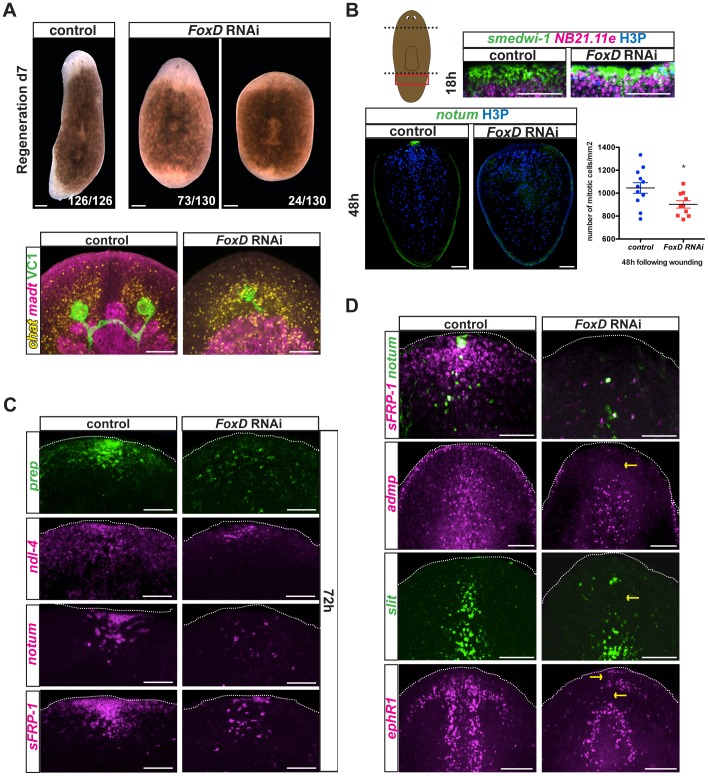
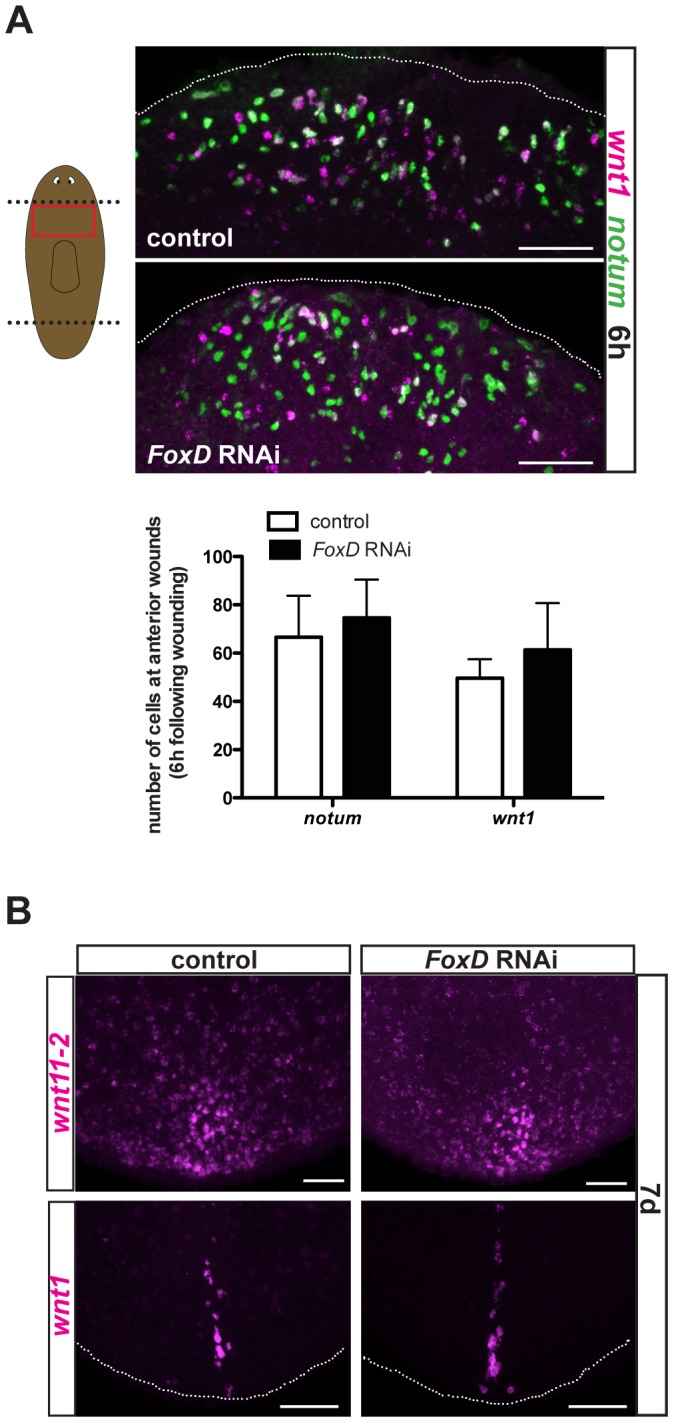
Planarian regeneration requires positional information to specify the identity of tissues to be replaced as well as pluripotent neoblasts capable of differentiating into new cell types. We found that wounding elicits rapid expression of a gene encoding a Forkhead-family transcription factor, FoxD. Wound-induced FoxD expression is specific to the ventral midline, is regulated by Hedgehog signaling, and is neoblast-independent. FoxD is subsequently expressed within a medial subpopulation of neoblasts at wounds involving head regeneration. Ultimately, FoxD is co-expressed with multiple anterior markers at the anterior pole. Inhibition of FoxD with RNA interference (RNAi) results in the failure to specify neoblasts expressing anterior markers (notum and prep) and in anterior pole formation defects. FoxD(RNAi) animals fail to regenerate a new midline and to properly pattern the anterior blastema, consistent with a role for the anterior pole in organizing pattern of the regenerating head. Our results suggest that wound signaling activates a forkhead transcription factor at the midline and, if the head is absent, FoxD promotes specification of neoblasts at the prior midline for anterior pole regeneration.
Overview
The claims and statistics of this paper haven’t been checked yet.
Free: it reads the open-access text and checks the first 5 claims that cite a source we can check. Create a free account to check every claim.
Integrity signals
Registry
Cites
Statistics
Figures
Verification
Claims the paper makes
The claims and statistics of this paper haven’t been checked yet.
Free: it reads the open-access text and checks the first 5 claims that cite a source we can check. Create a free account to check every claim.
Claims other papers make about this one
Each is checked against this paper’s own text: does it say what the citing paper says it does?
The source backs part of the claim, not all of it — or backs it for a different population, condition or comparison.
In the citing paper
“Signaling through planarian stem cells is necessary for production of the notum+ anterior pole and both to produce [41–44] and limit the production of the wnt1+ posterior pole.”
From STRIPAK limits stem cell differentiation of a WNT signaling center to control planarian axis scaling (2020) · cites this paper as [42]
Experimental — accuracy not yet measured
Self-check
Percentages, sums and reported differences re-computed from the paper’s own numbers.
The self-check needs the paper’s full text.
Citations
Cites
FUNDAMENTALS OF PLANARIAN REGENERATION
Reddien, P. W., & Alvarado, A. S. (2004) · Annual Review of Cell and Developmental Biology · doi:10.1146/annurev.cellbio.20.010403.095114 · Cited by 1,101 · cited 1×
“wounds produces an outgrowth called a blastema, which will replace some of the missing tissues [2].”
BackgroundSelf-citationThe bicoid protein determines position in the Drosophila embryo in a concentration-dependent manner
Driever, W., & Nüsslein-Volhard, C. (1988) · Cell · doi:10.1016/0092-8674(88)90183-3 · Cited by 1,029
A gradient of bicoid protein in Drosophila embryos
Driever, W., & Nüsslein-Volhard, C. (1988) · Cell · doi:10.1016/0092-8674(88)90182-1 · Cited by 1,017 · cited 1×
“controls establishment of AP body pattern [44,45].”
Forkhead Transcription Factors: Key Players in Development and Metabolism
Carlsson, P., & Mahlapuu, M. (2002) · Developmental Biology · doi:10.1006/dbio.2002.0780 · Cited by 840 · cited 1×
“During embryogenesis, Fox genes are involved in organogenesis and patterning of several tissues from all three germ layers [25].”
BackgroundWeigel, D., Jürgens, G., Küttner, F., Seifert, E., & Jäckle, H. (1989) · Cell · doi:10.1016/0092-8674(89)90133-5 · Cited by 782
Clonogenic Neoblasts Are Pluripotent Adult Stem Cells That Underlie Planarian Regeneration
Wagner, D. E., Wang, I. E., & Reddien, P. W. (2011) · Science · doi:10.1126/science.1203983 · Cited by 660 · cited 3×
“The adult population of proliferating cells (neoblasts) in Schmidtea mediterranea includes pluripotent stem cells [1] and is responsible for”
BackgroundInfluentialSelf-citationThe evolution of Fox genes and their role in development and disease
Hannenhalli, S., & Kaestner, K. H. (2009) · Nature Reviews Genetics · doi:10.1038/nrg2523 · Cited by 658
Kiecker, C., & Niehrs, C. (2001) · Development · doi:10.1242/dev.128.21.4189 · Cited by 512
Bromodeoxyuridine Specifically Labels the Regenerative Stem Cells of Planarians
Newmark, P. A., & Sánchez Alvarado, A. (2000) · Developmental Biology · doi:10.1006/dbio.2000.9645 · Cited by 509
β-Catenin Defines Head Versus Tail Identity During Planarian Regeneration and Homeostasis
Gurley, K. A., Rink, J. C., & Alvarado, A. S. (2008) · Science · doi:10.1126/science.1150029 · Cited by 469 · cited 1×
“PCGs expressed broadly in the posterior region of the animal include genes encoding additional Wnt ligands, wnt11-1, wnt11-2, and wntP-2/wnt11-5 and the Wnt receptor frizzled-4 [6,7,14,15,18];”
BackgroundSmed- β catenin-1 Is Required for Anteroposterior Blastema Polarity in Planarian Regeneration
Petersen, C. P., & Reddien, P. W. (2008) · Science · doi:10.1126/science.1149943 · Cited by 364 · cited 2×
“The anterior pole expresses notum, a Wnt inhibitor required for head regeneration [8], whereas the posterior pole expresses wnt1 [7,14].”
BackgroundSelf-citationFormaldehyde‐based whole‐mount in situ hybridization method for planarians
Pearson, B. J., Eisenhoffer, G. T., Gurley, K. A., Rink, J. C., Miller, D. E., & Sánchez Alvarado, A. (2009) · Developmental Dynamics · doi:10.1002/dvdy.21849 · Cited by 352 · cited 3×
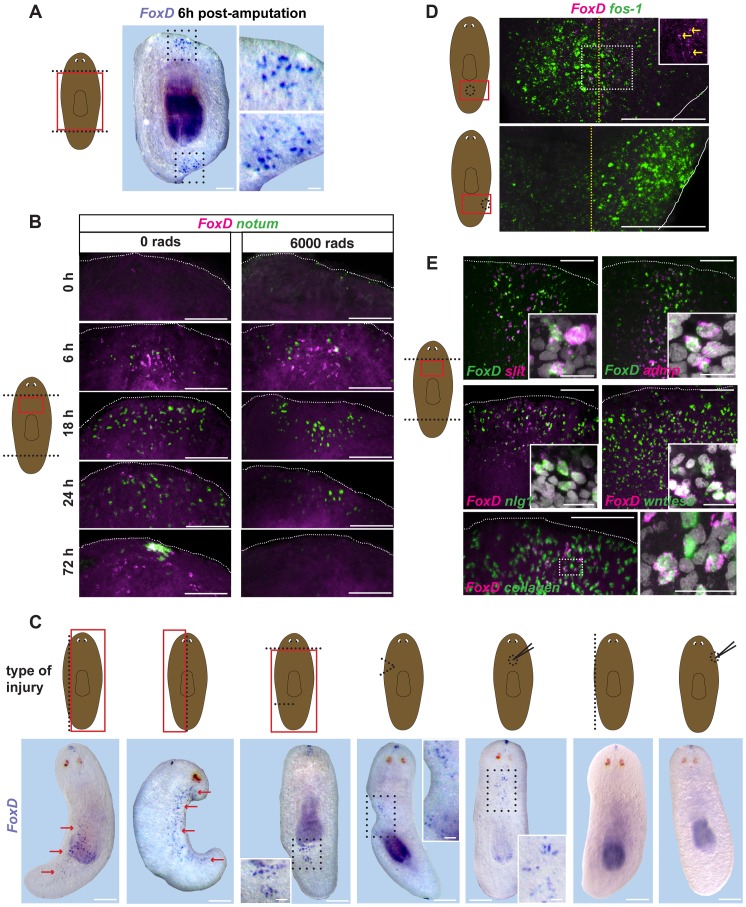
“Animals were wounded and fixed at six hours following injury in 4% formaldehyde [50] and nitroblue tetrazolium/5-bromo-4-”
MethodInfluentialFox's in development and disease
Lehmann, O. J., Sowden, J. C., Carlsson, P., Jordan, T., & Bhattacharya, S. S. (2003) · Trends in Genetics · doi:10.1016/s0168-9525(03)00111-2 · Cited by 350
Forkhead transcription factors: key players in health and disease
Benayoun, B. A., Caburet, S., & Veitia, R. A. (2011) · Trends in Genetics · doi:10.1016/j.tig.2011.03.003 · Cited by 301 · cited 1×
“Forkhead-box (Fox) genes are an evolutionary ancient family of winged-helix transcription factors involved in a wide variety of biological processes such as regulation of cell proliferation, growth, and differentiation [24].”
BackgroundCebrià, F., & Newmark, P. A. (2005) · Development · doi:10.1242/dev.01941 · Cited by 286
FGFR-related gene nou-darake restricts brain tissues to the head region of planarians
Cebrià, F., Kobayashi, C., Umesono, Y., Nakazawa, M., Mineta, K., Ikeo, K., Gojobori, T., Itoh, M., Taira, M., Alvarado, A. S., et al. (2002) · Nature · doi:10.1038/nature01042 · Cited by 267
Muscle cells provide instructions for planarian regeneration
Witchley, J. N., Mayer, M., Wagner, D. E., Owen, J. H., & Reddien, P. W. (2013) · Cell Reports · doi:10.1016/j.celrep.2013.07.022 · Cited by 264 · cited 3×
“planarian body plan patterning, and that display regional expression in planarian muscle cells have been described [15].”
BackgroundSelf-citationA molecular wound response program associated with regeneration initiation in planarians
Wenemoser, D., Lapan, S. W., Wilkinson, A. W., Bell, G. W., & Reddien, P. W. (2012) · Genes & Development · doi:10.1101/gad.187377.112 · Cited by 253 · cited 4×
“wound sites are known as W2 genes [3].”
BackgroundInfluentialSelf-citationTissue absence initiates regeneration through Follistatin-mediated inhibition of Activin signaling
Gaviño, M. A., Wenemoser, D., Wang, I. E., & Reddien, P. W. (2013) · eLife · doi:10.7554/elife.00247 · Cited by 253
Self-citationA wound-induced Wnt expression program controls planarian regeneration polarity
Petersen, C. P., & Reddien, P. W. (2009) · Proceedings of the National Academy of Sciences · doi:10.1073/pnas.0906823106 · Cited by 251 · cited 3×
“The large numbers of planarian wound-induced genes described so far are expressed broadly at the wound site [3,8,18,37].”
BackgroundSelf-citationPlanarian Hh Signaling Regulates Regeneration Polarity and Links Hh Pathway Evolution to Cilia
Rink, J. C., Gurley, K. A., Elliott, S. A., & Sánchez Alvarado, A. (2009) · Science · doi:10.1126/science.1178712 · Cited by 242 · cited 5×
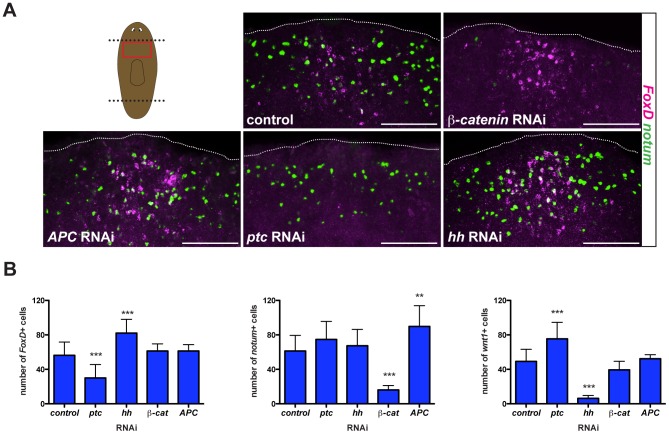
“Because hh impacts wound-induced wnt1 expression oppositely to FoxD [4,5], this result does not reflect a generic requirement for hh in wound-induced gene activation.”
BackgroundInfluentialPolarized notum Activation at Wounds Inhibits Wnt Function to Promote Planarian Head Regeneration
Petersen, C. P., & Reddien, P. W. (2011) · Science · doi:10.1126/science.1202143 · Cited by 239 · cited 6×
“Furthermore, FoxD was also co-expressed at wounds with other defined wound-induced genes, such as noggin-like1 (nlg1) [3,38], wntless [3,12,38], notum [8], and wnt1 [37] (Fig.”
BackgroundInfluentialSelf-citationDirksen, M. L., & Jamrich, M. (1992) · Genes & Development · doi:10.1101/gad.6.4.599 · Cited by 230 · cited 1×
“In Xenopus, the forkhead family gene, XDF1 is expressed in Spemann’s organizer and at later stages in the anterior neural region [33].”
BackgroundGrossniklaus, U., Pearson, R. K., & Gehring, W. J. (1992) · Genes & Development · doi:10.1101/gad.6.6.1030 · Cited by 229
Silencing of Smed -β catenin1 generates radial-like hypercephalized planarians
Iglesias, M., Gomez-Skarmeta, J. L., Saló, E., & Adell, T. (2008) · Development · doi:10.1242/dev.020289 · Cited by 221
Gurley, K. A., Elliott, S. A., Simakov, O., Schmidt, H. A., Holstein, T. W., & Alvarado, A. S. (2010) · Developmental Biology · doi:10.1016/j.ydbio.2010.08.007 · Cited by 212 · cited 2×
“The large numbers of planarian wound-induced genes described so far are expressed broadly at the wound site [3,8,18,37].”
BackgroundTransducing the Hedgehog Signal
Kalderon, D. (2000) · Cell · doi:10.1016/s0092-8674(00)00129-x · Cited by 190
Adell, T., Salò, E., Boutros, M., & Bartscherer, K. (2009) · Development · doi:10.1242/dev.033761 · Cited by 185
BMP signaling regulates the dorsal planarian midline and is needed for asymmetric regeneration
Reddien, P. W., Bermange, A. L., Kicza, A. M., & Sánchez Alvarado, A. (2007) · Development · doi:10.1242/dev.007138 · Cited by 173
Self-citationPlanarian Hedgehog/Patched establishes anterior–posterior polarity by regulating Wnt signaling
Yazawa, S., Umesono, Y., Hayashi, T., Tarui, H., & Agata, K. (2009) · Proceedings of the National Academy of Sciences · doi:10.1073/pnas.0907464106 · Cited by 160 · cited 3×
“In planarians, hh is expressed ventrally and medially [4,5]; the impact on wound-induced expression of FoxD at the midline raises the interesting possibility that hh might also have a role in midline biology in planarians.”
BackgroundA regulatory program for excretory system regeneration in planarians
Scimone, M. L., Srivastava, M., Bell, G. W., & Reddien, P. W. (2011) · Development · doi:10.1242/dev.068098 · Cited by 153 · cited 1×
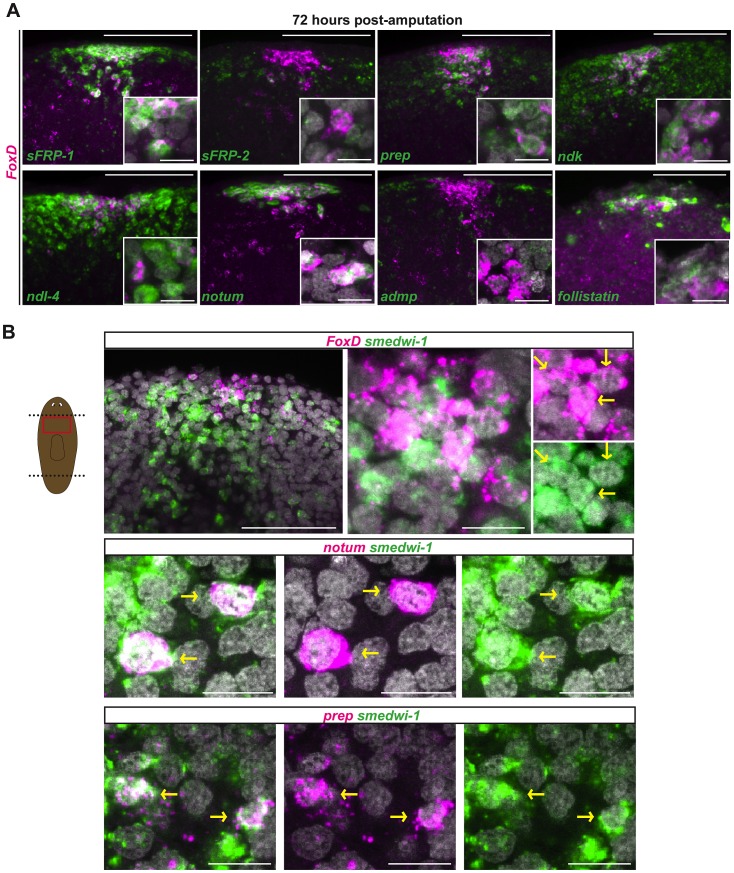
“Neoblasts can be specified to form eyes [48] or protonephridia [49] in regeneration, and here we demonstrate that some neoblasts near the forming anterior pole express FoxD, notum, and prep.”
BackgroundSelf-citationdlx and sp6-9 Control Optic Cup Regeneration in a Prototypic Eye
Lapan, S. W., & Reddien, P. W. (2011) · PLoS Genetics · doi:10.1371/journal.pgen.1002226 · Cited by 141 · cited 2×
“Neoblasts can be specified to form eyes [48] or protonephridia [49] in regeneration, and here we demonstrate that some neoblasts near the forming anterior pole express FoxD, notum, and prep.”
BackgroundSelf-citationAnalysis of motor function modulated by cholinergic neurons in planarian dugesia japonica
Nishimura, K., Kitamura, Y., Taniguchi, T., & Agata, K. (2010) · Neuroscience · doi:10.1016/j.neuroscience.2010.03.038 · Cited by 138
Regeneration and maintenance of the planarian midline is regulated by a slit orthologue
Cebrià, F., Guo, T., Jopek, J., & Newmark, P. A. (2007) · Developmental Biology · doi:10.1016/j.ydbio.2007.05.006 · Cited by 132 · cited 1×
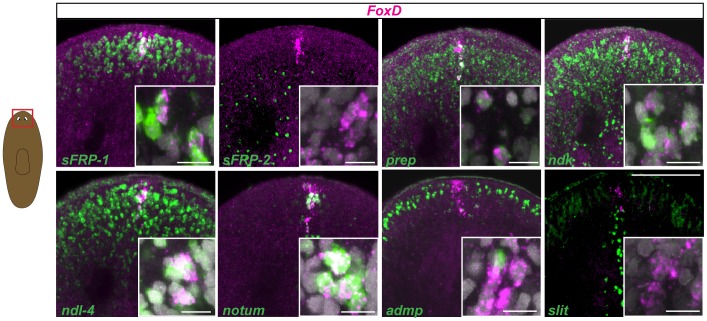
“We also assessed whether FoxD is co-expressed with two planarian genes expressed at the DV boundary (a lateral domain surrounding the animal at the midpoint of dorsal and ventral surfaces) and/ or at the midline (the median plane about which bilateral symmetry is organized): admp, encoding a BMP-family signaling ligan…”
BackgroundLocalized expression of sloppy paired protein maintains the polarity of Drosophila parasegments.
Cadigan, K. M., Grossniklaus, U., & Gehring, W. J. (1994) · Genes & Development · doi:10.1101/gad.8.8.899 · Cited by 129
Hedgehog Signal Transduction: From Flies to Vertebrates
Murone, M., Rosenthal, A., & de Sauvage, F. J. (1999) · Experimental Cell Research · doi:10.1006/excr.1999.4676 · Cited by 127 · cited 1×
“In vertebrates, Sonic hedgehog (a member of the Hh family) signaling is required for normal forebrain development and midline induction [40,41].”
BackgroundNoggin and Noggin-Like Genes Control Dorsoventral Axis Regeneration in Planarians
Molina, M. D., Neto, A., Maeso, I., Gómez-Skármeta, J. L., Saló, E., & Cebrià, F. (2011) · Current Biology · doi:10.1016/j.cub.2011.01.016 · Cited by 104 · cited 1×
“We also assessed whether FoxD is co-expressed with two planarian genes expressed at the DV boundary (a lateral domain surrounding the animal at the midpoint of dorsal and ventral surfaces) and/ or at the midline (the median plane about which bilateral symmetry is organized): admp, encoding a BMP-family signaling ligan…”
BackgroundGaviño, M. A., & Reddien, P. W. (2011) · Current Biology · doi:10.1016/j.cub.2011.01.017 · Cited by 104 · cited 1×
“We also assessed whether FoxD is co-expressed with two planarian genes expressed at the DV boundary (a lateral domain surrounding the animal at the midpoint of dorsal and ventral surfaces) and/ or at the midline (the median plane about which bilateral symmetry is organized): admp, encoding a BMP-family signaling ligan…”
BackgroundSelf-citationScimone, M. L., Meisel, J., & Reddien, P. W. (2010) · Development · doi:10.1242/dev.042051 · Cited by 102
Self-citationFollistatin antagonizes Activin signaling and acts with Notum to direct planarian head regeneration
Roberts-Galbraith, R. H., & Newmark, P. A. (2013) · Proceedings of the National Academy of Sciences · doi:10.1073/pnas.1214053110 · Cited by 96 · cited 7×
“fst RNAi can cause a strong block in regeneration, but under weaker RNAi conditions early expression of notum in this time window was affected [22].”
BackgroundInfluentialConstitutive gene expression and the specification of tissue identity in adult planarian biology
Reddien, P. W. (2011) · Trends in Genetics · doi:10.1016/j.tig.2011.04.004 · Cited by 92 · cited 4×
“constitutive regionalized expression in adult planarians and also guide pattern maintenance during tissue turnover [14].”
BackgroundInfluentialSelf-citationPAR proteins and the establishment of cell polarity duringC. elegans development
Nance, J. (2005) · BioEssays · doi:10.1002/bies.20175 · Cited by 92 · cited 1×
“elegans zygote after fertilization, establishing the anterior embryo end [46].”
Häcker, U., Kaufmann, E., Hartmann, C., Jürgens, G., Knöchel, W., & Jäckle, H. (1995) · The EMBO Journal · doi:10.1002/j.1460-2075.1995.tb00215.x · Cited by 83
Iglesias, M., Almuedo‐Castillo, M., Aboobaker, A. A., & Saló, E. (2011) · Developmental Biology · doi:10.1016/j.ydbio.2011.07.013 · Cited by 79
The TALE Class Homeobox Gene Smed-prep Defines the Anterior Compartment for Head Regeneration
Felix, D. A., & Aboobaker, A. A. (2010) · PLoS Genetics · doi:10.1371/journal.pgen.1000915 · Cited by 78 · cited 4×
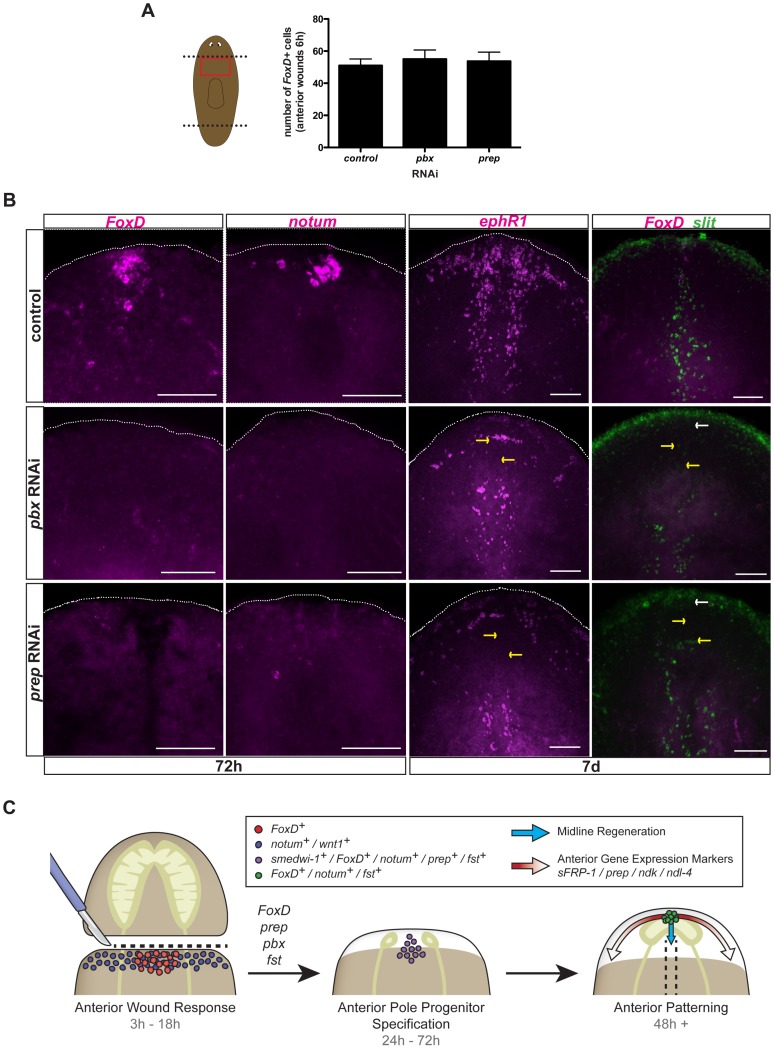
“Consistent with this hypothesis, head tissue can also be regenerated in pbx or prep RNAi animals lacking poles, but establishment of anterior patterning gene expression domains is severely affected [17,19,20].”
BackgroundInfluentialInduction of a noggin-like gene by ectopic DV interaction during planarian regeneration.
Ogawa, K., Ishihara, S., Saito, Y., Mineta, K., Nakazawa, M., Ikeo, K., Gojobori, T., Watanabe, K., & Agata, K. (2002) · Developmental Biology · doi:10.1006/dbio.2002.0790 · Cited by 72 · cited 1×
“Furthermore, FoxD was also co-expressed at wounds with other defined wound-induced genes, such as noggin-like1 (nlg1) [3,38], wntless [3,12,38], notum [8], and wnt1 [37] (Fig.”
BackgroundHayashi, T., Motoishi, M., Yazawa, S., Itomi, K., Tanegashima, C., Nishimura, O., Agata, K., & Tarui, H. (2011) · Development · doi:10.1242/dev.060194 · Cited by 58
pbx is required for pole and eye regeneration in planarians
Chen, C.-C. G., Wang, I. E., & Reddien, P. W. (2013) · Development · doi:10.1242/dev.083741 · Cited by 56 · cited 7×
“The TALE-homeodomain-encoding pbx and prep genes are required for regeneration and maintenance of anterior PCG expression, including for markers of the anterior pole [17,19,20].”
BackgroundInfluentialSelf-citationYu, J., Holland, N. D., & Holland, L. Z. (2003) · Development Genes and Evolution · doi:10.1007/s00427-003-0302-3 · Cited by 53 · cited 1×
“In amphioxus, FoxQ is expressed at the anterior pole during embryogenesis [32].”
BackgroundBlassberg, R. A., Felix, D. A., Tejada-Romero, B., & Aboobaker, A. A. (2013) · Development · doi:10.1242/dev.082982 · Cited by 52 · cited 6×
“The TALE-homeodomain-encoding pbx and prep genes are required for regeneration and maintenance of anterior PCG expression, including for markers of the anterior pole [17,19,20].”
BackgroundInfluentialThe expression of planarian brain factor homologs, DjFoxG and DjFoxD
Koinuma, S., Umesono, Y., Watanabe, K., & Agata, K. (2003) · Gene Expression Patterns · doi:10.1016/s1567-133x(02)00097-2 · Cited by 33 · cited 2×
“1 and [22,34]), but the pole and its role(s) are poorly defined; we focused our investigation of the anterior pole on the Schmidtea mediterranea ortholog of DjFoxD, Smed-FoxD, or FoxD in short (Fig.”
Background
Research works printed but not linked: 1
- Dubois F (1949) Contribution à l'étude de la migration des cellules. de régénération chez les Planaires dulcicoles. Bull Biol Fr Belg 83: 213– 283.
Cited by
Cell type transcriptome atlas for the planarian Schmidtea mediterranea
Fincher, C. T., Wurtzel, O., de Hoog, T., Kravarik, K. M., & Reddien, P. W. (2018) · Science · doi:10.1126/science.aaq1736 · Cited by 436
Self-citationThe Cellular and Molecular Basis for Planarian Regeneration
Reddien, P. W. (2018) · Cell · doi:10.1016/j.cell.2018.09.021 · Cited by 393
Self-citationRethinking Differentiation: Stem Cells, Regeneration, and Plasticity
Sánchez Alvarado, A., & Yamanaka, S. (2014) · Cell · doi:10.1016/j.cell.2014.02.041 · Cited by 276
Neoblast Specialization in Regeneration of the Planarian Schmidtea mediterranea
Scimone, M. L., Kravarik, K. M., Lapan, S. W., & Reddien, P. W. (2014) · Stem Cell Reports · doi:10.1016/j.stemcr.2014.06.001 · Cited by 236
“Scale bars for all panels, 100 mm. anterior pole (Scimone et al., 2014), and several neuron classes (Cowles et al., 2013; Currie and Pearson, 2013; Wenemoser et al., 2012) are expressed in smedwi-1+ cells during regeneration.”
BackgroundInfluentialSelf-citationOrthogonal muscle fibres have different instructive roles in planarian regeneration
Scimone, M. L., Cote, L. E., & Reddien, P. W. (2017) · Nature · doi:10.1038/nature24660 · Cited by 152
Self-citation
Metadata
- Authors
- Scimone, M. L., Lapan, S. W., & Reddien, P. W.
- Affiliations
- Howard Hughes Medical Institute (US)
- Corresponding author
- Reddien, Peter W.
- Venue
- PLoS Genetics
- Publisher
- Public Library of Science (PLoS)
- Published
- 2014-01-09
- Volume
- 10
- Issue
- 1
- Pages
- e1003999
- ISSN
- 1553-7390 (ISSN-L)
- 1553-7404
- PMC
- PMC3886891
- OpenAlex
- W2023265934
- Cited by
- 95
- References
- 51
- Citations by year
- 2026: 4 · 2025: 12 · 2024: 8 · 2023: 6 · 2022: 9 · 2021: 9 · 2020: 3 · 2019: 5 · 2018: 10 · 2017: 9 · 2016: 11 · 2015: 5 · 2014: 4
- FWCI
- 3.96
- Type
- journal article
- Language
- en
- Open access
- gold
- doi.org
- Licence
- Locations
- PLoS Genetics (publishedVersion, cc-by)
- Europe PMC (PubMed Central) (publishedVersion, cc-by)
- PubMed Central (publishedVersion, cc-by)
- PubMed (publishedVersion)
- DOAJ (DOAJ: Directory of Open Access Journals) (submittedVersion)
- DSpace@MIT (Massachusetts Institute of Technology) (submittedVersion, cc-by-nc)
- Figshare (submittedVersion, cc-by)
- PLoS eBooks
- Funders
- Howard Hughes Medical Institute
- W. M. Keck Foundation
- National Institutes of Health
- National Institute of General Medical Sciences (R01GM080639)
- Topics
- Life Sciences › Biochemistry, Genetics and Molecular Biology › Molecular Biology › Planarian Biology and Electrostimulation
- Life Sciences › Biochemistry, Genetics and Molecular Biology › Molecular Biology › Developmental Biology and Gene Regulation
- Life Sciences › Agricultural and Biological Sciences › Animal Science and Zoology › Marine Invertebrate Physiology and Ecology
- Keywords
- forkhead transcription factor, planarian regeneration, Hedgehog signaling, wound signaling, ventral midline, notum, PrEP, RNA interference
- MeSH terms
- Animals, Cell Differentiation, Planarians, Regeneration, Stem Cells, Wounds and Injuries, Signal Transduction, Helminth Proteins, Gene Expression Regulation, Developmental, RNA Interference, Forkhead Transcription Factors, Hedgehog Proteins
About these checks
Registry, retraction, Cites and statistics results are computed, not judged, with one exception: a printed reference that no index lists is read once by a model before it counts as a citation error. Claims are extracted by a model and kept only when their quote appears verbatim in the text; each cited source is then checked, with a model’s help, for whether it says what the claim relies on. Those verdicts can be wrong — read the claim’s quote and the cited source before relying on one.
Statistics and arithmetic are recomputed, not judged.
Confidence bands are shown only for fields calibrated on our annotated test set. None is calibrated yet, so no band is shown.
What counts as a claim ›How we measure confidence ›How we check this ›
Are you an author, or do you see a problem with this page? Request a review
Data sources
Bibliographic data: Semantic Scholar, OpenAlex, Crossref.
Contains information from the Semantic Scholar Academic Graph Datasets, made available under the ODC Attribution License (ODC-BY 1.0).
Semantic Scholar’s data is described in: Kinney, R., et al. (2023). The Semantic Scholar Open Data Platform. arXiv:2301.10140.
