

The DOI matches its Crossref record; 55 of the 55 references it cites were found in a registry or an index.
Reporting Methods of Blinding in Randomized Trials Assessing Nonpharmacological Treatments
Open accessAbstract
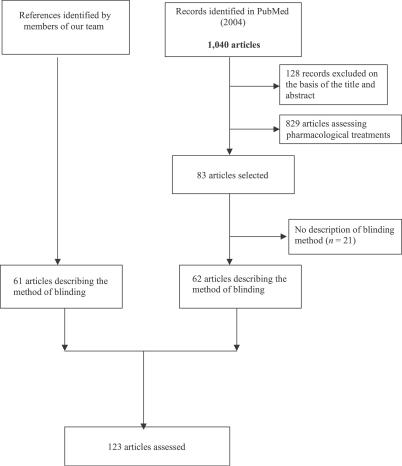
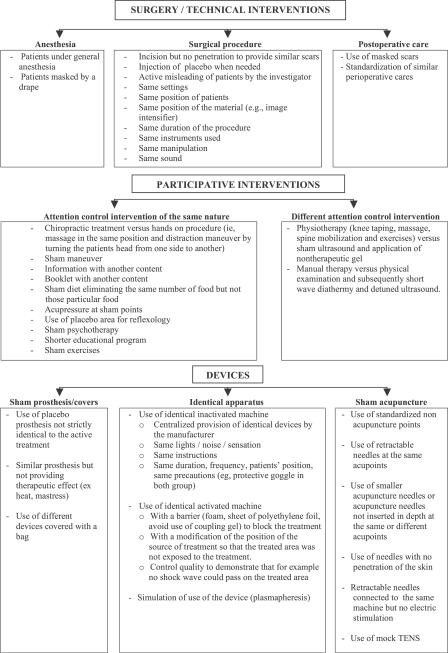
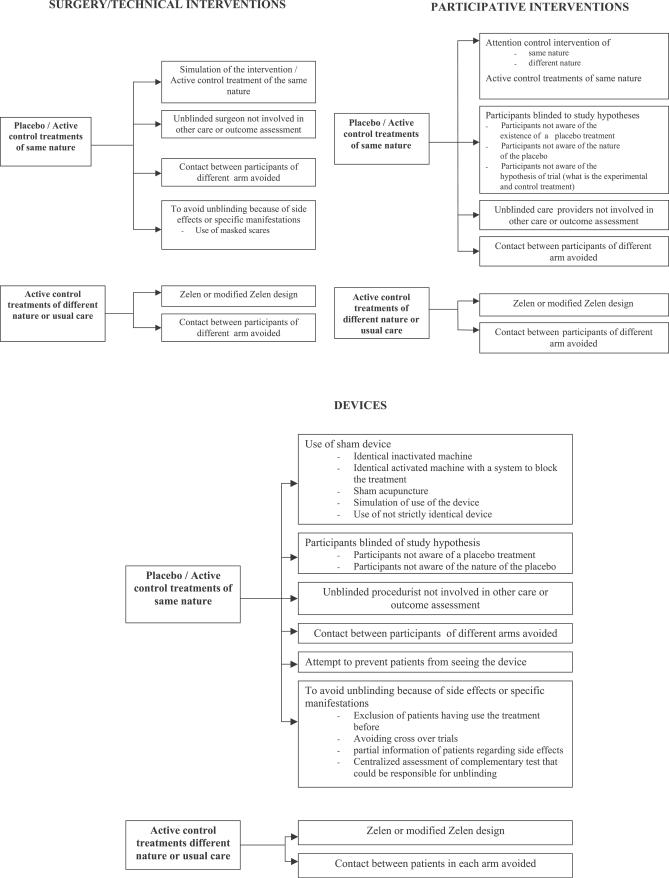
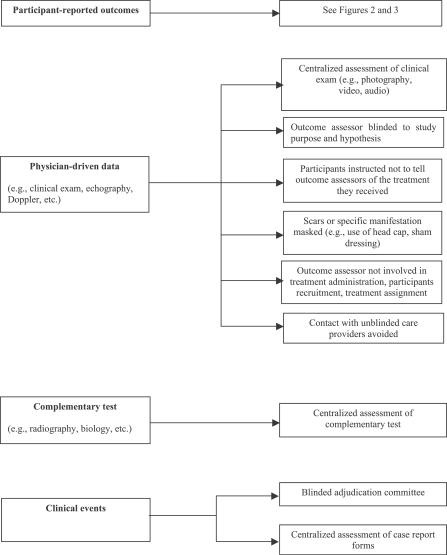
BACKGROUND: Blinding is a cornerstone of treatment evaluation. Blinding is more difficult to obtain in trials assessing nonpharmacological treatment and frequently relies on "creative" (nonstandard) methods. The purpose of this study was to systematically describe the strategies used to obtain blinding in a sample of randomized controlled trials of nonpharmacological treatment. METHODS AND FINDINGS: We systematically searched in Medline and the Cochrane Methodology Register for randomized controlled trials (RCTs) assessing nonpharmacological treatment with blinding, published during 2004 in high-impact-factor journals. Data were extracted using a standardized extraction form. We identified 145 articles, with the method of blinding described in 123 of the reports. Methods of blinding of participants and/or health care providers and/or other caregivers concerned mainly use of sham procedures such as simulation of surgical procedures, similar attention-control interventions, or a placebo with a different mode of administration for rehabilitation or psychotherapy. Trials assessing devices reported various placebo interventions such as use of sham prosthesis, identical apparatus (e.g., identical but inactivated machine or use of activated machine with a barrier to block the treatment), or simulation of using a device. Blinding participants to the study hypothesis was also an important method of blinding. The methods reported for blinding outcome assessors relied mainly on centralized assessment of paraclinical examinations, clinical examinations (i.e., use of video, audiotape, photography), or adjudications of clinical events. CONCLUSIONS: This study classifies blinding methods and provides a detailed description of methods that could overcome some barriers of blinding in clinical trials assessing nonpharmacological treatment, and provides information for readers assessing the quality of results of such trials.
Overview
The claims and statistics of this paper haven’t been checked yet.
Run the check — free, no account needed. It reads the open-access text and checks the sources it cites.
Integrity signals
Registry
Cites
Statistics
Figures
Verification
Claims the paper makes
The claims and statistics of this paper haven’t been checked yet.
Run the check — free, no account needed. It reads the open-access text and checks the sources it cites.
Claims other papers make about this one
Each is checked against this paper’s own text: does it say what the citing paper says it does?
The source backs part of the claim, not all of it — or backs it for a different population, condition or comparison.
In the citing paper
“In manual therapy, blinding is an issue, as patients tend to be aware of the manual treatment and therapists cannot be blinded to the treatment intervention they deliver.37”
From Efficacy and safety of osteopathic manipulative treatment: an overview of systematic reviews (2022) · cites this paper as [37]
Experimental — accuracy not yet measuredThe cited source says what the claim attributes to it.
In the citing paper
“The most common method reported was avoiding unblinding by participants through asking them not to discuss their treatment, a method frequently reported in the existing literature [5, 14, 18, 23].”
From Blinding outcome assessors in randomised controlled trials of psychological interventions: how is it done? A narrative review (2026) · cites this paper as [5]
The cited source says what the claim attributes to it.
In the citing paper
“In particular, only one study (Epton et al., 2014) evidently concealed group allocation and, as is often the case in non-pharmacological trials (Boutron et al., 2007), none clearly ensured blinding of participants.”
From The effect of e-mental health interventions on academic performance in university and college students: A meta-analysis of randomized controlled trials (2020) · cites this paper as Boutron et al., 2007
The cited source says what the claim attributes to it.
In the citing paper
“methods have been proposed to mitigate these issues in trial design and quality assessment (Boutron et al., 2007”
From Systematic review and meta-analysis of interventions for depression and anxiety in persons with multiple sclerosis (2016) · cites this paper as Boutron et al., 2007
In the citing paper
“it is difficult to use a doubleblind design for patients in trials of psychotherapy”
In the citing paper
“which would affect the transitivity of the whole network and restricts the interpretation of these results.15”
Self-check
Percentages, sums and reported differences re-computed from the paper’s own numbers.
The self-check needs the paper’s full text.
Citations
Cites
Schulz (1995) · doi:10.1001/jama.1995.03520290060030 · Cited by 5,634
The Revised CONSORT Statement for Reporting Randomized Trials: Explanation and Elaboration
Altman, D. G., Schulz, K. F., Moher, D., Egger, M., Davidoff, F., Elbourne, D., Gøtzsche, P. C., Lang, T., & for the CONSORT Group (2001) · Annals of Internal Medicine · doi:10.7326/0003-4819-134-8-200104170-00012 · Cited by 3,835
Self-citationMoher, D., Pham, B., Jones, A., Cook, D. J., Jadad, A. R., Moher, M., Tugwell, P., & Klassen, T. P. (1998) · The Lancet · doi:10.1016/s0140-6736(98)01085-x · Cited by 3,560
Self-citationAssessing the quality of controlled clinical trials
Jüni, P., Altman, D. G., & Egger, M. (2001) · BMJ · doi:10.1136/bmj.323.7303.42 · Cited by 3,309 · cited 1×
“Empirical evidence has demonstrated that lack of reporting of double blinding is responsible for biased treatment estimates [1,2,11–13].”
BackgroundTransplantation of Embryonic Dopamine Neurons for Severe Parkinson's Disease
Freed, C. R., Greene, P. E., Breeze, R. E., Tsai, W.-Y., DuMouchel, W., Kao, R., Dillon, S., Winfield, H., Culver, S., Trojanowski, J. Q., et al. (2001) · New England Journal of Medicine · doi:10.1056/nejm200103083441002 · Cited by 2,366
Psychometric properties of the credibility/expectancy questionnaire
Devilly, G. J., & Borkovec, T. D. (2000) · Journal of Behavior Therapy and Experimental Psychiatry · doi:10.1016/s0005-7916(00)00012-4 · Cited by 2,295 · cited 1×
“, use of validated credibility scales [43,44]), participants’ expectations (i.”
BackgroundGluud, L. L., Villumsen, J., & Gluud, C. N. (2001) · Annals of Internal Medicine · doi:10.7326/0003-4819-135-11-200112040-00010 · Cited by 2,266
A Controlled Trial of Arthroscopic Surgery for Osteoarthritis of the Knee
Moseley, J. B., O’Malley, K. J., Petersen, N. J., Menke, T. J., Brody, B. A., Kuykendall, D. H., Hollingsworth, J. C., Ashton, C. M., & Wray, N. P. (2002) · New England Journal of Medicine · doi:10.1056/nejmoa013259 · Cited by 2,146
Hróbjartsson, A., & Gøtzsche, P. C. (2001) · New England Journal of Medicine · doi:10.1056/nejm200105243442106 · Cited by 1,504
Self-citationA CONTROLLED TRIAL OF ARTHROSCOPIC SURGERY FOR OSTEOARTHRITIS OF THE KNEE
Ruce, J. B., Imberly, K., Etersen, A. J. P., Enke, T. E. J. M., Rody, A., Uykendall, D. A. H. K., Ohn, J., Shton, C. A. M. A., & Ray, E. P. W. (2002) · Cited by 1,087
Research works printed but not linked: 55
- Gluud, 2006, Am J Epidemiol, 163, 493
- Schulz, 1995, JAMA, 273, 408
- Schulz, 2002, Ann Intern Med, 136, 254
- Schulz, 1996, BMJ, 312, 742
- Devereaux, 2001, JAMA, 285, 2000
- Montori, 2002, J Clin Epidemiol, 55, 787
- Hrobjartsson, 2002, J Clin Epidemiol, 55, 430
- Hrobjartsson, 2001, N Engl J Med, 344, 1594
- Noseworthy, 1994, Neurology, 44, 16
- Altman, 2001, Ann Intern Med, 134, 663
- Moher, 1998, Lancet, 352, 609
- Juni, 2001, BMJ, 323, 42
- Kjaergard, 2001, Ann Intern Med, 135, 982
- Fergusson, 2004, BMJ, 328, 432
- Sackett, 2004, BMJ, 328, 1136
- Boutron, 2005, J Clin Epidemiol, 58, 1220
- Hrobjartsson, 2004, 12th Cochrane Colloquium: Bridging the Gaps, 138
- Boutron, 2004, J Clin Epidemiol, 57, 543
- Boutron, 2003, JAMA, 290, 1062
- McCulloch, 2002, BMJ, 324, 1448
- Lilford, 2004, Br J Surg, 91, 6
- Devereaux, 2005, BMJ, 330, 88
- Bhandari, 2002, J Bone Joint Surg Am, 84-A, 388
- Jacquier, 2006, Ann Surg, 244, 677
- Ethgen, 2005, Ann Intern Med, 143, 20
- Lee, 2002, JAMA, 287, 2805
- Freed, 2001, N Engl J Med, 344, 710
- Balon, 1998, N Engl J Med, 339, 1013
- Baker, 2001, J Rheumatol, 28, 1655
- Wolsko, 2004, Altern Ther Health Med, 10, 36
- Quilty, 2003, J Rheumatol, 30, 1311
- Edinger, 2001, JAMA, 285, 1856
- Wang, 2004, Anesthesiology, 100, 1399
- Carbajal, 2003, BMJ, 326, 13
- Boutron, 2005, J Clin Epidemiol, 58, 1233
- Paterson, 2005, BMJ, 330, 1202
- Moseley, 2002, N Engl J Med, 347, 81
- Spigt, 2005, J Clin Epidemiol, 58, 350
- Zelen, 1992, Lancet, 340, 375
- Boter, 2004, BMJ, 329, 86
- Bishop, 2005, Complement Ther Med, 13, 144
- Devilly, 2000, J Behav Ther Exp Psychiatry, 31, 73
- Torgerson, 2005, JAMA, 294, 41
- Torgerson, 1998, BMJ, 316, 606
- McPherson, 1999, Eur J Cancer, 35, 1598
- McPherson, 2001, Qual Health Care 10 Suppl, 1, i61
- McPherson, 1997, J R Soc Med, 90, 652
- McPherson, 1998, BMJ, 317
- Halpern, 2003, J Clin Epidemiol, 56, 109
- Wood, 2006, 14th Cochrane Colloquium:Bridging the Gaps
- Gerritsen, 2002, JAMA, 288, 1245
- Altman, 2004, BMJ, 328, 1135
- Sackett, 1986, Clin Res, 34, 711A
- Senn, 2004, BMJ, 328, 1135
- Pildal, 2005, BMJ, 330, 1049
Cited by
Sorted by citations
SPIRIT 2013 explanation and elaboration: guidance for protocols of clinical trials
Chan, A.-W., Tetzlaff, J. M., Gotzsche, P. C., Altman, D. G., Mann, H., Berlin, J. A., Dickersin, K., Hrobjartsson, A., Schulz, K. F., Parulekar, W. R., et al. (2013) · BMJ · doi:10.1136/bmj.e7586 · Cited by 6,251
Self-citationBoutron, I., Moher, D., Altman, D. G., Schulz, K. F., Ravaud, P., & for the CONSORT Group* (2008) · Annals of Internal Medicine · doi:10.7326/0003-4819-148-4-200802190-00008 · Cited by 2,292
Self-citationBoutron, I., Altman, D. G., Moher, D., Schulz, K. F., Ravaud, P., & for the CONSORT NPT Group* (2017) · Annals of Internal Medicine · doi:10.7326/m17-0046 · Cited by 1,538
Self-citationSmith, M., Hosking, J., Woodward, A. J., Witten, K., Macmillan, A. K., Field, A., Baas, P. H., & Mackie, H. W. (2017) · International Journal of Behavioral Nutrition and Physical Activity · doi:10.1186/s12966-017-0613-9 · Cited by 955
Boutron, I. (2010) · JAMA · doi:10.1001/jama.2010.651 · Cited by 842
Self-citation
Metadata
- Authors
- Boutron, I., Guittet, L., Estellat, C., Moher, D., Hróbjartsson, A., & Ravaud, P.
- Affiliations
- Inserm (FR)
- University of Ottawa (CA)
- Rigshospitalet (DK)
- Corresponding author
- Boutron, Isabelle
- ORCID
- Venue
- PLoS Medicine
- Publisher
- Public Library of Science (PLoS)
- Published
- 2007-02-20
- Volume
- 4
- Issue
- 2
- Pages
- e61
- ISSN
- 1549-1277 (ISSN-L)
- 1549-1676
- PMC
- PMC1800311
- OpenAlex
- W2118789584
- Cited by
- 389
- References
- 55
- Citations by year
- 2026: 34 · 2025: 27 · 2024: 14 · 2023: 21 · 2022: 20 · 2021: 27 · 2020: 27 · 2019: 24 · 2018: 36 · 2017: 17 · 2016: 16 · 2015: 24 · 2014: 20 · 2013: 20 · 2012: 18
- FWCI
- 10.56
- Type
- journal article
- Language
- en
- Open access
- gold
- doi.org
- Locations
- PLoS Medicine (publishedVersion, cc-by)
- Europe PMC (PubMed Central) (publishedVersion, cc-by)
- PubMed Central (publishedVersion, cc-by)
- PubMed (publishedVersion)
- HAL (submittedVersion, other-oa)
- DOAJ (DOAJ: Directory of Open Access Journals) (submittedVersion, cc-by-sa)
- Figshare (submittedVersion, cc-by)
- Funders
- University of Ottawa
- Topics
- Physical Sciences › Mathematics › Statistics and Probability › Statistical Methods in Clinical Trials
- Social Sciences › Decision Sciences › Statistics, Probability and Uncertainty › Meta-analysis and systematic reviews
- Life Sciences › Neuroscience › Cognitive Neuroscience › Pain Management and Placebo Effect
- Keywords
- blinding, randomization, non-pharmacological treatment, sham procedure, placebo, rehabilitation, psychotherapy, trial reporting quality
- MeSH terms
- Double-Blind Method, Humans, Research Design, Randomized Controlled Trials as Topic
About these checks
Registry, retraction, Cites and statistics results are computed, not judged, with one exception: a printed reference that no index lists is read once by a model before it counts as a citation error. Claims are extracted by a model and kept only when their quote appears verbatim in the text; each cited source is then checked, with a model’s help, for whether it says what the claim relies on. Those verdicts can be wrong — read the claim’s quote and the cited source before relying on one.
Statistics and arithmetic are recomputed, not judged.
Confidence bands are shown only for fields calibrated on our annotated test set. None is calibrated yet, so no band is shown.
What counts as a claim ›How we measure confidence ›How we check this ›
Are you an author, or do you see a problem with this page? Request a review
