

The DOI matches its Crossref record; 32 of the 32 references it cites were found in a registry or an index.
Detection of Intracellular Bacterial Communities in Human Urinary Tract Infection
Open accessAbstract
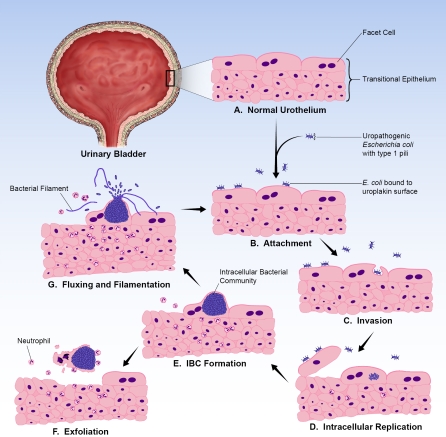
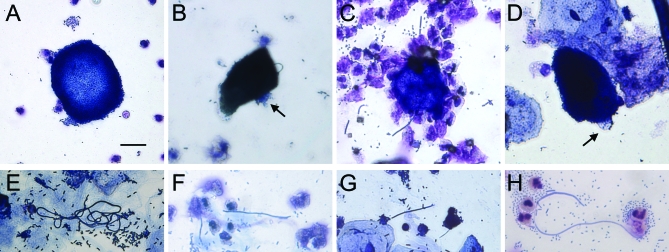
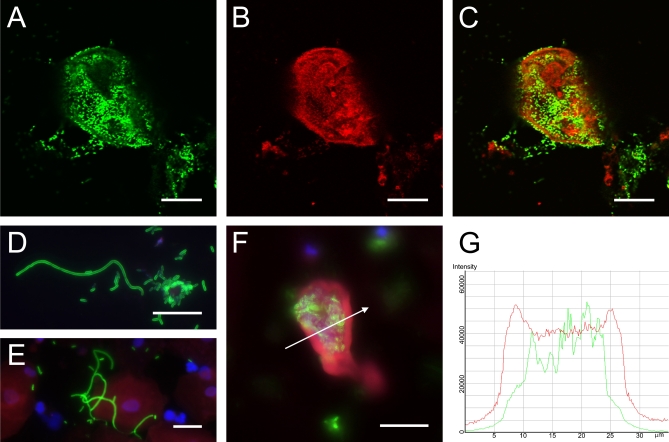
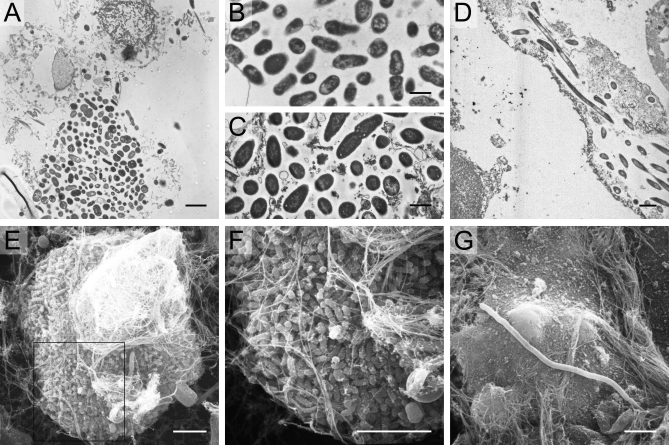
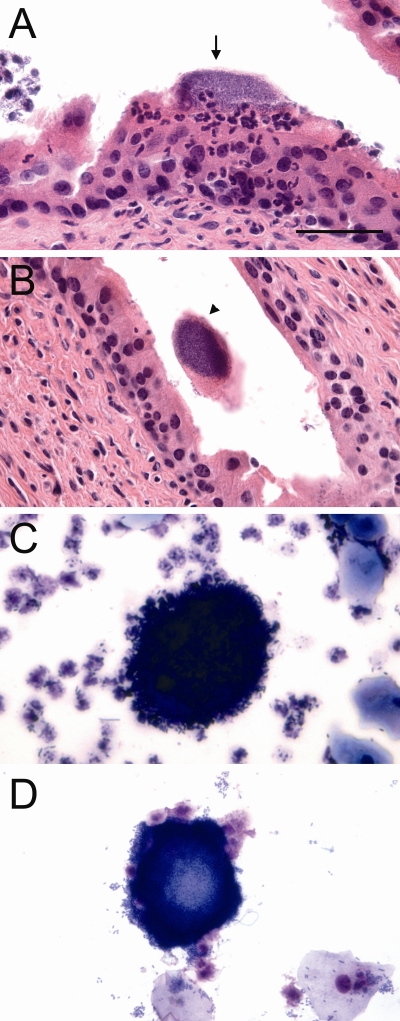
BACKGROUND: Urinary tract infections (UTIs) are one of the most common bacterial infections and are predominantly caused by uropathogenic Escherichia coli (UPEC). While UTIs are typically considered extracellular infections, it has been recently demonstrated that UPEC bind to, invade, and replicate within the murine bladder urothelium to form intracellular bacterial communities (IBCs). These IBCs dissociate and bacteria flux out of bladder facet cells, some with filamentous morphology, and ultimately establish quiescent intracellular reservoirs that can seed recurrent infection. This IBC pathogenic cycle has not yet been investigated in humans. In this study we sought to determine whether evidence of an IBC pathway could be found in urine specimens from women with acute UTI. METHODS AND FINDINGS: We collected midstream, clean-catch urine specimens from 80 young healthy women with acute uncomplicated cystitis and 20 asymptomatic women with a history of UTI. Investigators were blinded to culture results and clinical history. Samples were analyzed by light microscopy, immunofluorescence, and electron microscopy for evidence of exfoliated IBCs and filamentous bacteria. Evidence of IBCs was found in 14 of 80 (18%) urines from women with UTI. Filamentous bacteria were found in 33 of 80 (41%) urines from women with UTI. None of the 20 urines from the asymptomatic comparative group showed evidence of IBCs or filaments. Filamentous bacteria were present in all 14 of the urines with IBCs compared to 19 (29%) of 66 samples with no evidence of IBCs (p < 0.001). Of 65 urines from patients with E. coli infections, 14 (22%) had evidence of IBCs and 29 (45%) had filamentous bacteria, while none of the gram-positive infections had IBCs or filamentous bacteria. CONCLUSIONS: The presence of exfoliated IBCs and filamentous bacteria in the urines of women with acute cystitis suggests that the IBC pathogenic pathway characterized in the murine model may occur in humans. The findings support the occurrence of an intracellular bacterial niche in some women with cystitis that may have important implications for UTI recurrence and treatment.
Overview
The claims and statistics of this paper haven’t been checked yet.
Run the check — free, no account needed. It reads the open-access text and checks the sources it cites.
Integrity signals
Registry
Cites
Statistics
Figures
Verification
Claims the paper makes
The claims and statistics of this paper haven’t been checked yet.
Run the check — free, no account needed. It reads the open-access text and checks the sources it cites.
Claims other papers make about this one
Each is checked against this paper’s own text: does it say what the citing paper says it does?
The source backs part of the claim, not all of it — or backs it for a different population, condition or comparison.
In the citing paper
“IBCs have long been reported in the urine of patients with acute cystitis; however, they have not been detected in the urine of patients with acute episodes of rUTIs [25].”
From Vaginal microbiota and urinary tract infections in women: the protective role of vaginal lactobacilli in counteracting urinary tract infections occurrence and recurrence (2026) · cites this paper as [25]
Experimental — accuracy not yet measured
Self-check
Percentages, sums and reported differences re-computed from the paper’s own numbers.
The self-check needs the paper’s full text.
Citations
Cites
Epidemiology of urinary tract infections: incidence, morbidity, and economic costs
Foxman, B. (2002) · The American Journal of Medicine · doi:10.1016/s0002-9343(02)01054-9 · Cited by 1,935 · cited 1×
“Urinary tract infections (UTIs) affect nearly 13 million women annually in the United States alone and can result in significant costs and morbidity [1–5].”
Intracellular Bacterial Biofilm-Like Pods in Urinary Tract Infections
Anderson, G. G., Palermo, J. J., Schilling, J. D., Roth, R. A., Heuser, J., & Hultgren, S. J. (2003) · Science · doi:10.1126/science.1084550 · Cited by 1,175 · cited 1×
“This intracellular niche is conducive to UPEC replication and formation of intracellular bacterial communities (IBCs) with biofilm-like properties [13].”
Self-citationJawetz, E. (2016) · Pediatric Care Online · doi:10.1542/aap.ppcqr.396241 · Cited by 999
Induction and Evasion of Host Defenses by Type 1-Piliated Uropathogenic Escherichia coli
Mulvey, M. A., López-Boado, Y. S., Wilson, C. L., Roth, R. A., Parks, W. C., Heuser, J., & Hultgren, S. J. (1998) · Science · doi:10.1126/science.282.5393.1494 · Cited by 971
Self-citationMulvey, M. A., Schilling, J. D., & Hultgren, S. J. (2001) · Infection and Immunity · doi:10.1128/iai.69.7.4572-4579.2001 · Cited by 863 · cited 3×
“Ultimately, UPEC are able to form quiescent intracellular reservoirs composed of small rosettes of bacteria within Lamp-1–positive endocytic vesicles that can persist for several weeks protected from antibiotics and, presumably, undetected by the host immune system [15,19,20].”
Self-citationType 1 pilus‐mediated bacterial invasion of bladder epithelial cells
Martinez, J. J., Mulvey, M. A., Schilling, J. D., Pinkner, J. S., & Hultgren, S. J. (2000) · The EMBO Journal · doi:10.1093/emboj/19.12.2803 · Cited by 784 · cited 4×
“coli antibody (1:200) followed by 18 nm colloidal goldconjugated anti-rabbit IgG (1:30, Jackson ImmunoResearch Laboratories) [16].”
InfluentialSelf-citationDiagnosis of Coliform Infection in Acutely Dysuric Women
Stamm, W. E., Counts, G. W., Running, K. R., Fihn, S., Turck, M., & Holmes, K. K. (1982) · New England Journal of Medicine · doi:10.1056/nejm198208193070802 · Cited by 760
Self-citationDIAGNOSIS AND TREATMENT OF UNCOMPLICATED URINARY TRACT INFECTION
Hooton, T. M., & Stamm, W. E. (1997) · Infectious Disease Clinics of North America · doi:10.1016/s0891-5520(05)70373-1 · Cited by 739 · cited 1×
“Urinary tract infections (UTIs) affect nearly 13 million women annually in the United States alone and can result in significant costs and morbidity [1–5].”
Self-citationA Prospective Study of Risk Factors for Symptomatic Urinary Tract Infection in Young Women
Hooton, T. M., Scholes, D., Hughes, J. P., Winter, C., Roberts, P. L., Stapleton, A. E., Stergachis, A. S., & Stamm, W. E. (1996) · New England Journal of Medicine · doi:10.1056/nejm199608153350703 · Cited by 732 · cited 1×
“Urinary tract infections (UTIs) affect nearly 13 million women annually in the United States alone and can result in significant costs and morbidity [1–5].”
Self-citationThe etiology of urinary tract infection: Traditional and emerging pathogens
Ronald, A. (2003) · Disease-a-Month · doi:10.1067/mda.2003.8 · Cited by 656
Research works printed but not linked: 29
- Griebling, 2007, Urologic Diseases in America, 587
- Foxman, 2002, Am J Med, 113, 5S
- Hooton, 1996, N Engl J Med, 335, 468
- Hooton, 1997, Infect Dis Clin North Am, 11, 551
- Ronald, 1991, Med Clin North Am, 75, 299
- Ronald, 2001, Int J Antimicrob Agents, 17, 343
- Kunin, 1980, JAMA, 243, 134
- Foxman, 1990, Am J Public Health, 80, 331
- Ikaheimo, 1996, Clin Infect Dis, 22, 91
- Foxman, 1995, J Infect Dis, 172, 1536
- Russo, 1995, J Infect Dis, 172, 440
- Anderson, 2003, Science, 301, 105
- Justice, 2004, Proc Natl Acad Sci U S A, 101, 1333
- Mulvey, 2001, Infect Immun, 69, 4572
- Martinez, 2000, EMBO J, 19, 2803
- Mulvey, 1998, Science, 282, 1494
- Wright, 2007, Cell Microbiol, 9, 2230
- Mysorekar, 2006, Proc Natl Acad Sci U S A, 103, 14170
- Schilling, 2002, Infect Immun, 70, 7042
- Stamm, 1982, N Engl J Med, 307, 463
- Elliott, 1985, J Infect, 11, 191
- Feldmann, 2007, Infect Immun, 75, 3183
- Garofalo, 2007, Infect Immun, 75, 52
- Justice, 2006, Proc Natl Acad Sci U S A, 103, 19884
- Schoemaker, 1984, J Bacteriol, 158, 551
- Chen, 2006, Proc Natl Acad Sci U S A, 103, 5977
- Bran, 1972, N Engl J Med, 286, 626
- Buckley, 1978, N Engl J Med, 298, 321
- Hooton, 1991, JAMA, 265, 64
Cited by
Sorted by citations
Urinary tract infections: epidemiology, mechanisms of infection and treatment options
Flores‐Mireles, A. L., Walker, J. N., Caparon, M. G., & Hultgren, S. J. (2015) · Nature Reviews Microbiology · doi:10.1038/nrmicro3432 · Cited by 4,343
Self-citationThe epidemiology of urinary tract infection
Foxman, B. (2010) · Nature Reviews Urology · doi:10.1038/nrurol.2010.190 · Cited by 1,848
“Some recurrences may be attributable to the ability of UPEC to evade the immune system by creating intracellular bacterial communitie”
Evolving concepts in biofilm infections
Hall‐Stoodley, L., & Stoodley, P. (2009) · Cellular Microbiology · doi:10.1111/j.1462-5822.2009.01323.x · Cited by 1,138
“, 2008) and intracellular UPEC exhibiting the same phenotype in epithelial cells present in human UTI infections has been described (Rosen et al., 2007).”
BackgroundBacterial Biofilm and its Role in the Pathogenesis of Disease
Vestby, L. K., Grønseth, T., Simm, R., & Nesse, L. L. (2020) · Antibiotics · doi:10.3390/antibiotics9020059 · Cited by 1,196
“In addition, IBC have been observed by electron microscopy in shed epithelial cells in urine from 18% of women presenting with acute UTI (Figure 5) [223].”
BackgroundKostakioti, M., Hadjifrangiskou, M., & Hultgren, S. J. (2013) · Cold Spring Harbor Perspectives in Medicine · doi:10.1101/cshperspect.a010306 · Cited by 1,072
“FimH is thought to play a critical role in UPEC pathogenesis; it mediates binding and invasion to human bladder epithelial cells, binds to human uroplakin, and is critical in a murine preclinical model of cystitis, which mimics human disease (Mulvey et al. 1998; Martinez et al. 2000; Kau et al. 2005; Bishop et al. 200…”
BackgroundSelf-citation
Metadata
- Authors
- Rosen, D. A., Hooton, T. M., Stamm, W. E., Humphrey, P. A., & Hultgren, S. J.
- Affiliations
- Washington University in St. Louis (US)
- University of Miami (US)
- University of Washington (US)
- Venue
- PLoS Medicine
- Publisher
- Public Library of Science (PLoS)
- Published
- 2007-12-18
- Volume
- 4
- Issue
- 12
- Pages
- e329
- ISSN
- 1549-1277 (ISSN-L)
- 1549-1676
- PMC
- PMC2140087
- OpenAlex
- W2118051267
- Cited by
- 651
- References
- 31
- Citations by year
- 2026: 28 · 2025: 33 · 2024: 40 · 2023: 35 · 2022: 35 · 2021: 41 · 2020: 36 · 2019: 36 · 2018: 23 · 2017: 42 · 2016: 55 · 2015: 37 · 2014: 39 · 2013: 42 · 2012: 29
- FWCI
- 16.58
- Type
- journal article
- Language
- en
- Open access
- gold
- doi.org
- Locations
- PLoS Medicine (publishedVersion, cc-by)
- PubMed Central (publishedVersion, cc-by)
- PubMed (publishedVersion)
- Digital Commons@Becker (Washington University School of Medicine) (submittedVersion)
- DOAJ (DOAJ: Directory of Open Access Journals) (submittedVersion, cc-by-sa)
- Funders
- University of Washington
- National Institutes of Health
- National Institute of Diabetes and Digestive and Kidney Diseases (P01DK053369, DK-53369, R01 DK64540, P50DK064540, DK051406, P01 DK53369, DK64540, R01DK051406)
- Office of Research on Women's Health
- Topics
- Health Sciences › Medicine › Urology › Urinary Tract Infections Management
- Life Sciences › Immunology and Microbiology › Microbiology › Escherichia coli research studies
- Life Sciences › Biochemistry, Genetics and Molecular Biology › Molecular Biology › Bacterial biofilms and quorum sensing
- Keywords
- urinary tract infection, intracellular bacterial communities, uropathogenic Escherichia coli, acute uncomplicated cystitis, filamentous bacteria, recurrent urinary tract infection, women, bladder urothelium, human urine
- MeSH terms
- Acute Disease, Adult, Animals, Bacteria, Urinary Bladder, Cystitis, Disease Models, Animal, Escherichia coli Infections, Female, Fluorescent Antibody Technique, Humans, Mice, Inbred C3H, Microscopy, Electron, Scanning, Middle Aged, Recurrence, Urinary Tract Infections, Urine, Case-Control Studies, Urothelium, Mice
About these checks
Registry, retraction, Cites and statistics results are computed, not judged, with one exception: a printed reference that no index lists is read once by a model before it counts as a citation error. Claims are extracted by a model and kept only when their quote appears verbatim in the text; each cited source is then checked, with a model’s help, for whether it says what the claim relies on. Those verdicts can be wrong — read the claim’s quote and the cited source before relying on one.
Statistics and arithmetic are recomputed, not judged.
Confidence bands are shown only for fields calibrated on our annotated test set. None is calibrated yet, so no band is shown.
What counts as a claim ›How we measure confidence ›How we check this ›
Are you an author, or do you see a problem with this page? Request a review
