

The DOI matches its Crossref record; 35 of the 35 references it cites were found in a registry or an index.
Association of Early Repolarization Pattern on ECG with Risk of Cardiac and All-Cause Mortality: A Population-Based Prospective Cohort Study (MONICA/KORA)
Open accessAbstract
BACKGROUND: Early repolarization pattern (ERP) on electrocardiogram was associated with idiopathic ventricular fibrillation and sudden cardiac arrest in a case-control study and with cardiovascular mortality in a Finnish community-based sample. We sought to determine ERP prevalence and its association with cardiac and all-cause mortality in a large, prospective, population-based case-cohort study (Monitoring of Cardiovascular Diseases and Conditions [MONICA]/KORA [Cooperative Health Research in the Region of Augsburg]) comprised of individuals of Central-European descent. METHODS AND FINDINGS: Electrocardiograms of 1,945 participants aged 35-74 y, representing a source population of 6,213 individuals, were analyzed applying a case-cohort design. Mean follow-up was 18.9 y. Cause of death was ascertained by the 9th revision of the International Classification of Disease (ICD-9) codes as documented in death certificates. ERP-attributable effects on mortality were determined by a weighted Cox proportional hazard model adjusted for covariables. Prevalence of ERP was 13.1% in our study. ERP was associated with cardiac and all-cause mortality, most pronounced in those of younger age and male sex; a clear ERP-age interaction was detected (p = 0.005). Age-stratified analyses showed hazard ratios (HRs) for cardiac mortality of 1.96 (95% confidence interval [CI] 1.05-3.68, p = 0.035) for both sexes and 2.65 (95% CI 1.21-5.83, p = 0.015) for men between 35-54 y. An inferior localization of ERP further increased ERP-attributable cardiac mortality to HRs of 3.15 (95% CI 1.58-6.28, p = 0.001) for both sexes and to 4.27 (95% CI 1.90-9.61, p<0.001) for men between 35-54 y. HRs for all-cause mortality were weaker but reached significance. CONCLUSIONS: We found a high prevalence of ERP in our population-based cohort of middle-aged individuals. ERP was associated with about a 2- to 4-fold increased risk of cardiac mortality in individuals between 35 and 54 y. An inferior localization of ERP was associated with a particularly increased risk. Please see later in the article for the Editors' Summary.
Overview
The claims and statistics of this paper haven’t been checked yet.
Run the check — free, no account needed. It reads the open-access text and checks the sources it cites.
Integrity signals
Registry
Cites
Statistics
Figures
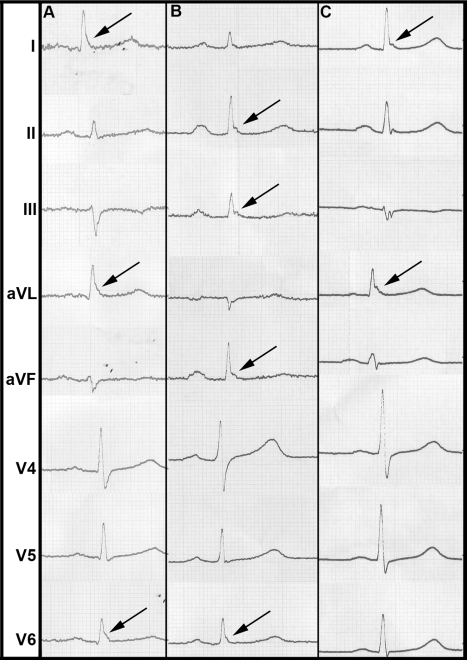
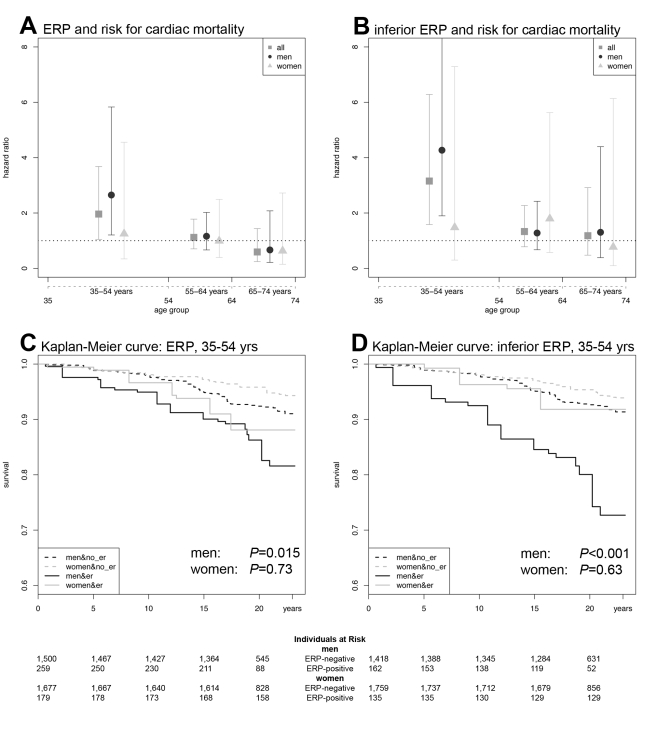
Verification
Claims the paper makes
The claims and statistics of this paper haven’t been checked yet.
Run the check — free, no account needed. It reads the open-access text and checks the sources it cites.
Claims other papers make about this one
Each is checked against this paper’s own text: does it say what the citing paper says it does?
The cited source says what the claim attributes to it.
In the citing paper
“Furthermore, it has been shown in population-based studies to be associated with increased risk of cardiac death (352,353,355–357).”
From 2017 ACC/AHA/HRS Guideline for the Evaluation and Management of Patients With Syncope (2017) · cites this paper as [357]
Self-check
Percentages, sums and reported differences re-computed from the paper’s own numbers.
The self-check needs the paper’s full text.
Citations
Cites
Regression Models and Life-Tables
Cox, D. R. (1972) · Journal of the Royal Statistical Society Series B: Statistical Methodology · doi:10.1111/j.2517-6161.1972.tb00899.x · Cited by 39,793
Regression Models and Life-Tables
Cox, D. R. (1992) · Springer Series in Statistics · doi:10.1007/978-1-4612-4380-9_37 · Cited by 26,297
Proportional hazards tests and diagnostics based on weighted residuals
GRAMBSCH, P. M., & THERNEAU, T. M. (1994) · Biometrika · doi:10.1093/biomet/81.3.515 · Cited by 5,885 · cited 1×
“The latter was identified to have a strongly time-dependent effect on mortality using a test based on scaled Schoenfeld residuals [19].”
MethodWHO MONICA Project Principal Invest (1988) · Journal of Clinical Epidemiology · doi:10.1016/0895-4356(88)90084-4 · Cited by 1,846
Sudden Death Due to Cardiac Arrhythmias
Huikuri, H. V., Castellanos, A., & Myerburg, R. J. (2001) · New England Journal of Medicine · doi:10.1056/nejmra000650 · Cited by 1,490 · cited 1×
“Cardiovascular diseases are the main cause of death in the industrialized world, and in approximately 50% of deaths due to cardiovascular causes, SCD, mostly due to ventricular arrhythmias, is considered the underlying reason [9,10].”
BackgroundSudden Cardiac Arrest Associated with Early Repolarization
Haïssaguerre, M., Derval, N., Sacher, F., Jesel, L., Deisenhofer, I., de Roy, L., Pasquié, J.-L., Nogami, A., Babuty, D., Yli-Mayry, S., et al. (2008) · New England Journal of Medicine · doi:10.1056/nejmoa071968 · Cited by 1,449 · cited 4×
“However, this judgment was seriously questioned by both (1) a study, in which ERP was found to be a clinically relevant ECG signature, and possibly a marker of SCD, in the evaluation of unexplained syncope or idiopathic ventricular fibrillation in patients without structural heart disease [7], and (2) the recent repor…”
MethodResultInfluentialKornitzer, M., Berghmans, L., Wilmet, M. D., Darquennes, H., Lagasse, R., & Payen, R. (1988) · Dépôt institutionnel de l'Université libre de Bruxelles (Université Libre de Bruxelles) · Cited by 1,270
Wada, K., Tanaka, K., & Nakashima, K. (2011) · PubMed · Cited by 1,132
Heart-Rate Profile during Exercise as a Predictor of Sudden Death
Jouven, X., Empana, J. P., Schwartz, P. J., Desnos, M., Courbon, D., & Ducimetière, P. (2005) · New England Journal of Medicine · doi:10.1056/nejmoa043012 · Cited by 1,023
Long-Term Outcome Associated with Early Repolarization on Electrocardiography
Tikkanen, J. T., Anttonen, O. M., Junttila, J. M., Aro, A. L., Kerola, T. V., Rissanen, H. A., Reunanen, A., & Huikuri, H. V. (2009) · New England Journal of Medicine · doi:10.1056/nejmoa0907589 · Cited by 842 · cited 1×
“. Recently, a community-based investigation of Finnish individuals demonstrated a slightly increased cardiovascular mortality associated with ERP”
BackgroundProlonged QTc Interval and Risk of Sudden Cardiac Death in a Population of Older Adults
Straus, S. M. J. M., Kors, J. A., De Bruin, M. L., van der Hooft, C. S., Hofman, A., Heeringa, J., Deckers, J. W., Kingma, J. H., Sturkenboom, M. C. J. M., Stricker, B. H. C., et al. (2006) · Journal of the American College of Cardiology · doi:10.1016/j.jacc.2005.08.067 · Cited by 833 · cited 1×
“5-fold in women, while younger participants appeared to be at higher risk [31].”
BackgroundKORA - A Research Platform for Population Based Health Research
Holle, R., Happich, M., Löwel, H., & Wichmann, H. ‐. (2005) · Das Gesundheitswesen · doi:10.1055/s-2005-858235 · Cited by 753 · cited 2×
“All participants were prospectively followed on a regular basis within the framework of KORA and follow-up information was available until December 2007 [12].”
BackgroundMethodSelf-citationEpidemiology of Sudden Cardiac Death: Clinical and Research Implications
Chugh, S. S., Reinier, K., Teodorescu, C., Evanado, A., Kehr, E. L., Samara, M. A., Mariani, R., Gunson, K., & Jui, J. (2008) · Progress in Cardiovascular Diseases · doi:10.1016/j.pcad.2008.06.003 · Cited by 732 · cited 3×
“SCD occurs in approximately 50% of all cardiovascular deaths [10].”
BackgroundAn improved method for adjusting the QT interval for heart rate (the Framingham Heart Study)
Sagie, A., Larson, M. G., Goldberg, R. J., Bengtson, J. R., & Levy, D. A. (1992) · The American Journal of Cardiology · doi:10.1016/0002-9149(92)90562-d · Cited by 715 · cited 1×
“The QT interval was corrected according to the Framingham formula [20].”
MethodHeritability of Cardiovascular and Personality Traits in 6,148 Sardinians
Pilia, G., Chen, W., Scuteri, A., Orrù, M., Albai, G., Dei, M., Lai, S., Usala, G., Lai, M., Loi, P., et al. (2006) · PLoS Genetics · doi:10.1371/journal.pgen.0020132 · Cited by 551 · cited 1×
“As seen for a number of other ECG signatures, for example QT- or PR-interval [27–29], among other factors, there might also be a heritable component, explaining part of the variable occurrence of ERP in the population or the degree of arrhythmogenicity.”
BackgroundRobust Variance Estimation for the Case-Cohort Design
Barlow, W. E. (1994) · Biometrics · doi:10.2307/2533444 · Cited by 542 · cited 3×
“Following the case-cohort design [13,14], a representative random sample of the entire source population was drawn (referred to below as the subcohort), stratified by sex and survey as described elsewhere [15–17].”
MethodCommon variants at ten loci modulate the QT interval duration in the QTSCD Study
Pfeufer, A., Sanna, S., Arking, D. E., Müller‐Nurasyid, M., Gateva, V., Fuchsberger, C., Ehret, G., Orrù, M., Pattaro, C., Köttgen, A., et al. (2009) · Nature Genetics · doi:10.1038/ng.362 · Cited by 385 · cited 1×
“As seen for a number of other ECG signatures, for example QT- or PR-interval [27–29], among other factors, there might also be a heritable component, explaining part of the variable occurrence of ERP in the population or the degree of arrhythmogenicity.”
BackgroundSelf-citationEarly repolarization syndrome: Clinical characteristics and possible cellular and ionic mechanisms
Gussak, I. B., & Antzelevitch, C. N. (2000) · Journal of Electrocardiology · doi:10.1054/jelc.2000.18106 · Cited by 347 · cited 2×
“Although generally considered benign, experimental studies suggested an arrhythmogenic potential [6], and recent clinical data demonstrated a strong association with ventricular fibrillation and sudden cardiac death (SCD) in patients without structural heart disease [7].”
ResultThe early repolarization normal variant electrocardiogram: correlates and consequences
Klatsky, A. L., Oehm, R., Cooper, R. A., Udaltsova, N. V., & Armstrong, M. A. (2003) · The American Journal of Medicine · doi:10.1016/s0002-9343(03)00355-3 · Cited by 327
Prolonged QT interval predicts cardiac and all-cause mortality in the elderly The Rotterdam Study
Bruyne, M. D. (1999) · European Heart Journal · doi:10.1053/euhj.1998.1276 · Cited by 298 · cited 1×
“With regard to the clinical impact of ERP, a careful interpretation is required. Younger males (35–54 y) in our study appear to bear the highest risk. However, the maximum risk attributed to ERP might be overestimated because of low incidence of cardiac deaths in the younger age groups. ERP is associated with a 2–4-fo…”
ResultInfluentialCardiological assessment of first-degree relatives in sudden arrhythmic death syndrome
Behr, E. R., Wood, D. A., Wright, M., Syrris, P., Sheppard, M. N., Casey, A., Davies, M. J., & McKenna, W. J. (2003) · The Lancet · doi:10.1016/s0140-6736(03)14692-2 · Cited by 287 · cited 1×
“Against the general notion that SUD is more common in men—autopsy series reported 63%–68% males [22,23]—the Edwards Registry of Cardiovascular Death found a clear female predominance for SUD (32% and 24% for women and men, respectively).”
BackgroundFamilial Sudden Death Is an Important Risk Factor for Primary Ventricular Fibrillation
Dekker, L., Bezzina, C. R., Henriques, J. P. S., Tanck, M. W. T., Koch, K. T., Alings, M., Arnold, A. E. R., de Boer, M., Gorgels, A. P. M., Michels, H. R., et al. (2006) · Circulation · doi:10.1161/circulationaha.105.606145 · Cited by 282 · cited 1×
“084) [26].”
The four-lead electrocardiogram in two hundred normal men and women
Shipley, R. A., & Hallaran, W. R. (1936) · American Heart Journal · doi:10.1016/s0002-8703(36)90417-9 · Cited by 267
The normal RS-T segment elevation variant∗
Wasserburger, R. H., & Alt, W. J. (1961) · The American Journal of Cardiology · doi:10.1016/0002-9149(61)90204-1 · Cited by 256 · cited 1×
“The electrocardiographic pattern of early repolarization (ERP), a slurring or notching at the QRS-ST junction, is a common and long described finding on electrocardiogram (ECG) [1,2].”
BackgroundElevated Levels of Interleukin-18 Predict the Development of Type 2 Diabetes
Thorand, B., Kolb, H., Baumert, J. J., Köenig, W., Chambless, L. E., Meisinger, C., Illig, T., Martin, S., & Herder, C. (2005) · Diabetes · doi:10.2337/diabetes.54.10.2932 · Cited by 216 · cited 1×
“Following the case-cohort design [13,14], a representative random sample of the entire source population was drawn (referred to below as the subcohort), stratified by sex and survey as described elsewhere [15–17].”
MethodSelf-citationTunstall-Pedoe, H., Puska, P., & Tuomilehto, J. (1988) · STM:n Hallinnonalan avoin julkaisuarkisto (Julkari) · Cited by 144
Sudden cardiac death in 15–35‐year olds in Sweden during 1992–99
Wisten, A., Forsberg, H., Krantz, P., & Messner, T. (2002) · Journal of Internal Medicine · doi:10.1046/j.1365-2796.2002.01038.x · Cited by 139 · cited 1×
“Against the general notion that SUD is more common in men—autopsy series reported 63%–68% males [22,23]—the Edwards Registry of Cardiovascular Death found a clear female predominance for SUD (32% and 24% for women and men, respectively).”
BackgroundNewton‐Cheh, C., Larson, M. G., Corey, D., Benjamin, E. J., Herbert, A. G., Levy, D. A., D’Agostino, R. B., & O’Donnell, C. J. (2005) · Heart Rhythm · doi:10.1016/j.hrthm.2004.11.009 · Cited by 132 · cited 1×
“As seen for a number of other ECG signatures, for example QT- or PR-interval [27–29], among other factors, there might also be a heritable component, explaining part of the variable occurrence of ERP in the population or the degree of arrhythmogenicity.”
BackgroundMehta, M. C., Jain, A. C., & Mehta, A. (1999) · Clinical Cardiology · doi:10.1002/clc.4960220203 · Cited by 129
Early Repolarization on Scalar Electrocardiogram
Mehta, M. C., & Jain, A. C. (1995) · The American Journal of the Medical Sciences · doi:10.1097/00000441-199506000-00001 · Cited by 123 · cited 2×
“This finding contrasts previous publications reporting a prevalence between 1%–5% [3–5].”
BackgroundResultHerder, C., Illig, T., Baumert, J., Müller‐Nurasyid, M., Klopp, N., Khuseyinova, N., Meisinger, C., Martin, S., Thorand, B., & Köenig, W. (2008) · Atherosclerosis · doi:10.1016/j.atherosclerosis.2007.12.025 · Cited by 62 · cited 1×
“Following the case-cohort design [13,14], a representative random sample of the entire source population was drawn (referred to below as the subcohort), stratified by sex and survey as described elsewhere [15–17].”
MethodSelf-citationSelecting an Efficient Design for Assessing Exposure-Disease Relationships in an Assembled Cohort
Wacholder, S., Gail, M. H., & Pee, D. (1991) · Biometrics · doi:10.2307/2532496 · Cited by 59 · cited 2×
“Following the case-cohort design [13,14], a representative random sample of the entire source population was drawn (referred to below as the subcohort), stratified by sex and survey as described elsewhere [15–17].”
MethodChugh, S. S., Chung, K., Zheng, Z., John, B., & Titus, J. L. (2003) · American Heart Journal · doi:10.1016/s0002-8703(03)00323-5 · Cited by 49 · cited 1×
“After detailed review, the rates of SCD in these individuals were 50% in women versus 24% in men [24].”
BackgroundEckart, R. E., Scoville, S. L., Shry, E. A., Potter, R. N., & Tedrow, U. B. (2006) · The American Journal of Cardiology · doi:10.1016/j.amjcard.2006.01.036 · Cited by 24 · cited 1×
“A study in female army recruits found SUD to be attributable to 53% of sudden deaths [25].”
BackgroundThorand, B., Schneider, A., Baumert, J. J., Döring, A., Marowsky-Köppl, M., Heier, M., Meisinger, C., & Löwel, H. (2005) · Das Gesundheitswesen · doi:10.1055/s-2005-858250 · Cited by 6
Self-citation
Research works printed but not linked: 3
- B Thorand, 2005, Case-cohort studies: an effective design for the investigation of biomarkers as risk factors for chronic diseases–demonstrated by the example of the MONICA/KORA Augsburg Case-Cohort Study 1984–2002., Gesundheitswesen, 67, S98
- U Vinsonneau, 2009, Prevalence of the early repolarization aspect in a healthy women population., Eur Heart J, 30, 167
- R Eckart, 2006, Causes of sudden death in young female military recruits., Am J Cardiol, 97, 1756
Cited by
Sorted by citations
Zeppenfeld, K., Tfelt‐Hansen, J., Riva, M., Winkel, B. G., Behr, E. R., Blom, N. A., Charron, P., Corrado, D., Dagres, N., de Chillou, C., et al. (2022) · European Heart Journal · doi:10.1093/eurheartj/ehac262 · Cited by 3,432
Self-citationPriori, S. G., Wilde, A. A., Horie, M., Cho, Y., Behr, E. R., Berul, C., Blom, N., Brugada, J., Chiang, C.-E., Huikuri, H., et al. (2013) · Heart Rhythm · doi:10.1016/j.hrthm.2013.05.014 · Cited by 1,942
“© Heart Rhythm Society, European Heart Rhythm Association, a registered branch of the European Society of Cardiology, and the Asia Pacific Heart Rhythm Society 28 ER ECG pattern (> 1 mm) in the inferior/lateral leads occurs in 1-13% of the general population and in 15-70% of idiopathic VF cases [153-161].”
InfluentialThe Spectrum of Epidemiology Underlying Sudden Cardiac Death
Hayashi, M., Shimizu, W., & Albert, C. M. (2015) · Circulation Research · doi:10.1161/circresaha.116.304521 · Cited by 741
J Wave Syndromes Consensus Conference: Emerging Concepts & Gaps in Knowledge
Antzelevitch, C., Yan, G.-X., Ackerman, M., Borggrefe, M., Corrado, D., Guo, J.-H., Gussak, I., Hasdemir, C., Horie, M., Huikuri, H., et al. (2016) · Heart Rhythm · doi:10.1016/j.hrthm.2016.05.024 · Cited by 239
Priori, S. G., Wilde, A. A. M., Horie, M., Cho, Y., Behr, E. R., Berul, C. I., Blom, N. A., Brugada, J., Chiang, C., Huikuri, H. V., et al. (2013) · EP Europace · doi:10.1093/europace/eut272 · Cited by 626
Metadata
- Authors
- Sinner, M. F., Reinhard, W., Müller, M., Beckmann, B.-M., Martens, E., Perz, S., Pfeufer, A., Winogradow, J., Stark, K., Meisinger, C., Wichmann, H.-E., Peters, A., Riegger, G. A. J., Steinbeck, G., Hengstenberg, C., & Kääb, S.
- Affiliations
- Ludwig-Maximilians-Universität München (DE)
- University Hospital Regensburg (DE)
- Helmholtz Munich (DE)
- Corresponding author
- Kääb, Stefan
- ORCID
- Venue
- PLoS Medicine
- Publisher
- Public Library of Science (PLoS)
- Published
- 2010-07-27
- Volume
- 7
- Issue
- 7
- Pages
- e1000314
- ISSN
- 1549-1277 (ISSN-L)
- 1549-1676
- PMC
- PMC2910598
- OpenAlex
- W2133142369
- Cited by
- 282
- References
- 35
- Citations by year
- 2026: 7 · 2025: 6 · 2024: 4 · 2023: 7 · 2022: 12 · 2021: 6 · 2020: 11 · 2019: 18 · 2018: 14 · 2017: 25 · 2016: 32 · 2015: 26 · 2014: 19 · 2013: 39 · 2012: 24
- FWCI
- 20.87
- Type
- journal article
- Language
- en
- Open access
- gold
- doi.org
- Locations
- PLoS Medicine (publishedVersion, cc-by)
- PubMed Central (publishedVersion, cc-by)
- PubMed (publishedVersion)
- DOAJ (DOAJ: Directory of Open Access Journals) (submittedVersion, cc-by-sa)
- Open access LMU (Ludwid Maxmilian's Universitat Munchen) (submittedVersion)
- Figshare (submittedVersion, cc-by)
- mediaTUM (Technical University of Munich) (submittedVersion)
- Site cant be reached (submittedVersion, cc-by)
- OPUS (Augsburg University) (submittedVersion, cc-by)
- Funders
- Deutsche Forschungsgemeinschaft
- Fondation Leducq (01GS0838)
- Bundesministerium für Bildung und Forschung (01GS0499, 01GS0838)
- Münchner Zentrum für Gesundheitswissenschaften
- Topics
- Health Sciences › Medicine › Cardiology and Cardiovascular Medicine › Cardiac electrophysiology and arrhythmias
- Health Sciences › Medicine › Cardiology and Cardiovascular Medicine › Cardiovascular Effects of Exercise
- Health Sciences › Medicine › Cardiology and Cardiovascular Medicine › Cardiac Health and Mental Health
- Keywords
- early repolarization, electrocardiogram, cardiac mortality, all-cause mortality, sudden cardiac death, age-stratified risk, sex differences, middle-aged adults, cardiovascular risk factors, Central European population, idiopathic ventricular fibrillation, sudden cardiac arrest, cardiovascular disease monitoring, cardiovascular disease prevention, cardiovascular disease treatment
- MeSH terms
- Adult, Aged, Cause of Death, Electrocardiography, Female, Germany, Heart Diseases, Humans, Male, Middle Aged, Population, Population Surveillance, Prospective Studies, Risk, Time Factors, Cohort Studies, Case-Control Studies
About these checks
Registry, retraction, Cites and statistics results are computed, not judged, with one exception: a printed reference that no index lists is read once by a model before it counts as a citation error. Claims are extracted by a model and kept only when their quote appears verbatim in the text; each cited source is then checked, with a model’s help, for whether it says what the claim relies on. Those verdicts can be wrong — read the claim’s quote and the cited source before relying on one.
Statistics and arithmetic are recomputed, not judged.
Confidence bands are shown only for fields calibrated on our annotated test set. None is calibrated yet, so no band is shown.
What counts as a claim ›How we measure confidence ›How we check this ›
Are you an author, or do you see a problem with this page? Request a review
