

The DOI matches its Crossref record; 35 of the 35 references it cites were found in a registry or an index.
Association of Early Repolarization Pattern on ECG with Risk of Cardiac and All-Cause Mortality: A Population-Based Prospective Cohort Study (MONICA/KORA)
Open accessAbstract
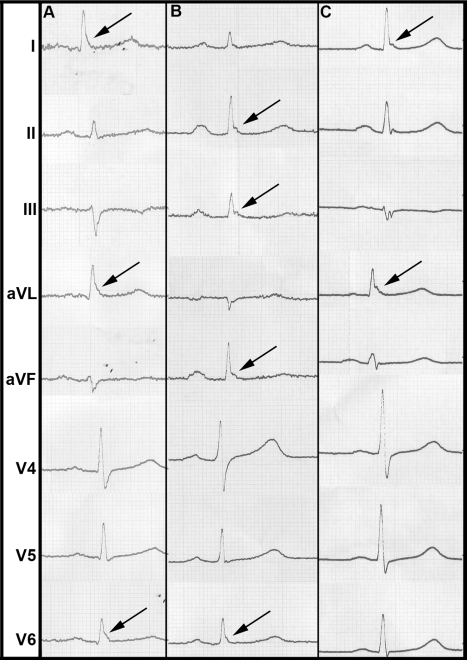
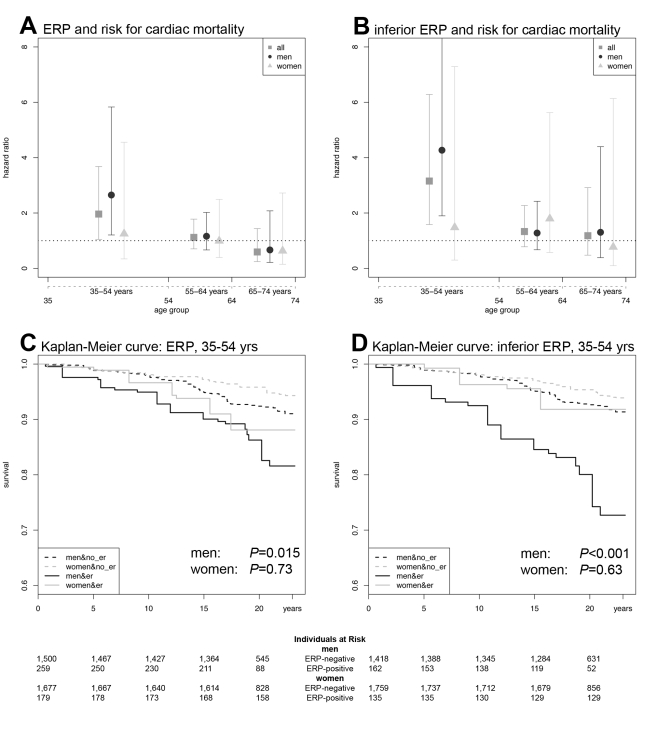
BACKGROUND: Early repolarization pattern (ERP) on electrocardiogram was associated with idiopathic ventricular fibrillation and sudden cardiac arrest in a case-control study and with cardiovascular mortality in a Finnish community-based sample. We sought to determine ERP prevalence and its association with cardiac and all-cause mortality in a large, prospective, population-based case-cohort study (Monitoring of Cardiovascular Diseases and Conditions [MONICA]/KORA [Cooperative Health Research in the Region of Augsburg]) comprised of individuals of Central-European descent. METHODS AND FINDINGS: Electrocardiograms of 1,945 participants aged 35-74 y, representing a source population of 6,213 individuals, were analyzed applying a case-cohort design. Mean follow-up was 18.9 y. Cause of death was ascertained by the 9th revision of the International Classification of Disease (ICD-9) codes as documented in death certificates. ERP-attributable effects on mortality were determined by a weighted Cox proportional hazard model adjusted for covariables. Prevalence of ERP was 13.1% in our study. ERP was associated with cardiac and all-cause mortality, most pronounced in those of younger age and male sex; a clear ERP-age interaction was detected (p = 0.005). Age-stratified analyses showed hazard ratios (HRs) for cardiac mortality of 1.96 (95% confidence interval [CI] 1.05-3.68, p = 0.035) for both sexes and 2.65 (95% CI 1.21-5.83, p = 0.015) for men between 35-54 y. An inferior localization of ERP further increased ERP-attributable cardiac mortality to HRs of 3.15 (95% CI 1.58-6.28, p = 0.001) for both sexes and to 4.27 (95% CI 1.90-9.61, p<0.001) for men between 35-54 y. HRs for all-cause mortality were weaker but reached significance. CONCLUSIONS: We found a high prevalence of ERP in our population-based cohort of middle-aged individuals. ERP was associated with about a 2- to 4-fold increased risk of cardiac mortality in individuals between 35 and 54 y. An inferior localization of ERP was associated with a particularly increased risk. Please see later in the article for the Editors' Summary.
Overview
The claims and statistics of this paper haven’t been checked yet.
Run the check — free, no account needed. It reads the open-access text and checks the sources it cites.
Integrity signals
Registry
Cites
Statistics
Figures
Verification
Claims the paper makes
The claims and statistics of this paper haven’t been checked yet.
Run the check — free, no account needed. It reads the open-access text and checks the sources it cites.
Claims other papers make about this one
Each is checked against this paper’s own text: does it say what the citing paper says it does?
The cited source says what the claim attributes to it.
In the citing paper
“Furthermore, it has been shown in population-based studies to be associated with increased risk of cardiac death (352,353,355–357).”
From 2017 ACC/AHA/HRS Guideline for the Evaluation and Management of Patients With Syncope (2017) · cites this paper as [357]
Self-check
Percentages, sums and reported differences re-computed from the paper’s own numbers.
The self-check needs the paper’s full text.
Citations
Cites
Regression Models and Life-Tables
Cox, D. R. (1972) · Journal of the Royal Statistical Society Series B: Statistical Methodology · doi:10.1111/j.2517-6161.1972.tb00899.x · Cited by 39,793
Regression Models and Life-Tables
Cox, D. R. (1992) · Springer Series in Statistics · doi:10.1007/978-1-4612-4380-9_37 · Cited by 26,297
Proportional hazards tests and diagnostics based on weighted residuals
GRAMBSCH, P. M., & THERNEAU, T. M. (1994) · Biometrika · doi:10.1093/biomet/81.3.515 · Cited by 5,885 · cited 1×
“The latter was identified to have a strongly time-dependent effect on mortality using a test based on scaled Schoenfeld residuals [19].”
MethodWHO MONICA Project Principal Invest (1988) · Journal of Clinical Epidemiology · doi:10.1016/0895-4356(88)90084-4 · Cited by 1,846
Sudden Death Due to Cardiac Arrhythmias
Huikuri, H. V., Castellanos, A., & Myerburg, R. J. (2001) · New England Journal of Medicine · doi:10.1056/nejmra000650 · Cited by 1,490 · cited 1×
“Cardiovascular diseases are the main cause of death in the industrialized world, and in approximately 50% of deaths due to cardiovascular causes, SCD, mostly due to ventricular arrhythmias, is considered the underlying reason [9,10].”
BackgroundSudden Cardiac Arrest Associated with Early Repolarization
Haïssaguerre, M., Derval, N., Sacher, F., Jesel, L., Deisenhofer, I., de Roy, L., Pasquié, J.-L., Nogami, A., Babuty, D., Yli-Mayry, S., et al. (2008) · New England Journal of Medicine · doi:10.1056/nejmoa071968 · Cited by 1,449 · cited 4×
“However, this judgment was seriously questioned by both (1) a study, in which ERP was found to be a clinically relevant ECG signature, and possibly a marker of SCD, in the evaluation of unexplained syncope or idiopathic ventricular fibrillation in patients without structural heart disease [7], and (2) the recent repor…”
MethodResultInfluentialKornitzer, M., Berghmans, L., Wilmet, M. D., Darquennes, H., Lagasse, R., & Payen, R. (1988) · Dépôt institutionnel de l'Université libre de Bruxelles (Université Libre de Bruxelles) · Cited by 1,270
Wada, K., Tanaka, K., & Nakashima, K. (2011) · PubMed · Cited by 1,132
Heart-Rate Profile during Exercise as a Predictor of Sudden Death
Jouven, X., Empana, J. P., Schwartz, P. J., Desnos, M., Courbon, D., & Ducimetière, P. (2005) · New England Journal of Medicine · doi:10.1056/nejmoa043012 · Cited by 1,023
Long-Term Outcome Associated with Early Repolarization on Electrocardiography
Tikkanen, J. T., Anttonen, O. M., Junttila, J. M., Aro, A. L., Kerola, T. V., Rissanen, H. A., Reunanen, A., & Huikuri, H. V. (2009) · New England Journal of Medicine · doi:10.1056/nejmoa0907589 · Cited by 842 · cited 1×
“. Recently, a community-based investigation of Finnish individuals demonstrated a slightly increased cardiovascular mortality associated with ERP”
Background
Research works printed but not linked: 3
- B Thorand, 2005, Case-cohort studies: an effective design for the investigation of biomarkers as risk factors for chronic diseases–demonstrated by the example of the MONICA/KORA Augsburg Case-Cohort Study 1984–2002., Gesundheitswesen, 67, S98
- U Vinsonneau, 2009, Prevalence of the early repolarization aspect in a healthy women population., Eur Heart J, 30, 167
- R Eckart, 2006, Causes of sudden death in young female military recruits., Am J Cardiol, 97, 1756
Cited by
Sorted by citations
Zeppenfeld, K., Tfelt‐Hansen, J., Riva, M., Winkel, B. G., Behr, E. R., Blom, N. A., Charron, P., Corrado, D., Dagres, N., de Chillou, C., et al. (2022) · European Heart Journal · doi:10.1093/eurheartj/ehac262 · Cited by 3,432
Self-citationPriori, S. G., Wilde, A. A., Horie, M., Cho, Y., Behr, E. R., Berul, C., Blom, N., Brugada, J., Chiang, C.-E., Huikuri, H., et al. (2013) · Heart Rhythm · doi:10.1016/j.hrthm.2013.05.014 · Cited by 1,942
“© Heart Rhythm Society, European Heart Rhythm Association, a registered branch of the European Society of Cardiology, and the Asia Pacific Heart Rhythm Society 28 ER ECG pattern (> 1 mm) in the inferior/lateral leads occurs in 1-13% of the general population and in 15-70% of idiopathic VF cases [153-161].”
InfluentialThe Spectrum of Epidemiology Underlying Sudden Cardiac Death
Hayashi, M., Shimizu, W., & Albert, C. M. (2015) · Circulation Research · doi:10.1161/circresaha.116.304521 · Cited by 741
J Wave Syndromes Consensus Conference: Emerging Concepts & Gaps in Knowledge
Antzelevitch, C., Yan, G.-X., Ackerman, M., Borggrefe, M., Corrado, D., Guo, J.-H., Gussak, I., Hasdemir, C., Horie, M., Huikuri, H., et al. (2016) · Heart Rhythm · doi:10.1016/j.hrthm.2016.05.024 · Cited by 239
Priori, S. G., Wilde, A. A. M., Horie, M., Cho, Y., Behr, E. R., Berul, C. I., Blom, N. A., Brugada, J., Chiang, C., Huikuri, H. V., et al. (2013) · EP Europace · doi:10.1093/europace/eut272 · Cited by 626
2017 ACC/AHA/HRS Guideline for the Evaluation and Management of Patients With Syncope
Shen, W.-K., Sheldon, R. S., Benditt, D. G., Cohen, M. I., Forman, D. E., Goldberger, Z. D., Grubb, B. P., Hamdan, M. H., Krahn, A. D., Link, M. S., et al. (2017) · Heart Rhythm · doi:10.1016/j.hrthm.2017.03.004 · Cited by 478
“2010 20668657 (229) Study type: Population based study applying a case-cohort design”
MethodOverview of Basic Mechanisms of Cardiac Arrhythmia
Antzelevitch, C. N., & Burashnikov, A. (2011) · Cardiac Electrophysiology Clinics · doi:10.1016/j.ccep.2010.10.012 · Cited by 472
Shen, W.-K., Sheldon, R. S., Benditt, D. G., Cohen, M. I., Forman, D. E., Goldberger, Z. D., Grubb, B. P., Hamdan, M. H., Krahn, A. D., Link, M. S., et al. (2017) · Circulation · doi:10.1161/cir.0000000000000499 · Cited by 463
“2010 20668657 (229) Study type: Population based study applying a case-cohort design”
MethodTikkanen, J. T., Junttila, J. M., Anttonen, O. M., Aro, A. L., Luttinen, S., Kerola, T. V., Sager, S. J., Rissanen, H. A., Myerburg, R. J., Reunanen, A., et al. (2011) · Circulation · doi:10.1161/circulationaha.110.014068 · Cited by 422
Shen, W.-K., Sheldon, R. S., Benditt, D. G., Cohen, M. I., Forman, D. E., Goldberger, Z. D., Grubb, B. P., Hamdan, M. H., Krahn, A. D., Link, M. S., et al. (2017) · Circulation · doi:10.1161/cir.0000000000000498 · Cited by 411
2017 ACC/AHA/HRS Guideline for the Evaluation and Management of Patients With Syncope
Shen, W.-K., Sheldon, R. S., Benditt, D. G., Cohen, M. I., Forman, D. E., Goldberger, Z. D., Grubb, B. P., Hamdan, M. H., Krahn, A. D., Link, M. S., et al. (2017) · Journal of the American College of Cardiology · doi:10.1016/j.jacc.2017.03.003 · Cited by 327
Priori, S. G., Wilde, A. A. M., Horie, M., Cho, Y., Behr, E. R., Berul, C. I., Blom, N. A., Brugada, J., Chiang, C., Huikuri, H. V., et al. (2013) · Heart Rhythm · doi:10.1016/j.hrthm.2013.07.021 · Cited by 272
Priori, S. G., Wilde, A. A. M., Horie, M., Cho, Y., Behr, E. R., Berul, C. I., Blom, N. A., Brugada, J., Chiang, C., Huikuri, H. V., et al. (2013) · Journal of Arrhythmia · doi:10.1016/j.joa.2013.07.002 · Cited by 244
“© Heart Rhythm Society, European Heart Rhythm Association, a registered branch of the European Society of Cardiology, and the Asia Pacific Heart Rhythm Society 28 ER ECG pattern (> 1 mm) in the inferior/lateral leads occurs in 1-13% of the general population and in 15-70% of idiopathic VF cases [153-161].”
InfluentialIncidence and Prognostic Value of Early Repolarization Pattern in the 12-Lead Electrocardiogram
Haruta, D., Matsuo, K., Tsuneto, A., Ichimaru, S., Hida, A., Sera, N., Imaizumi, M., Nakashima, E., Maemura, K., & Akahoshi, M. (2011) · Circulation · doi:10.1161/circulationaha.110.006460 · Cited by 240
Interpretation of the Electrocardiogram of Young Athletes
Uberoi, A., Stein, R., Perez, M. V., Freeman, J. V., Wheeler, M. T., Dewey, F. E., Peidro, R. M., Hadley, D., Drezner, J. A., Sharma, S., et al. (2011) · Circulation · doi:10.1161/circulationaha.110.013078 · Cited by 233
J-Wave syndromes expert consensus conference report: Emerging concepts and gaps in knowledge.
Antzelevitch, C., Yan, G.-X., Ackerman, M., Borggrefe, M., Corrado, D., Guo, J.-H., Gussak, I., Hasdemir, C., Horie, M., Huikuri, H., et al. (2016) · Europace · doi:10.1093/europace/euw235 · Cited by 155
Rosso, R., Glikson, E., Belhassen, B., Katz, A., Halkin, A., Steinvil, A., & Viskin, S. (2011) · Heart Rhythm · doi:10.1016/j.hrthm.2011.09.012 · Cited by 213
The Early Repolarization Pattern in the General Population
Noseworthy, P. A., Tikkanen, J. T., Porthan, K., Oikarinen, L., Pietilä, A., Harald, K., Peloso, G. M., Merchant, F. M., Jula, A., Väänänen, H., et al. (2011) · Journal of the American College of Cardiology · doi:10.1016/j.jacc.2011.04.003 · Cited by 190
“onsistent with published estimates ranging from 1% to 3% (1,4), we found an overall prevalence of ERP of .”
BackgroundJ-Wave syndromes expert consensus conference report: Emerging concepts and gaps in knowledge
Antzelevitch, C., Yan, G.-X., Ackerman, M., Borggrefe, M., Corrado, D., Guo, J.-H., Gussak, I., Hasdemir, C., Horie, M., Huikuri, H., et al. (2016) · Journal of Arrhythmia · doi:10.1016/j.joa.2016.07.002 · Cited by 462
Genetic, Molecular and Cellular Mechanisms Underlying the J Wave Syndromes
Antzelevitch, C. (2012) · Circulation Journal · doi:10.1253/circj.cj-12-0284 · Cited by 168
Early Repolarization in an Ambulatory Clinical Population
Uberoi, A., Jain, N., Perez, M. V., Weinkopff, A., Ashley, E. A., Hadley, D., Turakhia, M. P., & Froelicher, V. F. (2011) · Circulation · doi:10.1161/circulationaha.111.047191 · Cited by 162
Trends in Death Attributed to Heart Failure Over the Past Two Decades in Europe
Laribi, S., Aouba, A., Nikolaou, M., Lassus, J. P. E., Solal, A. C., Plaisance, P. I., Pavillon, G., Jois, P., Fonarow, G. C., Jougla, É., et al. (2012) · European Journal of Heart Failure · doi:10.1093/eurjhf/hfr182 · Cited by 149
J Wave syndromes: Brugada and Early Repolarization Syndromes
Antzelevitch, C., & Yan, G.-X. (2015) · Heart Rhythm · doi:10.1016/j.hrthm.2015.04.014 · Cited by 139
Olson, K. A., Viera, A. J., Soliman, E. Z., Crow, R. S., & Rosamond, W. D. (2011) · European Heart Journal · doi:10.1093/eurheartj/ehr264 · Cited by 134
“–12 Recently, two population-based studies showed that early repolarization was associated with an increased risk of death from cardiac causes.(10,11) These are the only population-based studies on the topic of which we are aware, but they are limited by samples comprised predominantly of individuals of European desce…”
BackgroundEarly Repolarization Pattern and Risk for Arrhythmia Death
Wu, S., Lin, X., Cheng, Y., Qiang, C.-C., & Zhang, J. (2013) · Journal of the American College of Cardiology · doi:10.1016/j.jacc.2012.11.023 · Cited by 125
“Mean Age (yrs) Follow-Up (yrs) Cohort studies Sinner et al. (2010) (9) Germany 48.9 52 10 18.9 Tikkanen et al. (2009) (8) Finland 52.4 44 8 30 11 Haruta et al. (2011) (7) Japan 43.7 47 15 24 15 Olson et al. (2011) (11) United States 44.3 54 17 4 Uberoi et al. (2011) (6) United States 87 55 15 7.6…”
InfluentialRosso, R., Adler, A., Halkin, A., & Viskin, S. (2011) · Heart Rhythm · doi:10.1016/j.hrthm.2011.01.037 · Cited by 121
Rollin, A., Maury, P., Bongard, V., Sacher, F., Delay, M., Duparc, A., Mondoly, P., Carrié, D., Ferrières, J., & Ruidavets, J. (2012) · The American Journal of Cardiology · doi:10.1016/j.amjcard.2012.06.033 · Cited by 119
Electrocardiographic Early Repolarization
Patton, K. K., Ellinor, P. T., Ezekowitz, M. D., Kowey, P. R., Lubitz, S. A., Perez, M. V., Piccini, J. P., Turakhia, M. P., Wang, P. J., & Viskin, S. (2016) · Circulation · doi:10.1161/cir.0000000000000388 · Cited by 118
“Similar findings were observed in a cohort of 6213 patients from Germany and 15 141 subjects in the Atherosclerosis Risk in Communities (ARIC) study.(19,52) In contrast, Uberoi and colleagues(48) found no association with ERP and increased cardiovascular mortality in 29 281 patients within the VA Palo Alto Health Care…”
BackgroundResultAssociation of Early Repolarization and Sudden Cardiac Death During an Acute Coronary Event
Tikkanen, J. T., Wichmann, V., Junttila, J. M., Rainio, M., Hookana, E., Lappi, O.-P., Kortelainen, M., Anttonen, O. M., & Huikuri, H. V. (2012) · Circulation Arrhythmia and Electrophysiology · doi:10.1161/circep.112.970863 · Cited by 102
“1% in a similar German study.(5) Subsequent studies of 2 random general population samples,(14) Finnish Health 2000 population and the Framingham population, Table 2.”
BackgroundHeritability of Early Repolarization: A Population-Based Study
Reinhard, W., Kaess, B., Debiec, R., Nelson, C., Stark, K. J., Tobin, M., Macfarlane, P., Tomaszewski, M., Samani, N., & Hengstenberg, C. (2011) · Circulation: Cardiovascular Genetics · doi:10.1161/circgenetics.110.958298 · Cited by 105
“Moreover, long-term follow-up data found a strong association between presence of the ER pattern, particularly in the inferior leads, and cardiovascular mortality.(5,6)”
BackgroundResultInfluentialSelf-citationKawata, H., Noda, T., Yamada, Y., Okamura, H., Satomi, K., Aiba, T., Takaki, H., Aihara, N., Isobe, M., Kamakura, S., et al. (2011) · Heart Rhythm · doi:10.1016/j.hrthm.2011.08.017 · Cited by 96
Priori, S. G., Wilde, A. A. M., Horie, M., Cho, Y., Behr, E. R., Berul, C. I., Blom, N. A., Brugada, J., Chiang, C., Huikuri, H. V., et al. (2013) · Journal of Arrhythmia · doi:10.1016/j.joa.2013.08.001 · Cited by 90
Identification of Large Families in Early Repolarization Syndrome
Gourraud, J., Scouarnec, S. L., Sacher, F., Chatel, S., Derval, N., Portero, V., Chavernac, P., Sandoval, J. E., Mabo, P., Redon, R., et al. (2013) · Journal of the American College of Cardiology · doi:10.1016/j.jacc.2012.09.040 · Cited by 90
“(9) demonstrated in 2 distinct populations that an ER pattern is associated with an increased risk of SCD (respective relative risks: 1.”
BackgroundClinical significance of variants of J-points and J-waves: early repolarization patterns and risk
Junttila, J. M., Sager, S. J., Tikkanen, J. T., Anttonen, O. M., Huikuri, H. V., & Myerburg, R. J. (2012) · European Heart Journal · doi:10.1093/eurheartj/ehs110 · Cited by 89
Rudic, B., Veltmann, C., Kuntz, E., Behnes, M., Elmas, E., Konrad, T., Kuschyk, J., Weiß, C., Borggrefe, M., & Schimpf, R. (2012) · Heart Rhythm · doi:10.1016/j.hrthm.2012.03.006 · Cited by 88
Napolitano, C., & Antzelevitch, C. N. (2011) · Circulation Research · doi:10.1161/circresaha.110.224279 · Cited by 85
Inferolateral early repolarization in athletes
Junttila, M. J., Sager, S. J., Freiser, M., McGonagle, S., Castellanos, A., & Myerburg, R. J. (2011) · Journal of Interventional Cardiac Electrophysiology · doi:10.1007/s10840-010-9528-y · Cited by 79
“Currently available data from the general population suggests that propensity to arrhythmogenic risk is associated with the inferior ECG pattern, and that the lateral pattern is likely benign [3, 4 ]. There are many confounding variables that add complexity to differentiating between benign and malignant patterns, inc…”
BackgroundIncreased prevalence of ECG markers for sudden cardiac arrest in refractory epilepsy
Lamberts, R. J., Blom, M. T., Nový, J., Belluzzo, M., Seldenrijk, A., Penninx, B. W. J. H., Sander, J. W. A. S., Tan, H. L., & Thijs, R. D. (2014) · Journal of Neurology Neurosurgery & Psychiatry · doi:10.1136/jnnp-2014-307772 · Cited by 78
Inappropriate and Confusing Electrocardiographic Terms
Surawicz, B., & Macfarlane, P. W. (2011) · Journal of the American College of Cardiology · doi:10.1016/j.jacc.2010.11.040 · Cited by 77
Haı̈ssaguerre, M., Nademanee, K., Hocini, M., Cheniti, G., Duchâteau, J., Frontera, A., Sacher, F., Derval, N., Denis, A., Pambrun, T., et al. (2018) · Heart Rhythm · doi:10.1016/j.hrthm.2018.10.040 · Cited by 77
The prognostic value of early repolarization with ST-segment elevation in African Americans
Perez, M. V., Uberoi, A., Jain, N., Ashley, E. A., Turakhia, M. P., & Froelicher, V. F. (2011) · Heart Rhythm · doi:10.1016/j.hrthm.2011.11.020 · Cited by 70
Rationale for the Use of the Terms J-Wave Syndromes and Early Repolarization
Antzelevitch, C. N., Yan, G., & Viskin, S. (2011) · Journal of the American College of Cardiology · doi:10.1016/j.jacc.2010.11.038 · Cited by 70
Mahida, S., Derval, N., Sacher, F., Leenhardt, A., Deisenhofer, I., Babuty, D., Schläpfer, J., Roy, L. D., Frank, R., Yli‐Mäyry, S., et al. (2015) · Journal of the American College of Cardiology · doi:10.1016/j.jacc.2014.10.043 · Cited by 67
Epidemiology of inherited arrhythmias
Offerhaus, J. A., Bezzina, C. R., & Wilde, A. A. M. (2019) · Nature Reviews Cardiology · doi:10.1038/s41569-019-0266-2 · Cited by 66
Junttila, J. M., Tikkanen, J. T., Kenttä, T. V., Anttonen, O. M., Aro, A. L., Porthan, K., Kerola, T. V., Rissanen, H. A., Knekt, P., & Huikuri, H. V. (2014) · Heart Rhythm · doi:10.1016/j.hrthm.2014.05.024 · Cited by 65
JCS/JHRS 2022 Guideline on Diagnosis and Risk Assessment of Arrhythmia
Takase, B., Ikeda, T., Shimizu, W., Abe, H., Aiba, T., Chinushi, M., Koba, S., KUSANO, K. F., Niwano, S., Takahashi, N., et al. (2023) · Circulation Journal · doi:10.1253/circj.cj-22-0827 · Cited by 68
Benign clinical significance of J-wave pattern (early repolarization) in highly trained athletes
Quattrini, F. M., Pelliccia, A., Assorgi, R., DiPaolo, F. M., Squeo, M. R., Culasso, F., Castelli, V., Link, M. S., & Maron, B. J. (2014) · Heart Rhythm · doi:10.1016/j.hrthm.2014.07.042 · Cited by 62
What Do We Know About the “Malignant Form” of Early Repolarization?
Adler, A., Rosso, R., Viskin, D., Halkin, A., & Viskin, S. (2013) · Journal of the American College of Cardiology · doi:10.1016/j.jacc.2013.05.054 · Cited by 61
Sinner, M. F., Porthan, K., Noseworthy, P. A., Havulinna, A. S., Tikkanen, J. T., Müller‐Nurasyid, M., Peloso, G. M., Ulivi, S., Beckmann, B. M., Brockhaus, A. C., et al. (2012) · Heart Rhythm · doi:10.1016/j.hrthm.2012.06.008 · Cited by 57
Self-citationSiebermair, J., Sinner, M. F., Beckmann, B.-M., Laubender, R. P., Martens, E., Sattler, S. M., Fichtner, S., Estner, H., Kääb, S., & Wakili, R. (2016) · EP Europace · doi:10.1093/europace/euv301 · Cited by 55
Self-citationA Clinical Approach to Early Repolarization
Obeyesekere, M., Klein, G., Nattel, S., Leong-Sit, P., Gula, L., Skanes, A., Yee, R., & Krahn, A. (2013) · Circulation · doi:10.1161/circulationaha.112.143149 · Cited by 42
J Wave Syndromes. From Cell to Bedside
Antzelevitch, C., & Yan, G.-X. (2011) · Journal of Electrocardiology · doi:10.1016/j.jelectrocard.2011.07.026 · Cited by 3
Early Repolarization Syndrome: Diagnostic and Therapeutic Approach
Bourier, F. J., Denis, A., Cheniti, G., Lam, A., Vlachos, K. G., Takigawa, M., Kitamura, Τ., Frontera, A., Duchâteau, J., Pambrun, T., et al. (2018) · Frontiers in Cardiovascular Medicine · doi:10.3389/fcvm.2018.00169 · Cited by 48
“J point elevation is found more frequently in patients with idiopathic ventricular fibrillation than in healthy individuals (11).”
BackgroundSoliman, E. Z., Prineas, R. J., Case, L. D., Russell, G., Rosamond, W. D., Rea, T. D., Sotoodehnia, N., Post, W. S., Siscovick, D. S., Psaty, B. M., et al. (2011) · Heart · doi:10.1136/hrt.2010.215871 · Cited by 47
“This may explain the recently reported increased cardiovascular and all-cause mortality associated with early repolarization as defined mainly on the basis of STelevation.29 30 The mechanism by which ST elevation could be predictive of high CHD risk is unclear.”
BackgroundPrevalence of early repolarisation/J wave patterns in the normal population
Maury, P., & Rollin, A. (2013) · Journal of Electrocardiology · doi:10.1016/j.jelectrocard.2013.06.014 · Cited by 45
“ERwas correlated to an older age andmale gender and was associated with increased cardiac and all-causemortality.(31) In 2011, Olson et al.”
MethodMaking sense of early repolarization
Viskin, S., Rosso, R., & Halkin, A. (2011) · Heart Rhythm · doi:10.1016/j.hrthm.2011.11.042 · Cited by 45
Pérez‐Riera, A. R., de Abreu, L. C., Yanowitz, F. G., Barros, R. B., Femenía, F., McIntyre, W. F., & Baranchuk, A. M. (2012) · Cardiology Journal · doi:10.5603/cj.2012.0063 · Cited by 42
“[51] founded a high prevalence of ERP in a Finnish community-based sample cohort of middle-aged individuals.”
Muramoto, D., Yong, C. M., Singh, N., Aggarwal, S., Perez, M. V., Ashley, E. A., Hadley, D., & Froelicher, V. F. (2013) · American Heart Journal · doi:10.1016/j.ahj.2013.10.027 · Cited by 42
Role of Early Repolarization Pattern in Increasing Risk of Death
Cheng, Y., Lin, X., Ji, C., Chen, X., Liu, L., Tang, K., & Wu, S. (2016) · Journal of the American Heart Association · doi:10.1161/jaha.116.003375 · Cited by 42
Benign vs malignant inferolateral early repolarization: Focus on the T wave
Roten, L., Derval, N., Maury, P., Mahida, S., Pascale, P., Leenhardt, A., Jesel, L., Deisenhofer, I., Kautzner, J., Probst, V., et al. (2015) · Heart Rhythm · doi:10.1016/j.hrthm.2015.11.020 · Cited by 40
Early repolarization pattern in the general population: Prevalence and associated factors
Sun, G., Ye, N., Chen, Y., Zhou, Y., Li, Z., & Sun, Y. (2016) · International Journal of Cardiology · doi:10.1016/j.ijcard.2016.12.045 · Cited by 39
Chen, Y., Barajas-Martinez, H., Zhu, D.-X., Wang, X.-H., Chen, C.-H., Zhuang, R.-J., Shi, J.-J., Wu, X.-M., Tao, Y.-J., Jin, W.-D., et al. (2017) · Journal of Translational Medicine · doi:10.1186/s12967-017-1180-1 · Cited by 33
“As a matter of fact, ER pattern are more common in male population [24].”
BackgroundThe new kids on the block of arrhythmogenic disorders: Short QT syndrome and early repolarization
Mazzanti, A., Underwood, K., Nevelev, D., Kofman, S., & Priori, S. (2017) · Cardiovascular Electrophysiology · doi:10.1111/jce.13265 · Cited by 32
Electrocardiographic features of sudden unexpected death in epilepsy
Chyou, J. Y., Friedman, D. J., Cerrone, M., Slater, W., Guo, Y., Taupin, D., O’Rourke, S., Priori, S. G., & Devinsky, O. (2016) · Epilepsia · doi:10.1111/epi.13411 · Cited by 37
“1C).(7,8) The Framingham Heart Study population averaged 40.”
BackgroundMethodThe Diagnosis, Risk Stratification, and Treatment of Brugada Syndrome
Steinfurt, J., Biermann, J., Bode, C., & Odening, K. E. (2015) · Deutsches Ärzteblatt international · doi:10.3238/arztebl.2015.0394 · Cited by 36
Association Between J-Point Elevation and Death From Coronary Artery Disease
Hisamatsu, T., Ohkubo, T., Miura, K., Yamamoto, T., Fujiyoshi, A., Miyagawa, N., Kadota, A., Takashima, N., Nagasawa, S., Kita, Y., et al. (2013) · Circulation Journal · doi:10.1253/circj.cj-12-1273 · Cited by 35
Georgopoulos, S., Letsas, Κ. P., Liu, T., Kalafateli, M., Korantzopoulos, P. G., Bürkle, G., Vlachos, K. G., Γιαννόπουλος, Γ., Efremidis, M., Deftereos, S. G., et al. (2016) · EP Europace · doi:10.1093/europace/euw394 · Cited by 34
Early Repolarization in Athletes
Aagaard, P., Baranowski, B. J., Aziz, P. F., & Phelan, D. M. J. (2016) · Circulation Arrhythmia and Electrophysiology · doi:10.1161/circep.115.003577 · Cited by 33
Nam, G. (2012) · Circulation Journal · doi:10.1253/circj.cj-12-1306 · Cited by 31
History and clinical significance of early repolarization syndrome
Mahida, S., Derval, N., Sacher, F., Berte, B., Yamashita, S., Hooks, D. A., Denis, A., Lim, H. S., Amraoui, S., Al-Jefairi, N., et al. (2014) · Heart Rhythm · doi:10.1016/j.hrthm.2014.09.048 · Cited by 31
Definition of Early Repolarization
Derval, N., Shah, A. J., & Jaı̈s, P. (2011) · Circulation · doi:10.1161/circulationaha.111.064063 · Cited by 31
Primary Electrical Heart Disease—Principles of Pathophysiology and Genetics
Badura, K., Buławska, D., Dąbek, B., Witkowska, A., Lisińska, W., Radzioch, E., Skwira, S., Młynarska, E., Rysz, J., & Franczyk, B. (2024) · International Journal of Molecular Sciences · doi:10.3390/ijms25031826 · Cited by 31
“Overall, ERS presents an intricate interplay of molecular mechanisms involving ion channel mutations and alterations, influencing cardiac repolarization, particularly changes in potassium current and fluctuations in natrium and calcium currents levels, which is about to be discussed in this chapter.”
BackgroundEarly repolarization syndrome: A cause of sudden cardiac death
Ali, A., Butt, N., & Sheikh, A. S. (2015) · World Journal of Cardiology · doi:10.4330/wjc.v7.i8.466 · Cited by 28
Tikkanen, J. T., Kenttä, T. V., Porthan, K., Huikuri, H. V., & Junttila, J. M. (2015) · Annals of Noninvasive Electrocardiology · doi:10.1111/anec.12310 · Cited by 27
Acute Cardiac Complications in Critical Brain Disease
Ripoll, J. G., Blackshear, J. L., & Díaz‐Gómez, J. L. (2018) · Neurosurgery Clinics of North America · doi:10.1016/j.nec.2017.11.007 · Cited by 26
Characteristics of “malignant” vs. “benign” electrocardiographic patterns of early repolarization
Tikkanen, J. T., & Huikuri, H. V. (2015) · Journal of Electrocardiology · doi:10.1016/j.jelectrocard.2014.12.020 · Cited by 26
“Thereafter, infero-lateral QRS notching and slurring, referred to as early repolarization ECG pattern, have also been demonstrated to possess an increased risk of sudden cardiac death (SCD) and mortality in general population [4–6].”
BackgroundPargaonkar, V. S., Perez, M. V., Jindal, A., Mathur, M. B., MYERS, J. N., & Froelicher, V. F. (2015) · Annals of Internal Medicine · doi:10.7326/m15-0598 · Cited by 26
Laribi, S., Aouba, A., Resche‐Rigon, M., Johansen, H. K., Eb, M., Peacock, W. F., Masip, J., Ezekowitz, J. A., Solal, A. C., Jougla, É., et al. (2014) · QJM · doi:10.1093/qjmed/hcu083 · Cited by 25
Genetics of inherited primary arrhythmia disorders
Gollob, M. H., & SPEARS, D. A. (2015) · The Application of Clinical Genetics · doi:10.2147/tacg.s55762 · Cited by 25
Natural History of the Electrocardiographic Pattern of Early Repolarization in Ambulatory Patients
Adhikarla, C., Boga, M., Wood, A. D., & Froelicher, V. F. (2011) · The American Journal of Cardiology · doi:10.1016/j.amjcard.2011.07.055 · Cited by 24
Automatic detection of end QRS notching or slurring
Clark, E., Katibi, I. A., & Macfarlane, P. W. (2013) · Journal of Electrocardiology · doi:10.1016/j.jelectrocard.2013.10.007 · Cited by 24
“The prevalence of the ER pattern in two contiguous leads found using the automated method was of the same order of magnitude as that found manually by Sinner et al in the MONICA population [9].”
MethodJ Wave Syndromes as a cause of Malignant Cardiac Arrhythmias
Diego, J. D. D., & Antzelevitch, C. (2018) · Pacing and clinical electrophysiology : PACE · doi:10.1111/pace.13408 · Cited by 18
ST-Segment Elevation and Sudden Death in the Athlete
Zorzi, A., Elmaghawry, M., Migliore, F., Rigato, I., Basso, C., Thiene, G., & Corrado, D. (2013) · Cardiac Electrophysiology Clinics · doi:10.1016/j.ccep.2012.12.003 · Cited by 17
Early Repolarization Syndrome; Mechanistic Theories and Clinical Correlates
Mercer, B. N., Begg, G. A., Page, S. P., Bennett, C., Tayebjee, M. H., & Mahida, S. (2016) · Frontiers in Physiology · doi:10.3389/fphys.2016.00266 · Cited by 23
Kim, S. H., Kim, D. Y., Kim, H., Jung, S. M., Han, S. W., Suh, S. Y., & Ryu, K.-H. (2012) · BMC Cardiovascular Disorders · doi:10.1186/1471-2261-12-122 · Cited by 23
“02 associated with sudden cardiac death in Western and Asian populations [4-6].”
BackgroundEarly repolarisation: controversies and clinical implications
Bastiaenen, R., & Behr, E. R. (2012) · Heart · doi:10.1136/heartjnl-2011-301347 · Cited by 22
Teumer, A., Trenkwalder, T., Kessler, T., Jamshidi, Y., van den Berg, M. E., Kaess, B. M., Nelson, C. P., Bastiaenen, R., Bortoli, M. D., Rossini, A., et al. (2019) · JCI Insight · doi:10.1172/jci.insight.131156 · Cited by 22
“Moreover, observational studies also identified different ERP subtypes including the occurrence of 285 ERP in the inferior region and a horizontal/descending ST segment morphology to be associated with 286 a higher risk of sudden arrhythmic death and cardiovascular mortality(2, 44, 45).”
BackgroundSelf-citationThe early repolarization pattern: Echocardiographic characteristics in elite athletes
Reinhard, W., Trenkwalder, T., Haller, B., Meindl, C., Schoenfeld, J., Kaess, B. M., Hengstenberg, C., Schunkert, H., Preßler, A., Halle, M., et al. (2018) · Annals of Noninvasive Electrocardiology · doi:10.1111/anec.12617 · Cited by 21
Self-citationTereshchenko, L. G., McCabe, A. R., Han, L., Sur, S., Huang, T., Marine, J. E., Cheng, A., SPRAGG, D. D., Sinha, S. K., Calkins, H. G., et al. (2012) · Heart Rhythm · doi:10.1016/j.hrthm.2012.06.036 · Cited by 21
Honarbakhsh, S., Srinivasan, N. T., Kirkby, C., Firman, E., Tobin, L., Finlay, M., Hunter, R. J., Murphy, C., LOWE, M. D., SCHILLING, R. J., et al. (2016) · EP Europace · doi:10.1093/europace/euw251 · Cited by 21
Lanza, G. A., Mollo, R., Cosenza, A., Pinnacchio, G., Careri, G., Laurito, M., & Crea, F. (2012) · Journal of Electrocardiology · doi:10.1016/j.jelectrocard.2012.04.005 · Cited by 20
J waves and early repolarization: Do not confuse me with the facts!
Rosso, R., Halkin, A., & Viskin, S. (2012) · Heart Rhythm · doi:10.1016/j.hrthm.2012.07.019 · Cited by 20
Early repolarization pattern: its ECG characteristics, arrhythmogeneity and heritability
Mizusawa, Y., & Bezzina, C. R. (2014) · Journal of Interventional Cardiac Electrophysiology · doi:10.1007/s10840-013-9870-y · Cited by 18
Ji, H., Hu, N., Liu, R., Zhou, H., Gao, W.-L., & Quan, X. (2021) · Medicine · doi:10.1097/md.0000000000025978 · Cited by 17
“3%) reported the prevalence in the Europe, including 3 in France,([5,30,38]) 3 in Germany,([19,31,43]) 3 in Finland,([21,24,40]) 2 in the UK,([36,41]) 2 in Italy,([27,39]) and 1 in Spain.”
BackgroundJCS / JHRS 2022 Guideline on Diagnosis and Risk Assessment of Arrhythmia
Takase, B., Ikeda, T., Shimizu, W., Abe, H., Aiba, T., Chinushi, M., Koba, S., KUSANO, K. F., Niwano, S., Takahashi, N., et al. (2024) · Journal of Arrhythmia · doi:10.1002/joa3.13052 · Cited by 19
Stavrakis, S., Patel, N., Te, C. C., Golwala, H. B., George, A., Lozano, P., & Lazzara, R. (2012) · Annals of Noninvasive Electrocardiology · doi:10.1111/j.1542-474x.2012.00533.x · Cited by 16
Prognostic Implications of Q Waves and T-Wave Inversion Associated With Early Repolarization
Uberoi, A., Sallam, K., Perez, M. V., Jain, N., Ashley, E. A., & Froelicher, V. F. (2012) · Mayo Clinic Proceedings · doi:10.1016/j.mayocp.2012.04.009 · Cited by 16
Risk and Protective Factors for Sudden Cardiac Death: An Umbrella Review of Meta-Analyses
Tsartsalis, D., Korela, D., Karlsson, L., Foukarakis, E. G., Svensson, A., Anastasakis, A., Venetsanos, D., Aggeli, C., Tsioufis, C. P., Braunschweig, F., et al. (2022) · Frontiers in Cardiovascular Medicine · doi:10.3389/fcvm.2022.848021 · Cited by 17
“ERP is defined as an elevation of the QRS-ST junction, J-point, and QRS notching in multiple ECG leads, and is high prevalent in middle-aged individuals (51).”
BackgroundA practical guide to early repolarization
Adler, A., & Gollob, M. H. (2014) · Current Opinion in Cardiology · doi:10.1097/hco.0000000000000126 · Cited by 16
“Most population studies following Tikkanen’s footsteps [34,35] found a similar association; however, major differences in population, methods, and definitions make”
BackgroundTrends in heart failure mortality in Poland between 1980 and 2010
Rywik, T. M., Koziarek, J., Piotrowski, W., Leszek, P., Rozentryt, P., Zieliński, T., Korewicki, J., & Broda, G. (2013) · Polskie Archiwum Medycyny Wewnętrznej · doi:10.20452/pamw.2007 · Cited by 16
Metadata
- Authors
- Sinner, M. F., Reinhard, W., Müller, M., Beckmann, B.-M., Martens, E., Perz, S., Pfeufer, A., Winogradow, J., Stark, K., Meisinger, C., Wichmann, H.-E., Peters, A., Riegger, G. A. J., Steinbeck, G., Hengstenberg, C., & Kääb, S.
- Affiliations
- Ludwig-Maximilians-Universität München (DE)
- University Hospital Regensburg (DE)
- Helmholtz Munich (DE)
- Corresponding author
- Kääb, Stefan
- ORCID
- Venue
- PLoS Medicine
- Publisher
- Public Library of Science (PLoS)
- Published
- 2010-07-27
- Volume
- 7
- Issue
- 7
- Pages
- e1000314
- ISSN
- 1549-1277 (ISSN-L)
- 1549-1676
- PMC
- PMC2910598
- OpenAlex
- W2133142369
- Cited by
- 282
- References
- 35
- Citations by year
- 2026: 7 · 2025: 6 · 2024: 4 · 2023: 7 · 2022: 12 · 2021: 6 · 2020: 11 · 2019: 18 · 2018: 14 · 2017: 25 · 2016: 32 · 2015: 26 · 2014: 19 · 2013: 39 · 2012: 24
- FWCI
- 20.87
- Type
- journal article
- Language
- en
- Open access
- gold
- doi.org
- Locations
- PLoS Medicine (publishedVersion, cc-by)
- PubMed Central (publishedVersion, cc-by)
- PubMed (publishedVersion)
- DOAJ (DOAJ: Directory of Open Access Journals) (submittedVersion, cc-by-sa)
- Open access LMU (Ludwid Maxmilian's Universitat Munchen) (submittedVersion)
- Figshare (submittedVersion, cc-by)
- mediaTUM (Technical University of Munich) (submittedVersion)
- Site cant be reached (submittedVersion, cc-by)
- OPUS (Augsburg University) (submittedVersion, cc-by)
- Funders
- Deutsche Forschungsgemeinschaft
- Fondation Leducq (01GS0838)
- Bundesministerium für Bildung und Forschung (01GS0499, 01GS0838)
- Münchner Zentrum für Gesundheitswissenschaften
- Topics
- Health Sciences › Medicine › Cardiology and Cardiovascular Medicine › Cardiac electrophysiology and arrhythmias
- Health Sciences › Medicine › Cardiology and Cardiovascular Medicine › Cardiovascular Effects of Exercise
- Health Sciences › Medicine › Cardiology and Cardiovascular Medicine › Cardiac Health and Mental Health
- Keywords
- early repolarization, electrocardiogram, cardiac mortality, all-cause mortality, sudden cardiac death, age-stratified risk, sex differences, middle-aged adults, cardiovascular risk factors, Central European population, idiopathic ventricular fibrillation, sudden cardiac arrest, cardiovascular disease monitoring, cardiovascular disease prevention, cardiovascular disease treatment
- MeSH terms
- Adult, Aged, Cause of Death, Electrocardiography, Female, Germany, Heart Diseases, Humans, Male, Middle Aged, Population, Population Surveillance, Prospective Studies, Risk, Time Factors, Cohort Studies, Case-Control Studies
About these checks
Registry, retraction, Cites and statistics results are computed, not judged, with one exception: a printed reference that no index lists is read once by a model before it counts as a citation error. Claims are extracted by a model and kept only when their quote appears verbatim in the text; each cited source is then checked, with a model’s help, for whether it says what the claim relies on. Those verdicts can be wrong — read the claim’s quote and the cited source before relying on one.
Statistics and arithmetic are recomputed, not judged.
Confidence bands are shown only for fields calibrated on our annotated test set. None is calibrated yet, so no band is shown.
What counts as a claim ›How we measure confidence ›How we check this ›
Are you an author, or do you see a problem with this page? Request a review
