

Road Trauma in Teenage Male Youth with Childhood Disruptive Behavior Disorders: A Population Based Analysis
Open accessThe DOI matches its Crossref record; 68 of the 69 references it cites were found in a registry or an index.
Abstract
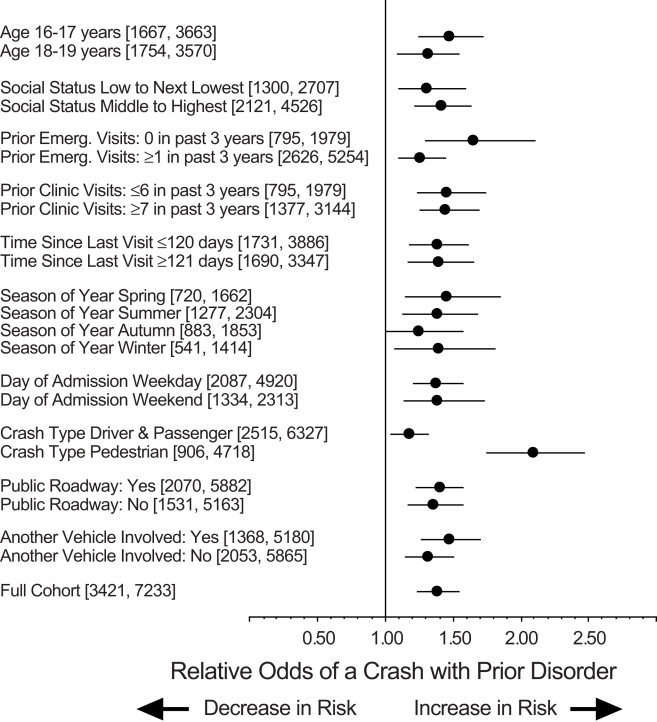
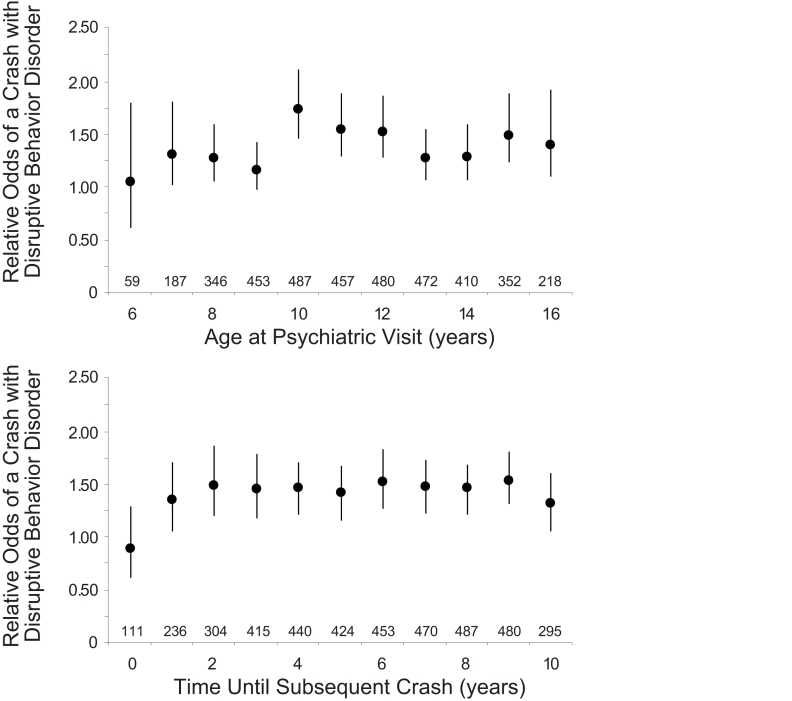
BACKGROUND: Teenage male drivers contribute to a large number of serious road crashes despite low rates of driving and excellent physical health. We examined the amount of road trauma involving teenage male youth that might be explained by prior disruptive behavior disorders (attention deficit hyperactivity disorder, conduct disorder, oppositional defiant disorder). METHODS AND FINDINGS: We conducted a population-based case-control study of consecutive male youth between age 16 and 19 years hospitalized for road trauma (cases) or appendicitis (controls) in Ontario, Canada over 7 years (April 1, 2002 through March 31, 2009). Using universal health care databases, we identified prior psychiatric diagnoses for each individual during the decade before admission. Overall, a total of 3,421 patients were admitted for road trauma (cases) and 3,812 for appendicitis (controls). A history of disruptive behavior disorders was significantly more frequent among trauma patients than controls (767 of 3,421 versus 664 of 3,812), equal to a one-third increase in the relative risk of road trauma (odds ratio = 1.37, 95% confidence interval 1.22-1.54, p<0.001). The risk was evident over a range of settings and after adjustment for measured confounders (odds ratio 1.38, 95% confidence interval 1.21-1.56, p<0.001). The risk explained about one-in-20 crashes, was apparent years before the event, extended to those who died, and persisted among those involved as pedestrians. CONCLUSIONS: Disruptive behavior disorders explain a significant amount of road trauma in teenage male youth. Programs addressing such disorders should be considered to prevent injuries.
Overview
The claims and statistics of this paper haven’t been checked yet.
Free: it reads the open-access text and checks the first 5 claims that cite a source we can check. Create a free account to check every claim.
Integrity signals
Registry
Cites
Statistics
Figures
Verification
Claims the paper makes
The claims and statistics of this paper haven’t been checked yet.
Free: it reads the open-access text and checks the first 5 claims that cite a source we can check. Create a free account to check every claim.
Claims other papers make about this one
Each is checked against this paper’s own text: does it say what the citing paper says it does?
The check wasn’t confident either way, so it gives no verdict — never disputed.
In the citing paper
“symptoms of depression and anxiety can create a barrier to the use of any relevant treatment option for ADHD [10,18,19].”
From A Digital Mental Health Support Program for Depression and Anxiety in Populations With Attention-Deficit/Hyperactivity Disorder: Feasibility and Usability Study (2023) · cites this paper as [10]
Experimental — accuracy not yet measured
Self-check
Percentages, sums and reported differences re-computed from the paper’s own numbers.
The self-check needs the paper’s full text.
Citations
Cites
Kessler, R. C., Adler, L., Barkley, R., Biederman, J., Conners, C. K., Demler, O., Faraone, S. V., Greenhill, L. L., Howes, M. J., Secnik, K., et al. (2006) · American Journal of Psychiatry · doi:10.1176/ajp.2006.163.4.716 · Cited by 3,886 · cited 1×
“The evidence suggests that these disorders are frequent during childhood and adolescence, characterized by impulsivity with rule infringement, and identified in some cases of trauma [25–29].”
BackgroundNegative Controls: A Tool for Detecting Confounding and Bias in Observational Studies
Lipsitch, M., Tchetgen Tchetgen, E., & Cohen, T. (2010) · Epidemiology · doi:10.1097/ede.0b013e3181d61eeb · Cited by 1,583 · cited 1×
“The purpose of these analyses was to check for the absence of an association where no association would be expected [64].”
BackgroundLong-Term Medical and Social Consequences of Preterm Birth
Moster, D., Lie, R. T., & Markestad, T. (2008) · New England Journal of Medicine · doi:10.1056/nejmoa0706475 · Cited by 1,402
Global Status Report on Road Safety: Time for Action
Toroyan, T. (2009) · Cited by 1,392
Mortality among Patients Admitted to Hospitals on Weekends as Compared with Weekdays
Bell, C. M., & Redelmeier, D. A. (2001) · New England Journal of Medicine · doi:10.1056/nejmsa003376 · Cited by 1,070 · cited 1×
“These databases have been validated in past medical research and prior analyses have used these databases to provide measures of relative risks, absolute risk, and attributable risk [41–43].”
MethodSelf-citationRisk taking in adolescence: What changes, and why?
STEINBERG, L. (2004) · Annals of the New York Academy of Sciences · doi:10.1196/annals.1308.005 · Cited by 963 · cited 1×
“Unfortunately, teenage male drivers are often remarkable in risk attitudes and resistant to standard safety advice [9,10].”
BackgroundMORTALITY AMONG PATIENTS ADMITTED TO HOSPITALS ON WEEKENDS AS COMPARED WITH WEEKDAYS
Ell, C., & Edelmeier, A. R. (2001) · Cited by 844
Attention-deficit hyperactivity disorder and hyperkinetic disorder
Swanson, J., Sergeant, J., Taylor, E., Sonuga-Barke, E., Jensen, P., & Cantwell, D. (1998) · The Lancet · doi:10.1016/s0140-6736(97)11450-7 · Cited by 601 · cited 1×
“The specific disorders were attention deficit hyperactivity disorder, conduct disorder, and oppositional defiant disorder (codes 312 to 314) [53–56].”
BackgroundAttention-deficit hyperactivity disorder and hyperkinetic disorder
Swanson, J. M., Sergeant, J. A., Taylor, E., Sonuga-Barke, E. J. S., Jensen, P. S., & Cantwell, D. P. (2001) · Attention Deficit Hyperactivity Disorders · doi:10.4324/9781315054315-2 · Cited by 572
Acute appendicitis in children: Emergency department diagnosis and management
Rothrock, S. G., & Pagane, J. (2000) · Annals of Emergency Medicine · doi:10.1067/mem.2000.105658 · Cited by 415 · cited 1×
“We chose this control condition because it was frequent, clearly coded in hospital records, generally unrelated to traumatic injury, not known to protect against other childhood disorders, and has served as a standard for other research [44–49].”
ResultBarkley, R. A., Murphy, K. R., Dupaul, G. J., & Bush, T. (2002) · Journal of the International Neuropsychological Society · doi:10.1017/s1355617702801345 · Cited by 387 · cited 1×
“Past research has suggested that disruptive behavior disorders might contribute to the risk of serious road trauma in teenage males [21–24].”
BackgroundOutpatient gatifloxacin therapy and dysglycemia in older adults.
Park-Wyllie, L. Y., Juurlink, D. N., Kopp, A., Shah, B. R., Stukel, T. A., Stumpo, C., Dresser, L., Low, D. E., & Mamdani, M. M. (2006) · New England Journal of Medicine · doi:10.1056/nejmoa055191 · Cited by 367 · cited 1×
“This strategy assured that ascertainment was blind to outcome status, free of reporting bias, and avoided reverse-causality artifacts [61,62].”
BackgroundBarkley, R. A., & Cox, D. (2007) · Journal of Safety Research · doi:10.1016/j.jsr.2006.09.004 · Cited by 335 · cited 1×
“Past studies, however, raise uncertainties because of small sample size, referral bias, surrogate outcomes, inadequate controls, and self-report bias [30,31].”
BackgroundThe Effect of Epilepsy or Diabetes Mellitus on the Risk of Automobile Accidents
Hansotia, P., & Broste, S. K. (1991) · New England Journal of Medicine · doi:10.1056/nejm199101033240105 · Cited by 257 · cited 1×
“Overall, attention deficit hyperactivity disorder, conduct disorder, and oppositional defiant disorder were associated with about a one-third increase in the risk of serious road trauma, which is similar in magnitude to the relative risk documented for individuals treated for epilepsy [67,68].”
ResultPeering Into the Bias Blind Spot: People’s Assessments of Bias in Themselves and Others
Ehrlinger, J., Gilovich, T., & Ross, L. (2005) · Personality and Social Psychology Bulletin · doi:10.1177/0146167204271570 · Cited by 255 · cited 1×
“. As such, a policy of creating “forgiving roads” can ironically create “permissive roads” for those who are impulsive and have imperfect rule adherence. The underlying error is that drivers sometimes overestimate their skills and underestimate their risks”
BackgroundEpidemiologic features of acute appendicitis in Ontario, Canada.
Al-Omran, M. A., Mamdani, M., & McLeod, R. S. (2003) · PubMed Central · Cited by 239
What we know about ADHD and driving risk: a literature review, meta-analysis and critique.
Jerome, L., Segal, A., & Habinski, L. (2006) · PubMed Central · Cited by 200
Fischer, M., Barkley, R. A., Smallish, L., & Fletcher, K. (2007) · Accident Analysis & Prevention · doi:10.1016/j.aap.2006.06.008 · Cited by 200 · cited 1×
“The evidence suggests that these disorders are frequent during childhood and adolescence, characterized by impulsivity with rule infringement, and identified in some cases of trauma [25–29].”
BackgroundThe effect of traumatic brain injury on the health of homeless people
Hwang, S. W., Colantonio, A., Chiu, S., Tolomiczenko, G., Kiss, A., Cowan, L., Redelmeier, D. A., & Levinson, W. (2008) · Canadian Medical Association Journal · doi:10.1503/cmaj.080341 · Cited by 194 · cited 1×
“The evidence suggests that these disorders are frequent during childhood and adolescence, characterized by impulsivity with rule infringement, and identified in some cases of trauma [25–29].”
BackgroundSelf-citationEvaluating the Evidence For and Against the Overdiagnosis of ADHD
Sciutto, M. J., & Eisenberg, M. (2007) · Journal of Attention Disorders · doi:10.1177/1087054707300094 · Cited by 186 · cited 1×
“A further caveat is that disruptive behavior disorders are sometimes overdiagnosed, open to debate, and could be abused by vehicle insurers [82,83].”
BackgroundDriving Outcomes of Young People With Attentional Difficulties in Adolescence
WOODWARD, L. J., FERGUSSON, D. M., & HORWOOD, L. J. (2000) · Journal of the American Academy of Child & Adolescent Psychiatry · doi:10.1097/00004583-200005000-00017 · Cited by 181 · cited 1×
“Of course, many issues remain for future research including medication level at time of injury, amount of driving, extent of brain trauma, and sequelae among those not hospitalized [75,76].”
BackgroundDistractions and the risk of car crash injury
Lam, L. T. (2002) · Journal of Safety Research · doi:10.1016/s0022-4375(02)00034-8 · Cited by 173
Long-term outcome of head injuries: a 23 year follow up study of children with head injuries.
Klonoff, H., Clark, C., & Klonoff, P. S. (1993) · Journal of Neurology, Neurosurgery & Psychiatry · doi:10.1136/jnnp.56.4.410 · Cited by 171 · cited 1×
“Teenage male drivers involved in serious crashes can also have especially devastating outcomes related to ongoing needs for health care as well as foregone future productivity [5].”
BackgroundWalker, J. S., Coleman, D., Lee, J., Squire, P. N., & Friesen, B. J. (2008) · Journal of the American Academy of Child & Adolescent Psychiatry · doi:10.1097/chi.0b013e318179961a · Cited by 168 · cited 1×
“Regulations of psychiatric diagnoses, however, would be controversial given the unfair stigma and social discrimination that surrounds mental disorders [81].”
BackgroundRisks older drivers face themselves and threats they pose to other road users
Evans, L. (2000) · International Journal of Epidemiology · doi:10.1093/ije/29.2.315 · Cited by 167 · cited 1×
“In addition, young drivers are sometimes a hazard to other road users and contribute to more fatalities in older pedestrians than older drivers themselves [6–8].”
BackgroundAttention Deficit Hyperactivity Disorder and Increased Risk of Injury
Merrill, R. M., Lyon, J. L., Baker, R. K., & Gren, L. H. (2009) · Advances in Medical Sciences · doi:10.2478/v10039-009-0022-7 · Cited by 165 · cited 1×
“Others use the term ‘‘attention deficit related disorders,’’ ‘‘childhood behavioral disorder,’’ or ‘‘externalizing disorder’’ to denote these conditions since combinations are frequent, exact diagnoses are not always possible, and diagnostic criteria change over time [57–60].”
BackgroundProtecting Vulnerable Road Users from Injury
Constant, A., & Lagarde, E. (2010) · PLoS Medicine · doi:10.1371/journal.pmed.1000228 · Cited by 139 · cited 1×
“In addition, young drivers are sometimes a hazard to other road users and contribute to more fatalities in older pedestrians than older drivers themselves [6–8].”
BackgroundJerome, L., Habinski, L., & Segal, A. (2006) · Current Psychiatry Reports · doi:10.1007/s11920-006-0045-8 · Cited by 130 · cited 1×
“Past research has suggested that disruptive behavior disorders might contribute to the risk of serious road trauma in teenage males [21–24].”
BackgroundInattentive and Hyperactive Behaviors and Driving Offenses in Adolescence
Nada‐Raja, S., Langley, J. D., McGee, R. O., Williams, S., Begg, D., & Reeder, A. I. (1997) · Journal of the American Academy of Child & Adolescent Psychiatry · doi:10.1097/00004583-199704000-00014 · Cited by 127 · cited 1×
“A third limitation that causes our study to underestimate the association of disruptive behavior disorders with road trauma is that the data excluded girls [74].”
BackgroundThe evolution and effectiveness of graduated licensing
Simpson, H. M. (2003) · Journal of Safety Research · doi:10.1016/s0022-4375(02)00077-4 · Cited by 119 · cited 1×
“Some regions have further restrictions using graduated licensing programs that disallow young drivers from night driving, high-speed roadways, and additional hazardous settings [14–16].”
BackgroundCorrespondence Between DSM-III-R and DSM-IV Attention-Deficit/Hyperactivity Disorder
Biederman, J., Faraone, S. V., Weber, W. J., Russell, R. L., Rater, M. A., & Park, K. S. (1997) · Journal of the American Academy of Child & Adolescent Psychiatry · doi:10.1097/00004583-199712000-00016 · Cited by 98 · cited 1×
“We focused on selected disorders relevant to childhood, defined by the Diagnostic and Statistical Manual of Mental Disorders, and associated with inattention or distraction. The specific disorders were attention deficit hyperactivity disorder, conduct disorder, and oppositional defiant disorder (codes 312 to 314)”
MethodPsychiatric illness and subsequent traumatic brain injury: a case control study
Fann, J. R. (2002) · Journal of Neurology, Neurosurgery & Psychiatry · doi:10.1136/jnnp.72.5.615 · Cited by 94 · cited 1×
“Many disorders can be treated effectively, so that well-managed patients could have outcomes similar to the population average [78,79].”
BackgroundCardiovascular Outcomes after a Change in Prescription Policy for Clopidogrel
Jackevicius, C. A., Tu, J. V., Demers, V., de Melo, M. N., Cox, J. L., Rinfret, S., Kalavrouziotis, D., Johansen, H., Behlouli, H., Newman, A. M., et al. (2008) · New England Journal of Medicine · doi:10.1056/nejmsa0803410 · Cited by 81
Impact of antisocial lifestyle on health
Shepherd, J., Farrington, D., & Potts, J. (2004) · Journal of Public Health · doi:10.1093/pubmed/fdh169 · Cited by 76
Meadows, M., Stradling, S. G., & Lawson, S. (1998) · British Journal of Psychology · doi:10.1111/j.2044-8295.1998.tb02694.x · Cited by 69 · cited 1×
“Past research has suggested that disruptive behavior disorders might contribute to the risk of serious road trauma in teenage males [21–24].”
BackgroundFactors affecting the severity of motor vehicle traffic crashes involving young drivers in Ontario.
Mao, Y., Zhang, J., Robbins, G., Clarke, K., Lam, M., & Pickett, W. (1997) · Injury Prevention · doi:10.1136/ip.3.3.183 · Cited by 69 · cited 1×
“The downside, however, is a lack of data from prospective observation of lifestyle, alcohol, drugs, speeding, distractions, impulsivity, undiagnosed internalizing disorders, and other mechanisms or mediators in the causal pathway to driver error [77].”
BackgroundAn overview of epilepsy and driving
Drazkowski, J. F. (2007) · Epilepsia · doi:10.1111/j.1528-1167.2007.01392.x · Cited by 66 · cited 1×
“Overall, attention deficit hyperactivity disorder, conduct disorder, and oppositional defiant disorder were associated with about a one-third increase in the risk of serious road trauma, which is similar in magnitude to the relative risk documented for individuals treated for epilepsy [67,68].”
ResultDefining oppositional defiant disorder
Rowe, R., Maughan, B., Costello, E. J., & Angold, A. (2005) · Journal of Child Psychology and Psychiatry · doi:10.1111/j.1469-7610.2005.01420.x · Cited by 66
Lam, L. T.-M. (2002) · Journal of Attention Disorders · doi:10.1177/108705470200600204 · Cited by 64 · cited 1×
“Others use the term ‘‘attention deficit related disorders,’’ ‘‘childhood behavioral disorder,’’ or ‘‘externalizing disorder’’ to denote these conditions since combinations are frequent, exact diagnoses are not always possible, and diagnostic criteria change over time [57–60].”
BackgroundChildhood problem behaviors and injury risk over the life course
Jokela, M. M., Power, C., & Kivimäki, M. (2009) · Journal of Child Psychology and Psychiatry · doi:10.1111/j.1469-7610.2009.02122.x · Cited by 61 · cited 1×
“The evidence suggests that these disorders are frequent during childhood and adolescence, characterized by impulsivity with rule infringement, and identified in some cases of trauma [25–29].”
BackgroundOlofsson, E., Bunketorp, O., & Andersson, A. (2009) · Acta Paediatrica · doi:10.1111/j.1651-2227.2008.00998.x · Cited by 59 · cited 1×
“The evidence suggests that these disorders are frequent during childhood and adolescence, characterized by impulsivity with rule infringement, and identified in some cases of trauma [25–29].”
BackgroundMental disorders and delivery motorcycle drivers (motoboys): A dangerous association
Kieling, R. R., Szobot, C. M., Matte, B., Coelho, R. S., Kieling, C., Pechansky, F., & Rohde, L. A. (2011) · European Psychiatry · doi:10.1016/j.eurpsy.2010.03.004 · Cited by 52
Ward, N. J., & Wilde, G. J. S. (1996) · Safety Science · doi:10.1016/0925-7535(96)00006-9 · Cited by 46 · cited 1×
“. A classic example involves designing the approach paths to road intersections with generous sight lines to accommodate drivers with slow reaction times (e.g., older drivers). This safety cushion, ironically, can tempt drivers who have quick reaction times to approach at faster speeds (e.g., younger drivers)”
BackgroundMandatory reporting by physicians of patients potentially unfit to drive.
Redelmeier, D. A., Vinkatesh, V., & Stanbrook, M. B. (2008) · PubMed Central · Cited by 46
Self-citationBaker, S. G., & Kramer, B. S. (2001) · Journal of Women s Health & Gender-Based Medicine · doi:10.1089/152460901753285769 · Cited by 46 · cited 1×
“We excluded teenage girls from both groups to avoid Simpson’s paradox (a spurious association created by loading on a null-null position) since this group has much lower rates of crash involvement [50,51].”
BackgroundLicensing Age and Teenage Driver Crashes: A Review of the Evidence
Williams, A. F. (2009) · Traffic Injury Prevention · doi:10.1080/15389580802500546 · Cited by 45 · cited 1×
“Some regions have further restrictions using graduated licensing programs that disallow young drivers from night driving, high-speed roadways, and additional hazardous settings [14–16].”
BackgroundThe relationship between childhood behaviour disorders and unintentional injury events
Bruce, B., Kirkland, S., & Waschbusch, D. (2007) · Paediatrics & Child Health · doi:10.1093/pch/12.9.749 · Cited by 43
DSM-IV or ICD-10-DCR diagnoses in child and adolescent psychiatry: does it matter?
Sørensen, M. J., Mors, O. N., & Thomsen, P. H. (2005) · European Child & Adolescent Psychiatry · doi:10.1007/s00787-005-0482-7 · Cited by 42 · cited 2×
“The specific disorders were attention deficit hyperactivity disorder, conduct disorder, and oppositional defiant disorder (codes 312 to 314) [53–56].”
BackgroundGraduated Licensing and Beyond
WILLIAMS, A., & Mayhew, D. (2008) · American Journal of Preventive Medicine · doi:10.1016/j.amepre.2008.06.015 · Cited by 41 · cited 1×
“Some regions have further restrictions using graduated licensing programs that disallow young drivers from night driving, high-speed roadways, and additional hazardous settings [14–16].”
BackgroundDriving Fatalities on Super Bowl Sunday
Redelmeier, D. A., & Stewart, C. L. (2003) · New England Journal of Medicine · doi:10.1056/nejm200301233480423 · Cited by 36 · cited 1×
“In accord with prior research [52], we characterized each case using four categories: driver, passenger, pedestrian, and miscellaneous.”
MethodSelf-citationCallaghan, R. C., & Khizar, A. (2010) · Journal of Affective Disorders · doi:10.1016/j.jad.2009.06.029 · Cited by 36
Maxson, R. T., Lawson, K. A., Pop, R., Yuma, P., & Johnson, K. M. K. (2009) · Journal of Pediatric Surgery · doi:10.1016/j.jpedsurg.2008.08.003 · Cited by 33 · cited 1×
“We chose this control condition because it was frequent, clearly coded in hospital records, generally unrelated to traumatic injury, not known to protect against other childhood disorders, and has served as a standard for other research [44–49].”
ResultA simple model for potential use with a misclassified binary outcome in epidemiology
Duffy, S. W., Warwick, J., Williams, A. R. W., Keshavarz, H., Kaffashian, F., Rohan, T. E., Nili, F., & Sadeghi-Hassanabadi, A. (2004) · Journal of Epidemiology & Community Health · doi:10.1136/jech.2003.010546 · Cited by 31 · cited 1×
“In addition, childhood psychiatric diagnoses can be mistaken and the misdiagnoses also bias our relative risk estimates toward the null [55,70].”
BackgroundMotor vehicle accident deaths, 1979 to 2004.
Ramage-Morin, P. L. (2008) · PubMed · Cited by 30
Prevalence and Characteristics of Alcohol-Related Incidents Requiring Police Attendance
Palk, G. R., Davey, J. D., & Freeman, J. (2007) · Journal of Studies on Alcohol and Drugs · doi:10.15288/jsad.2007.68.575 · Cited by 27
Travel Patterns of Older Americans with Disabilities
Sweeney, M. (2010) · ROSA P · doi:10.21949/1501662 · Cited by 26 · cited 1×
“Teenagers and their families are aware of diagnoses, may selfrestrict driving, and thereby attenuate all observed risks [69].”
BackgroundPSYCHOTROPIC MEDICATIONS AND MOTOR VEHICLE COLLISIONS IN PATIENTS WITH DEMENTIA
Rapoport, M. J., Herrmann, N., Molnar, F., Rochon, P. A., Juurlink, D. N., Zagorski, B., Seitz, D. P., Morris, J. C., & Redelmeier, D. A. (2008) · Journal of the American Geriatrics Society · doi:10.1111/j.1532-5415.2008.01903.x · Cited by 17 · cited 1×
“These databases have been validated in past medical research and prior analyses have used these databases to provide measures of relative risks, absolute risk, and attributable risk [41–43].”
MethodSelf-citationSgro, M. D., Roberts, W., Grossman, S., & Barozzino, T. (2000) · Paediatrics & Child Health · doi:10.1093/pch/5.1.19 · Cited by 16 · cited 1×
“If our study presumed a disease prevalence of 10% from population surveys [71], for example, the estimated odds ratio would be about 2.”
Backgroundvon Eyben, F. E., Mouritsen, E., Holm, J., Montvilas, P., Dimcevski, G. G., Helleberg, I., Kristensen, L. L., Suciu, G., & von Eyben, R. (2002) · European Journal of Cardiovascular Prevention & Rehabilitation · doi:10.1177/174182670200900306 · Cited by 16 · cited 1×
“We chose this control condition because it was frequent, clearly coded in hospital records, generally unrelated to traumatic injury, not known to protect against other childhood disorders, and has served as a standard for other research [44–49].”
ResultLeverence, R. R., Martinez, M., Whisler, S. L., Romero-Leggott, V., Harji, F., Milner, M., & Voelz, J. (2005) · Journal of Adolescent Health · doi:10.1016/j.jadohealth.2004.03.008 · Cited by 16
Major Trauma in Pregnant Women During the Summer
Redelmeier, D. A., Drucker, A. M., & Venkatesh, V. (2005) · The Journal of Trauma: Injury, Infection, and Critical Care · doi:10.1097/01.ta.0000172644.38918.bd · Cited by 15 · cited 1×
“These databases have been validated in past medical research and prior analyses have used these databases to provide measures of relative risks, absolute risk, and attributable risk [41–43].”
MethodSelf-citationPreventing Road Deaths—Time for Data
Editors, T. P. M. (2010) · PLoS Medicine · doi:10.1371/journal.pmed.1000257 · Cited by 14
Nursing Home Residence Confounds Gender Differences in Medicare Utilization
Kronman, A. C., Freund, K. M., Hanchate, A. D., Emanuel, E. J., & Ash, A. S. (2010) · Women s Health Issues · doi:10.1016/j.whi.2009.11.016 · Cited by 13 · cited 1×
“We excluded teenage girls from both groups to avoid Simpson’s paradox (a spurious association created by loading on a null-null position) since this group has much lower rates of crash involvement [50,51].”
BackgroundCox, D. J., Mikami, A. Y., Cox, B. S., Coleman, M. T., Mahmood, A., Sood, A., Moore, M., Burket, R. C., & Merkel, R. L. (2008) · Archives of Pediatrics and Adolescent Medicine · doi:10.1001/archpedi.162.8.793 · Cited by 12 · cited 1×
“Many disorders can be treated effectively, so that well-managed patients could have outcomes similar to the population average [78,79].”
BackgroundAttention deficit/hyperactivity disorder (ADHD) and driving safety
Cox, D. J., & Davis, M. T. (2009) · Birkhäuser Basel eBooks · doi:10.1007/978-3-7643-9923-8_19 · Cited by 9
Hariharan, S. L., & Pomerantz, W. J. (2007) · Clinical Pediatrics · doi:10.1177/0009922807304228 · Cited by 9 · cited 1×
“We chose this control condition because it was frequent, clearly coded in hospital records, generally unrelated to traumatic injury, not known to protect against other childhood disorders, and has served as a standard for other research [44–49].”
ResultYouth and Road Crashes: Magnitude, Characteristics, and Trends
Emery, P. C., Mayhew, D. R., & Simpson, H. M. (2008) · Cited by 4
Drivers Involved in Crashes Killing Older Road Users
Evans, L. (2007) · SAE technical papers on CD-ROM/SAE technical paper series · doi:10.4271/2007-01-1165 · Cited by 1
Research works printed but not linked: 6
- The Joint OECD/ECMT Transport Research Centre 2006 Young drivers: the road to safety. Paris Organisation for Economic Co-operation and Development and European Conference of Ministers of Transport
- Insurance Institute for Highway Safety 2008 Licensing teenagers later reduces their crashes. Status Report 42 1 4
- Canadian Medical Association 2006 Determining medical fitness to operate motor vehicles: CMA driver guide. 7th edition. Ottawa Canadian Medical Association
- Statistics Canada 2007 2006 Census of Population. Ottawa: Statistics Canada. Catalogue 97-551-XCB2006009
- Gordis L 2004 Epidemiology. Philadelphia Elsevier Saunders 181 187
- Gordis L 2004 Epidemiology. Philadelphia Elsevier Saunders 191 196
Cited by
Chang, Z., Lichtenstein, P., D’Onofrio, B. M., Sjölander, A., & Larsson, H. (2014) · JAMA Psychiatry · doi:10.1001/jamapsychiatry.2013.4174 · Cited by 293
Self-harm Emergencies After Bariatric Surgery: A Population-Based Cohort Study
Bhatti, J. A., Nathens, A. B., Thiruchelvam, D., Grantcharov, T., Goldstein, B. I., & Redelmeier, D. A. (2016) · JAMA Surgery · doi:10.1001/jamasurg.2015.3414 · Cited by 170
Self-citationChang, Z., Quinn, P. D., Hur, K., Gibbons, R. D., Sjölander, A., Larsson, H., & D’Onofrio, B. M. (2017) · JAMA Psychiatry · doi:10.1001/jamapsychiatry.2017.0659 · Cited by 166
ADHD and accidents over the life span – A systematic review
Brunkhorst-Kanaan, N., Libutzki, B., Reif, A., Larsson, H., McNeill, R. V., & Kittel-Schneider, S. (2021) · Neuroscience & Biobehavioral Reviews · doi:10.1016/j.neubiorev.2021.02.002 · Cited by 107
“possible mechanisms or risk factors that might explain this association (Jernbro et al., 2020; Avsar et al., 2009; Shilon et al., 2012; Prasad et al., 2018; Rowe et al., 2004; Redelmeier et al., 2010; Hoare and Beattie, 2003).”
BackgroundCurry, A. E., Metzger, K. B., Pfeiffer, M. R., Elliott, M. R., Winston, F. K., & Power, T. J. (2017) · JAMA Pediatrics · doi:10.1001/jamapediatrics.2017.0910 · Cited by 91
“CHOP primary care visits, median (IQR) 19 (10-33) 26 (15-40) 18 (10-31) <.”
Metadata
- Authors
- Redelmeier, D. A., Chan, W. K., & Lu, H.
- Affiliations
- Sunnybrook Health Science Centre (CA)
- University of Toronto (CA)
- Institute for Clinical Evaluative Sciences (CA)
- Corresponding author
- Redelmeier, Donald A.
- Chan, William K.
- Lu, Hong
- Venue
- PLoS Medicine
- Publisher
- Public Library of Science (PLoS)
- Published
- 2010-11-16
- Volume
- 7
- Issue
- 11
- Pages
- e1000369
- ISSN
- 1549-1277 (ISSN-L)
- 1549-1676
- PMC
- PMC2981585
- OpenAlex
- W1983730049
- Cited by
- 39
- References
- 69
- Citations by year
- 2026: 1 · 2024: 2 · 2023: 1 · 2021: 2 · 2019: 2 · 2018: 3 · 2017: 7 · 2016: 2 · 2015: 4 · 2014: 3 · 2013: 4 · 2012: 5
- FWCI
- 11.65
- Type
- journal article
- Language
- en
- Open access
- gold
- doi.org
- Locations
- PLoS Medicine (publishedVersion, cc-by)
- PubMed Central (publishedVersion, cc-by)
- PubMed (publishedVersion)
- DOAJ (DOAJ: Directory of Open Access Journals) (submittedVersion, cc-by-sa)
- Funders
- University of Toronto
- Topics
- Physical Sciences › Engineering › Safety, Risk, Reliability and Quality › Traffic and Road Safety
- Health Sciences › Medicine › Public Health, Environmental and Occupational Health › Injury Epidemiology and Prevention
- Social Sciences › Psychology › Clinical Psychology › Child and Adolescent Psychosocial and Emotional Development
- Keywords
- road trauma, adolescent drivers, disruptive behavior disorders, attention deficit hyperactivity disorder, conduct disorder, oppositional defiant disorder, traffic accidents, injury risk, psychiatric comorbidity, injury prevention, young men
- MeSH terms
- Accidents, Traffic, Adolescent, Attention Deficit Disorder with Hyperactivity, Humans, Male, Case-Control Studies, Conduct Disorder, Attention Deficit and Disruptive Behavior Disorders
About these checks
Registry, retraction, Cites and statistics results are computed, not judged, with one exception: a printed reference that no index lists is read once by a model before it counts as a citation error. Claims are extracted by a model and kept only when their quote appears verbatim in the text; each cited source is then checked, with a model’s help, for whether it says what the claim relies on. Those verdicts can be wrong — read the claim’s quote and the cited source before relying on one.
Statistics and arithmetic are recomputed, not judged.
Confidence bands are shown only for fields calibrated on our annotated test set. None is calibrated yet, so no band is shown.
What counts as a claim ›How we measure confidence ›How we check this ›
Are you an author, or do you see a problem with this page? Request a review
Data sources
Bibliographic data: Semantic Scholar, OpenAlex, Crossref.
Contains information from the Semantic Scholar Academic Graph Datasets, made available under the ODC Attribution License (ODC-BY 1.0).
Semantic Scholar’s data is described in: Kinney, R., et al. (2023). The Semantic Scholar Open Data Platform. arXiv:2301.10140.
