

The Midwives Service Scheme in Nigeria
Open accessThe DOI matches its Crossref record; 7 of the 8 references it cites were found in a registry or an index.
Abstract
Maternal, newborn, and child health indices in Nigeria vary widely across geopolitical zones and between urban and rural areas, mostly due to variations in the availability of skilled attendance at birth. To improve these indices, the Midwives Service Scheme (MSS) in Nigeria engaged newly graduated, unemployed, and retired midwives to work temporarily in rural areas. The midwives are posted for 1 year to selected primary care facilities linked through a cluster model in which four such facilities with the capacity to provide basic essential obstetric care are clustered around a secondary care facility with the capacity to provide comprehensive emergency obstetric care. The outcome of the MSS 1 year on has been an uneven improvement in maternal, newborn, and child health indices in the six geopolitical zones of Nigeria. Major challenges include retention, availability and training of midwives, and varying levels of commitment from state and local governments across the country, and despite the availability of skilled birth attendants at MSS facilities, women still deliver at home in some parts of the country.
Overview
The claims and statistics of this paper haven’t been checked yet.
Free: it reads the open-access text and checks the first 5 claims that cite a source we can check. Create a free account to check every claim.
Integrity signals
Registry
Cites
Statistics
Figures
Verification
Claims the paper makes
The claims and statistics of this paper haven’t been checked yet.
Free: it reads the open-access text and checks the first 5 claims that cite a source we can check. Create a free account to check every claim.
Claims other papers make about this one
Each is checked against this paper’s own text: does it say what the citing paper says it does?
The source backs part of the claim, not all of it — or backs it for a different population, condition or comparison.
In the citing paper
“Midwifery personnel in rural Nigeria, Niger and Ghana, were typically young and single and rarely had a social connection with the community to which they were deployed. They were often not accepted by the community due to their age, and had little opportunity for marriage or starting a family [35, 37, 38].”
From What Prevents Quality Midwifery Care? A Systematic Mapping of Barriers in Low and Middle Income Countries from the Provider Perspective (2016) · cites this paper as [37]
Experimental — accuracy not yet measuredThe check wasn’t confident either way, so it gives no verdict — never disputed.
In the citing paper
“Social isolation was reported by midwifery personnel in different contexts [29, 32, 35, 37–40].”
From What Prevents Quality Midwifery Care? A Systematic Mapping of Barriers in Low and Middle Income Countries from the Provider Perspective (2016) · cites this paper as [37]
Experimental — accuracy not yet measured
Self-check
Percentages, sums and reported differences re-computed from the paper’s own numbers.
The self-check needs the paper’s full text.
Citations
Cites
Nigeria Demographic and Health Survey 2008
Macro, I. (2009) · Cited by 2,063
Strategies for reducing maternal mortality: getting on with what works
Campbell, O. M., & Graham, W. J. (2006) · The Lancet · doi:10.1016/s0140-6736(06)69381-1 · Cited by 1,785 · cited 1×
“While task shifting has offered a costeffective expansion of the overall HRH pool, skilled attendance at birth is essential to reducing the burden of maternal mortality [8].”
BackgroundGoing to scale with professional skilled care
Koblinsky, M., Matthews, Z., Hussein, J., Mavalankar, D., Mridha, M. K., Anwar, I., Achadi, E., Adjei, S., Padmanabhan, P., & van Lerberghe, W. (2006) · The Lancet · doi:10.1016/s0140-6736(06)69382-3 · Cited by 475 · cited 2×
“mary health care (PHC) facilities [5].”
BackgroundRapid Expansion of the Health Workforce in Response to the HIV Epidemic
Samb, B., Celletti, F., Holloway, J., Van Damme, W., De Cock, K. M., & Dybul, M. (2007) · New England Journal of Medicine · doi:10.1056/nejmsb071889 · Cited by 182 · cited 1×
“Efforts to better reach underserved communities have been on task shifting to community health workers (CHWs) [7].”
BackgroundMaternal Mortality in Nigeria: The Real Issues
Harrison, K. A. (1997) · African Journal of Reproductive Health · doi:10.2307/3583270 · Cited by 123 · cited 1×
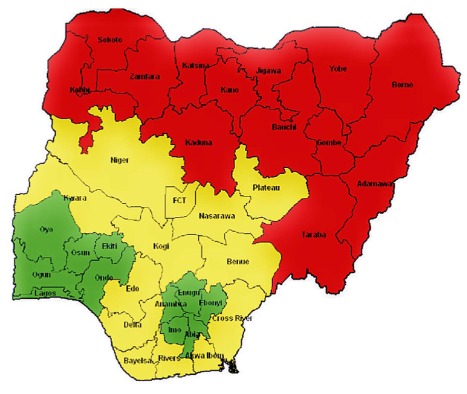
“Health indices in Nigeria vary widely across geopolitical zones (See Box 1) and socioeconomic groups [3].”
BackgroundThompson, J. E., Fullerton, J. T., & Sawyer, A. J. (2011) · Midwifery · doi:10.1016/j.midw.2011.04.001 · Cited by 117
Betrán, A. P., Wojdyla, D., Posner, S. F., & Gülmezoglu, A. M. (2005) · BMC Public Health · doi:10.1186/1471-2458-5-131 · Cited by 111 · cited 1×
“mortality decrease [8,9].”
Cited by
Filby, A., McConville, F., & Portela, A. (2016) · PLOS ONE · doi:10.1371/journal.pone.0153391 · Cited by 323
Abímbọ́lá, Ṣ., Negin, J., Jan, S., & Martiniuk, A. L. C. (2014) · Health Policy and Planning · doi:10.1093/heapol/czu069 · Cited by 193
“This is important because, to the extent that they are commonly owned by a community, PHC services in many LMICs are similar to common-pool resources (Ostrom 1996).”
BackgroundInfluentialKress, D. H., Su, Y., & Wang, H. (2016) · Health Systems & Reform · doi:10.1080/23288604.2016.1234861 · Cited by 101
“Some scholars have argued that low PHC coverage is a result of an insufficient health workforce.(14,16,17) The literature largely points to bottlenecks in primary health care inputs, including health facilities and health workers, to explain Nigeria’s poor performance in PHC coverage.”
BackgroundHow decentralisation influences the retention of primary health care workers in rural Nigeria
Abímbọ́lá, Ṣ., Olanipekun, T. O., Igbokwe, U., Negin, J., Jan, S., Martiniuk, A. L. C., Ihebuzor, N., & Aina, M. (2015) · Global Health Action · doi:10.3402/gha.v8.26616 · Cited by 126
“Perhaps because PHC is often the only form of formal health service available to rural populations, the shortage of rural PHC workers is also associated with worse health outcomes in rural communities compared to urban areas (26, 27).”
BackgroundYaya, S., Bishwajit, G., Uthman, O. A., & Amouzou, A. (2018) · PLoS ONE · doi:10.1371/journal.pone.0196896 · Cited by 116
Metadata
- Authors
- Abimbola, S., Okoli, U., Olubajo, O., Abdullahi, M. J., & Pate, M. A.
- Affiliations
- National Primary Health Care Development Agency (NG)
- Duke University (US)
- Venue
- PLoS Medicine
- Publisher
- Public Library of Science (PLoS)
- Published
- 2012-05-01
- Volume
- 9
- Issue
- 5
- Pages
- e1001211
- ISSN
- 1549-1277 (ISSN-L)
- 1549-1676
- PMC
- PMC3341343
- OpenAlex
- W2072114590
- Cited by
- 144
- References
- 8
- Citations by year
- 2026: 10 · 2025: 9 · 2023: 11 · 2022: 11 · 2021: 9 · 2020: 20 · 2019: 14 · 2018: 10 · 2017: 12 · 2016: 10 · 2015: 12 · 2014: 7 · 2013: 8 · 2012: 1
- FWCI
- 7.80
- Type
- journal article
- Language
- en
- Open access
- gold
- doi.org
- Locations
- PLoS Medicine (publishedVersion, cc-by)
- Europe PMC (PubMed Central) (publishedVersion, cc-by)
- PubMed Central (publishedVersion, cc-by)
- PubMed (publishedVersion)
- DOAJ (DOAJ: Directory of Open Access Journals) (submittedVersion, cc-by-sa)
- Topics
- Health Sciences › Medicine › Pediatrics, Perinatology and Child Health › Global Maternal and Child Health
- Health Sciences › Medicine › Public Health, Environmental and Occupational Health › Global Health Workforce Issues
- Health Sciences › Medicine › Obstetrics and Gynecology › Maternal and Perinatal Health Interventions
- Keywords
- skilled birth attendance, midwife retention, rural health workforce, cluster model, emergency obstetric care, maternal health, newborn health, child health, home birth, midwifery education, Nigeria
- MeSH terms
- Workforce, Adult, Child, Female, Humans, Infant, Newborn, Maternal Health Services, Midwifery, Nigeria, Obstetric Nursing, Pregnancy, Primary Health Care, Rural Population, Outcome Assessment, Health Care
About these checks
Registry, retraction, Cites and statistics results are computed, not judged, with one exception: a printed reference that no index lists is read once by a model before it counts as a citation error. Claims are extracted by a model and kept only when their quote appears verbatim in the text; each cited source is then checked, with a model’s help, for whether it says what the claim relies on. Those verdicts can be wrong — read the claim’s quote and the cited source before relying on one.
Statistics and arithmetic are recomputed, not judged.
Confidence bands are shown only for fields calibrated on our annotated test set. None is calibrated yet, so no band is shown.
What counts as a claim ›How we measure confidence ›How we check this ›
Are you an author, or do you see a problem with this page? Request a review
Data sources
Bibliographic data: Semantic Scholar, OpenAlex, Crossref.
Contains information from the Semantic Scholar Academic Graph Datasets, made available under the ODC Attribution License (ODC-BY 1.0).
Semantic Scholar’s data is described in: Kinney, R., et al. (2023). The Semantic Scholar Open Data Platform. arXiv:2301.10140.
