

Estimated impact on birth weight of scaling up intermittent preventive treatment of malaria in pregnancy given sulphadoxine-pyrimethamine resistance in Africa: A mathematical model
Open accessThe DOI matches its Crossref record; 42 of the 42 references it cites were found in a registry or an index.
Abstract
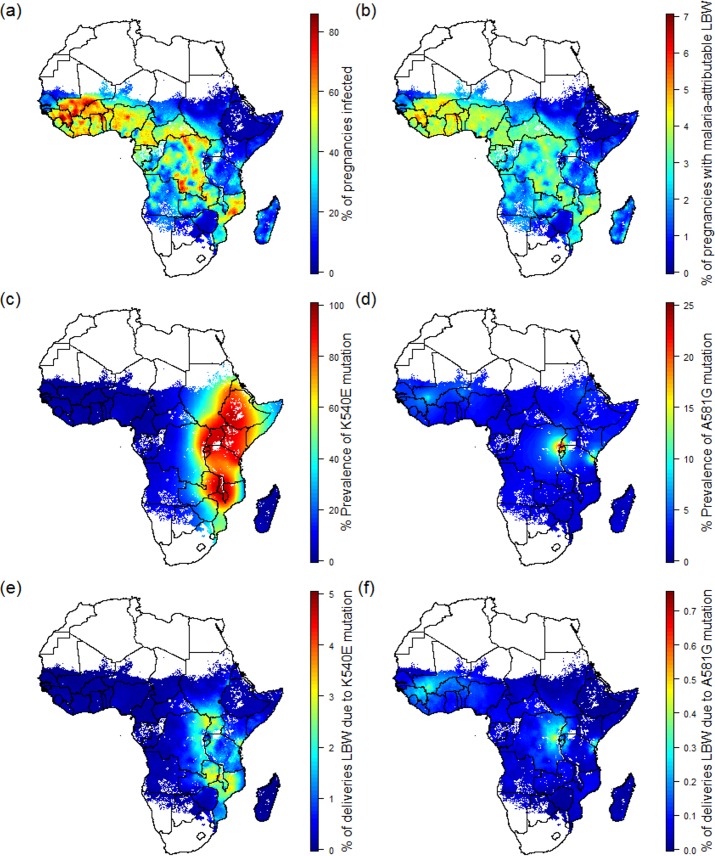
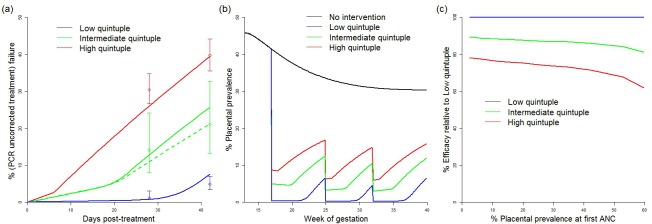
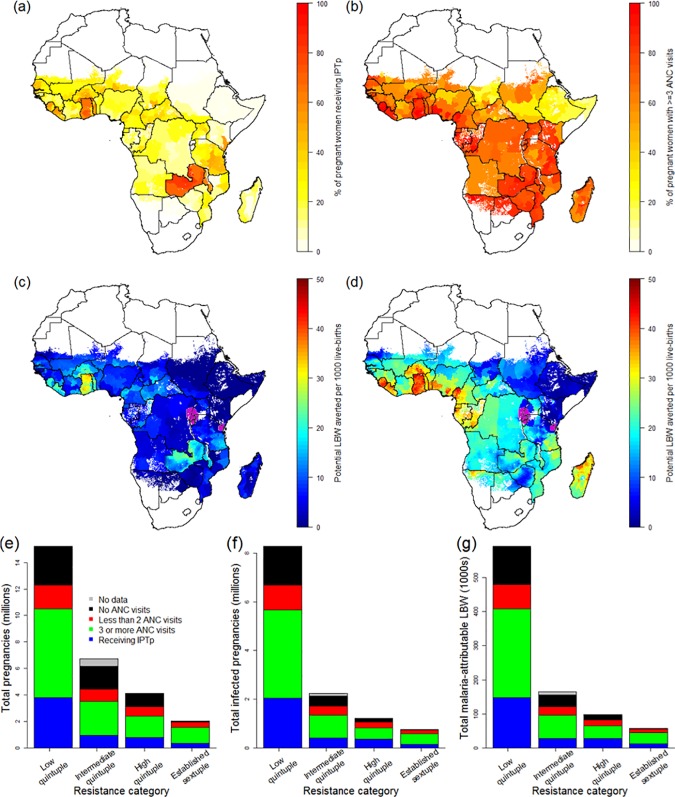
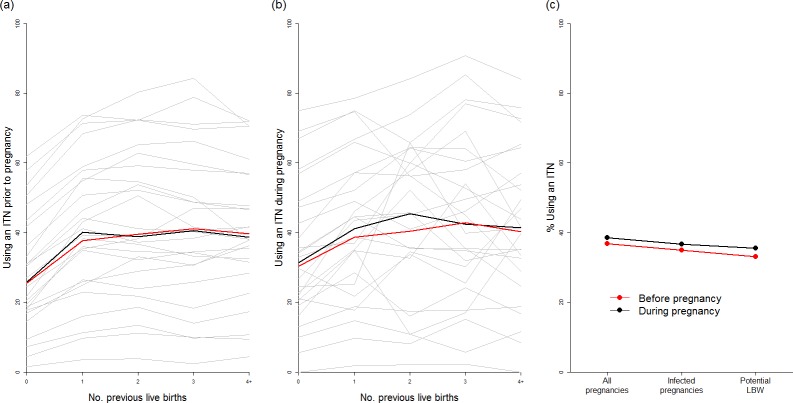
BACKGROUND: Malaria transmission has declined substantially in the 21st century, but pregnant women in areas of sustained transmission still require protection to prevent the adverse pregnancy and birth outcomes associated with malaria in pregnancy (MiP). A recent call to action has been issued to address the continuing low coverage of intermittent preventive treatment of malaria in pregnancy (IPTp). This call has, however, been questioned by some, in part due to concerns about resistance to sulphadoxine-pyrimethamine (SP), the only drug currently recommended for IPTp. METHODS AND FINDINGS: Using an existing mathematical model of MiP, we combined estimates of the changing endemicity of malaria across Africa with maps of SP resistance mutations and current coverage of antenatal access and IPTp with SP (IPTp-SP) across Africa. Using estimates of the relationship between SP resistance mutations and the parasitological efficacy of SP during pregnancy, we estimated the varying impact of IPTp-SP across Africa and the incremental value of enhancing IPTp-SP uptake to match current antenatal care (ANC) coverage. The risks of MiP and malaria-attributable low birthweight (mLBW) in unprotected pregnancies (i.e., those not using insecticide-treated nets [ITNs]) leading to live births fell by 37% (33%-41% 95% credible interval [crI]) and 31% (27%-34% 95% crI), respectively, from 2000 to 2015 across endemic areas in sub-Saharan Africa. However, these gains are fragile, and coverage is far from optimal. In 2015, 9.5 million (8.3 million-10.4 million 95% crI) of 30.6 million pregnancies in these areas would still have been infected with Plasmodium falciparum without intervention, leading to 750,000 (390,000-1.1 million 95% crI) mLBW deliveries. In all, 6.6 million (5.6 million-7.3 million 95% crI) of these 9.5 million (69.3%) pregnancies at risk of infection (and 53.4% [16.3 million/30.6 million] of all pregnancies) occurred in settings with near-perfect SP curative efficacy (>99%) based on the most recent estimates of resistance. Forty-four percent of these pregnancies (23% of all pregnancies) were not receiving any IPTp-SP despite making ≥3 ANC visits, representing 160,000 (94,000-236,000 95% crI) preventable low birthweight (LBW) deliveries. Only 4% (1.4 million) of pregnancies occurred in settings with >10% prevalence of the sextuple haplotype associated with compromised SP effectiveness. Forty-two percent of all pregnancies occurred in settings where the quintuple dhfr/dhps haplotype had become established but where in vivo efficacy data suggest SP maintains the majority of its effectiveness in clearing infections. Not accounting for protection from the use of ITNs during pregnancy, expanding IPTp-SP to all women with ≥3 ANC visits in Africa could prevent an additional 215,000 (128,000-318,000 95% crI) LBW deliveries. In 26 countries with sufficient recent data to estimate ITN impact (population-based ITN usage data that can be stratified by gravidity), we estimate that, due primarily to low ITN use by primigravidae, only 16.5% of the potential LBW births prevented by scaling up IPTp-SP would in fact have already have been prevented through ITN use. Our analysis also highlights the difficulties associated with estimating the relationship between the effectiveness of interventions against parasitological endpoints such as placental infection at delivery and health outcomes including birthweight, which is also determined by a wide range of unrelated factors. We also did not capture other aspects of malaria burden such as clinical malaria, maternal and neonatal anaemia, and miscarriage, all of which increase the overall importance of effective preventative strategies but have their own relationship with transmission intensity, parity, and SP resistance. CONCLUSIONS: Despite recent declines in malaria transmission in Africa, the burden of MiP in the absence of adequate prevention remains substantial. Even accounting for SP resistance, extending IPTp-SP to all women attending ANC, as well as long-lasting insecticidal net distribution targeted towards first-time mothers, would have a sizeable impact upon maternal and infant health in almost all malaria-endemic settings in sub-Saharan Africa.
Overview
The claims and statistics of this paper haven’t been checked yet.
Free: it reads the open-access text and checks the first 5 claims that cite a source we can check. Create a free account to check every claim.
Integrity signals
Registry
Cites
Statistics
Figures
Verification
Claims the paper makes
The claims and statistics of this paper haven’t been checked yet.
Free: it reads the open-access text and checks the first 5 claims that cite a source we can check. Create a free account to check every claim.
Claims other papers make about this one
Each is checked against this paper’s own text: does it say what the citing paper says it does?
The cited source says what the claim attributes to it.
In the citing paper
“Despite the clinically proven advantages of intermittent preventive treatment of malaria in pregnancy (IPTp) with sulfadoxine-pyrimethamine (SP), utilisation has been low in many African countries.”
From High uptake of Intermittent Preventive Treatment of malaria in pregnancy is associated with improved birth weight among pregnant women in Ghana (2019) · cites this paper as [13]
The cited source says what the claim attributes to it.
In the citing paper
“P. falciparum infection (either microscopically or sub-microscopically) during pregnancy is one of the major factors underlying low birth weight”
From High uptake of Intermittent Preventive Treatment of malaria in pregnancy is associated with improved birth weight among pregnant women in Ghana (2019) · cites this paper as [13]
The cited source says what the claim attributes to it.
In the citing paper
“several studies have shown the beneficial effect of IPTp-SP on the birth weight with some indication of a dose-dependent relationship with birth weight13,16,22”
From High uptake of Intermittent Preventive Treatment of malaria in pregnancy is associated with improved birth weight among pregnant women in Ghana (2019) · cites this paper as [13]
Self-check
Percentages, sums and reported differences re-computed from the paper’s own numbers.
The self-check needs the paper’s full text.
Citations
Cites
The effect of malaria control on Plasmodium falciparum in Africa between 2000 and 2015
Bhatt, S., Weiss, D. J., Cameron, E., Bisanzio, D., Mappin, B., Dalrymple, U., Battle, K. E., Moyes, C. L., Henry, A., Eckhoff, P. A., et al. (2015) · Nature · doi:10.1038/nature15535 · Cited by 3,225 · cited 4×
“Published estimates of changes in the prevalence of malaria in children aged 2–10 y between 2000 and 2015 (estimated using a spatiotemporal geostatistical model fitted to geolocated prevalence data from 27,573 population clusters between 1994 and 2014) were obtained from the Malaria Atlas Project (MAP) at a 1 km × 1 k…”
BackgroundMethodInfluentialEpidemiology and burden of malaria in pregnancy
Desai, M., ter Kuile, F. O., Nosten, F., McGready, R., Asamoa, K., Brabin, B., & Newman, R. D. (2007) · The Lancet Infectious Diseases · doi:10.1016/s1473-3099(07)70021-x · Cited by 1,432 · cited 3×
“Although LBW is not the only adverse outcome caused by MiP, LBW has a substantial negative impact on those who experience it, leading to increased risk of neonatal and infant mortality and a range of poor developmental outcomes [7].”
BackgroundInfluentialThe burden of malaria in pregnancy in malaria-endemic areas
Steketee, R., Nahlen, B., Parise, M., & Menendez, C. (2001) · The American Journal of Tropical Medicine and Hygiene · doi:10.4269/ajtmh.2001.64.28 · Cited by 1,063 · cited 2×
“Prior to the unprecedented investment in malaria control that has occurred in the 21st century [1], it had been estimated that nearly 20% of low birthweight (LBW) deliveries (35% of those that were preventable) were caused by malaria [2,3], leading to an estimated 11.”
BackgroundImpact of malaria during pregnancy on low birth weight in sub-Saharan Africa
Guyatt, H. L., & Snow, R. W. (2004) · Clinical Microbiology Reviews · doi:10.1128/cmr.17.4.760-769.2004 · Cited by 458 · cited 1×
“Prior to the unprecedented investment in malaria control that has occurred in the 21st century [1], it had been estimated that nearly 20% of low birthweight (LBW) deliveries (35% of those that were preventable) were caused by malaria [2,3], leading to an estimated 11.”
BackgroundParise, M. E., Ayisi, J. G., Nahlen, B. L., Schultz, L. J., Roberts, J. M., Misore, A., Muga, R., Oloo, A. J., & Steketee, R. W. (1998) · The American journal of tropical medicine and hygiene · doi:10.4269/ajtmh.1998.59.813 · Cited by 388
O. ter Kuile, F., van Eijk, A. M., & Filler, S. J. (2007) · JAMA · doi:10.1001/jama.297.23.2603 · Cited by 355
Kayentao, K., Garner, P., Maria van Eijk, A., Naidoo, I., Roper, C., Mulokozi, A., MacArthur, J. R., Luntamo, M., Ashorn, P., Doumbo, O. K., et al. (2013) · JAMA · doi:10.1001/jama.2012.216231 · Cited by 298 · cited 3×
“On the one hand, observational studies show no declining trend in the effect of IPTp-SP upon LBW according to the level of K540E mutation, despite the declines in parasitological efficacy observed with increasing frequency of this mutation [9,22]; on the other hand, the only randomised clinical trial subsequent to sca…”
BackgroundEisele, T. P., Larsen, D. A., Anglewicz, P. A., Keating, J., Yukich, J., Bennett, A., Hutchinson, P., & Steketee, R. W. (2012) · The Lancet Infectious Diseases · doi:10.1016/s1473-3099(12)70222-0 · Cited by 253
Mapping ‘partially resistant’, ‘fully resistant’, and ‘super resistant’ malaria
Naidoo, I., & Roper, C. (2013) · Trends in Parasitology · doi:10.1016/j.pt.2013.08.002 · Cited by 228 · cited 1×
“The efficacy of SP for treating clinical disease [19] and when used for intermittent preventive treatment in infants [20] is substantially inhibited by sequential mutations in the Plasmodium falciparum dihydrofolate reductase (dhfr) and dihydropteroate synthase (dhps) genes, which confer resistance to pyrimethamine an…”
BackgroundSchultz, L. J., Steketee, R. W., Macheso, A., Kazembe, P., Chitsulo, L., & Wirima, J. J. (1994) · The American Journal of Tropical Medicine and Hygiene · doi:10.4269/ajtmh.1994.51.515 · Cited by 214
Research works printed but not linked: 2
- Njagi JK. The effects of sulfadoxine-pyrimethamine intermittent treatment and pyrethroid impregnated bed nets on malaria morbidity and birth weight in Bondo district, Kenya [dissertation]. Nairobi: University of Nairobi; 2002.
- Walker PGT, ter Kuile FO, Garske T, Menendez C, Ghani AC. Estimated risk of placental infection and low birthweight attributable to Plasmodium falciparum malaria in Africa in 2010: a modelling study. Lancet Glob Heal. 2014; 2: e460– 7. 25103519 · DOI · Paper page
Cited by
Quakyi, I., Tornyigah, B., Houze, P., Kusi, K. A., Coleman, N., Escriou, G., Laar, A., Cot, M., Fobil, J., Asare, G. Q., et al. (2019) · Scientific Reports · doi:10.1038/s41598-019-55046-5 · Cited by 183
Prevention of malaria in pregnancy
Desai, M., Hill, J., Fernandes, S., Walker, P., Pell, C., Gutman, J., Kayentao, K., Gonzalez, R., Webster, J., Greenwood, B., et al. (2018) · The Lancet Infectious Diseases · doi:10.1016/s1473-3099(18)30064-1 · Cited by 153
Self-citationOkell, L., Griffin, J. T., & Roper, C. (2017) · Scientific Reports · doi:10.1038/s41598-017-06708-9 · Cited by 106
Chloroquine and Sulfadoxine–Pyrimethamine Resistance in Sub-Saharan Africa—A Review
Roux, A. T., Maharaj, L., Oyegoke, O. O., Akoniyon, O. P., Adeleke, M. A., Maharaj, R., & Okpeku, M. (2021) · Frontiers in Genetics · doi:10.3389/fgene.2021.668574 · Cited by 115
“, 2007), but the quintuple and sextuple mutants were found only in specific regions of Africa (Walker et al., 2017).”
BackgroundHuijben, S., & Paaijmans, K. P. (2018) · Evolutionary Applications · doi:10.1111/eva.12530 · Cited by 53
Zakama, A. K., Ozarslan, N., & Gaw, S. L. (2020) · Current Tropical Medicine Reports · doi:10.1007/s40475-020-00213-2 · Cited by 72
Weckman, A. M., McDonald, C. R., Baxter, J. B., Fawzi, W. W., Conroy, A. L., & Kain, K. C. (2019) · Advances in Nutrition · doi:10.1093/advances/nmz015 · Cited by 78
“750,000 low-birth-weight deliveries (due to PTB and/or FGR) in sub-Saharan Africa alone (21, 22).”
Kitojo, C., Gutman, J. R., Chacky, F., Kigadye, E., Mkude, S., Mandike, R., Mohamed, A., Reaves, E. J., Walker, P., & Ishengoma, D. S. (2019) · The Lancet Global Health · doi:10.1016/s2214-109x(19)30405-x · Cited by 50
Self-citationTargeting Pregnant Women for Malaria Surveillance
Mayor, A. G., Menéndez, C., & Walker, P. G. T. (2019) · Trends in Parasitology · doi:10.1016/j.pt.2019.07.005 · Cited by 44
Self-citationBerry, I., Walker, P. G. T., Tagbor, H. K., Bojang, K., Coulibaly, S. O., Kayentao, K., Williams, J. E., Oduro, A. R., Milligan, P. J., Chandramohan, D., et al. (2017) · American Journal of Tropical Medicine and Hygiene · doi:10.4269/ajtmh.17-0620 · Cited by 61
Self-citationOriero, E. C., Amenga-Etego, L. N.-K., Ishengoma, D. S., & Amambua‐Ngwa, A. (2021) · Critical Reviews in Microbiology · doi:10.1080/1040841x.2020.1838440 · Cited by 43
“…data in sub-Saharan Africa (sSA) is on P. falciparum, showing that pregnant women are at higher risk of malaria, particularly primigravidae in areas of moderate to intense transmission, with severe impact on pregnancy outcomes (Brabin 1983; De Beaudrap et al. 2013, 2016; Walker et al. 2017).”
BackgroundWinskill, P., Slater, H. C., Griffin, J. T., Ghani, A. C., & Walker, P. G. T. (2017) · PLOS Medicine · doi:10.1371/journal.pmed.1002448 · Cited by 40
“Our results provide a conservative estimate of the overall impact of PMI funding, as we do not capture the impact of all PMI-associated activities, notably intermittent preventive treatment in pregnancy (IPTp), which we have not modelled but is one of the most cost-effective malaria interventions [34,35].”
ResultSelf-citationWalker, P. G. T., Cairns, M. E., Slater, H., Gutman, J., Kayentao, K., Williams, J. E., Coulibaly, S. O., Khairallah, C., Taylor, S. M., Meshnick, S. R., et al. (2020) · Nature Communications · doi:10.1038/s41467-020-17528-3 · Cited by 42
Self-citationAnchang-Kimbi, J. K., Kalaji, L. N., Mbacham, H. F., Wepnje, G. B., Apinjoh, T. O., Sumbele, I. U. N., Dionne‐Odom, J., Tita, A., & Achidi, E. A. (2020) · Malaria Journal · doi:10.1186/s12936-020-03155-2 · Cited by 45
Malaria in Pregnancy and Adverse Birth Outcomes: New Mechanisms and Therapeutic Opportunities
Ngai, M., Weckman, A. M., Erice, C., McDonald, C. R., Cahill, L. S., Sled, J. G., & Kain, K. C. (2019) · Trends in Parasitology · doi:10.1016/j.pt.2019.12.005 · Cited by 36
Dosoo, D., Malm, K., Oppong, F. B., Gyasi, R. K., Oduro, A. R., Williams, J. E., Atibilla, D., Peprah, N. Y., Twumasi, M. F., Owusu‐Agyei, S., et al. (2021) · BMJ Global Health · doi:10.1136/bmjgh-2021-005877 · Cited by 36
Ding, X. C., Incardona, S., Serra‐Casas, E., Charnaud, S. C., Slater, H. C., Domingo, G. J., Adams, E. R., ter Kuile, F. O., Samuels, A. M., Kariuki, S., et al. (2023) · Malaria Journal · doi:10.1186/s12936-023-04445-1 · Cited by 30
“8 million low birthweight newborns [2, 3].”
Mutanyi, J. A., Onguru, D., Ogolla, S., & Adipo, L. B. (2021) · Infectious Diseases of Poverty · doi:10.1186/s40249-021-00887-4 · Cited by 36
Pregnant Women: An Overlooked Asset to Plasmodium falciparum Malaria Elimination Campaigns?
Gonçalves, B. P., Walker, P. G. T., Cairns, M. E., Tiono, A. B., Bousema, T., & DRAKELEY, C. J. (2017) · Trends in Parasitology · doi:10.1016/j.pt.2017.03.001 · Cited by 31
“Despite the benefits associated with them, the proportion of pregnant women in sub-Saharan Africa at risk of malaria infection who receive IPTp or sleep under ITN remains highly variable and is particularly low in primigravidae: recent model-based estimates suggest that in 2015 only 35% of women whose pregnancy could…”
InfluentialSelf-citationMalaria in pregnancy control and pregnancy outcomes: a decade’s overview using Ghana’s DHIMS II data
Ampofo, G. D., Osarfo, J., Aberese-Ako, M., Asem, L., Komey, M., Mohammed, W., Ofosu, A. A., & Tagbor, H. K. (2022) · Malaria Journal · doi:10.1186/s12936-022-04331-2 · Cited by 29
“The trend of IPTp-SP uptake within the geographical zones for the 1st to 5th doses seemed to follow that of the national prevalence over the study period.”
BackgroundInfluentialDun-Dery, F., Meissner, P. E., Beiersmann, C., Kuunibe, N., Winkler, V. F., Jahn, A., & Müller, O. (2021) · Parasite Epidemiology and Control · doi:10.1016/j.parepi.2021.e00222 · Cited by 30
van Lenthe, M., van der Meulen, R., Lassovski, M., Ouabo, A., Bakula, E., Badio, C., Cibenda, D., Okell, L., Piriou, E., Grignard, L., et al. (2019) · Malaria Journal · doi:10.1186/s12936-019-3057-7 · Cited by 29
Yunga, S. T., Fouda, G. G., Sama, G., Ngu, J. B., Leke, R. G. F., & Taylor, D. W. (2018) · Scientific Reports · doi:10.1038/s41598-017-18574-6 · Cited by 26
Olaleye, A. O., Okusanya, B. O., Oduwole, O. A., Esu, E., & Meremikwu, M. M. (2019) · International Journal of Gynecology & Obstetrics · doi:10.1002/ijgo.12835 · Cited by 24
Mama, A., Ahiabor, C., Tornyigah, B., Frempong, N. A., Kusi, K. A., Adu, B., Courtin, D., Houzé, S., Deloron, P., Ofori, M. F., et al. (2022) · Malaria Journal · doi:10.1186/s12936-022-04124-7 · Cited by 22
van Eijk, A. M., Stepniewska, K., Khairallah, C., Rodriguez, E. L., Ahn, J., Gutman, J., ter Kuile, F. O., Accrombessi, M., Agyeman, Y. N., Ahn, J., et al. (2025) · The Lancet Infectious Diseases · doi:10.1016/s1473-3099(25)00219-1 · Cited by 24
“13,14 For each combination of the thresholds and combinations of the different markers, mixed-effects Poisson models were fitted to the number of malaria cases, with the total number of participants (ie, the denominator) as the exposure variable (appendix p 10).”
Kamau, A., Musau, M. M., Mwakio, S., Amadi, D., Nyaguara, A., Bejon, P., Seale, A. C., Berkley, J. A., & Snow, R. W. (2022) · Clinical Infectious Diseases · doi:10.1093/cid/ciac509 · Cited by 21
“Our findings of sustained impact on birth outcomes with SP in areas with high levels of SP resistance mutations are consistent with those from previous reports [10, 20, 24, 26, 48].”
Muthiani, Y., Hunter, P., Näsänen-Gilmore, P. K., Koivu, A. M., Isojärvi, J., Luoma, J., Salenius, M., Hadji, M., Ashorn, U., & Ashorn, P. (2023) · American Journal of Clinical Nutrition · doi:10.1016/j.ajcnut.2023.02.025 · Cited by 27
Taylor, S. M., Madanitsa, M., Thwai, K. L., Khairallah, C., Kalilani‐Phiri, L., van Eijk, A. M., Mwapasa, V., ter Kuile, F. O., & Meshnick, S. R. (2017) · The Journal of Infectious Diseases · doi:10.1093/infdis/jix304 · Cited by 17
Wallender, E. K., Vučićević, K. M., Jagannathan, P., Huang, L., Natureeba, P., Kakuru, A., Muhindo, M. K., Nakalembe, M., Havlir, D. V., Kamya, M. R., et al. (2017) · The Journal of Infectious Diseases · doi:10.1093/infdis/jix660 · Cited by 16
Age-modified factors associated with placental malaria in rural Burkina Faso
Bihoun, B., Zango, S. H., Traoré‐Coulibaly, M., Valéa, I., Ravinetto, R., Geertruyden, J. V., D’Alessandro, U., Tinto, H., & Robert, A. R. (2022) · BMC Pregnancy and Childbirth · doi:10.1186/s12884-022-04568-4 · Cited by 18
“The resistance ranged from low to moderate [69], thus SP is still used for IPTp and remains efficacious against asymptomatic parasitemia [70, 71].”
BackgroundCates, J., Westreich, D. J., Unger, H. W., Bauserman, M., Adair, L. S., Cole, S. R., Meshnick, S. R., Rogerson, S. J., & Initiative, F. T. M. M. A. M. (. (2018) · American Journal of Public Health · doi:10.2105/ajph.2017.304251 · Cited by 18
Wang, X., Zhang, X., Chen, H., Lu, Q., Ruan, W., & Chen, Z. (2022) · Microbiology Spectrum · doi:10.1128/spectrum.02005-22 · Cited by 17
“However, the emergence of resistance to antimalarial drugs is a significant obstacle to reducing the burden of this disease (9, 10).”
BackgroundAugusto, O. J., Stergachis, A. S., Dellicour, S., Tinto, H., Valá, A., Rupérez, M., Macete, E., Diallo, S. N., Kazienga, A., Valéa, I., et al. (2020) · Malaria Journal · doi:10.1186/s12936-020-03210-y · Cited by 14
Combating low birth weight due to malaria infection in pregnancy
Beeson, J. G., Scoullar, M. J. L., & Boeuf, P. (2018) · Science Translational Medicine · doi:10.1126/scitranslmed.aat1506 · Cited by 15
Lingani, M., Zango, S. H., Valéa, I., Samadoulougou, S., Somé, G., Sanou, M., Kaboré, B., Rouamba, T., Sorgho, H., Tahita, M. C., et al. (2023) · Malaria Journal · doi:10.1186/s12936-023-04530-5 · Cited by 12
Matambisso, G., Brokhattingen, N., Maculuve, S. A., Cisteró, P., Mbeve, H., Escoda, A., Bambo, G., Cuna, B., Melembe, C., Ndimande, N., et al. (2024) · Journal of Infection · doi:10.1016/j.jinf.2024.106144 · Cited by 14
Doe, M. T. T., Bajinka, O., & Barrow, A. (2022) · World Journal of Pediatrics · doi:10.1007/s12519-022-00549-x · Cited by 10
“The ANC registrants unlike the non-registrants are not observing the circle of distribution of free long-lasting insecticidal nets (LLINs) and mass distribution of LLINs during ANC visits has proven the community acceptance of the proper use of ITNs [12, 13].”
BackgroundInfluentialPiperaquine Exposure Is Altered by Pregnancy, HIV, and Nutritional Status in Ugandan Women
Hughes, E. A., Imperial, M. Z., Wallender, E. K., Kajubi, R., Huang, L., Jagannathan, P., Zhang, N., Kakuru, A., Natureeba, P., Mwima, M. W., et al. (2020) · Antimicrobial Agents and Chemotherapy · doi:10.1128/aac.01013-20 · Cited by 8
Dosoo, D., Bailey, J. A., Asante, K. P., Oppong, F. B., Niaré, K., Opoku-Mensah, J., Owusu‐Agyei, S., Greenwood, B. M., & Chandramohan, D. (2022) · PLoS ONE · doi:10.1371/journal.pone.0271489 · Cited by 8
A renewed focus on preventing malaria in pregnancy
Ferenchick, E. K., Roman, E., Wolf, K., Florey, L., Youll, S., Mangiaterra, V., Agarwal, K., & Gutman, J. (2018) · Reproductive Health · doi:10.1186/s12978-018-0573-9 · Cited by 9
Leuba, S. I., Verity, R., Gutman, J., Weiss, D. J., Cairns, M. E., Williams, J. E., Khairallah, C., Bojang, K., Dodd, J., Noor, A. M., et al. (2026) · Nature Health · doi:10.1038/s44360-026-00068-3 · Cited by 7
“Consequently, although IPTp-SP is estimated to have prevented 551,000 LBW cases, an additional 351,000 cases remained unprevented 2,6 .”
InfluentialSelf-citationSpatio-temporal spread of artemisinin resistance in Southeast Asia
Flegg, J. A., Kandanaarachchi, S., Guerin, P. J., Dondorp, A. M., Nosten, F. H., Otienoburu, S. D., & Golding, N. (2024) · PLoS Computational Biology · doi:10.1371/journal.pcbi.1012017 · Cited by 8
“The maps have proved useful to policymakers, and the predictive maps of SP resistance were combined with clinical data on low birthweight [10].”
MethodMbacham, H. F., Mosume, D. M., Apinjoh, T. O., Ntui, V. N., Moyeh, M. N., Kalaji, L. N., Wepnje, G. B., Ghogomu, S. M., Dionne, J. A., Tita, A., et al. (2023) · Malaria Journal · doi:10.1186/s12936-023-04485-7 · Cited by 7
“The selection of these resistant parasite strains can be alarming rapid and thus continues to threaten effectiveness of SP throughout sub-Saharan Africa [8, 9].”
BackgroundLeuba, S. I., Westreich, D. J., Bose, C. L., Powers, K. A., Olshan, A. F., Taylor, S. M., Tshefu, A. K., Lokangaka, A. L., Carlo, W. A., Chomba, E., et al. (2021) · The Journal of Infectious Diseases · doi:10.1093/infdis/jiab588 · Cited by 9
The potential benefit of scaling up malaria prevention to reduce low birth weight in Africa
Beeson, J. G., & Simpson, J. A. (2017) · PLoS Medicine · doi:10.1371/journal.pmed.1002244 · Cited by 7
Abdalla, E. A. M., Abdalla, L. A. M., & Eltayeb, W. A. H. (2017) · IOSR Journal of Pharmacy and Biological Sciences · doi:10.9790/3008-1203056772 · Cited by 6
Hong, H., Aslam-Mir, U., Kajubi, R., Wallender, E. K., Mwebaza, N., Dorsey, G., Rosenthal, P. J., Aweeka, F. T., & Huang, L. (2023) · Antimicrobial Agents and Chemotherapy · doi:10.1128/aac.01427-22 · Cited by 4
“search for an effective alternative IPTp regimen (5).”
BackgroundZhang, K., Liang, D., Zhang, D. “., Cao, J., & Huang, J. (2022) · International Journal of Environmental Research and Public Health · doi:10.3390/ijerph191912866 · Cited by 4
Namusoke, F., Lugaajju, A., Buwembo, W., Kiwuwa, M. S., & Kaddumukasa, M. (2024) · Malaria Journal · doi:10.1186/s12936-024-05135-2 · Cited by 6
Guure, C. B., & Afagbedzi, S. K. (2022) · BMC Pregnancy and Childbirth · doi:10.1186/s12884-022-04565-7 · Cited by 4
“Other studies have also observed that plasmodium falciparum infection during pregnancy is a major cause of low birth weight with sulfadoxine-pyrimethamine being beneficial [16, 36].”
ResultTowards Intermittent Preventive Therapy in Pregnancy with Dihydroartemisinin‐Piperaquine?
ter Kuile, F. O. (2021) · Clinical Pharmacology & Therapeutics · doi:10.1002/cpt.2394 · Cited by 3
Elgadi, A. T., Mohammed, T. N., Abdelazim, E., Altraifi, S., Altraifi, H., Elhaj, A., Elnaiem, W., & Hemmeda, L. (2025) · Travel Medicine and Infectious Disease · doi:10.1016/j.tmaid.2025.102908 · Cited by 2
Munsey, A., Digre, P., Hicks, J. T., Wagman, J., Robertson, M., Alao, M., Hounto, A. O., Gansané, A., Débé, S., Candrinho, B. N., et al. (2025) · BMJ Global Health · doi:10.1136/bmjgh-2024-018572 · Cited by 2
“The opportunity to survey women attending ANC1 may provide additional useful information for malaria control programmes on access and utilisation of interventions.”
Self-citationEffects of Malaria Interventions During Pregnancy on Low Birth Weight in Malawi
Nkoka, O., Chuang, T., & Chen, Y. (2020) · American Journal of Preventive Medicine · doi:10.1016/j.amepre.2020.05.021 · Cited by 2
“Eisele TP, Larsen DA, Anglewicz PA, et al. Malaria prevention in pregnancy, 451 birthweight, and neonatal mortality: a meta-analysis of 32 national cross-sectional 452 datasets in Africa.”
BackgroundInfluentialTraoré, O., Kaboré, B. W. O., Ruizendaal, E., Sorgho, H., Valéa, I., Traoré‐Coulibaly, M., Scott, S., Mens, P. F., Schallig, H. D. F. H., Traoré, Y., et al. (2018) · doi:10.35841/immunology.2.1.11-21
“Over the last 20 years, several preventive interventions such as Long-Lasting Insecticidal Nets (LLIN), intermittent preventive treatment for pregnant women [1] and Seasonal Malaria Chemoprevention (SMC) for children 3-59 months living in areas of seasonal malaria transmission [2], have been scaled up in malaria-endem…”
BackgroundГригорьевна, С. А., & Lisitsyna, O. I. (2022) · Meditsinskiy sovet = Medical Council · doi:10.21518/2079-701x-2022-16-16-101-107 · Cited by 1
Surakat, O. A., Onakhinor, S. O., Adewuyi, A., Dauda, O. G., Adeponle, O., Fadiji, O. S., Raji, M., Abdulsalam, M., Oroge, O., Adeleke, M. A., et al. (2024) · Zoologist (The) · doi:10.4314/tzool.v22i1.8 · Cited by 6
Malaria and Malnutrition during Pregnancy: An Investigation of Interactions and Interventions.
Cates, J. (2017) · Carolina Digital Repository (University of North Carolina at Chapel Hill) · doi:10.17615/yx5h-wt35 · Cited by 2
OTIENO, M. F. (2022) · Public Health Open Access · doi:10.23880/phoa-16000201
Buzigi, E., & Mohammed, B. A. (2023) · Research Square · doi:10.21203/rs.3.rs-3160774/v1 · Cited by 1
Predictive Malaria Epidemiology, Models of Malaria Control Interventions and Elimination
Watson, O. J., Routledge, I., Griffin, J. T., & Ghani, A. C. (2018) · Springer eBooks · doi:10.1007/978-1-4614-8326-7_146
Matanda, D. J., Liambila, W., & Kangwana, B. P. (2022) · doi:10.31899/sbsr2022.1045
“The most recent available evidence shows that IPTp-SP remains effective in preventing the adverse consequences of malaria on maternal and foetal outcomes even in settings where mutations linked to SP resistance are prevalent (Desai et al., 2018; Kajubi et al., 2019; Kimani et al., 2016; Mlugu et al., 2020; Roh et al.,…”
BackgroundJafari‐Guemouri, S., Dégbègni, R., Courtois, L., Accrombessi, M., Massougbodji, A., Ding, X. C., Ndam, N. T., Mama, A., Fiévet, N., Hubert, V., et al. (2024) · Open Forum Infectious Diseases · doi:10.1093/ofid/ofae762
Medekon, K. S., Degila, J., & Silal, S. P. (2025) · medRxiv · doi:10.1101/2025.07.09.25331180
Mbacham, H. F., Mosume, D. M., Apinjoh, T. O., Ntui, V. N., Moyeh, M. N., Kalaji, L. N., Wepnje, G. B., Ghogomu, S. M., Dionne, J. A., Tita, A. T. N., et al. (2023) · Figshare · doi:10.6084/m9.figshare.22615097
Ding, X. C., Incardona, S., Serra‐Casas, E., Charnaud, S. C., Slater, H., Domingo, G. J., Adams, E. R., ter Kuile, F. O., Samuels, A. M., Kariuki, S., et al. (2023) · Figshare · doi:10.6084/m9.figshare.22609115
Augusto, O. J., Stergachis, A., Dellicour, S., Tinto, H., Valá, A., Ruperez, M., Macete, E., Diallo, S. N., Kazienga, A., Valéa, I., et al. (2020) · Figshare · doi:10.6084/m9.figshare.12101658
Mbacham, H. F., Mosume, D. M., Apinjoh, T. O., Ntui, V. N., Moyeh, M. N., Kalaji, L. N., Wepnje, G. B., Ghogomu, S. M., Dionne, J. A., Tita, A. T. N., et al. (2023) · Figshare · doi:10.6084/m9.figshare.22615088
Mutanyi, J. A., Onguru, D., Ogolla, S., & Adipo, L. B. (2021) · Figshare · doi:10.6084/m9.figshare.15128588
Mbacham, H. F., Mosume, D. M., Apinjoh, T. O., Ntui, V. N., Moyeh, M. N., Kalaji, L. N., Wepnje, G. B., Ghogomu, S. M., Dionne, J. A., Tita, A. T. N., et al. (2023) · Figshare · doi:10.6084/m9.figshare.22615094
Mziray, N., Okell, L., Kiware, S. S., Cuomo-Dannenburg, G., Ainea, N., Ishengoma, D. S., & Nyerere, N. (2026) · Infectious Disease Modelling · doi:10.1016/j.idm.2026.03.004
“Malaria chemoprevention strategies such as IPTp and IPTi/PMC, which have been widely implemented using SP, have shown to be effective in preventing malaria cases in eligible groups (Ahadzie-Soglie et al., 2022; Bouyou-Akotet et al., 2016; Matambisso et al., 2024; Walker et al., 2017).”
Boukili, Y. D.-E., Rovira-Vallbona, E., Guetens, P., Chiheb, D., Kattenberg, J. H., Kestens, L., Enosse, S. M., Rosanas‐Urgell, A., & Arnaldo, P. (2026) · Pathogens · doi:10.3390/pathogens15050504
“%) was slightly lower than in settings where it exceeds 90% [60], these findings still suggest compromised SP efficacy.”
Metadata
- Authors
- Walker, P. G. T., Floyd, J., ter Kuile, F., & Cairns, M.
- Affiliations
- Imperial College London (GB)
- Corresponding author
- Walker, Patrick G. T.
- Venue
- PLOS Medicine
- Publisher
- Public Library of Science (PLoS)
- Published
- 2017-02-28
- Volume
- 14
- Issue
- 2
- Pages
- e1002243
- ISSN
- 1549-1277 (ISSN-L)
- 1549-1676
- PMC
- PMC5330448
- OpenAlex
- W2593801067
- Cited by
- 73
- References
- 42
- Citations by year
- 2026: 3 · 2025: 4 · 2024: 5 · 2023: 10 · 2022: 12 · 2021: 8 · 2020: 7 · 2019: 8 · 2018: 7 · 2017: 9
- FWCI
- 7.96
- Type
- journal article
- Language
- en
- Open access
- gold
- doi.org
- Licence
- Locations
- PLoS Medicine (publishedVersion, cc-by)
- PubMed Central (publishedVersion, cc-by)
- PubMed (publishedVersion)
- LSTM Online Archive (Liverpool School of Tropical Medicine) (acceptedVersion)
- LSHTM Research Online (London School of Hygiene and Tropical Medicine) (acceptedVersion)
- DOAJ (DOAJ: Directory of Open Access Journals) (submittedVersion, cc-by-sa)
- Figshare (submittedVersion, cc-by)
- Spiral (Imperial College London) (submittedVersion, cc-by)
- Greater South Information System
- Funders
- Medical Research Council
- Department for International Development
- European and Developing Countries Clinical Trials Partnership
- Topics
- Health Sciences › Medicine › Public Health, Environmental and Occupational Health › Malaria Research and Control
- Health Sciences › Medicine › Pediatrics, Perinatology and Child Health › Global Maternal and Child Health
- Health Sciences › Medicine › Infectious Diseases › HIV/AIDS Research and Interventions
- Keywords
- malaria in pregnancy, intermittent preventive treatment in pregnancy, sulfadoxine-pyrimethamine resistance, Plasmodium falciparum, low birth weight, antenatal care coverage, IPTp uptake, malaria endemicity, insecticide-treated nets, sub-Saharan Africa
- MeSH terms
- Antimalarials, Birth Weight, Child, Child, Preschool, Drug Combinations, Female, Humans, Malaria, Models, Theoretical, Pregnancy, Pyrimethamine, Sulfadoxine, Africa South of the Sahara, Drug Resistance, Multiple
About these checks
Registry, retraction, Cites and statistics results are computed, not judged, with one exception: a printed reference that no index lists is read once by a model before it counts as a citation error. Claims are extracted by a model and kept only when their quote appears verbatim in the text; each cited source is then checked, with a model’s help, for whether it says what the claim relies on. Those verdicts can be wrong — read the claim’s quote and the cited source before relying on one.
Statistics and arithmetic are recomputed, not judged.
Confidence bands are shown only for fields calibrated on our annotated test set. None is calibrated yet, so no band is shown.
What counts as a claim ›How we measure confidence ›How we check this ›
Are you an author, or do you see a problem with this page? Request a review
Data sources
Bibliographic data: Semantic Scholar, OpenAlex, Crossref.
Contains information from the Semantic Scholar Academic Graph Datasets, made available under the ODC Attribution License (ODC-BY 1.0).
Semantic Scholar’s data is described in: Kinney, R., et al. (2023). The Semantic Scholar Open Data Platform. arXiv:2301.10140.
