

Prevalence of sexually transmitted infections and bacterial vaginosis among women in sub-Saharan Africa: An individual participant data meta-analysis of 18 HIV prevention studies
Open accessThe DOI matches its Crossref record; 54 of the 55 references it cites were found in a registry or an index.
Abstract
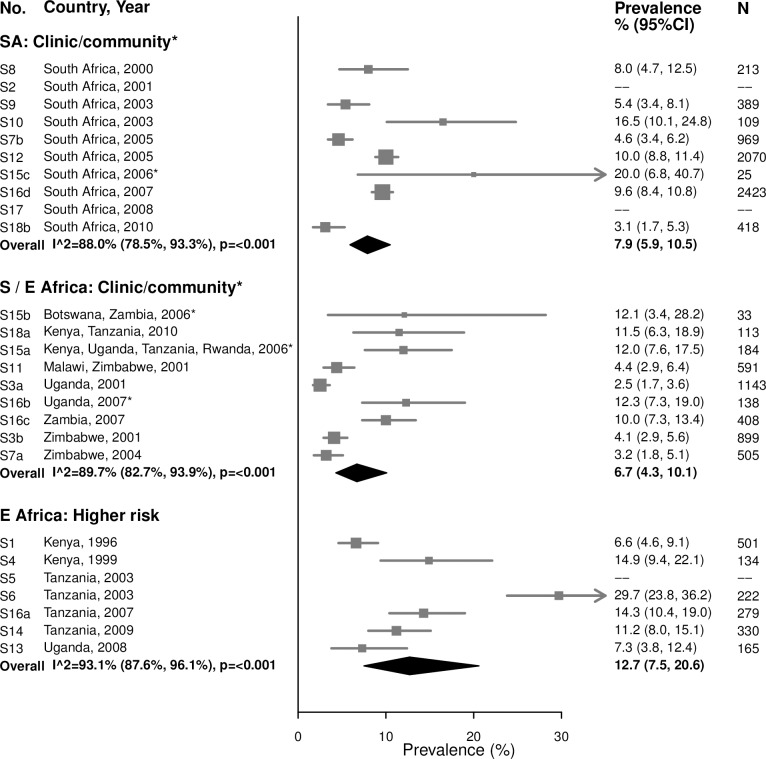
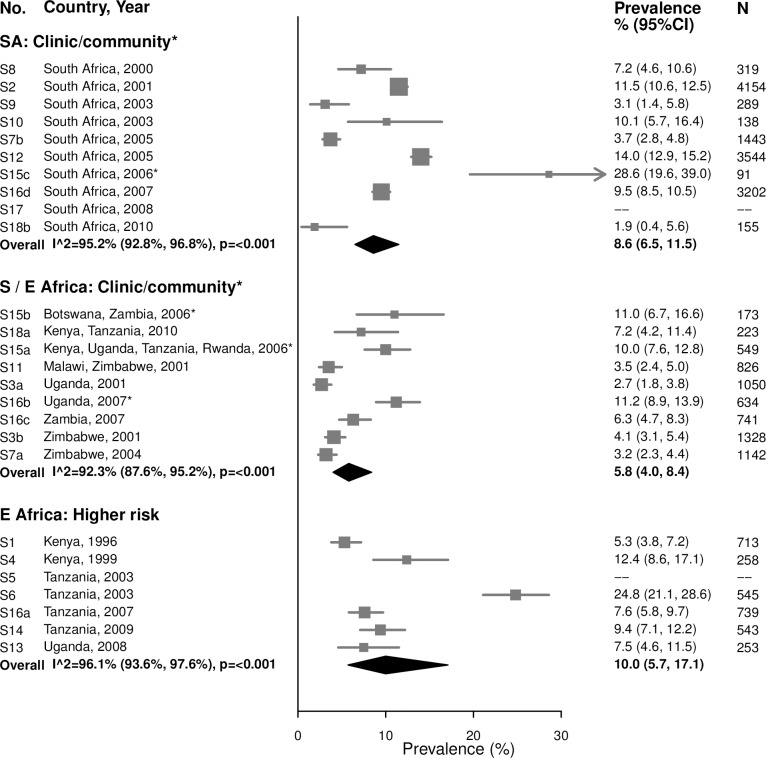
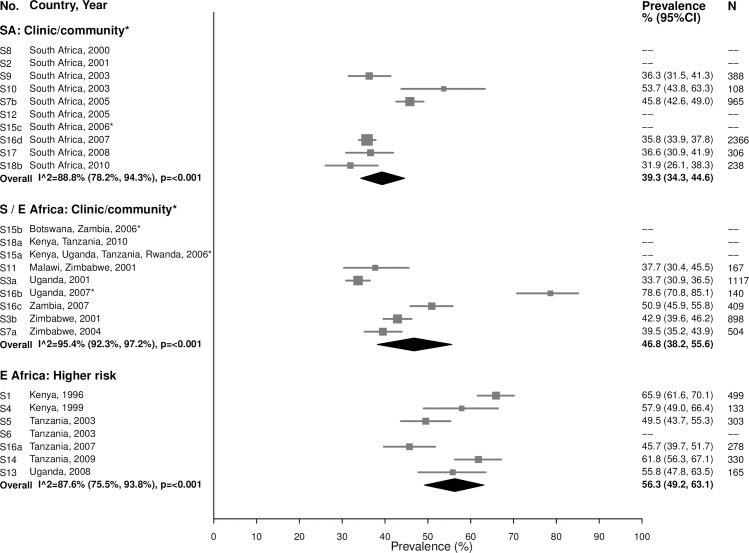
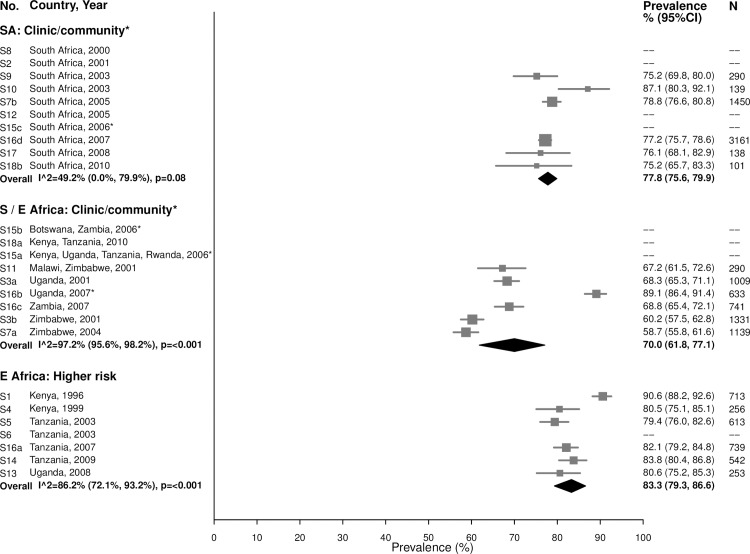
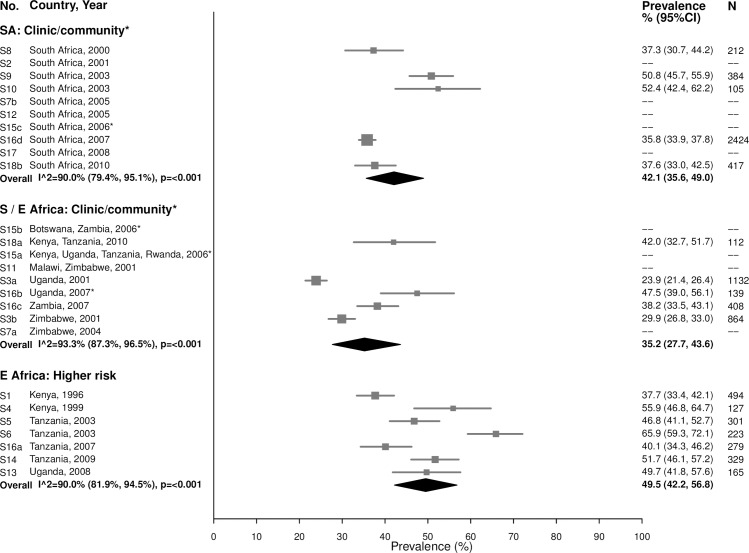
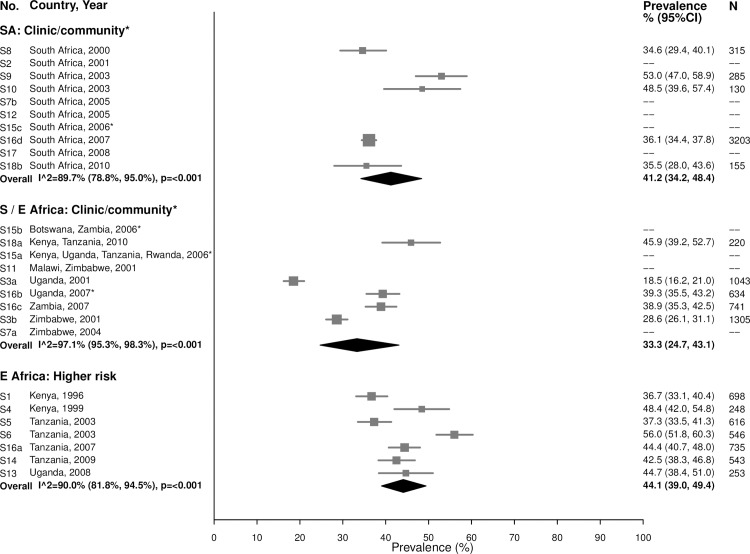
BACKGROUND: Estimates of sexually transmitted infection (STI) prevalence are essential for efforts to prevent and control STIs. Few large STI prevalence studies exist, especially for low- and middle-income countries (LMICs). Our primary objective was to estimate the prevalence of chlamydia, gonorrhea, trichomoniasis, syphilis, herpes simplex virus type 2 (HSV-2), and bacterial vaginosis (BV) among women in sub-Saharan Africa by age, region, and population type. METHODS AND FINDINGS: We analyzed individual-level data from 18 HIV prevention studies (cohort studies and randomized controlled trials; conducted during 1993-2011), representing >37,000 women, that tested participants for ≥1 selected STIs or BV at baseline. We used a 2-stage meta-analysis to combine data. After calculating the proportion of participants with each infection and standard error by study, we used a random-effects model to obtain a summary mean prevalence of each infection and 95% confidence interval (CI) across ages, regions, and population types. Despite substantial study heterogeneity for some STIs/populations, several patterns emerged. Across the three primary region/population groups (South Africa community-based, Southern/Eastern Africa community-based, and Eastern Africa higher-risk), prevalence was higher among 15-24-year-old than 25-49-year-old women for all STIs except HSV-2. In general, higher-risk populations had greater prevalence of gonorrhea and syphilis than clinic/community-based populations. For chlamydia, prevalence among 15-24-year-olds was 10.3% (95% CI: 7.4%, 14.1%; I2 = 75.7%) among women specifically recruited from higher-risk settings for HIV in Eastern Africa and was 15.1% (95% CI: 12.7%, 17.8%; I2 = 82.3%) in South African clinic/community-based populations. Among clinic/community-based populations, prevalence was generally greater in South Africa than in Southern/Eastern Africa for most STIs; for gonorrhea, prevalence among 15-24-year-olds was 4.6% (95% CI: 3.3%, 6.4%; I2 = 82.8%) in South Africa and was 1.7% (95% CI: 1.2%, 2.6%; I2 = 55.2%) in Southern/Eastern Africa. Across the three primary region/population groups, HSV-2 and BV prevalence was high among 25-49-year-olds (ranging from 70% to 83% and 33% to 44%, respectively). The main study limitation is that the data are not from random samples of the target populations. CONCLUSIONS: Combining data from 18 HIV prevention studies, our findings highlight important features of STI/BV epidemiology among sub-Saharan African women. This methodology can be used where routine STI surveillance is limited and offers a new approach to obtaining critical information on STI and BV prevalence in LMICs.
Overview
The claims and statistics of this paper haven’t been checked yet.
Free: it reads the open-access text and checks the first 5 claims that cite a source we can check. Create a free account to check every claim.
Integrity signals
Registry
Cites
Statistics
Figures
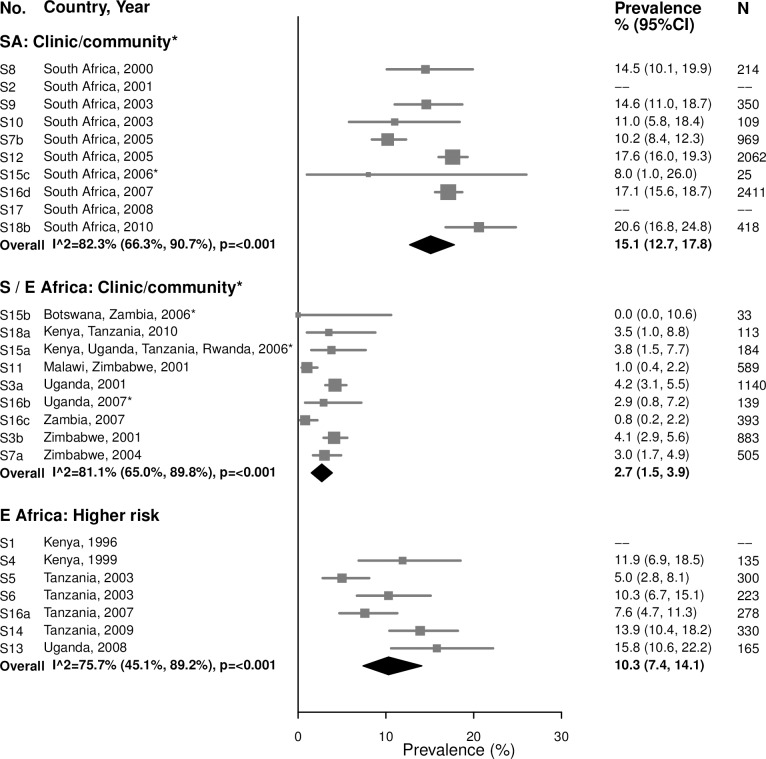
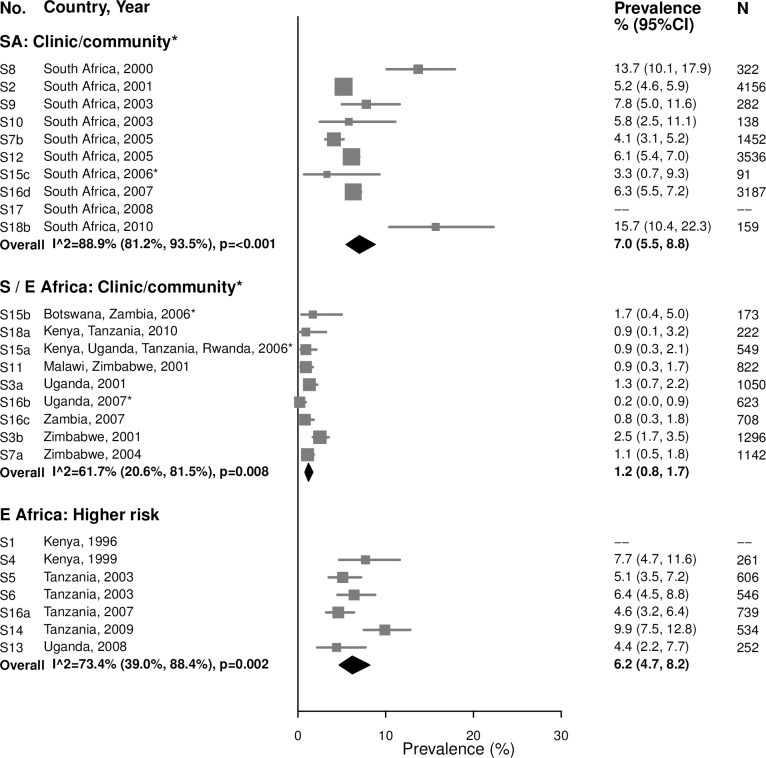
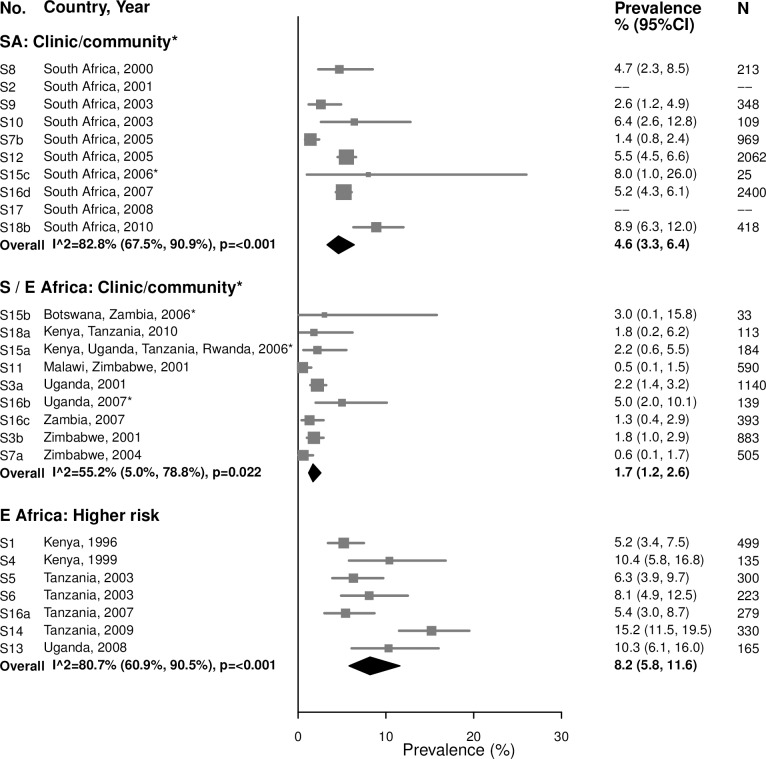
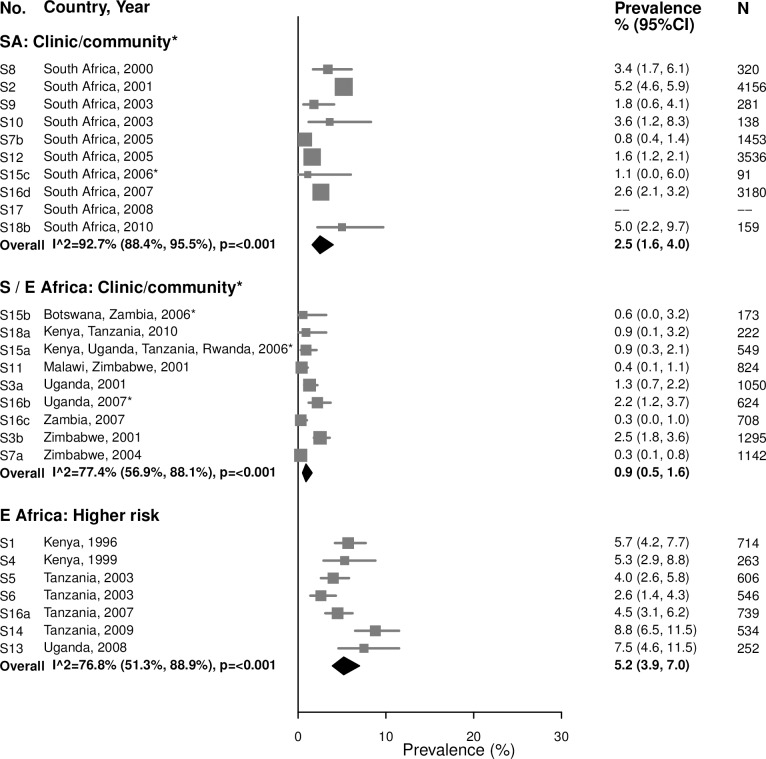
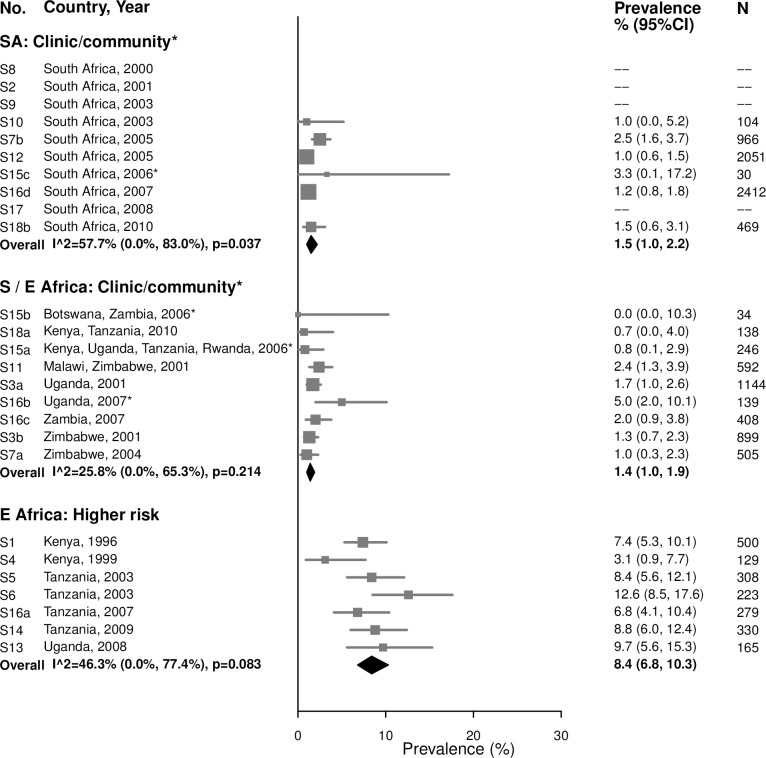
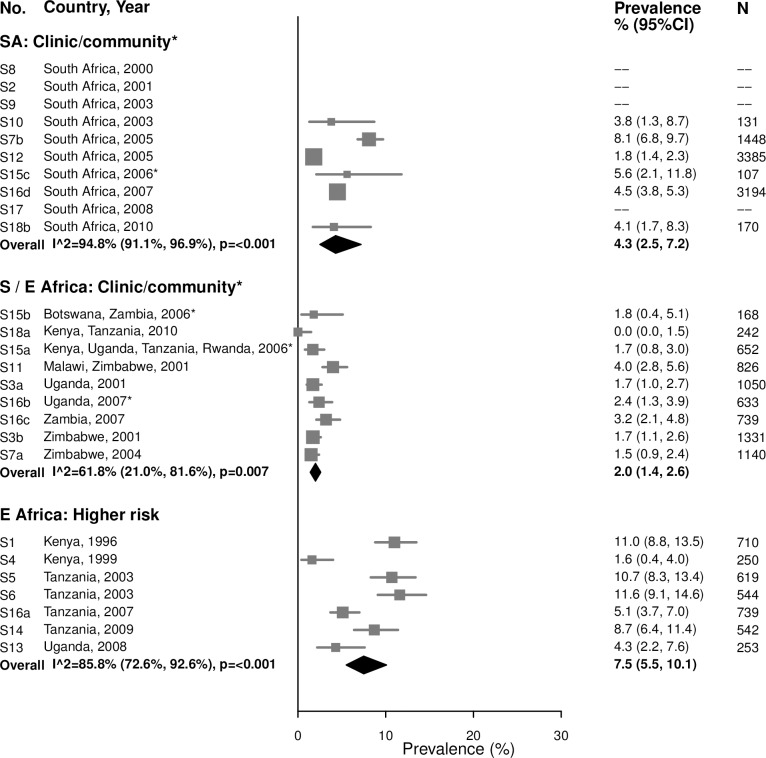
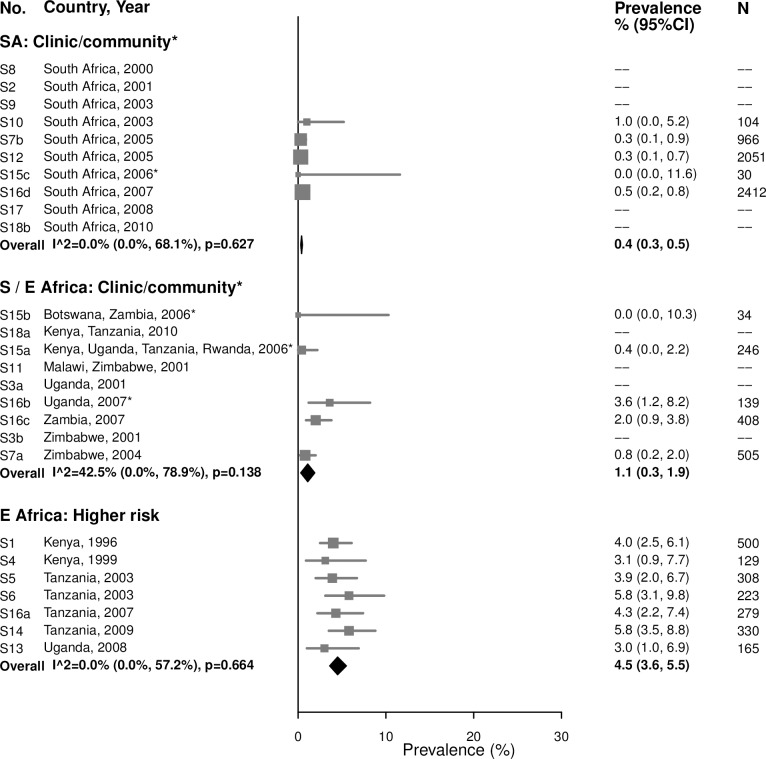
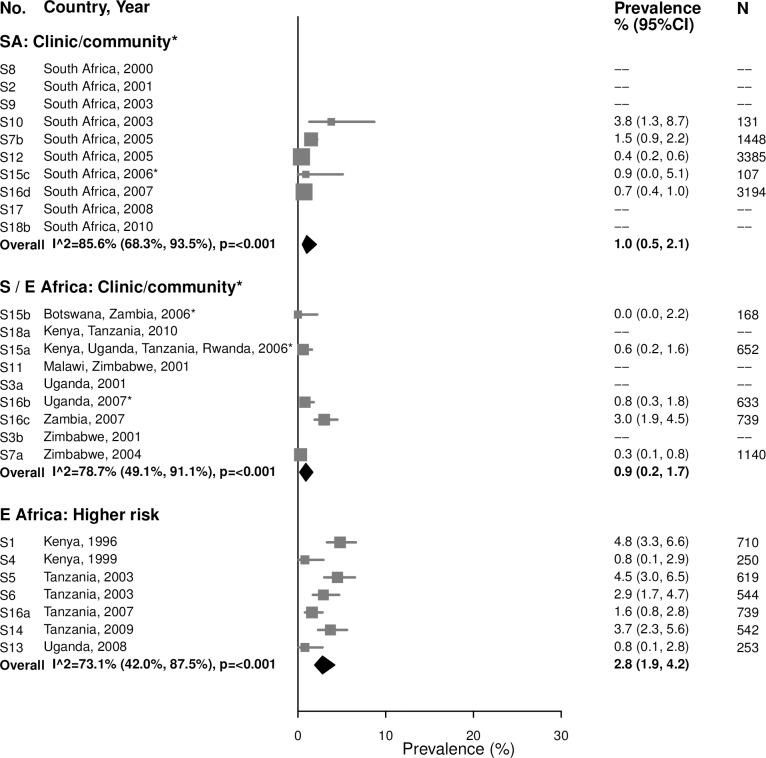
Verification
Claims the paper makes
The claims and statistics of this paper haven’t been checked yet.
Free: it reads the open-access text and checks the first 5 claims that cite a source we can check. Create a free account to check every claim.
Claims other papers make about this one
Each is checked against this paper’s own text: does it say what the citing paper says it does?
The source backs part of the claim, not all of it — or backs it for a different population, condition or comparison.
In the citing paper
“Moreover, the presence of BV, which is more prevalent in women from ACB communities [9–11], has been consistently associated with a 2-5-fold increase in HIV-1 risk [12, 13].”
From Feasibility, safety and tolerability of estrogen and/or probiotics for improving vaginal health in Canadian African, Caribbean, and Black women: A pilot phase 1 clinical trial (2025) · cites this paper as [12]
Experimental — accuracy not yet measured
Self-check
Percentages, sums and reported differences re-computed from the paper’s own numbers.
The self-check needs the paper’s full text.
Citations
Cites
Measuring inconsistency in meta-analyses
Higgins, J. P. T., Thompson, S. G., Deeks, J. J., & Altman, D. G. (2003) · BMJ · doi:10.1136/bmj.327.7414.557 · Cited by 63,139
Abdool Karim, Q., Abdool Karim, S. S., Frohlich, J. A., Grobler, A. C., Baxter, C., Mansoor, L. E., Kharsany, A. B. M., Sibeko, S., Mlisana, K. P., Omar, Z., et al. (2010) · Science · doi:10.1126/science.1193748 · Cited by 2,435
Self-citationPreexposure Prophylaxis for HIV Infection among African Women
Van Damme, L., Corneli, A., Ahmed, K., Agot, K., Lombaard, J., Kapiga, S., Malahleha, M., Owino, F., Manongi, R., Onyango, J., et al. (2012) · New England Journal of Medicine · doi:10.1056/nejmoa1202614 · Cited by 1,603
Newman, L., Rowley, J., Vander Hoorn, S., Wijesooriya, N. S., Unemo, M., Low, N., Stevens, G., Gottlieb, S., Kiarie, J., & Temmerman, M. (2015) · PLOS ONE · doi:10.1371/journal.pone.0143304 · Cited by 1,603 · cited 5×
“Aside from syphilis—for which available rapid diagnostic tests and concerted efforts to screen and treat pregnant women to avert mother-to-child transmission have resulted in likely declines over time [1,38]—the other STIs and BV lack clearly effective population-level interventions in these settings.”
BackgroundMethodResultInfluentialSelf-citationPettifor, A. E., Rees, H. V., Kleinschmidt, I., Steffenson, A. E., MacPhail, C., Hlongwa-Madikizela, L., Vermaak, K., & Padian, N. S. (2005) · AIDS · doi:10.1097/01.aids.0000183129.16830.06 · Cited by 645
Acyclovir and transmission of HIV-1 from persons infected with HIV-1 and HSV-2.
Celum, C., Wald, A., Lingappa, J. R., Magaret, A. S., Wang, R. S., Mugo, N., Mujugira, A., Baeten, J. M., Mullins, J. I., Hughes, J. P., et al. (2010) · New England Journal of Medicine · doi:10.1056/nejmoa0904849 · Cited by 524 · cited 3×
“S15c [28,29] South Africa South Africa Sexually active women whose partners had HIV and HSV-2 HIVdiscordant couples RCT; HSV suppression to reduce HIV transmission 2004– 2009 18–49 32 138”
BackgroundGlobal Estimates of Prevalent and Incident Herpes Simplex Virus Type 2 Infections in 2012
Looker, K. J., Magaret, A. S., Turner, K. M. E., Vickerman, P., Gottlieb, S. L., & Newman, L. M. (2015) · PLoS ONE · doi:10.1371/journal.pone.0114989 · Cited by 519
Self-citationSkoler-Karpoff, S., Ramjee, G., Ahmed, K., Altini, L., Plagianos, M. G., Friedland, B., Govender, S., De Kock, A., Cassim, N., Palanee, T., et al. (2008) · The Lancet · doi:10.1016/s0140-6736(08)61842-5 · Cited by 502 · cited 1×
“S12 [24,25] South Africa South Africa Sexually active women Clinic/ communitybased RCT; microbicide to reduce HIV acquisition 2004– 2006 16–49 28 5,615”
BackgroundThe global epidemiology of bacterial vaginosis: a systematic review
Kenyon, C., Colebunders, R., & Crucitti, T. (2013) · American Journal of Obstetrics and Gynecology · doi:10.1016/j.ajog.2013.05.006 · Cited by 464 · cited 1×
“Global estimates of BV occurrence are limited [3].”
BackgroundPetousis-Harris, H., Paynter, J., Morgan, J., Saxton, P., McArdle, B., Goodyear-Smith, F., & Black, S. (2017) · The Lancet · doi:10.1016/s0140-6736(17)31449-6 · Cited by 457
Research works printed but not linked: 1
- Rabe LK, Kelly CW, Hillier SL. A comparison of the diagnosis of bacterial vaginosis by Amsel’s Clinical Criteria and the Vaginal Gram Staining Nugent score in HPTN 035. Microbicides 2008 Conference; 2008 Feb 24–27; New Delhi, India.
Cited by
Items 101–200 of 256
Wang, M., Tapia, K. A., Oluoch, L. M., Micheni, M., Selke, S., Kiptinness, C., Chohan, B. H., Wald, A., Ngure, K., Mugo, N., et al. (2023) · Journal of Adolescent Health · doi:10.1016/j.jadohealth.2022.10.026 · Cited by 10
Padeniya, T. N., Hui, B. B., Wood, J., Seib, K. L., & Regan, D. G. (2023) · Vaccine · doi:10.1016/j.vaccine.2023.07.048 · Cited by 12
Mullick, S., Cox, L. A., Martin, C. E., Fipaza, Z., & Ncube, S. (2023) · Journal of Adolescent Health · doi:10.1016/j.jadohealth.2023.09.004 · Cited by 12
Kapiga, S., Hansen, C. H., Downs, J. A., Sichalwe, S., Hashim, R., Mngara, J., van Dam, G. J., Corstjens, P. L. A. M., Kingery, J. R., Peck, R. N., et al. (2020) · Tropical Medicine & International Health · doi:10.1111/tmi.13520 · Cited by 12
“Although we did not collect data about the history of treatment, a meta-analysis suggests that a majority of East Africans with syphilis remain untreated thereby remaining with high-titre, ongoing disease [22].”
BackgroundMerzouki, A., Estill, J. A. M., Orel, E., Tal, K., & Keiser, O. (2021) · PeerJ · doi:10.7717/peerj.10660 · Cited by 11
“, 2018; Kenyon, Buyze & Schwartz, 2018), we still had to exclude many factors that can play a critical role in HIV transmission, including the prevalence of excessive alcohol consumption, STIs (Looker et al., 2017; Torrone et al., 2018) (ex.”
BackgroundZulaika, G., Otieno, F., Mason, L., van Eijk, A. M., Bhaumik, R., Green, S. J., Phillips‐Howard, P. A., & Mehta, S. D. (2024) · BMC Public Health · doi:10.1186/s12889-024-20491-z · Cited by 14
“Bacterial vaginosis (BV) affects 20–50% of women in sub-Saharan Africa [7], and doubles the risk of HIV acquisition and transmission [8–10], increases risk of adverse pregnancy outcomes [11–15], and increases risk of Trichomonas vaginalis (TV) [16, 17], herpes simplex virus-2 (HSV-2) [18],…”
Sexual violence and self-reported sexually transmitted infections among women in sub-Saharan Africa
Aboagye, R. G., Seidu, A., Ahinkorah, B. O., Frimpong, J. B., & Yaya, S. (2022) · Journal of Biosocial Science · doi:10.1017/s0021932022000062 · Cited by 11
Bogale, E. K., Anagaw, T. F., Tiruneh, M. G., Fenta, E. T., Endeshaw, D., Delie, A. M., Adal, O. T., & Tareke, A. A. (2024) · BMC Public Health · doi:10.1186/s12889-024-19548-w · Cited by 12
“This was higher than studies in South African which were 1.5% [36], east Africa, which were 8.4 [36], south east Africa, which was 1.4 [36] and among high school students in Northern Nigeria which was 9.0% [37].”
ResultInfluentialMacLean, F., Tsegaye, A. T., Graham, J. B., Swarts, J. L., Vick, S. C., Potchen, N. B., Talavera, I. C., Warrier, L., Dubrulle, J., Schroeder, L. K., et al. (2025) · Journal of Clinical Investigation · doi:10.1172/jci184609 · Cited by 18
“The issue of HIV acquisition risk is of particular concern in parts of the world where both BV and HIV are prevalent, such as in sub-Saharan Africa (15).”
Zavala, E., Rhodes, M., & Christian, P. S. (2022) · International Journal of Public Health · doi:10.3389/ijph.2022.1604620 · Cited by 15
Yakobi, S. H., & Pooe, O. J. (2023) · Medical Sciences · doi:10.3390/medsci11020028 · Cited by 10
“In South Africa, syndromic treatment for STIs has enabled these drugs to be used for longer periods of time [13,22].”
BackgroundOware, K., Adiema, L., Rono, B., Violette, L. R., McClelland, R. S., Donnell, D. J., Scoville, C. W., Odoyo, J. B., Baeten, J. M., Bukusi, E. A., et al. (2023) · BMC Women s Health · doi:10.1186/s12905-023-02413-0 · Cited by 13
Connolly, S., Wall, K. M., Parker, R., Kilembe, W., Inambao, M., Visoiu, A.-M., Sharkey, T., Hunter, E., & Allen, S. A. (2020) · International Journal of STD & AIDS · doi:10.1177/0956462419894453 · Cited by 14
“Our observations are consistent with CT/NG co-infection rates in comparable populations.(22) In particular, within a similar cohort of HIVuninfected high-risk South African women, 100% (n1⁄4 43) of the women infected with NG were also coinfected with another STI, whereas only 84% (n1⁄4 130) of those infected with CT h…”
ResultPolymicrobial Interactions Operative during Pathogen Transmission
Rowe, H. M., & Rosch, J. W. (2021) · mBio · doi:10.1128/mbio.01027-21 · Cited by 10
Low prevalence of bacterial vaginosis in Kenyan adolescent girls and rapid incidence after first sex
Roxby, A. C., Mugo, N., Oluoch, L. M., Tapia, K. A., Wang, M., Selke, S., Chohan, B. H., Micheni, M., Sycuro, L. K., Yuh, T., et al. (2023) · American Journal of Obstetrics and Gynecology · doi:10.1016/j.ajog.2023.06.044 · Cited by 11
Analysis and prediction of the incidence and prevalence trends of gonorrhea in China
Chen, X., Chen, S.-C., Li, C., Shi, L., Zhu, Y., & Yao, Y. (2023) · Human Vaccines & Immunotherapeutics · doi:10.1080/21645515.2023.2256907 · Cited by 9
“4%).(22) Young adults are susceptible to gonorrhea, which may be because they are sexually active while undergoing physical and mental development, with open sexual attitudes coupled with weaker awareness of sexual safety.”
BackgroundNthulane, N. P., Mosebi, S., Tshikalange, T. E., Nyila, M. A., & Mankga, L. T. (2020) · Journal of Herbmed Pharmacology · doi:10.34172/jhp.2020.17 · Cited by 9
“Introduction Sexually transmitted infections (STIs) among young adults in many rural communities have a profound impact on sexual and reproductive health and remain a major public health concern with more than one million STIs acquired daily, worldwide (1-3).”
BackgroundAsare, K., Ngcapu, S., Osman, F., Vandormael, A. M., Mindel, A., Naicker, N., Khanyile, M., Karim, S. S. A., Tomita, A. M., & Garrett, N. (2023) · Annals of Epidemiology · doi:10.1016/j.annepidem.2023.04.004 · Cited by 10
Manjate, A. A., Sergon, G., Kenga, D., Golparian, D., Tyulenev, Y. A., Loquilha, O., Maússe, F. E., Guschin, A. E., Langa, J. C., Passanduca, A., et al. (2024) · Frontiers in Reproductive Health · doi:10.3389/frph.2024.1323926 · Cited by 12
Mkhize, P. P., Mehou‐Loko, C., Maphumulo, N., Radzey, N., Abrahams, A. G., Sibeko, S., Harryparsad, R., Manhanzva, M. T., Meyer, B., Radebe, P., et al. (2024) · Sexually Transmitted Infections · doi:10.1136/sextrans-2024-056260 · Cited by 12
Smith, E., Masson, L., Passmore, J.-A. S., & Sinanovic, E. (2023) · Frontiers in Public Health · doi:10.3389/fpubh.2023.1048091 · Cited by 8
Kim, H., Rohr, J. K., Leyna, G. H., Killewo, J., Tomita, A. M., Tanser, F. C., & Bärnighausen, T. (2023) · Annals of Epidemiology · doi:10.1016/j.annepidem.2023.05.001 · Cited by 11
Oladele, D. A., Iwelunmor, J., Gbajabiamila, T., Obiezu-Umeh, C., Okwuzu, J. O., Nwaozuru, U., Musa, A. Z., Tahlil, K., Idigbe, I., Ong, J., et al. (2023) · JMIR Formative Research · doi:10.2196/44402 · Cited by 6
“…medium for addressing the SRH challenge among AYAs, some of which include the high pre valence of sexually transmitted infections (STIs) and HIV [ 8-11]. mHealth intervention has become common in Nigeria because the high H I V bu r d e n a m o n g AYA s r e q u i r e s innovative youth-centered…”
BackgroundSelf-Collection of Vaginal Swabs Among Adolescent Girls in a School-Setting in East Africa
Francis, S. C., Miiro, G., Nakuya, K., Rutakumwa, R., Nakiyingi‐Miiro, J., Nabaggala, G. S., Musoke, S. N., Namakula, J., Tanton, C., Torondel, B., et al. (2019) · Sexually Transmitted Diseases · doi:10.1097/olq.0000000000000990 · Cited by 9
Self-citationWhitworth, H. S., Changalucha, J. M., Baisley, K. J., & Watson‐Jones, D. (2021) · Tropical Medicine & International Health · doi:10.1111/tmi.13660 · Cited by 10
“3% for HSV2, depending on whether participants were from a low or high HIV risk setting [32].”
BackgroundSelf-citationMasa, R., Chowa, G. A. N., & Sherraden, M. W. (2019) · Youth & Society · doi:10.1177/0044118x18824730 · Cited by 8
“In sub-Saharan Africa (SSA), including Ghana, prevalence of all STIs (except herpes simplex virus type 2) is higher among young women aged 15 to 24 years than women aged 25 to 49 years (Torrone et al., 2018).”
BackgroundOdogwu, N. M., Olayemi, O. O., & Omigbodun, A. O. (2020) · PeerJ · doi:10.7717/peerj.9684 · Cited by 10
“Interestingly, others have also reported a high prevalence of BV in sub-Saharan African women (Gautam et al., 2015; Torrone et al., 2018).”
BackgroundBalle, C., Gill, K., Konstantinus, I. N., Jaumdally, S. Z., Lennard, K. S., Esra, R. T., Happel, A., Barnabas, S. L., Gamieldien, H., Pidwell, T., et al. (2020) · Sexually Transmitted Infections · doi:10.1136/sextrans-2020-054483 · Cited by 11
Hu, J., Lan, Y., Zhang, D., Lan, G., & Wei, J. (2025) · Frontiers in Public Health · doi:10.3389/fpubh.2025.1674277 · Cited by 11
Reddy, K., Palanee‐Phillips, T., & Heffron, R. A. (2023) · Current HIV/AIDS Reports · doi:10.1007/s11904-023-00680-y · Cited by 7
“%) among women aged 15–24 years regardless of region [58].”
BackgroundPrice, M. A., Kuteesa, M. O., Oladimeji, M., Brumskine, W., Edward, V., Makkan, H., Mthembu, F., Muturi‐Kioi, V., Chetty-Makkan, C. M., & Maenetje, P. W. (2024) · PLoS ONE · doi:10.1371/journal.pone.0306771 · Cited by 7
Makuza, J. D., Soe, P., Jeong, D., Nisingizwe, M. P., Dushimiyimana, D., Umutesi, J., Nshimiyimana, L., Maliza, C., Serumondo, J., Remera, E., et al. (2022) · BMC Infectious Diseases · doi:10.1186/s12879-022-07685-9 · Cited by 9
“A meta-analysis published in 2018, has shown that in Southern/East African regions, among women, higher-risk populations such as sex workers had a higher prevalence of gonorrhea and syphilis than clinic/community-based populations [6].”
MethodMurphy, D. J., Lim, D., Armstrong, R., McCoy, C. F., Bashi, Y. H. D., Boyd, P., Derrick, T., Spence, P. L., Devlin, B., & Malcolm, K. R. (2021) · Drug Delivery and Translational Research · doi:10.1007/s13346-021-01081-7 · Cited by 10
Kawuki, J., Savi, V., Betunga, B., Gopang, M., Isangula, K. G., & Nuwabaine, L. (2025) · Social Science & Medicine · doi:10.1016/j.socscimed.2025.117722 · Cited by 6
Negussie, Y. M., Fente, B. M., Asmare, Z. A., Asnake, A. A., Bezie, M. M., Asebe, H. A., & Seifu, B. L. (2025) · BMJ Open · doi:10.1136/bmjopen-2024-085628 · Cited by 8
Understanding the Associations of Urogenital Microbiomes With Fertility and In Vitro Fertilization
Berard, A. R., Brubaker, D. K., Nemecio, D., & Zuend, C. F. (2025) · American Journal of Reproductive Immunology · doi:10.1111/aji.70035 · Cited by 8
Bernstein, D. I., Morello, C. S., Cardin, R. D., Bravo, F., Kraynyak, K. A., & Spector, D. H. (2019) · Vaccine · doi:10.1016/j.vaccine.2019.09.090 · Cited by 6
Zango, A., Stutterheim, S. E., de Vries, N. K., & Crutzen, R. (2024) · Reproductive Health · doi:10.1186/s12978-023-01733-6 · Cited by 6
“For instance, among youths aged 15–24 across countries in the Sub-Saharan region, the estimated prevalence ranges were 6.4–11.6% for gonorrhoea, 9–17.8% for chlamydia, 10.5–20.6% for trichomoniasis, and 2.2–10.3% for syphilis (4).”
BackgroundInfluentialGill, B., Wessels, J. M., Hayes, C. L., Ratcliffe, J., Wokuri, J., Ball, E., Reid, G., Kaul, R., Rana, J., Alkhaifi, M., et al. (2025) · PLoS ONE · doi:10.1371/journal.pone.0315576 · Cited by 5
Czapar, A. E., Paul, S., Zulaika, G., Otieno, F., Agingu, W., Chaudhary, A., Bhaumik, R., van Eijk, A. M., Green, S. J., Nyothach, E., et al. (2024) · BMC Infectious Diseases · doi:10.1186/s12879-024-10313-3 · Cited by 6
Laboratory investigations of herpes simplex virus-1 and -2 clinical samples in Korea
Oh, E. J., Yuk, Y. S., & Kim, J. K. (2021) · Osong Public Health and Research Perspectives · doi:10.24171/j.phrp.2021.0146 · Cited by 5
Bitty-Anderson, A. M., Gbeasor‐Komlanvi, F. A., Bakoubayi, A. W., Tchankoni, M. K., Sadio, A. J., Salou, M., Dagnra, C. A., Ekouévi, D. K., & Coffie, P. A. (2022) · Frontiers in Public Health · doi:10.3389/fpubh.2022.915029 · Cited by 8
Zhu, B., Diachok, C. R., Edupuganti, L., Edwards, D., Donowitz, J. R., Tossas, K. Y., Matveyev, A. V., Spaine, K. M., Lee, V., Serrano, M. G., et al. (2022) · Infectious Microbes & Diseases · doi:10.1097/im9.0000000000000103 · Cited by 5
“Lactobacillus species also seem to attenuate the risk of sexually transmitted infections (STIs) by reducing inflammation and protecting the integrity of epithelial and mucosal barriers.(4,5) Recent studies have identified a correlation between the composition of the vaginal microbiome during pregnancy and preterm birt…”
BackgroundHuyveneers, L. E. P., Maphanga, M., Umunnakwe, C. N., Boer, L. B., Moraba, R., Tempelman, H. A., Wensing, A. M. J., & Hermans, L. E. (2023) · Tropical Medicine & International Health · doi:10.1111/tmi.13864 · Cited by 5
Butcher, R., Jarju, S., Obayemi, D., Bashorun, A. O., Vasileva, H., Bransbury-Hare, H., Agboghoroma, O., Drammeh, L., Holland, M. J., Harding-Esch, E. M., et al. (2023) · BMC Infectious Diseases · doi:10.1186/s12879-023-08399-2 · Cited by 6
“However, available data come from a limited number of high-income countries, with data from low- and middleincome countries either lacking or coming from targeted or high-risk subgroups [1, 5].”
BackgroundMehta, S. D., Agingu, W., Zulaika, G., Nyothach, E., Bhaumik, R., Green, S. J., van Eijk, A. M., Otieno, F., Phillips‐Howard, P. A., & Schneider, J. A. (2023) · Microorganisms · doi:10.3390/microorganisms11082035 · Cited by 7
Michalow, J., Jahn, A., Cori, A., Boily, M., Chimpandule, T., Mbiriyawanda, S., Ozituosauka, W., Nyirenda, R. K., & Eaton, J. W. (2024) · Sexually Transmitted Diseases · doi:10.1097/olq.0000000000001919 · Cited by 5
Kusemererwa, S., Ruzagira, E., Onyango, M., Kabarambi, A., & Abaasa, A. M. (2024) · BMJ Open · doi:10.1136/bmjopen-2023-079497 · Cited by 8
Vaginal practices among women at risk for HIV acquisition in Soweto, South Africa
Lazarus, E. M., Otwombe, K. N., Dietrich, J. J., Andrasik, M. P., Morgan, C. A., Kublin, J. G., Gray, G. E., Isaacs, A. J., & Laher, F. (2019) · Southern African Journal of HIV Medicine · doi:10.4102/sajhivmed.v20i1.866 · Cited by 9
Mitchev, N., Singh, R., Ramsuran, V., Ismail, A., Allam, M., Kwenda, S., Mnyameni, F., Garrett, N., Swe-Han, K. S., Niehaus, A. J., et al. (2022) · International Journal of Microbiology · doi:10.1155/2022/7318325 · Cited by 6
“South Africa has an estimated prevalence of ∼5% [9, 10].”
BackgroundMabugana, M. C., Dias, B. D. C., Müller, E. E., Kufa, T., Gumede, L., Mahlangu, M. P., Maseko, D. V., & Kularatne, R. S. (2022) · Diagnostic Microbiology and Infectious Disease · doi:10.1016/j.diagmicrobio.2023.115924 · Cited by 6
Martin, K., Dauya, E., Simms, V. M., Bandason, T., Azizi, S. C., Machiha, A., Shamu, T., Musiyandaka, P., Mwaturura, T., Francis, S. C., et al. (2024) · Sexually Transmitted Infections · doi:10.1136/sextrans-2024-056146 · Cited by 5
Self-citationVerwijs, M. C., Agaba, S. K., Umulisa, M. M., Uwineza, M., Nivoliez, A., Lievens, E., & van de Wijgert, J. H. H. M. (2020) · BMJ Open · doi:10.1136/bmjopen-2019-031819 · Cited by 7
Zango, A., Crutzen, R., & de Vries, N. K. (2021) · Frontiers in Reproductive Health · doi:10.3389/frph.2021.745309 · Cited by 4
Mataboge, P., Mthimkhulu, N., Kutywayo, A., Martin, C. E., Mazibuko, M., Kwatsha, K., Makalela, N., Briedenhann, E., Butler, V., Bothma, R., et al. (2023) · BMC Public Health · doi:10.1186/s12889-023-16904-0 · Cited by 5
“The estimated prevalence of STIs among clinic-going AGYW in South Africa ranged from 8.0-20.6% for chlamydia, and 1.4–8.9% for gonorrhoea [18].”
BackgroundInfluentialTetteh, J. K., Aboagye, R. G., Adu‐Gyamfi, A. B., Appiah, S. C. Y., Seidu, A., Attila, F. L., & Ahinkorah, B. O. (2024) · Health Science Reports · doi:10.1002/hsr2.1970 · Cited by 5
“…and inadequate health infrastructure especially in the highlands region as barriers to healthcare including STI treatment services in PNG. 26,27 – 32 It has been reported that individuals who have sex at an early age are often at a greater risk of exposure to risky sexual behaviours, such as non…”
BackgroundFortas, C., Harimanana, A. N., Solange, R. B., Rasoanaivo, T. F., Razanadranaivo, H. L., Mangahasimbola, R. T., RASOLOSON, D. T., Rafetrarivony, L. F., Rasolofomanana, T. T., Rabarisoa, L., et al. (2025) · BMC Infectious Diseases · doi:10.1186/s12879-025-10578-2 · Cited by 6
“In a meta-analysis that estimated STI prevalence among women in different African regions, our figures were closer to the estimates found among young women in East Africa and at high risk, i.e., recruited from recreational facilities or engaged in transactional sex [24].”
InfluentialBintabara, D., Lilungulu, A., Jumanne, S., Nassoro, M. M., & Mpondo, B. C. T. (2021) · AIDS Research and Therapy · doi:10.1186/s12981-021-00362-y · Cited by 6
“Besides, as the pregnancy status increases the risk of acquiring HIV infection [5], thisplacewomen in SSA which is the area with high fertility rate and burden of sexually transmitted diseases to be at most vulnerable for HIV infection [6].”
BackgroundSiziba, A., Nunu, W. N., Mudonhi, N., Ndlovu, V., Munyai, O., Ndlovu, B., & Sanganyado, E. (2022) · Curationis · doi:10.4102/curationis.v45i1.2191 · Cited by 8
“In 2012, Beitbridge had a population of more than 42 000 and an estimated 17 000 people are in transit between Zimbabwe and South Africa daily.”
BackgroundInfluentialSouza, S. O., de Paula, A. C., Silva, C. D. A., Carvalho, P. M. R. D. S., de Souza, M. M., & de Matos, M. A. (2020) · Ciencia y enfermería/Ciencia y enfermería · doi:10.29393/ce26-5igso60005 · Cited by 4
Mwenda, N., Nduati, R. W., Kosgei, M., & Kerich, G. K. (2021) · Frontiers in Pediatrics · doi:10.3389/fped.2021.544192 · Cited by 5
“A meta-analysis of 37,000 HIV-negative women from sub-Saharan Africa found that >50% of women with different STDs had co-existing BV and there was a significant correlation between BV and herpes simplex type 2 (HSV-2) and Trichomonas (15).”
BackgroundNeglect of STIs and infertility undermines family planning programmes
Marston, C., & Francis, S. C. (2019) · BMJ Sexual & Reproductive Health · doi:10.1136/bmjsrh-2018-200270 · Cited by 4
Self-citationMackworth-Young, C. R. S., Busza, J. R., Karumazondo, J. J., Bernays, S., Tshuma, M., Nyamyanza, R., Nzombe, P., Mavodza, C., Ferrand, R. A., & Chikwari, C. D. (2025) · Global Public Health · doi:10.1080/17441692.2025.2557312 · Cited by 4
“Young people experience a high burden of sexually transmitted infections (STIs) (Torrone et al., 2018).”
Milford, C., Dlamini, B. L., Mafunda, N. A., Hardwick, T., Lewis, L., Khan, A. A., Mdladla, M. N., Mitchell, C. M., & Potloane, D. (2025) · BMC Women s Health · doi:10.1186/s12905-025-04210-3 · Cited by 3
“In young South African women aged 15–24, a separate estimate for BV prevalence was 42.1% [7].”
InfluentialStuart, R. M., Newman, L. M., Manguro, G., Chikwari, C. D., Marks, M., Peters, R. P. H., Klein, D. J., Snyder, L., Kerr, C. C., & Rao, D. W. (2026) · Sexually Transmitted Infections · doi:10.1136/sextrans-2025-056646 · Cited by 3
Investigating causes of the high prevalence of sexually transmitted infections in Du Noon
Dookhith, A. B. F., Razak, A., & Isaacs, A. A. (2024) · South African Family Practice · doi:10.4102/safp.v66i1.5794 · Cited by 3
Seifu, B. L., Fente, B. M., Melkam, M., Asmare, Z. A., Asnake, A. A., Bezie, M. M., Asebe, H. A., & Negussie, Y. M. (2024) · PLoS ONE · doi:10.1371/journal.pone.0307755 · Cited by 5
Mitchev, N., Singh, R., Garrett, N., Ramsuran, V., Niehaus, A. J., & Mlisana, K. P. (2021) · African Journal of Laboratory Medicine · doi:10.4102/ajlm.v10i1.1124 · Cited by 3
Govender, Y., MORRISON, C. S., Chen, P., Gao, X., Yamamoto, H. S., Chipato, T., Anderson, S. M., Barbieri, R. L., Salata, R. A., Doncel, G. F., et al. (2022) · Sexually Transmitted Infections · doi:10.1136/sextrans-2022-055458 · Cited by 5
Self-citationEkholuenetale, M., Nzoputam, C. I., & Okonji, O. C. (2022) · Venereology · doi:10.3390/venereology1030018 · Cited by 3
Iwuji, C. C., Martin, C. E., Pillay, D., Shamu, P., Nzenze, S. A., Murire, M., Cox, L. A., Miners, A. H., Llewellyn, C. D., & Mullick, S. (2023) · Sexually Transmitted Infections · doi:10.1136/sextrans-2023-055816 · Cited by 4
Mapiye, M., Ravhuhali, K. G., de Voux, A., & Kufa, T. (2024) · BMC Infectious Diseases · doi:10.1186/s12879-023-08756-1 · Cited by 3
Kutywayo, A., Mataboge, P., Mthimkhulu, N., Martin, C. E., Muhwava, L. S., Mazibuko, M., Makalela, N., Kwatsha, K., Butler, V., & Mullick, S. (2024) · Frontiers in Reproductive Health · doi:10.3389/frph.2024.1249750 · Cited by 3
Schwebs, T., Kieninger, A.-K., Tisakova, L. P., Oberbauer, V., Berdaguer, R., Mtshali, A., Mzobe, G. F., Rompalo, A. M., Mindel, A., Letsoalo, M. P., et al. (2024) · Antibiotics · doi:10.3390/antibiotics13121217 · Cited by 7
“BV is particularly prevalent among women of childbearing age in sub-Saharan Africa, with rates of 42.1% in those aged 15–24 and 41.2% in those aged 25–49 [3].”
InfluentialTesting for sexually transmitted infections among youth in Zimbabwe
Ndowa, F. J., & Mullick, S. (2021) · The Lancet Child & Adolescent Health · doi:10.1016/s2352-4642(20)30394-1 · Cited by 3
MacLean, F., Tsegaye, A. T., Graham, J. B., Swarts, J. L., Vick, S. C., Potchen, N. B., Talavera, I. C., Warrier, L., Dubrulle, J., Schroeder, L. K., et al. (2024) · bioRxiv (Cold Spring Harbor Laboratory) · doi:10.1101/2024.07.03.601916 · Cited by 3
Kasprowicz, D., Wilczyńska, W., & Korzeniewski, K. (2025) · Journal of Clinical Medicine · doi:10.3390/jcm14103479 · Cited by 2
“STIs mostly affect young adults [19–21] and are especially dangerous to pregnant women due to the risk of perinatal transmission of pathogens from a mother to a child, as well as an STI’s potential to cause pregnancy complications [20].”
Mbulawa, Z. Z. A., & Mabunda, S. A. (2025) · Infection · doi:10.1007/s15010-025-02649-y · Cited by 2
“[7 ] and South African AGYW (42–47.0”
InfluentialGizat, A., Awoke, T., Getie, M., Gebreyesus, T., Tsega, A., Tafere, W., Ali, S., Mesele, A., Getachew, K., Nibret, D., et al. (2026) · BMC Women s Health · doi:10.1186/s12905-026-04301-9 · Cited by 2
“[32], as well as South Africa, Zimbabwe, Bangladesh, and Chile (58.3%, 30.3%, 23.2% and 32%, respectively) [33], also show substantially higher prevalence compared with our study population.”
InfluentialDiagnostic value of dual-fluorescence staining in bacterial vaginosis
Li, C., Duan, Z., Zhang, J., Gao, J., & Ying, C. (2023) · Laboratory Medicine · doi:10.1093/labmed/lmad034 · Cited by 2
Stewart, L. L., Vodstrcil, L. A., Coombe, J., Bradshaw, C. S., & Hocking, J. S. (2024) · Sexual Health · doi:10.1071/sh23094 · Cited by 4
Soehnchen, C., Burmann, A., Henningsen, M., & Meister, S. (2024) · JMIR Formative Research · doi:10.2196/58549 · Cited by 5
Hemmerling, A., Govender, V., Dong, K. L., Dong, M., Pillay, S., Ndung’u, T., Bhoola, A., Moodley, J., Casillas, G., Lagenaur, L. A., et al. (2025) · Frontiers in Reproductive Health · doi:10.3389/frph.2025.1544458 · Cited by 4
Jiang, T., Zhang, C., Wang, D., Guo, Z., Guo, Y., Liu, H., & Wang, Z. (2025) · Clinica Chimica Acta · doi:10.1016/j.cca.2025.120625 · Cited by 3
Langwenya, N., Todd, C. S., Jones, H. E., Hoover, D. R., Hu, N.-C., Ronan, A., & Myer, L. (2020) · BMJ Sexual & Reproductive Health · doi:10.1136/bmjsrh-2019-200494 · Cited by 2
Mekie, M., Taklual, W., & Tesfaw, A. (2020) · The Open Public Health Journal · doi:10.2174/1874944502013010643 · Cited by 2
Prevalence and associated predictors of HIV and syphilis among women, south of Brazil
Santana, N. D. C. S., Galinari, C. B., Demarchi, I. G., Consolaro, M. E. L., & Teixeira, J. J. V. (2021) · Research Society and Development · doi:10.33448/rsd-v10i13.20989 · Cited by 2
Prevalence and risk factors for gonococcal infection in Reunion Island
Saïb, A., Bouscaren, N., Berçot, B., Duchateau, A., Miltgen, G., Rodet, R., Wartel, G., Andry, F., Iacobelli, S., & Bertolotti, A. (2021) · Infectious Diseases Now · doi:10.1016/j.idnow.2021.12.003 · Cited by 2
Dassaye, R., Wand, H. C., Reddy, T., Tanser, F. C., Sartorius, B. K. D., Morris, N., & Ramjee, G. (2023) · SAHARA-J Journal of Social Aspects of HIV/AIDS · doi:10.1080/17290376.2023.2193238 · Cited by 2
“Similarly, a individual participant data (IPD) meta-analysis based on 18 prospective HIV prevention studies ident-i fi ed a higher STI prevalence in clinic/community-based populations in South Africa relative to homogenous populations elsewhere in Southern/ Eastern Africa (Torrone et al., 2018).”
BackgroundDeese, J., Heffron, R. A., Jaspan, H. B., Masson, L., Smit, J. A., & Sibeko, S. (2021) · Clinical Obstetrics & Gynecology · doi:10.1097/grf.0000000000000627 · Cited by 2
Merzouki, A., Estill, J. A. M., Orel, E., Tal, K., & Keiser, O. (2019) · bioRxiv (Cold Spring Harbor Laboratory) · doi:10.1101/620450 · Cited by 2
Global Burden of Sexually Transmitted Infections: 1990 - 2019Preprint
Huang, J., Lin, S., Pan, J., Lu, L., Liu, B., Zheng, J., Wu, H., Zeng, Z., & Li, D. (2021) · SSRN Electronic Journal · doi:10.2139/ssrn.3910359 · Cited by 3
Prakhova, S. (2024) · Preprints.org · doi:10.20944/preprints202310.0814.v2 · Cited by 2
Papageorgiou, V., Crittendon, E., Coukan, F., Davies, B., & Ward, H. (2022) · Wellcome Open Research · doi:10.12688/wellcomeopenres.17457.2 · Cited by 1
Beesham, I., Isehunwa, O. O., Kriel, Y., Jaggernath, M., Bennett, K. K., Hurwitz, K. E., Smith, P. M., Chitneni, P. R., Bosman, S., Bangsberg, D. R., et al. (2024) · Sexually Transmitted Diseases · doi:10.1097/olq.0000000000001951 · Cited by 1
“25 The prevalence of CT and NG among South African women aged 15 to 24 years was 15% and 5%, respectively.”
BackgroundResultJuru, T. (2024) · Journal of Interventional Epidemiology and Public Health · doi:10.37432/jieph.2024.7.1.92 · Cited by 1
Ala, O. O., Shuaib, B. I., Momodu, A., & Muhibi, M. A. (2025) · BMC Women s Health · doi:10.1186/s12905-025-03875-0 · Cited by 2
Onofrio, I., Pagliari, S., Francis, A., Quinn, M. E., Belcher, T., Dissanayake, S. N., Twumasi, C., Vichos, I., Grudzein, L. A., Rollier, C. S., et al. (2026) · mSphere · doi:10.1128/msphere.00174-26 · Cited by 1
“Prevalence rates are notably higher among sexually active young adults in LMICs, particularly in sub-Saharan Africa, Southeast Asia, and parts of Latin America (2–4).”
Onzia, A., Mujugira, A., Nakate, V., Musaazi, J., Bukenya, J. N., Sseggujja, E., Ajeru, P. A., Parkes-Ratanshi, R. M., Melendez, J. H., Hamill, M. M., et al. (2026) · BMJ Public Health · doi:10.1136/bmjph-2025-003618 · Cited by 1
Onono, M. A., Zewdie, K., Brown, E. R., Mugo, N., Otieno, G., Wakhungu, I., Heller, K. B., Bukusi, E. A., & Barnabas, R. V. (2026) · The Lancet Regional Health - Africa · doi:10.1016/j.lanafr.2026.100137 · Cited by 1
Metadata
- Authors
- Torrone, E. A., Morrison, C. S., Chen, P.-L., Kwok, C., Francis, S. C., Hayes, R. J., Looker, K. J., McCormack, S., McGrath, N., van de Wijgert, J. H. H. M., Watson-Jones, D., Low, N., Gottlieb, S. L., & on behalf of the STIMA Working Group
- Affiliations
- Centers for Disease Control and Prevention (US)
- Family Health International 360 (US)
- London School of Hygiene & Tropical Medicine (GB)
- University of Bristol (GB)
- MRC Clinical Trials Unit at UCL (GB)
- Africa Health Research Institute (ZA)
- University of Bern (CH)
- World Health Organization (CH)
- Corresponding author
- Torrone, Elizabeth A.
- ORCID
- Venue
- PLOS Medicine
- Publisher
- Public Library of Science (PLoS)
- Published
- 2018-02-27
- Volume
- 15
- Issue
- 2
- Pages
- e1002511
- ISSN
- 1549-1277 (ISSN-L)
- 1549-1676
- PMC
- PMC5828349
- OpenAlex
- W4294661837
- Cited by
- 256
- References
- 55
- Citations by year
- 2026: 23 · 2025: 24 · 2024: 42 · 2023: 39 · 2022: 32 · 2021: 43 · 2020: 29 · 2019: 20 · 2018: 4
- FWCI
- 3.42
- Type
- journal article
- Language
- en
- Update notices
- correction (2018-06-26)
- Open access
- gold
- doi.org
- Licence
- public-domain
- creativecommons.org/publicdomain/zero/1.0/ (vor)
- Locations
- PLoS Medicine (publishedVersion, public-domain)
- Europe PMC (PubMed Central) (publishedVersion, public-domain)
- PubMed Central (publishedVersion, public-domain)
- PubMed (publishedVersion)
- Bristol Research (University of Bristol) (publishedVersion, cc-by)
- ePrints Soton (University of Southampton) (acceptedVersion)
- LSHTM Research Online (London School of Hygiene and Tropical Medicine) (acceptedVersion)
- Bern Open Repository and Information System (University of Bern) (submittedVersion, cc-by)
- DOAJ (DOAJ: Directory of Open Access Journals) (submittedVersion, cc-by-sa)
- UCL Discovery (University College London) (submittedVersion)
- Figshare (submittedVersion, cc-by)
- Explore Bristol Research (submittedVersion, cc-by)
- Open Access CRIS of the University of Bern
- Funders
- World Health Organization Human Reproduction Programme
- Topics
- Life Sciences › Immunology and Microbiology › Microbiology › Reproductive tract infections research
- Health Sciences › Medicine › Infectious Diseases › HIV/AIDS Research and Interventions
- Health Sciences › Medicine › Epidemiology › Cervical Cancer and HPV Research
- Keywords
- sexually transmitted infections, bacterial vaginosis, chlamydia, gonorrhea, trichomoniasis, syphilis, herpes simplex virus type 2, STI prevalence, women, sub-Saharan Africa, age differences, community-based population, South Africa, East Africa, Southern Africa, low- and middle-income countries, sexually transmitted infection surveillance
- MeSH terms
- Adolescent, Adult, Female, Health Promotion, HIV, Humans, Middle Aged, Sexually Transmitted Diseases, HIV Infections, Prevalence, Vaginosis, Bacterial, Africa South of the Sahara, Young Adult
About these checks
Registry, retraction, Cites and statistics results are computed, not judged, with one exception: a printed reference that no index lists is read once by a model before it counts as a citation error. Claims are extracted by a model and kept only when their quote appears verbatim in the text; each cited source is then checked, with a model’s help, for whether it says what the claim relies on. Those verdicts can be wrong — read the claim’s quote and the cited source before relying on one.
Statistics and arithmetic are recomputed, not judged.
Confidence bands are shown only for fields calibrated on our annotated test set. None is calibrated yet, so no band is shown.
What counts as a claim ›How we measure confidence ›How we check this ›
Are you an author, or do you see a problem with this page? Request a review
Data sources
Bibliographic data: Semantic Scholar, OpenAlex, Crossref.
Contains information from the Semantic Scholar Academic Graph Datasets, made available under the ODC Attribution License (ODC-BY 1.0).
Semantic Scholar’s data is described in: Kinney, R., et al. (2023). The Semantic Scholar Open Data Platform. arXiv:2301.10140.
