

Prevalence of sexually transmitted infections and bacterial vaginosis among women in sub-Saharan Africa: An individual participant data meta-analysis of 18 HIV prevention studies
Open accessThe DOI matches its Crossref record; 54 of the 55 references it cites were found in a registry or an index.
Abstract
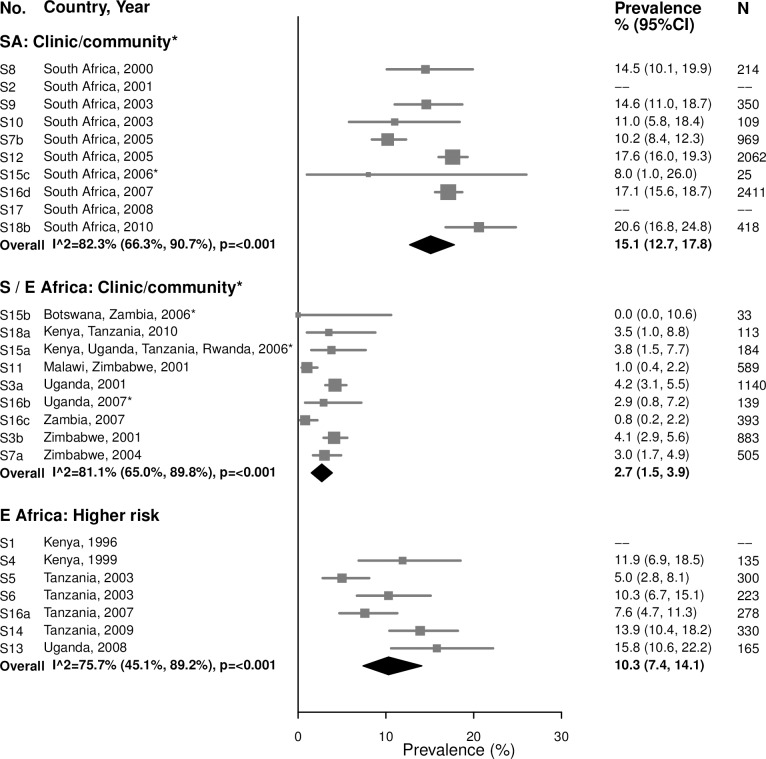
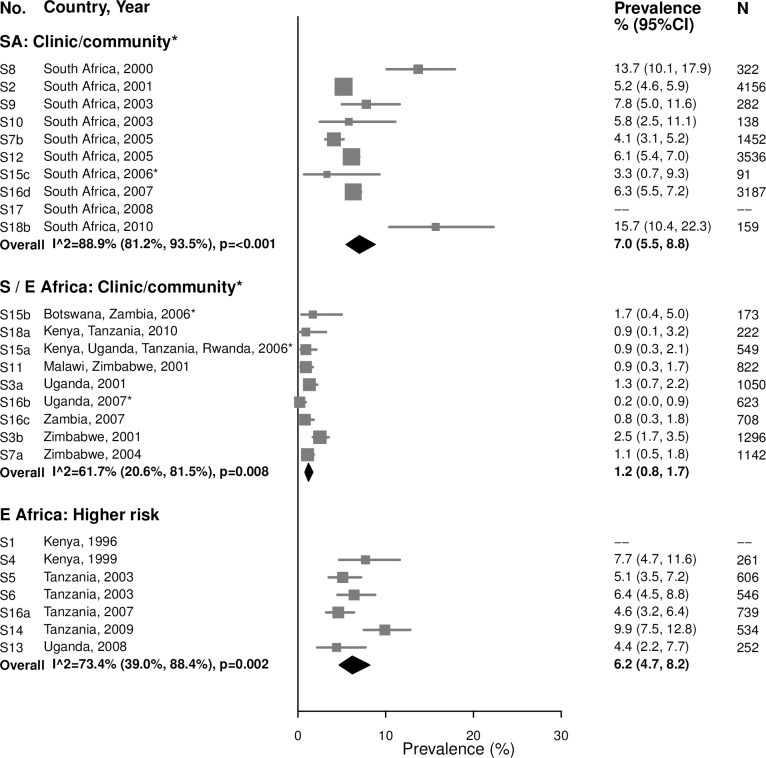
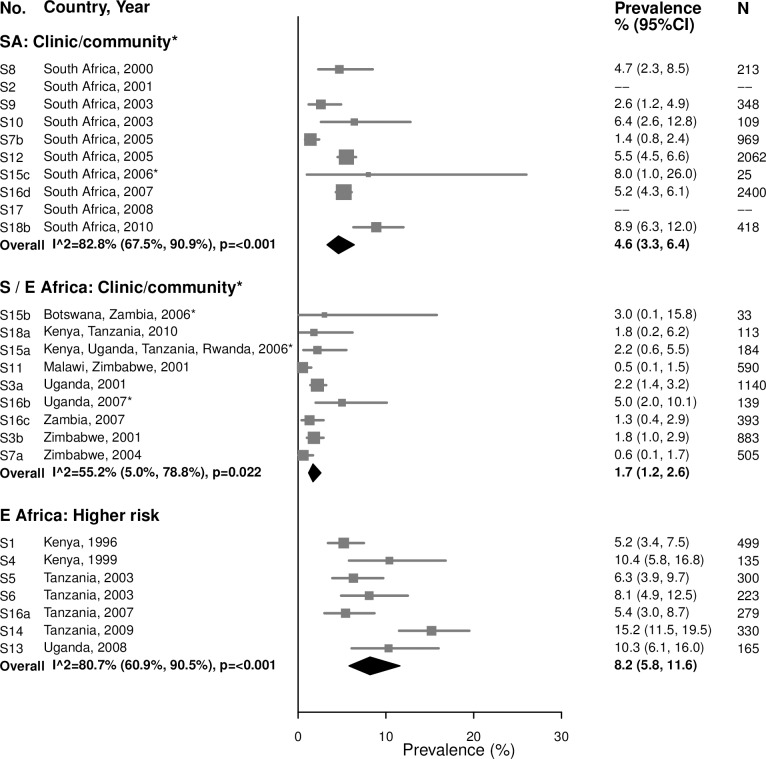
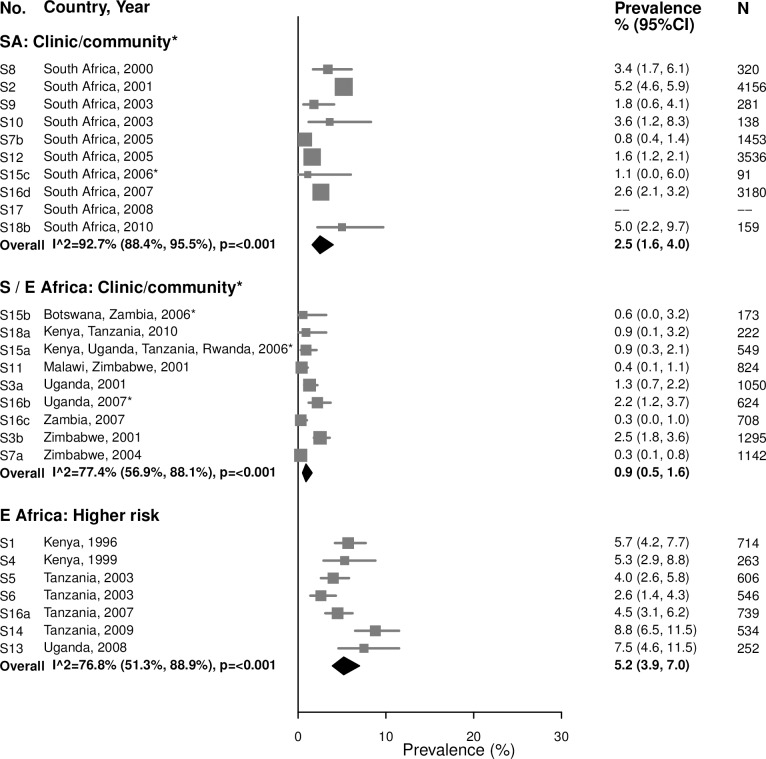
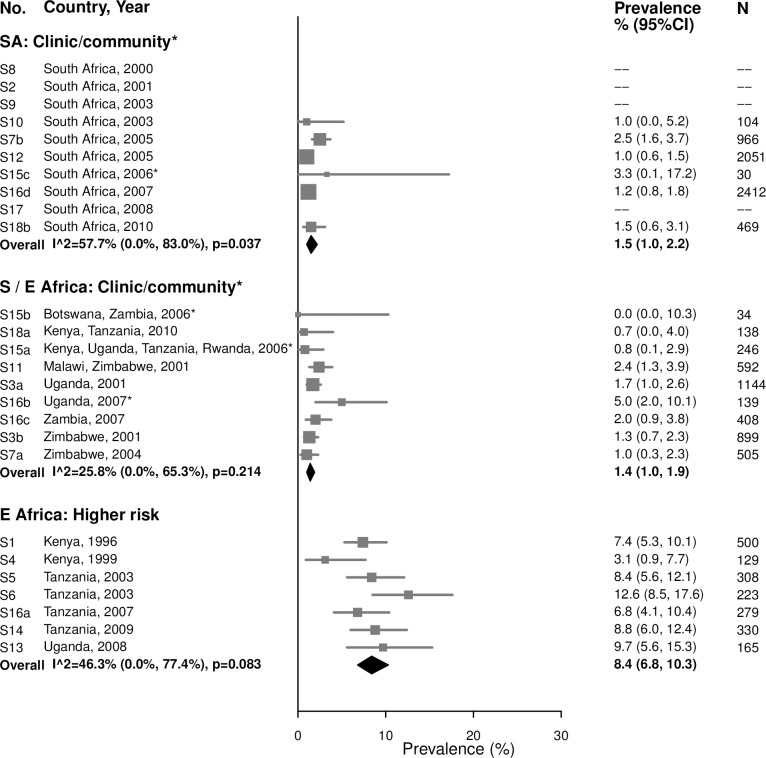
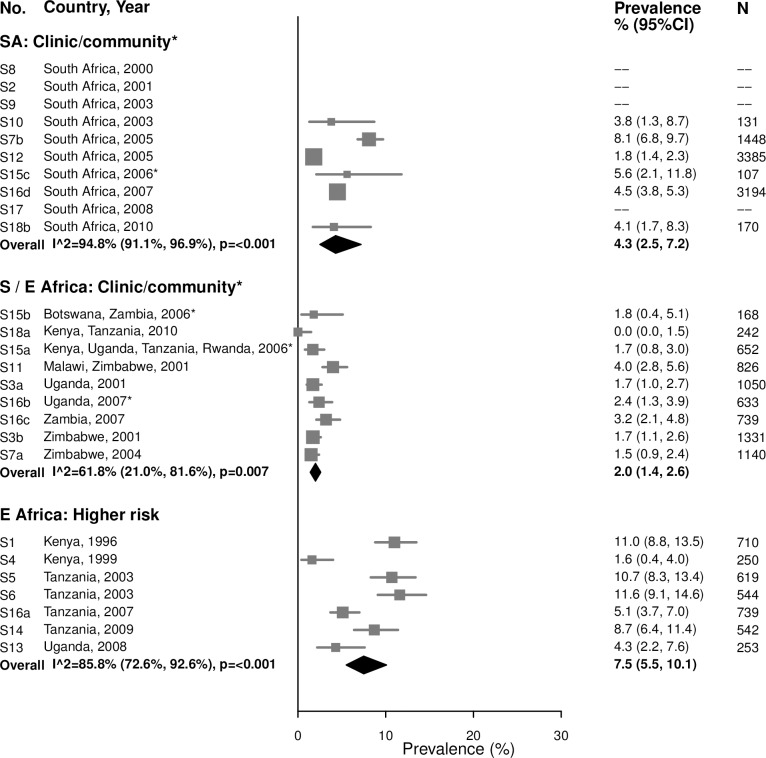
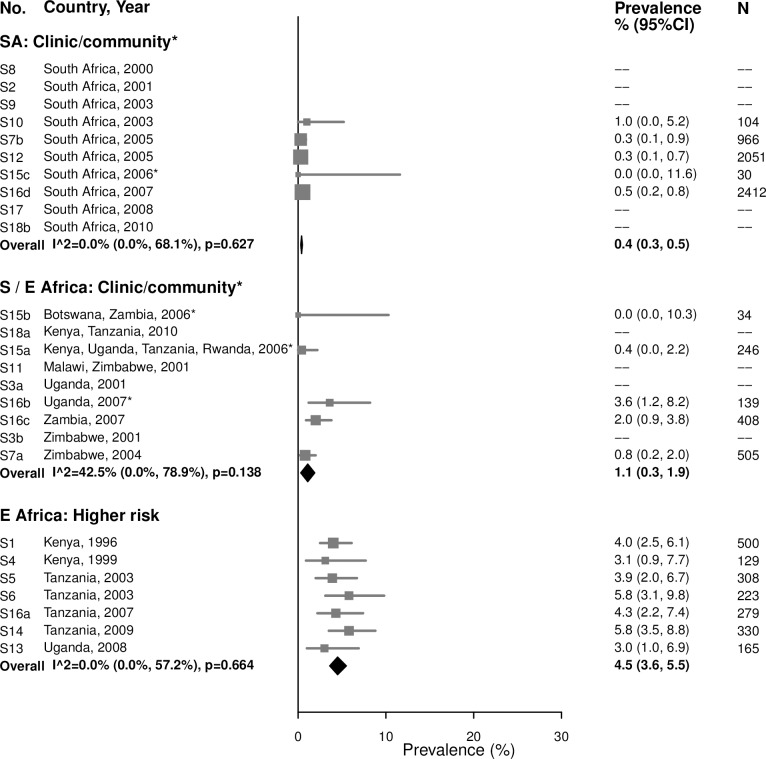
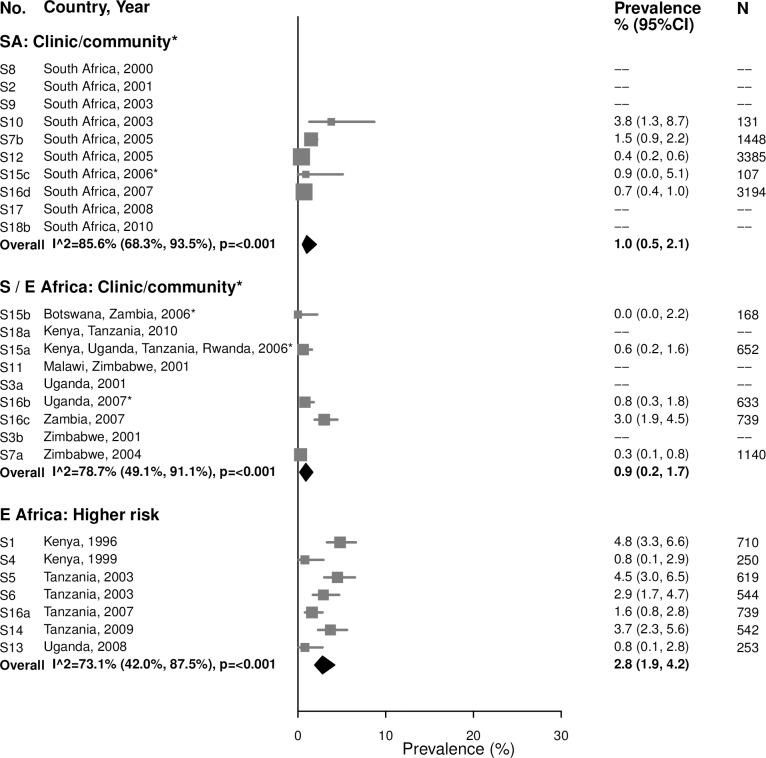
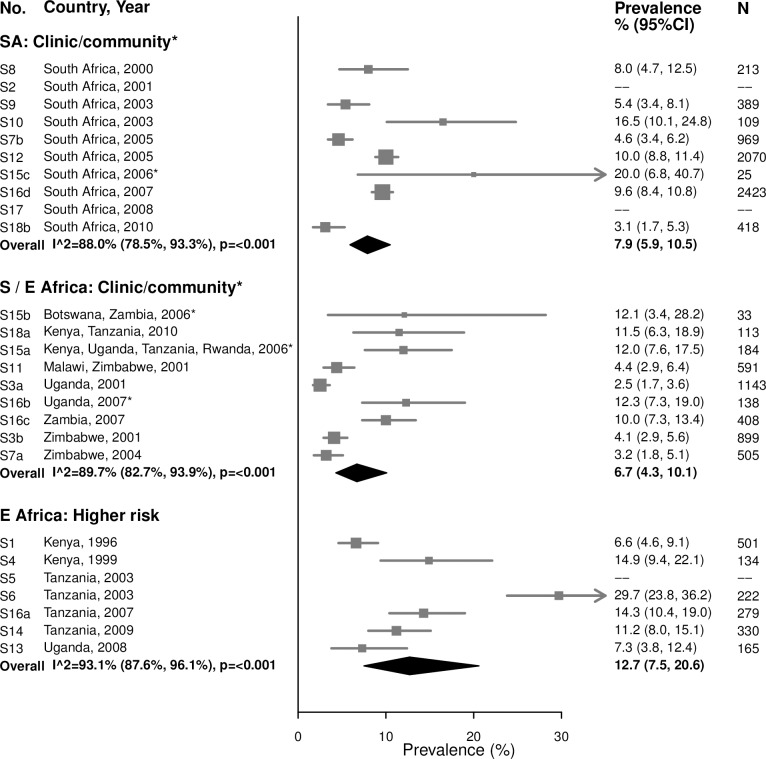
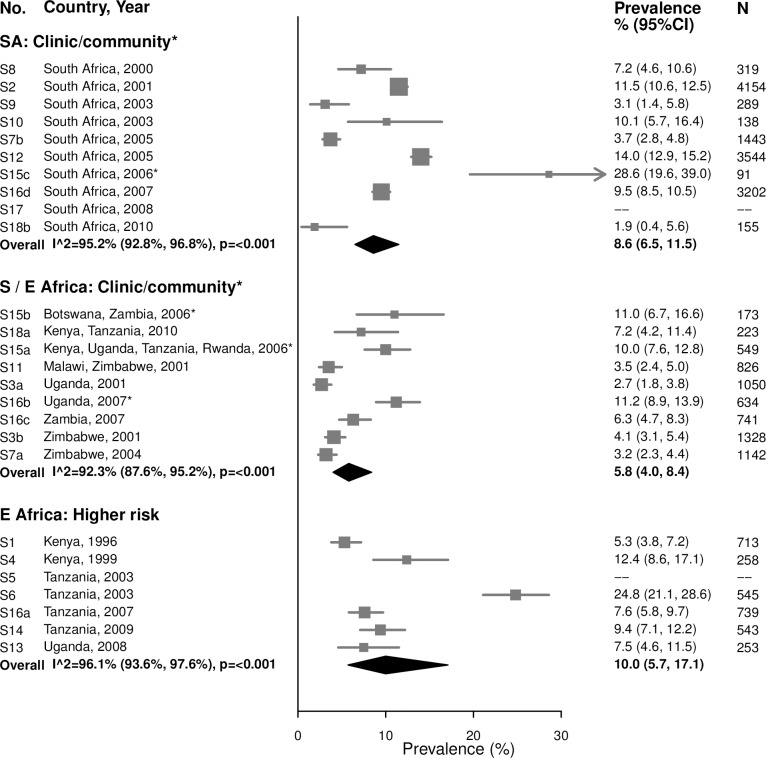
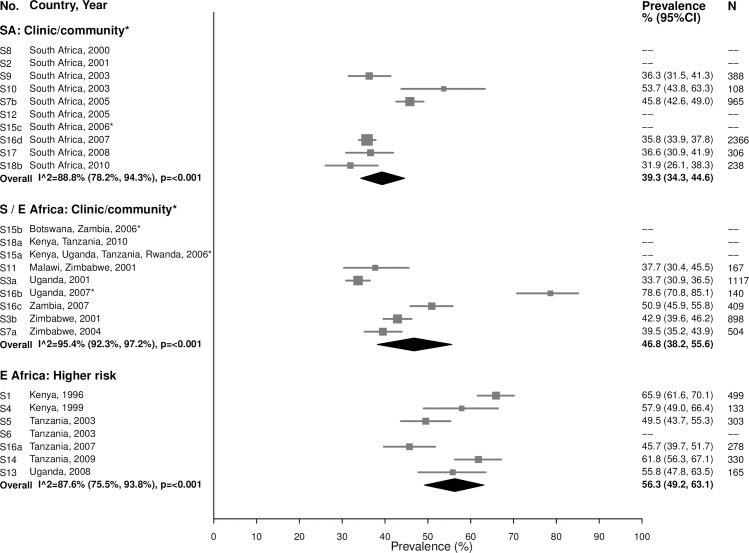
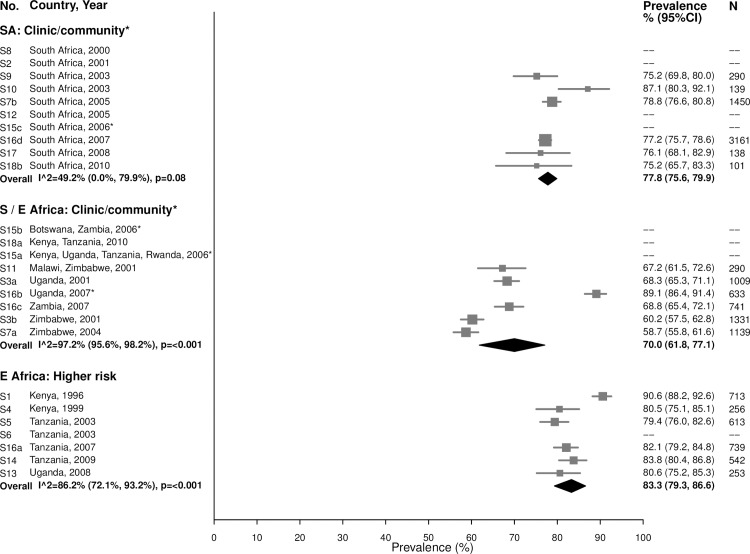
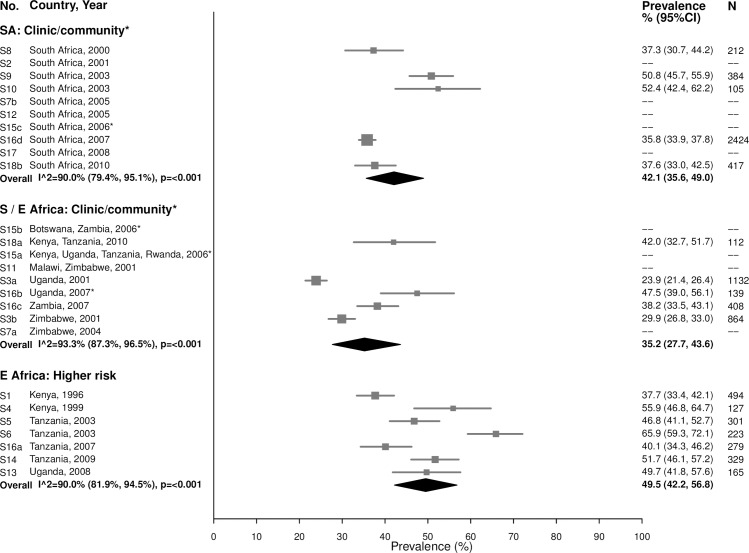
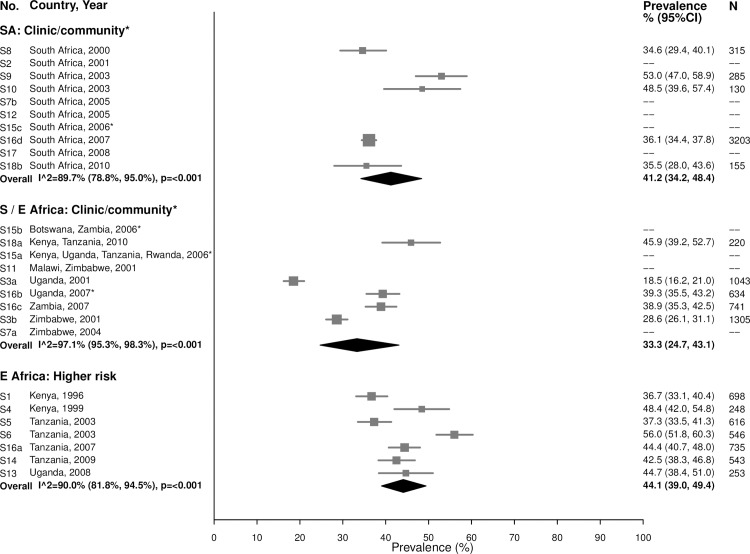
BACKGROUND: Estimates of sexually transmitted infection (STI) prevalence are essential for efforts to prevent and control STIs. Few large STI prevalence studies exist, especially for low- and middle-income countries (LMICs). Our primary objective was to estimate the prevalence of chlamydia, gonorrhea, trichomoniasis, syphilis, herpes simplex virus type 2 (HSV-2), and bacterial vaginosis (BV) among women in sub-Saharan Africa by age, region, and population type. METHODS AND FINDINGS: We analyzed individual-level data from 18 HIV prevention studies (cohort studies and randomized controlled trials; conducted during 1993-2011), representing >37,000 women, that tested participants for ≥1 selected STIs or BV at baseline. We used a 2-stage meta-analysis to combine data. After calculating the proportion of participants with each infection and standard error by study, we used a random-effects model to obtain a summary mean prevalence of each infection and 95% confidence interval (CI) across ages, regions, and population types. Despite substantial study heterogeneity for some STIs/populations, several patterns emerged. Across the three primary region/population groups (South Africa community-based, Southern/Eastern Africa community-based, and Eastern Africa higher-risk), prevalence was higher among 15-24-year-old than 25-49-year-old women for all STIs except HSV-2. In general, higher-risk populations had greater prevalence of gonorrhea and syphilis than clinic/community-based populations. For chlamydia, prevalence among 15-24-year-olds was 10.3% (95% CI: 7.4%, 14.1%; I2 = 75.7%) among women specifically recruited from higher-risk settings for HIV in Eastern Africa and was 15.1% (95% CI: 12.7%, 17.8%; I2 = 82.3%) in South African clinic/community-based populations. Among clinic/community-based populations, prevalence was generally greater in South Africa than in Southern/Eastern Africa for most STIs; for gonorrhea, prevalence among 15-24-year-olds was 4.6% (95% CI: 3.3%, 6.4%; I2 = 82.8%) in South Africa and was 1.7% (95% CI: 1.2%, 2.6%; I2 = 55.2%) in Southern/Eastern Africa. Across the three primary region/population groups, HSV-2 and BV prevalence was high among 25-49-year-olds (ranging from 70% to 83% and 33% to 44%, respectively). The main study limitation is that the data are not from random samples of the target populations. CONCLUSIONS: Combining data from 18 HIV prevention studies, our findings highlight important features of STI/BV epidemiology among sub-Saharan African women. This methodology can be used where routine STI surveillance is limited and offers a new approach to obtaining critical information on STI and BV prevalence in LMICs.
Overview
The claims and statistics of this paper haven’t been checked yet.
Free: it reads the open-access text and checks the first 5 claims that cite a source we can check. Create a free account to check every claim.
Integrity signals
Registry
Cites
Statistics
Figures
Verification
Claims the paper makes
The claims and statistics of this paper haven’t been checked yet.
Free: it reads the open-access text and checks the first 5 claims that cite a source we can check. Create a free account to check every claim.
Claims other papers make about this one
Each is checked against this paper’s own text: does it say what the citing paper says it does?
The source backs part of the claim, not all of it — or backs it for a different population, condition or comparison.
In the citing paper
“Moreover, the presence of BV, which is more prevalent in women from ACB communities [9–11], has been consistently associated with a 2-5-fold increase in HIV-1 risk [12, 13].”
From Feasibility, safety and tolerability of estrogen and/or probiotics for improving vaginal health in Canadian African, Caribbean, and Black women: A pilot phase 1 clinical trial (2025) · cites this paper as [12]
Experimental — accuracy not yet measured
Self-check
Percentages, sums and reported differences re-computed from the paper’s own numbers.
The self-check needs the paper’s full text.
Citations
Cites
Measuring inconsistency in meta-analyses
Higgins, J. P. T., Thompson, S. G., Deeks, J. J., & Altman, D. G. (2003) · BMJ · doi:10.1136/bmj.327.7414.557 · Cited by 63,139
Abdool Karim, Q., Abdool Karim, S. S., Frohlich, J. A., Grobler, A. C., Baxter, C., Mansoor, L. E., Kharsany, A. B. M., Sibeko, S., Mlisana, K. P., Omar, Z., et al. (2010) · Science · doi:10.1126/science.1193748 · Cited by 2,435
Self-citationPreexposure Prophylaxis for HIV Infection among African Women
Van Damme, L., Corneli, A., Ahmed, K., Agot, K., Lombaard, J., Kapiga, S., Malahleha, M., Owino, F., Manongi, R., Onyango, J., et al. (2012) · New England Journal of Medicine · doi:10.1056/nejmoa1202614 · Cited by 1,603
Newman, L., Rowley, J., Vander Hoorn, S., Wijesooriya, N. S., Unemo, M., Low, N., Stevens, G., Gottlieb, S., Kiarie, J., & Temmerman, M. (2015) · PLOS ONE · doi:10.1371/journal.pone.0143304 · Cited by 1,603 · cited 5×
“Aside from syphilis—for which available rapid diagnostic tests and concerted efforts to screen and treat pregnant women to avert mother-to-child transmission have resulted in likely declines over time [1,38]—the other STIs and BV lack clearly effective population-level interventions in these settings.”
BackgroundMethodResultInfluentialSelf-citationPettifor, A. E., Rees, H. V., Kleinschmidt, I., Steffenson, A. E., MacPhail, C., Hlongwa-Madikizela, L., Vermaak, K., & Padian, N. S. (2005) · AIDS · doi:10.1097/01.aids.0000183129.16830.06 · Cited by 645
Acyclovir and transmission of HIV-1 from persons infected with HIV-1 and HSV-2.
Celum, C., Wald, A., Lingappa, J. R., Magaret, A. S., Wang, R. S., Mugo, N., Mujugira, A., Baeten, J. M., Mullins, J. I., Hughes, J. P., et al. (2010) · New England Journal of Medicine · doi:10.1056/nejmoa0904849 · Cited by 524 · cited 3×
“S15c [28,29] South Africa South Africa Sexually active women whose partners had HIV and HSV-2 HIVdiscordant couples RCT; HSV suppression to reduce HIV transmission 2004– 2009 18–49 32 138”
BackgroundGlobal Estimates of Prevalent and Incident Herpes Simplex Virus Type 2 Infections in 2012
Looker, K. J., Magaret, A. S., Turner, K. M. E., Vickerman, P., Gottlieb, S. L., & Newman, L. M. (2015) · PLoS ONE · doi:10.1371/journal.pone.0114989 · Cited by 519
Self-citationSkoler-Karpoff, S., Ramjee, G., Ahmed, K., Altini, L., Plagianos, M. G., Friedland, B., Govender, S., De Kock, A., Cassim, N., Palanee, T., et al. (2008) · The Lancet · doi:10.1016/s0140-6736(08)61842-5 · Cited by 502 · cited 1×
“S12 [24,25] South Africa South Africa Sexually active women Clinic/ communitybased RCT; microbicide to reduce HIV acquisition 2004– 2006 16–49 28 5,615”
BackgroundThe global epidemiology of bacterial vaginosis: a systematic review
Kenyon, C., Colebunders, R., & Crucitti, T. (2013) · American Journal of Obstetrics and Gynecology · doi:10.1016/j.ajog.2013.05.006 · Cited by 464 · cited 1×
“Global estimates of BV occurrence are limited [3].”
BackgroundPetousis-Harris, H., Paynter, J., Morgan, J., Saxton, P., McArdle, B., Goodyear-Smith, F., & Black, S. (2017) · The Lancet · doi:10.1016/s0140-6736(17)31449-6 · Cited by 457
Research works printed but not linked: 1
- Rabe LK, Kelly CW, Hillier SL. A comparison of the diagnosis of bacterial vaginosis by Amsel’s Clinical Criteria and the Vaginal Gram Staining Nugent score in HPTN 035. Microbicides 2008 Conference; 2008 Feb 24–27; New Delhi, India.
Cited by
Items 201–256 of 256
LoVette, A., Sullivan, A., Kuo, C., Operario, D., Harrison, A. D., & Mathews, C. (2023) · AIDS Education and Prevention · doi:10.1521/aeap.2023.35.1.1 · Cited by 2
Senbadejo, T. Y., Isawumi, A., & Paemka, L. (2024) · Research Ideas and Outcomes · doi:10.3897/rio.10.e116907 · Cited by 1
“There is a high burden of RTI in developing countries (Torrone et al. 2018).”
BackgroundShalan, A. A., Hindi, N. K. K., Radhi, M. M., & Chabuck, Z. A. G. (2024) · Medical Journal of Babylon · doi:10.4103/mjbl.mjbl_679_23 · Cited by 1
Jaya, Z. N., Mapanga, W., & Mashamba-Thompson, T. P. (2024) · BMJ Open · doi:10.1136/bmjopen-2023-082981 · Cited by 1
“As a result, it could increase the uptake of STI healthcare services, enhance healthcare outcomes and ultimately contribute towards achieving Sustainable Development Goal (SDG) 3, of ensuring universal access healthcare services.”
BackgroundKharsodiya, K., Das, K. P., & Dhingra, H. K. (2025) · Journal of Microbiological Methods · doi:10.1016/j.mimet.2025.107212 · Cited by 4
Pradeep, B. (2019) · JOURNAL OF INTEGRATED COMMUNITY HEALTH · doi:10.24321/2319.9113.201905 · Cited by 1
Ade-Ojo, I. P., Abolarin, E., Okiki, A., & Oso, O. T. (2022) · British journal of healthcare and medical research · doi:10.14738/jbemi.93.12421 · Cited by 1
Wang, Q., Wang, X.-Y., Ma, X., Newman, L. M., Dou, L., Qiao, Y., Chen, X., Jin, X., & Wang, A. (2020) · doi:10.21203/rs.3.rs-21898/v1 · Cited by 2
“SubSaharan countries such as Rwanda, Tanzania, Ethiopia, Uganda, Zambia, and Nigeria are coming across a greater problem of maternal HIV-syphilis co-infection than any other part of the world [24][25][26].”
BackgroundIwuji, C. C., Martin, C. E., Pillay, D., Shamu, P., Nzenze, S. A., Murire, M., Cox, L. A., Miners, A. H., Llewellyn, C. D., & Mullick, S. (2022) · medRxiv · doi:10.1101/2022.03.07.22271994 · Cited by 1
“STI prevalence and incidence is also particularly high among young women receiving HIV Pre-Exposure Prophylaxis (PrEP) [4, 5], with studies reporting chlamydia prevalence ranging from 8.”
BackgroundSzöllősi, A. P., Raffai, T., Bogdanov, A., Endrész, V., Párducz, L., Somogyvári, F., Janovák, L., Burián, K., & Virok, D. P. (2020) · BMC Research Notes · doi:10.1186/s13104-020-4918-4 · Cited by 1
“The seroprevalence of HSV-2 indicates that a significant part of the population harbors the virus [1].”
BackgroundBacterial Vaginosis and Risk Factors in Pregnant Women in SenegalPreprint
Bonneton, M., Huynh, B.-T., Seck, A., Bercion, R., Sarr, F. D., Delarocque‐Astagneau, E., & Vray, M. (2021) · doi:10.21203/rs.3.rs-153819/v1
“BV prevalence among sub-Saharan African countries varies from 25–50% (12) and from 9–23% in pregnant women (4, 13, 14).”
BackgroundSharma, A., Das, K., Saini, S. K., Ghai, S., Mittal, S., & Kaur, M. (2021) · PubMed Central · doi:10.4103/ijcm.ijcm_225_20
“The interview schedule was used to collect data which included the following: (1) sociodemographics, (2) assessment of sexual health, substance abuse, and sexual practices, (3) knowledge assessment regarding STIs and HIV/AIDS, and (4) practices related to prevention and treatment of STIs and HIV/AIDS.”
MethodSiziba, A., Nunu, W. N., Mudonhi, N., Ndlovu, V., Munyai, O., Ndlovu, B., & Sanganyado, E. (2021) · Curationis · doi:10.4102/curationis.v44i1.2191
Christian, D. M.-K., Hermione, D. M.-K., Fabrice, C. A., Kouabosso, A., Alain, J. M. A., Léon, K., & Grésenguet, G. (2022) · Journal of Microbiology and Antimicrobials · doi:10.5897/jma2021.0453
“…prevalence would therefore be underestimated because the trend is now to use nucleic acid amplification tests (Poncin and Bercot, 2019) as is the case in the studies by Compain, Kirkcaldy and Torrone (Compain et al., 2019; Kirkcaldy et al., 2019; Torrone et al., 2018), more sensitive than culture.”
BackgroundMethodInfluentialOware, K., Adiema, L., Rono, B., Violette, L. R., McClelland, R. S., Donnell, D. J., Scoville, C. W., Odoyo, J. B., Baeten, J. M., Bukusi, E. A., et al. (2022) · medRxiv · doi:10.1101/2022.04.01.22273292
Makuza, J. D., Soe, P., Jeong, D., Nisingizwe, M. P., Dushimiyimana, D., Umutesi, J., Nshimiyimana, L., Maliza, C., Serumondo, J., Remera, E., et al. (2022) · Research Square · doi:10.21203/rs.3.rs-1595516/v1
Host Genetic Determinants of the Vaginal Microbiome in Kenyan WomenPreprint
Mehta, S. D., Nannini, D. R., Otieno, F., Green, S. J., Agingu, W., LANDAY, A. L., Zheng, Y., & Hou, L. (2020) · doi:10.21203/rs.3.rs-17153/v1
“Given the co-occurrence of risk for BV, nonoptimal vaginal microbiome, and HIV and STI among African and African American women, well-powered cross-national studies are needed to answer whether common variants are replicated across populations, and to identify important gene by environment interactions that inform how…”
BackgroundInfluentialOluoch, L. M., Tapia, K. A., Kiptinness, C., Casmir, E., Maina, S. G., Makena, L., Selke, S., Wang, M., Chohan, B. H., Sycuro, L. K., et al. (2023) · BMJ Open · doi:10.1136/bmjopen-2023-071746
Jaya, Z. N., Mapanga, W., & Mashamba-Thompson, T. P. (2024) · medRxiv · doi:10.1101/2024.01.05.23299719
Prakhova, S. (2024) · Preprints.org · doi:10.20944/preprints202310.0814.v3
Jaya, Z. N., Mapanga, W., Ogunsakin, R. E., & Mashamba-Thompson, T. P. (2024) · medRxiv · doi:10.1101/2024.06.03.24308383
ABNORMAL VAGINAL DISCHARGE IN WOMEN OF REPRODUCTIVE AGE AND THE WAYS OF ITS MANAGEMENT
Hamidova, N. A., & Mammadkhanova, I. A. (2024) · World of Medicine and Biology · doi:10.26724/2079-8334-2024-2-88-176-179
Predictors of Abnormal Vaginal Discharge among Women of Reproductive Age in Southeast Nigeria
Egwim, J. I., Dike, V., Igbonagwam, H., Oke, N., Amajo, U., Okafor, A. N.-C., Izegbune, A., & Okafor, I. (2024) · International Journal of Clinical Medicine · doi:10.4236/ijcm.2024.157018
The impact of bacterial vaginosis on pregnancy
Pillay, K., Mabaso, N. G., & Abbai, N. S. (2024) · Journal of Medical Laboratory Science & Technology of South Africa · doi:10.36303/jmlstsa.172 · Cited by 1
TvAP65 in Trichomonas vaginalis Promotes HPV Infection by Interacting with Host MoleculesPreprint
Mei, X., Sheng, W., Zhang, Y., Tian, W., Tian, X., Yang, Z., Wang, S., & Zhang, Z. (2024) · bioRxiv (Cold Spring Harbor Laboratory) · doi:10.1101/2024.09.27.615334
Berard, A. R., Knodel, S., Zuend, C. F., Noël‐Romas, L., Birse, K., McQueen, P., Leon, M. D., Kratzer, K., Taylor, O. A., Bailey, S., et al. (2024) · Journal of Obstetrics and Gynaecology Canada · doi:10.1016/j.jogc.2024.102667
Onzia, A. A., Mujugira, A., Nakate, V., Musaazi, J., Bukenya, J. N., Sseggujja, E., Ajeru, P. A., Parkes-Ratanshi, R. M., Melendez, J. H., Hamill, M. M., et al. (2025) · medRxiv · doi:10.1101/2025.08.21.25334130
Klatt, N. R., Swanson, E., Broedlow, C. A., Cherenack, E. M., Nogueira, N. F., Basting, C. M., Yue, P., Chakrawarti, A., Schroeder, T. A., Salazar, A. S., et al. (2025) · Research Square · doi:10.21203/rs.3.rs-7576831/v1 · Cited by 1
“BV is associated with signi�cant clinical and public health consequences, including discomfort, obstetric complications, pelvic in�ammatory disease, and increased risk of sexually transmitted infections including HIV 4–15 .”
InfluentialRodrigues, R. C., Loureiro, S. R., João, I., Jordão, I., Borrego, M. J., Catalão, C., Silva, A. R., Sousa, C., & Vale, N. (2025) · Medicina · doi:10.3390/medicina61101749
“Co-infections can complicate the clinical picture, as symptoms may overlap or be masked, potentially delaying diagnosis and treatment [47].”
Mei, X., Sheng, W., Zhang, Y., Tian, W., Tian, X., Yang, Z., Wang, S., & Zhang, Z. (2025) · Infectious Diseases of Poverty · doi:10.1186/s40249-025-01381-x · Cited by 1
Kamusiime, B., Smith, P. M., Nalumansi, A., Wood, T. E., Eram, G., Kasiita, V., Ssendiwala, P., Nakyanzi, A., Bambia, F., Muwonge, T. R., et al. (2025) · Frontiers in Reproductive Health · doi:10.3389/frph.2025.1688969
Beyond the individual: Addressing structural and intersectional barriers to STBBI testing in Canada
Iftikhar, M. K. (2025) · International Journal of STD & AIDS · doi:10.1177/09564624251391227
Marcus, R., Pike, C., Gill, K., Smith, P., Rouhani, S., Mendelsohn, A., Mendel, E., Lince-Deroche, N., Naidoo, K., Ahmed, N., et al. (2024) · Figshare · doi:10.6084/m9.figshare.26625349
Bintabara, D., Lilungulu, A., Jumanne, S., Nassoro, M. M., & Mpondo, B. C. T. (2021) · Figshare · doi:10.6084/m9.figshare.14906124
Martin, K., Chikwari, C. D., Mackworth-Young, C. R. S., Chisenga, M., Bandason, T., Dauya, E., Olaru, I. D., Francis, S. C., Mavodza, C., Nzombe, P., et al. (2022) · Figshare · doi:10.6084/m9.figshare.19159105
Self-citationMartin, K., Chikwari, C. D., Mackworth-Young, C. R. S., Chisenga, M., Bandason, T., Dauya, E., Olaru, I. D., Francis, S. C., Mavodza, C., Nzombe, P., et al. (2022) · Figshare · doi:10.6084/m9.figshare.19159102
Self-citationMataboge, P., Mthimkhulu, N., Kutywayo, A., Martin, C. E., Mazibuko, M., Kwatsha, K., Makalela, N., Briedenhann, E., Butler, V., Bothma, R., et al. (2023) · Figshare · doi:10.6084/m9.figshare.24439243
Zango, A., Stutterheim, S. E., & Crutzen, R. (2026) · Research Square · doi:10.21203/rs.3.rs-8307772/v1
Stuart, R. M., Newman, L. M., Manguro, G., Chikwari, C. D., Marks, M., Peters, R. P. H., Klein, D. J., Snyder, L., Kerr, C. C., & Rao, D. W. (2026) · Research Square · doi:10.21203/rs.3.rs-8843262/v1
Mukasa, D., Kinuthia, J., Meisner, A., Matemo, D. N., Schaafsma, T. T., Morton, J., Wandera, C., Budiawan, E., Kemuto, V., Irine, C., et al. (2026) · PLoS Medicine · doi:10.1371/journal.pmed.1004962
“At the same time, African women also face a disproportionate burden of sexually transmitted infections (STIs), including high rates of curable bacterial pathogens such as Chlamydia trachomatis and Neisseria gonorrhoeae [3].”
Melaku, M. S., Yohannes, L., Sharew, B., Aemro, A., Alhur, A. A., Mengstie, M. A., & Mengesha, A. T. (2026) · BMC Infectious Diseases · doi:10.1186/s12879-026-13010-5 · Cited by 1
“On the other hand the finding is lower than from findings among adolescents in Mali [48] and among young women in SSA [49].”
Charlebois, E. D., Gutin, S. A., Neilands, T. B., Getahun, M., Akullian, A. N., Maeri, I., Eyul, P., Omoding, D., Okiring, J., Cohen, C. R., et al. (2026) · International Journal of STD & AIDS · doi:10.1177/09564624261427053
“30,32 In addition, at all follow-up time points, women had higher STI prevalence than men.”
Song, Q., Jing, Z., Shen, Z., Li, S., Li, R., Yang, D., & Wang, M. (2026) · International Journal of Women s Health · doi:10.2147/ijwh.s577767 · Cited by 1
Wilson, J., Hamzah, A. S. A., Jordan, C. K. I., Hayward, J. A., Kullin, B., Manhanzva, M. T., Tyssen, D. P., Mehou‐Loko, C., Abrahams, A. G., Radzey, N., et al. (2026) · bioRxiv (Cold Spring Harbor Laboratory) · doi:10.64898/2026.03.26.714511
Microbiote vaginal, de la flore normale à la dysbiose : Caractérisations, diagnostics et impacts
Chacra, L. A. (2023) · theses.fr (ABES) · doi:10.70675/7645b94az84adz449dzb4eezda5539e815c5
Govender, V., Moodley, D., Letsoalo, M. P., Kama, A. O., Pillay, N., Mzobe, G. F., & Ngcapu, S. (2026) · Journal of Reproductive Immunology · doi:10.1016/j.jri.2026.104908
Osman, A., Akram, H., Alemrayat, B., ALMAraghi, S., Harfouche, M., & Abu-Raddad, L. J. (2026) · PLoS Medicine · doi:10.1371/journal.pmed.1004936
Bornmann, C. R. (2026) · Elsevier eBooks · doi:10.1016/b978-0-443-45863-7.00040-8
Mumtaz, G. R., Fakih, I., Sharara, E. S., El-Khoury, R., Naja, C., Abu-Raddad, L. J., & Fahme, S. A. (2026) · BMJ Global Health · doi:10.1136/bmjgh-2025-020347
Asghar, M. U., Ikram, S., Munir, I., Malik, S., Muzzamal, H., Sajid, M., Fatima, F., Haneef, K., Asghar, A., & Ain, N. U. (2026) · Microbial Pathogenesis · doi:10.1016/j.micpath.2026.108704
Sadana, A., Yessayan, S., Patel, K., Ongas, M. O., Misiko, B., Cheserem, C., Githongo, G., Rahangdale, L., Tang, J. H., Belinson, J. L., et al. (2026) · medRxiv · doi:10.64898/2026.07.10.26357746
Sidiq, K. R., & Ezadin, Z. (2026) · Charmo Journal of Natural Sciences and Technologies · doi:10.31530/cjnst.2026.2.2.2
Wilson, J., Hamzah, A. S. A., Jordan, C. K. I., Hayward, J. A., Kullin, B., Manhanzva, M. T., Tyssen, D. P., Mehou‐Loko, C., Abrahams, A. G., Radzey, N., et al. (2026) · Applied and Environmental Microbiology · doi:10.1128/aem.00566-26
“In support of this, it was found that the South African Lb. crispatus isolates subjected to WGS in this study were generally more closely related to one another than to reference strains and isolates from other geographical regions.”
InfluentialDeep Learning-Based HSV-1 Detection Using Transfer Learning with MobileNetV2
Agrawal, P., Jain, A., & Gupta, P. (2026) · IEEE World Conference on Applied Intelligence and Computing (AIC) · doi:10.1109/aic70896.2026.11716895
Martin, K., Chikwari, C. D., & Ferrand, R. A. (2026) · The Lancet Regional Health - Africa · doi:10.1016/j.lanafr.2026.100168
Metadata
- Authors
- Torrone, E. A., Morrison, C. S., Chen, P.-L., Kwok, C., Francis, S. C., Hayes, R. J., Looker, K. J., McCormack, S., McGrath, N., van de Wijgert, J. H. H. M., Watson-Jones, D., Low, N., Gottlieb, S. L., & on behalf of the STIMA Working Group
- Affiliations
- Centers for Disease Control and Prevention (US)
- Family Health International 360 (US)
- London School of Hygiene & Tropical Medicine (GB)
- University of Bristol (GB)
- MRC Clinical Trials Unit at UCL (GB)
- Africa Health Research Institute (ZA)
- University of Bern (CH)
- World Health Organization (CH)
- Corresponding author
- Torrone, Elizabeth A.
- ORCID
- Venue
- PLOS Medicine
- Publisher
- Public Library of Science (PLoS)
- Published
- 2018-02-27
- Volume
- 15
- Issue
- 2
- Pages
- e1002511
- ISSN
- 1549-1277 (ISSN-L)
- 1549-1676
- PMC
- PMC5828349
- OpenAlex
- W4294661837
- Cited by
- 256
- References
- 55
- Citations by year
- 2026: 23 · 2025: 24 · 2024: 42 · 2023: 39 · 2022: 32 · 2021: 43 · 2020: 29 · 2019: 20 · 2018: 4
- FWCI
- 3.42
- Type
- journal article
- Language
- en
- Update notices
- correction (2018-06-26)
- Open access
- gold
- doi.org
- Licence
- public-domain
- creativecommons.org/publicdomain/zero/1.0/ (vor)
- Locations
- PLoS Medicine (publishedVersion, public-domain)
- Europe PMC (PubMed Central) (publishedVersion, public-domain)
- PubMed Central (publishedVersion, public-domain)
- PubMed (publishedVersion)
- Bristol Research (University of Bristol) (publishedVersion, cc-by)
- ePrints Soton (University of Southampton) (acceptedVersion)
- LSHTM Research Online (London School of Hygiene and Tropical Medicine) (acceptedVersion)
- Bern Open Repository and Information System (University of Bern) (submittedVersion, cc-by)
- DOAJ (DOAJ: Directory of Open Access Journals) (submittedVersion, cc-by-sa)
- UCL Discovery (University College London) (submittedVersion)
- Figshare (submittedVersion, cc-by)
- Explore Bristol Research (submittedVersion, cc-by)
- Open Access CRIS of the University of Bern
- Funders
- World Health Organization Human Reproduction Programme
- Topics
- Life Sciences › Immunology and Microbiology › Microbiology › Reproductive tract infections research
- Health Sciences › Medicine › Infectious Diseases › HIV/AIDS Research and Interventions
- Health Sciences › Medicine › Epidemiology › Cervical Cancer and HPV Research
- Keywords
- sexually transmitted infections, bacterial vaginosis, chlamydia, gonorrhea, trichomoniasis, syphilis, herpes simplex virus type 2, STI prevalence, women, sub-Saharan Africa, age differences, community-based population, South Africa, East Africa, Southern Africa, low- and middle-income countries, sexually transmitted infection surveillance
- MeSH terms
- Adolescent, Adult, Female, Health Promotion, HIV, Humans, Middle Aged, Sexually Transmitted Diseases, HIV Infections, Prevalence, Vaginosis, Bacterial, Africa South of the Sahara, Young Adult
About these checks
Registry, retraction, Cites and statistics results are computed, not judged, with one exception: a printed reference that no index lists is read once by a model before it counts as a citation error. Claims are extracted by a model and kept only when their quote appears verbatim in the text; each cited source is then checked, with a model’s help, for whether it says what the claim relies on. Those verdicts can be wrong — read the claim’s quote and the cited source before relying on one.
Statistics and arithmetic are recomputed, not judged.
Confidence bands are shown only for fields calibrated on our annotated test set. None is calibrated yet, so no band is shown.
What counts as a claim ›How we measure confidence ›How we check this ›
Are you an author, or do you see a problem with this page? Request a review
Data sources
Bibliographic data: Semantic Scholar, OpenAlex, Crossref.
Contains information from the Semantic Scholar Academic Graph Datasets, made available under the ODC Attribution License (ODC-BY 1.0).
Semantic Scholar’s data is described in: Kinney, R., et al. (2023). The Semantic Scholar Open Data Platform. arXiv:2301.10140.
