

The DOI matches its Crossref record; 166 of the 171 references it cites were found in a registry or an index.
Psychiatric morbidity and suicidal behaviour in low- and middle-income countries: a systematic review and meta- analysis
Open accessAbstract
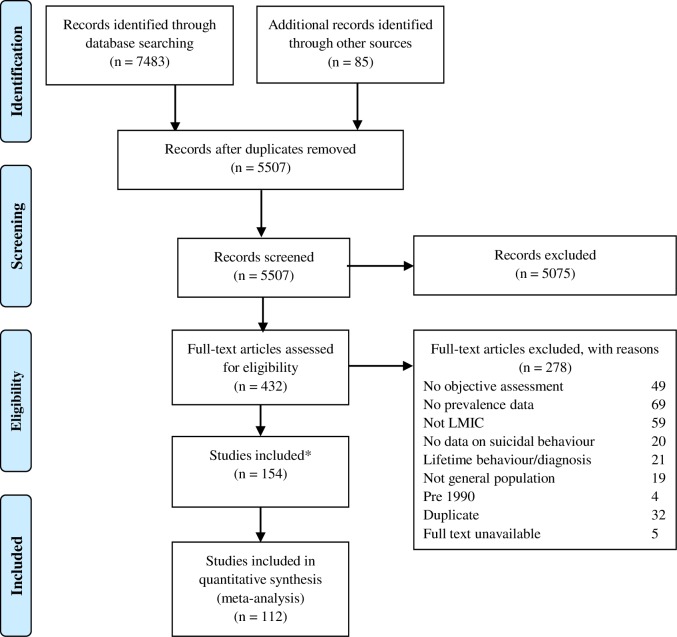
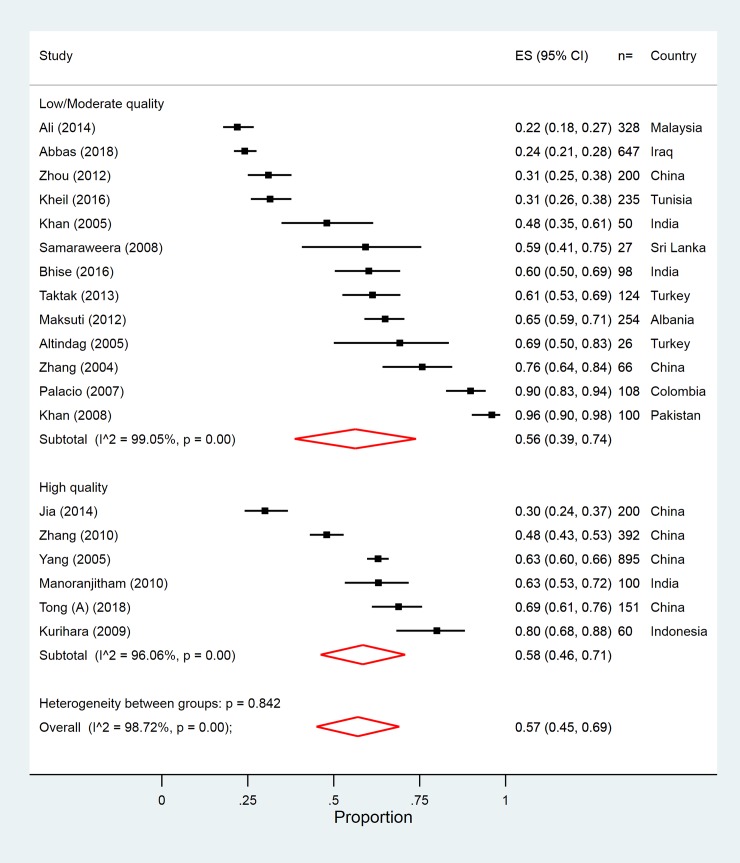
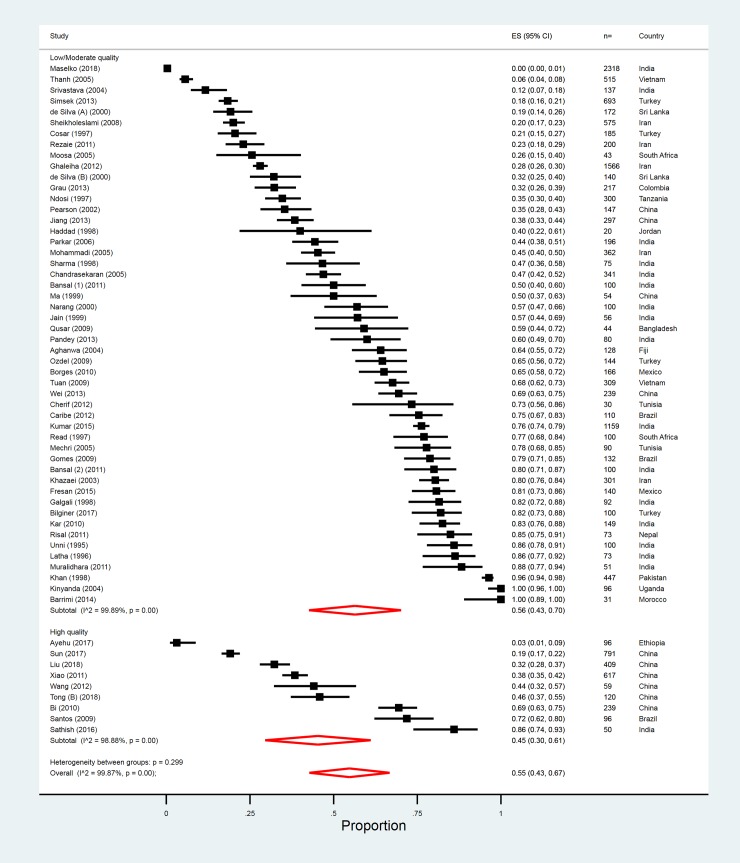
BACKGROUND: Psychiatric disorders are reported to be present in 80% to 90% of suicide deaths in high-income countries (HIC), but this association is less clear in low- and middle-income countries (LMIC). There has been no previous systematic review of this issue in LMIC. The current study aims to estimate the prevalence of psychiatric morbidity in individuals with suicidal behaviour in LMIC. METHODS AND FINDINGS: PubMed, PsycINFO, and EMBASE searches were conducted to identify quantitative research papers (any language) between 1990 and 2018 from LMIC that reported on the prevalence of psychiatric morbidity in suicidal behaviour. We used meta-analytic techniques to generate pooled estimates for any psychiatric disorder and specific diagnosis based on International classification of disease (ICD-10) criteria. A total of 112 studies (154 papers) from 26 LMIC (India: 25%, China: 15%, and other LMIC: 60%) were identified, including 18 non-English articles. They included 30,030 individuals with nonfatal suicidal behaviour and 4,996 individuals who had died by suicide. Of the 15 studies (5 LMIC) that scored highly on our quality assessment, prevalence estimates for psychiatric disorders ranged between 30% and 80% in suicide deaths and between 3% and 86% in those who engaged in nonfatal suicidal behaviour. There was substantial heterogeneity between study estimates. Fifty-eight percent (95% CI 46%-71%) of those who died by suicide and 45% (95% CI 30%-61%) of those who engaged in nonfatal suicidal behaviour had a psychiatric disorder. The most prevalent disorder in both fatal and nonfatal suicidal behaviour was mood disorder (25% and 21%, respectively). Schizophrenia and related disorders were identified in 8% (4%-12%) of those who died by suicide and 7% (3%-11%) of those who engaged in nonfatal suicidal behaviour. In nonfatal suicidal behaviour, anxiety disorders, and substance misuse were identified in 19% (1%-36%) and 11% (7%-16%) of individuals, respectively. This systematic review was limited by the low number of high-quality studies and restricting our searches to databases that mainly indexed English language journals. CONCLUSIONS: Our findings suggest a possible lower prevalence of psychiatric disorders in suicidal behaviour in LMIC. We found very few high-quality studies and high levels of heterogeneity in pooled estimates of psychiatric disorder, which could reflect differing study methods or real differences. There is a clear need for more robust evidence in order for LMIC to strike the right balance between community-based and mental health focussed interventions.
Overview
The claims and statistics of this paper haven’t been checked yet.
Run the check — free, no account needed. It reads the open-access text and checks the sources it cites.
Integrity signals
Registry
Cites
Statistics
Figures
Verification
Claims the paper makes
The claims and statistics of this paper haven’t been checked yet.
Run the check — free, no account needed. It reads the open-access text and checks the sources it cites.
Claims other papers make about this one
Each is checked against this paper’s own text: does it say what the citing paper says it does?
In the citing paper
“These syndromes constitute a risk factor for subsequent onset of depression, and may be the sequelae of partial remission of an episode of major depression. 173”
From Time for united action on depression: a Lancet–World Psychiatric Association Commission (2022) · cites this paper as [173]
In the citing paper
“some of the key drivers of recent trends in suicide rates differ between low- and high-income countries, for example the prevalence of underlying mental health problems in the population (Knipe et al., 2019).”
From Social media use, economic recession and income inequality in relation to trends in youth suicide in high-income countries: a time trends analysis (2020) · cites this paper as Knipe et al., 2019
Self-check
Percentages, sums and reported differences re-computed from the paper’s own numbers.
The self-check needs the paper’s full text.
Citations
Cites
Measuring inconsistency in meta-analyses
Higgins, J. P. T., Thompson, S. G., Deeks, J. J., & Altman, D. G. (2003) · BMJ · doi:10.1136/bmj.327.7414.557 · Cited by 63,139
Meta-analysis in clinical trials
DerSimonian, R., & Laird, N. (1986) · Controlled Clinical Trials · doi:10.1016/0197-2456(86)90046-2 · Cited by 39,552
Rayyan-a web and mobile app for systematic reviews.
Ouzzani, M., Hammady, H., Fedorowicz, Z., & Elmagarmid, A. (2016) · Systematic Reviews · doi:10.1186/s13643-016-0384-4 · Cited by 26,092
(2014) · Medical Entomology and Zoology · Cited by 17,633
Psychological autopsy studies of suicide: a systematic review.
CAVANAGH, J. T. O., CARSON, A. J., SHARPE, M., & LAWRIE, S. M. (2003) · Psychological Medicine · doi:10.1017/s0033291702006943 · Cited by 2,207
Metaprop: a Stata command to perform meta-analysis of binomial data
Nyaga, V. N., Arbyn, M., & Aerts, M. (2014) · Archives of Public Health · doi:10.1186/2049-3258-72-39 · Cited by 2,139
Psychiatric diagnoses in 3275 suicides: a meta-analysis
Arsenault-Lapierre, G., Kim, C., & Turecki, G. (2004) · BMC Psychiatry · doi:10.1186/1471-244x-4-37 · Cited by 985
Suicide mortality in India: a nationally representative survey
Patel, V., Ramasundarahettige, C. F., Vijayakumar, L., Thakur, J., Gajalakshmi, V., Gururaj, G., Suraweera, W., & Jha, P. (2012) · The Lancet · doi:10.1016/s0140-6736(12)60606-0 · Cited by 966
Risk factors for suicide in China: a national case-control psychological autopsy study
Phillips, M. R., Yang, G., Zhang, Y., Wang, L., Ji, H., & Zhou, M. (2002) · The Lancet · doi:10.1016/s0140-6736(02)11681-3 · Cited by 928
Research works printed but not linked: 23
- S.Y. Haddad, 1998, Suicide attempted by burning: A three-year study, Annals of Burns and Fire Disasters, 6, 1
- P Maksuti, 2012, Epidemiological overview on pattern of suicide in the district of Tirana in Albania, over the period 2001–2010, Int J Neuropsychopharmacol, 1, 229
- C-J Du, 2008, Comparison of the characteristics of completed suicide in people with and without mental disorders older than 55 and with no serious physical illnesses. [Chinese], Chinese Mental Health Journal, 22, 397
- Y Zhang, 2004, National case-control study of suicide and accidental death Chinese Mental Health Journal., 18, 861
- R Zhou, 2014, Identification of mental disorders in rural youth suicides. [Chinese], Chinese Mental Health Journal, 28, 248
- PD Bansal, 2011, Psychiatric morbidity and the socio-demographic determinants of deliberate self harm, Journal of Clinical and Diagnostic Research, 5, 601
- P Bansal, 2011, The Psychopathology and the Sociodemographic Determinants of Attempted Suicide Patients, Journal of Clinical and Diagnostic Research, 5, 917
- M Barrimi, 2014, Violent suicide attempts in the general hospital of Fez (Morocco): Evaluation and management in liaison psychiatry. Prospective study over a period of 6 months, L'Evolution Psychiatrique, 79, 619
- S Chatterjee, 2015, Study of psychiatric comorbidity and psychosocial stress factors in patients attempting suicide., Indian J Psychiatry, 1, S78
- AG Grau, 2013, Suicide attempts and related risk factors in Cartagena, Colombia, Acta Psiquiatr Psicol Am Lat, 59, 240
- RR Kulkarni, 2013, Clinical profile of first suicide attempters in a general hospital, Indian J Psychiatry, 55, S56
- C Ma, 1999, Psychological factors and clinical features of attempted suicides. [Chinese], Chinese Mental Health Journal, 13, 110
- A Mechri, 2005, Repeat suicide attempts: characteristics of repeaters versus first-time attempters admitted in the emergency of a tunisian general hospital., L'Encephale: Revue de psychiatrie clinique biologique et therapeutique, 31, 65
- A Pandey, 2013, Psychiatric Morbidity in Suicide attempters attending University Hospital of North India, Delhi Psychiatry Journal, 16, 128
- I Pérez-Olmos, 2007, Psychiatric and social characterisation of suicide attempts treated at a children's clinic, 2003–2005 [Spanish]., Rev Salud Pública, 9, 230
- A Risal, 2011, Psychiatric manifestations of patients admitted for intentional self harm in a tertiary care hospital., Indian J Psychiatry, 1, S61
- SA Santos, 2009, Prevalence of mental disorders associated with suicide attempts treated at an emergency hospital in Rio de Janeiro, Brazil [Portuguese]., Cad Saude Publica, 25, 2064
- S Sathish, 2016, Psychiatric morbidity in suicide attempters, Indian J Psychiatry, 58, S80
- R Vasquez-Rojas, 2013, When a Suicide Attempt is Kid's Stuff [Spanish]., Rev Colomb Psiquiatr, 43, 36
- W Wang, 2012, Attempters suicide in people aged 18 and older in Xiamen City [Chinese], Chinese Mental Health Journal, 26, 332
- C-L Xiao, 2011, Characteristics of suicide attempters who ingested pesticides and those who used other methods, Chinese Mental Health Journal, 25, 128
- X Li, 2002, Characteristics of serious suicide attempts treated in general hospitals. [Chinese], Chinese Mental Health Journal, 16, 681
- X Li, 2003, The comparison of impulsive and non-impulsive attempted suicide [Chinese], Chinese Journal of Mental and Nervous Diseases, 29
Cited by
Sorted by citations
Time for united action on depression: a Lancet–World Psychiatric Association Commission
Herrman, H., Patel, V., Kieling, C., Berk, M., Buchweitz, C., Cuijpers, P., Furukawa, T. A., Kessler, R. C., Kohrt, B. A., Maj, M., et al. (2022) · The Lancet · doi:10.1016/s0140-6736(21)02141-3 · Cited by 1,104
Williams, A. J., Jones, C. A., Arcelus, J., Townsend, E., Lazaridou, A., & Michail, M. (2021) · PLoS ONE · doi:10.1371/journal.pone.0245268 · Cited by 200
“A modified version of the data extraction tool used in a previous systematic review was utilised by two independent authors (AJW, AL) to extract data on study design, participants, outcome details, and associated risk [35].”
MethodSelf-citationAnimal Models of Depression: What Can They Teach Us about the Human Disease?
Becker, M., Pinhasov, A., & Ornoy, A. (2021) · Diagnostics · doi:10.3390/diagnostics11010123 · Cited by 194
Suicide in Global Mental Health
Lovero, K. L., dos Santos, P. F., Come, A. X., Wainberg, M. L., & Oquendo, M. A. (2023) · Current Psychiatry Reports · doi:10.1007/s11920-023-01423-x · Cited by 193
Preventing suicide: a public health approach to a global problem
Pirkis, J., Dandona, R., Silverman, M. M., Khan, M. M., & Hawton, K. E. (2024) · The Lancet Public Health · doi:10.1016/s2468-2667(24)00149-x · Cited by 153
The Lancet Commission on self-harm
Moran, P., Chandler, A., Dudgeon, P., Kirtley, O. J., Knipe, D. W., Pirkis, J., Sinyor, M., Allister, R., Ansloos, J. P., Ball, M. A., et al. (2024) · The Lancet · doi:10.1016/s0140-6736(24)01121-8 · Cited by 143
Self-citationTranslating promise into practice: a review of machine learning in suicide research and prevention
Kirtley, O. J., van Mens, K., Hoogendoorn, M., Kapur, N., & de Beurs, D. (2022) · The Lancet Psychiatry · doi:10.1016/s2215-0366(21)00254-6 · Cited by 100
Self-citationShao, X., & Zhu, G. (2020) · Frontiers in Psychiatry · doi:10.3389/fpsyt.2020.00381 · Cited by 91
Lee, Y. Y., Chisholm, D., Eddleston, M., Gunnell, D., Fleischmann, A., Konradsen, F., Bertram, M., Mihalopoulos, C., Brown, R. J., Santomauro, D. F., et al. (2020) · The Lancet Global Health · doi:10.1016/s2214-109x(20)30493-9 · Cited by 79
Renaud, J., MacNeil, S., Vijayakumar, L., Spodenkiewicz, M., Daniels, S. M., Brent, D. A., & Turecki, G. (2022) · Frontiers in Psychiatry · doi:10.3389/fpsyt.2022.1044354 · Cited by 76
Mental disorders and risk of suicide attempt in prisoners
Favril, L., Indig, D., Gear, C., & Wilhelm, K. (2020) · Social Psychiatry and Psychiatric Epidemiology · doi:10.1007/s00127-020-01851-7 · Cited by 69
Padmanathan, P., Bould, H., Winstone, L., Moran, P., & Gunnell, D. (2020) · Journal of Affective Disorders · doi:10.1016/j.jad.2020.05.057 · Cited by 67
“, 2019), and some of the key drivers of recent trends in suicide rates differ between low- and high-income countries, for example the prevalence of underlying mental health problems in the population (Knipe et al., 2019).”
BackgroundSuicide prevention in psychiatric patients
Wasserman, D., Carli, V., Iosue, M., Javed, A., & Herrman, H. (2021) · Asia-Pacific Psychiatry · doi:10.1111/appy.12450 · Cited by 71
“a meta-analysis by Knipe et al. (2019), a mood disorder was identified in 25% of people who died by suicide.”
BackgroundTroya, M. I., Spittal, M. J., Pendrous, R., Crowley, G., Gorton, H. C., Russell, K., Byrne, S., Musgrove, R., Hannam-Swain, S., Kapur, N., et al. (2022) · eClinicalMedicine · doi:10.1016/j.eclinm.2022.101399 · Cited by 48
Self-citationImpulsivity and aggression in suicide ideators and suicide attempters of high and low lethality
Brokke, S. S., Landrø, N. I., & Haaland, V. Ø. (2022) · BMC Psychiatry · doi:10.1186/s12888-022-04398-w · Cited by 52
Preventing suicide: a call to action
Hawton, K. E., & Pirkis, J. (2024) · The Lancet Public Health · doi:10.1016/s2468-2667(24)00159-2 · Cited by 41
Yu, R., Chen, Y., Li, L., Chen, J., Guo, Y., Bian, Z., Lv, J., Yu, C., Xie, X., Huang, D., et al. (2021) · PLoS Medicine · doi:10.1371/journal.pmed.1003545 · Cited by 38
“Overall, though, the relative risks of mental disorders were lower than that reported in high-income countries, consistent with the finding of lower absolute prevalence of mental disorders in suicide [29].”
ResultMarlow, M., Skeen, S., Hunt, X., Sundin, P., Weiss, R. E., Mofokeng, S., Makhetha, M., Cluver, L. D., Sherr, L., & Tomlinson, M. (2022) · SSM - Mental Health · doi:10.1016/j.ssmmh.2022.100167 · Cited by 36
Prevalence of mental disorders in South Asia: A systematic review of reviews
Vidyasagaran, A. L., McDaid, D., Faisal, M. R., Nasir, M. Z. M., Muliyala, K. P., Thekkumkara, S. N., Wright, J. M., Huque, R., Benkalkar, S., & Siddiqi, N. (2023) · Cambridge Prisms Global Mental Health · doi:10.1017/gmh.2023.72 · Cited by 39
Arafat, S. M. Y., Khan, M. A. S., Knipe, D. W., & Khan, M. M. (2021) · Brain and Behavior · doi:10.1002/brb3.2409 · Cited by 36
“Recent reviews identified a possibility of a lower prevalence of mental disorders in suicidal behavior in low- and middle-income country settings (Knipe et al., 2019), and inWHOSouthEastAsia region (Arafat,Menon, et al.”
BackgroundSelf-citationSuicide prevention: Putting the person at the center
Patel, V., & Gonsalves, P. P. (2019) · PLoS Medicine · doi:10.1371/journal.pmed.1002938 · Cited by 36
Food insecurity and mental health outcomes among homeless adults: a scoping review
Loftus, E. I., Lachaud, J., Hwang, S. W., & Mejía-Lancheros, C. (2020) · Public Health Nutrition · doi:10.1017/s1368980020001998 · Cited by 35
Fischer, R. D., Bailey, Y., Shankar, M., Safaeinili, N., Karl, J. A., Daly, A., Johnson, F. N., Winter, T. J., Arahanga‐Doyle, H., Fox, R., et al. (2024) · Clinical Psychology Review · doi:10.1016/j.cpr.2024.102425 · Cited by 43
Depression and suicidal behavior in South Asia: a systematic review and meta-analysis
Arafat, S. M. Y., Saleem, T., Menon, V., Ali, S. A., Baminiwatta, A., Kar, S. K., Akter, H., & Singh, R. K. (2022) · Cambridge Prisms Global Mental Health · doi:10.1017/gmh.2022.20 · Cited by 34
“Another systematic review conducted by Knipe et al. (2019) studied psychiatric morbidities in low-and-middle-income countries, which also lacked calculation of the prevalence of depression in suicidal behavior.”
BackgroundResultInfluentialArafat, S. M. Y., Marthoenis, M., Khan, M. M., & Rezaeian, M. (2022) · European Journal of Investigation in Health Psychology and Education · doi:10.3390/ejihpe12070055 · Cited by 34
Tackling stigma in self-harm and suicide in the young
Aggarwal, S., Borschmann, R., & Patton, G. C. (2021) · The Lancet Public Health · doi:10.1016/s2468-2667(20)30259-0 · Cited by 33
Aggarwal, S., Patton, G. C., Berk, M., & Patel, V. (2021) · Social Psychiatry and Psychiatric Epidemiology · doi:10.1007/s00127-020-02005-5 · Cited by 33
“Can be based on evidence or experience (a) Stronger association of self-harm in LMICs with social causes and less with mental illness [4] (b) Tailoring the management plan to self-harm candidates’ needs to reduce refusal, drop-out rates and attrition [21–23] (c) Task shifting measures involving evidence based therapy…”
BackgroundDomestic violence and self-poisoning in Sri Lanka
Bandara, P., Page, A., Senarathna, L., Kidger, J., Feder, G. S., Gunnell, D., Rajapakse, T. N., & Knipe, D. W. (2020) · Psychological Medicine · doi:10.1017/s0033291720002986 · Cited by 30
“Acute fear concomitant with violent incidents, in addition to chronic fear acquired over time, has been shown to increase psychological distress in highincome countries (HIC) and LMIC settings (Devries et al., 2013; Richardson, Nandi, Jaswal, & Harper, 2020).”
BackgroundMethodInfluentialSelf-citationPsychological Autopsy Studies of Suicide in South East Asia
Arafat, S. M. Y., Menon, V., Varadharajan, N., & Kar, S. K. (2021) · Indian Journal of Psychological Medicine · doi:10.1177/02537176211033643 · Cited by 29
Childhood adversity and self-poisoning: A hospital case control study in Sri Lanka
Rajapakse, T. N., Russell, A. E., Kidger, J., Bandara, P., López-López, J. A., Senarathna, L., Metcalfe, C., Gunnell, D., & Knipe, D. W. (2020) · PLoS ONE · doi:10.1371/journal.pone.0242437 · Cited by 27
Self-citationSafdar, M., Afzal, K. I., Smith, Z., Ali, F., Zarif, P., & Baig, Z. F. (2021) · BJPsych Open · doi:10.1192/bjo.2021.923 · Cited by 32
Doty, B., Bass, J., Ryan, T., Zhang, A. W., & Wilcox, H. C. (2022) · BMJ Open · doi:10.1136/bmjopen-2021-055000 · Cited by 30
ACEs and mental health problems as suicidality predictors in Mexican adolescents
Muñoz, A. C., Velasco-Rojano, Á. E., Rodríguez-Caballero, A., Prado-Solé, E., & Álvarez, M. G. (2023) · Child Abuse & Neglect · doi:10.1016/j.chiabu.2023.106440 · Cited by 23
Menon, V., Varadharajan, N., Bascarane, S., Subramanian, K., Mukherjee, M. P., & Kattimani, S. (2020) · Indian Journal of Psychiatry · doi:10.4103/psychiatry.indianjpsychiatry_331_20 · Cited by 22
“[82] It is also unclear whether the observed high rates of stressful life events among the deceased are a cause or effect of psychiatric morbidity, and further research is needed to answer this question.”
Gonda, X., Döme, P., Serafini, G., & Pompili, M. (2023) · Pharmacology & Therapeutics · doi:10.1016/j.pharmthera.2023.108390 · Cited by 21
Suicidio y demencia: revisión sistemática y metaanálisis
Muñoz, F. J. Á., Rubio‐Aparicio, M., Muñoz, P. G., Herrero, A. M. G., Sánchez‐Meca, J., & Navarro‐Mateu, F. (2020) · Revista de Psiquiatría y Salud Mental · doi:10.1016/j.rpsm.2020.04.012 · Cited by 20
Chan, L. F., Chin, S. J., Loo, T. H., Panirselvam, R. R., Chang, S., Chang, H. Y., Mokhzani, A. R. B., Rahman, F. H. A., Utyasheva, L., & Eddleston, M. (2023) · BMC Psychiatry · doi:10.1186/s12888-023-04974-8 · Cited by 20
Self-citationPerry, E. W., Recinos, M., Kwiringira, J. N., Phung, E., Olwit, C., Swahn, M. H., Massetti, G. M., & Self‐Brown, S. (2024) · Child Abuse & Neglect · doi:10.1016/j.chiabu.2024.106701 · Cited by 20
“In 2015, it was estimated that over 75 % of deaths by suicide occur in LMICs (Knipe et al., 2019; World Health Organization, 2017).”
BackgroundInfluentialIntimate partner violence, suicide and self-harm in Sri Lanka: Analysis of national data
Bandara, P., Page, A., Rajapakse, T. N., & Knipe, D. W. (2024) · PLoS ONE · doi:10.1371/journal.pone.0298413 · Cited by 16
Self-citationSuicide Rate, Depression and the Human Development Index: An Ecological Study From Mexico
Cabello-Rangel, H., Márquez-Caraveo, M. E., & Diaz‐Castro, L. (2020) · Frontiers in Public Health · doi:10.3389/fpubh.2020.561966 · Cited by 17
Liang, Y., Wu, M., Zou, Y., Wan, X., Liu, Y., & Liu, X. (2023) · Frontiers in Public Health · doi:10.3389/fpubh.2023.1097098 · Cited by 18
“Since JBI has no cut-off criteria for classifying high-quality study, we also used another quality assessment tool (26) to ensure precision of pooled prevalence.”
MethodAssociation between suicidal ideation and burnout: A meta-analysis
Esparza-Reig, J., & Julián, M. (2024) · Death Studies · doi:10.1080/07481187.2023.2300064 · Cited by 17
“…et al., 2013); socioeconomic problems and physical and psychiatric illnesses (Qin et al., 2022); working in health professions (Dutheil et al., 2019; Que et al., 2019); living in a low-or middle-income country (Knipe et al., 2019); unemployment (Amiri, 2022); and homelessness (Ayano et al., 2019).”
Utyasheva, L., & Eddleston, M. (2021) · Journal of Human Rights · doi:10.1080/14754835.2020.1850241 · Cited by 15
Study of Risk Factors Associated with Suicide Attempt in Patients with Bipolar Disorder Type I
Subramanian, K., Menon, V., Sarkar, S., Chandrasekaran, V., & Selvakumar, N. (2020) · Journal of Neurosciences in Rural Practice · doi:10.1055/s-0040-1709347 · Cited by 15
“29 Mood disorders comprised the majority of patients in both suicide and nonfatal suicidal behaviors with depression being the most common ranging from 22 to 59.7%.”
InfluentialSuicide of women and girls during the COVID ‐19 pandemic
Bellizzi, S., Lorettu, L., Nivoli, A., & Molek, K. (2022) · International Journal of Gynecology & Obstetrics · doi:10.1002/ijgo.14146 · Cited by 15
Suicide and self-harm in older adults
Connors, M. H., Draper, B., Wand, A. P. F., Leo, D. D., & Reppermund, S. (2025) · Nature Reviews Psychology · doi:10.1038/s44159-025-00454-w · Cited by 17
Pushpakumara, P. H. G. J., Dawson, A. H., Adikari, A. M. P., Thennakoon, S. U. B., Abeysinghe, R., & Rajapakse, T. N. (2021) · PLoS ONE · doi:10.1371/journal.pone.0255805 · Cited by 16
Ortiz, S. N., Aggarwal, P., Jain, A. T., Singh, N. P., George, T. S., Smith, A. R., & Raval, V. V. (2022) · Archives of Suicide Research · doi:10.1080/13811118.2022.2110026 · Cited by 18
“Despite this rate, the scientific literature on suicide risk factors in low-and middle-income countries remains relatively scarce (Knipe et al., 2019).”
BackgroundArafat, S. M. Y., Shormi, F. R., & Kibria, G. (2024) · Heliyon · doi:10.1016/j.heliyon.2024.e38627 · Cited by 14
Psychoneuroimmunology: The new frontier in suicide research
Neupane, S. P. (2021) · Brain Behavior & Immunity - Health · doi:10.1016/j.bbih.2021.100344 · Cited by 15
Suicide and dementia: Systematic review and meta-analysis
Muñoz, F. J. Á., Rubio‐Aparicio, M., Muñoz, P. G., Herrero, A. M. G., Sánchez‐Meca, J., & Navarro‐Mateu, F. (2020) · Revista de Psiquiatría y Salud Mental (English Edition) · doi:10.1016/j.rpsmen.2020.04.006 · Cited by 13
An Integrated General Theory of Psychopathology and Suicide
Soper, C. A. (2023) · Evolutionary Psychological Science · doi:10.1007/s40806-023-00373-0 · Cited by 15
Tu, C., Yen, T., Chang, C., Chen, H., Yen, Y., Guo, M.-C., Lu, T., Wu, C., Chen, I., Cheng, H.-C., et al. (2021) · Journal of Affective Disorders · doi:10.1016/j.jad.2021.12.058 · Cited by 12
Self-citationMental Health and Suicide in Bangladesh
Arafat, S. M. Y. (2023) · New Perspectives in Behavioral & Health Sciences · doi:10.1007/978-981-99-0289-7_3 · Cited by 12
Williams, A. J., Arcelus, J., Townsend, E., & Michail, M. (2019) · BMJ Open · doi:10.1136/bmjopen-2019-031541 · Cited by 16
Self-citationSuicidal thoughts and behaviors among untreated illicit substance users: a population-based study
Shiraly, R., Jazayeri, S. A., Seifaei, A., Jeihooni, A. K., & Griffiths, M. D. (2024) · Harm Reduction Journal · doi:10.1186/s12954-024-01015-9 · Cited by 10
“According to a recent systematic review, 12% of deaths by suicide in low-and middle-income countries were associated with psychoactive substance use [6].”
BackgroundSuicide first aid guidelines for Indonesia: a Delphi consensus study
Setiyawati, D., Jatmika, W. N., Puspakesuma, N., Retnowati, S., & Colucci, E. (2022) · Journal of Mental Health · doi:10.1080/09638237.2021.2022632 · Cited by 11
“Socio-economic challenges (Iemmi et al., 2016; Knipe et al., 2015), social and interpersonal pressures (Liu et al., 2018; McKinnon et al., 2016), and physical/mental health conditions (Knipe et al., 2019; Smith et al., 2021) are among the contributing factors.”
BackgroundAlonzo, D. M. (2023) · Social Psychiatry and Psychiatric Epidemiology · doi:10.1007/s00127-022-02400-0 · Cited by 10
“1 3 over 80% of suicidal behavior in high-income countries are linked to psychiatric illness whereas only 45% are in LMICs [7].”
BackgroundInfluentialScharpf, F., Masath, F. B., Mkinga, G., Kyaruzi, E. S., Nkuba, M. G., Machumu, M., & Hecker, T. (2023) · Social Psychiatry and Psychiatric Epidemiology · doi:10.1007/s00127-023-02506-z · Cited by 11
“…evidence suggests a lower association between psychopathology and suicidality in low-and middle-income countries compared to high-income countries [16], which highlights the importance of understanding how contextual and interpersonal factors, such as economic hardship, social support, family and…”
BackgroundHagaman, A. K., Bates, L. M., Atif, N., Chung, E. O., LeMasters, K. H., Rahman, A., Saqib, K., Sikander, S., & Maselko, J. (2022) · Archives of Suicide Research · doi:10.1080/13811118.2022.2154727 · Cited by 9
“Suicide is a leading contributor to global mortality and three-quarters of these deaths occur in low- and-middle-income countries (LMIC) (Iemmi et al., 2016; Knipe et al., 2019; WHO, 2017).”
BackgroundOngeri, L., Theuri, C., Nyawira, M., Penninx, B. W. J. H., Tijdink, J. K., Kariuki, S. M., & Newton, C. R. J. C. (2023) · Comprehensive Psychiatry · doi:10.1016/j.comppsych.2023.152382 · Cited by 12
Vitamin D and suicidality: a Chinese early adolescent cohort and Mendelian randomization study
Yuan, M., Li, Y., Chang, J.-J., Zhang, X., Wang, S., Cao, L., Li, Y., Wang, G., & Su, P. (2023) · Epidemiology and Psychiatric Sciences · doi:10.1017/s2045796023000665 · Cited by 10
“Mood disorders, anxiety disorders and substance misuse are the most prevalent psychiatric morbidities in individuals with suicidality (Knipe et al., 2019).”
BackgroundRisk factors of suicidal behaviors in a high‐risk longitudinal veteran sample: A network analysis
Saulnier, K. G., Volarov, M., Velimirović, M., Bauer, B. W., Kolnogorova, K., Ashrafioun, L., Stecker, T. A., & Allan, N. P. (2022) · Suicide and Life-Threatening Behavior · doi:10.1111/sltb.12918 · Cited by 8
Staniszewska, A., Lasota, D., Kielan, A. J., & Brytek‐Matera, A. (2022) · International Journal of Environmental Research and Public Health · doi:10.3390/ijerph19042343 · Cited by 8
“They are often described as an “external cause of death,” which is imprecise and untrue [4].”
BackgroundBasnet, A., Shrestha, D. B., Chaulagain, S., Thapa, A., Khadka, M., Regmi, B., Khadka, M., Adhikari, K., Thapa, A. J., Pokharel, S., et al. (2021) · F1000Research · doi:10.12688/f1000research.54327.2 · Cited by 8
Trend and Geographical Distribution of Suicide Research: A Bibliometric Analysis of Three Decades
Arafat, S. M. Y., Singh, R. K., Singh, K., & Amin, R. (2024) · International Journal of Mental Health and Addiction · doi:10.1007/s11469-024-01251-x · Cited by 8
“…seem to be less prevalent among those who die by suicide in LMICs where acute life stresses related to socioeconomic and cultural issues have been shown to play a more significant role in suicide than they do in Western countries (Arafat et al., 2022; Knipe et al., 2019; Milner et al., 2013).”
Sex education and self-poisoning in Sri Lanka: an explorative analysis
Crowley, G., Bandara, P., Senarathna, L., Malalagama, A. S., Gunasekera, S., Rajapakse, T. N., & Knipe, D. W. (2022) · BMC Public Health · doi:10.1186/s12889-021-12374-4 · Cited by 8
Self-citationSocial and Psychiatric Factors of Suicidal Thoughts and Behaviors in Mozambican Adolescents
Come, A. X., Polanco-Roman, L. A., dos Santos, P. F., Fumo, W., Mutemba, R., Pathare, S., Wainberg, M. L., Oquendo, M. A., Duarte, C. S., Mello, M. F., et al. (2022) · Journal of the American Academy of Child & Adolescent Psychiatry · doi:10.1016/j.jaac.2022.03.032 · Cited by 8
Suicide among psychiatric patients who migrated to the UK: a national clinical survey
Tham, S.-G., Hunt, I. M., Turnbull, P., Appleby, L., Kapur, N., & Knipe, D. W. (2023) · EClinicalMedicine · doi:10.1016/j.eclinm.2023.101859 · Cited by 8
Self-citationItua, I., Shah, K., Galway, P., Chaudhry, F., Georgiadi, T., Rastogi, J., Naleer, S., & Knipe, D. W. (2024) · Archives of Suicide Research · doi:10.1080/13811118.2024.2322144 · Cited by 8
Self-citationKoçak, O., Kovan, A., Alkhulayfi, A. M. A., Alshehri, N. A., Demirdöven, M., & Yıldırım, M. (2025) · BMC Psychology · doi:10.1186/s40359-025-02892-w · Cited by 9
“Based on these explanations, suicidal ideation is a globally prevalent phenomenon, and although rates vary by region, research shows that low-and middle-income societies report higher rates of suicidal ideation than those with higher socioeconomic status [27, 61].”
Roza, T. H., Marchionatti, L. E., Gosmann, N. P., do Canto, G. C., Machado, P. V., Massuda, R., Passos, I. C., Kessler, F. H. P., Magalhães, P. V. D. S., & Telles, L. E. D. B. (2023) · Suicide and Life-Threatening Behavior · doi:10.1111/sltb.13009 · Cited by 7
Cultural Perspectives of Suicide in Bangladesh
Khan, A. R. (2023) · Springer eBooks · doi:10.1007/978-981-95-8321-8_4 · Cited by 8
Deliberate Self-poisoning due to Plant Toxins: Verdant Footprints of the Past into the Present
Gunasekaran, K., Abhilash, K. P. P., Rabbi, A. S., Pradeeptha, S., & Pradeep, R. (2021) · Indian Journal of Critical Care Medicine · doi:10.5005/jp-journals-10071-23784 · Cited by 7
“Indian J Psychiatry 2016;58(3):301–306.”
Skrivankova, V. W., Rabie, S., Tlali, M., Folb, N., Chinogurei, C., Bennett, S., Wesso, A., Ruffieux, Y., Cornell, M., Seedat, S., et al. (2025) · PLoS Medicine · doi:10.1371/journal.pmed.1004765 · Cited by 8
Tu, L., Liu, Y., Zhu, H., Zhang, Q., & Xiao, J. (2024) · BMC Public Health · doi:10.1186/s12889-024-19095-4 · Cited by 8
“Additionally, a meta-analysis focusing on low-and middle-income countries suggests that only 45% of individuals engaging in nonfatal suicidal behaviors have a diagnosed psychiatric disorder [45].”
BackgroundSaeed, G., Mumtaz, S., Tanveer, J., Hamid, E., Jehan, S., Atiq, M., Kanwal, M., Sikander, S., Atif, N., Rahman, A., et al. (2024) · SSM - Mental Health · doi:10.1016/j.ssmmh.2024.100356 · Cited by 6
Song, I., & Luan, H. (2022) · Applied Geography · doi:10.1016/j.apgeog.2022.102664 · Cited by 7
Bhattacharjee, B., Roy, S., Alam, M. M., Royle, R. K. S., Paul, S., Islam, M. S., Bari, M. S., & Chowdhury, F. R. (2023) · Cureus · doi:10.7759/cureus.39893 · Cited by 6
“also found a low prevalence of psychiatric disorders in suicidal tendency in low- and middleincome countries (an average of 45% in non-fatal suicidal tendency and 55% in those who died by suicide) compared to high-income countries (80%-90%) [29].”
ResultEncina, E. P., Rodante, D., Agrest, M., Tapia‐Muñoz, T., Vidal-Zamora, I., Ardila-Gómez, S. E., Alvarado, R., Leiderman, E. A., & Reavley, N. J. (2023) · BMC Psychiatry · doi:10.1186/s12888-023-05417-0 · Cited by 8
Donnelly, H. K., Richardson, D., & Solberg, V. S. H. (2023) · Suicide and Life-Threatening Behavior · doi:10.1111/sltb.13032 · Cited by 5
Lasota, D., Mirowska-Guzel, D. M., & Goniewicz, K. (2021) · International Journal of Environmental Research and Public Health · doi:10.3390/ijerph18094936 · Cited by 6
“They are often described as “external cause of death,” which is imprecise and untrue [13,53].”
BackgroundInfluentialBasnet, A., Shrestha, D. B., Chaulagain, S., Thapa, A., Khadka, M., Regmi, B., Khadka, M., Adhikari, K., Thapa, A. J., Pokharel, S., et al. (2021) · F1000Research · doi:10.12688/f1000research.54327.1 · Cited by 6
Jiang, Y., Jin, Y., Bao, J., Wang, S., Lai, W.-D., Wen, C., Xu, Z., & Yu, J. (2021) · Frontiers in Pharmacology · doi:10.3389/fphar.2021.708517 · Cited by 6
Mashhood, A., Saeed, G., & Sami, F. (2025) · SSM - Mental Health · doi:10.1016/j.ssmmh.2025.100433 · Cited by 7
Rethinking suicide prevention: insights from the global south for a new global agenda
Machado, D. B. (2025) · Nature Mental Health · doi:10.1038/s44220-025-00491-7 · Cited by 7
“In HICs, it is estimated that 80–90% of suicides are associated with a psychiatric diagnosis 29,57 , whereas in LMICs, only 58% of individuals who die by suicide meet criteria for a diagnosable mental disorder 58 .”
Suicide variations between English neighbourhoods over 2017-21: The role of spatial scale
Congdon, P. D. (2024) · Social Science & Medicine · doi:10.1016/j.socscimed.2024.117414 · Cited by 5
Pharmacological Strategies for Suicide Prevention Based on the Social Pain Model: A Scoping Review
Rajkumar, R. P. (2022) · Psych · doi:10.3390/psych4030038 · Cited by 5
Khatri, M. A., Al‐Huseini, S., Al-Maqbali, M., Cucchi, A., Saadi, A. A., Farsi, A. A., Jose, S., Al‐Sibani, N., & Al‐Adawi, S. (2023) · Journal of Psychiatric Practice · doi:10.1097/pra.0000000000000726 · Cited by 5
Sarmiento, I., Kgakole, L., Molatlhwa, P., Girish, I., Andersson, N., & Cockcroft, A. (2023) · Vulnerable Children and Youth Studies · doi:10.1080/17450128.2023.2262941 · Cited by 5
“Parenting behaviours have been associated with suicidal behaviour among youth in Africa (Randall et al., 2014; Swahn et al., 2012) and other LMIC (Kim, 2019).”
BackgroundInfluentialPalfreyman, A., Vijayaraj, K., Riyaz, S., Rizwan, Z., Sivayokan, S., Thenakoon, T. H. S., Dayabandara, M., Hanwella, R., & Devakumar, D. (2024) · Violence Against Women · doi:10.1177/10778012241230326 · Cited by 5
“Kurunegala ’ s labor emigration far exceeds Jaffna ’ s, with implications for the mental health of female migrant households and those left behind (Knipe et al., 2019).”
BackgroundTadesse, G., Gashaw, F., Amare, T., Fentahun, S., & Yitayih, S. (2024) · BJPsych Open · doi:10.1192/bjo.2024.71 · Cited by 5
Zadran, N., Kumar, J., IBRAR, A., Khan, A. W., Khan, A., Ishaq, M. S., & Tahir, A. (2020) · Cureus · doi:10.7759/cureus.10935 · Cited by 5
“Additionally, suicide rates are also increasing at an alarming rate, especially since the declaration of the COVID-19 pandemic [2-3].”
BackgroundMental health and violence against women in Afghanistan, India and Sri Lanka: a situation analysis
Quinlan-Davidson, M., Ahmad, A., Asher, L., Bhatia, U., Daruwalla, N., Devakumar, D., Nadkarni, A., Palfreyman, A., Saboor, L., Samanmalee, T. R., et al. (2025) · Global Health Research · doi:10.3310/gdom7555 · Cited by 4
Suicide risk and mental health in the general population of French Polynesia
Amadéo, S., Benradia, I., Sy, A., Rereao, M., Favro, P., David-Vanquin, G., Meunier-Tuheaiva, A., Lacoste, J., Fenni, A., Nguyen, N. L., et al. (2022) · Journal of International Medical Research · doi:10.1177/03000605221111273 · Cited by 4
Polick, C. S., Ploutz-Snyder, R. J., Braley, T. J., Connell, C. M., & Stoddard, S. A. (2023) · PLoS ONE · doi:10.1371/journal.pone.0292233 · Cited by 4
Shah, R. K., Timsinha, S., & Sah, S. K. (2021) · Journal of Nepal Medical Association · doi:10.31729/jnma.7131 · Cited by 4
Suicidal behaviour is pathological: implications for psychiatric euthanasia
Sisti, D. A., Mann, J. J., & Oquendo, M. A. (2024) · Journal of Medical Ethics · doi:10.1136/jme-2023-109522 · Cited by 3
Sinha, P., Sreeraj, V. S., Arumugham, S. S., & Thirthalli, J. (2025) · BMC Psychiatry · doi:10.1186/s12888-025-07109-3 · Cited by 3
“Up to half of the suicide deaths and non-fatal suicidal behaviours are associated with a psychiatric disorder [30].”
Hughes, A., & Pitman, A. (2026) · Crisis · doi:10.1027/0227-5910/a001044 · Cited by 4
“Neverthe-less, working with any given definition can be challenging; for example, where a systematic review is unable to separate nonsuicidal self-harm from suicide attempt because included studies lack data on intent (Knipe et al., 2019).”
Metadata
- Authors
- Knipe, D., Williams, A. J., Hannam-Swain, S., Upton, S., Brown, K., Bandara, P., Chang, S.-S., & Kapur, N.
- Affiliations
- University of Bristol (GB)
- University of Birmingham (GB)
- Sheffield Hallam University (GB)
- University of Nottingham (GB)
- Western Sydney University (AU)
- National Taiwan University (TW)
- Corresponding author
- Knipe, Duleeka
- ORCID
- Venue
- PLOS Medicine
- Publisher
- Public Library of Science (PLoS)
- Published
- 2019-10-09
- Volume
- 16
- Issue
- 10
- Pages
- e1002905
- ISSN
- 1549-1277 (ISSN-L)
- 1549-1676
- PMC
- PMC6785653
- OpenAlex
- W2980106730
- Cited by
- 174
- References
- 171
- Citations by year
- 2026: 19 · 2025: 23 · 2024: 27 · 2023: 42 · 2022: 24 · 2021: 23 · 2020: 13 · 2019: 2
- FWCI
- 2.45
- Type
- journal article
- Language
- en
- Open access
- gold
- doi.org
- Licence
- Locations
- PLoS Medicine (publishedVersion, cc-by)
- PubMed Central (publishedVersion, cc-by)
- PubMed (publishedVersion)
- Research Portal (King's College London) (publishedVersion, cc-by)
- SHURA (Sheffield Hallam University Research Archive) (Sheffield Hallam University) (acceptedVersion)
- RePEc: Research Papers in Economics (submittedVersion)
- DOAJ (DOAJ: Directory of Open Access Journals) (submittedVersion, cc-by-sa)
- Figshare (submittedVersion, cc-by)
- Bristol Research (University of Bristol) (submittedVersion, cc-by)
- Funders
- Wellcome Trust
- University of Bristol
- Elizabeth Blackwell Institute for Health Research, University of Bristol
- Topics
- Social Sciences › Psychology › Clinical Psychology › Suicide and Self-Harm Studies
- Health Sciences › Medicine › Psychiatry and Mental health › Mental Health Treatment and Access
- Social Sciences › Sociology and Political Science › Homicide, Infanticide, and Child Abuse
- Keywords
- psychiatric morbidity, suicidal behavior, suicide, low- and middle-income countries, mood disorders, schizophrenia, anxiety disorders, substance abuse, prevalence of mental disorders, suicide mortality, ICD-10 diagnoses, India, China, South Asia, Southeast Asia, Africa, Latin America, Caribbean, Pacific Islands, Middle East
- MeSH terms
- Suicide, Completed, China, Developing Countries, Humans, India, Morbidity, Poverty, Risk Factors, Suicide, Attempted, Prevalence, Mood Disorders, Suicidal Ideation
About these checks
Registry, retraction, Cites and statistics results are computed, not judged, with one exception: a printed reference that no index lists is read once by a model before it counts as a citation error. Claims are extracted by a model and kept only when their quote appears verbatim in the text; each cited source is then checked, with a model’s help, for whether it says what the claim relies on. Those verdicts can be wrong — read the claim’s quote and the cited source before relying on one.
Statistics and arithmetic are recomputed, not judged.
Confidence bands are shown only for fields calibrated on our annotated test set. None is calibrated yet, so no band is shown.
What counts as a claim ›How we measure confidence ›How we check this ›
Are you an author, or do you see a problem with this page? Request a review
