

The DOI matches its Crossref record; 30 of the 30 references it cites were found in a registry or an index.
Housing and child health in sub-Saharan Africa: A cross-sectional analysis
Open accessAbstract
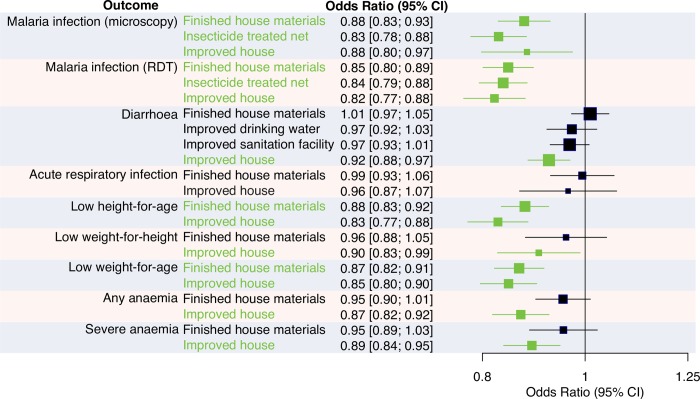
BACKGROUND: Housing is essential to human well-being but neglected in global health. Today, housing in Africa is rapidly improving alongside economic development, creating an urgent need to understand how these changes can benefit health. We hypothesised that improved housing is associated with better health in children living in sub-Saharan Africa (SSA). We conducted a cross-sectional analysis of housing conditions relative to a range of child health outcomes in SSA. METHODS AND FINDINGS: Cross-sectional data were analysed for 824,694 children surveyed in 54 Demographic and Health Surveys, 21 Malaria Indicator Surveys, and two AIDS Indicator Surveys conducted in 33 countries between 2001 and 2017 that measured malaria infection by microscopy or rapid diagnostic test (RDT), diarrhoea, acute respiratory infections (ARIs), stunting, wasting, underweight, or anaemia in children aged 0-5 years. The mean age of children was 2.5 years, and 49.7% were female. Housing was categorised into a binary variable based on a United Nations definition comparing improved housing (with improved drinking water, improved sanitation, sufficient living area, and finished building materials) versus unimproved housing (all other houses). Associations between house type and child health outcomes were determined using conditional logistic regression within surveys, adjusting for prespecified covariables including age, sex, household wealth, insecticide-treated bed net use, and vaccination status. Individual survey odds ratios (ORs) were pooled using random-effects meta-analysis. Across surveys, improved housing was associated with 8%-18% lower odds of all outcomes except ARI (malaria infection by microscopy: adjusted OR [aOR] 0.88, 95% confidence intervals [CIs] 0.80-0.97, p = 0.01; malaria infection by RDT: aOR 0.82, 95% CI 0.77-0.88, p < 0.001; diarrhoea: aOR 0.92, 95% CI 0.88-0.97, p = 0.001; ARI: aOR 0.96, 95% CI 0.87-1.07, p = 0.49; stunting: aOR 0.83, 95% CI 0.77-0.88, p < 0.001; wasting: aOR 0.90, 95% CI 0.83-0.99, p = 0.03; underweight: aOR 0.85, 95% CI 0.80-0.90, p < 0.001; any anaemia: aOR 0.87, 95% CI 0.82-0.92, p < 0.001; severe anaemia: aOR 0.89, 95% CI 0.84-0.95, p < 0.001). In comparison, insecticide-treated net use was associated with 16%-17% lower odds of malaria infection (microscopy: aOR 0.83, 95% CI 0.78-0.88, p < 0.001; RDT: aOR 0.84, 95% CI 0.79-0.88, p < 0.001). Drinking water source and sanitation facility alone were not associated with diarrhoea. The main study limitations are the use of self-reported diarrhoea and ARI, as well as potential residual confounding by socioeconomic position, despite adjustments for household wealth and education. CONCLUSIONS: In this study, we observed that poor housing, which includes inadequate drinking water and sanitation facility, is associated with health outcomes known to increase child mortality in SSA. Improvements to housing may be protective against a number of important childhood infectious diseases as well as poor growth outcomes, with major potential to improve children's health and survival across SSA.
Overview
The claims and statistics of this paper haven’t been checked yet.
Run the check — free, no account needed. It reads the open-access text and checks the sources it cites.
Integrity signals
Registry
Cites
Statistics
Figures
Verification
Claims the paper makes
The claims and statistics of this paper haven’t been checked yet.
Run the check — free, no account needed. It reads the open-access text and checks the sources it cites.
Claims other papers make about this one
Each is checked against this paper’s own text: does it say what the citing paper says it does?
In the citing paper
“and that closed eaves, together with modern housing elements, such as metal roofs, window screening, and improved doors, are associated with reduced malaria burdens.10, 11, 12, 13”
From Impact and cost-effectiveness of a lethal house lure against malaria transmission in central Côte d'Ivoire: a two-arm, cluster-randomised controlled trial (2021) · cites this paper as [13]
Self-check
Percentages, sums and reported differences re-computed from the paper’s own numbers.
The self-check needs the paper’s full text.
Citations
Cites
Meta-analysis in clinical trials
DerSimonian, R., & Laird, N. (1986) · Controlled Clinical Trials · doi:10.1016/0197-2456(86)90046-2 · Cited by 39,552 · cited 1×
“Individual survey odds ratios (ORs) were combined to produce a summary OR using random-effects meta-analysis [25].”
MethodRoth, G. A., Abate, D., Abate, K. H., Abay, S. M., Abbafati, C., Abbasi, N., Abbastabar, H., Abd-Allah, F., Abdela, J., Abdelalim, A., et al. (2018) · The Lancet · doi:10.1016/s0140-6736(18)32203-7 · Cited by 8,600
World Population Prospects The 2006 Revision
Zlotnik, H. (2007) · United Nations eBooks · Cited by 7,896
Naghavi, M., Abajobir, A. A., Abbafati, C., Abbas, K. M., Abd-Allah, F., Abera, S. F., Aboyans, V., Adetokunboh, O., Afshin, A., Agrawal, A., et al. (2017) · The Lancet · doi:10.1016/s0140-6736(17)32152-9 · Cited by 4,821
Constructing socio-economic status indices: how to use principal components analysis
Vyas, S., & Kumaranayake, L. (2006) · Health Policy and Planning · doi:10.1093/heapol/czl029 · Cited by 3,280 · cited 4×
“To condense these 12 assets into a single dimensional index, we tested isometric mapping, kernel principle component analysis, t-distributed stochastic neighbour embedding, and linear PCA.”
MethodInfluentialThe effect of malaria control on Plasmodium falciparum in Africa between 2000 and 2015
Bhatt, S., Weiss, D. J., Cameron, E., Bisanzio, D., Mappin, B., Dalrymple, U., Battle, K. E., Moyes, C. L., Henry, A., Eckhoff, P. A., et al. (2015) · Nature · doi:10.1038/nature15535 · Cited by 3,225
Self-citationBhutta, Z. A., Das, J. K., Rizvi, A., Gaffey, M. F., Walker, N., Horton, S., Webb, P., Lartey, A., & Black, R. E. (2013) · The Lancet · doi:10.1016/s0140-6736(13)60996-4 · Cited by 3,093
Housing and Health: Time Again for Public Health Action
Krieger, J., & Higgins, D. L. (2002) · American Journal of Public Health · doi:10.2105/ajph.92.5.758 · Cited by 1,550 · cited 1×
“A lack of affordable housing has been linked to inadequate nutrition in other settings [7].”
BackgroundThe sustainable development goals: 17 goals to transform our world
Clark, H., & Wu, H. (2016) · United Nations eBooks · doi:10.18356/69725e5a-en · Cited by 656
Report on the Sanitary Condition of the Labouring Population of Great Britain
MacNalty, A. S. (1965) · BMJ · doi:10.1136/bmj.2.5467.926-a · Cited by 476
Research works printed but not linked: 12
- WHO-AFRO, 2019, Fact sheet on child health
- E Chadwick, 1965, Britain
- WHO, 2018, Housing and Health Guidelines
- UN, 2015, World Population Prospects, 2015 Revision
- ICF International, 2011, Demographic and Health Surveys Methodology
- WHO, 2018, Global reference list of 100 core health indicators (plus health-related SDGs)
- WHO, 2011, Haemoglobin concentrations for the diagnosis of anaemia and assessment of severity
- UN, 2012, Indicators for monitoring the Millennium Development Goals: 7.10 Proportion of urban population living in slums 2012
- World Health Organization, 2015, Progress on sanitation and drinking water– 2015 update and MDG assessment
- SO Rutstein, 2015, Steps to constructing the new DHS Wealth Index
- WHO, 2016, Burning opportunity: clean household energy for health, sustainable development, and wellbeing of women and children
- Institute MG, 2016, Lions on the move II: Realizing the potential of Africa's economies
Cited by
Sorted by citations
Casari, S., Paola, M. D., Banci, E., Diallo, S., Scarallo, L., Renzo, S., Gori, A., Renzi, S., Paci, M., de Mast, Q., et al. (2022) · Nutrients · doi:10.3390/nu14091782 · Cited by 160
The state of earthen housing worldwide: how development affects attitudes and adoption
Marsh, A., & Kulshreshtha, Y. (2021) · Building Research & Information · doi:10.1080/09613218.2021.1953369 · Cited by 89
Household, dietary and healthcare factors predicting childhood stunting in Ethiopia
Ayelign, A., & Zerfu, T. A. (2021) · Heliyon · doi:10.1016/j.heliyon.2021.e06733 · Cited by 72
“Our findings are in lined with previous studies (Apio et al., 2019; Beal et al., 2018; Binagwaho et al., 2020; Bogale et al., 2020; Kismul et al., 2018; Karlsson et al., 2020; Tusting et al., 2020).”
ResultObasohan, P. E., Walters, S. J., Jacques, R., & Khatab, K. (2020) · International Journal of Environmental Research and Public Health · doi:10.3390/ijerph17238782 · Cited by 71
“…and interaction terms, source of drinking water and mother’s BMI Nil Nil Nil Children whose mothers are uneducated are at higher risk of being stunted Tusting et al. (2020) [33] To establish that improved housing is associated with improved child health in SSA stunting, wasting and…”
BackgroundInfluentialSternberg, E. D., Cook, J., Alou, L. P. A., Assi, S. B., Koffi, A. A., Doudou, D. T., Aoura, C. J., Wolie, R. Z., Oumbouke, W. A., Worrall, E., et al. (2021) · The Lancet · doi:10.1016/s0140-6736(21)00250-6 · Cited by 57
Sahiledengle, B., Petrucka, P. M., Kumie, A., Mwanri, L., Beressa, G., Atlaw, D., Tekalegn, Y., Zenbaba, D., Desta, F., & Agho, K. (2022) · BMC Public Health · doi:10.1186/s12889-022-14309-z · Cited by 63
“Current evidence clearly shows that the housing environment has significantly impacts children’s growth and development [55, 56].”
BackgroundSmith, J. L., Mumbengegwi, D. R., Haindongo, E., Cueto, C., Roberts, K. W., Gosling, R. D., Uusiku, P., Kleinschmidt, I., Bennett, A. F., & Sturrock, H. J. W. (2021) · PLoS ONE · doi:10.1371/journal.pone.0252690 · Cited by 63
Lindsay, S. W., Davies, M., Alabaster, G., Altamirano, H., Jatta, E., Jawara, M., Carrasco-Tenezaca, M., von Seidlein, L., Shenton, F. C., Tusting, L. S., et al. (2020) · Philosophical Transactions of the Royal Society B Biological Sciences · doi:10.1098/rstb.2019.0814 · Cited by 48
A review of the impact of shelter design on the health of displaced populations
Conzatti, A., Kershaw, T., Copping, A., & Coley, D. (2022) · Journal of International Humanitarian Action · doi:10.1186/s41018-022-00123-0 · Cited by 51
Rahut, D. B., Mishra, R., & Bera, S. (2023) · Nutrition · doi:10.1016/j.nut.2023.112346 · Cited by 93
Obasohan, P. E., Walters, S. J., Jacques, R., & Khatab, K. (2021) · International Journal of Environmental Research and Public Health · doi:10.3390/ijerph18042119 · Cited by 42
Gao, Y., Zhang, L., Ashish, K. C., Wang, Y., Zou, S., Chen, C., Huang, Y., Mi, X., & Zhou, H. (2021) · PLoS Medicine · doi:10.1371/journal.pmed.1003578 · Cited by 42
“Our definition was aligned with 2 recent studies that explored changes in housing and their impact on child health in SSA [9,16].”
BackgroundMethodResultInfluentialPinder, M., Bradley, J., Jawara, M., Affara, M., Conteh, L., Correa, S., Jeffries, D. J., Jones, C. O. H., Kandeh, B., Knudsen, J., et al. (2021) · The Lancet Planetary Health · doi:10.1016/s2542-5196(21)00002-4 · Cited by 39
Dietler, D., Loss, G. J., Farnham, A., de Hoogh, K., Fink, G., Utzinger, J., & Winkler, M. S. (2021) · Environmental Impact Assessment Review · doi:10.1016/j.eiar.2021.106591 · Cited by 38
Mapping socioeconomic inequalities in malaria in Sub-Sahara African countries
Carrasco‐Escobar, G., Fornace, K., & Benmarhnia, T. (2021) · Scientific Reports · doi:10.1038/s41598-021-94601-x · Cited by 31
Malaria among under-five children in Ethiopia: a systematic review and meta-analysis
Biset, G., Tadesse, A. W., Tegegne, K. D., Tilahun, L., & Gebeyehu, N. A. (2022) · Malaria Journal · doi:10.1186/s12936-022-04370-9 · Cited by 30
“8%) [46], (21%) [47], and (26%) [48], the national malaria survey in Gambella (21%) [49], a study in Uganda (19.”
BackgroundResultMangani, C., Frake, A. N., Chipula, G., Mkwaila, W., Kakota, T., Mambo, I., Chim'gonda, J., Mathanga, D., Mzilahowa, T., Zulu, L., et al. (2022) · The American Journal of Tropical Medicine and Hygiene · doi:10.4269/ajtmh.21-0390 · Cited by 28
“However, a recent meta-analysis from 21 studies from sub-Saharan Africa countries conducted between 2008 and 2015 found that modern housing was associated with a 9–14% reduction in the odds of malaria infection compared with traditional housing.(65) There has been an incremental improvement in quality of housing acros…”
BackgroundGao, Y., Wang, Y., Mi, X., Zhou, M., Zou, S., & Zhou, H. (2021) · International Journal of Environmental Research and Public Health · doi:10.3390/ijerph181910138 · Cited by 24
“If the material of more than one out of three components of its floor, roof, and wall could be classified as “unfinished” based on the DHS criteria (Supplementary Table S2), then the house’s building material was considered as unfinished [5,20].”
BackgroundCai, Y. S., Gibson, H. S., Ramakrishnan, R., Mamouei, M., & Rahimi, K. (2021) · International Journal of Environmental Research and Public Health · doi:10.3390/ijerph18189729 · Cited by 22
“As with a previous study [18], outcomes were derived from answers to the two questionnaire items reported by mothers or other caregivers: (1) “Has the child had an illness with a cough at any time in the last two weeks?” and (2) “Has the child had fast, short, rapid breaths or difficulty breathing at any time in the l…”
MethodSpatial variation in lymphatic filariasis risk factors of hotspot zones in Ghana
Kwarteng, E. V. S., Andam‐Akorful, S. A., Kwarteng, A., Asare, D.-C. B. M., Quaye‐Ballard, J. A., Osei, F., & Duker, A. A. (2021) · BMC Public Health · doi:10.1186/s12889-021-10234-9 · Cited by 21
Mapping local variation in household overcrowding across Africa from 2000 to 2018: a modelling study
Chipeta, M. G., Kumaran, E. A. P., Browne, A. J., Hamadani, B. H. K., Haines–Woodhouse, G., Sartorius, B. K. D., Reiner, R. C., Dolecek, C., Hay, S. I., & Moore, C. E. (2022) · The Lancet Planetary Health · doi:10.1016/s2542-5196(22)00149-8 · Cited by 21
Gao, Y., Mi, X., Wang, Y., Zou, S., & Zhou, H. (2021) · International Journal of Environmental Research and Public Health · doi:10.3390/ijerph18041685 · Cited by 19
Musiime, A. K., Krezanoski, P. J., Smith, D. L., Kilama, M., Conrad, M. D., Otto, G., Kyagamba, P., Rwatooro, J. A., Rek, J. C., Nankabirwa, J. I., et al. (2022) · PLOS Global Public Health · doi:10.1371/journal.pgph.0000063 · Cited by 14
“With urbanisation, population expansion and economic growth, housing is widely changing across SSA, offering major potential for improvements in health [9].”
BackgroundResultInfluentialMsoffe, R. V., Hewitt, M., Masalu, J. P., Finda, M., Kavishe, D. R., Okumu, F. O., Mpolya, E. A., Kaindoa, E. W., & Killeen, G. F. (2022) · Malaria Journal · doi:10.1186/s12936-022-04333-0 · Cited by 16
SUTCLIFFE, J. F., & Yin, S. (2021) · Malaria Journal · doi:10.1186/s12936-021-03957-y · Cited by 15
Chilot, D., Diress, M., Gela, Y. Y., Sinamaw, D., Simegn, W., Andualem, A. A., Seid, A. M., Bitew, D. A., Seid, M. A., Eshetu, H. B., et al. (2023) · Scientific Reports · doi:10.1038/s41598-023-27728-8 · Cited by 15
The urban syndemic of COVID-19: insights, reflections and implications
Ellis, G., Grant, M., Brown, C., Caiaffa, W. T., Shenton, F. C., Lindsay, S. W., Dora, C. F. C., Nguendo-Yongsi, H. B., & Morgan, S. (2021) · Cities & Health · doi:10.1080/23748834.2021.1894843 · Cited by 16
“Ultimately, our mission is to improve housing quality in Low-to-Middle Income Countries (Tusting et al. 2019, 2020) and help make our communities resilient against the considerable threat from infectious diseases.”
BackgroundChild health and the housing environment
Brown, C., Ravallion, M. D., & van de Walle, D. (2023) · World Development · doi:10.1016/j.worlddev.2023.106265 · Cited by 14
Dadi, A. F., Ahmed, K. Y., Berhane, Y., Bizuayehu, H. M., Tesema, G. A., Abate, K. H., Kibret, G. D., Ketema, D. B., Bore, M. G., Belachew, S. A., et al. (2024) · The Lancet Global Health · doi:10.1016/s2214-109x(24)00313-9 · Cited by 14
Child undernutrition and its association with household environmental conditions in Bangladesh
Khan, M. M. A., Billah, M. A., Fatima, K., Islam, M. M., Sarker, B. K., Khanam, S. J., Banke-Thomas, A. O., & Khan, M. N. (2024) · Public Health Nutrition · doi:10.1017/s1368980024002325 · Cited by 12
“Inthe LMIC contexts, living in houses constructed with poor housing materials and exposure to HAP are widely known global risks of under-5 stunting and align greatly with our findings (33,40,41) .”
Colston, J. M., Fang, B., Nong, M. K., Chernyavskiy, P., Annapareddy, N., Lakshmi, V., & Kosek, M. N. (2024) · PLOS Global Public Health · doi:10.1371/journal.pgph.0003338 · Cited by 12
Sahiledengle, B., Agho, K., Petrucka, P. M., Kumie, A., Beressa, G., Atlaw, D., Tekalegn, Y., Zenbaba, D., Desta, F., & Mwanri, L. (2023) · Maternal and Child Nutrition · doi:10.1111/mcn.13483 · Cited by 18
“These factors singly and collectively may contribute to childhood undernutrition (Gao et al., 2021; Sahiledengle et al., 2022; Tusting et al., 2020).”
BackgroundChilot, D., Belay, D. G., Shitu, K., Mulat, B., Alem, A. Z., & Geberu, D. M. (2022) · BMJ Open · doi:10.1136/bmjopen-2022-065257 · Cited by 11
Anaele, B. I., Varshney, K., Ugwu, F. S. O., & Frasso, R. (2021) · Malaria Journal · doi:10.1186/s12936-021-03920-x · Cited by 11
Gao, Y., Sheng, J., Mi, X., Zhou, M., Zou, S., & Zhou, H. (2022) · Nutrients · doi:10.3390/nu14030458 · Cited by 16
“The household wealth quintile was constructed following the method recommended by the World Food Programme [33,34].”
MethodHousing and health outcomes: evidence on child morbidities from six Sub-Saharan African countries
Muindi, K., Iddi, S., Gitau, H., & Mberu, B. U. (2023) · BMC Pediatrics · doi:10.1186/s12887-023-03992-5 · Cited by 10
“[15], found reductions in diseases that are leading causes of child mortality including diarrhoea and respiratory illness among children living in housing with some of the attributes we considered in the healthy housing status i.”
BackgroundWand, H. C., Moodley, J., Reddy, T., & Naidoo, S. (2024) · Spatial and Spatio-temporal Epidemiology · doi:10.1016/j.sste.2024.100653 · Cited by 9
Xing, S.-Y., Zhang, H.-T., Wang, L., Lu, H.-Z., Peng, Z., Liu, M., Li, C.-X., & Deng, S. (2024) · Malaria Journal · doi:10.1186/s12936-024-04997-w · Cited by 10
Sahiledengle, B., & Mwanri, L. (2024) · PLOS Global Public Health · doi:10.1371/journal.pgph.0003305 · Cited by 10
Mottelson, J. (2023) · PLoS ONE · doi:10.1371/journal.pone.0292045 · Cited by 9
“More specifically, non-compliance with building regulations can lead to emergence of sub-standard housing conditions that increase exposure to disease and risk of building collapse [5, 6].”
BackgroundNyarko, M. J., ten Ham‐Baloyi, W., & van Rooyen, D. R. M. (2024) · Journal of Nutrition Education and Behavior · doi:10.1016/j.jneb.2024.03.010 · Cited by 14
“26 In our study, teenage pregnancy was perceived as another socioeconomic factor contributing to malnutrition in children.”
BackgroundWoldegebriel, A. G., Gebreegziabiher, G., Desta, A. A., Ajemu, K. F., Berhe, A. A., Woldearegay, T. W., & Bezabih, N. M. (2021) · Pediatric Health Medicine and Therapeutics · doi:10.2147/phmt.s283681 · Cited by 8
Double burden of malnutrition among under-five children in Eastern and Southern African countries
Gebremichael, B., Abera, A., Biadgilign, S., Baye, K., Zhou, S. J., & Haile, D. (2025) · Scientific Reports · doi:10.1038/s41598-025-87144-y · Cited by 7
Farnham, A., Winkler, M. S., Zabré, H. R., Divall, M. J., Fink, G., & Knoblauch, A. M. (2021) · The Extractive Industries and Society · doi:10.1016/j.exis.2021.101016 · Cited by 7
Adejoh, S. O., Кузнецова, И. Б., & Dhesi, S. (2022) · Critical Public Health · doi:10.1080/09581596.2022.2096427 · Cited by 7
“There are both short- and longer-term implications of these difficulties for IDPs’ mental and physical health, with evidence that poor housing and sanitation are associated with health outcomes linked to increased child mortality (Tusting et al., 2020).”
BackgroundKua, K. P., & Lee, S. W. H. (2021) · Reviews on Environmental Health · doi:10.1515/reveh-2020-0169 · Cited by 6
Coulibaly, B., Sié, A., Dah, C., Bountogo, M., Ouattara, M., Compaoré, A., Nikiema, M., Tiansi, J. N., Sibiri, N. D., Brogdon, J. M., et al. (2021) · Malaria Journal · doi:10.1186/s12936-021-03895-9 · Cited by 7
“Children with a baseline infection may have been at higher risk of repeated infection, for example, due to environmental or behavioural factors such as improved housing materials or proximity to standing water, or children with positive smears at baseline may have still been positive at 14 days [25, 26].”
BackgroundGeorge, C. M., Birindwa, A., Li, S., Williams, C., Kuhl, J., Thomas, E., François, R., Sanvura, P., Bisimwa, J., Mirindi, P. N., et al. (2023) · Emerging infectious diseases · doi:10.3201/eid2901.212118 · Cited by 6
“We included household wall type as a measure of socioeconomic status of the household, which has been associated with child growth (24).”
MethodExamining Wealth Trends in Kombewa, Kenya
McLorg, A., Omolo, K., Sifuna, P., Shaw, A., Walia, B., & Larsen, D. A. (2021) · Social Indicators Research · doi:10.1007/s11205-021-02677-9 · Cited by 6
Klu, D., Alhassan, A., Vidzro, S. E., & Aberese-Ako, M. (2026) · Malaria Journal · doi:10.1186/s12936-026-05815-1 · Cited by 5
“Evidence suggests that improved waste management, safe water storage, and access to proper sanitation facilities can significantly reduce malaria transmission [20–22].”
Caravedo, M. A., Morales, M. L., Tanabe, M. B., López, M., White, A. C., & Cabada, M. M. (2024) · American Journal of Tropical Medicine and Hygiene · doi:10.4269/ajtmh.23-0666 · Cited by 5
Kwarteng, E. V. S., Osei, F., Andam‐Akorful, S. A., Kwarteng, A., Asare, D.-C. B. M., Quaye‐Ballard, J. A., & Duker, A. A. (2022) · Frontiers in Tropical Diseases · doi:10.3389/fitd.2022.811909 · Cited by 5
Risk Factors of Diarrhoea Among Under-Five Children in Zimbabwe: A Systematic Review
Mohammadnezhad, M. (2023) · American Journal of Biomedical Science & Research · doi:10.34297/ajbsr.2023.19.002591 · Cited by 5
Yaro, J. B., Tiono, A. B., Sanou, A., Toé, K. H., Bradley, J., Ouédraogo, A., Ouedraogo, Z. A., Guelbeogo, M. W., Agboraw, E., Worrall, E., et al. (2021) · Malaria Journal · doi:10.1186/s12936-021-03926-5 · Cited by 5
Akande, O. K., Yusuf, A., & Sham, R. B. (2023) · Environment-Behaviour Proceedings Journal · doi:10.21834/ebpj.v8i23.4505 · Cited by 5
Vaid, U. G. (2024) · International Journal of Environmental Research and Public Health · doi:10.3390/ijerph21121710 · Cited by 4
“Living in poor quality housing has been associated with various communicable diseases [3,4], non-communicable diseases including asthma [5] and hypertension [6], higher childhood mortality [7], as well as mental health problems [8,9]; for a review see [10].”
Does piped water improve adolescent health? Empirical evidence from rural China
Dong, J., Zhang, K., Yin, X., Li, H., & Koondhar, M. A. (2021) · Review of Development Economics · doi:10.1111/rode.12759 · Cited by 4
Family Health Behavior: Preventive Measures against Acute Respiratory Infections in Under-5 Children
Puspitasari, M. D., & Rahardja, M. B. (2021) · International Journal of Preventive Medicine · doi:10.4103/ijpvm.ijpvm_580_20 · Cited by 4
“[35] Some factors, such as improved household sanitation,[36,37] younger age, and higher economic status, are associated with a decrease in the risk of under‑5 children suffering from ARI.”
BackgroundInfluentialCanelas, T., Thomsen, E. K., McDermott, D. P., Sternberg, E. D., Thomas, M. B., & Worrall, E. (2021) · PLOS Global Public Health · doi:10.1371/journal.pgph.0000030 · Cited by 4
Housing and Child Health in South Africa: The Value of Longitudinal Research
Chatindiara, K., Marais, L., & Cloete, J. (2022) · International Journal of Environmental Research and Public Health · doi:10.3390/ijerph19052497 · Cited by 5
“conditions are likely to cause child mortality since children spend more time at home than adults and are thus more likely to be affected [8].”
BackgroundCOVID-19 & informal settlements: is ‘Stay Home’ safe?
Nix, E., Paulose, J., Lakhanpaul, M., Factor-Litvak, P. R., Parikh, P., Altamirano, H., Karim, Y. B., & Manikam, L. (2022) · UCL Open Environment · doi:10.14324/111.444/ucloe.000038 · Cited by 4
“Housing has been often missed from the global health agenda, looked through the lens of affordability and access, and considered physically adequate when built from finished materials, with sufficient space and having access to water and sanitation [12].”
BackgroundUnderstanding inequities in child mortality in Egypt: Socioeconomic and proximate factors
Abdelhady, M., & Farag, M. (2023) · Global Public Health · doi:10.1080/17441692.2023.2276861 · Cited by 4
“In 2020, Tusting et al. and Yang et al. found an increased risk posed by unprotected water sources and sanitation on child health in the Sub-Saharan Africa region (Tusting et al., 2020; Yang et al., 2020).”
BackgroundClimate Change and Malaria: A Call for Robust AnalyticsPreprint
Laydon, D. J., Smith, D. L., Chakradeo, K., Khurana, M. P., Okiring, J., Duchêne, D. A., & Bhatt, S. (2024) · medRxiv · doi:10.1101/2024.09.16.24313623 · Cited by 5
“The distribution of malaria, and its transmission intensity and seasonality have been shaped by a range of factors: climate [1–3], mosquito ecology and biogeography [4], malaria control [5], economic development [6], human genetics [7, 8], and history [9].”
Child Stunting and Temperature Anomalies: A Cross-Sectional Study in Burkina Faso and Kenya
Mansfield, T. C., Brown, M. E., & Gore, M. L. (2025) · Children · doi:10.3390/children12101346 · Cited by 4
“…and Health Surveys (DHS) across sub-Saharan Africa including Kenya and Burkina Faso findings revealed that monthly mean daytime land surface temperatures exceeding 35 ◦ C were significantly associated with increased odds of wasting, underweight, and concurrent stunting with wasting [33].”
Guthula, V. B., Oehmcke, S., Chilaule, R. V. E., Zhang, H., Lang, N., Kariryaa, A., Mottelson, J., & Igel, C. (2025) · Science of Remote Sensing · doi:10.1016/j.srs.2025.100306 · Cited by 3
More than just a home: the impact of household conditions on early childhood development in Jordan
Al-Masaeid, M., & Almomani, M. (2026) · Health Education · doi:10.1108/he-09-2025-0168 · Cited by 3
The Role of African Nurse Diaspora in Addressing Public Health Priorities in Africa
Ezeonwu, M. C. (2021) · Global Qualitative Nursing Research · doi:10.1177/23333936211031501 · Cited by 3
“…et al., 2018), poor water and air quality, poor sanitation, environmental degradation (Bradshaw et al., 2019; Yang et al., 2020), poor housing (Tusting et al., 2020), political instability and conflicts (Atti & Gulis, 2017), social and ethnic stratification and inequality (Ichoku et al.,…”
BackgroundA sensitive mass spectrometry-based method to identify common respiratory pathogens in children
Hu, L., Zhang, S., Song, W., Fang, D., Xie, Z., Chen, X., Liu, M., Cui, B., Zhang, Y., Zhang, R., et al. (2023) · Microbiology Spectrum · doi:10.1128/spectrum.01858-23 · Cited by 3
Azanaw, J., Melese, M., & Worede, E. A. (2025) · Scientific Reports · doi:10.1038/s41598-025-96412-w · Cited by 3
Liu, Z., Fan, Y., Ashorn, P., Chingwanda, C., Maleta, K. M., Hallamaa, L., Hyöty, H., Chaima, D., & Ashorn, U. (2022) · International Journal of Environmental Research and Public Health · doi:10.3390/ijerph191710891 · Cited by 6
Golzarpour, M., Santana, P., Sajjadi, H., Harouni, G. G., da Costa, C. H., Ziapour, A., Azizi, S. A., Akbari, M., & Afrashteh, S. (2023) · Frontiers in Public Health · doi:10.3389/fpubh.2023.1134411 · Cited by 3
Rahmadiani, I., Fibriana, A. I., Nisa, A. A., Shabbir, S. A., & Azam, M. (2025) · International Journal of Preventive Medicine · doi:10.4103/ijpvm.ijpvm_242_24 · Cited by 2
Amugongo, J. S., LaBeaud, A. D., Bosire, C. M., Bisanzio, D., Nzaro, M., Ngari, M. M., Vu, D. M., Ndenga, B. A., & Mutuku, F. M. (2025) · Malaria Journal · doi:10.1186/s12936-025-05657-3 · Cited by 2
“…water Unprotected (River/rain/public well) 1756 [74] 826 [83] 157 [78] [87] Protected (Piped/well inside the compound) 615 [26] 166 [17] 45 [22] [13] Source of house lighting Paraffin 1533 [65] 790 [80] 141 [70] [83] Electricity 781 [33] 178 [18] 57 [28] [15] Solar 57 (2.4) 24 (2.4) 4 (2.0) (1.7)”
InfluentialMottelson, J., Chilaule, R. V. E., Mlacha, Y. P., Limwagu, A. J., Chaki, E., Skalbo, E., Kruse, M. M., Streich, O. S. C., Ulriksen, M. B., Klüver, T., et al. (2026) · Cities · doi:10.1016/j.cities.2026.107053 · Cited by 2
Mwinga, K., Mwinga, N., & Nomaguchi, T. (2021) · Springer eBooks · doi:10.1007/978-3-030-45009-0_44 · Cited by 2
Adeniyi, L. A., & Olayiwola, A. M. (2024) · Journal of Housing and the Built Environment · doi:10.1007/s10901-024-10171-0 · Cited by 2
“However, shreds of evidence avail on the relation - ship between ill health and poor housing conditions (Mberu et al., 2016; Adebowale et al., 2017; Tusting et al., 2020 ).”
Determinación social en la ocurrencia de anemia ferropénica en niños: una revisión sistemática
Infantozzi, F. C., Thumé, E., & Nedel, F. (2022) · Revista Uruguaya de Enfermería · doi:10.33517/rue2022v17n1a7 · Cited by 2
Nshimyiryo, A., Barnhart, D. A., Kateera, F., Mazimpaka, C., Niyigena, A., Ngoga, G., Uwamahoro, P., Galaris, J., Gato, S., Umugisha, J. P., et al. (2022) · Journal of Global Health Reports · doi:10.29392/001c.36464 · Cited by 2
Tartour, A. I., Osman, T., Javed, R., Ali, R., Syed, A., Elnour, F. A., Saeed, A., Bansal, D., Al-Romaihi, H. E., & Farag, E. (2024) · Qatar journal of public health. · doi:10.5339/qjph.2023.9 · Cited by 2
Mapping Local Variation in Household Overcrowding Across Africa from 2000 to 2018: A Modelling StudyPreprint
Chipeta, M. G., Kumaran, E. A. P., Browne, A. J., Hamadani, B. H. K., Haines–Woodhouse, G., Sartorius, B. K. D., Reiner, R. C., Dolecek, C., Hay, S. I., & Moore, C. E. (2022) · SSRN Electronic Journal · doi:10.2139/ssrn.4000670 · Cited by 2
Yaro, J. B., Tiono, A. B., Sanou, A., Toé, K. H., Bradley, J., Ouédraogo, A., Ouedraogo, Z. A., Guelbeogo, M. W., Agboraw, E., Worrall, E., et al. (2021) · Research Square · doi:10.21203/rs.3.rs-273831/v1 · Cited by 2
Azzahra, H., Razak, R., Budiastuti, A., & Ramadhanti, I. T. (2024) · PREPOTIF Jurnal Kesehatan Masyarakat · doi:10.31004/prepotif.v8i3.37571 · Cited by 1
“Peningkatan kualitas rumah melalui penggunaan bahan bangunan yang baik dan penyediaan ruang untuk tinggal yang memadai ( sufficient living area ), dapat mencegah munculnya masalah kesehatan pada anak (Tustingi et al., 2020).”
Moomin, S. T., Sidik, M. G., Ahmed, S. D., Gawusu, S., Jamatutu, S. A., & Abdul-Fatawu, M. (2025) · World Development Sustainability · doi:10.1016/j.wds.2025.100250 · Cited by 1
Roy, C., Sati, V. P., Sharma, M., Banerjee, S., & Kalbalia, P. (2025) · Discover Public Health · doi:10.1186/s12982-025-01205-1 · Cited by 1
“Strengthening healthcare infrastructure in vulnerable villages is essential, potentially involving the establishment of local health centres, mobile health units, and the training of community health workers [62–64].”
Fambirai, T., & Chimbari, M. J. (2025) · Malaria Journal · doi:10.1186/s12936-025-05770-3 · Cited by 1
Ozughalu, U. M., & Ozughalu, J. N. (2026) · Child Indicators Research · doi:10.1007/s12187-025-10319-6 · Cited by 1
Sefah, B., Abakah, E., Bosangi, D., Asante, D., Boateng, F., Agyemang, T. S., & Affum, C. (2026) · Discover Public Health · doi:10.1186/s12982-026-01528-7 · Cited by 1
“More densely populated or urbanized areas may benefit from reduced mosquito habitats, improved access to healthcare, and more effective vector control interventions [13, 19].”
Mohamed-Djawad, M. H., Ditombi, B. M., Ngomo, J. M. N., Nguema, O. A. M., Agbanrin, A. A., Ngondza, B. P., Kono, H. N., Nymane, T., Ombago, J., Migueba, V., et al. (2026) · Malaria Journal · doi:10.1186/s12936-026-05865-5 · Cited by 1
“These findings are in line with multi-country analyses showing that gradients of urbani-sation, housing quality, and infrastructure availability are key determinants of malaria risk across sub-Saharan Africa [34, 49, 50].”
Guido, G., Totaro, V., Lochoro, P., Ictho, J., Occa, E., Chhaganlal, K. D., Segala, F. V., Dall’Oglio, G., Mechendura, B. F., Gomonda, E. D. S., et al. (2026) · PLoS neglected tropical diseases · doi:10.1371/journal.pntd.0014186 · Cited by 1
“…as those lacking adequate water and sanitation facilities, providing insufficient living space, and constructed with unfinished materials (e.g., earth, sand, dung, or palm flooring), were associated with an increased likelihood of malaria, diarrhea, stunting, wasting, underweight, and anemia [19].”
A multidimensional assessment of housing quality and socio-spatial inequality: Evidence from Ghana
Aha, B., Abass, A. S., Alimo, P. K., & Ehwi, R. J. (2026) · Habitat International · doi:10.1016/j.habitatint.2026.103934 · Cited by 2
Kim, E. T., Zhou, Y., Mugenyi, L., Lillie, M., Bbosa, J. K., Agaba, C., Ojok, A. M., Hembling, J., Ruhangawebare, G. K., Miller, C., et al. (2022) · Journal of Development Effectiveness · doi:10.1080/19439342.2022.2089201 · Cited by 1
“Household poverty is a major hindrance to children’s optimal health and educational attainment globally (Black et al. 2017; Tusting et al. 2020; AAP Council on Community Pediatrics 2016; Arpino, Gumà, and Julià 2018; Engle and Black 2008).”
BackgroundSaha, J., Saha, J., Roy, A., & Chouhan, P. (2023) · Journal of Public Health · doi:10.1007/s10389-023-02091-0 · Cited by 1
“Furthermore, some studies have concentrated only on children, young and middle-aged populations, although older age groups are also susceptible to the adverse effects of household air pollution on their health (Yaya et al. 2018; Franklin et al. 2019; Tustingi et al. 2020; Saha and Chouhan 2020).”
Potential risk of stunting in children under five years living by the riverside: A systematic review
Restila, R., Wispriyono, B., Arminsih, R., Achmadi, U. F., Miko, T. Y., Djafri, D., & Hananto, M. (2023) · Malaysian Journal of Nutrition · doi:10.31246/mjn-2022-0143 · Cited by 4
Shirima, R. S., Katusi, G. C., Mmbando, A. S., Fanuel, G., Aslanis, D., Kadam, S., Lonji, C. T., Sylvester, H. A., Lluberas, M., Okumu, F. O., et al. (2024) · Parasites & Vectors · doi:10.1186/s13071-024-06407-1 · Cited by 1
“Poor house designs in sub-Saharan Africa continue to contribute to malaria transmission [9, 10, 15, 39–41].”
BackgroundMinawir, N. M., Mbaga, D. S., Béchir, M., Sodio, B., & Yaro, A. S. (2025) · Food and Nutrition Sciences · doi:10.4236/fns.2025.161006 · Cited by 1
George, C. M., Birindwa, A., Li, S., Williams, C., Kuhl, J., Thomas, E., François, R., Sanvura, P., Bisimwa, J., Mirindi, P. N., et al. (2022) · Emerging infectious diseases · doi:10.3201/eid2811.212118 · Cited by 1
Socioeconomic status and mental health
Bradley, R. H. (2022) · Elsevier eBooks · doi:10.1016/b978-0-323-91497-0.00131-4 · Cited by 1
Mwinga, K., Mwinga, N., & Nomaguchi, T. (2020) · Springer eBooks · doi:10.1007/978-3-030-05325-3_44-1
A Comparative Look at Social Housing in Developed and Developing Countries
Emoh, F. I., Macdonald, D., Oham, C. A. C., & Kulothungan, G. (2022) · Advances in business strategy and competitive advantage book series · doi:10.4018/978-1-7998-7724-0.ch005
COVID-19 & informal settlements: is Stay Home safe?Preprint
Nix, E., Paulose, J., Lakhanpaul, M., Factor-Litvak, P. R., Parikh, P., Altamirano, H., Karim, Y. B., & Manikam, L. (2021) · doi:10.14324/111.444/000038.v2
Metadata
- Authors
- Tusting, L. S., Gething, P. W., Gibson, H. S., Greenwood, B., Knudsen, J., Lindsay, S. W., & Bhatt, S.
- Affiliations
- London School of Hygiene & Tropical Medicine (GB)
- University of Oxford (GB)
- Royal Danish Academy – Architecture, Design, Conservation (DK)
- Durham University (GB)
- Corresponding author
- Tusting, Lucy S.
- ORCID
- Venue
- PLoS Medicine
- Publisher
- Public Library of Science (PLoS)
- Published
- 2020-03-23
- Volume
- 17
- Issue
- 3
- Pages
- e1003055
- ISSN
- 1549-1277 (ISSN-L)
- 1549-1676
- PMC
- PMC7089421
- OpenAlex
- W3012798392
- Cited by
- 130
- References
- 30
- Citations by year
- 2026: 21 · 2025: 16 · 2024: 17 · 2023: 16 · 2022: 24 · 2021: 33 · 2020: 3
- FWCI
- 12.01
- Type
- journal article
- Language
- en
- Open access
- gold
- doi.org
- Licence
- Locations
- PLoS Medicine (publishedVersion, cc-by)
- Europe PMC (PubMed Central) (publishedVersion, cc-by)
- PubMed Central (publishedVersion, cc-by)
- PubMed (publishedVersion)
- Architecture, Design and Conservation (Aarhus School of Architecture, Design School Kolding, The Royal Danish Academy of Fine Arts, Schools of Architecture, Design and Conservation (KADK)) (publishedVersion, other-oa)
- Durham Research Online (Durham University) (acceptedVersion)
- LSHTM Research Online (London School of Hygiene and Tropical Medicine) (acceptedVersion)
- Durham Research Online (Durham University) (submittedVersion, cc-by)
- DOAJ (DOAJ: Directory of Open Access Journals) (submittedVersion, cc-by-sa)
- Figshare (submittedVersion, cc-by)
- Funders
- Academy of Medical Sciences (SBF004\1080)
- European Commission (EDCTP2-programme, EDCTP2)
- Department for International Development (N011570)
- Global Challenges Research Fund
- Directorate for Biological Sciences
- Medical Research Council (MR/N011570/2, N011570, MR/R015600/1, MR/N011570/1)
- Biotechnology and Biological Sciences Research Council (BB/R00532X/1)
- European and Developing Countries Clinical Trials Partnership (EDCTP2)
- Topics
- Health Sciences › Nursing › Nutrition and Dietetics › Child Nutrition and Water Access
- Social Sciences › Urban Studies › Urban and Rural Development Challenges
- Health Sciences › Medicine › Pediatrics, Perinatology and Child Health › Global Maternal and Child Health
- Keywords
- housing conditions, child health, improved housing, malaria, diarrhea, acute respiratory infections, stunting, wasting, underweight, anemia, household wealth, sanitation, drinking water, sub-Saharan Africa, child mortality, insecticide-treated nets, vaccination status, household crowding
- MeSH terms
- Child Health, Age Factors, Anemia, Child, Preschool, Cross-Sectional Studies, Diarrhea, Female, Health Status, Health Surveys, Housing, Humans, Infant, Infant, Newborn, Malaria, Male, Prospective Studies, Risk Factors, Sanitation, Child Nutrition Disorders, Africa South of the Sahara, Risk Assessment, Insecticide-Treated Bednets, Drinking Water, Social Determinants of Health, Protective Factors
About these checks
Registry, retraction, Cites and statistics results are computed, not judged, with one exception: a printed reference that no index lists is read once by a model before it counts as a citation error. Claims are extracted by a model and kept only when their quote appears verbatim in the text; each cited source is then checked, with a model’s help, for whether it says what the claim relies on. Those verdicts can be wrong — read the claim’s quote and the cited source before relying on one.
Statistics and arithmetic are recomputed, not judged.
Confidence bands are shown only for fields calibrated on our annotated test set. None is calibrated yet, so no band is shown.
What counts as a claim ›How we measure confidence ›How we check this ›
Are you an author, or do you see a problem with this page? Request a review
