

Symptom burden and health-related quality of life in chronic kidney disease: A global systematic review and meta-analysis
Open accessThe DOI matches its Crossref record; 35 of the 35 references it cites were found in a registry or an index.
Abstract
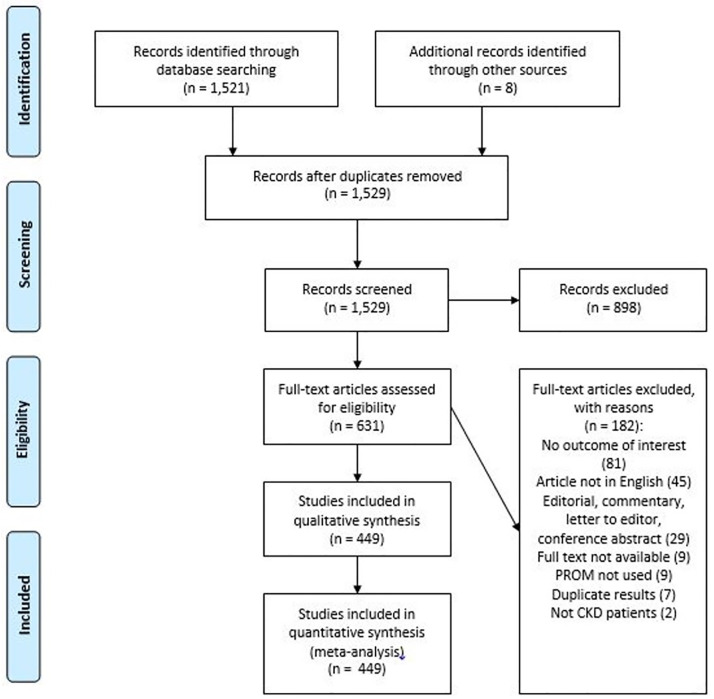
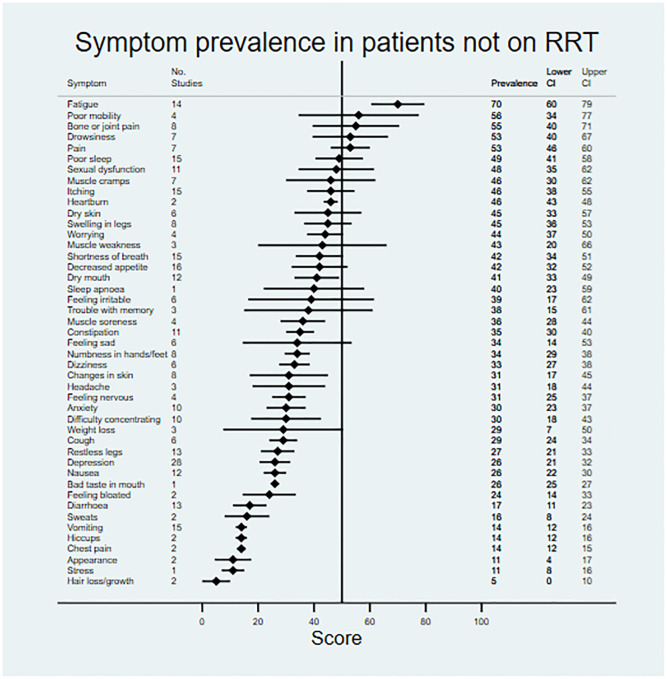
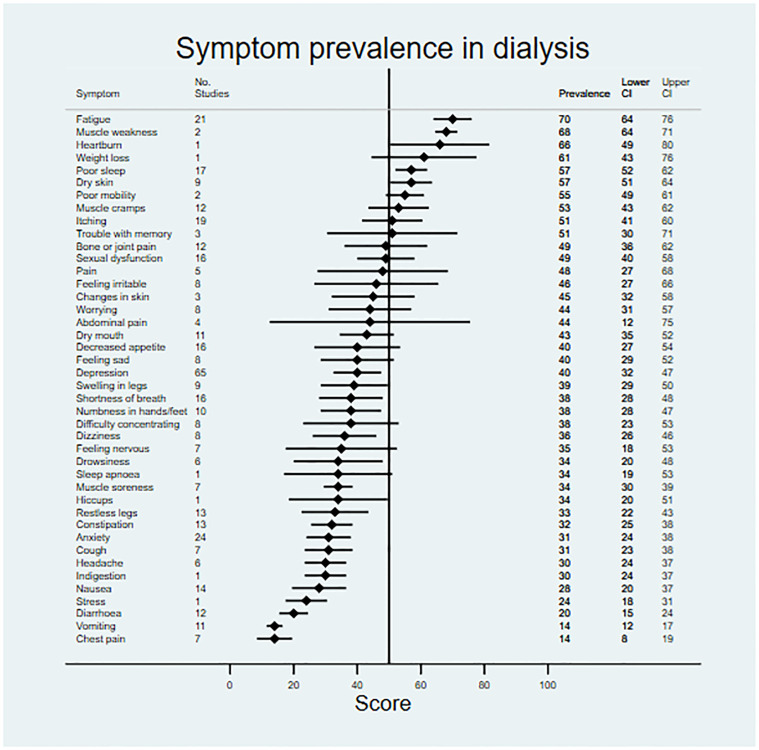
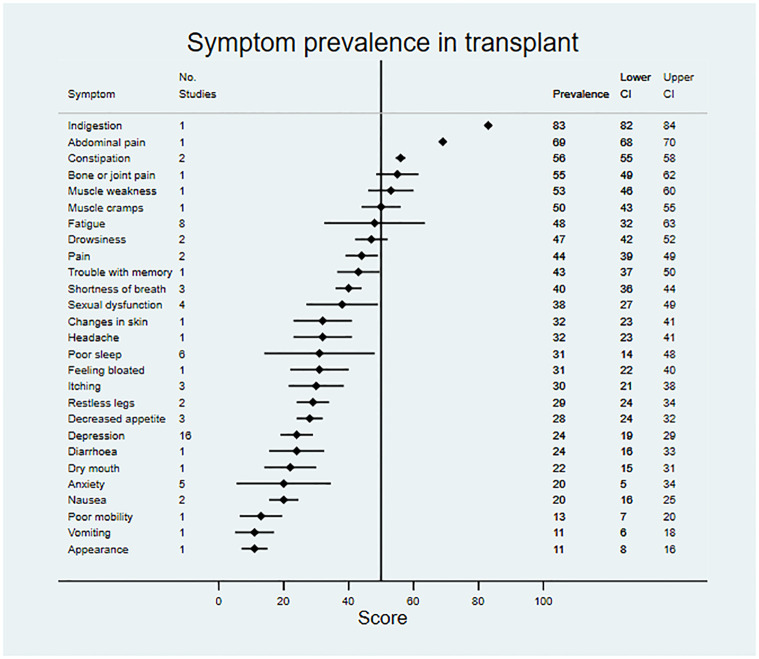
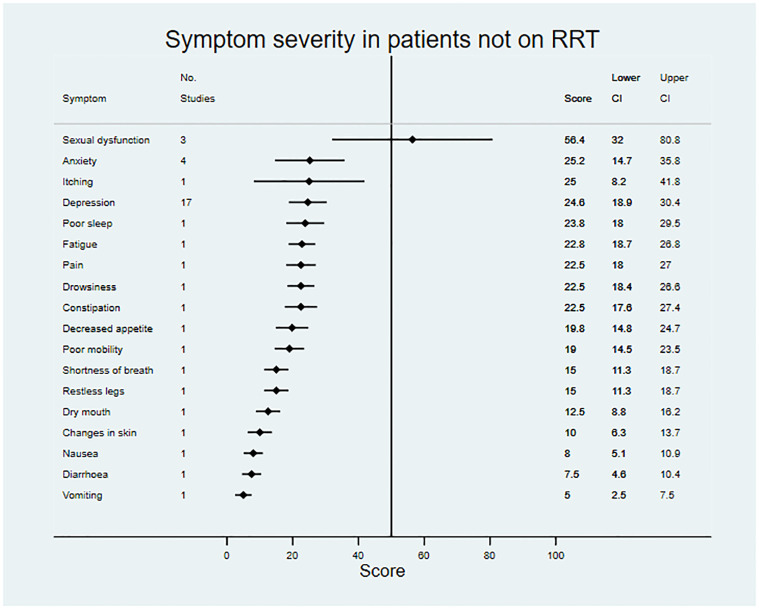
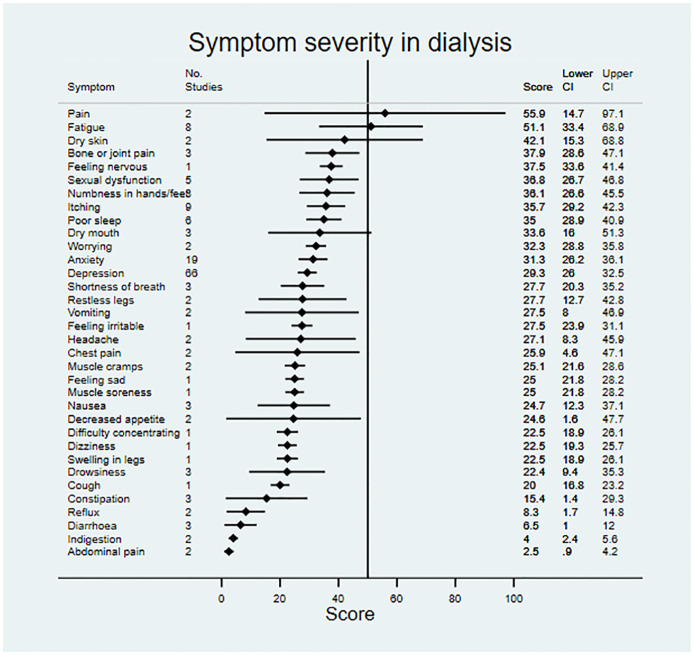
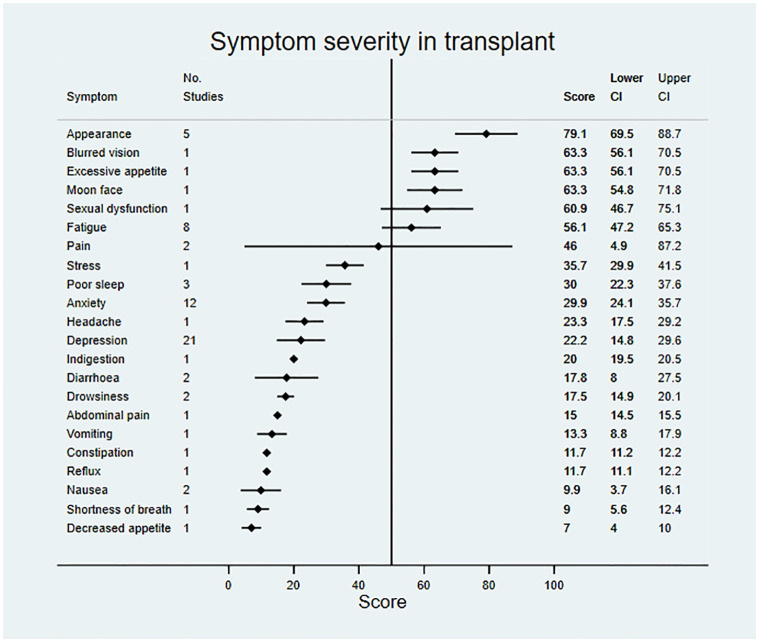
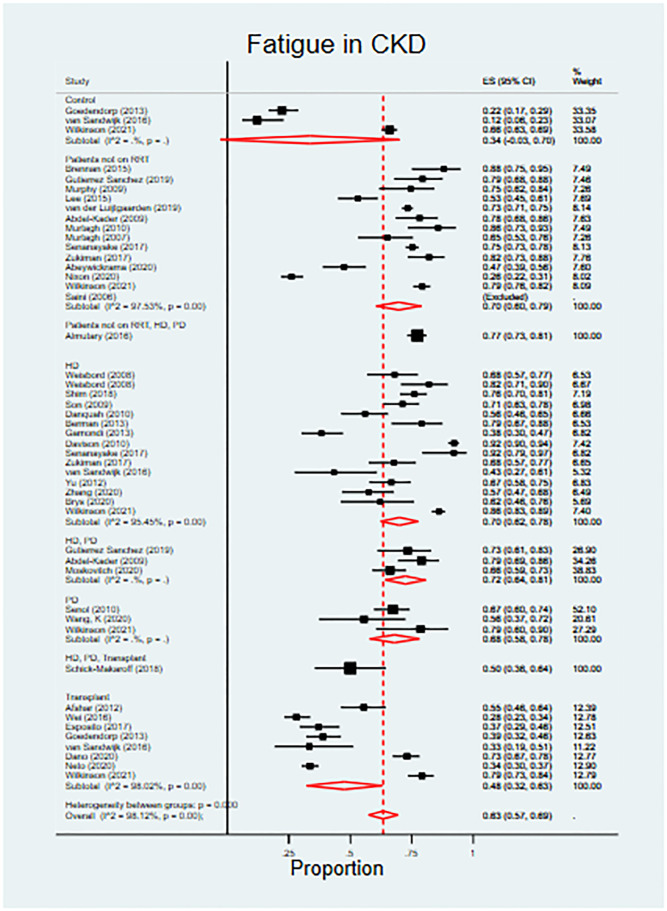
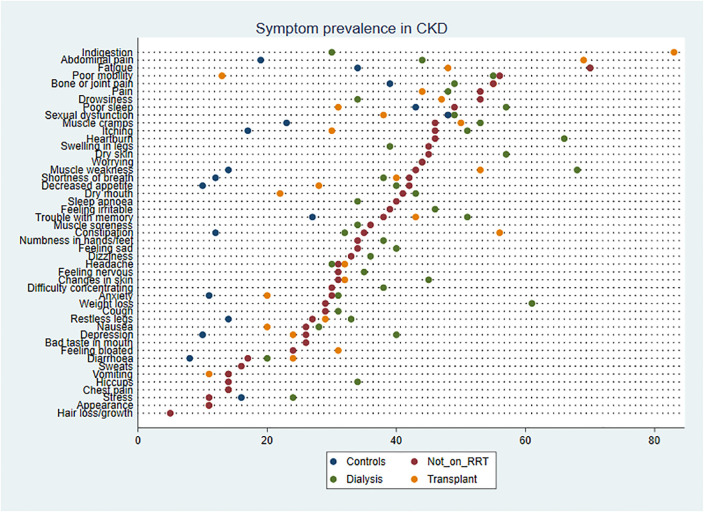
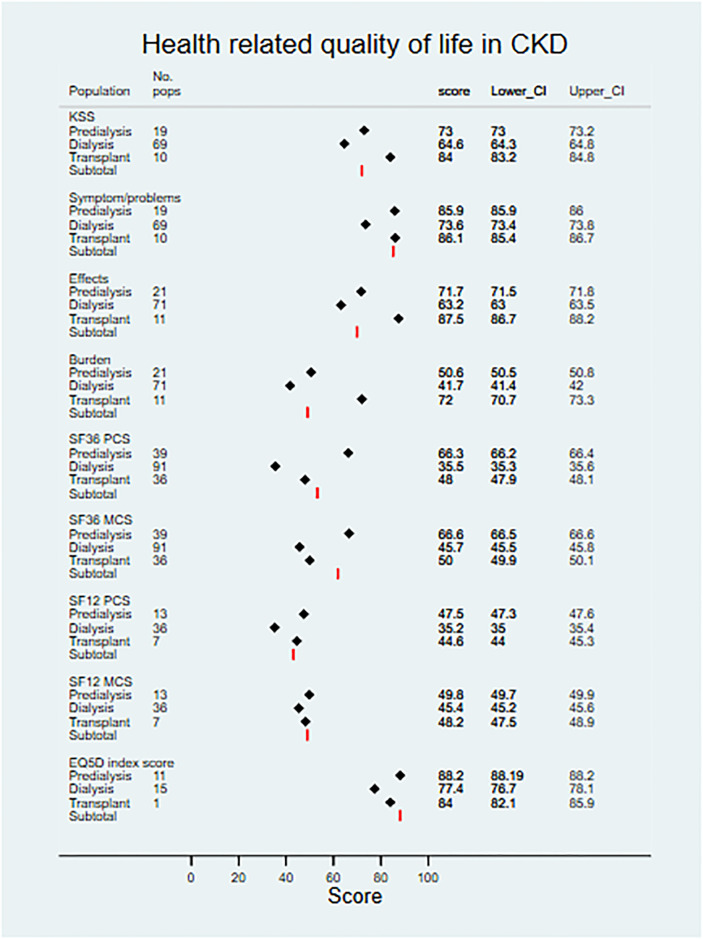
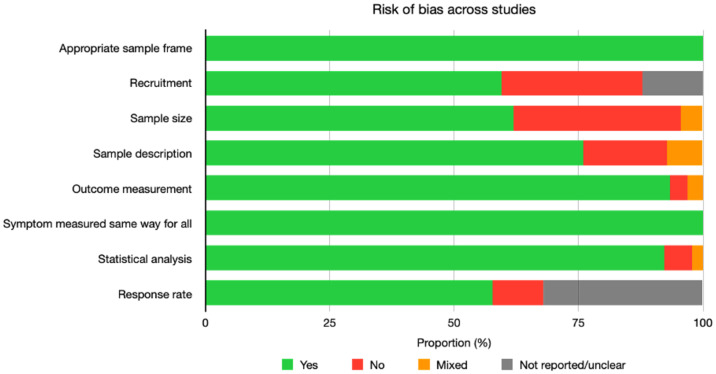
Background: The importance of patient-reported outcome measurement in chronic kidney disease (CKD) populations has been established. However, there remains a lack of research that has synthesised data around CKD-specific symptom and health-related quality of life (HRQOL) burden globally, to inform focused measurement of the most relevant patient-important information in a way that minimises patient burden. The aim of this review was to synthesise symptom prevalence/severity and HRQOL data across the following CKD clinical groups globally: (1) stage 1–5 and not on renal replacement therapy (RRT), (2) receiving dialysis, or (3) in receipt of a kidney transplant. Methods and findings: MEDLINE, PsycINFO, and CINAHL were searched for English-language cross-sectional/longitudinal studies reporting prevalence and/or severity of symptoms and/or HRQOL in CKD, published between January 2000 and September 2021, including adult patients with CKD, and measuring symptom prevalence/severity and/or HRQOL using a patient-reported outcome measure (PROM). Random effects meta-analyses were used to pool data, stratified by CKD group: not on RRT, receiving dialysis, or in receipt of a kidney transplant. Methodological quality of included studies was assessed using the Joanna Briggs Institute Critical Appraisal Checklist for Studies Reporting Prevalence Data, and an exploration of publication bias performed. The search identified 1,529 studies, of which 449, with 199,147 participants from 62 countries, were included in the analysis. Studies used 67 different symptom and HRQOL outcome measures, which provided data on 68 reported symptoms. Random effects meta-analyses highlighted the considerable symptom and HRQOL burden associated with CKD, with fatigue particularly prevalent, both in patients not on RRT (14 studies, 4,139 participants: 70%, 95% CI 60%–79%) and those receiving dialysis (21 studies, 2,943 participants: 70%, 95% CI 64%–76%). A number of symptoms were significantly ( p < 0.05 after adjustment for multiple testing) less prevalent and/or less severe within the post-transplantation population, which may suggest attribution to CKD (fatigue, depression, itching, poor mobility, poor sleep, and dry mouth). Quality of life was commonly lower in patients on dialysis (36-Item Short Form Health Survey [SF-36] Mental Component Summary [MCS] 45.7 [95% CI 45.5–45.8]; SF-36 Physical Component Summary [PCS] 35.5 [95% CI 35.3–35.6]; 91 studies, 32,105 participants for MCS and PCS) than in other CKD populations (patients not on RRT: SF-36 MCS 66.6 [95% CI 66.5–66.6], p = 0.002; PCS 66.3 [95% CI 66.2–66.4], p = 0.002; 39 studies, 24,600 participants; transplant: MCS 50.0 [95% CI 49.9–50.1], p = 0.002; PCS 48.0 [95% CI 47.9–48.1], p = 0.002; 39 studies, 9,664 participants). Limitations of the analysis are the relatively few studies contributing to symptom severity estimates and inconsistent use of PROMs (different measures and time points) across the included literature, which hindered interpretation. Conclusions: The main findings highlight the considerable symptom and HRQOL burden associated with CKD. The synthesis provides a detailed overview of the symptom/HRQOL profile across clinical groups, which may support healthcare professionals when discussing, measuring, and managing the potential treatment burden associated with CKD. Protocol registration: PROSPERO CRD42020164737.
Overview
The claims and statistics of this paper haven’t been checked yet.
Free: it reads the open-access text and checks the first 5 claims that cite a source we can check. Create a free account to check every claim.
Integrity signals
Registry
Cites
Statistics
Figures
Verification
Claims the paper makes
The claims and statistics of this paper haven’t been checked yet.
Free: it reads the open-access text and checks the first 5 claims that cite a source we can check. Create a free account to check every claim.
Claims other papers make about this one
Each is checked against this paper’s own text: does it say what the citing paper says it does?
The source backs part of the claim, not all of it — or backs it for a different population, condition or comparison.
In the citing paper
“70% of patients with chronic kidney disease have persistent fatigue; 3 63% of patients with coronary heart disease have persistent pain in the arms, legs, or joints; 4 and 31% of patients with ulcerative colitis in remission have persistent gastro intestinal symptoms”
From Persistent physical symptoms: definition, genesis, and management (2024) · cites this paper as [3]
Experimental — accuracy not yet measured
Self-check
Percentages, sums and reported differences re-computed from the paper’s own numbers.
The self-check needs the paper’s full text.
Citations
Cites
Measuring inconsistency in meta-analyses
Higgins, J. P. T., Thompson, S. G., Deeks, J. J., & Altman, D. G. (2003) · BMJ · doi:10.1136/bmj.327.7414.557 · Cited by 63,139
Bias in meta-analysis detected by a simple, graphical test
Egger, M., Smith, G. D., Schneider, M., & Minder, C. (1997) · BMJ · doi:10.1136/bmj.315.7109.629 · Cited by 56,722
Bikbov, B., Purcell, C. A., Levey, A. S., Smith, M., Abdoli, A., Abebe, M., Adebayo, O. M., Afarideh, M., Agarwal, S. K., Agudelo-Botero, M., et al. (2020) · The Lancet · doi:10.1016/s0140-6736(20)30045-3 · Cited by 6,648
Munn, Z., Moola, S., Lisy, K., Riitano, D., & Tufanaru, C. (2015) · International Journal of Evidence-Based Healthcare · doi:10.1097/xeb.0000000000000054 · Cited by 3,131 · cited 6×
“Critical Appraisal Checklist for Studies Reporting Prevalence Data, and an exploration of publication bias performed.”
BackgroundMethodInfluentialCella, D., Yount, S., Rothrock, N., Gershon, R., Cook, K., Reeve, B., Ader, D., Fries, J. F., Bruce, B., & Rose, M. (2007) · Medical Care · doi:10.1097/01.mlr.0000258615.42478.55 · Cited by 3,118
The positive false discovery rate: a Bayesian interpretation and the q-value
Storey, J. D. (2003) · The Annals of Statistics · doi:10.1214/aos/1074290335 · Cited by 2,204 · cited 1×
“To account for multiple testing, sharpened false discovery rate (FDR) q-values were computed [18], and adjusted p-values are reported, with a significance level of p< 0.”
MethodMetaprop: a Stata command to perform meta-analysis of binomial data
Nyaga, V. N., Arbyn, M., & Aerts, M. (2014) · Archives of Public Health · doi:10.1186/2049-3258-72-39 · Cited by 2,139 · cited 1×
“Using Stata, the metaprop (meta-analysis of binomial data) command was used to summarise prevalence data, and the metan command was used to summarise severity and HRQOL scores [15,16].”
MethodMetan: fixed- and random-effects meta-analysis
Harris, R. J., Deeks, J. J., Altman, D. G., Bradburn, M. J., Harbord, R. M., & Sterne, J. A. C. (2008) · The Stata Journal: Promoting communications on statistics and Stata · doi:10.1177/1536867x0800800102 · Cited by 1,027
The Prevalence of Symptoms in End-Stage Renal Disease: A Systematic Review
Murtagh, F. E. M., Addington-Hall, J., & Higginson, I. J. (2007) · Advances in Chronic Kidney Disease · doi:10.1053/j.ackd.2006.10.001 · Cited by 983 · cited 2×
“Recent reviews report on some symptoms, but do not quantify the symptom burden or accurately identify differences in symptom burden between treatment states [21,22].”
BackgroundMapes, D. L., Lopes, A. A., Satayathum, S., Mccullough, K. P., Goodkin, D. A., Locatelli, F., Fukuhara, S., Young, E. W., Kurokawa, K., Saito, A., et al. (2003) · Kidney International · doi:10.1046/j.1523-1755.2003.00072.x · Cited by 858
Cited by
Items 201–300 of 414
Sodium Balance and Quality of Life in People with Chronic Kidney Disease—A Cross-Sectional Study
Martin, K., Tan, S., Hewitson, T. D., & Toussaint, N. D. (2025) · Nutrients · doi:10.3390/nu17162634 · Cited by 2
“Furthermore, people with CKD, especially those on dialysis, carry a substantial physiological and psychological symptom burden, leading to poor health-related quality of life (HRQOL) [18].”
López, M. Á. E., Marcilla-Toribio, I., Gutiérrez, R. B., & Andrés, M. M. (2025) · Enfermería Nefrológica · doi:10.37551/s2254-28842025026 · Cited by 1
Finderup, J., Agerskov, H., Deele, M., Frandsen, C. E., Kristensen, I. V., Bonner, A., & Konradsen, H. (2025) · The Nephron journals/Nephron journals · doi:10.1159/000548903 · Cited by 1
“Common CKD symptoms are fatigue, drowsiness, pain, pruritus, and restless legs [6], and although the underlying mechanisms remain poorly understood, CKD symptoms are associated with severely decreased quality of life, increased morbidity and mortality, higher healthcare utilisation, reduced…”
Costes-Albrespic, M., Liabeuf, S., Larabi, I. A., Laville, S. M., Stengel, B., Omorou, A. Y., Frimat, L., Alvarez, J., Massy, Z. A., de Pinho, N. A., et al. (2025) · Toxins · doi:10.3390/toxins17110541 · Cited by 1
“Lastly, our outcomes were based on the symptom burden subscale of the KDQOL; although not the most sensitive or specific, the KDQOL is the instrument most widely used for health-related quality of life assessment in CKD and enables between-study comparisons [38].”
Zhang, Y., Peng, H., Yang, L., Pu, S., Huang, X., & Shi, Y. (2025) · BMC Medical Informatics and Decision Making · doi:10.1186/s12911-025-03264-5 · Cited by 1
“Person-focused attention to symptoms and subjective experiences is critical in managing CKD as it progresses towards end-stage, where patients often face increasing discomfort such as fatigue, bone/joint pain, and severe vomiting, consistent with previous studies [18, 19].”
Mancheno, J. C. S., del Peso, G., García-Llana, H., Ossorio, M., Castillo, A., Bajo, M. A., Sánchez, R. J., & Alonso‐Babarro, A. (2025) · The Nephron journals/Nephron journals · doi:10.1159/000548248 · Cited by 1
Kumnig, M., Jowsey‐Gregoire, S. G., Gruber, A., Kofler, M. M., & Gordon, E. J. (2025) · Frontiers in Psychology · doi:10.3389/fpsyg.2025.1712921 · Cited by 1
The role of social networks in supporting self-management in CKD: a narrative synthesis
Bonfield, B., Veighey, K. V., Blakeman, T., Murphy, E., & Vassilev, I. (2025) · BMC Nephrology · doi:10.1186/s12882-025-04658-3 · Cited by 2
“The 14 included papers used semi-structured interviews [7], focus groups [2], both semi-structured interviews and focus groups [4], and 1 qualitative content data analysis of an online peer support group.”
Deprivation and limitations in daily life in new onset kidney disease: a population study
Cowan, E., Bell, S., Black, C., Blakeman, T., Fraser, S. D., Hughes, A., Keskindağ, B., Methven, S., Nath, M., Nitsch, D., et al. (2025) · Clinical Kidney Journal · doi:10.1093/ckj/sfaf397 · Cited by 1
“…of the subset of people attending outpatient kidney clinics have identified potentially modifiable factors that affect quality of life of those with kidney disease including mental health, health literacy, smoking, obesity, polypharmacy, physical activity, and mental health [7 , 45 , 46 , 51 –58 ].”
Martins, M. P. D. A., Faria, A. D. C. A., da Rocha, C. G., Forte, E. C. N., Trindade, L. D. L., Züge, S. S., Gonçalves, M. N. D. C., & Ribeiro, O. M. P. L. (2025) · International Journal of Environmental Research and Public Health · doi:10.3390/ijerph23010015 · Cited by 1
“…Disease (CKD) is a progressive and irreversible condition, characterised by the gradual loss of kidney function and by a combination of metabolic, haemo-Int dynamic and musculoskeletal alterations that significantly compromise the functionality and quality of life of the affected individuals [1,2].”
Correa‐Rotter, R., Wu, M.-S., Hull, R., Esposito, C., Reichel, H., Chadban, S. J., Sánchez, J. J. G., Pentakota, S., Kularatne, T., Fifer, S. J., et al. (2025) · Advances in Therapy · doi:10.1007/s12325-025-03455-6 · Cited by 1
Jessen, B., Christian, S.-L., Huber, T. B., Löwe, B., den Bergh, O. V., Witthöft, M., & Mora, M. C. S. (2025) · Journal of Psychosomatic Research · doi:10.1016/j.jpsychores.2025.112508 · Cited by 1
Ming, Y., Sun, Z., Tao, M., Yang, J., Li, S., Tao, X., Wang, H., Qu, C., & Liu, Z. (2025) · Food Science & Nutrition · doi:10.1002/fsn3.71402 · Cited by 2
Nursing research on vascular access in hemodialysis: Trends and insights from a bibliometric study
Özkan, İ., & Taylan, S. (2026) · The Journal of Vascular Access · doi:10.1177/11297298251407277 · Cited by 1
Rączewski, S., Caban, W., Lemiszewska, N., Kuncewicz, M., Mosakowska, M., Kotwica-Strzałek, E., & Niemczyk, S. (2026) · Journal of Clinical Medicine · doi:10.3390/jcm15041423 · Cited by 1
“…one of the most prevalent yet under-treated symptoms among patients with chronic kidney disease, with systematic review evidence demonstrating that approximately 60% of patients undergoing hemodialysis experience pain, significantly exceeding the 20% prevalence in the general population [5,8].”
Zhang, M., Cai, Y., Hou, Y., Ma, B., & Chen, O. (2026) · Quality of Life Research · doi:10.1007/s11136-026-04192-1 · Cited by 1
“Consistent with prior research, this study found that HD patients experience low to moderate levels of physical and mental QoL, underscoring the need to improve QoL in this population [38 ].”
Chung, G. E., Yoon, J. W., Kim, H. L., Han, Y. M., Choi, S., & Heo, N. J. (2026) · Scientific Reports · doi:10.1038/s41598-025-30244-6 · Cited by 1
Qiao, X., Wang, Y., Tian, Z., Zhan, Y., Yang, T., Luan, J., Yan, E., Li, X., Tang, T., Ji, Q., et al. (2026) · Frontiers in Psychiatry · doi:10.3389/fpsyt.2026.1733502 · Cited by 1
“…given that symptom distress is widespread and persistent in this population, incorporating patient-reported outcome measures (such as symptom distress and quality of life) is of signi fi cant importance for optimizing clinical management strategies and improving overall patient well-being (18).”
Yu, Z., Wu, Y., Guo, S., Li, Z., Cui, J., & Shi, G. (2026) · Microchimica Acta · doi:10.1007/s00604-026-08126-z · Cited by 1
Su, L., Xu, L., Tang, J., & Zuo, M. (2026) · BMC Nephrology · doi:10.1186/s12882-026-05048-z · Cited by 3
“The cumulative burden of these conditions drives up medical costs and profoundly diminishes patients’ quality of life [12–13].”
Global trends and projections of early-onset CKD burden: a GBD 2021 analysis
Chen, A., Liu, Y., Chen, X., Zhang, C., Wang, L. F., & Yue, C. (2026) · Clinical Kidney Journal · doi:10.1093/ckj/sfag206 · Cited by 1
Ducharlet, K., Brennan, F. P., Raj, R., Ogivly, C., Stallworthy, E., Li, K. C., Kennard, A. L., Bob, S., Scholes-Robertson, N. J., Pais, R., et al. (2026) · Internal Medicine Journal · doi:10.1111/imj.70463 · Cited by 1
“22 These symptoms are often under-reported and inadequately managed.”
Nikolovski, J., Smyth, B. J., Muthuramalingam, S., McDonald, S. P., Roydhouse, J. K., Aiyegbusi, O. L., Rutherford, C., Luchterhand, A., Cardelli, P., Morton, R. L., et al. (2026) · Journal of Renal Care · doi:10.1111/jorc.70069 · Cited by 4
Self-citationGaudio, K., Le, A., Paparella, A. N., Sullivan, M. J. L., Cantarovich, M., & Sandal, S. (2026) · Journal of Nephrology · doi:10.1093/joneph/aajaf065 · Cited by 1
EQ-5D in dialysis units: a PROM with a view
Sala, I., & Rodrigues, A. S. (2022) · Bulletin de la Dialyse à Domicile · doi:10.25796/bdd.v4i4.69733 · Cited by 2
Building an Evidence Base for Active Medical Management without Dialysis: Tale of Two Programs
Cheung, K. L. (2023) · Kidney360 · doi:10.34067/kid.0000000000000031 · Cited by 1
Singh, S., Sharma, K., Kumari, J. R., Dhull, E., & Jain, A. (2023) · World Journal of Biology Pharmacy and Health Sciences · doi:10.30574/wjbphs.2023.13.2.0096 · Cited by 1
[Peritoneal dialysis impact on quality of life in elderly]
Martínez-Magaña, J. F., Godínez‐Victoria, M., Gracia‐Ramos, A. E., & García‐Hernández, A. L. (2023) · PubMed Central · doi:10.5281/zenodo.8319822 · Cited by 1
Use of sertraline and agomelatine in hemodialysis patients: A case series report
Kubanek, A., Przybylak, M., Paul, P., Kowalska, A., Błaszczyk, M., Macul-Sanewska, A., Renke, M., Rutkowski, P., Bidzan, L., & Grabowski, J. (2023) · Acta Biochimica Polonica · doi:10.18388/abp.2020_6936 · Cited by 1
Palliative Care in Advanced Kidney Disease: The Approach for a Nephrologist
Khanna, S., & Khanna, U. B. (2024) · Indian Journal of Kidney Diseases · doi:10.4103/ijkd.ijkd_15_24 · Cited by 1
From the Patients’ Vantage Point: Centering on the Patient/Family Perspective
Romero, C. C. B., Graham, J.-K., Lee, A., McFee, A., & Eems, T. J. V. D. (2024) · Springer eBooks · doi:10.1007/978-3-031-64672-0_15 · Cited by 1
Daehler, S., Lutz, W., Probst, T., Rief, W., Rubel, J. A., Schwartz, S., & Kleinstäuber, M. (2025) · Cognitive Therapy and Research · doi:10.1007/s10608-024-10571-0 · Cited by 2
Haanstra, A. J., Maring, H., van der Veen, Y., Quint, E. E., Schroevers, M. J., Ranchor, A. V., Berger, S. P., Finnema, E., & Annema, C. (2025) · Annals of Behavioral Medicine · doi:10.1093/abm/kaaf017 · Cited by 2
“9,11,12 15 Fatigue severity in hemodialysis patients is reported as one of the highest among individuals with a chronic condition, including cancer patients undergoing chemotherapy treatment and patients with depression.”
Sahu, G., Arora, P., Tiwari, P., D’Cruz, S., & Tahlan, A. (2025) · Brazilian Journal of Nephrology · doi:10.1590/2175-8239-jbn-2024-0229pt · Cited by 2
Patel, D. M., Han, D., Stephens, M. A. C., Gotay-Lehmer, J., Santiago, D., Tamargo, C. L., Parikh, C. R., Shin, J., Riekert, K. A., & Crews, D. C. (2025) · Clinical Journal of the American Society of Nephrology · doi:10.2215/cjn.0000000770 · Cited by 3
Depression in Kidney Failure Patients
Ong, S. C., Butt, M. D., & Malik, T. (2025) · Springer eBooks · doi:10.1007/978-3-031-73363-5_127 · Cited by 1
Guo, W., Tian, J., Yan, J., Li, J., Zhang, Y., & Han, Q. (2026) · European Journal of Cardiovascular Nursing · doi:10.1093/eurjcn/zvaf134 · Cited by 1
Mon-Yee, M., Burton, C. D., Leaviss, J., Forsyth, J. E., Daly, G., & Davis, S. C. (2026) · BMJ Open · doi:10.1136/bmjopen-2025-102846 · Cited by 1
HUBUNGAN HOLISTIC HEALTH ASSESMENT DENGAN KUALITAS HIDUP PASIEN HEMODIALISA
Diani, I., & Efroliza, E. (2023) · Masker Medika · doi:10.52523/maskermedika.v11i1.513
Schmill, P., Hudson, J. L., McBride, E., Greenwood, S. A., & Chilcot, J. (2026) · Journal of Nephrology · doi:10.64898/2026.06.10.26355356 · Cited by 1
Hiperparatireoidismo secundário à hipovitaminose D depende dos níveis séricos de magnésio
Schuch, T. F. (2010) · Lume (Universidade Federal do Rio Grande do Sul)
Kapfhammer, H. (2022) · Springer eBooks · doi:10.1007/978-3-662-65873-4_8
Symptomerfassung und -management
Pommer, W. (2023) · Springer eBooks · doi:10.1007/978-3-662-65648-8_9
Thone, L., Paul, N., & Sreenivas, V. (2023) · International Journal of Science and Healthcare Research · doi:10.52403/ijshr.20230270
CADTH (2023) · Canadian Journal of Health Technologies · doi:10.51731/cjht.2023.732
Pediatric Kidney Transplantation: Focus on Graft Survival and Current Transition Care
Райкевич-Ляховская, О. В., Baiko, S., Рапецкая, Н. В., Чеботарева, Т. К., Жаголкин, Е. Е., Свистунова, Е. А., Barkova, O. N., Юрковский, В. В., Громова, О. А., Дубров, В. И., et al. (2023) · Педиатрия Восточная Европа · doi:10.34883/pi.2023.11.3.002
Si, P. E. H., Alava, M. H., Dunn, L., Wilkie, M. E., & Fotheringham, J. (2023) · BMC Nephrology · doi:10.1186/s12882-023-03394-w
“There is increasing evidence that symptom burden is the most important predictor of reduced HRQoL amongst people with end staged kidney failure suggesting that recognition and effective treatment of symptom burden may have the greatest impact on the HRQoL in haemodialysis population [11].”
BackgroundKapfhammer, H. (2023) · Springer eBooks · doi:10.1007/978-3-662-68309-5_7
Cappuccio, A., Daina, E., Gesualdo, L., Stea, E. D., Pisani, A., Marino, A., Manna, G. L., Tringali, E., Tondolo, F., Pani, A., et al. (2024) · Research Square · doi:10.21203/rs.3.rs-4020752/v1
Anderson, N. E. (2024) · Journal of research in nursing · doi:10.1177/17449871231225439
“This review identified the Dialysis Symptom Index (DSI) as one of the currently available PROMs with the most comprehensive symptom coverage (Fletcher et al., 2022).”
BackgroundSelf-citationBhandari, S., Mehta, S. P., Khwaja, A., Cleland, J. G. F., Ives, N. J., Brettell, E. A., Chadburn, M., Cockwell, P., & for the STOP-ACEi Trial Investigators (2024) · Efficacy and Mechanism Evaluation · doi:10.3310/ttmc6210 · Cited by 1
Self-citationSharma, S., Alexander, K. E., Green, T., Wu, M., & Bonner, A. (2024) · SSRN Electronic Journal · doi:10.2139/ssrn.4785750 · Cited by 1
Research Progress of Symptom Synchronization Network in Chronic Disease Patient
周, 佳. (2024) · Nursing Science · doi:10.12677/ns.2024.136097
Non‐dialytic Options and a Palliative Conservative Kidney Management Approach
Noble, H. R., Carswell, C., & Walsh, I. (2024) · Wiley eBooks · doi:10.1002/9781394178797.ch10
He, T., Yu, X., Liao, L., Yang, H., Wang, T., Hu, J., & Li, Z. (2024) · Research Square · doi:10.21203/rs.3.rs-4643343/v1
Бодесова, С. Б., Sagandykova, N. S., Danebek, K., Sultanova, B., & Baurzhan, M. B. (2024) · Research Square · doi:10.21203/rs.3.rs-4574063/v1
Research Progress of Family Adjustment in Maintenance Hemodialysis Patients
王, 叶. (2024) · Nursing Science · doi:10.12677/ns.2024.138163
Cognitive Profiles in Chronic Kidney Disease: A New Narrative
Mesa‐Gresa, P., & Marin, A. (2024) · Springer eBooks · doi:10.1007/978-3-031-32046-0_58-1
Levin, A., & Stevens, P. E. (2024) · Nephrology Self-Assessment Program · doi:10.58483/nsap.00382024
KRONİK BÖBREK HASTALIĞININ KÜRESEL YÜKÜNÜN İNCELENMESİ
Özbek, M., & Erbaydar, N. P. (2024) · Eskişehir Türk Dünyası Uygulama ve Araştırma Merkezi Halk Sağlığı Dergisi · doi:10.35232/estudamhsd.1475552 · Cited by 1
Ievlev, E. N., & Казакова, И. А. (2024) · Clinical Medicine (Russian Journal) · doi:10.30629/0023-2149-2024-102-5-6-427-432
Azzopardi, G., & Prowle, J. R. (2024) · Springer eBooks · doi:10.1007/978-3-031-66541-7_34
Adamoli, A. N., Razzera, B. N., Colferai, R. N., Ranheiri, M. F., Machado, W. D. L., Feóli, A. M. P., Noto, A. R., & Oliveira, M. D. S. (2024) · Brazilian Journal of Nephrology · doi:10.1590/2175-8239-jbn-2024-0068pt
How Are You Feeling?: Symptoms of Kidney Disease
Rayner, H. C., Thomas, M. E., Dasgupta, I., Lalayiannis, A. D., & Hameed, M. A. (2024) · Springer eBooks · doi:10.1007/978-3-031-66349-9_5
Kidney Replacement Therapy: Common Problems in Dialysis and Transplant Patients
Rayner, H. C., Thomas, M. E., Dasgupta, I., Lalayiannis, A. D., & Hameed, M. A. (2024) · Springer eBooks · doi:10.1007/978-3-031-66349-9_23
Hemodiyaliz Hastalarında Semptom Yükü Deprem Sonrasında Artar mı? Prospektif Bir Kohort Çalışması
Yaşar, E., Karaaslan, T., & Pembegül, İ. (2024) · Medical Journal of Western Black Sea · doi:10.29058/mjwbs.1544457
Parker, K., Needham, A., Thachil, J. V., Mitra, S., & Lewis, P. J. (2025) · BMC Nephrology · doi:10.1186/s12882-025-03966-y · Cited by 1
Turkanik, E., Kurleto, P., Tomaszek, L., & Pietrzyk, J. A. (2025) · Pielegniarstwo XXI wieku / Nursing in the 21st Century · doi:10.12923/pielxxiw-2024-0043
Depression in Kidney Failure Patients
Ong, S. C., Butt, M. D., & Malik, T. (2024) · Springer eBooks · doi:10.1007/978-3-031-32046-0_127-1
Zheng, X., Linyu, X. U., & Wang, A. (2025) · Research Square · doi:10.21203/rs.3.rs-6023205/v1 · Cited by 2
Dendrobium nobile in the Treatment of Renal Diseases
Sarsaiya, S., Jain, A., Gong, Q., Wu, Q., & Shi, J. (2025) · CABI eBooks · doi:10.1079/9781800627987.0011
Quality of life in patients with end-stage chronic kidney disease and sarcopenia
Владимировна, У. Е., Фомина, Н. В., & Kirilenko, S. V. (2025) · Fundamental and Clinical Medicine · doi:10.23946/2500-0764-2025-10-1-75-86
Eleftheroudi, M., Mitsopoulos, E., Papadopoulou, D., Bamichas, G., Kyrgialanis, A., Papoulidou, F., Thodis, E. D., Samakouri, M. A., Panagoutsos, S. A., & Passadakis, P. (2025) · Cureus · doi:10.7759/cureus.81839 · Cited by 1
Lebensqualität bei Dialysepatienten unter Anämietherapie
Brandenburg, V. M. (2025) · Nephrologie aktuell · doi:10.1055/a-2529-8299
PERCEPCIÓN DE LA PERSONA EN HEMODIÁLISIS SOBRE LA CALIDAD DE LA ATENCIÓN SANITARIA
Pulgar, K. A. S., Aravena, V. E. J., & Garrido, M. E. L. (2025) · Horizonte de enfermeria · doi:10.7764/horiz_enferm.36.1.404-420
Morais, J. G., Guedes, M. H., Barra, A. B. L., Larkin, J. W., Canziani, M. E. F., Pecoits‐Filho, R., & Nerbass, F. B. (2025) · Hemodialysis International · doi:10.1111/hdi.13271
Progression der chronischen Nierenerkrankung bremsen
Füeßl, L. (2025) · MMW - Fortschritte der Medizin · doi:10.1007/s15006-025-4951-2
“Etwa 1% davon erreicht das Stadium der Dialyseabhängigkeit, ein Großteil des Patientenkollektivs verstirbt vorher an einer kardio-vaskulären oder malignen Erkrankung [1, 2, 3].”
Asada, Y., Horiguchi, T., Hirono, K., Inagaki, M., & Tasaki, K. (2025) · Journal of International Nursing Research · doi:10.53044/jinr.2024-0016
Pistorio, M. L., Pasquale, C. D., Lenzo, V., Veroux, M., Martin, M., Martin, D., Giaquinta, A., Giambra, M. M., Veroux, P., & Quattropani, M. C. A. (2025) · Journal of Clinical Medicine · doi:10.3390/jcm14134673
“Its reliability has been confirmed in patients with chronic kidney disease and transplant recipients [18–20].”
Pérez-Seoane, C. L., Larrañeta-Inda, I., & Sánchez, J. L. C. (2025) · Enfermería Nefrológica · doi:10.37551/s2254-28842025013
“Aunque se re-conoce que la autopercepción de la salud está asociada con la evolución de la enfermedad y la calidad de vida 23 , su valor en un ICE puede ser limitado si no se complementa con otros indicadores clínicos objetivos.”
Biju, B., D’cruz, A., Jiby, S., Devassy, M., & Jacob, R. (2025) · Journal of Drug Delivery and Therapeutics · doi:10.22270/jddt.v15i7.7268
Dialyse und Lebensqualität: Was sollte man erfassen, und welche Rolle spielt die Dialyseform?
Fischer, F., Schappert, A., Ottlewski, I., Cromm, K., & Rose, M. (2025) · Die Nephrologie · doi:10.1007/s11560-025-00864-0
General Directorate of Anbar Education, M. O. E., & Hamad, A. F. (2025) · RA Journal Of Applied Research · doi:10.47191/rajar/v11i8.02
Liang, C., Yen, H.-L., Lin, S., Chen, C.-C., Chang, Y., & Fang, Y. (2025) · BMJ Open · doi:10.1136/bmjopen-2024-095840
Zhang, N., Lu, Q., Qiu, J., Fan, S., Zhao, Y., Wang, S., Sun, W., Wang, W., & Liu, F. (2025) · Nursing and Health Sciences · doi:10.1111/nhs.70219
“As kidney function progressively declines, patients are faced with physical issues such as electrolyte imbalances, osteoporosis, and anemia, as well as systemic manifestations such as fatigue and diminished appetite (Fletcher et al. 2022).”
Lai, P.-C., Lin, M.-Y., & Chen, C. (2025) · Clinical Nursing Research · doi:10.1177/10547738251367554
“As CKD progresses, patients experience more physiological and psychological discomfort, with fatigue and depression being the most common symptoms (Fletcher et al., 2022).”
Fatigue of Cancer is Distinctly Different than the Fatigue of Chronic Kidney Disease
Fernandez, C., Chang, A. R., Vanenkevort, E. A., & Davis, M. P. (2025) · Supportive Care in Cancer · doi:10.1007/s00520-025-09941-5
Cognitive Profiles in Chronic Kidney Disease: A New Narrative
Mesa‐Gresa, P., & Marin, A. (2025) · Springer eBooks · doi:10.1007/978-3-031-73363-5_58
Barbosa, S. N. R., Cueto-Manzano, A. M., Romero-Ornelas, N. G., Chávez‐Chávez, H. E., Díaz-Canchola, L. M., López, M. A., Cerrillos‐Gutiérrez, J. I., Zambrano-Melín, J. R., Campos, E. R., & Martín-del-Campo, F. (2025) · The Nephron journals/Nephron journals · doi:10.1159/000548275
“There are multiple studies comparing the QOL be-tween different CKD treatment modalities; however, there are few studies including transplant and CKD G3-G5ND patients as almost all are focused on patients receiving dialysis [11].”
Li, J., Chen, Q., & Xu, Y. (2025) · BMC Nephrology · doi:10.1186/s12882-025-04450-3
“Moreover, lower PROs scores were closely linked to worse prognosis in these patients [20].”
Kim, D., & Im, E. (2025) · Advances in Nursing Science · doi:10.1097/ans.0000000000000600
Wang, X., Zhang, Q., Tang, E., Wang, H., & Li, X. (2025) · Renal Failure · doi:10.1080/0886022x.2025.2568970
“…to increase progressively [4]. in addition, CKd represents a substantial health economic burden, with advancement from stage 3 to 4/5 associated with a 1.3-to 4.2-fold increase in costs and progression to end-stage renal disease (ESRd) estimated to cost $20,000–$100,000 per patient per year [5].”
InfluentialYıldırım, S., Altunok, M., Yeter, H. H., Bakırdöğen, S., Çankaya, E., & Güz, G. (2025) · Blood Purification · doi:10.1159/000548852
Yu, L., Yang, Y., Chen, Y., & Wang, Q. (2025) · International Urology and Nephrology · doi:10.1007/s11255-025-04864-w
Feng, J., Liu, L., Chen, X., Guo, B., Deng, J., Ru, Z., Chen, Y., Lan, L., Li, H., Zhou, Y., et al. (2025) · Complementary Therapies in Medicine · doi:10.1016/j.ctim.2025.103289
Gaudet, K., Corbière, M., Collette, S., Chen, T., Cardinal, H., Sapir‐Pichhadze, R., & Achille, M. A. (2025) · Transplantation Direct · doi:10.1097/txd.0000000000001865
Hartajaya, G., Wibowo, I. A., & Agustini, N. N. M. (2025) · Ganesha Medicine · doi:10.23887/gm.v5i1.88399
Paré, M., Zola, N., Coudert, L., Phaneuf, J.-C., Lavallée, R., Caplette‐Gingras, A., Fortier, C., & Agharazii, M. (2025) · BMC Nephrology · doi:10.1186/s12882-025-04563-9 · Cited by 1
“Depressive symptoms have been reported in up to 55% of individuals with CKD, and anxiety symptoms in up to 50%, across all treatment modalities [11, 13, 14].”
Muxunov, A., Kalinina, D., Gaipov, A., & Sarría‐Santamera, A. (2025) · BMJ Open · doi:10.1136/bmjopen-2025-103080
“11 However, most of the studies included in this review were conducted in HICs.”
Jessen, B., Löwe, B., Twerenbold, R., Härter, M., Harth, V., Hoven, H., Schmidt‐Lauber, C., Huber, T. B., & Mora, M. C. S. (2025) · medRxiv · doi:10.1101/2025.11.27.25341140
Metadata
- Authors
- Fletcher, B. R., Damery, S., Aiyegbusi, O. L., Anderson, N., Calvert, M., Cockwell, P., Ferguson, J., Horton, M., Paap, M. C. S., Sidey-Gibbons, C., Slade, A., Turner, N., & Kyte, D.
- Affiliations
- University of Birmingham (GB)
- National Institute for Health and Care Research (GB)
- University Hospitals Birmingham NHS Foundation Trust (GB)
- NIHR Birmingham Biomedical Research Centre (GB)
- University of Leeds (GB)
- University of Groningen (NL)
- The University of Texas MD Anderson Cancer Center (US)
- Centre for Inflammation Research (GB)
- Corresponding author
- Kyte, Derek
- ORCID
- Venue
- PLOS Medicine
- Publisher
- Public Library of Science (PLoS)
- Published
- 2022-04-06
- Volume
- 19
- Issue
- 4
- Pages
- e1003954
- ISSN
- 1549-1277 (ISSN-L)
- 1549-1676
- PMC
- PMC8985967
- OpenAlex
- W4223633541
- Cited by
- 414
- References
- 35
- Citations by year
- 2026: 121 · 2025: 136 · 2024: 93 · 2023: 52 · 2022: 11
- FWCI
- 10.97
- Type
- journal article
- Language
- en
- Open access
- gold
- doi.org
- Licence
- Locations
- PLoS Medicine (publishedVersion, cc-by)
- PubMed Central (publishedVersion, cc-by)
- PubMed (publishedVersion)
- University of Groningen research database (University of Groningen / Centre for Information Technology) (publishedVersion, cc-by)
- White Rose Research Online (University of Leeds, The University of Sheffield, University of York) (acceptedVersion)
- Worcester Research and Publications (University of Worcester) (acceptedVersion)
- RePEc: Research Papers in Economics (submittedVersion)
- DOAJ (DOAJ: Directory of Open Access Journals) (submittedVersion)
- University of Birmingham Research Portal (University of Birmingham) (submittedVersion, cc-by)
- University of Groningen research database (University of Groningen / Centre for Information Technology) (submittedVersion, cc-by)
- Funders
- Kidney Research UK (Stoneygate Research Award (KS_RP_20180914))
- Topics
- Health Sciences › Medicine › Nephrology › Dialysis and Renal Disease Management
- Health Sciences › Medicine › Nephrology › Chronic Kidney Disease and Diabetes
- Social Sciences › Economics, Econometrics and Finance › Economics and Econometrics › Health Systems, Economic Evaluations, Quality of Life
- Keywords
- chronic kidney disease, symptom burden, health-related quality of life, patient-reported outcomes, fatigue, dialysis, kidney transplantation, renal replacement therapy, depression, pruritus, sleep disorders, xerostomia, mobility impairment, SF-36, SF-6D, SF-12, SF-1000
- MeSH terms
- Adult, Cross-Sectional Studies, Fatigue, Renal Dialysis, Humans, Quality of Life, Renal Insufficiency, Chronic
About these checks
Registry, retraction, Cites and statistics results are computed, not judged, with one exception: a printed reference that no index lists is read once by a model before it counts as a citation error. Claims are extracted by a model and kept only when their quote appears verbatim in the text; each cited source is then checked, with a model’s help, for whether it says what the claim relies on. Those verdicts can be wrong — read the claim’s quote and the cited source before relying on one.
Statistics and arithmetic are recomputed, not judged.
Confidence bands are shown only for fields calibrated on our annotated test set. None is calibrated yet, so no band is shown.
What counts as a claim ›How we measure confidence ›How we check this ›
Are you an author, or do you see a problem with this page? Request a review
Data sources
Bibliographic data: Semantic Scholar, OpenAlex, Crossref.
Contains information from the Semantic Scholar Academic Graph Datasets, made available under the ODC Attribution License (ODC-BY 1.0).
Semantic Scholar’s data is described in: Kinney, R., et al. (2023). The Semantic Scholar Open Data Platform. arXiv:2301.10140.
