

Association of sleep duration at age 50, 60, and 70 years with risk of multimorbidity in the UK: 25-year follow-up of the Whitehall II cohort study
Open accessThe DOI matches its Crossref record; 40 of the 41 references it cites were found in a registry or an index.
Abstract
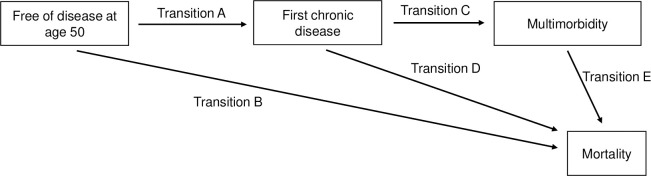
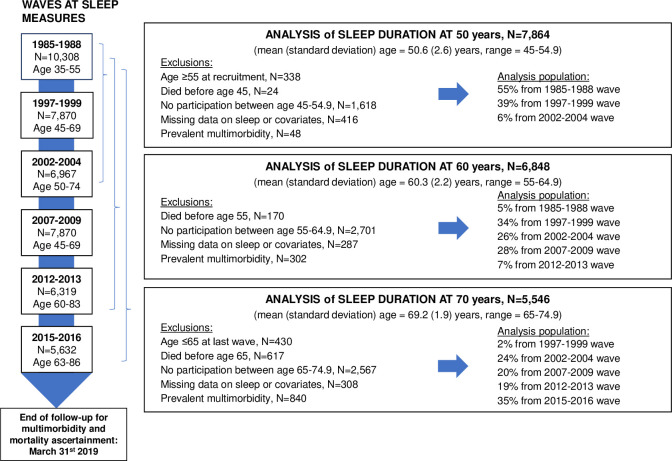
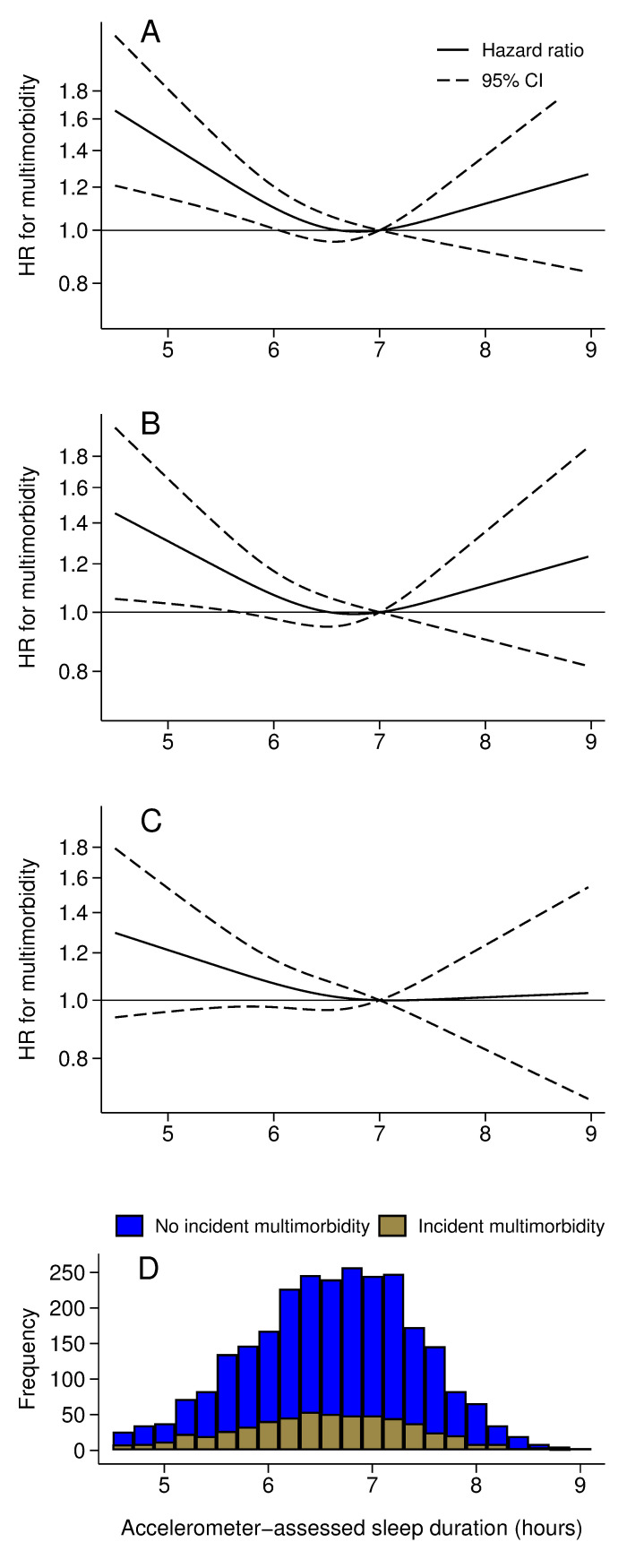
Background: Sleep duration has been shown to be associated with individual chronic diseases but its association with multimorbidity, common in older adults, remains poorly understood. We examined whether sleep duration is associated with incidence of a first chronic disease, subsequent multimorbidity and mortality using data spanning 25 years. Methods and findings: Data were drawn from the prospective Whitehall II cohort study, established in 1985 on 10,308 persons employed in the London offices of the British civil service. Self-reported sleep duration was measured 6 times between 1985 and 2016, and data on sleep duration was extracted at age 50 (mean age (standard deviation) = 50.6 (2.6)), 60 (60.3 (2.2)), and 70 (69.2 (1.9)). Incidence of multimorbidity was defined as having 2 or more of 13 chronic diseases, follow-up up to March 2019. Cox regression, separate analyses at each age, was used to examine associations of sleep duration at age 50, 60, and 70 with incident multimorbidity. Multistate models were used to examine the association of sleep duration at age 50 with onset of a first chronic disease, progression to incident multimorbidity, and death. Analyses were adjusted for sociodemographic, behavioral, and health-related factors. A total of 7,864 (32.5% women) participants free of multimorbidity had data on sleep duration at age 50; 544 (6.9%) reported sleeping ≤5 hours, 2,562 (32.6%) 6 hours, 3,589 (45.6%) 7 hours, 1,092 (13.9%) 8 hours, and 77 (1.0%) ≥9 hours. Compared to 7-hour sleep, sleep duration ≤5 hours was associated with higher multimorbidity risk (hazard ratio: 1.30, 95% confidence interval = 1.12 to 1.50; p < 0.001). This was also the case for short sleep duration at age 60 (1.32, 1.13 to 1.55; p < 0.001) and 70 (1.40, 1.16 to 1.68; p < 0.001). Sleep duration ≥9 hours at age 60 (1.54, 1.15 to 2.06; p = 0.003) and 70 (1.51, 1.10 to 2.08; p = 0.01) but not 50 (1.39, 0.98 to 1.96; p = 0.07) was associated with incident multimorbidity. Among 7,217 participants free of chronic disease at age 50 (mean follow-up = 25.2 years), 4,446 developed a first chronic disease, 2,297 progressed to multimorbidity, and 787 subsequently died. Compared to 7-hour sleep, sleeping ≤5 hours at age 50 was associated with an increased risk of a first chronic disease (1.20, 1.06 to 1.35; p = 0.003) and, among those who developed a first disease, with subsequent multimorbidity (1.21, 1.03 to 1.42; p = 0.02). Sleep duration ≥9 hours was not associated with these transitions. No association was found between sleep duration and mortality among those with existing chronic diseases. The study limitations include the small number of cases in the long sleep category, not allowing conclusions to be drawn for this category, the self-reported nature of sleep data, the potential for reverse causality that could arise from undiagnosed conditions at sleep measures, and the small proportion of non-white participants, limiting generalization of findings. Conclusions: In this study, we observed short sleep duration to be associated with risk of chronic disease and subsequent multimorbidity but not with progression to death. There was no robust evidence of an increased risk of chronic disease among those with long sleep duration at age 50. Our findings suggest an association between short sleep duration and multimorbidity.
Overview
The claims and statistics of this paper haven’t been checked yet.
Free: it reads the open-access text and checks the first 5 claims that cite a source we can check. Create a free account to check every claim.
Integrity signals
Registry
Cites
Statistics
Figures
Verification
Claims the paper makes
The claims and statistics of this paper haven’t been checked yet.
Free: it reads the open-access text and checks the first 5 claims that cite a source we can check. Create a free account to check every claim.
Self-check
Percentages, sums and reported differences re-computed from the paper’s own numbers.
The self-check needs the paper’s full text.
Citations
Cites
Barnett, K., Mercer, S. W., Norbury, M., Watt, G., Wyke, S., & Guthrie, B. (2012) · The Lancet · doi:10.1016/s0140-6736(12)60240-2 · Cited by 6,972 · cited 2×
“Inclusion of at least 12 conditions is thought to accurately reflect multimorbidity [29] and our list was chosen from previous research on multimorbidity [8,30].”
BackgroundMethodNational Sleep Foundation's sleep time duration recommendations: methodology and results summary.
Hirshkowitz, M., Whiton, K., Albert, S. M., Alessi, C., Bruni, O., DonCarlos, L., Hazen, N., Herman, J., Katz, E. S., Kheirandish-Gozal, L., et al. (2015) · Sleep Health · doi:10.1016/j.sleh.2014.12.010 · Cited by 4,404 · cited 1×
“Second, current guidelines recommend 7 to 8 hours of sleep for older adults [14] but whether both short and long sleep duration carry risk for multimorbidity remains unclear.”
BackgroundHealth inequalities among British civil servants: the Whitehall II study
Marmot, M. G., Stansfeld, S., Patel, C., North, F., Head, J., White, I., Brunner, E., Feeney, A., Marmot, M. G., & Smith, G. D. (1991) · The Lancet · doi:10.1016/0140-6736(91)93068-k · Cited by 3,608 · cited 1×
“The Whitehall II study is an ongoing cohort study established in 1985 among 10,308 British civil servants (6,895 men and 3,413 women, aged 35 to 55 years) [21].”
BackgroundGroup-Based Trajectory Modeling in Clinical Research
Nagin, D. S., & Odgers, C. L. (2010) · Annual Review of Clinical Psychology · doi:10.1146/annurev.clinpsy.121208.131413 · Cited by 2,708 · cited 1×
“Groups were chosen using the best model fit (Bayesian Information Criterion values and average posterior probabilities) and meaningful interpretation of trajectories [24].”
MethodIntroduction to the Analysis of Survival Data in the Presence of Competing Risks
Austin, P. C., Lee, D. S., & Fine, J. P. (2016) · Circulation · doi:10.1161/circulationaha.115.017719 · Cited by 2,653
Sleep duration and all-cause mortality: a systematic review and meta-analysis of prospective studies
Cappuccio, F. P., D'Elia, L., Strazzullo, P., & Miller, M. A. (2010) · Sleep · doi:10.1093/sleep/33.5.585 · Cited by 2,224
Short sleep duration and health outcomes: a systematic review, meta-analysis, and meta-regression
Itani, O., Jike, M., Watanabe, N., & Kaneita, Y. (2017) · Sleep Medicine · doi:10.1016/j.sleep.2016.08.006 · Cited by 1,252 · cited 3×
“Several biological mechanisms have been proposed to explain the role of short sleep duration in disease onset [15,16] but the role of long sleep is less well understood [3,17].”
BackgroundA scale for the estimation of sleep problems in clinical research
Jenkins, C. D., Stanton, B.-A., Niemcryk, S. J., & Rose, R. M. (1988) · Journal of Clinical Epidemiology · doi:10.1016/0895-4356(88)90138-2 · Cited by 1,203 · cited 1×
“In post hoc analysis, we used data on sleep quality measured using the Jenkins sleep problems scale [27].”
MethodDesigning Health Care for the Most Common Chronic Condition—Multimorbidity
Tinetti, M. E., Fried, T. R., & Boyd, C. M. (2012) · JAMA · doi:10.1001/jama.2012.5265 · Cited by 1,005
Palladino, R., Tayu Lee, J., Ashworth, M., Triassi, M., & Millett, C. (2016) · Age and Ageing · doi:10.1093/ageing/afw044 · Cited by 983
Research works printed but not linked: 2
- World Health Organisation. Multimorbidity: Technical Series on Safer. Primary Care. 2016.
- Harrell FE Jr. Regression Modeling Strategies: With Applications to Linear Models, Logistic Regression, and Survival Analysis. New York: Springer; 2001.
Cited by
Dementia prevention, intervention, and care: 2024 report of the Lancet standing Commission
Livingston, G., Huntley, J., Liu, K. Y., Costafreda, S. G., Selbæk, G., Alladi, S., Ames, D., Banerjee, S., Burns, A., Brayne, C., et al. (2024) · The Lancet · doi:10.1016/s0140-6736(24)01296-0 · Cited by 3,860
Self-citationHeatwave exposure in relation to decreased sleep duration in older adults
Zhou, W., Wang, Q., Li, R., Zhang, Z., Kadier, A., Wang, W., Zhou, F., & Ling, L. (2023) · Environment International · doi:10.1016/j.envint.2023.108348 · Cited by 66
Nistor, P., Chang-Kit, B., Nicholson, K., Anderson, K. K., & Stranges, S. (2023) · Sleep Medicine · doi:10.1016/j.sleep.2023.07.002 · Cited by 49
Ding, R., Ding, P., Tian, L., Kuang, X., Huang, B., & Lin, C. (2024) · Journal of Affective Disorders · doi:10.1016/j.jad.2024.08.200 · Cited by 44
Tian, L., Ding, P., Kuang, X., Ai, W., & Shi, H. (2024) · BMC Public Health · doi:10.1186/s12889-024-20524-7 · Cited by 49
“Insufficient or excessive sleep has been linked to adverse outcomes, such as co-morbidities [6], cognitive impairment [7], depression [8] and even mortality [9].”
BackgroundAssociation between sleep traits and primary liver cancer: A Mendelian randomization analysis
Yang, X., Wang, J., & Wang, H. (2023) · European Journal of Clinical Investigation · doi:10.1111/eci.14002 · Cited by 38
Hung, S.-T., Cheng, Y.-C., Wu, C.-C., & Su, C.-H. (2023) · Journal of Multidisciplinary Healthcare · doi:10.2147/jmdh.s419306 · Cited by 52
“Adequate Sleep for Older Persons Sleep disorders are common among older individuals, with insomnia being the most frequent one.(72) Sleep apnea, restless legs syndrome, periodic limb movement disorder, and rapid eye movement sleep behavior disorder are other disorders that can affect sleep patterns among the elderly.”
BackgroundMultiple geriatric syndromes in community-dwelling older adults in China
Wang, L.-Y., Hu, Z., Chen, H.-X., Tang, M.-L., & Hu, X. (2024) · Scientific Reports · doi:10.1038/s41598-024-54254-y · Cited by 47
“…were asked about the number of hours they actually slept on a typical night in the past month Five or fewer hours was used as the cut-off 2,32,33 Constipation Rome-III criteria to measure constipation In the absence of functional constipation without laxative use, two or more of the…”
MethodAge at cardiovascular disease onset, dementia risk, and the role of lifestyle factors
van Gennip, A. C. E., van Sloten, T. T., Fayossé, A., Sabia, S., & Singh‐Manoux, A. (2023) · Alzheimer s & Dementia · doi:10.1002/alz.13562 · Cited by 34
Self-citationDu, Y., de Bock, G. H., Vonk, J. M., Pham, A. T., van der Ende, M. Y., Snieder, H., Smidt, N., Krabbe, P. F. M., Alizadeh, B. Z., Lunter, G. A., et al. (2024) · European Journal of Ageing · doi:10.1007/s10433-024-00833-x · Cited by 40
Novel perspective of ‘poor sleep’ in public health: a narrative review
Léger, D., Ferini‐Strambi, L., Han, F., Poyares, D. R., Uchiyama, M., & Zee, P. C. (2024) · BMJ Public Health · doi:10.1136/bmjph-2024-000952 · Cited by 38
Self-citationSalinas‐Rodríguez, A., Manrique-Espinoza, B. S., Moreno-Tamayo, K. M., & Guerrero‐Zúñiga, S. (2024) · Sleep Health · doi:10.1016/j.sleh.2023.12.002 · Cited by 26
Weston, G., Zilanawala, A., Webb, E. A., Carvalho, L. A., & McMunn, A. (2024) · BMC Public Health · doi:10.1186/s12889-024-17762-0 · Cited by 34
“…show a u-shaped association between sleep duration and poor health [2], and evidence that insufficient sleep (habitual short sleep duration) and sleep problems (e.g. difficulties initiating or maintaining sleep) are associated with mental and cognitive health problems, and chronic diseases [4].”
BackgroundHoward, C., Mukadam, N., Hui, E. K., & Livingston, G. (2024) · Sleep Medicine · doi:10.1016/j.sleep.2024.10.022 · Cited by 31
“Sleep plays a vital role in physiological functions associated with optimal health [10].”
Sleep and the recovery from stress
Yu, X., Nollet, M., Franks, N. P., & Wisden, W. (2025) · Neuron · doi:10.1016/j.neuron.2025.04.028 · Cited by 30
Ding, R., Ding, P., Tian, L., Kuang, X., Li, H., & Shi, H. (2023) · BMC Public Health · doi:10.1186/s12889-023-15894-3 · Cited by 25
Zhao, X., Lu, J., Zhang, J., Liu, C., Wang, H., Wāng, Y., & Du, Q. (2024) · Psychoneuroendocrinology · doi:10.1016/j.psyneuen.2024.107065 · Cited by 27
Sleep disorders and mortality: A prospective study in the Canadian longitudinal study on aging
Zolfaghari, S., Keil, A. T., Pelletier, A., & Postuma, R. B. (2023) · Sleep Medicine · doi:10.1016/j.sleep.2023.12.023 · Cited by 25
Chu, Y., Aune, D., Yu, C., Wu, Y., Ferrari, G., Rezende, L. F. M., & Wang, Y. (2023) · Public Health · doi:10.1016/j.puhe.2023.10.004 · Cited by 18
Divergent biological pathways linking short and long sleep durations to mental and physical health
Li, Y., Gong, W., Sahakian, B. J., Huang, S., Zhang, W., Zhao, Y., Ma, L., Naismith, S. L., Yu, J., Jia, T., et al. (2025) · Nature Mental Health · doi:10.1038/s44220-025-00395-6 · Cited by 25
“Deviations from this optimal sleep duration, namely short or long sleep duration, are associated with more severe mental and neurological illnesses 8–10 , as well as cardiometabolic diseases 11,12 .”
Zhang, J., Chen, L., Zhang, S., Cai, M., Zou, H., Vaughn, M. G., Tabet, M., Qian, Z. M., & Lin, H. (2023) · Journal of the American Heart Association · doi:10.1161/jaha.123.029463 · Cited by 22
“27 As for different clusters of sleep behaviors, we observed significant but differential impacts on the transition states.”
Guillard, R., Korczowski, L., Léger, D., Congedo, M., & Londero, A. (2023) · International Journal of Environmental Research and Public Health · doi:10.3390/ijerph20085509 · Cited by 18
Self-citationMortlock, E., Silovský, V., Güldenpfennig, J., Faltusová, M., Olejarz, A., Börger, L., Ježek, M., Jennings, D. J., & Capellini, I. (2024) · Proceedings of the Royal Society B Biological Sciences · doi:10.1098/rspb.2023.2115 · Cited by 18
Sleep deprivation detected by voice analysis
Thoret, E., Andrillon, T., Gauriau, C., Léger, D., & Pressnitzer, D. (2024) · PLoS Computational Biology · doi:10.1371/journal.pcbi.1011849 · Cited by 20
Self-citationZhang, J., Zhao, X., Tang, J. P., Liu, C., Zhang, Y., Cai, C., & Du, Q. (2024) · Cell Death Discovery · doi:10.1038/s41420-024-02214-w · Cited by 16
Cai, D., Zeng, Y., Chen, M., Zhong, Y., Quan, Y., Ye, M., & Huang, X. (2025) · Frontiers in Public Health · doi:10.3389/fpubh.2025.1580101 · Cited by 15
Prugger, C., Perier, M., Sabia, S., Fayossé, A., van Sloten, T. T., Jouven, X., Pentti, J., Kivimäki, M., & Empana, J. P. (2024) · The Lancet Regional Health - Europe · doi:10.1016/j.lanepe.2024.100922 · Cited by 14
Self-citationYin, L., Rong, T., Zhang, Y., & Gao, J. (2023) · Geriatric Nursing · doi:10.1016/j.gerinurse.2023.10.005 · Cited by 15
Zhao, Y., Liu, J., Xia, J.-H., Li, C., & Ma, X. (2024) · Journal of Affective Disorders · doi:10.1016/j.jad.2024.03.051 · Cited by 10
Xu, Y.-X., Huang, Y., Zhou, Y., Wan, Y., Su, P., Tao, F., & Sun, Y. (2023) · Journal of Adolescent Health · doi:10.1016/j.jadohealth.2023.08.010 · Cited by 12
Leech, R. M., Chappel, S. E., Ridgers, N. D., Eicher‐Miller, H. A., Maddison, R., & McNaughton, S. A. (2024) · Advances in Nutrition · doi:10.1016/j.advnut.2024.100275 · Cited by 11
Iakunchykova, O. P., Pan, M., Amlien, I. K., Roe, J. M., Walhovd, K. B., Fjell, A. M., Chen, C., Benros, M. E., & Wang, Y. (2024) · Brain Behavior & Immunity - Health · doi:10.1016/j.bbih.2024.100754 · Cited by 11
Akimoto, M., Fan, X., Lan, L., Sekhar, C., Tanabe, S., Wyon, D. P., & Wargocki, P. L. (2025) · Science and Technology for the Built Environment · doi:10.1080/23744731.2025.2531317 · Cited by 8
“Too little sleep and disturbed sleep have been documented as plausible causes of various adverse health issues such as cardiovascular diseases, cancer, subsequent multimorbidity, and even mortality (Sabia et al. 2022; Tao et al. 2021).”
Piber, D., Olmstead, R. E., Cho, J. H., & Irwin, M. R. (2023) · SLEEP · doi:10.1093/sleep/zsad130 · Cited by 14
Ungvari, Z. I., Fekete, M., Lehoczki, A., Munkácsy, G., Fekete, J. T., Zábó, V., Purebl, G., Varga, P., Ungvari, A., & Győrffy, B. (2025) · GeroScience · doi:10.1007/s11357-025-01593-x · Cited by 15
“Emerging evidence highlights the need to incorporate sleep as a key variable in population-based health research [6, 7, 19, 40, 41] and as an important highlight of health promotion programmes.”
Li, Y., Tang, Y., Lu, J., Ren, L., & Wu, H. (2024) · Journal of Global Health · doi:10.7189/jogh.14.04034 · Cited by 8
“Healthy lifestyle status was assessed by six lifestyle factors: smoking, drinking, physical exercise, diet, cognitive activity, and sleep [21,22].”
BackgroundEffects of physical activity on sleep quality and wellbeing
Chrysant, S. G. (2024) · Hospital Practice · doi:10.1080/21548331.2024.2320069 · Cited by 11
Zhang, Y., Zhu, Y., Zhang, X., Li, C., Fu, H., Lin, L., Yang, Z., & Zhang, B. (2024) · Sleep Medicine · doi:10.1016/j.sleep.2024.02.043 · Cited by 8
Sleep Deprivation and Its Consequences
Chernyshev, O. Y. (2023) · CONTINUUM Lifelong Learning in Neurology · doi:10.1212/con.0000000000001323 · Cited by 9
Liu, H.-M., Xue, Y., Tang, K.-W., Shen, H., Huang, Y., Deng, W.-Y., Qian, L., & Jin, X. (2025) · Archives of Gerontology and Geriatrics · doi:10.1016/j.archger.2025.105949 · Cited by 7
Negative health outcomes in long sleepers: The societal sleep restriction hypothesis
Balkin, T. J., Simonelli, G., & Riedy, S. M. (2024) · Sleep Medicine Reviews · doi:10.1016/j.smrv.2024.101968 · Cited by 9
Cheng, Y., Wei, Y., & Tang, S.-L. (2024) · Depression and Anxiety · doi:10.1155/2024/2304723 · Cited by 6
“For instance, moderate sleep, physical activities, and internet use are bene fi cial to health, but insuf fi cient or excessive sleep [33], excessive physical activities [34], and internet use [30, 35] can weaken these bene fi ts or even have adverse health consequences.”
Sleep Quality among Homeless-Experienced Older Adults: Exploratory Results from the HOPE HOME Study
Garcia, C. M., Schrier, E., Carey, C. A., Valle, K. A., Evans, J. L., & Kushel, M. (2023) · Journal of General Internal Medicine · doi:10.1007/s11606-023-08429-4 · Cited by 11
Wang, X., Zhang, D., Liu, L., Meng, S., Li, Y., Zhang, R., Zhou, J., Qian, Y., Li, Z., Jiang, Z., et al. (2025) · Frontiers in Public Health · doi:10.3389/fpubh.2025.1619406 · Cited by 6
Chang, S.-Y., Lee, Y., Hung, H. Y., Chen, C., Fang, C., & Chen, Y. (2025) · Scandinavian Journal of Caring Sciences · doi:10.1111/scs.70118 · Cited by 5
Wu, Y., Wang, W., Wang, Y., Zhao, Y., You, D., Zhang, W., Xia, J., Gu, Y., Qian, Q., Hong, Y., et al. (2024) · Geriatrics and gerontology international/Geriatrics & gerontology international · doi:10.1111/ggi.14897 · Cited by 5
Wang, L., Wang, S., Tian, C., Zou, T., Zhao, Y., Li, S., Yang, M., & Chai, N. (2024) · Nature and Science of Sleep · doi:10.2147/nss.s473022 · Cited by 4
Su, M., Zhou, Y., Chen, W., & Liu, Y. (2025) · Frontiers in Public Health · doi:10.3389/fpubh.2025.1514524 · Cited by 5
Ran, X., Xu, Y., Ni, X., Zhao, Z., Xu, J., Tan, X., Ma, H., & Wu, Q. (2025) · Archives of Gerontology and Geriatrics · doi:10.1016/j.archger.2025.105987 · Cited by 4
Calcaterra, G., Akurati, S., Punjabi, N., Iacobellis, G., & Varghese, R. T. (2026) · Diabetes Research and Clinical Practice · doi:10.1016/j.diabres.2026.113387 · Cited by 3
Patel, S., Speechley, M. R., Nicholson, K., Espin‐Garcia, O., Reid, G. J., & Stranges, S. (2024) · Sleep Medicine · doi:10.1016/j.sleep.2024.09.029 · Cited by 3
Dong, C., Mather, K. A., Brodaty, H., Sachdev, P. S., Trollor, J. N., Harrison, F., Bliuc, D., Ivers, R., Rhee, J., & Dai, Z. (2025) · Nutrients · doi:10.3390/nu17050796 · Cited by 6
“In the UK Biobank, a 1-point increase in sleep score (factors including early chronotype, 7–8 h of sleep, and no insomnia) reduced mortality risk by 10% [38], while sleeping less than five hours per night increased the multimorbidity risk by 30% [39].”
Wu, Y., Gong, C., Pi, L., Zheng, M., Liu, W., & Wang, Y. (2024) · JMIR Aging · doi:10.2196/59818 · Cited by 5
Miao, Y., Li, X., Shen, Z., Zhu, D., Bai, J., Zhang, J., Ren, R., Guo, D., Tarimo, C. S., Cui, J., et al. (2025) · Scientific Reports · doi:10.1038/s41598-025-85163-3 · Cited by 4
Wei, X., Dai, W., & Xie, Y. (2025) · Frontiers in Psychology · doi:10.3389/fpsyg.2025.1556043 · Cited by 2
Zhou, Y., Guo, X., Dong, S., Wang, Y., Zheng, M., Wang, C., Wu, L., & Liu, W. (2025) · PLoS ONE · doi:10.1371/journal.pone.0339843 · Cited by 2
“Currently, several studies have shown that both short and long sleep durations not only affect the quality of daily life but may also significantly impair physiological functions and increase the risk of frailty [19–21].”
Alabadi-Bierman, A., Spencer-Hwang, R., Beeson, W. L., Paalani, M., & Santos, H. D. (2024) · Journal of Applied Gerontology · doi:10.1177/07334648241242687 · Cited by 2
“…different types of survey questions, sleep logs, and wrist actigraphy), both insuf fi cient and excessive sleep durations are consistently linked to inferior concurrent health outcomes (Cappuccio et al., 2010; Chattu et al., 2018; Lauderdale et al., 2016; Ren et al., 2020; Sabia et al., 2022).”
Liu, Y., Fu, G., Chai, Y., Xue, C., Song, Q., Luo, S., & Luo, L. (2025) · Frontiers in Public Health · doi:10.3389/fpubh.2025.1543474 · Cited by 3
Noor, S. T. A., Kawsar, L. A., & Bhuia, M. R. (2025) · Global Health · doi:10.1155/ghe3/2909466 · Cited by 3
“In line with the result of this study, several studies covering diferent demography of the world, like China [43], United Kingdom [44], Luxembourg [45], Canada [46], United States [47] and a few other regions, also found that people with short sleeping habits were vulnerable to developing…”
Zhao, X., Han, L., Ding, H., & Li, C. (2025) · BMC Public Health · doi:10.1186/s12889-025-23870-2 · Cited by 2
Garduno, A. C., Patel, S. R., Gallo, L. C., Natarajan, L., Parada, H., McEvoy, L. K., Smarr, B. L., & LaCroix, A. Z. (2025) · Chronobiology International · doi:10.1080/07420528.2025.2547026 · Cited by 1
“There are only a handful of studies that have examined the same relationship prospectively, and these previous prospective cohort studies did not objectively measure sleep in their main sample and lacked racial or ethnic diversity (Sabia et al. 2022; Sindi et al. 2020; Zhou et al. 2023).”
Lekha, P. P. S., & Azeez, E. P. A. (2024) · Journal of Human Behavior in the Social Environment · doi:10.1080/10911359.2024.2407914 · Cited by 1
“On par with the previous studies by Hoefelmann et al. (2012) and Sabia et al. (2022), the current study results suggested that individuals with multiple diseases and poor self-rated health had reduced sleep quality compared to their counterparts.”
Grellman, K., Smith, O. J., Terry, D. P., Quarrie, K. L., Iverson, G. L., & Gardner, A. J. (2025) · Journal of Neurotrauma · doi:10.1089/neu.2024.0543 · Cited by 2
Yin, S., Zhang, Y., Du, L., Zhou, J., & Chen, D. (2025) · Frontiers in Public Health · doi:10.3389/fpubh.2025.1609345 · Cited by 1
Li, Y., Liu, H., Xie, Y., Wu, H., Jiang, J., Ren, L., & Wu, J. (2025) · Journal of Global Health · doi:10.7189/jogh.15.04266 · Cited by 2
“Healthy lifestyle status was determined by considering five factors: smoking, drinking, physical activity, social contact, and sleep [ 17 , 31 ].”
Beyond Wealth: The Impact of Robot Adoption on Chronic Diseases
Liu, Y., Wang, Z., Jin, X., & Lu, A. (2025) · Health Economics · doi:10.1002/hec.70052 · Cited by 1
Zhang, Y., Wang, J., Han, T., & Wu, H. (2025) · Sleep And Breathing · doi:10.1007/s11325-025-03542-6 · Cited by 1
Influence of an AQP4 haplotype and sleep duration on early Alzheimer's disease
Palatsides, E. L., Yiallourou, S. R., Himali, D., Cavuoto, M. G., Baril, A., Yang, Q., Peloso, G. M., Ryan, J. L., Fakhri, G. E., Ghosh, S., et al. (2026) · Alzheimer s & Dementia · doi:10.1002/alz.71540 · Cited by 1
Ideas that come at night: on sleep research in 2022
Arnulf, I. (2022) · The Lancet Neurology · doi:10.1016/s1474-4422(22)00481-1 · Cited by 1
Relationship between healthy habits and obesity in older adults
Martín, I. S. M., Díaz, E. Á., Nieto, M. V., de la Calle, L., Rojo, S. S., Moráis-Moreno, C., López, M. E., Bernat, M. G., Santos, Y. Q., López, M. B., et al. (2023) · Journal of Gerontology and Geriatrics · doi:10.36150/2499-6564-n274 · Cited by 1
Research Progress on the Relationship between Novel Coronavirus Infection and Sleep Disorder
温, 玉. (2024) · International Journal of Psychiatry and Neurology · doi:10.12677/ijpn.2024.131001 · Cited by 1
Amin, A., Islam, M. M., Samadd, M. A., Das, R., Sarkar, M. R., Wahed, M. A., Rahman, A. S. M. A., Uddin, T. M., & Haque, A. (2024) · Discover Medicine · doi:10.1007/s44337-024-00060-4 · Cited by 1
Su, M., Zhou, Y., Chen, W., & Liu, Y. (2023) · Research Square · doi:10.21203/rs.3.rs-3377180/v1
Dementia and depression: risk factors and microvascular mechanisms
van Gennip, A. C. E. (2024) · Research Publications (Maastricht University) · doi:10.26481/dis.20241010ag
Li, Y., Lu, Y., Liu, X., Liu, L., Mei, W., Zhang, W., Zhao, B., & Liu, Y. (2025) · BMC Oral Health · doi:10.1186/s12903-025-05497-2
Gao, X., Gong, J., Wang, W., & Wang, Y. (2025) · Sleep Medicine · doi:10.1016/j.sleep.2025.106544
Howard, C., Mukadam, N., Hui, E. K., & Livingston, G. (2025) · Sleep Medicine · doi:10.1016/j.sleep.2025.106543
Peng, Y., Jin, T., Li, C., Wang, J., Chen, L., Chen, L., Zhang, S., Zhao, W., Ma, H., Lin, Y., et al. (2025) · Research Square · doi:10.21203/rs.3.rs-6621017/v1
Multimorbidity Networks in Older Adults:Structural Characteristics and Socioecological DeterminantsPreprint
Chen, H., Wang, W., Luo, T., & Huang, L. (2025) · Research Square · doi:10.21203/rs.3.rs-6777465/v1
Salame, S., Chan, T., Kendzerska, T., Fisher, S., Manuel, D. G., & Hsu, A. T. (2025) · Sleep Medicine · doi:10.1016/j.sleep.2025.108692
Weston, G., Zilanawala, A., Webb, E. A., Carvalho, L. A., & McMunn, A. (2024) · Figshare · doi:10.6084/m9.figshare.25097360
Weston, G., Zilanawala, A., Webb, E. A., Carvalho, L. A., & McMunn, A. (2024) · Figshare · doi:10.6084/m9.figshare.25097330
Ding, R., Ding, P., Tian, L., Kuang, X., Huang, L., & Shi, H. (2024) · Figshare · doi:10.6084/m9.figshare.26598773
Weston, G., Zilanawala, A., Webb, E. A., Carvalho, L. A., & McMunn, A. (2024) · Figshare · doi:10.6084/m9.figshare.26673537
Sleep duration trajectories and cognitive impairment among elderly: a 13-year cohort study in China
Li, R., Zhai, W., & Liu, J. (2026) · BMC Geriatrics · doi:10.1186/s12877-026-07001-z · Cited by 1
“Furthermore, considering the relatively low proportion of individuals sleeping less than 4 h or more than 10 h, we categorized sleep duration into 7 groups: ≤4, 5, 6, 7, 8, 9, and ≥ 10 h [23].”
Ma, H., Gao, X., Chen, H., Wang, J., Yin, Z. D., Zhang, X., Zhu, X., Guo, Z., Lai, J., & Li, J. (2026) · Journal of Affective Disorders · doi:10.1016/j.jad.2026.121231 · Cited by 1
Wang, Y., Zhang, Q., Gong, Y., Ji, C., & Qi, S. (2026) · Psychology Health & Medicine · doi:10.1080/13548506.2026.2623308
Feng, Y., Li, G., Wang, S., Wu, X., Xiaoyu, J. I. A. O., Zhang, Y., Tarimo, C. S., Dai, N., Liu, R., Zhao, Q., et al. (2026) · Public Health · doi:10.1016/j.puhe.2026.106191
Real-time semantic interpretation of IoT sensor data for patient health monitoring
Sejdiu, B., Mazrekaj, A., & Ahmedi, L. (2026) · Journal of Web Semantics · doi:10.1016/j.websem.2026.100880 · Cited by 1
Factors Influencing Successful Aging in Community-Dwelling Older Women: A SOC Model Approach
한은, & Son, H. K. (2026) · International Journal of Women s Health · doi:10.2147/ijwh.s594173
“…Li et al, 37 who reported higher rates of successful aging in those without sleep disorders, and with a 9-year cohort study showing reduced successful aging in groups with altered sleep duration 43 8 chronic illnesses such as stroke and hypertension 44 and may negatively affect successful aging.”
Liu, J., Shi, Y., Song, C., Wang, S. W., Gu, S., Li, Q., & Chen, H. M. (2026) · Journal of Health Population and Nutrition · doi:10.1186/s41043-026-01329-3
Li, G. Y., Shi, J., Hu, F., Kakkos, I., Matsopoulos, G. K., Zhou, B., & Sun, Y. (2026) · Biomedical Signal Processing and Control · doi:10.1016/j.bspc.2026.110518
Chen, L., Deng, H., & Meng, L. (2026) · Journal of Cardiothoracic Surgery · doi:10.1186/s13019-026-04469-z
Cao, P., & Chen, Y. (2026) · BMC Public Health · doi:10.1186/s12889-026-28514-7
Beyond the Gut: Brain Fog, Sleep Quality, Cognitive Function and Quality of Life in Celiac Disease
Altınsoy, C., Aksoy, E. K., Mehmet Raşit, A. Y. T. E., & Dikmen, D. (2026) · Nutrients · doi:10.3390/nu18142365
“In particular, higher GI symptom severity may be associated with sleep disturbances [29,86,87].”
Xu, J., Liu, R., Zhang, M., Zeng, P., Liao, S., Lin, Z., Huang, B., Yao, Y., Xie, K., Chen, S., et al. (2026) · BMC Public Health · doi:10.1186/s12889-026-28622-4 · Cited by 1
Wang, F., Qiao, H., Zheng, Y., Wu, S., Ni, Y., & He, X. (2026) · Frontiers in Nutrition · doi:10.3389/fnut.2026.1850552 · Cited by 1
“This pattern accords with the Whitehall II cohort, in which short sleep ( ≤ 5 h) at ages 50, 60, and 70 years was associated with a 30–40% higher risk of incident multimorbidity relative to 7-h sleep (HR 1.30–1.40) (37).”
InfluentialPath analysis of risk and protective factors in the occurrence of hypertension
Istyanto, F., Raharjo, B. B., & Ningrum, D. N. A. (2026) · BIO Web of Conferences · doi:10.1051/bioconf/202624702004
Épidémiologie, temps de sommeil-insomnie et santé mentale
Léger, D., & Marchand, G. (2025) · Elsevier eBooks · doi:10.1016/b978-2-294-78711-9.00012-8
Self-citationItoh, N., Saito, Y., Ogata, Y., Karasawa, Y., & Nozawa, K. (2026) · BMJ Open · doi:10.1136/bmjopen-2025-115665
Metadata
- Authors
- Sabia, S., Dugravot, A., Léger, D., Ben Hassen, C., Kivimaki, M., & Singh-Manoux, A.
- Affiliations
- Inserm (FR)
- Université Paris Cité (FR)
- ORCID
- Venue
- PLOS Medicine
- Publisher
- Public Library of Science (PLoS)
- Published
- 2022-10-18
- Volume
- 19
- Issue
- 10
- Pages
- e1004109
- ISSN
- 1549-1277 (ISSN-L)
- 1549-1676
- PMC
- PMC9578599
- OpenAlex
- W4306732432
- Cited by
- 106
- References
- 41
- Citations by year
- 2026: 23 · 2025: 30 · 2024: 35 · 2023: 17 · 2022: 1
- FWCI
- 19.10
- Type
- journal article
- Language
- en
- Open access
- gold
- doi.org
- Licence
- Locations
- PLoS Medicine (publishedVersion, cc-by)
- PubMed Central (publishedVersion, cc-by)
- PubMed (publishedVersion)
- DOAJ (DOAJ: Directory of Open Access Journals) (submittedVersion, cc-by-sa)
- UCL Discovery (University College London) (submittedVersion)
- Työväentutkimus Vuosikirja (submittedVersion)
- Funders
- National Institute on Aging (R01AG056477, RF1AG062553)
- Medical Research Foundation (R024227, S011676, K013351)
- British Heart Foundation (RG/16/11/32334)
- Wellcome Trust (221854/Z/20/Z)
- Agence Nationale de la Recherche (ANR-19-CE36-0004-01)
- Topics
- Social Sciences › Psychology › Experimental and Cognitive Psychology › Sleep and related disorders
- Health Sciences › Medicine › Epidemiology › Chronic Disease Management Strategies
- Health Sciences › Medicine › Physiology (medical) › Obstructive Sleep Apnea Research
- Keywords
- sleep duration, multimorbidity, chronic disease incidence, older adults, short sleep duration, long sleep, mortality, Whitehall II cohort, civil service employees, sleep and health, disease progression, multi-state models, self-reported sleep, socioeconomic status, alcohol consumption, physical activity
- MeSH terms
- Multimorbidity, Aged, Female, Follow-Up Studies, Humans, London, Male, Middle Aged, Prospective Studies, Risk Factors, Sleep, Sleep Wake Disorders, Cohort Studies
About these checks
Registry, retraction, Cites and statistics results are computed, not judged, with one exception: a printed reference that no index lists is read once by a model before it counts as a citation error. Claims are extracted by a model and kept only when their quote appears verbatim in the text; each cited source is then checked, with a model’s help, for whether it says what the claim relies on. Those verdicts can be wrong — read the claim’s quote and the cited source before relying on one.
Statistics and arithmetic are recomputed, not judged.
Confidence bands are shown only for fields calibrated on our annotated test set. None is calibrated yet, so no band is shown.
What counts as a claim ›How we measure confidence ›How we check this ›
Are you an author, or do you see a problem with this page? Request a review
Data sources
Bibliographic data: Semantic Scholar, OpenAlex, Crossref.
Contains information from the Semantic Scholar Academic Graph Datasets, made available under the ODC Attribution License (ODC-BY 1.0).
Semantic Scholar’s data is described in: Kinney, R., et al. (2023). The Semantic Scholar Open Data Platform. arXiv:2301.10140.
