

External Validation of a Measurement Tool to Assess Systematic Reviews (AMSTAR)
Open accessThe DOI matches its Crossref record; 75 of the 76 references it cites were found in a registry or an index.
Abstract
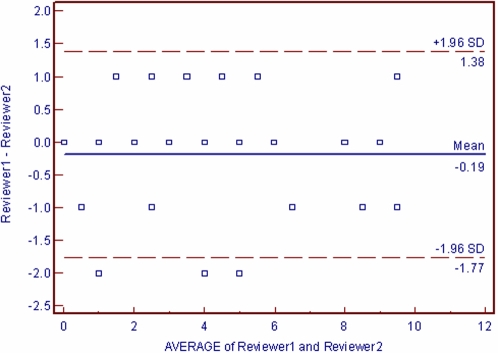
BACKGROUND: Thousands of systematic reviews have been conducted in all areas of health care. However, the methodological quality of these reviews is variable and should routinely be appraised. AMSTAR is a measurement tool to assess systematic reviews. METHODOLOGY: AMSTAR was used to appraise 42 reviews focusing on therapies to treat gastro-esophageal reflux disease, peptic ulcer disease, and other acid-related diseases. Two assessors applied the AMSTAR to each review. Two other assessors, plus a clinician and/or methodologist applied a global assessment to each review independently. CONCLUSIONS: The sample of 42 reviews covered a wide range of methodological quality. The overall scores on AMSTAR ranged from 0 to 10 (out of a maximum of 11) with a mean of 4.6 (95% CI: 3.7 to 5.6) and median 4.0 (range 2.0 to 6.0). The inter-observer agreement of the individual items ranged from moderate to almost perfect agreement. Nine items scored a kappa of >0.75 (95% CI: 0.55 to 0.96). The reliability of the total AMSTAR score was excellent: kappa 0.84 (95% CI: 0.67 to 1.00) and Pearson's R 0.96 (95% CI: 0.92 to 0.98). The overall scores for the global assessment ranged from 2 to 7 (out of a maximum score of 7) with a mean of 4.43 (95% CI: 3.6 to 5.3) and median 4.0 (range 2.25 to 5.75). The agreement was lower with a kappa of 0.63 (95% CI: 0.40 to 0.88). Construct validity was shown by AMSTAR convergence with the results of the global assessment: Pearson's R 0.72 (95% CI: 0.53 to 0.84). For the AMSTAR total score, the limits of agreement were -0.19+/-1.38. This translates to a minimum detectable difference between reviews of 0.64 'AMSTAR points'. Further validation of AMSTAR is needed to assess its validity, reliability and perceived utility by appraisers and end users of reviews across a broader range of systematic reviews.
Overview
The claims and statistics of this paper haven’t been checked yet.
Free: it reads the open-access text and checks the first 5 claims that cite a source we can check. Create a free account to check every claim.
Integrity signals
Registry
Cites
Statistics
Figures
Verification
Claims the paper makes
The claims and statistics of this paper haven’t been checked yet.
Free: it reads the open-access text and checks the first 5 claims that cite a source we can check. Create a free account to check every claim.
Claims other papers make about this one
Each is checked against this paper’s own text: does it say what the citing paper says it does?
The source backs part of the claim, not all of it — or backs it for a different population, condition or comparison.
In the citing paper
“This is a revised version of the original AMSTAR checklist [18], which is a validated measure of systematic review quality [19].”
From Implementation of Telemental Health Services Before COVID-19: Rapid Umbrella Review of Systematic Reviews (2021) · cites this paper as [19]
Experimental — accuracy not yet measuredThe source backs part of the claim, not all of it — or backs it for a different population, condition or comparison.
In the citing paper
“The validity and reliability of the AMSTAR has been established in previous studies.19,20”
From Quality assessment of systematic reviews on the efficacy of oral appliance therapy for adult and pediatric sleep-disordered breathing (2016) · cites this paper as [20]
Experimental — accuracy not yet measured
Self-check
Percentages, sums and reported differences re-computed from the paper’s own numbers.
The self-check needs the paper’s full text.
Citations
Cites
6 retracted
Eradication of Helicobacter pylori for non-ulcer dyspepsia
Moayyedi, P., Soo, S., Deeks, J., Delaney, B., Harris, A., Innes, M., Oakes, R., Wilson, S., Roalfe, A., Bennett, C., et al. (2003) · The Cochrane Database of Systematic Reviews · doi:10.1002/14651858.cd002096 · Cited by 371
RetractedEradication of Helicobacter pylori for non-ulcer dyspepsia
Moayyedi, P., Soo, S., Deeks, J. J., Delaney, B., Harris, A., Innes, M., Oakes, R., Wilson, S., Roalfe, A., Bennett, C., et al. (2006) · Cochrane Database of Systematic Reviews · doi:10.1002/14651858.cd002096.pub4 · Cited by 195 · cited 1×
“The topics of the reviews ranged across the spectrum of GI problems like dyspepsia, gastroesophageal reflux disease (GERD), peptic ulcer disease (PUD), and also GI drug interventions such as H2 receptor antagonists and proton pump inhibitors [9–50].”
BackgroundRetractedInitial management strategies for dyspepsia
Delaney, B., Moayyedi, P., & Forman, D. (2003) · Cochrane Database of Systematic Reviews · doi:10.1002/14651858.cd001961 · Cited by 181
RetractedPharmacological interventions for non-ulcer dyspepsia
Moayyedi, P., Soo, S., Deeks, J., Delaney, B., Innes, M., & Forman, D. (2003) · Cochrane Database of Systematic Reviews · doi:10.1002/14651858.cd001960 · Cited by 114
RetractedPharmacological interventions for non-ulcer dyspepsia
Moayyedi, P., Shelly, S., Deeks, J. J., Delaney, B., Innes, M., & Forman, D. (2006) · Cochrane Database of Systematic Reviews · doi:10.1002/14651858.cd001960.pub3 · Cited by 99 · cited 1×
“The topics of the reviews ranged across the spectrum of GI problems like dyspepsia, gastroesophageal reflux disease (GERD), peptic ulcer disease (PUD), and also GI drug interventions such as H2 receptor antagonists and proton pump inhibitors [9–50].”
BackgroundRetractedEradication of Helicobacter pylori for non-ulcer dyspepsia
Moayyedi, P., Soo, S., Deeks, J., Delaney, B., Harris, A., Innes, M., Oakes, R., Wilson, S., Roalfe, A., Bennett, C., et al. (2005) · Cochrane Database of Systematic Reviews · doi:10.1002/14651858.cd002096.pub2 · Cited by 60
RetractedSTATISTICAL METHODS FOR ASSESSING AGREEMENT BETWEEN TWO METHODS OF CLINICAL MEASUREMENT
Martin Bland, J., & Altman, D. (1986) · The Lancet · doi:10.1016/s0140-6736(86)90837-8 · Cited by 47,965
A Coefficient of Agreement for Nominal Scales
Cohen, J. (1960) · Educational and Psychological Measurement · doi:10.1177/001316446002000104 · Cited by 42,398
Weighted kappa: nominal scale agreement provision for scaled disagreement or partial credit
Cohen, J. (1968) · Psychological Bulletin · doi:10.1037/h0026256 · Cited by 8,736 · cited 2×
“Kappa values of less than 0 rate as less than chance agreement; 0.01–0.20 slight agreement; 0.21– 0.40 fair agreement; 0.41–0.60 moderate agreement; 0.61–0.80 substantial agreement; and 0.81–0.99 almost perfect agreement [52], [57].”
BackgroundMethodInfluentialMeasuring nominal scale agreement among many raters.
Fleiss, J. L. (1971) · Psychological Bulletin · doi:10.1037/h0031619 · Cited by 8,733
Research works printed but not linked: 3
- Trépanier EF Agro K Holbrook AM Blackhouse G Goeree R 1998 Meta-analysis of H pylori (HP) eradication rates in patients with duodenal ulcer (DU). Can J Clin Pharmacol. 5(1) 67
- Oxman AD Guyatt GH 1991 Validation of an index of the quality of review articles. J Clin Epidemiol 44(11) 1271 78 1834807 · DOI · Paper page
- Bland JM Altman DG 1987 Statistical methods for assessing agreement between measurement. Biochimica Clinica 11 399 404
Cited by
Items 401–500 of 569
Mickenautsch, S., & Yengopal, V. (2011) · International Dental Journal · doi:10.1111/j.1875-595x.2011.00055.x · Cited by 10
Torloni, M. R., & Riera, R. (2010) · Sao Paulo Medical Journal · doi:10.1590/s1516-31802010000400005 · Cited by 6
“The AMSTAR (a measurement tool to assess systematic reviews) criteria are as follows: (1) a priori design; (2) duplicate study selection and data extraction; (3) comprehensive literature search; (4) inclusive publication status; (5) included/excluded studies provided; (6) characteristics of included studies provided;…”
MethodSygouros, A., & Acar, A. (2013) · Journal of the World Federation of Orthodontists · doi:10.1016/j.ejwf.2013.05.004 · Cited by 8
“AMSTAR is now a tool with proven reliability and validity [11,12].”
MethodSystematic Reviews Addressing Microsurgical Head and Neck Reconstruction
Momeni, A., Jacobson, J. Y., & Lee, G. (2014) · Journal of Craniofacial Surgery · doi:10.1097/scs.0000000000001248 · Cited by 8
“Thus, a score between 0 and 11 is generated, with higher values reflecting better methodological quality.(2,12) AMSTAR scores of 4 or lower, 5 to 8, and 9 or greater are considered poor, fair, and good methodological quality, respectively.”
BackgroundLi, H., Xing, D., Ke, Y., & Lin, J. (2018) · International Journal of Rheumatic Diseases · doi:10.1111/1756-185x.13314 · Cited by 8
Fichman, P., & Vaughn, M. (2021) · Journal of the Association for Information Science and Technology · doi:10.1002/asi.24497 · Cited by 10
Faggion, C. M., Atieh, M. A., Tsagris, M., Seehra, J., & Pandis, N. (2023) · European Journal Of Oral Sciences · doi:10.1111/eos.12962 · Cited by 7
Quality of systematic reviews with meta‐analyses of resveratrol: A methodological systematic review
Lu, C., Ke, L., Zhang, Q., Deng, X., Shang, W., Zhao, X., Li, Y., Xie, Y., & Wang, Z. (2023) · Phytotherapy Research · doi:10.1002/ptr.8025 · Cited by 10
“The quality of a systematic review usually depends on two aspects: “ methodological quality ” and “ reporting quality ” (Shea et al., 2007).”
BackgroundLoef, M., & Walach, H. (2015) · Public Health · doi:10.1016/j.puhe.2015.01.014 · Cited by 9
Mickenautsch, S. (2012) · BMC Research Notes · doi:10.1186/1756-0500-5-26 · Cited by 7
“The AMSTAR (Assessment of Multiple SysTemAtic Reviews) tool [24-26] was used for critical self-assessment of the quality of the systematic review articles.”
MethodHauß, A., Zilezinski, M., & Bergjan, M. (2021) · Zeitschrift für Evidenz Fortbildung und Qualität im Gesundheitswesen · doi:10.1016/j.zefq.2020.11.007 · Cited by 9
Self‐Assembling Alanine‐Rich Peptides of Biomedical and Biotechnological Relevance
Measey, T. J., & Schweitzer‐Stenner, R. (2012) · Wiley eBooks · doi:10.1002/9781118183373.ch11 · Cited by 9
Gender Differences in Adverse Childhood Experiences and Mental Health Outcomes: A Systematic Review
Lee, J. Y., Chung, I., & Nam, Y. J. (2025) · Child Indicators Research · doi:10.1007/s12187-025-10286-y · Cited by 11
Ulmner, M., Bjørnland, T., Rosén, A., Berge, T., Olsen-Bergem, H., & Lund, B. (2024) · Journal of Oral Rehabilitation · doi:10.1111/joor.13661 · Cited by 7
Solmi, M., Cobey, K. D., Moher, D., Ebrahimzadeh, S., Dragioti, E., Shin, J. I., Raduà, J., Cortese, S., Shea, B., Veronese, N., et al. (2024) · BMJ Open · doi:10.1136/bmjopen-2022-071136 · Cited by 16
“40 Then, a checklist for overviews of reviews 41 was developed based on Cochrane recommendations, 36 and the older versions of PRISMA 42 (and not PRISMA 2020 30 ), and AMSTAR 35 43 (and not AMSTAR 2 44 ).”
MethodSelf-citationCurrent Evidence of the Efficacy of Cell-Based Therapies in Heart Failure
Harvey, E., Fisher, S. A., Doree, C. J., Taggart, D. P., & Martin‐Rendon, E. (2015) · Circulation Journal · doi:10.1253/circj.cj-14-1415 · Cited by 6
Viswanathan, V. K., & Muthu, S. (2023) · World Neurosurgery X · doi:10.1016/j.wnsx.2023.100185 · Cited by 6
Climate change in endodontics: Is it time to recycle “garbage in–garbage out” systematic reviews?
Fedorowicz, Z., Sequeira-Byron, P., Jagannath, V. A., & Sharif, M. O. (2011) · Oral Surgery Oral Medicine Oral Pathology Oral Radiology and Endodontology · doi:10.1016/j.tripleo.2011.02.022 · Cited by 6
Coenen, M., Schuetz, G. M., & Dewey, M. (2013) · RöFo - Fortschritte auf dem Gebiet der Röntgenstrahlen und der bildgebenden Verfahren · doi:10.1055/s-0033-1350140 · Cited by 8
Jeevanantham, D., Rajendran, V., Tremblay, L., Larivière, C., & Knight, A. (2018) · Systematic Reviews · doi:10.1186/s13643-018-0785-7 · Cited by 9
Kvamme, L. S., Waaler, P. M., Helland, S. S., & Kjøbli, J. (2021) · Child and Adolescent Mental Health · doi:10.1111/camh.12507 · Cited by 10
Systematic Reviews in Craniofacial Trauma—Strengths and Weaknesses
Hunter, C. L., Januszyk, M., Wan, D. C., & Momeni, A. (2015) · Annals of Plastic Surgery · doi:10.1097/sap.0000000000000633 · Cited by 6
“Thus, a score of 0 to 11 is generated, with higher values reflecting better methodological quality.(14,15) Criteria assessed with AMSTAR are demonstrated in Table 2.”
BackgroundZhang, H., Deng, Y.-H., Shuai, T., & Song, G.-M. (2017) · Chinese Nursing Research · doi:10.1016/j.cnre.2017.02.001 · Cited by 6
Quality of systematic reviews is poor, our fault, our responsibility
Campbell, J. M. (2017) · The JBI Database of Systematic Reviews and Implementation Reports · doi:10.11124/jbisrir-2017-003552 · Cited by 7
Sun, B. J., Tijerina, J. D., Nazerali, R. S., & Lee, G. (2018) · Annals of Plastic Surgery · doi:10.1097/sap.0000000000001384 · Cited by 6
Acupuncture for depression: An overview of systematic reviews
Gao, T., Zheng, Q., Hou, T., Luo, Y., Shi, Y., & Li, Y. (2019) · European Journal of Integrative Medicine · doi:10.1016/j.eujim.2019.03.009 · Cited by 7
Santis, K. K. D., & Kaplan, I. (2020) · Zeitschrift für Psychologie · doi:10.1027/2151-2604/a000397 · Cited by 8
Team Effectiveness in Patient Health Management: An Overview of Reviews
Gogovor, A., Burnand, B., Ahmed, S., Montague, T. J., & Peytremann‐Bridevaux, I. (2012) · International Journal of Clinical Medicine · doi:10.4236/ijcm.2012.37111 · Cited by 7
“The tool was found to have a good agreement, reliability and validity [30-32].”
MethodDuley, L., Dorling, J. S., Ayers, S., Oliver, S. R., YOXALL, C. W., Weeks, A. D., Megone, C., Oddie, S., Gyte, G. M., Chivers, Z., et al. (2019) · Programme Grants for Applied Research · doi:10.3310/pgfar07080 · Cited by 9
Wang, M., & Little, J. (2016) · Neuroepidemiology · doi:10.1159/000445389 · Cited by 6
Guindon, G. E., Paraje, G. R., & Chaloupka, F. J. (2018) · American Journal of Public Health · doi:10.2105/ajph.2014.302396s · Cited by 6
Kutschan, S., Freuding, M., Keinki, C., & Hübner, J. (2020) · Journal of Cancer Research and Clinical Oncology · doi:10.1007/s00432-020-03238-2 · Cited by 5
Hoben, M., Chamberlain, S. A., O’Rourke, H. M., Elliott, B., Shrestha, S., Devkota, R., Thorne, T. E., Lam, J., Banerjee, S., Hughes, L., et al. (2021) · BMJ Open · doi:10.1136/bmjopen-2020-041318 · Cited by 7
Alharbi, A., Alhosaini, S. S., Alrakebeh, S. S., & Aloraini, S. M. (2025) · Healthcare · doi:10.3390/healthcare13233120 · Cited by 4
“AMSTAR-2, a 16-item tool widely utilized in systematic reviews, evaluates methodological rigor and has demonstrated acceptable inter-rater reliability, construct validity, and feasibility [29].”
Hamasaki, T., Briand, C., Mahroug, A., & Sauvageau, A. (2025) · Disability and Rehabilitation Assistive Technology · doi:10.1080/17483107.2025.2526175 · Cited by 9
“…quality of the included systematic reviews by using the tool Assessing the Methodological Quality of Systematic Reviews (aMstaR 2) [24,28] (Figure 3). in cases of disagreement, the first author evaluated the study. aMstaR 2 consists of 11 questions that examine the quality of a…”
InfluentialQuality Assessment of the Methods Used in Published Opioid Conversion Reviews
Saokaew, S., & Oderda, G. M. (2012) · Journal of Pain & Palliative Care Pharmacotherapy · doi:10.3109/15360288.2012.734904 · Cited by 4
Bhambhvani, H. P., Greenberg, D. R., & Eisenberg, M. L. (2021) · Andrology · doi:10.1111/andr.12972 · Cited by 4
Krishnamurthy, I., Othman, R., Baxter, D. G., & Mani, R. (2018) · Physical Therapy Reviews · doi:10.1080/10833196.2018.1468965 · Cited by 4
Salehi‐Pourmehr, H., Naseri, A., Mostafaei, A., Vahedi, L., Sajjadi, S., Tayebi, S., Mostafaei, H., & Hajebrahimi, S. (2021) · Urology Research and Practice · doi:10.5152/tud.2021.21038 · Cited by 7
Li, W., Li, W., Wan, Y., Ren, J., Li, T., & Li, C. (2014) · PubMed Central · doi:10.11919/j.issn.1002-0829.214080 · Cited by 7
“The range of the overall quality score for each review was between 0 and 11.[15,16] Based on the recommendations of the Canadian Agency for Drugs and Technologies in Health (CADTH),[27] the total score was used to classify the overall quality of each review as high (total score 9 to 11), moderate (score 5 to 8), or lo…”
MethodUltrasound call detection in capybara
Nogueira, S. S. D. C., Barros, K. S., de Almeida, M. H., Pedroza, J. P., Nogueira-Filho, S. L. G., & Tokumaru, R. S. (2012) · Pesquisa Veterinária Brasileira · doi:10.1590/s0100-736x2012000700014 · Cited by 4
Introduction: Research Synthesis in Evidence-Based Clinical Decision-Making
Chiappelli, F., Brant, X., Oluwadara, O., Neagos, N., & Ramchandani, M. H. (2010) · Springer eBooks · doi:10.1007/978-3-642-05025-1_1 · Cited by 4
Response to Cassidy JD, et al.
Spearing, N., & Connelly, L. B. (2011) · Injury · doi:10.1016/j.injury.2010.12.021 · Cited by 4
Macedo, C. R., Riera, R., & Torloni, M. R. (2013) · Clinics · doi:10.6061/clinics/2013(04)20 · Cited by 4
Surgical resection of liver metastasis in pancreatic and periampullary carcinoma
López‐López, V., Robles-Campos, R., López‐Conesa, A., Brusadín, R., Carbonell, G., Gómez, A. G., Ruiz‐Manzanera, J. J., & Parrilla, P. (2019) · Minerva Chirurgica · doi:10.23736/s0026-4733.18.07972-5 · Cited by 4
Puga, M. E. D. S., & Atallah, Á. N. (2020) · Sao Paulo Medical Journal · doi:10.1590/1516-3180.2020.138625112020 · Cited by 5
“2020; 138(6):459-64 MECIR – METHODOLOGICAL EXPECTATIONS FOR COCHRANE INTERVENTION REVIEWS - https://methods.”
BackgroundMethodInfluentialGök, Ç., & Karataş, P. (2026) · Journal of Pediatric Nursing · doi:10.1016/j.pedn.2026.01.026 · Cited by 6
Yang, Y., Cheng, X., Chen, S., Xie, J.-Z., Chen, G., Li, L., Feng, Y., Chen, Y., Liu, G., Yin, Y., et al. (2026) · International Journal of Surgery · doi:10.1097/js9.0000000000004566 · Cited by 5
“The study was registered with PROSPERO, and the methodology adhered to the Preferred Reporting Items for Systematic Reviews and Meta-Analyses (PRISMA) and PRISMA-2020 guidelines, along with the extension statement for network meta-analyses (PRISMA-NMA) and AMSTAR [ 18–20 ] .”
Deng, Y.-S., Xi, L.-H., Han, S., Liang, T., Huang, H., Fan, Y., Zheng, Y., & Lin, J. (2023) · Medicine · doi:10.1097/md.0000000000036472 · Cited by 4
“In this study, the AMSTAR 2 scale, [22] PRISMA 2020 statement, [23,24] ROBIS tool, [25,26] GRADE system tool [27] and other methods were used to comprehensively evaluate the methodological quality, risk of bias, reporting quality, evidence quality and efficacy of published TCM therapies as…”
MethodLu, T., Liu, B., Lu, C., Du, Z., Yang, K., & Ge, L. (2024) · Complementary Therapies in Medicine · doi:10.1016/j.ctim.2024.103034 · Cited by 3
Liu, S., Zhang, X., Yan, L., Wang, H., Ding, Z., Liu, H., Pan, G., Han, C., Tian, B., Dong, Z., et al. (2025) · Journal of Cancer Research and Clinical Oncology · doi:10.1007/s00432-025-06082-4 · Cited by 3
“…“cannot currently recommend one tool over another due to a lack of empirical evidence on this topic”, we adopted the validated AMSTAR 2 tool (a measurement tool to assess systematic reviews) (Shea et al. 2007, 2009, 2017, 2007) to evaluate the methodological quality of each included meta-analysis.”
Telang, S. S., Podosin, M. A., Fathi, A. T., Kotlier, J. L., Feingold, C. L., Alluri, R. K., & Liu, J. N. (2025) · Global Spine Journal · doi:10.1177/21925682251322427 · Cited by 3
Kelley, G. A., & Kelley, K. S. (2014) · Journal of Novel Physiotherapies · doi:10.4172/2165-7025.1000219 · Cited by 3
“The response “Not Applicable” is chosen when an item is not relevant (for example, meta-analysis of data not possible) [18-21].”
BackgroundMethodColquhoun, H. L., Lowe, D. B., Helis, E., Belanger, D., Ens, B., Hill, S., Mayhew, A., Taylor, M. J., & Grimshaw, J. (2016) · Health Research Policy and Systems · doi:10.1186/s12961-016-0140-1 · Cited by 3
Self-citationFonseca, P. R., Nobre, J. B., & da Rocha, J. S. (2018) · Physiotherapy Quarterly · doi:10.5114/pq.2018.79740 · Cited by 3
Prada, L., Prada, A., Antunes, M. M., Fernandes, R. M., Costa, J. N., Ferreira, J. J., & Caldeira, D. (2022) · BMC Medical Research Methodology · doi:10.1186/s12874-022-01591-z · Cited by 3
“While the original tool (AMSTAR), adapted and validated in 2007, includes 11 items [9, 10], AMSTAR-2 has 16 items in total, allowing for a more detailed assessment of the methodological quality of systematic reviews [5].”
MethodWu, R., Liu, S., Sun, J., Lai, L. Y. W., & Liu, J. (2018) · Journal of Traditional Chinese Medical Sciences · doi:10.1016/j.jtcms.2018.05.002 · Cited by 3
The quality of systematic reviews addressing peripheral nerve repair and reconstruction
Sun, B. J., Tijerina, J. D., Agbim, U. N., Lee, G., & Nazerali, R. S. (2018) · Journal of Plastic Reconstructive & Aesthetic Surgery · doi:10.1016/j.bjps.2018.10.047 · Cited by 3
Assessing the Methodological Quality of Systematic Reviews: The Development of AMSTAR
Shea, B. (2008) · Digital Academic REpository of VU University Amsterdam (Vrije Universiteit Amsterdam) · Cited by 3
Self-citationBaker, W. L., Bennetts, M., Coleman, C. I., & Cappelleri, J. C. (2016) · Springer eBooks · doi:10.1007/978-3-319-25655-9_9 · Cited by 3
Chiappelli, F., Ramchandani, M. H., Phi, L., & Brant, X. (2012) · Springer eBooks · doi:10.1007/978-3-642-23144-5_3 · Cited by 3
“A measurement tool for the assessment of multiple systematic reviews (AMSTAR) was developed by pooling the better elements of fi rst generation instruments [ 22, 23 ] .”
MethodMeta-analytic rage or race for evidence-based interventional cardiology?
Biondi‐Zoccai, G. (2009) · EuroIntervention · doi:10.4244/eijv5i4a64 · Cited by 2
Associated variables with digital competence of teachers: a systematic review
Salehi, S., Dehghani, M., Azimi, E., Javadipour, M., صالحی, ک., & Thani, F. N. (2025) · Cogent Education · doi:10.1080/2331186x.2025.2576135 · Cited by 8
“To assess the quality of the studies, the AMSTAR tool, which was validated by Shea et al. (2007), was used.”
Mondragon, K. M., Tan‐Lim, C. S. C., Velasco, R., Cordero, C. P., Strebel, H. M. J. S., Palileo‐Villanueva, L. M., & Mantaring, J. B. (2025) · Journal of Clinical Epidemiology · doi:10.1016/j.jclinepi.2025.112056 · Cited by 2
Gök, Ç., & Karataş, P. (2026) · Breastfeeding Medicine · doi:10.1177/15568253261446229 · Cited by 2
“24,25 Quality of the included studies The methodological quality of the included meta-analyses was assessed using the AMSTAR tool.”
Peters, S. T., Rutten, J. J. S., van Kooij, Y. E., Selles, R. W., Slijper, H. P., Hand-Wrist Study Group, & Wouters, R. M. (2026) · Quality of Life Research · doi:10.1007/s11136-026-04314-9 · Cited by 3
“Scores of four or lower were considered high risk of bias [31].”
Santos, A. R. D. O., Oliveira, A., Nogueira, J. L., Noronha, K., & Andrade, M. (2019) · Jornal Brasileiro de Economia da Saúde · doi:10.21115/jbes.v11.n2.p170-210 · Cited by 2
Hellberg, C., Larsson, S., Bertilsson, G., Domeij, H., Tholén, S. L., Fredriksson, M. K., Ahlström, G., Dahlberg, L., Karlsson, P., Nybom, J., et al. (2022) · European Journal of Social Work · doi:10.1080/13691457.2022.2130182 · Cited by 2
“AMSTAR has been shown to have high validity and interrater reliability (Pieper et al., 2014; Pieper et al., 2017; Pollock et al., 2017; Shea et al., 2007; Shea et al., 2009).”
BackgroundNian, T., Xing, X., Yang, K., & Li, X. (2023) · Value in Health · doi:10.1016/j.jval.2023.06.016 · Cited by 2
Li, Y., Zhao, G., Ma, Y., Wang, L., Liu, Y., & Zhang, H. (2024) · BMC Pulmonary Medicine · doi:10.1186/s12890-023-02829-2 · Cited by 2
“Two studies [19, 24] reported specific adverse events, such as pain or discomfort, accidental dislodgement of the vascular catheter, nausea and vomiting, skin damage or pressure ulcers, abdominal distension, and general discomfort.”
BackgroundMethodMartín, M. S., Sánchez, M., Moreno, E. M. O., & Navarro‐Mateu, F. (2024) · Cogent Education · doi:10.1080/2331186x.2024.2385785 · Cited by 9
“The original AMSTAR was design and validated as a practical critical appraisal tool for professionals to evaluate the quality of systematic reviews of randomized controlled trials of interventions (Shea, Bouter, et al., 2007; Shea, Grimshaw, et al., 2007).”
InfluentialAutologous fat grafting for breast reconstruction
Tan, Q., Tian, C., Chen, J., & Lv, Q. (2013) · Cochrane Database of Systematic Reviews · doi:10.1002/14651858.cd010793 · Cited by 2
RetractedTaking an idea to a research protocol
Biccard, B. M., & Rodseth, R. N. (2014) · Southern African Journal of Anaesthesia and Analgesia · doi:10.1080/22201173.2014.10844558 · Cited by 2
Burdens without blessings: Peer reviewers get no respect
Ferraris, V. A. (2017) · Journal of Thoracic and Cardiovascular Surgery · doi:10.1016/j.jtcvs.2016.12.028 · Cited by 5
Estresores vitales durante la infancia y trastorno de ansiedad: una meta-revisión
Herazo, E., Campo‐Arias, A., & Dávila, N. A. I. (2018) · Duazary · doi:10.21676/2389783x.2425 · Cited by 5
Hansen, T. T., Astrup, A. V., & Sjödin, A. M. (2021) · Obesity Medicine · doi:10.1016/j.obmed.2021.100322 · Cited by 2
Barbosa-Liz, D. M., Giannakopoulos, N. N., Carvajal‐Flórez, Á., Zapata‐Noreña, Ó., & Faggion, C. M. (2023) · Orthodontics and Craniofacial Research · doi:10.1111/ocr.12720 · Cited by 2
Eshaghpour, A., Li, A., Javidan, A. P., Chen, N., Yang, S. S., & Crowther, M. A. (2020) · BMJ Evidence-Based Medicine · doi:10.1136/bmjebm-2019-111326 · Cited by 2
Alsultan, F., Albarrak, J. B., Alshayie, R. A., & Aloraini, S. M. (2025) · Physical Therapy Reviews · doi:10.1080/10833196.2025.2544463 · Cited by 1
“This assessment was conducted independently by the same two reviewers [25].”
Bastardo, R., Pavão, J., Martins, A. I., Silva, A. G., & Rocha, N. P. (2025) · Future Internet · doi:10.3390/fi17080376 · Cited by 1
“Thus, based on questions 1 and 3 of the first version of the A MeaSurement Tool to As-sess systematic Reviews (AMSTAR) checklist [15], the IC2 criterion was introduced.”
Candidate treatments for long COVID: a narrative review of expert and patient-driven priorities
Baptista, S. N., Atkins, T., Chakraborty, S. P., Bakhit, M., Glasziou, P., & Byambasuren, O. (2026) · Frontiers in Medicine · doi:10.3389/fmed.2026.1734600 · Cited by 1
Evidence‐based plastic surgery—“Status Quo”
Momeni, A., & Stark, G. B. (2013) · Microsurgery · doi:10.1002/micr.22194 · Cited by 1
“Assessing 11 quality criteria, the tool assigns a score of 0 or 1 to each criterion, thus, generating a score of 0 to 11, with higher values reflecting better methodological quality.(11,44) A score of 4 or less, 5 to 8, and 9 or greater is considered less than fair, fair to good, and good methodological quality, respe…”
MethodCrouch, S. R. (2011) · Australian Health Review · doi:10.1071/ah10942 · Cited by 2
Kumar, P. (2012) · International Journal of Biomedical and Advance Research · doi:10.7439/ijbar.v3i6.360 · Cited by 1
Wu, A. M., Wu, C., Margo, C. E., & Greenberg, P. B. (2014) · Journal of Cataract & Refractive Surgery · doi:10.1016/j.jcrs.2014.11.004 · Cited by 1
“The AMSTAR guideline is the most recent and reliable instrument for evaluating methodological quality of systematic reviews; it has been refined based on improvements from previous instruments (eg, the Overview Quality Assessment Questionnaire), expert consensus, and empirical evidence.(4,5) The AMSTAR consists of an…”
MethodCommunity-Based Service Models for Seniors in Newfoundland & Labrador
Bergman, H., Grignon, M., Cooper, B. A., Bornstein, S., & Navarro, P. (2013) · Cited by 1
An Introduction to Systematic Reviews that Include Meta-analyses for Policy Makers and Analysts
Malange, R. (2015) · DOAJ (DOAJ: Directory of Open Access Journals) · doi:10.31990/71 · Cited by 2
Rituximab in Lymphoma and Chronic Lymphocytic Leukemia: A Clinical Practice Guideline, Version 3
Prica, A. A., Baldassarre, F. G., Imrie, K., Kouroukis, T., & Cheung, M. C. (2015) · Cited by 1
Burdens Without Blessings: Peer Reviewers Get No Respect
Ferraris, V. A. (2017) · The Annals of Thoracic Surgery · doi:10.1016/j.athoracsur.2017.02.014 · Cited by 1
Shivakumar, T., Ranjan, V. P., Yamuna, V. S., & Karthik, P. (2017) · International Surgery Journal · doi:10.18203/2349-2902.isj20174503
5 Kritisch beoordelen van een artikel: secundair onderzoek
Offringa, M., Assendelft, W. J., & Scholten, R. J. P. M. (2008) · Bohn Stafleu van Loghum eBooks · doi:10.1007/978-90-313-6636-1_5 · Cited by 1
Genomics, Genetics, and Breeding in Aquaculture
Maluwa, A. O. (2021) · Elsevier eBooks · doi:10.1016/b978-0-12-824296-4.00003-7 · Cited by 1
Methodological Quality Analysis of Systematic Review for the Treatment of Rotator Cuff Disease
Estevam, J. D. A., Franco, E. S. B., Kriebel, C. F., & Peccin, M. S. (2021) · LA Referencia (Red Federada de Repositorios Institucionales de Publicaciones Científicas) · Cited by 1
Systematic review of musculoskeletal taping methods
Polakowski, E. (2015) · D-Scholarship@Pitt (University of Pittsburgh) · Cited by 3
Comportamento sedentário e desfechos na saúde de idosos: uma revisão sistemática
Rezende, L. F. M. (2014) · Digital Library of Theses and Dissertations (Universidade de São Paulo) · doi:10.11606/d.5.2014.tde-15082014-122127 · Cited by 1
Improving the quality of reviews in veterinary science: The author’s responsibility
O'Connor, A. M. C. (2011) · The Veterinary Journal · doi:10.1016/j.tvjl.2011.10.014 · Cited by 1
“…of Heidelberg Dental School and his colleagues evaluate the quality of systematic reviews in dentistry and find evidence of low-quality reviews based on the AMSTAR checklist (Faggion et al., 2012) – a checklist that aims to assess the quality of conduct of a review (Shea et al., 2007a,b, 2009).”
BackgroundImmunotherapy for Patients with Follicular Lymphoma: The Contribution of Systematic Reviews
Vidal, L., Gafter‐Gvili, A., & Shpilberg, O. (2010) · Acta Haematologica · doi:10.1159/000318883 · Cited by 1
“Two reviewers (L.V. and A.G.-G.) assessed the risk of bias in the systematic reviews according to the following parameters: use of explicit inclusion/exclusion criteria and a predefined protocol, comprehensive search, whether selection bias was avoided, assessment of risk of bias of original trials and correct statist…”
MethodRefaat, S. M., & Abdelazeim, F. H. (2022) · Research Square · doi:10.21203/rs.3.rs-1804500/v1 · Cited by 1
Solmi, M., Cobey, K. D., Moher, D., Ebrahimzadeh, S., Dragioti, E., Shin, J. I., Raduà, J., Cortese, S., Shea, B., Veronese, N., et al. (2022) · medRxiv · doi:10.1101/2022.12.28.22283572 · Cited by 1
“Then, a checklist for overviews of reviews 41 was developed based on Cochrane recommendations 36 , and the older versions of PRISMA 42 (and not PRISMA 2020 30 ), and A MeaSurement Tool to Assess systematic Reviews) quality assessment tool (AMSTAR) 35,43 (and not AMSTAR 2 44 ).”
Self-citation
Metadata
- Authors
- Shea, B. J., Bouter, L. M., Peterson, J., Boers, M., Andersson, N., Ortiz, Z., Ramsay, T., Bai, A., Shukla, V. K., & Grimshaw, J. M.
- Affiliations
- Amsterdam Public Health (NL)
- Vrije Universiteit Amsterdam (NL)
- University of Ottawa (CA)
- Universidad Autónoma de Guerrero (MX)
- Academia Nacional de Medicina (AR)
- Canada's Drug Agency (CA)
- Corresponding author
- Shea, Beverley J.
- ORCID
- Venue
- PLoS ONE
- Publisher
- Public Library of Science (PLoS)
- Published
- 2007-12-26
- Volume
- 2
- Issue
- 12
- Pages
- e1350
- ISSN
- 1932-6203 (ISSN-L)
- PMC
- PMC2131785
- OpenAlex
- W2024037973
- Cited by
- 569
- References
- 76
- Citations by year
- 2026: 6 · 2025: 20 · 2024: 20 · 2023: 25 · 2022: 27 · 2021: 38 · 2020: 33 · 2019: 37 · 2018: 61 · 2017: 58 · 2016: 50 · 2015: 38 · 2014: 42 · 2013: 37 · 2012: 25
- FWCI
- 2.17
- Type
- journal article
- Language
- en
- Open access
- gold
- doi.org
- Locations
- PLoS ONE (publishedVersion, cc-by)
- PubMed Central (publishedVersion, cc-by)
- PubMed (publishedVersion)
- RePEc: Research Papers in Economics (submittedVersion)
- Digital Academic REpository of VU University Amsterdam (Vrije Universiteit Amsterdam) (submittedVersion)
- DOAJ (DOAJ: Directory of Open Access Journals) (submittedVersion, cc-by-sa)
- Figshare (submittedVersion, cc-by)
- Data Archiving and Networked Services (DANS) (submittedVersion, other-oa)
- Topics
- Social Sciences › Decision Sciences › Statistics, Probability and Uncertainty › Meta-analysis and systematic reviews
- Social Sciences › Sociology and Political Science › Delphi Technique in Research
- Health Sciences › Medicine › Public Health, Environmental and Occupational Health › Clinical practice guidelines implementation
- Keywords
- AMSTAR, methodological quality assessment, external validation, interobserver agreement, construct validity, reliability statistics, gastroesophageal reflux disease, peptic ulcer, acid-related diseases
- MeSH terms
- Gastric Acid, Gastroesophageal Reflux, Humans, Peptic Ulcer, Meta-Analysis as Topic, Reproducibility of Results
About these checks
Registry, retraction, Cites and statistics results are computed, not judged, with one exception: a printed reference that no index lists is read once by a model before it counts as a citation error. Claims are extracted by a model and kept only when their quote appears verbatim in the text; each cited source is then checked, with a model’s help, for whether it says what the claim relies on. Those verdicts can be wrong — read the claim’s quote and the cited source before relying on one.
Statistics and arithmetic are recomputed, not judged.
Confidence bands are shown only for fields calibrated on our annotated test set. None is calibrated yet, so no band is shown.
What counts as a claim ›How we measure confidence ›How we check this ›
Are you an author, or do you see a problem with this page? Request a review
Data sources
Bibliographic data: Semantic Scholar, OpenAlex, Crossref.
Contains information from the Semantic Scholar Academic Graph Datasets, made available under the ODC Attribution License (ODC-BY 1.0).
Semantic Scholar’s data is described in: Kinney, R., et al. (2023). The Semantic Scholar Open Data Platform. arXiv:2301.10140.
