

The DOI matches its Crossref record; 37 of the 37 references it cites were found in a registry or an index.
Brain Neuronal CB2 Cannabinoid Receptors in Drug Abuse and Depression: From Mice to Human Subjects
Open accessAbstract
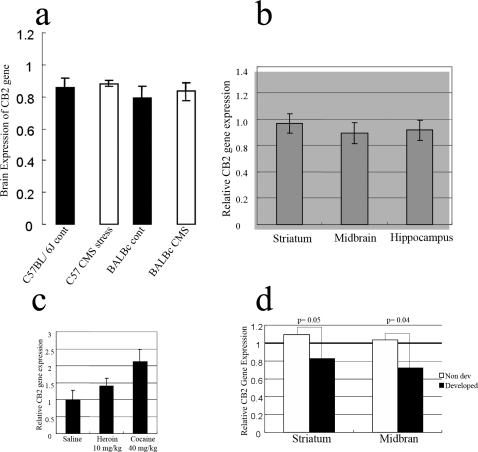
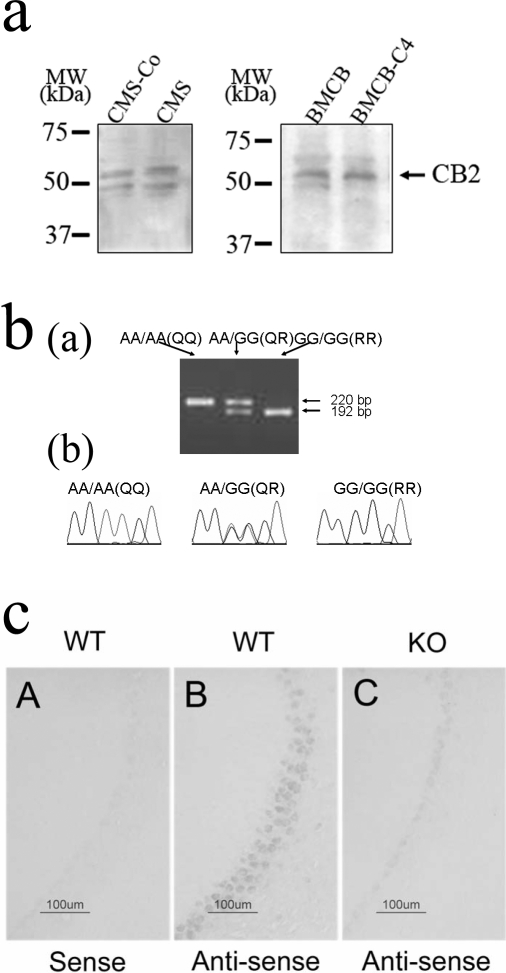
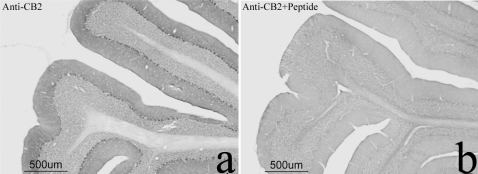
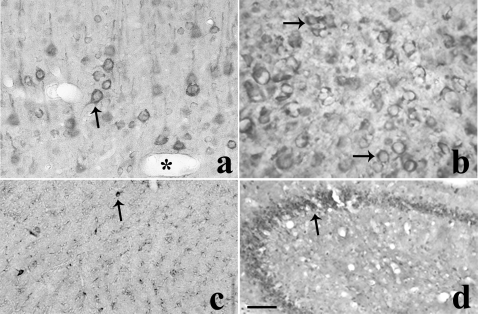
BACKGROUND: Addiction and major depression are mental health problems associated with stressful events in life with high relapse and reoccurrence even after treatment. Many laboratories were not able to detect the presence of cannabinoid CB2 receptors (CB2-Rs) in healthy brains, but there has been demonstration of CB2-R expression in rat microglial cells and other brain associated cells during inflammation. Therefore, neuronal expression of CB2-Rs had been ambiguous and controversial and its role in depression and substance abuse is unknown. METHODOLOGY/PRINCIPAL FINDINGS: In this study we tested the hypothesis that genetic variants of CB2 gene might be associated with depression in a human population and that alteration in CB2 gene expression may be involved in the effects of abused substances including opiates, cocaine and ethanol in rodents. Here we demonstrate that a high incidence of (Q63R) but not (H316Y) polymorphism in the CB2 gene was found in Japanese depressed subjects. CB2-Rs and their gene transcripts are expressed in the brains of naïve mice and are modulated following exposure to stressors and administration of abused drugs. Mice that developed alcohol preference had reduced CB2 gene expression and chronic treatment with JWH015 a putative CB2-R agonist, enhanced alcohol consumption in stressed but not in control mice. The direct intracerebroventricular microinjection of CB2 anti-sense oligonucleotide into the mouse brain reduced mouse aversions in the plus-maze test, indicating the functional presence of CB2-Rs in the brain that modifies behavior. We report for the using electron microscopy the sub cellular localization of CB2-Rs that are mainly on post-synaptic elements in rodent brain. CONCLUSIONS/SIGNIFICANCE: Our data demonstrate the functional expression of CB2-Rs in brain that may provide novel targets for the effects of cannabinoids in depression and substance abuse disorders beyond neuro-immunocannabinoid activity.
Overview
The claims and statistics of this paper haven’t been checked yet.
Run the check — free, no account needed. It reads the open-access text and checks the sources it cites.
Integrity signals
Registry
Cites
Statistics
Figures
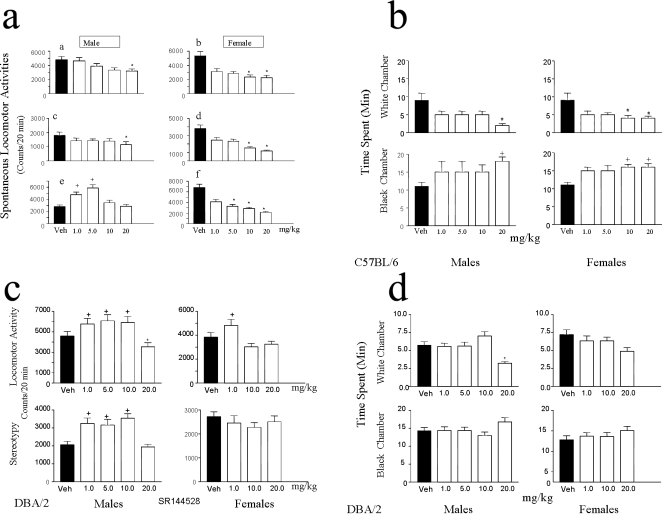
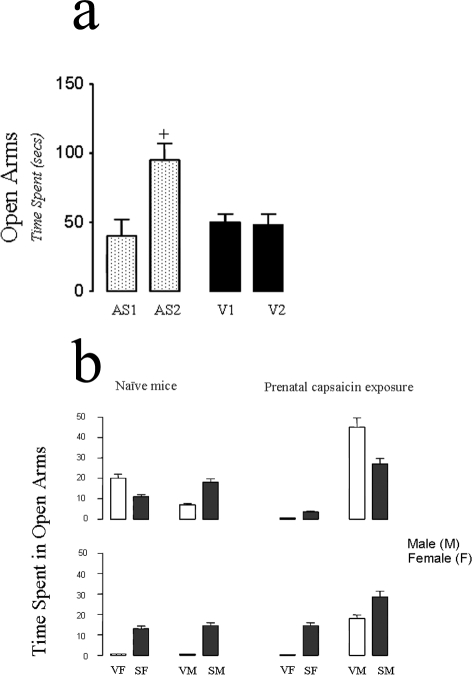
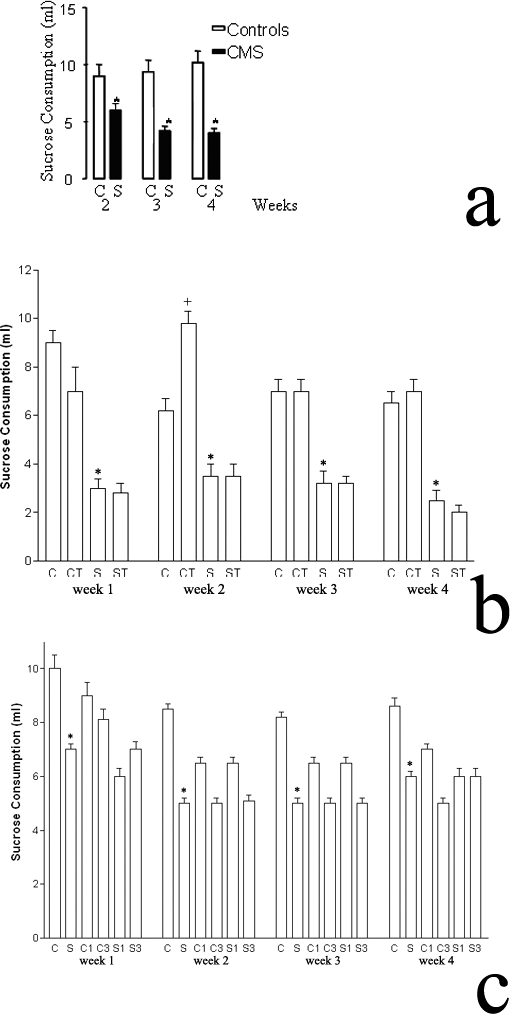
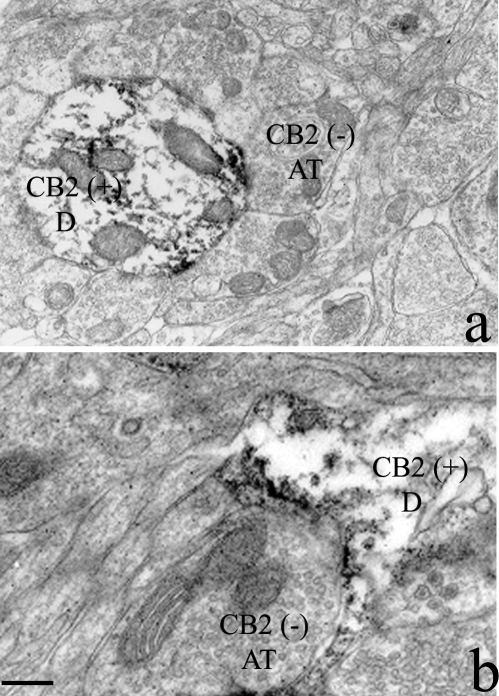
Verification
Claims the paper makes
The claims and statistics of this paper haven’t been checked yet.
Run the check — free, no account needed. It reads the open-access text and checks the sources it cites.
Claims other papers make about this one
Each is checked against this paper’s own text: does it say what the citing paper says it does?
In the citing paper
“A potential link between variants in the human CNR2 and major depression (Onaivi et al., 2008) has also been proposed.”
From The endocannabinoid system as a target for novel anxiolytic drugs (2017) · cites this paper as Onaivi et al., 2008
Self-check
Percentages, sums and reported differences re-computed from the paper’s own numbers.
The self-check needs the paper’s full text.
Citations
Cites
The rat brain in stereotaxic coordinates
Palkovits, M. (1983) · Neuropeptides · doi:10.1016/0143-4179(83)90049-5 · Cited by 28,959
The Rat Brain in Stereotaxic Coordinates
Paxinos, G., & Watson, C. (1983) · Elsevier eBooks · doi:10.1016/c2009-0-63235-9 · Cited by 28,585
THE USE OF LEAD CITRATE AT HIGH pH AS AN ELECTRON-OPAQUE STAIN IN ELECTRON MICROSCOPY
Reynolds, E. S. (1963) · The Journal of Cell Biology · doi:10.1083/jcb.17.1.208 · Cited by 24,938
Molecular characterization of a peripheral receptor for cannabinoids
Munro, S., Thomas, K. L., & Abu-Shaar, M. (1993) · Nature · doi:10.1038/365061a0 · Cited by 5,092
Galiègue, S., Mary, S., Marchand, J., Dussossoy, D., Carrière, D., Carayon, P., Bouaboula, M., Shire, D. J., Fur, G. L., & Casellas, P. (1995) · European Journal of Biochemistry · doi:10.1111/j.1432-1033.1995.tb20780.x · Cited by 1,776
Willner, P. (2005) · Neuropsychobiology · doi:10.1159/000087097 · Cited by 1,605
Identification and Functional Characterization of Brainstem Cannabinoid CB2Receptors
Van Sickle, M. D., Duncan, M., Kingsley, P. J., Mouihate, A., Urbani, P., Mackie, K., Stella, N., Makriyannis, A., Piomelli, D., Davison, J. S., et al. (2005) · Science · doi:10.1126/science.1115740 · Cited by 1,470
Cannabis use and mental health in young people: cohort study.
Patton, G. C., Coffey, C., Carlin, J. B., Degenhardt, L., Lynskey, M., & Hall, W. (2002) · BMJ · doi:10.1136/bmj.325.7374.1195 · Cited by 997
Cannabinoid CB2 receptors: immunohistochemical localization in rat brain
Gong, J.-P., Onaivi, E. S., Ishiguro, H., Liu, Q.-R., Tagliaferro, P. A., Brusco, A., & Uhl, G. R. (2006) · Brain Research · doi:10.1016/j.brainres.2005.11.035 · Cited by 820
Self-citationBenito, C., Núñez, E., Tolón, R. M., Carrier, E. J., Rábano, A., Hillard, C. J., & Romero, J. (2003) · Journal of Neuroscience · doi:10.1523/jneurosci.23-35-11136.2003 · Cited by 636
Cited by
Sorted by citations
The endocannabinoid system and the brain.
Mechoulam, R., & Parker, L. A. (2013) · Annual Review of Psychology · doi:10.1146/annurev-psych-113011-143739 · Cited by 1,090
Synthetic cannabinoids: Epidemiology, pharmacodynamics, and clinical implications
Castaneto, M. S., Gorelick, D. A., Desrosiers, N. A., Hartman, R. L., Pirard, S., & Huestis, M. A. (2014) · Drug and Alcohol Dependence · doi:10.1016/j.drugalcdep.2014.08.005 · Cited by 710
CB2: a cannabinoid receptor with an identity crisis
Atwood, B. K., & Mackie, K. (2010) · British Journal of Pharmacology · doi:10.1111/j.1476-5381.2010.00729.x · Cited by 659
Cannabinoid and cannabinoid‐like receptors in microglia, astrocytes, and astrocytomas
Stella, N. (2010) · Glia · doi:10.1002/glia.20983 · Cited by 556
Seely, K. A., Lapoint, J. M., Moran, J. H., & Fattore, L. (2012) · Progress in Neuro-Psychopharmacology and Biological Psychiatry · doi:10.1016/j.pnpbp.2012.04.017 · Cited by 486
Metadata
- Authors
- Onaivi, E. S., Ishiguro, H., Gong, J.-P., Patel, S., Meozzi, P. A., Myers, L., Perchuk, A., Mora, Z., Tagliaferro, P. A., Gardner, E., Brusco, A., Akinshola, B. E., Hope, B., Lujilde, J., Inada, T., Iwasaki, S., Macharia, D., Teasenfitz, L., Arinami, T., & Uhl, G. R.
- Affiliations
- William Paterson University (US)
- National Institutes of Health (US)
- Universidad de Buenos Aires (AR)
- Howard University (US)
- Teikyo University Chiba Medical Center (JP)
- Corresponding author
- Onaivi, Emmanuel S.
- Venue
- PLoS ONE
- Publisher
- Public Library of Science (PLoS)
- Published
- 2008-02-20
- Volume
- 3
- Issue
- 2
- Pages
- e1640
- ISSN
- 1932-6203 (ISSN-L)
- PMC
- PMC2241668
- OpenAlex
- W1980460968
- Cited by
- 257
- References
- 37
- Citations by year
- 2026: 3 · 2025: 7 · 2024: 11 · 2023: 15 · 2022: 13 · 2021: 14 · 2020: 12 · 2019: 16 · 2018: 16 · 2017: 22 · 2016: 15 · 2015: 14 · 2014: 13 · 2013: 18 · 2012: 18
- FWCI
- 11.67
- Type
- journal article
- Language
- en
- Open access
- gold
- doi.org
- Locations
- PLoS ONE (publishedVersion, cc-by)
- PubMed Central (publishedVersion, cc-by)
- PubMed (publishedVersion)
- DOAJ (DOAJ: Directory of Open Access Journals) (submittedVersion, cc-by-sa)
- Funders
- William Paterson University of New Jersey
- National Institute on Alcohol Abuse and Alcoholism
- National Institute on Drug Abuse
- Topics
- Health Sciences › Medicine › Pharmacology (medical) › Cannabis and Cannabinoid Research
- Life Sciences › Neuroscience › Cellular and Molecular Neuroscience › Neurotransmitter Receptor Influence on Behavior
- Life Sciences › Neuroscience › Cellular and Molecular Neuroscience › Neuropeptides and Animal Physiology
- Keywords
- CB2 receptor, depression, substance abuse, alcohol preference, cocaine, opiates, ethanol, stress, antisense oligonucleotides, subcellular localization, Japanese patients
- MeSH terms
- Animals, Brain Chemistry, Depressive Disorder, Gene Expression Regulation, Humans, Neurons, Polymorphism, Genetic, Substance-Related Disorders, Receptor, Cannabinoid, CB2, Mice
About these checks
Registry, retraction, Cites and statistics results are computed, not judged, with one exception: a printed reference that no index lists is read once by a model before it counts as a citation error. Claims are extracted by a model and kept only when their quote appears verbatim in the text; each cited source is then checked, with a model’s help, for whether it says what the claim relies on. Those verdicts can be wrong — read the claim’s quote and the cited source before relying on one.
Statistics and arithmetic are recomputed, not judged.
Confidence bands are shown only for fields calibrated on our annotated test set. None is calibrated yet, so no band is shown.
What counts as a claim ›How we measure confidence ›How we check this ›
Are you an author, or do you see a problem with this page? Request a review
