

The DOI matches its Crossref record; 18 of the 18 references it cites were found in a registry or an index.
Enhanced Caenorhabditis elegans Locomotion in a Structured Microfluidic Environment
Open accessAbstract
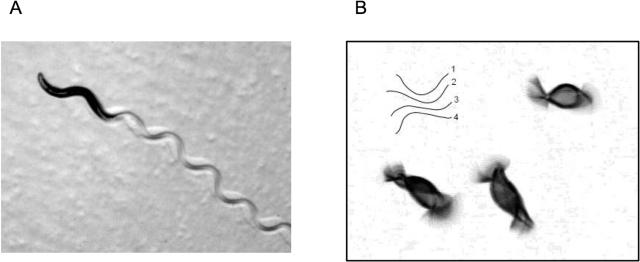
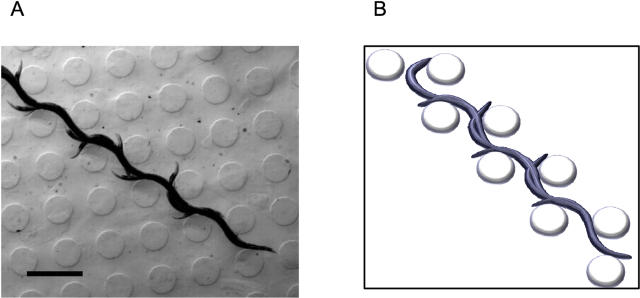
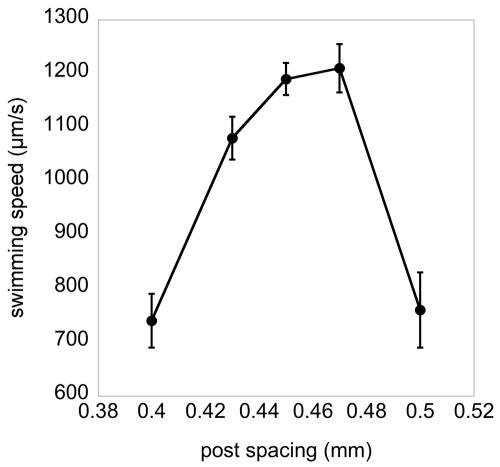
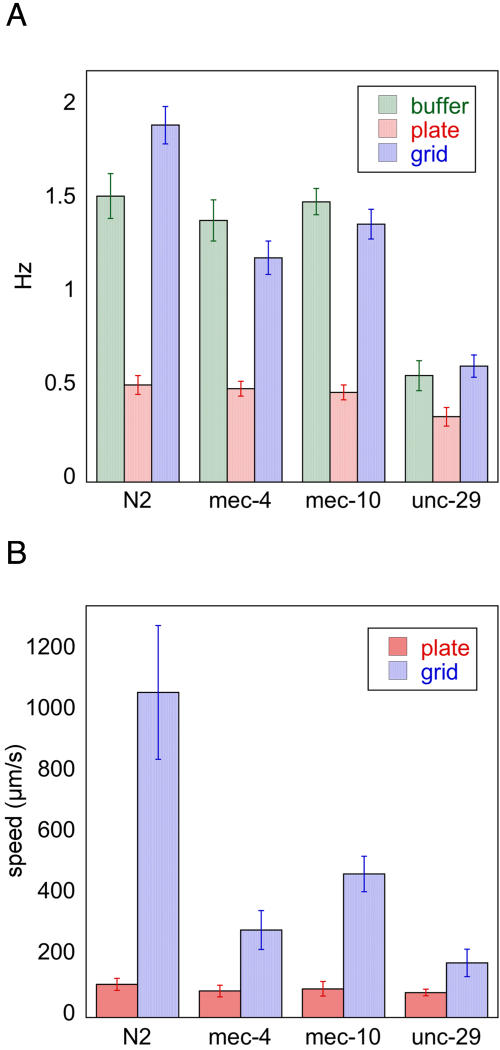
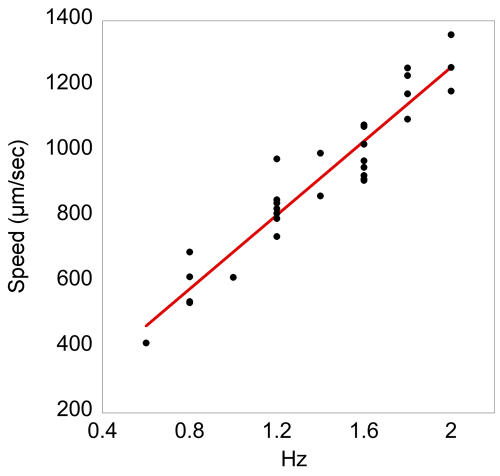
BACKGROUND: Behavioral studies of Caenorhabditis elegans traditionally are done on the smooth surface of agar plates, but the natural habitat of C. elegans and other nematodes is the soil, a complex and structured environment. In order to investigate how worms move in such environments, we have developed a technique to study C. elegans locomotion in microstructures fabricated from agar. METHODOLOGY/PRINCIPAL FINDINGS: When placed in open, liquid-filled, microfluidic chambers containing a square array of posts, we discovered that worms are capable of a novel mode of locomotion, which combines the fast gait of swimming with the more efficient movements of crawling. When the wavelength of the worms matched the periodicity of the post array, the microstructure directed the swimming and increased the speed of C. elegans ten-fold. We found that mutants defective in mechanosensation (mec-4, mec-10) or mutants with abnormal waveforms (unc-29) did not perform this enhanced locomotion and moved much more slowly than wild-type worms in the microstructure. CONCLUSION/SIGNIFICANCE: These results show that the microstructure can be used as a behavioral screen for mechanosensory and uncoordinated mutants. It is likely that worms use mechanosensation in the movement and navigation through heterogeneous environments.
Overview
The claims and statistics of this paper haven’t been checked yet.
Run the check — free, no account needed. It reads the open-access text and checks the sources it cites.
Integrity signals
Registry
Cites
Statistics
Figures
Verification
Claims the paper makes
The claims and statistics of this paper haven’t been checked yet.
Run the check — free, no account needed. It reads the open-access text and checks the sources it cites.
Claims other papers make about this one
Each is checked against this paper’s own text: does it say what the citing paper says it does?
The cited source says what the claim attributes to it.
In the citing paper
“In particular, arrays of microfluidic posts (“artificial dirt”) have recently been developed specifically for this purpose (Lockery et al., 2008; Park et al., 2008).”
From Gait Modulation in C. elegans: An Integrated Neuromechanical Model (2012) · cites this paper as Park et al., 2008
The cited source says what the claim attributes to it.
In the citing paper
“We find that the model copes well with these environments, producing remarkably realistic locomotion when compared to the reported behavior (Lockery et al., 2008; Park et al., 2008).”
From Gait Modulation in C. elegans: An Integrated Neuromechanical Model (2012) · cites this paper as Park et al., 2008
The cited source says what the claim attributes to it.
In the citing paper
“Specifically, as in the experiments, the model yields crawling behavior in the hexagonal post configuration (Movies S3–S5 in Supplementary Material; Lockery et al., 2008) and swimming like motion in the cubic configuration (Movie S6 in Supplementary Material; Park et al., 2008).”
From Gait Modulation in C. elegans: An Integrated Neuromechanical Model (2012) · cites this paper as Park et al., 2008
Self-check
Percentages, sums and reported differences re-computed from the paper’s own numbers.
The self-check needs the paper’s full text.
Citations
Cites
THE GENETICS OF CAENORHABDITIS ELEGANS
Brenner, S. (1974) · Genetics · doi:10.1093/genetics/77.1.71 · Cited by 15,220
Stiernagle, T. (2006) · WormBook · doi:10.1895/wormbook.1.101.1 · Cited by 2,972 · cited 1×
“. Worms were synchronized using the standard hypochlorite procedure”
MethodThe neural circuit for touch sensitivity in Caenorhabditis elegans
Chalfie, M., Sulston, J., White, J., Southgate, E., Thomson, J., & Brenner, S. (1985) · The Journal of Neuroscience · doi:10.1523/jneurosci.05-04-00956.1985 · Cited by 1,093 · cited 1×
“elegans behavior, including the studies of chemotaxis, thermotaxis, and mechanosensation [1,3].”
BackgroundSawin, E. R., Ranganathan, R., & Horvitz, H. R. (2000) · Neuron · doi:10.1016/s0896-6273(00)81199-x · Cited by 1,076 · cited 1×
“Worms have an exquisite sense of touch, and it has even been shown that worms can ‘‘feel’’ when they are in a lawn of bacteria [15].”
BackgroundPathogenic bacteria induce aversive olfactory learning in Caenorhabditis elegans
Zhang, Y., Lu, H., & Bargmann, C. I. (2005) · Nature · doi:10.1038/nature04216 · Cited by 819 · cited 1×
“Previously, microstructures made from PDMS have been used to develop a behavioral assay to screen for oxygen sensing mutants [6] and for olfaction [14].”
MethodOxygen sensation and social feeding mediated by a C. elegans guanylate cyclase homologue
Gray, J. M., Karow, D. S., Lu, H., Chang, A. J., Chang, J. S., Ellis, R. E., Marletta, M. A., & Bargmann, C. I. (2004) · Nature · doi:10.1038/nature02714 · Cited by 591 · cited 3×
“Previous studies have used microfabricated chambers [6], mazes [7], and arrays of posts [8], to explore worm behavior in more structured and challenging environments.”
BackgroundMethodDriscoll, M., & Chalfie, M. (1991) · Nature · doi:10.1038/349588a0 · Cited by 552 · cited 1×
“Physiologically MEC-4 and MEC-10 are core subunits of the same mechanosensitive channel [11,12], and so have a similar mechanosensory defect and produce similar behavior in the microstruture.”
BackgroundEscherichia coli swim on the right-hand side
DiLuzio, W. R., Turner, L., Mayer, M., Garstecki, P., Weibel, D. B., Berg, H. C., & Whitesides, G. M. (2005) · Nature · doi:10.1038/nature03660 · Cited by 528 · cited 1×
“The understanding of the self-powered motion of organisms through microfabricated structures is the first step towards their use in scientific and in bioengineering applications”
BackgroundC. elegans : a practical approach
Hope, I. D. (1999) · Cited by 445
Gene interactions affecting mechanosensory transduction in Caenorhabditis elegans
Huang, M., & Chalfie, M. (1994) · Nature · doi:10.1038/367467a0 · Cited by 393 · cited 1×
“Physiologically MEC-4 and MEC-10 are core subunits of the same mechanosensitive channel [11,12], and so have a similar mechanosensory defect and produce similar behavior in the microstruture.”
Background
Cited by
Sorted by citations
Sterling, P., & Laughlin, S. (2015) · doi:10.7551/mitpress/9780262028707.001.0001 · Cited by 482
C. elegans in high-throughput drug discovery
O’Reilly, L. P., Luke, C. J., Perlmutter, D. H., Silverman, G. A., & Pak, S. C. (2013) · Advanced Drug Delivery Reviews · doi:10.1016/j.addr.2013.12.001 · Cited by 274
Albrecht, D. R., & Bargmann, C. I. (2011) · Nature Methods · doi:10.1038/nmeth.1630 · Cited by 245
“…for neuronal imaging, high-throughput phenotypic screens, and laser axotomy (reviewed in 11,12 ), C. elegans could be completely immobilized, spatially restricted while permitting body posture movements 13 , or allowed to navigate through undulating channels 14 or structured environments 14,15 .”
Nictation, a dispersal behavior of the nematode Caenorhabditis elegans, is regulated by IL2 neurons
Lee, H., Choi, M. K., Lee, D., Kim, H. S., Hwang, H., Kim, H., Park, S., Paik, Y., & Lee, J. (2011) · Nature Neuroscience · doi:10.1038/nn.2975 · Cited by 184
“To overcome this drawback, we developed another assay that uses polydimethylsiloxane (PDMS)-based microfluidic structures that provide the necessary architecture for nictating dauer”
MethodSelf-citationGait Modulation in C. elegans: An Integrated Neuromechanical Model
Boyle, J. H., Berri, S., & Cohen, N. (2012) · Frontiers in Computational Neuroscience · doi:10.3389/fncom.2012.00010 · Cited by 148
“We recreated model microfluidic chambers with the same quasi-2D hexagonal arrays as in Lockery et al. (2008) and cubic arrays as in Park et al. (2008) and used these to perform simulations of our integrated model.”
BackgroundMethodInfluentialSoil-on-a-Chip: microfluidic platforms for environmental organismal studies
Stanley, C. E., Großmann, G., Solvas, X. C. I., & deMello, A. J. (2015) · Lab on a Chip · doi:10.1039/c5lc01285f · Cited by 161
WormScan: A Technique for High-Throughput Phenotypic Analysis of Caenorhabditis elegans
Mathew, M. D., Mathew, N. D., & Ebert, P. R. (2012) · PLoS ONE · doi:10.1371/journal.pone.0033483 · Cited by 149
“5 mm/s [47], potentially resulting in significant movement between the required 90 seconds for a sequential scan.”
BackgroundHulme, S. E., & Whitesides, G. M. (2011) · Angewandte Chemie International Edition · doi:10.1002/anie.201005461 · Cited by 141
Ben-Yakar, A., Chronis, N., & Lu, H. (2009) · Current Opinion in Neurobiology · doi:10.1016/j.conb.2009.10.010 · Cited by 138
“[12] used micropillars to create artificial soil to allow C.”
MethodBeneath Our Feet: Strategies for Locomotion in Granular Media
Hosoi, A. E., & Goldman, D. I. (2014) · Annual Review of Fluid Mechanics · doi:10.1146/annurev-fluid-010313-141324 · Cited by 123
“In the following sections, we focus on a few key studies: locomotion through microstructured environments (Majmudar et al. 2012, Park et al. 2008) and motion through a saturated granular medium ( Jung 2010) (see Supplemental Video 3).”
BackgroundResultInfluentialElectrotaxis of Caenorhabditis elegans in a microfluidic environment
Rezai, P., Siddiqui, A., Selvaganapathy, P. R., & Gupta, B. P. (2009) · Lab on a Chip · doi:10.1039/b917486a · Cited by 125
Microfluidics as a tool for C. elegans research
San‐Miguel, A., & Lu, H. (2013) · WormBook · doi:10.1895/wormbook.1.162.1 · Cited by 118
“This type of study has also been performed in an agar device constructed from a PDMS mold (Park et al., 2008).”
MethodMicrofluidics-enabled phenotyping, imaging, and screening of multicellular organisms
Crane, M. M., Chung, K., Stirman, J. N., & Lu, H. (2010) · Lab on a Chip · doi:10.1039/b927258e · Cited by 108
Caenorhabditis elegans swimming in a saturated particulate system
Jung, S. (2010) · Physics of Fluids · doi:10.1063/1.3359611 · Cited by 111
Automated imaging of neuronal activity in freely behaving Caenorhabditis elegans
Arous, J. B., Tanizawa, Y., Rabinowitch, I., Chatenay, D., & Schafer, W. R. (2010) · Journal of Neuroscience Methods · doi:10.1016/j.jneumeth.2010.01.011 · Cited by 97
“systems to record neuronal activity of worms crawling through complex structured environments that aremore similar to the natural environment of the worm (Lockery et al., 2008; Park et al., 2008).”
BackgroundParallel Multimodal Circuits Control an Innate Foraging Behavior
López-Cruz, A., Sordillo, A., Pokala, N., Liu, Q., McGrath, P. T., & Bargmann, C. I. (2019) · Neuron · doi:10.1016/j.neuron.2019.01.053 · Cited by 88
Worm chips: microtools for C. elegans biology.
Chronis, N. (2010) · Lab on a Chip · doi:10.1039/b919983g · Cited by 88
Johari, S., Nock, V., Alkaisi, M. M., & Wang, W. (2013) · Lab on a Chip · doi:10.1039/c3lc41403e · Cited by 86
Shape memory alloy-based small crawling robots inspired by C. elegans
Yuk, H., Kim, D.-Y., Lee, H., Jo, S., & Shin, J. H. (2011) · Bioinspiration & Biomimetics · doi:10.1088/1748-3182/6/4/046002 · Cited by 82
“For example, when their amplitude is limited by regularly spaced obstacles or a narrow channel similar to their natural environment in humid soil, the worm’s velocity can be greatly enhanced [16, 17].”
BackgroundExperiments and theory of undulatory locomotion in a simple structured medium
Majmudar, T. S., Keaveny, E. E., Zhang, J., & Shelley, M. (2012) · Journal of The Royal Society Interface · doi:10.1098/rsif.2011.0856 · Cited by 77
Decoupling and Reprogramming the Wiggling Motion of Midge Larvae Using a Soft Robotic Platform
Xia, N., Jin, B., Jin, D., Yang, Z., Pan, C., Wang, Q., Ji, F., Iacovacci, V., Majidi, C., Ding, Y., et al. (2022) · Advanced Materials · doi:10.1002/adma.202109126 · Cited by 74
Mechanical intelligence simplifies control in terrestrial limbless locomotion
Wang, T., Pierce, C., Kojouharov, V., Chong, B., Diaz, K., Lu, H., & Goldman, D. I. (2023) · Science Robotics · doi:10.1126/scirobotics.adi2243 · Cited by 77
“2A, i, v, and ix, and movie S1) ( 54 , 55 ).”
BackgroundInfluentialExploring Living Multicellular Organisms, Organs, and Tissues Using Microfluidic Systems
Sivagnanam, V., & Gijs, M. A. M. (2013) · Chemical Reviews · doi:10.1021/cr200432q · Cited by 72
A micropillar-based on-chip system for continuous force measurement ofC. elegans
Ghanbari, A., Nock, V., Johari, S., Blaikie, R. J., Chen, X., & Wang, W. (2012) · Journal of Micromechanics and Microengineering · doi:10.1088/0960-1317/22/9/095009 · Cited by 69
“Changes in the locomotive behavior of the nematodes can be induced by natural aging [6], structured environment [7], external exposure to toxins and drugs [8–10], or through the manipulation of specific genes [11–14].”
BackgroundMicrofluidic laboratories for C. elegans enhance fundamental studies in biology
Bakhtina, N. A., & Korvink, J. G. (2013) · RSC Advances · doi:10.1039/c3ra43758b · Cited by 71
Rahman, M., Edwards, H., Birze, N., Gabrilska, R. A., Rumbaugh, K. P., Bławzdziewicz, J., Szewczyk, N. J., Driscoll, M., & Vanapalli, S. A. (2020) · Scientific Reports · doi:10.1038/s41598-020-73002-6 · Cited by 75
Technologies for micromanipulating, imaging, and phenotyping small invertebrates and vertebrates.
Yanik, M., Rohde, C., & Pardo-Martín, C. (2011) · Annual Review of Biomedical Engineering · doi:10.1146/annurev-bioeng-071910-124703 · Cited by 74
Hwang, H., & Lu, H. (2012) · Biotechnology Journal · doi:10.1002/biot.201200129 · Cited by 62
Self-citationMicrofluidic Approaches for Manipulating, Imaging, and Screening C. elegans
Gupta, B. P., & Rezai, P. (2016) · Micromachines · doi:10.3390/mi7070123 · Cited by 62
“[44] was constructed of agar and not PDMS.”
BackgroundSpagnolie, S. E., & Underhill, P. T. (2022) · Annual Review of Condensed Matter Physics · doi:10.1146/annurev-conmatphys-040821-112149 · Cited by 59
A high-throughput device for size based separation of C. elegans developmental stages
Ai, X., Zhuo, W., Liang, Q., McGrath, P. T., & Lu, H. (2014) · Lab on a Chip · doi:10.1039/c3lc51334c · Cited by 58
Motility of small nematodes in wet granular media
Juárez, G., Lu, K., Sznitman, J., & Arratia, P. E. (2010) · Europhysics Letters (EPL) · doi:10.1209/0295-5075/92/44002 · Cited by 54
Han, B., Kim, D.-Y., Ko, U. H., & Shin, J. H. (2012) · Lab on a Chip · doi:10.1039/c2lc40209b · Cited by 55
Worms under Pressure: Bulk Mechanical Properties of C. elegans Are Independent of the Cuticle
Gilpin, W., Uppaluri, S., & Brangwynne, C. P. (2015) · Biophysical Journal · doi:10.1016/j.bpj.2015.03.020 · Cited by 53
Wang, X., Hu, R., Ge, A., Hu, L., Wang, S., Feng, X., Du, W., & Liu, B. (2015) · Lab on a Chip · doi:10.1039/c5lc00354g · Cited by 51
Zhao, X., Xu, F., Tang, L., Du, W., Feng, X., & Liu, B. (2013) · Biosensors and Bioelectronics · doi:10.1016/j.bios.2013.06.024 · Cited by 48
“In addition, post arrays were reported for studying the crawling, chemosensory behaviors and stress response of C. elegans (Albrecht and Bargmann, 2011; Lockery et al., 2008; Park et al., 2008; Wang et al., 2013).”
BackgroundHigh-throughput age synchronisation of Caenorhabditis elegans
Solvas, X. C. I., Geier, F. M., Leroi, A. M., Bundy, J. G., Edel, J. B., & deMello, A. J. (2011) · Chemical Communications · doi:10.1039/c1cc14076k · Cited by 46
Gait synchronization in Caenorhabditis elegans
Yuan, J., Raizen, D. M., & Bau, H. H. (2014) · Proceedings of the National Academy of Sciences · doi:10.1073/pnas.1401828111 · Cited by 45
Locomotion Control of Caenorhabditis elegans through Confinement
Lebois, F., Sauvage, P., Py, C., Cardoso, O., Ladoux, B., Hersen, P., & Meglio, J.-M. D. (2012) · Biophysical Journal · doi:10.1016/j.bpj.2012.04.051 · Cited by 46
Multi-Environment Model Estimation for Motility Analysis of Caenorhabditis elegans
Sznitman, R., Gupta, M., Hager, G. D., Arratia, P. E., & Sznitman, J. (2010) · PLoS ONE · doi:10.1371/journal.pone.0011631 · Cited by 43
Hu, C., Dillon, J., Kearn, J., Murray, C., O'Connor, V. M., Holden-Dye, L. M., & Morgan, H. (2013) · PLoS ONE · doi:10.1371/journal.pone.0064297 · Cited by 41
Applications of Microfluidics in Quantitative Biology
Bai, Y., Gao, M., Wen, L., He, C., Chen, Y., Liu, C., Fu, X., & Huang, S. (2017) · Biotechnology Journal · doi:10.1002/biot.201700170 · Cited by 44
Rahman, M., Hewitt, J. E., Van-Bussel, F., Edwards, H., Bławzdziewicz, J., Szewczyk, N. J., Driscoll, M., & Vanapalli, S. A. (2018) · Lab on a Chip · doi:10.1039/c8lc00103k · Cited by 45
Salam, S., Ansari, A., Amon, S., Rezai, P., Selvaganapathy, P. R., Mishra, R. K., & Gupta, B. P. (2013) · Worm · doi:10.4161/worm.24558 · Cited by 40
Collective rotations of active particles interacting with obstacles
Mokhtari, Z., Aspelmeier, T., & Zippelius, A. (2017) · Europhysics Letters (EPL) · doi:10.1209/0295-5075/120/14001 · Cited by 37
A three-dimensional habitat for C. elegans environmental enrichment
Guisnet, A., Maitra, M., Pradhan, S., & Hendricks, M. (2021) · PLoS ONE · doi:10.1371/journal.pone.0245139 · Cited by 34
“Similarly, their speed can be increased up to ten-fold with specially designed microfluidic chambers [20].”
BackgroundControl of Rapsyn Stability by the CUL-3-containing E3 Ligase Complex
Nam, S., Min, K., Hwang, H., Lee, H., Lee, J. H., 윤종복, Lee, H., Park, S., & Lee, J. (2009) · Journal of Biological Chemistry · doi:10.1074/jbc.m808230200 · Cited by 33
Self-citationWang, C., Lower, S. S., Thomas, V. P., & Williamson, V. M. (2010) · PLoS ONE · doi:10.1371/journal.pone.0015148 · Cited by 32
Stress and timing associated with Caenorhabditis elegans immobilization methods
Manjarrez, J. R., & Mailler, R. (2020) · Heliyon · doi:10.1016/j.heliyon.2020.e04263 · Cited by 30
“) using whichever microfluidics platform is reasonable and can be obtained for your study [23, 24, 25, 26, 27, 28, 29, 30].”
BackgroundMethodCohen, E., Yemini, E., Schafer, W. R., Feitelson, D. G., & Treinin, M. (2012) · Journal of Experimental Biology · doi:10.1242/jeb.075416 · Cited by 30
“Mutations interfering with the function of these neurons were also shown to affect locomotion within a structured environment, to control forward thrashing frequency in liquid, and to control speed and wave propagation (Korta et al., 2007; Lebois et al., 2012; Park et al., 2008).”
BackgroundThe Stress-Chip: A microfluidic platform for stress analysis in Caenorhabditis elegans
Banse, S. A., Blue, B. W., Robinson, K. J., Jarrett, C. M., & Phillips, P. C. (2019) · PLoS ONE · doi:10.1371/journal.pone.0216283 · Cited by 29
Tailored environments to study motile cells and pathogens
Muthinja, J. M., Ripp, J., Krüger, T., Imle, A., Haraszti, T., Fackler, O., Spatz, J. P., Engstler, M., & Frischknecht, F. (2018) · Cellular Microbiology · doi:10.1111/cmi.12820 · Cited by 27
Rezai, P., Salam, S., Selvaganapathy, P. R., & Gupta, B. P. (2011) · Biomicrofluidics · doi:10.1063/1.3665224 · Cited by 30
Decision-making by nematodes in complex microfluidic mazes
Pandey, S., Joseph, A., Lycke, R., & Parashar, A. (2011) · Advances in Bioscience and Biotechnology · doi:10.4236/abb.2011.26060 · Cited by 27
“Recent advances in vivo microfluidic testing [12,13] have facilitated the monitoring of several behavioral facets of nematodes such as locomotion, growth, reproduction, and neuronal functioning [14-16].”
BackgroundHigh-throughput mechanotransduction in Drosophila embryos with mesofluidics
Shorr, A. Z., Sönmez, U. M., Minden, J. S., & LeDuc, P. R. (2019) · Lab on a Chip · doi:10.1039/c8lc01055b · Cited by 28
Towards terrain interaction prediction for bioinspired planetary exploration rovers
Yeomans, B., & Saaj, C. M. (2014) · Bioinspiration & Biomimetics · doi:10.1088/1748-3182/9/1/016009 · Cited by 28
Microfluidic Platform for the Study of Caenorhabditis elegans
Shi, W., Wen, H., Lin, B., & Qin, J. (2011) · Topics in current chemistry · doi:10.1007/128_2011_145 · Cited by 27
Feng, Z., McLamb, F., Vu, J. P., Gong, S., Gersberg, R. M., & Bozinovic, G. (2022) · Ecotoxicology and Environmental Safety · doi:10.1016/j.ecoenv.2022.114047 · Cited by 26
Locomotion of C. elegans: A Piecewise-Harmonic Curvature Representation of Nematode Behavior
Padmanabhan, V., Khan, Z. S., Solomon, D. E., Armstrong, A., Rumbaugh, K. P., Vanapalli, S. A., & Bławzdziewicz, J. (2012) · PLoS ONE · doi:10.1371/journal.pone.0040121 · Cited by 26
Khare, S. M., Awasthi, A., Venkataraman, V., & Koushika, S. P. (2015) · Biomicrofluidics · doi:10.1063/1.4906905 · Cited by 29
Amplitude-modulated sinusoidal microchannels for observing adaptability in C. elegans locomotion
Parashar, A., Lycke, R., Carr, J., & Pandey, S. (2011) · Biomicrofluidics · doi:10.1063/1.3604391 · Cited by 25
Puchalt, J. C., Sánchez-Salmerón, A.-J., Ivorra, E., Llopis, S., Martínez, R., & Martorell, P. (2021) · Scientific Reports · doi:10.1038/s41598-021-91898-6 · Cited by 28
McDiarmid, T. A., Yu, A., & Rankin, C. H. (2018) · Genes Brain & Behavior · doi:10.1111/gbb.12437 · Cited by 22
Calahorro, F., & Ruiz‐Rubio, M. (2013) · Genes Brain & Behavior · doi:10.1111/gbb.12046 · Cited by 23
“This is produced by complementary dorsal and ventral muscular contractions provided by internal hydrostatic pressures Genes, Brain and Behavior (2013) 12: 453–464 457 of the worm (Park et al. 2008).”
BackgroundSpermatozoa scattering by a microchannel feature: an elastohydrodynamic model
Montenegro-Johnson, T. D., Gadêlha, H., & Smith, D. J. (2015) · Royal Society Open Science · doi:10.1098/rsos.140475 · Cited by 22
Whole animal modeling: piecing together nematode locomotion
Cohen, N., & Denham, J. E. (2018) · Current Opinion in Systems Biology · doi:10.1016/j.coisb.2018.12.002 · Cited by 21
Undulatory microswimming near solid boundaries
Schulman, R. D., Backholm, M., Ryu, W. S., & Dalnoki‐Veress, K. (2014) · Physics of Fluids · doi:10.1063/1.4897651 · Cited by 20
Self-citationNematode locomotion in unconfined and confined fluids
Bilbao, A., Wajnryb, E., Vanapalli, S. A., & Bławzdziewicz, J. (2013) · Physics of Fluids · doi:10.1063/1.4816718 · Cited by 22
Dynamic force patterns of an undulatory microswimmer
Schulman, R. D., Backholm, M., Ryu, W. S., & Dalnoki‐Veress, K. (2014) · Physical Review E · doi:10.1103/physreve.89.050701 · Cited by 20
Self-citationEmerging prospects of integrated bioanalytical systems in neuro-behavioral toxicology
Bai, Y., Henry, J., Campana, O., & Włodkowic, D. (2020) · The Science of The Total Environment · doi:10.1016/j.scitotenv.2020.143922 · Cited by 20
Rapid measurement of ageing by automated monitoring of movement of C. elegans populations
Zavagno, G., Raimundo, A., Kirby, A., Saunter, C. D., & Weinkove, D. (2023) · GeroScience · doi:10.1007/s11357-023-00998-w · Cited by 20
“To better mimic movement on solid media, microfluidic technologies have incorporated micropillars to allow animals to weave through them [18, 23].”
Freyth, K., Janowitz, T., Nunes, F., Voss, M., Heinick, A., Bertaux, J., Scheu, S., & Paul, R. J. (2010) · Molecules and Cells · doi:10.1007/s10059-010-0125-9 · Cited by 18
“The worm moves with very little slip at a speed of up to 0.5 mm s -1 . In liquids, C. elegans shows fast but less effective swimming motions (speed about 0.1 mm s -1 ). Applying microfluidic structures (uniformly spaced agar posts), Park et al. (2008) reported fast and effective locomotion of C. elegans at a speed of…”
BackgroundInfluentialQiu, Z., Tu, L., Huang, L. J., Zhu, T., Nock, V., Yu, E., Liu, X., & Wang, W. (2015) · Biomicrofluidics · doi:10.1063/1.4908595 · Cited by 19
Neurogenetics of nictation, a dispersal strategy in nematodes
Yang, H., Lee, B. Y., Yim, H., & Lee, J. (2020) · Journal of Neurogenetics · doi:10.1080/01677063.2020.1788552 · Cited by 20
“Agar chips are made using a polydimethylsiloxane mould and their microstructure mimics the dirt structure of the natural environment of freeliving nematodes (Park et al., 2008).”
BackgroundLüersen, K., Gottschling, D.-C., & Döring, F. (2016) · Genetics · doi:10.1534/genetics.116.188896 · Cited by 17
“…during spontaneous crawling The crawling pattern of C. elegans and other nematodes is determined by a sinusoidal wave propagated along the body from the head to the tail, where each segment of the worm’s body follows the preceding segment (Gray and Lissmann 1964; Park et al. 2008) (Figure 8A).”
BackgroundCaenorhabditis elegans transfers across a gap under an electric field as dispersal behavior
Chiba, T., Okumura, E., Nishigami, Y., Nakagaki, T., Sugi, T., & Sato, K. (2023) · Current Biology · doi:10.1016/j.cub.2023.05.042 · Cited by 19
Taylor line swimming in microchannels and cubic lattices of obstacles
Münch, J. L., Alizadehrad, D., Babu, S. B., & Stark, H. (2016) · Soft Matter · doi:10.1039/c6sm01304j · Cited by 20
Borne, F., Kasimatis, K. R., & Phillips, P. C. (2017) · PLoS ONE · doi:10.1371/journal.pone.0189679 · Cited by 19
“The chambers all have a 156 pillar-array to facilitate the natural, sinusoidal movement of worms [35,36].”
BackgroundMicrofluidics for mechanobiology of model organisms
Kim, A. A., Nekimken, A. L., Fechner, S., O’Brien, L. E., & Pruitt, B. L. (2018) · Methods in cell biology · doi:10.1016/bs.mcb.2018.05.010 · Cited by 22
“…of worm locomotion in microfluidic chambers that focus on characterizing crawling and swimming in different environments (Lockery et al., 2008), this paper dissected mechanobiological pathways by showing the effect of knocking out genes that are essential for mechanosensation (Park et al., 2008).”
BackgroundMethodInfluentialStress response ofCaenorhabditis elegansinduced by space crowding in a micro-column array chip
Wang, X., Tang, L., Xia, Y., Hu, L., Feng, X., Du, W., & Liu, B. (2013) · Integrative Biology · doi:10.1039/c3ib20289e · Cited by 18
Dynamics of scattering in undulatory active collisions
Rieser, J. M., Schiebel, P., Pazouki, A., Qian, F., Goddard, Z. C., Wiesenfeld, K. A., Zangwill, A., Negruţ, D., & Goldman, D. I. (2019) · Physical review. E · doi:10.1103/physreve.99.022606 · Cited by 19
Predicting path from undulations forC. elegansusing linear and nonlinear resistive force theory
Keaveny, E. E., & Brown, A. E. (2017) · Physical Biology · doi:10.1088/1478-3975/aa5ce6 · Cited by 17
Puchalt, J. C., Gonzalez-Rojo, J. F., Gómez-Escribano, A. P., Vázquez‐Manrique, R. P., & Sánchez-Salmerón, A.-J. (2022) · Scientific Reports · doi:10.1038/s41598-022-05823-6 · Cited by 16
Walking is like slithering: A unifying, data-driven view of locomotion
Zhao, D., Bittner, B., Clifton, G. T., Gravish, N., & Revzen, S. (2022) · Proceedings of the National Academy of Sciences · doi:10.1073/pnas.2113222119 · Cited by 15
“For example, walking insects (2–4), crawling worms (5, 6), slithering reptiles (7–9), and swimming microorganisms (10, 11) all exhibit such relationships.”
BackgroundYaqoob, B., Rodella, A., Dottore, E. D., Mondini, A., Mazzolai, B., & Pugno, N. M. (2023) · Journal of The Royal Society Interface · doi:10.1098/rsif.2022.0875 · Cited by 12
“During swimming in water, the body’s waveform characteristics differ significantly from crawling on harder media, like agar, in terms of amplitude, wavelength and speed [18,22,42,43].”
BackgroundEscape dynamics of confined undulating worms
Biswas, A., & Kudrolli, A. A. (2023) · Soft Matter · doi:10.1039/d3sm00211j · Cited by 12
Kamal, A., & Keaveny, E. E. (2018) · Journal of The Royal Society Interface · doi:10.1098/rsif.2018.0592 · Cited by 12
“In fluidic environments consisting of posts arranged in a square arrays, or in wet granular media, both experiments [26, 27, 28] and simulations [28, 29] demonstrate enhanced locomotion with speeds of up to ten times the free swimming value when an undulatory swimmer is able to push and pull against the posts or grain…”
Karengera, A., Bao, C., Riksen, J. A. G., van Veelen, H. P. J., Sterken, M. G., Kammenga, J. E., Murk, A. J., & Dinkla, I. J. T. (2021) · Ecotoxicology and Environmental Safety · doi:10.1016/j.ecoenv.2021.112923 · Cited by 11
Haspel, G., Deng, L., Alfonso, M. B. H., & Tanvir, Z. (2020) · Elsevier eBooks · doi:10.1016/b978-0-12-816477-8.00001-6 · Cited by 10
On-Demand Isolation and Manipulation of C. elegans by In Vitro Maskless Photopatterning
Oliver, C. R., Gourgou, E., Bazopoulou, D., Chronis, N., & Hart, A. J. (2016) · PLoS ONE · doi:10.1371/journal.pone.0145935 · Cited by 11
A microfluidic diode for sorting and immobilization of Caenorhabditis elegans
Yang, L., Hong, T., Zhang, Y., Arriola, J. G. S., Nelms, B. L., Mu, R. R., & Li, D. (2017) · Biomedical Microdevices · doi:10.1007/s10544-017-0175-2 · Cited by 10
Sterling, P., & Laughlin, S. B. (2023) · Animal Cognition · doi:10.1007/s10071-023-01825-7 · Cited by 11
Caenorhabditis Elegans Segmentation Using Texture-Based Models for Motility Phenotyping
Greenblum, A., Sznitman, R., Fua, P., Arratia, P. E., & Sznitman, J. (2014) · IEEE Transactions on Biomedical Engineering · doi:10.1109/tbme.2014.2298612 · Cited by 9
Doh, J. H., Moore, A. B., Çelen, İ., Moore, M. T., & Sabanayagam, C. R. (2016) · Journal of Biological Methods · doi:10.14440/jbm.2016.109 · Cited by 10
Miniaturized Sensors and Actuators for Biological Studies on Small Model Organisms of Disease
Youssef, K., Bayat, P., Peimani, A. R., Dibaji, S., & Rezai, P. (2017) · Energy, environment, and sustainability · doi:10.1007/978-981-10-7751-7_9 · Cited by 11
Aceves-Sánchez, P., Degond, P., Keaveny, E. E., Manhart, A., Merino-Aceituno, S., & Peurichard, D. (2020) · Bulletin of Mathematical Biology · doi:10.1007/s11538-020-00805-z · Cited by 10
Analysis of Freely Swimming C. elegans Using Laser Diffraction
Magnes, J., Raley‐Susman, K. M., Melikechi, N., Sampson, A., Eells, R., Bello, A., & Lueckheide, M. J. (2012) · Open Journal of Biophysics · doi:10.4236/ojbiphy.2012.23013 · Cited by 10
“The worms navigate the environment with novel locomotory patterns, so-called “enhanced swimming” that relies on mechanosensory neuron signal transduction [7].”
BackgroundNam, S.-W., Qian, C., Kim, S. H., van Noort, D., Chiam, K., & Park, S. (2013) · Scientific Reports · doi:10.1038/srep03247 · Cited by 10
Self-citationAdvanced Microfluidic Assays for Caenorhabditis elegans
Bakhtina, N. A., MacKinnon, N., & Korvink, J. G. (2016) · InTech eBooks · doi:10.5772/64283 · Cited by 10
“To further study crawling behavior, a number of PDMS microfluidic devices were presented that consisted of sinusoidal channels of varying wave‐ lengths [84, 86, 87].”
Optimal Fungal Space Searching Algorithms
Asenova, E., Lin, H., Fu, E., Nicolau, D. V., & Nicolau, D. V. (2016) · IEEE Transactions on NanoBioscience · doi:10.1109/tnb.2016.2567098 · Cited by 9
Metadata
- Authors
- Park, S., Hwang, H., Nam, S.-W., Martinez, F., Austin, R. H., & Ryu, W. S.
- Affiliations
- Ewha Womans University (KR)
- Princeton University (US)
- Corresponding author
- Ryu, William S.
- Venue
- PLoS ONE
- Publisher
- Public Library of Science (PLoS)
- Published
- 2008-06-25
- Volume
- 3
- Issue
- 6
- Pages
- e2550
- ISSN
- 1932-6203 (ISSN-L)
- PMC
- PMC2430527
- OpenAlex
- W1980172171
- Cited by
- 157
- References
- 18
- Citations by year
- 2026: 6 · 2025: 6 · 2024: 6 · 2023: 10 · 2022: 10 · 2021: 8 · 2020: 8 · 2019: 4 · 2018: 7 · 2017: 7 · 2016: 9 · 2015: 12 · 2014: 8 · 2013: 13 · 2012: 15
- FWCI
- 3.94
- Type
- journal article
- Language
- en
- Open access
- gold
- doi.org
- Locations
- PLoS ONE (publishedVersion, cc-by)
- PubMed Central (publishedVersion, cc-by)
- PubMed (publishedVersion)
- DOAJ (DOAJ: Directory of Open Access Journals) (submittedVersion, cc-by-sa)
- Funders
- Korea Science and Engineering Foundation
- Topics
- Life Sciences › Biochemistry, Genetics and Molecular Biology › Cell Biology › Cellular Mechanics and Interactions
- Life Sciences › Neuroscience › Cellular and Molecular Neuroscience › Neurobiology and Insect Physiology Research
- Physical Sciences › Physics and Astronomy › Condensed Matter Physics › Micro and Nano Robotics
- Keywords
- Caenorhabditis elegans, locomotion, swimming, crawling, mechanosensing, mec-4, mec-10, soil environment
- MeSH terms
- Animals, Locomotion, Caenorhabditis elegans, Microfluidics
About these checks
Registry, retraction, Cites and statistics results are computed, not judged, with one exception: a printed reference that no index lists is read once by a model before it counts as a citation error. Claims are extracted by a model and kept only when their quote appears verbatim in the text; each cited source is then checked, with a model’s help, for whether it says what the claim relies on. Those verdicts can be wrong — read the claim’s quote and the cited source before relying on one.
Statistics and arithmetic are recomputed, not judged.
Confidence bands are shown only for fields calibrated on our annotated test set. None is calibrated yet, so no band is shown.
What counts as a claim ›How we measure confidence ›How we check this ›
Are you an author, or do you see a problem with this page? Request a review
