

A Distinct Translation Initiation Mechanism Generates Cryptic Peptides for Immune Surveillance
Open accessThe DOI matches its Crossref record; 47 of the 47 references it cites were found in a registry or an index.
Abstract
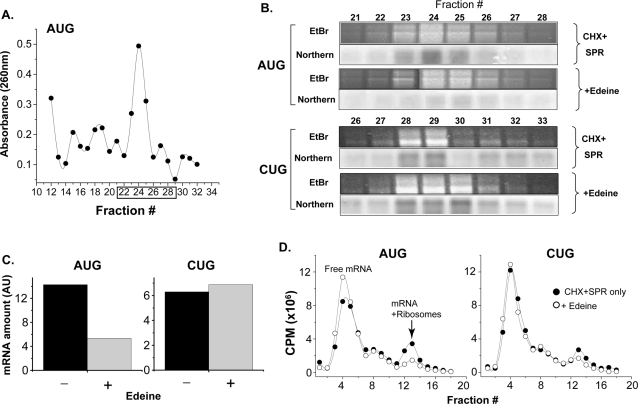
MHC class I molecules present a comprehensive mixture of peptides on the cell surface for immune surveillance. The peptides represent the intracellular protein milieu produced by translation of endogenous mRNAs. Unexpectedly, the peptides are encoded not only in conventional AUG initiated translational reading frames but also in alternative cryptic reading frames. Here, we analyzed how ribosomes recognize and use cryptic initiation codons in the mRNA. We find that translation initiation complexes assemble at non-AUG codons but differ from canonical AUG initiation in response to specific inhibitors acting within the peptidyl transferase and decoding centers of the ribosome. Thus, cryptic translation at non-AUG start codons can utilize a distinct initiation mechanism which could be differentially regulated to provide peptides for immune surveillance.
Overview
The claims and statistics of this paper haven’t been checked yet.
Free: it reads the open-access text and checks the first 5 claims that cite a source we can check. Create a free account to check every claim.
Integrity signals
Registry
Cites
Statistics
Figures
Verification
Claims the paper makes
The claims and statistics of this paper haven’t been checked yet.
Free: it reads the open-access text and checks the first 5 claims that cite a source we can check. Create a free account to check every claim.
Claims other papers make about this one
Each is checked against this paper’s own text: does it say what the citing paper says it does?
The source backs part of the claim, not all of it — or backs it for a different population, condition or comparison.
In the citing paper
“Initiation at near-cognate sites is sometimes resistant to harringtonine (Starck et al., 2008); Stern-Ginossar and Weissman, unpublished data), so our analysis may underestimate the true prevalence of near-cognate initiation.”
From Ribosome Profiling of Mouse Embryonic Stem Cells Reveals the Complexity and Dynamics of Mammalian Proteomes (2011) · cites this paper as Starck et al., 2008
Experimental — accuracy not yet measured
Self-check
Percentages, sums and reported differences re-computed from the paper’s own numbers.
The self-check needs the paper’s full text.
Citations
Cites
Kozak, M. (1986) · Cell · doi:10.1016/0092-8674(86)90762-2 · Cited by 4,741 · cited 1×
“The small 40S ribosomal subunit preloaded with initiator Met-tRNAi Met scans in the 59 to 39 direction until an initiation codon, usually AUG, is found in a suitable nucleotide context [34,35,36].”
MethodRapid degradation of a large fraction of newly synthesized proteins by proteasomes
Schubert, U., Antón, L. C., Gibbs, J., Norbury, C. C., Yewdell, J. W., & Bennink, J. R. (2000) · Nature · doi:10.1038/35008096 · Cited by 1,536 · cited 1×
“surface is derived from newly synthesized polypeptides [30,31].”
BackgroundTranslational control in stress and apoptosis
Holcik, M., & Sonenberg, N. (2005) · Nature Reviews Molecular Cell Biology · doi:10.1038/nrm1618 · Cited by 1,366 · cited 1×
“Such cryptic initiation events could provide an important source of peptides for antigen presentation during viral infection or cellular stress when conventional translation mechanisms are subverted [44].”
BackgroundCrystal structures of complexes of the small ribosomal subunit with tetracycline, edeine and IF3
Pioletti, M., Schlünzen, F., Harms, J., Zarivach, R., Glühmann, M., Avila, H., Bashan, A., Bartels, H., Auerbach, T., Jacobi, C., et al. (2001) · The EMBO Journal · doi:10.1093/emboj/20.8.1829 · Cited by 527 · cited 2×
“Structural studies have shown that edeine binds to the 40S ribosomal subunit and interferes with recognition of the AUG codon by Met-tRNAi Met [25,39].”
BackgroundKozak, M. (1984) · Nature · doi:10.1038/308241a0 · Cited by 526 · cited 1×
“However, only the initiation step is strongly influenced by the nucleotides surrounding the initiation codon [21].”
BackgroundMaking sense of mass destruction: quantitating MHC class I antigen presentation
Yewdell, J. W., Reits, E., & Neefjes, J. (2003) · Nature Reviews Immunology · doi:10.1038/nri1250 · Cited by 445 · cited 1×
“The peptides are produced by the antigen processing pathway which begins with proteasomal degradation of newly synthesized proteins and ends with presentation of pMHC I on the cell surface [4,5,6].”
BackgroundMechanisms of MHC class I‐restricted antigen processing and cross‐presentation
Cresswell, P., Ackerman, A. L., Giodini, A., Peaper, D. R., & Wearsch, P. A. (2005) · Immunological Reviews · doi:10.1111/j.0105-2896.2005.00316.x · Cited by 435 · cited 1×
“The presentation of peptides, derived from endogenously synthesized proteins, by the major histocompatibility complex class I molecules (MHC I) is essential for immune surveillance by the CD8 T cell repertoire [1,2,3].”
BackgroundInitiation of Protein Synthesis from the A Site of the Ribosome
Wilson, J. E., Pestova, T. V., Hellen, C. U. T., & Sarnow, P. (2000) · Cell · doi:10.1016/s0092-8674(00)00055-6 · Cited by 430 · cited 3×
“insect viruses do not require any known initiation factors [15,16].”
BackgroundMethodImpaired Control of IRES-Mediated Translation in X-Linked Dyskeratosis Congenita
Yoon, A., Peng, G., Brandenburg, Y., Zollo, O., Xu, W., Rego, E., & Ruggero, D. (2006) · Science · doi:10.1126/science.1123835 · Cited by 424 · cited 1×
“The recent discovery of ribosomes containing mutant RNA which fail to translate IRES-containing mRNAs in X-linked dyskeratosis congenita is also consistent with this notion [43].”
BackgroundThe major substrates for TAP in vivo are derived from newly synthesized proteins
Reits, E. A. J., Vos, J. C., Grommé, M., & Neefjes, J. (2000) · Nature · doi:10.1038/35008103 · Cited by 415 · cited 1×
“surface is derived from newly synthesized polypeptides [30,31].”
Background
Cited by
Ingolia, N. T., Lareau, L. F., & Weissman, J. S. (2011) · Cell · doi:10.1016/j.cell.2011.10.002 · Cited by 2,187
“Initiation at near-cognate sites is sometimes resistant to harringtonine (Starck et al., 2008; N. Stern-Ginossar and J.S.W., unpublished data), so our analysis may underestimate the true prevalence of near-cognate initiation.”
BackgroundRibosome Profiling Provides Evidence that Large Noncoding RNAs Do Not Encode Proteins
Guttman, M., Russell, P., Ingolia, N. T., Weissman, J. S., & Lander, E. S. (2013) · Cell · doi:10.1016/j.cell.2013.06.009 · Cited by 745
“…translation could be important for regulation of a downstream ORF (Geballe and Morris, 1994), contribute to the antigenic potential of pathogens (Starck et al., 2008), regulate mRNA stability by inducing nonsensemediated decay (Smith and Steitz, 1998), and may even serve as a source of…”
BackgroundNon-AUG translation: a new start for protein synthesis in eukaryotes
Kearse, M. G., & Wilusz, J. E. (2017) · Genes & Development · doi:10.1101/gad.305250.117 · Cited by 387
“Nevertheless, a growing number of functional peptides generated from non-AUG start codons have been documented (Starck et al. 2008, 2012; Slavoff et al. 2013), and continuing improvements to the methods provide increasingly high-confidence data sets.”
BackgroundMethodInfluentialAutoimmunity against a defective ribosomal insulin gene product in type 1 diabetes
Kracht, M. J. L., van Lummel, M., Nikolic, T., Joosten, A. M., Laban, S., van der Slik, A. R., van Veelen, P. A., Carlotti, F., de Koning, E. J. P., Hoeben, R. C., et al. (2017) · Nature Medicine · doi:10.1038/nm.4289 · Cited by 234
Leucine-tRNA Initiates at CUG Start Codons for Protein Synthesis and Presentation by MHC Class I
Starck, S. R., Jiang, V., Pavon-Eternod, M., Prasad, S., McCarthy, B., Pan, T., & Shastri, N. (2012) · Science · doi:10.1126/science.1220270 · Cited by 226
Self-citationDRiPs solidify: progress in understanding endogenous MHC class I antigen processing
Yewdell, J. W. (2011) · Trends in Immunology · doi:10.1016/j.it.2011.08.001 · Cited by 161
“These non-traditional ER-ribosomes [109], like CUG start codon decoding ribosomes [87], resist stress-induced protein synthesis inhibition, consistent with an immunoribosome like-function.”
BackgroundRevisiting sORFs: overcoming challenges to identify and characterize functional microproteins
Schlesinger, D., & Elsässer, S. J. (2021) · FEBS Journal · doi:10.1111/febs.15769 · Cited by 135
Immune Recognition of β-Cells: Neoepitopes as Key Players in the Loss of Tolerance
James, E. A., Pietropaolo, M., & Mamula, M. J. (2018) · Diabetes · doi:10.2337/dbi17-0030 · Cited by 101
“Translation of defective ribosomal initiation products (DRiPs) was recently reported as a possible source of neoepitopes in b-cells (23).”
BackgroundInfluentialA new framework for understanding IRES-mediated translation
Komar, A. A., Mazumder, B., & Merrick, W. C. (2012) · Gene · doi:10.1016/j.gene.2012.04.039 · Cited by 100
“A similar type of event may be associated with the expression of MHC class I peptides (Starck et al., 2008, Starck and Shastri, 2011).”
BackgroundSpecialized ribosomes and the control of translation
Guo, H. (2018) · Biochemical Society Transactions · doi:10.1042/bst20160426 · Cited by 89
Nowhere to hide: unconventional translation yields cryptic peptides for immune surveillance
Starck, S. R., & Shastri, N. (2016) · Immunological Reviews · doi:10.1111/imr.12434 · Cited by 82
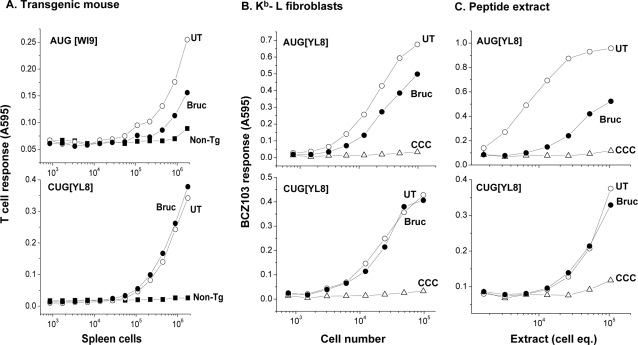
“(82) identified a variety of small molecules that differentially affected CUG versus AUG initiation, with activity within or near the active site of initiator Met-tRNAi Met binding during initiation.”
BackgroundSelf-citationNon-conventional sources of peptides presented by MHC class I
Starck, S. R., & Shastri, N. (2011) · Cellular and Molecular Life Sciences · doi:10.1007/s00018-011-0655-0 · Cited by 82
“assembles for addition of the first amino acid [ 56 ].”
Self-citationThe Human Immunopeptidome Project, a Suggestion for yet another Postgenome Next Big Thing
Admon, A., & Bassani‐Sternberg, M. (2011) · Molecular & Cellular Proteomics · doi:10.1074/mcp.o111.011833 · Cited by 67
“It was even suggested that some HLA peptides are encoded by alternative reading frames (reviewed in (29, 30)) and even result from protein splicing (31, 32).”
BackgroundPaes, W., Leonov, G., Partridge, T., Chikata, T., Murakoshi, H., Frangou, A., Brackenridge, S., Nicastri, A., Smith, A. G., Learn, G. H., et al. (2019) · Proceedings of the National Academy of Sciences · doi:10.1073/pnas.1911622116 · Cited by 58
“However, in addition to such previously described noncanonical translation products (29 – 31), trans -spliced peptides as well as low translational fidelity of mRNA transcripts or RNA editing may result in nongenomically encoded peptide sequences that may also contribute to the immunopeptidome and…”
Goodenough, E., Robinson, T. M., Zook, M. B., Flanigan, K. M., Atkins, J. F., Howard, M. T., & Eisenlohr, L. C. (2014) · Proceedings of the National Academy of Sciences · doi:10.1073/pnas.1402670111 · Cited by 58
“Nonstandard translation, or translational recoding, can produce functional or nonfunctional proteins by such mechanisms as initiation at an internal AUG (5) or non-AUG start codon (6), ribosome frame-shifting (3, 7), or continuing past a stop codon.”
BackgroundTranslational Regulation by Upstream Open Reading Frames and Human Diseases
Silva, J., Fernandes, R. O., & Romão, L. (2019) · Advances in experimental medicine and biology · doi:10.1007/978-3-030-19966-1_5 · Cited by 54
The Synthesis of Truncated Polypeptides for Immune Surveillance and Viral Evasion
Cardinaud, S., Starck, S. R., Chandra, P. E., & Shastri, N. (2010) · PLoS ONE · doi:10.1371/journal.pone.0008692 · Cited by 48
“Primer extension ‘toeprinting’ assay of initiation complexes Toeprinting assay was performed as previously described [33].”
MethodSelf-citationCUG Start Codon Generates Thioredoxin/Glutathione Reductase Isoforms in Mouse Testes
Gerashchenko, M. V., Su, D., & Gladyshev, V. N. (2009) · Journal of Biological Chemistry · doi:10.1074/jbc.m109.070532 · Cited by 54
Wojciechowska, M., Olejniczak, M., Galka-Marciniak, P., Jazurek, M., & Krzyżosiak, W. J. (2014) · Nucleic Acids Research · doi:10.1093/nar/gku794 · Cited by 54
“On the other hand, various cryptic peptides, products of alternative translation initiation, act as alternative sources of antigens for major histocompatibility complex class I components (114,115).”
Presentation of Cryptic Peptides by MHC Class I Is Enhanced by Inflammatory Stimuli
Prasad, S., Starck, S. R., & Shastri, N. (2016) · The Journal of Immunology · doi:10.4049/jimmunol.1502045 · Cited by 47
“Therefore, the construct starting with a CUG gives rise to a combination of MYL8 and LYL8 peptides (13, 23).”
BackgroundSelf-citationInsights into the processing of MHC class I ligands gained from the study of human tumor epitopes
Vigneron, N., & den Eynde, B. J. V. (2011) · Cellular and Molecular Life Sciences · doi:10.1007/s00018-011-0658-x · Cited by 52
“Indeed, the leucine start at a CUG initiation site depends on a specific set of ribosomes that scan sequences for CUG initiation sites, does not depend on initiation factor eIF2a [111], and diverges in its sensitivity to inhibitors acting on the P-site of the ribosomes [112].”
BackgroundDetecting translational regulation by change point analysis of ribosome profiling data sets
Županič, A., Méplan, C., Grellscheid, S. N., Mathers, J. C., Kirkwood, T. B. L., Hesketh, J. E., & Shanley, D. P. (2014) · RNA · doi:10.1261/rna.045286.114 · Cited by 39
“While it is possible that some of our 11 genes are false positives, it should be noted that Ingolia et al.(2011) found 3426 potential alternative TISs in the annotated CDSs.”
InfluentialComprehensive profiling of translation initiation in influenza virus infected cells
Machkovech, H. M., Bloom, J. D., & Subramaniam, A. R. (2019) · PLoS Pathogens · doi:10.1371/journal.ppat.1007518 · Cited by 33
Spencer, C. T., Bezbradica, J. S., Ramos, M., Arico, C. D., Conant, S. B., Gilchuk, P., Gray, J. J., Zheng, M., Niu, X., Hildebrand, W. H., et al. (2015) · PROTEOMICS - CLINICAL APPLICATIONS · doi:10.1002/prca.201500106 · Cited by 33
The biogenesis of the immunopeptidome
Admon, A. (2023) · Seminars in Immunology · doi:10.1016/j.smim.2023.101766 · Cited by 32
Immunity and the regulation of protein synthesis: surprising connections
Pierre, P. (2009) · Current Opinion in Immunology · doi:10.1016/j.coi.2009.03.003 · Cited by 31
Alternative Splicing of the Delta-Opioid Receptor Gene Suggests Existence of New Functional Isoforms
Piltonen, M., Parisien, M., Grégoire, S., Chabot‐Doré, A., Jafarnejad, S. M., Bérubé, P., Djambazian, H. H. V., SLADEK, R. M., Geneau, G., Willett, P., et al. (2018) · Molecular Neurobiology · doi:10.1007/s12035-018-1253-z · Cited by 26
Antigen-specific T cells and autoimmunity
Rojas, M., Acosta‐Ampudia, Y., Heuer, L. S., Zang, W., Monsalve, D. M., Ramírez-Santana, C., Anaya, J., Ridgway, W. M., Ansari, A. A., & Gershwin, M. E. (2024) · Journal of Autoimmunity · doi:10.1016/j.jaut.2024.103303 · Cited by 33
The different activities of RNA G-quadruplex structures are controlled by flanking sequences
Zheng, A. J.-L., Thermou, A., Güixens‐Gallardo, P., Malbert-Colas, L., Daskalogianni, C., Vaudiau, N., Brohagen, P., Granzhan, A., Blondel, M., Teulade‐Fichou, M., et al. (2021) · Life Science Alliance · doi:10.26508/lsa.202101232 · Cited by 25
“…translation that is distinct from the canonical translation which generates full-length proteins, in line with the notion that full-length proteins are a poor substrate for antigenic peptides (Cardinaud et al, 2004; Starck et al, 2008; Apcher et al, 2011; Wei et al, 2019; Yewdell etal,2019).”
A yeast-based assay identifies drugs that interfere with Epstein-Barr virus immune evasion
Voisset, C., Daskalogianni, C., Contesse, M., Mazars, A., Arbach, H., Cann, M. L., Soubigou, F., Apcher, S., Fåhræus, R., & Blondel, M. (2014) · Disease Models & Mechanisms · doi:10.1242/dmm.014308 · Cited by 25
“Hence, the GAr domain controls the translation of its own mRNA (Starck et al., 2008; Yin et al., 2003), thereby minimizing the production of peptide substrates, the so-called defective ribosomal products (DRiPs) or pioneer translation products (PTPs), for the MHC class I pathway (Apcher et al.,…”
BackgroundRobust, Vaccine-Induced CD8+ T Lymphocyte Response against an Out-of-Frame Epitope
Maness, N. J., Wilson, N. A., Reed, J. S., Piaskowski, S. M., Sacha, J. B., Walsh, A. D., Thoryk, E. A., Heidecker, G. J., Citron, M. P., Liang, X., et al. (2009) · The Journal of Immunology · doi:10.4049/jimmunol.0903118 · Cited by 22
A viral RNA motif involved in signaling the initiation of translation on non-AUG codons
Sanz, M. Á., González-Almela, E., García-Moreno, M., Marina, A., & Carrasco, L. (2019) · RNA · doi:10.1261/rna.068858.118 · Cited by 23
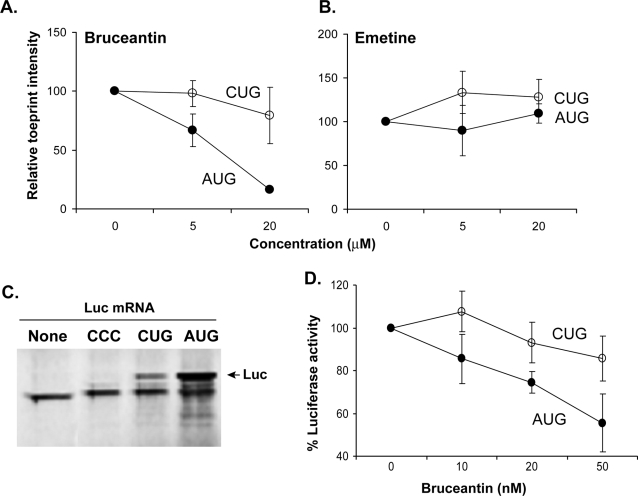
“The inhibitor bruceantin has been previously used to selectively block the initiation of protein synthesis; specifically, it is thought that bruceantin at low concentrations blocks the initiation at the P ribosomal site, whereas at higher concentrations it can interfere with the elongation steps (Liao et al. 1976; Sta…”
BackgroundMethodInfluentialBansal, A., Mann, T., Sterrett, S., Peng, B. J., Bet, A., Carlson, J. M., & Goepfert, P. (2015) · JAIDS Journal of Acquired Immune Deficiency Syndromes · doi:10.1097/qai.0000000000000700 · Cited by 17
Determinants of Initiation Codon Selection during Translation in Mammalian Cells
Matsuda, D., & Mauro, V. P. (2010) · PLoS ONE · doi:10.1371/journal.pone.0015057 · Cited by 15
“Finally, the results of this study corroborate numerous other studies indicating that a substantial fraction of the proteome may consist of multiple peptides and proteins that are encoded by individual mRNAs, both from the same and different reading frames [45,46].”
Protein-coding potential of non-canonical open reading frames in human transcriptome
Kore, H., Datta, K. K., Nagaraj, S. H., & Gowda, H. (2023) · Biochemical and Biophysical Research Communications · doi:10.1016/j.bbrc.2023.09.068 · Cited by 10
Crystal structure of the eukaryotic translation initiation factor 2A from Schizosaccharomyces pombe
Kashiwagi, K., Ito, T., & Yokoyama, S. (2014) · Journal of Structural and Functional Genomics · doi:10.1007/s10969-014-9177-y · Cited by 9
Autoimmunity, epitope analysis, and molecular mimicry
Rojas, M., Acosta‐Ampudia, Y., Monsalve, D. M., Ramírez-Santana, C., Heuer, L. S., Ridgway, W. M., Anaya, J., Lian, Z.-X., & Gershwin, M. E. (2025) · Current Opinion in Immunology · doi:10.1016/j.coi.2025.102681 · Cited by 11
A close-up view of codon selection in eukaryotic initiation
Lind, C., Esguerra, M., & Åqvist, J. (2017) · RNA Biology · doi:10.1080/15476286.2017.1308998 · Cited by 9
“showed that Leu-tRNA can be the initiator at CUG start codons(19) but possibly not as efficiently as AUG.(20,21) Moreover, there are various reports as to which alternative start codon would be most preferred.”
BackgroundPeng, B. J., Carlson, J. M., Liu, M. K. P., Gao, F., Goonetilleke, N. P., McMichael, A. J., Borrow, P., Gilmour, J. W., Heath, S. L., Hunter, E., et al. (2018) · Journal of Virology · doi:10.1128/jvi.00711-18 · Cited by 5
“in recent years have provided evidence in both cell lines and animal models, of how 181 CUG leu start codons are frequently used by cells to generate epitopes that can trigger T cell 182 activation (37-40).”
BackgroundRadio-Immunology of Ablative Radiation
Savage, T., & Guha, C. (2019) · Springer eBooks · doi:10.1007/978-3-030-16924-4_2 · Cited by 4
Repertoire of Classical MHC Class I and Class II Molecules
Purcell, A. W., & Dudek, N. L. (2016) · Elsevier eBooks · doi:10.1016/b978-0-12-374279-7.06003-3 · Cited by 2
Song, Z., Lim, Y., van Krimpen, A., Geleijnse, M. A. A., Messchendorp, M., Voerman, J. S. A., Li, L. V., Tondeur, E. G. M., Mishra, G., Hos, B. J., et al. (2025) · Cancer Immunology Research · doi:10.1158/2326-6066.cir-24-0467 · Cited by 1
“In line with this, influenza virus infection could induce the presentation of noncanonical antigens, which contributed to viral immunosurveillance (54–57).”
Radio-Immunology of Ablative Radiation Therapy
Ahmed, M. M., Małachowska, B., & Guha, C. (2024) · Springer eBooks · doi:10.1007/978-3-031-67743-4_2 · Cited by 2
REDOX REGULATION OF PROTEIN TRANSLATION IN EUKARYOTES
Gerashchenko, M. V. (2014) · Lincoln (University of Nebraska)
Shippen, D. E., & Cifuentes‐Rojas, C. (2014) · Faculty Opinions – Post-Publication Peer Review of the Biomedical Literature · doi:10.3410/f.718026785.793489930
Re-reading the genetic code: The evolutionary potential of frameshifting in time
Samhita, L. (2022) · Journal of Biosciences · doi:10.1007/s12038-022-00289-0 · Cited by 1
“MHC cells use alternate initiation, stop codon readthrough, as well as frameshifting to generate these peptides, enhancing the diversity of peptide sequences seen by cytotoxic T-cells (Malarkannan et al. 1999; Schwab et al. 2003; Starck et al. 2008).”
BackgroundWagner, C. A., Smith, K., James, J. A., & James, E. A. (2024) · Elsevier eBooks · doi:10.1016/b978-0-443-23947-2.00025-4
Charpentier, M. (2017) · theses.fr (ABES) · doi:10.70675/de860915z06d5z4298za893z83de3d33bb91
Metadata
- Authors
- Starck, S. R., Ow, Y., Jiang, V., Tokuyama, M., Rivera, M., Qi, X., Roberts, R. W., & Shastri, N.
- Affiliations
- University of California, Berkeley (US)
- Howard Hughes Medical Institute (US)
- University of Southern California (US)
- Corresponding author
- Shastri, Nilabh
- Venue
- PLoS ONE
- Publisher
- Public Library of Science (PLoS)
- Published
- 2008-10-21
- Volume
- 3
- Issue
- 10
- Pages
- e3460
- ISSN
- 1932-6203 (ISSN-L)
- PMC
- PMC2565129
- OpenAlex
- W2001971893
- Cited by
- 48
- References
- 47
- Citations by year
- 2025: 2 · 2024: 3 · 2023: 2 · 2022: 1 · 2021: 2 · 2019: 5 · 2018: 4 · 2017: 4 · 2016: 3 · 2015: 2 · 2014: 7 · 2013: 1 · 2012: 2
- FWCI
- 1.37
- Type
- journal article
- Language
- en
- Open access
- gold
- doi.org
- Locations
- PLoS ONE (publishedVersion, cc-by)
- PubMed Central (publishedVersion, cc-by)
- PubMed (publishedVersion)
- eScholarship (California Digital Library) (submittedVersion, cc-by)
- DOAJ (DOAJ: Directory of Open Access Journals) (submittedVersion, cc-by-sa)
- eScholarship (California Digital Library) (submittedVersion)
- Funders
- Howard Hughes Medical Institute
- Cancer Research Institute
- National Institutes of Health
- Topics
- Life Sciences › Biochemistry, Genetics and Molecular Biology › Molecular Biology › RNA and protein synthesis mechanisms
- Physical Sciences › Chemistry › Organic Chemistry › Chemical Synthesis and Analysis
- Life Sciences › Biochemistry, Genetics and Molecular Biology › Molecular Biology › RNA modifications and cancer
- Keywords
- non-AUG start codons, MHC class I peptide presentation, immune surveillance, ribosome, translation initiation complex, peptidyl transferase center, decoding center, ribosome inhibitors, alternative reading frame
- MeSH terms
- Animals, Humans, Immunologic Surveillance, Peptide Chain Initiation, Translational, Peptides, Peptidyl Transferases, Ribosomes, RNA, Messenger, Protein Biosynthesis, Histocompatibility Antigens Class I, Codon, Initiator
About these checks
Registry, retraction, Cites and statistics results are computed, not judged, with one exception: a printed reference that no index lists is read once by a model before it counts as a citation error. Claims are extracted by a model and kept only when their quote appears verbatim in the text; each cited source is then checked, with a model’s help, for whether it says what the claim relies on. Those verdicts can be wrong — read the claim’s quote and the cited source before relying on one.
Statistics and arithmetic are recomputed, not judged.
Confidence bands are shown only for fields calibrated on our annotated test set. None is calibrated yet, so no band is shown.
What counts as a claim ›How we measure confidence ›How we check this ›
Are you an author, or do you see a problem with this page? Request a review
Data sources
Bibliographic data: Semantic Scholar, OpenAlex, Crossref.
Contains information from the Semantic Scholar Academic Graph Datasets, made available under the ODC Attribution License (ODC-BY 1.0).
Semantic Scholar’s data is described in: Kinney, R., et al. (2023). The Semantic Scholar Open Data Platform. arXiv:2301.10140.
