

The diaphragm and lubricant gel for prevention of cervical sexually transmitted infections: results of a randomized controlled trial.
Open accessThe DOI matches its Crossref record; 24 of the 24 references it cites were found in a registry or an index.
Abstract
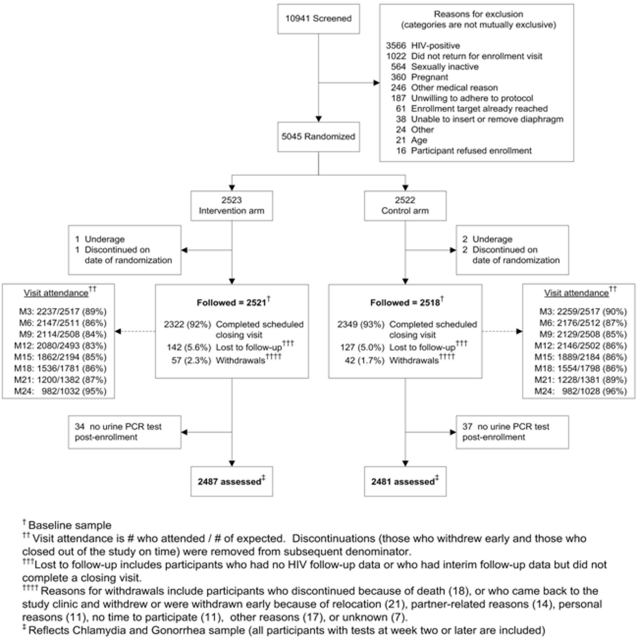
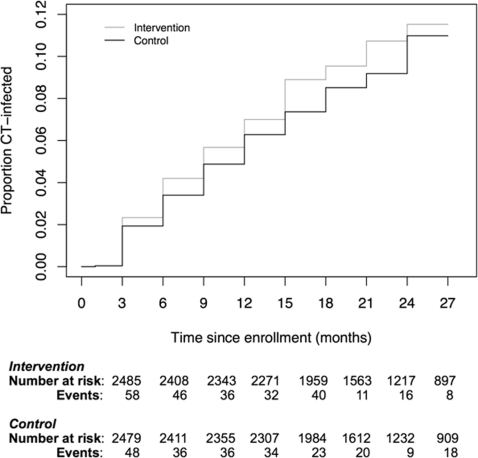
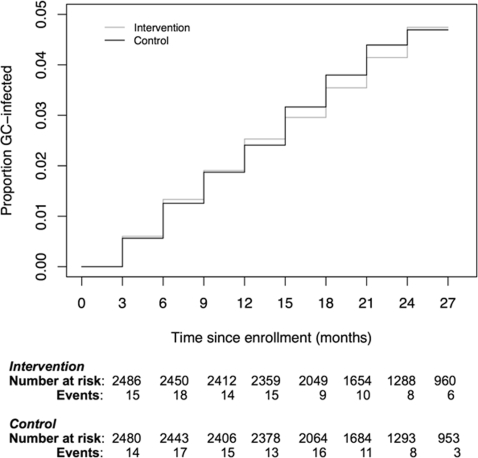
BACKGROUND: We evaluated the effectiveness of the Ortho All-Flex Diaphragm, lubricant gel (Replens) and condoms compared to condoms alone on the incidence of chlamydial and gonococcal infections in an open-label randomized controlled trial among women at risk of HIV/STI infections. METHODS: We randomized 5045 sexually-active women at three sites in Southern Africa. Participants who tested positive for curable STIs were treated prior to enrollment as per local guidelines. Women were followed quarterly and tested for Chlamydia trachomatis (CT) or Neisseria gonorrhoeae (GC) infection by nucleic-acid amplification testing (Roche Amplicor) using first-catch urine specimens. STIs detected at follow-up visits were treated. We compared the incidence of first infection after randomization between study arms in both intent-to-treat (ITT) and per-protocol populations. FINDINGS: Baseline demographic, behavioral and clinical characteristics were balanced across study arms. Nearly 80% of participants were under 35 years of age. Median follow-up time was 21 months and the retention rate was over 93%. There were 471 first chlamydia infections, 247 in the intervention arm and 224 in the control arm with an overall incidence of 6.2/100 woman-years (wy) (relative hazard (RH) 1.11, 95% Confidence Interval (CI): 0.93-1.33; p = 0.25) and 192 first gonococcal infections, 95 in the intervention arm and 97 in the control arm with an overall incidence of 2.4/100wy (RH 0.98, 95%CI: 0.74-1.30; p = 0.90). Per protocol results indicated that when diaphragm adherence was defined as "always use" since the last visit, there was a significant reduction in the incidence of GC infection among women randomized to the intervention arm (RH 0.61, 95%CI: 0.41-0.91, P = 0.02). INTERPRETATION: There was no difference by study arm in the rate of acquisition of CT or GC. However, our per-protocol results suggest that consistent use of the diaphragm may reduce acquisition of GC. TRIAL REGISTRATION: ClinicalTrials.gov NCT00121459.
Overview
The claims and statistics of this paper haven’t been checked yet.
Free: it reads the open-access text and checks the first 5 claims that cite a source we can check. Create a free account to check every claim.
Integrity signals
Registry
Cites
Statistics
Figures
Verification
Claims the paper makes
The claims and statistics of this paper haven’t been checked yet.
Free: it reads the open-access text and checks the first 5 claims that cite a source we can check. Create a free account to check every claim.
Claims other papers make about this one
Each is checked against this paper’s own text: does it say what the citing paper says it does?
The source backs part of the claim, not all of it — or backs it for a different population, condition or comparison.
In the citing paper
“Likewise, no difference by study arm in the rate of acquisition of chlamydia, gonorrhea, or herpes occurred (35,36).”
From Sexually Transmitted Infections Treatment Guidelines, 2021 (2021) · cites this paper as [36]
Experimental — accuracy not yet measuredThe cited source says what the claim attributes to it.
In the citing paper
“However, a trial examining the effect of a diaphragm plus lubricant on HIV acquisition among women in Africa reported no additional protective effect when compared with the use of male condoms alone.”
From Sexually Transmitted Infections Treatment Guidelines, 2021 (2021) · cites this paper as [36]
Self-check
Percentages, sums and reported differences re-computed from the paper’s own numbers.
The self-check needs the paper’s full text.
Citations
Cites
(2001) · Statistics for Psychologists · doi:10.4324/9781410605542-11 · Cited by 6,877
Diggle, P. J., Heagerty, P. J., Liang, K.-Y., & Zeger, S. L. (2002) · doi:10.1093/oso/9780198524847.001.0001 · Cited by 3,384
Grosskurth, H., Todd, J., Mwijarubi, E., Mayaud, P., Nicoll, A., ka-Gina, G., Newell, J., Grosskurth, H., Todd, J., Mayaud, P., et al. (1995) · The Lancet · doi:10.1016/s0140-6736(95)91380-7 · Cited by 1,406 · cited 1×
“Although six randomized controlled trials to measure the effect of STI treatment on HIV transmission have been conducted, only the first study in Mwanza, Tanzania found nearly 40% reduction in HIV when STIs were treated through syndromic management [17], whilst the others showed no effect [18–22].”
BackgroundControl of sexually transmitted diseases for AIDS prevention in Uganda: a randomised community trial
Wawer, M. J., Sewankambo, N. K., Serwadda, D., Quinn, T. C., Kiwanuka, N., Li, C., Lutalo, T., Nalugoda, F., Gaydos, C. A., Moulton, L. H., et al. (1999) · The Lancet · doi:10.1016/s0140-6736(98)06439-3 · Cited by 787
Celum, C., Wald, A., Hughes, J., Sanchez, J., Reid, S., Delany-Moretlwe, S., Cowan, F., Casapia, M., Ortiz, A., Fuchs, J., et al. (2008) · The Lancet · doi:10.1016/s0140-6736(08)60920-4 · Cited by 449 · cited 1×
“In addition two recent intervention trials to reduce HSV2 acquisition for HIV prevention also had disappointing outcomes [23,24].”
BackgroundLack of effectiveness of cellulose sulfate gel for the prevention of vaginal HIV transmission.
Van Damme, L., Govinden, R., Mirembe, F. M., Guédou, F., Solomon, S., Becker, M. L., Pradeep, B. S., Krishnan, A. K., Alary, M., Pande, B., et al. (2008) · New England Journal of Medicine · doi:10.1056/nejmoa0707957 · Cited by 438
Self-citationEffect of Herpes Simplex Suppression on Incidence of HIV among Women in Tanzania
Watson-Jones, D., Weiss, H. A., Rusizoka, M., Changalucha, J., Baisley, K., Mugeye, K., Tanton, C., Ross, D., Everett, D., Clayton, T., et al. (2008) · New England Journal of Medicine · doi:10.1056/nejmoa0800260 · Cited by 371 · cited 1×
“In addition two recent intervention trials to reduce HSV2 acquisition for HIV prevention also had disappointing outcomes [23,24].”
BackgroundPadian, N. S., van der Straten, A., Ramjee, G., Chipato, T., de Bruyn, G., Blanchard, K., Shiboski, S., Montgomery, E. T., Fancher, H., Cheng, H., et al. (2007) · The Lancet · doi:10.1016/s0140-6736(07)60950-7 · Cited by 337 · cited 6×
“Further details on statistical issues in study design and monitoring have been reported previously [3].”
BackgroundResultInfluentialSelf-citationKamali, A., Quigley, M., Nakiyingi, J., Kinsman, J., Kengeya-Kayondo, J., Gopal, R., Ojwiya, A., Hughes, P., Carpenter, L., & Whitworth, J. (2003) · The Lancet · doi:10.1016/s0140-6736(03)12598-6 · Cited by 318
SAVVY vaginal gel (C31G) for prevention of HIV infection: a randomized controlled trial in Nigeria.
Feldblum, P. J., Adeiga, A., Bakare, R., Wevill, S., Lendvay, A., Obadaki, F., Olayemi, M. O., Wang, L., Nanda, K., & Rountree, W. (2008) · PLoS ONE · doi:10.1371/journal.pone.0001474 · Cited by 280
Research works printed but not linked: 1
- CONRAD 2007 Phase III Trials of Cellulose Sulfate Microbicide for HIV Prevention Closed. Press Release. Available: http://www.conrad.org/pressroom.htm. Accessed 31 January 2008
Cited by
Sexually Transmitted Infections Treatment Guidelines, 2021
Workowski, K. A., Bachmann, L. H., Chan, P. A., Johnston, C. M., Muzny, C. A., Park, I., Reno, H., Zenilman, J. M., & Bolan, G. A. (2021) · MMWR. Recommendations and Reports · doi:10.15585/mmwr.rr7004a1 · Cited by 3,018
Sexually Transmitted Diseases Treatment Guidelines, 2010
(2011) · Annals of Emergency Medicine · doi:10.1016/j.annemergmed.2011.04.006 · Cited by 2,076
Smith‐McCune, K., SHIBOSKI, S. C., Chirenje, M. Z., Magure, T. M., Tuveson, J. L., Ma, Y., Costa, M. D., Moscicki, A., Palefsky, J. M., Makunike-Mutasa, R., et al. (2010) · PLoS ONE · doi:10.1371/journal.pone.0010094 · Cited by 117
“In separate regression models adjusting for baseline variables (including age, high risk partner, positive test for STIs, positive HSV-2 serology and condom use), HIV acquisition was associated with having baseline prevalent infection with HPV 58 (aHR 2.13; 95% CI 1.09–4.15) or HPV 70 (aHR 2.68; 95% CI 1.08–6.66).”
InfluentialSelf-citationThurman, A. R., Clark, M. R., & Doncel, G. F. (2011) · Infectious Diseases in Obstetrics and Gynecology · doi:10.1155/2011/429403 · Cited by 95
“001), suggesting that the diaphragm plus lubricant provided at least as effective protection against HIV-1, GC, and CT as condoms alone, although these studies were not designed to test a noninferiority hypothesis [45, 46].”
BackgroundMethodResultInfluentialSexually Transmitted Infections: Impact and Cost-Effectiveness of Prevention
Chesson, H. W., Mayaud, P., & Aral, S. O. (2017) · World Bank, Washington, DC eBooks · doi:10.1596/978-1-4648-0524-0_ch10 · Cited by 98
Friend, D. R., & Doncel, G. F. (2010) · Antiviral Research · doi:10.1016/j.antiviral.2010.09.005 · Cited by 63
Interventions to Prevent Sexually Transmitted Infections, Including HIV Infection
Marrazzo, J. M., & Cates, W. (2011) · Clinical Infectious Diseases · doi:10.1093/cid/cir695 · Cited by 61
“[78] Median follow-up time was 21 months, and the retention rate was .”
BackgroundKacanek, D., Bostrom, A., Montgomery, E., Ramjee, G., de Bruyn, G., Blanchard, K., Rock, A., Mtetwa, S., & van der Straten, A. (2013) · JAIDS Journal of Acquired Immune Deficiency Syndromes · doi:10.1097/qai.0b013e3182a6b0be · Cited by 51
“The methods and results of the MIRA trial are described in detail elsewhere.(26,27) The study protocol was reviewed and approved by Institutional Review Boards at the participating sites and at the University of California, San Francisco.”
MethodSelf-citationWetmore, C. M., Manhart, L. E., & Wasserheit, J. N. (2010) · Epidemiologic Reviews · doi:10.1093/epirev/mxq010 · Cited by 47
“Ramjee, 2008 (44) and Sawaya, 2008 (45) 98 NR NR Yes No effect”
Dubbink, J. H., Verweij, S. P., Struthers, H. E., Ouburg, S., McIntyre, J. A., Morré, S. A., & Peters, R. P. H. (2018) · International Journal of STD & AIDS · doi:10.1177/0956462418758224 · Cited by 39
“7 Ramjee et al.(97) 2008 Zimbabwe Urban 2455 NAAT 2.”
BackgroundInfluentialMcConville, C., Major, I., Devlin, B., & Brimer, A. (2016) · European Journal of Pharmaceutics and Biopharmaceutics · doi:10.1016/j.ejpb.2016.05.003 · Cited by 33
Determinants of Differential HIV Incidence Among Women in Three Southern African Locations
Napierala, S., Weiss, H. A., Montgomery, E., Blanchard, K., de Bruyn, G., Ramjee, G., Chipato, T., PADIAN, N. S., & van der Straten, A. (2011) · JAIDS Journal of Acquired Immune Deficiency Syndromes · doi:10.1097/qai.0b013e3182254038 · Cited by 34
“gonorrhoea in all sites combined.(19) C.”
MethodSelf-citationvan der Straten, A., Sahin‐Hodoglugil, N., Clouse, K., Mtetwa, S., & Chirenje, M. Z. (2010) · Journal of Family Planning and Reproductive Health Care · doi:10.1783/147118910790290966 · Cited by 27
Venkatesh, K. K., van der Straten, A., Mayer, K. H., Blanchard, K., Ramjee, G., Lurie, M. N., Chipato, T., PADIAN, N. S., & de Bruyn, G. (2011) · Sexually Transmitted Diseases · doi:10.1097/olq.0b013e31820a8c2c · Cited by 28
Self-citationthe MIRA Team, van der Straten, A., Cheng, H., Chidanyika, A., de Bruyn, G., & PADIAN, N. S. (2010) · AIDS and Behavior · doi:10.1007/s10461-010-9690-3 · Cited by 29
“These were selected a priori, based on the literature and from prior published analyses of MIRA [15, 17, 20]: study site, age, education, cohabitation, marital status; having a positive test for any curable STI (Chlamydia, gonorrhea, trichomoniasis, syphilis), indicator variables both for participant’s high-risk behav…”
MethodSelf-citationThe MIRA team, Montgomery, E., Cheng, H., van der Straten, A., Chidanyika, A., Lince-Deroche, N., Blanchard, K., Gita Ramjee, H., Nkala-Dlamini, B., & PADIAN, N. S. (2009) · AIDS and Behavior · doi:10.1007/s10461-009-9609-z · Cited by 25
“As recently published, there was no additional protective benefit against HIV infection or cervical STIs, when the diaphragm and gel were provided in addition to condoms and a comprehensive HIV prevention package [5, 6].”
BackgroundSelf-citationvan der Straten, A., Shiboski, S. C., Montgomery, E., Moore, J., de Bruyn, G., Gita Ramjee, H., Chidanyika, A., Kacanek, D., & PADIAN, N. S. (2009) · JAIDS Journal of Acquired Immune Deficiency Syndromes · doi:10.1097/qai.0b013e3181958511 · Cited by 24
Self-citationBose, D. L., Hundal, A., Singh, S., Singh, S., Seth, K., Hadi, S. U., Saran, A., Joseph, J., Goyal, K., & Salve, S. (2023) · Campbell Systematic Reviews · doi:10.1002/cl2.1297 · Cited by 36
Microbicide research: current and future directions
Ramjee, G. (2010) · Current Opinion in HIV and AIDS · doi:10.1097/coh.0b013e32833a9f66 · Cited by 27
Richardson, B. A., Kelly, C., Ramjee, G., Fleming, T. R., Makanani, B., Roberts, S. T., Musara, P., Mkandawire, N., Moench, T. R., Coletti, A., et al. (2013) · JAIDS Journal of Acquired Immune Deficiency Syndromes · doi:10.1097/qai.0b013e31828607c5 · Cited by 23
Neisseria gonorrhoeae (Gonorrhea)
Marrazzo, J. M., & Apicella, M. A. (2015) · Elsevier eBooks · doi:10.1016/b978-1-4557-4801-3.00214-9 · Cited by 20
Sahin‐Hodoglugil, N., Montgomery, E., Kacanek, D., Morar, N. S., Mtetwa, S., Nkala-Dlamini, B., Philip, J., Gita Ramjee, H., Cheng, H., van der Straten, A., et al. (2011) · AIDS Care · doi:10.1080/09540121.2010.543879 · Cited by 18
“The study failed to show any significant effect of the interven- tion against HIV (Padian et al., 2007), chlamydia, or gonorrhea (Ramjee et al., 2008), although the trial *Corresponding author.”
BackgroundSelf-citationThe New Public Health and STD/HIV Prevention
Aral, S. O., Fenton, K. A., & Lipshutz, J. A. (2012) · Springer eBooks · doi:10.1007/978-1-4614-4526-5 · Cited by 37
Marrazzo, J. M., Handsfield, H. H., & Sparling, P. F. (2010) · Elsevier eBooks · doi:10.1016/b978-0-443-06839-3.00212-5 · Cited by 26
Kacanek, D., Dennis, A. J., Sahin‐Hodoglugil, N., Montgomery, E., Morar, N. S., Mtetwa, S., Nkala-Dlamini, B., Phillip, J., Watadzaushe, C., van der Straten, A., et al. (2012) · AIDS Education and Prevention · doi:10.1521/aeap.2012.24.1.54 · Cited by 17
“The methods and primary and secondary results of the MIRA trial are described in detail elsewhere (Padian et al., 2007; Ramjee et al., 2008).”
MethodSelf-citationMéthodes de contraception naturelle et méthodes barrières. RPC contraception CNGOF
Hassoun, D. (2018) · Gynécologie Obstétrique Fertilité & Sénologie · doi:10.1016/j.gofs.2018.10.002 · Cited by 39
Montgomery, E., Blanchard, K., Cheng, H., Chipato, T., de Bruyn, G., Ramjee, G., PADIAN, N. S., van der Straten, A., & The MIRA team (2009) · The European Journal of Contraception & Reproductive Health Care · doi:10.3109/13625180903215430 · Cited by 15
Self-citationPenman‐Aguilar, A., Swezey, T., Turner, A. N., Bell, A. J., Ramiandrisoa, F. N., Legardy-Williams, J. K., Randrianasolo, B. S., Damme, K. V., Dulyx, J., Behets, F., et al. (2009) · AIDS Education and Prevention · doi:10.1521/aeap.2009.21.6.512 · Cited by 9
Komatsu, T. (2010) · InTech eBooks · doi:10.5772/8133 · Cited by 12
Change in condom and other barrier method use during and after an HIV prevention trial in Zimbabwe
van der Straten, A., Cheng, H., & Minnis, A. M. (2010) · Journal of the International AIDS Society · doi:10.1186/1758-2652-13-39 · Cited by 7
“Main results from the trial have been previously published, and no significant protective effect of the intervention against HIV or STI could be demonstrated [ 3-5 ].”
BackgroundSelf-citationClouse, K., Montgomery, E., Milford, C., Watadzaushe, C., Nkala-Dlamini, B., Fancher, H., Lince-Deroche, N., Cheng, H., Thompson, M. E., & van der Straten, A. (2010) · Clinical Trials · doi:10.1177/1740774510368299 · Cited by 6
“participants’ vulnerability, participants’ uncompensated risks or burdens, depth of the researcher–participant relationship, and participants’ dependence on the researchers [16].”
BackgroundSelf-citationAdding to the menu of modern methods – the diaphragm
Holmes, W. R. (2010) · Sexual Health · doi:10.1071/sh09077 · Cited by 6
Investigating Potential Associations between Cervical Procedures and HIV Acquisition
Diouf, K., Sawaya, G. F., SHIBOSKI, S. C., Magure, T. M., Makunike-Mutasa, R., Darragh, T. M., Tuveson, J. L., Chipato, T., Palefsky, J. M., Moscicki, A., et al. (2011) · ISRN Obstetrics and Gynecology · doi:10.5402/2011/789106 · Cited by 5
“Results from the overall trial demonstrated that diaphragm/gel provision added no significant protection against acquisition of HIV [9] or sexually transmitted infections [10]; hence, data from the intervention and control arms were pooled for this study.”
BackgroundSelf-citationDiaphragm for STI and HIV Prevention: Is It a Safe Method for Women at High Risk?
Njoroge, B., Gallo, M. F., Sharma, A., Bukusi, E. A., Nguti, R., Bell, A. J., Jamieson, D. J., Williams, D., & Eschenbach, D. A. (2010) · Sexually Transmitted Diseases · doi:10.1097/olq.0b013e3181ce147c · Cited by 6
Ramjee, G., & Whitaker, C. (2011) · InTech eBooks · doi:10.5772/19196 · Cited by 5
“, 2009), and generally falling HIV incidence rates in countries where these efficacy trials are conducted (Ramjee et al., 2008).”
BackgroundGallo, M. F., Warner, L., Bell, A. J., Wiener, J. B., Eschenbach, D. A., Bukusi, E. A., Sharma, A., Njoroge, B., NGUGI, E. N., & Jamieson, D. J. (2010) · American Journal of Epidemiology · doi:10.1093/aje/kwq158 · Cited by 5
Penman‐Aguilar, A., Legardy-Williams, J. K., Turner, A. N., Rabozakandriana, T. O. O., Williams, D., Razafindravoavy, S., Behets, F., Damme, K. V., & Jamieson, D. J. (2011) · Journal of Women s Health · doi:10.1089/jwh.2010.2143 · Cited by 5
“Notably, per-protocol analyses of data from the MIRA study suggested an effect against Neisseria gonorrhoeae.(13) Although the results of the MIRA study dampened enthusiasm for cervical barriers as methods of HIV=STI prevention, it and other studies demonstrated that the diaphragm may be acceptable in sub-Saharan Afri…”
ResultKulczycki, A., Qu, H., Bosarge, P. M., & Shewchuk, R. M. (2010) · Journal of Women s Health · doi:10.1089/jwh.2009.1730 · Cited by 4
“31 This result reflects findings from earlier observational studies, which also suggested that the diaphragm may confer protection against pelvic inflammatory disease and cervical neoplasia.”
Farrell, J., Spolyar, O., & Greenhalgh, S. (2023) · Mathematical Biosciences & Engineering · doi:10.3934/mbe.2023720 · Cited by 4
Barriers to diaphragm use: the views of advanced practice nurses
Kulczycki, A., Qu, H., Shewchuk, R. M., & Bosarge, P. M. (2010) · Journal of Family Planning and Reproductive Health Care · doi:10.1783/147118910791069475 · Cited by 3
Canadian Contraception Consensus Chapter 5 Barrier Methods
(2015) · Journal of Obstetrics and Gynaecology Canada · doi:10.1016/s1701-2163(16)39376-8 · Cited by 4
İnsan Sağlığında Koruyucu Yaklaşımlar
Yücel, H., Özgöbek, H. R., Toptaner, N. E., Kolcu, M., Korkmaz, N., Ünveren, Y., Aracı, A., Uzlaşır, S., Sari, M. E., KILINÇ, H. E., et al. (2022) · Akademisyen Kitabevi eBooks · doi:10.37609/akya.944 · Cited by 3
Enhancing Women’s Sexual Health: Prevention Measures in Diverse Populations of Women
Marrazzo, J. M. (2012) · Springer eBooks · doi:10.1007/978-1-4614-4526-5_11 · Cited by 2
“A subsequent analysis of data from this study evaluated outcomes of chlamydia and gonorrhea [ 93 ] .”
MethodRyan, N., & Kurth, A. (2022) · Global maternal and child health · doi:10.1007/978-3-031-06314-5_22 · Cited by 2
Dual Protection Use to Prevent STIs and Unintended Pregnancy
Sales, J. M., Whiteman, M. K., Kottke, M., Madden, T. E., & DiClemente, R. J. (2012) · Infectious Diseases in Obstetrics and Gynecology · doi:10.1155/2012/972689 · Cited by 3
Policy implications for multipurpose prevention technologies service delivery
Rees, H., & Forbes, A. (2014) · BJOG An International Journal of Obstetrics & Gynaecology · doi:10.1111/1471-0528.12912 · Cited by 1
Preparation and characterization of latex films photo-immobilized with IFN-α
Wu, L., Hu, K., Zhang, L., Chen, W., Chen, X., You, R., Yin, L., & Guan, Y. (2016) · Colloids and Surfaces B Biointerfaces · doi:10.1016/j.colsurfb.2016.04.037 · Cited by 1
Anticoncepción vaginal o métodos de barrera femeninos
Hassoun, D. (2018) · EMC - Ginecología-Obstetricia · doi:10.1016/s1283-081x(18)89333-x · Cited by 4
Marrazzo, J. M. (2016) · Elsevier eBooks · doi:10.1016/b978-0-7020-6285-8.00065-4
Huchko, M. J. (2010) · Faculty Opinions – Post-Publication Peer Review of the Biomedical Literature · doi:10.3410/f.3334958.3023056
Gilliams, E. A., Hynes, N. A., & Rompalo, A. M. (2026) · Elsevier eBooks · doi:10.1016/b978-0-443-45863-7.00039-1
Metadata
- Authors
- Ramjee, G., van der Straten, A., Chipato, T., de Bruyn, G., Blanchard, K., Shiboski, S., Cheng, H., Montgomery, E., Padian, N., & for the MIRA team
- Affiliations
- University of Zimbabwe (ZW)
- Ibis Reproductive Health (US)
- University of California, San Francisco (US)
- RTI International (US)
- Venue
- PLoS ONE
- Publisher
- Public Library of Science (PLoS)
- Published
- 2008-10-22
- Volume
- 3
- Issue
- 10
- Pages
- e3488
- ISSN
- 1932-6203 (ISSN-L)
- PMC
- PMC2567030
- OpenAlex
- W2080474418
- Cited by
- 52
- References
- 24
- Citations by year
- 2026: 1 · 2023: 2 · 2022: 2 · 2021: 1 · 2018: 3 · 2017: 1 · 2016: 3 · 2015: 2 · 2014: 2 · 2013: 2 · 2012: 4
- FWCI
- 9.24
- Type
- journal article
- Language
- en
- Open access
- gold
- doi.org
- Locations
- PLoS ONE (publishedVersion, cc-by)
- PubMed Central (publishedVersion, cc-by)
- PubMed (publishedVersion)
- DOAJ (DOAJ: Directory of Open Access Journals) (submittedVersion, cc-by-sa)
- Figshare (submittedVersion, cc-by)
- Greater South Information System
- Funders
- Bill and Melinda Gates Foundation (21082)
- Department of Obstetrics and Gynecology, University of Wisconsin-Madison
- University of California, San Francisco
- Medical Research Council
- Topics
- Life Sciences › Immunology and Microbiology › Microbiology › Reproductive tract infections research
- Health Sciences › Medicine › Infectious Diseases › HIV/AIDS Research and Interventions
- Health Sciences › Medicine › Epidemiology › Cervical Cancer and HPV Research
- Keywords
- diaphragm, lubricant gel, condom use, chlamydia, gonorrhea, sexually transmitted infections, women, HIV/STI prevention, Neisseria gonorrhoeae, Chlamydia trachomatis, Southern Africa, nucleic acid amplification tests, urine samples
- MeSH terms
- Adult, Chlamydia Infections, Chlamydia trachomatis, Contraceptive Devices, Female, DNA, Bacterial, Female, Gonorrhea, Humans, Middle Aged, Neisseria gonorrhoeae, Sexually Transmitted Diseases, South Africa, Incidence, Treatment Outcome, Condoms, Lubricants, Young Adult
About these checks
Registry, retraction, Cites and statistics results are computed, not judged, with one exception: a printed reference that no index lists is read once by a model before it counts as a citation error. Claims are extracted by a model and kept only when their quote appears verbatim in the text; each cited source is then checked, with a model’s help, for whether it says what the claim relies on. Those verdicts can be wrong — read the claim’s quote and the cited source before relying on one.
Statistics and arithmetic are recomputed, not judged.
Confidence bands are shown only for fields calibrated on our annotated test set. None is calibrated yet, so no band is shown.
What counts as a claim ›How we measure confidence ›How we check this ›
Are you an author, or do you see a problem with this page? Request a review
Data sources
Bibliographic data: Semantic Scholar, OpenAlex, Crossref.
Contains information from the Semantic Scholar Academic Graph Datasets, made available under the ODC Attribution License (ODC-BY 1.0).
Semantic Scholar’s data is described in: Kinney, R., et al. (2023). The Semantic Scholar Open Data Platform. arXiv:2301.10140.
