

Naloxone's Pentapeptide Binding Site on Filamin A Blocks Mu Opioid Receptor–Gs Coupling and CREB Activation of Acute Morphine
Open accessThe DOI matches its Crossref record; 24 of the 26 references it cites were found in a registry or an index; 1 of the 50 sources its claims cite were checked for support.
Abstract
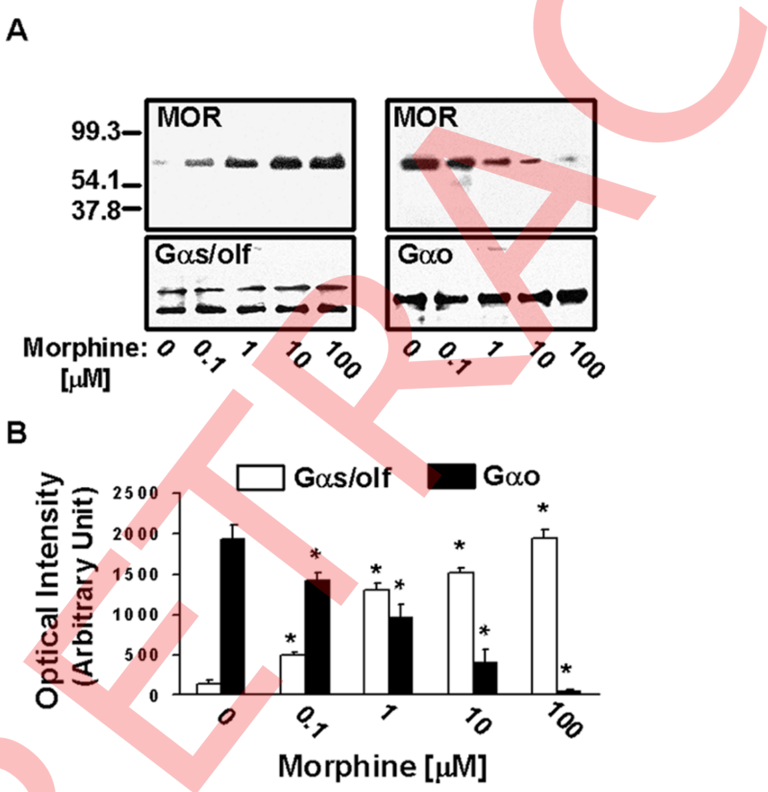
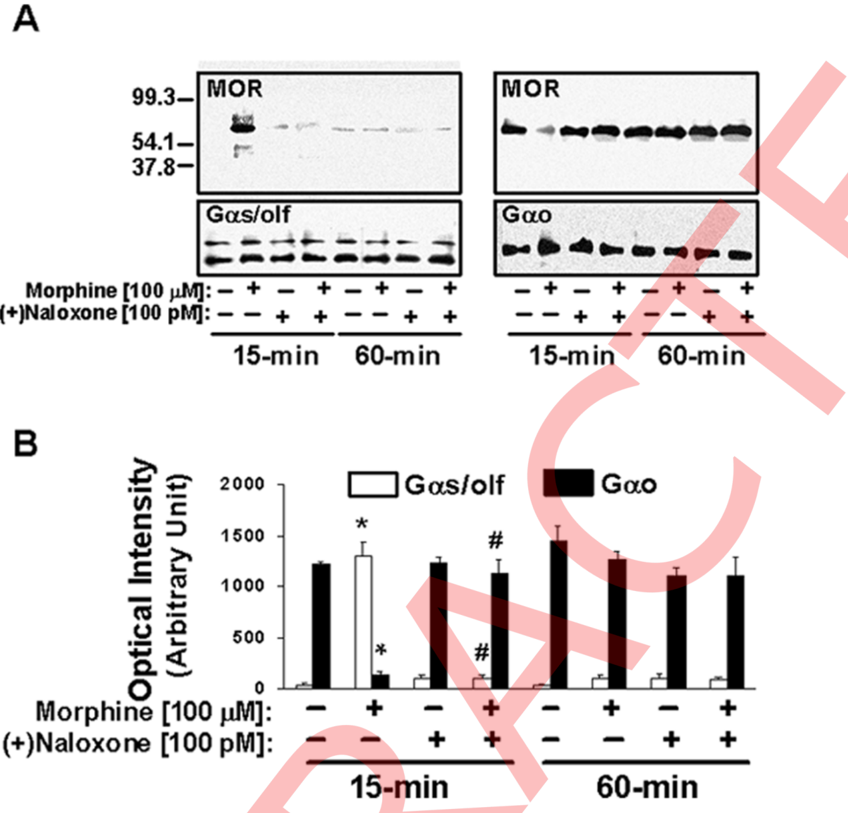
Chronic morphine causes the mu opioid receptor (MOR) to switch its coupling from Gi/o to Gs, resulting in excitatory signaling via both Galphas and its Gbetagamma dimer. Ultra-low-dose naloxone (NLX) prevents this switch and attenuates opioid tolerance and dependence. This protective effect is mediated via a high-affinity interaction of NLX to a pentapeptide region in c-terminal filamin A (FLNA), a scaffolding protein interacting with MOR. In organotypic striatal slice cultures, we now show that acute morphine induces a dose-dependent Go-to-Gs coupling switch at 5 and 15 min that resolves by 1 hr. The acute Gs coupling induced by 100 microM morphine was completely prevented by co-treatment with 100 pM NLX, (+)NLX, or naltrexone (NTX), or their pentapeptide binding site (FLNA(2561-2565)), which we show can act as a decoy for MOR or bind to FLNA itself. All of these co-treatments presumably prevent the MOR-FLNA interaction. Since ultra-low-dose NTX also attenuates the addictive properties of opioids, we assessed striatal cAMP production and CREB phosphorylation at S(133). Correlating with the Gs coupling, acute morphine induced elevated cAMP levels and a several-fold increase in pS(133)CREB that were also completely blocked by NLX, NTX or the FLNA pentapeptide. We propose that acute, robust stimulation of MOR causes an interaction with FLNA that allows an initially transient MOR-Gs coupling, which recovers with receptor recycling but persists when MOR stimulation is repeated or prolonged. The complete prevention of this acute, morphine-induced MOR-Gs coupling by 100 pM NLX/NTX or 10 microM pentapeptide segment of FLNA further elucidates both MOR signaling and the mechanism of action of ultra-low-dose NLX or NTX in attenuating opioid tolerance, dependence and addictive potential.
Overview
CoChat Summary
TL;DR
Acute high-dose morphine causes a transient, dose-dependent switch in mu opioid receptor coupling from Go to Gs in rat striatal slice cultures, accompanied by elevated cAMP and CREB phosphorylation at S133. Ultra-low-dose naloxone/naltrexone or the FLNA pentapeptide VAKGL completely prevents this acute switch and downstream signaling.
Key findings
- Acute morphine (0.1–100 µM, 15 min) produced dose-dependent MOR–Gs coupling with a parallel decrease in MOR–Go coupling; 100 µM morphine caused a complete Go-to-Gs switch at 5 and 15 min that resolved by 60 min, with no Gs coupling detected.
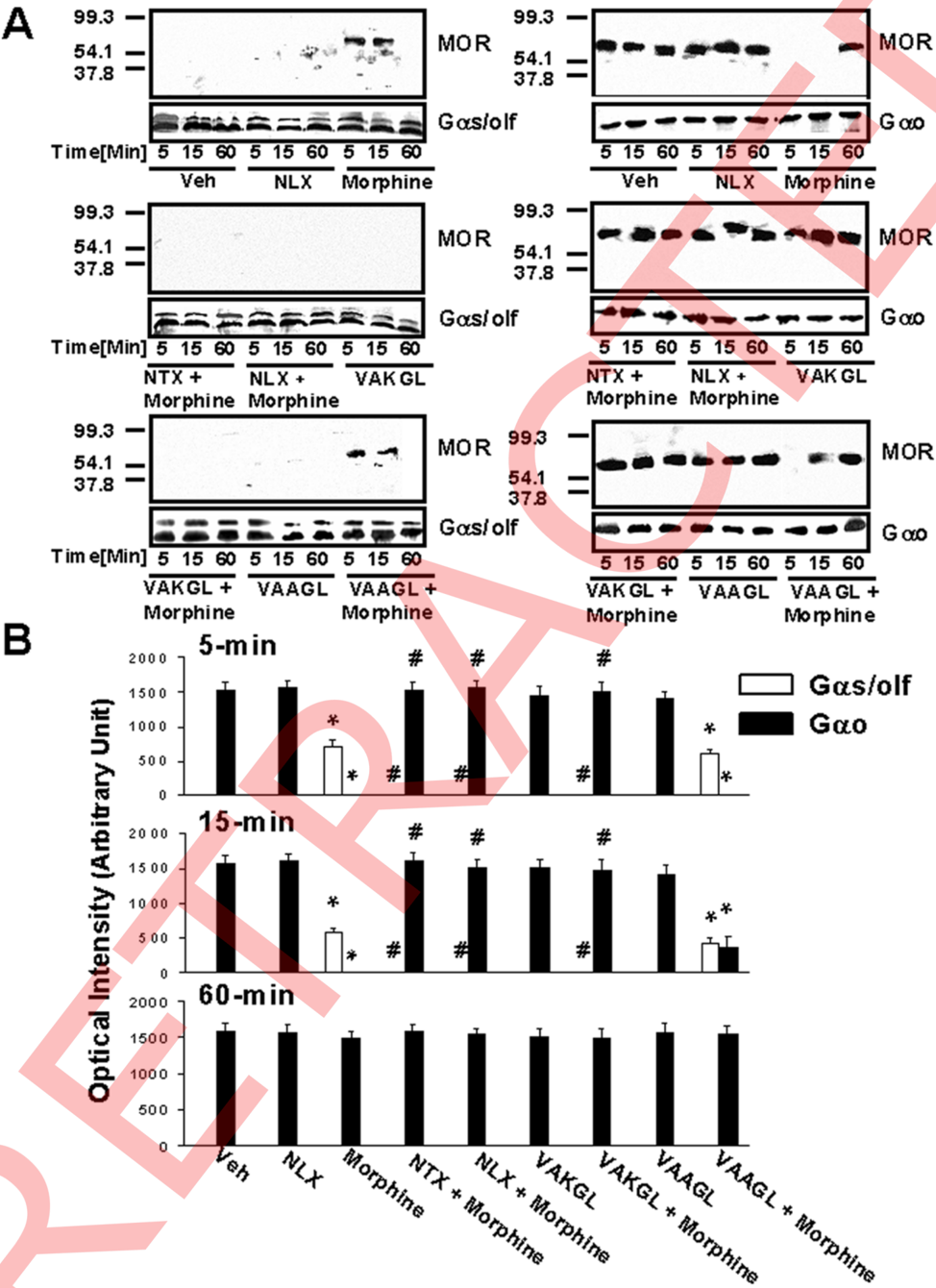
- Co-treatment with 100 pM NLX, NTX, (+)NLX, or 10 µM FLNA2561–2565 pentapeptide (VAKGL) completely prevented the acute morphine-induced Go-to-Gs coupling; the control peptide VAAGL did not. NLX, NTX, or either peptide alone had no effect on MOR coupling.
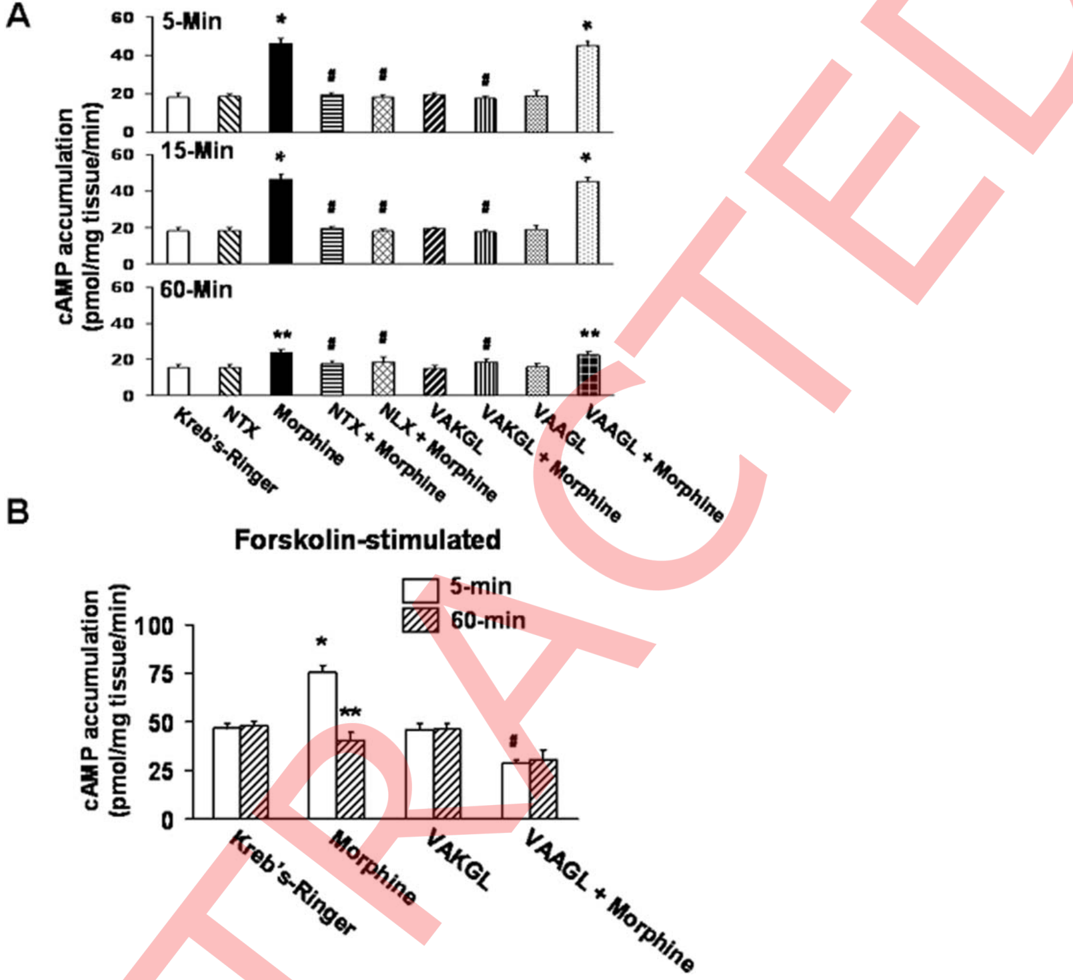
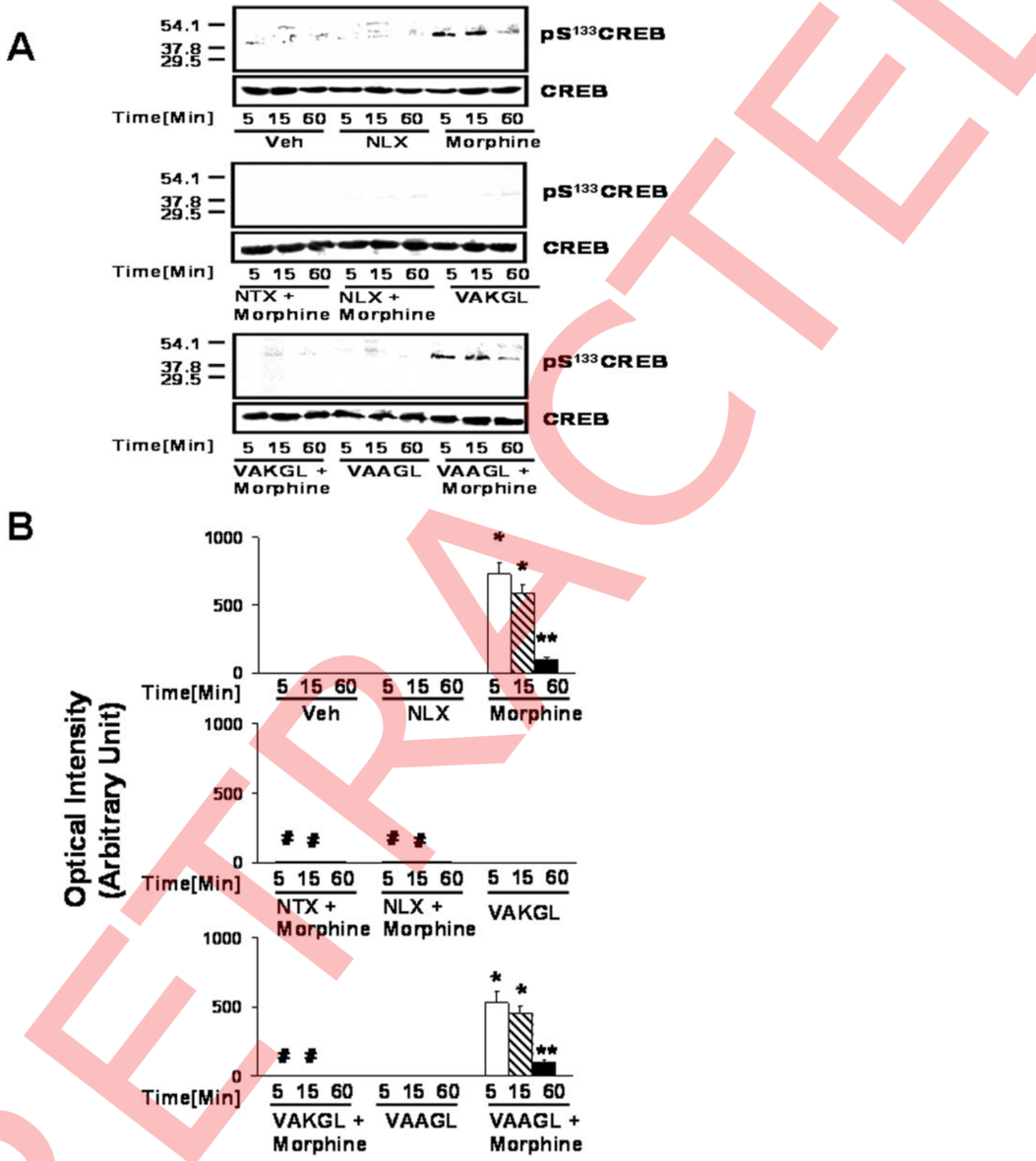
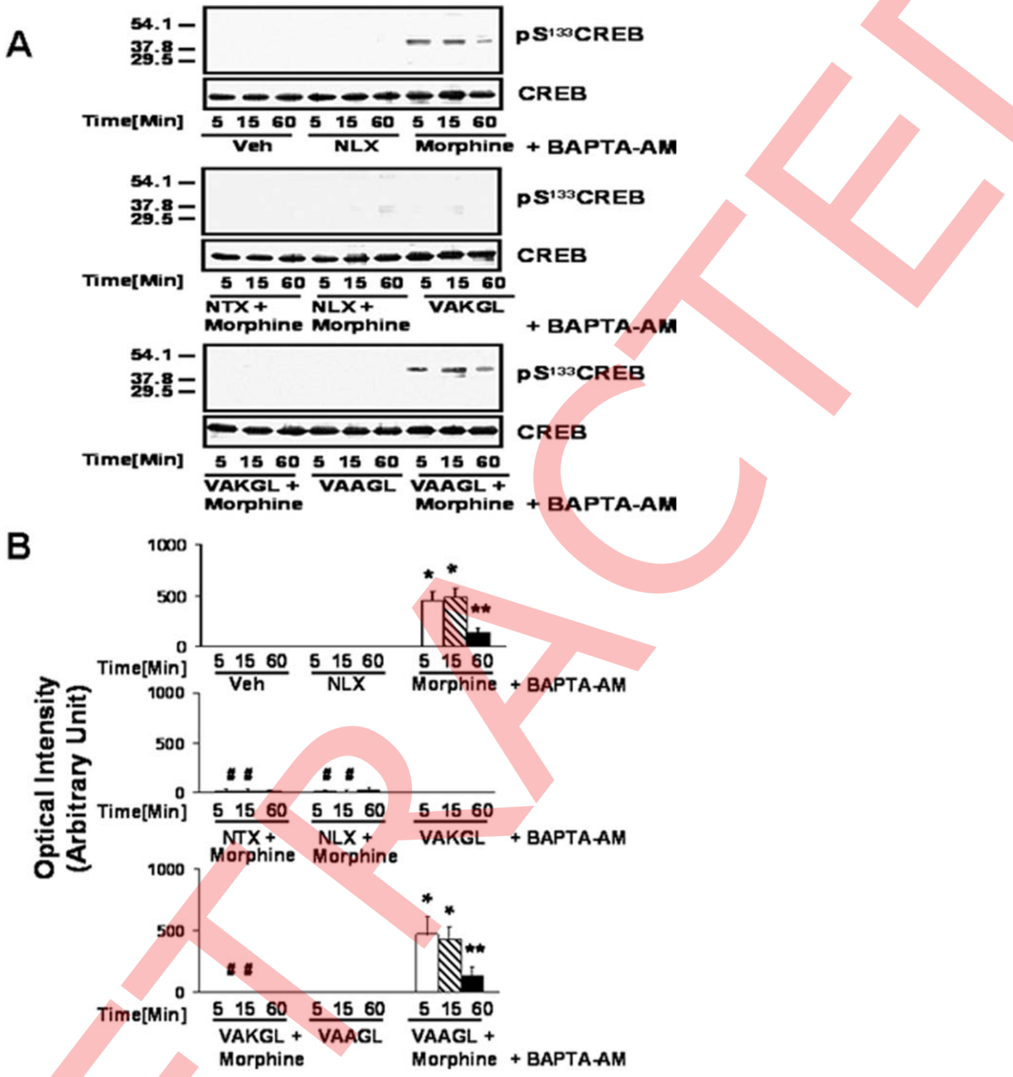
- Acute 100 µM morphine increased cAMP at 5 and 15 min and produced a several-fold increase in pS133CREB; these effects were blocked by 100 pM NLX or NTX or 10 µM VAKGL, but not by VAAGL. BAPTA-AM did not notably diminish morphine-induced CREB activation, suggesting a cAMP/PKA rather than Ca²⁺ pathway.
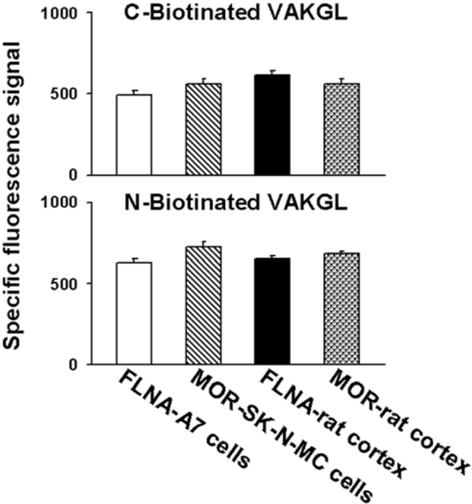
- In a cell-free assay, VAKGL bound both purified MOR and FLNA proteins, suggesting it may disrupt the MOR–FLNA interaction by acting as a decoy for either protein.
Methods
- Organotypic striatal slice cultures from male Sprague Dawley rats (200–250 g); 200-µm slices were cultured for 2 days and treated with morphine, NLX/NTX, VAKGL, VAAGL, or BAPTA-AM, then harvested at 5, 15, or 60 min.
- MOR–G protein coupling was measured by immunoprecipitation with anti-Gαs/olf or anti-Gαo followed by Western blotting for MOR; cAMP was measured by assay with IBMX and/or forskolin; CREB activation was measured by immunoprecipitation of CREB and Western blotting for pS133CREB.
- VAKGL binding to purified MOR and FLNA was tested on streptavidin-coated plates with biotinylated peptide and FITC-conjugated detection (n = 12). Most experiments used n = 4; statistics used two-way ANOVA with Newman-Keuls, two-tailed t tests, and p < 0.05.
Limitations
- The paper states that a true comparison of Gs vs. Go coupling levels cannot be made because the antibodies may have different affinities, and that the anti-Gαs/olf antibody does not distinguish between Gs family members; the detected Gα protein in striatum may be predominantly Golf.
- The paper states that further study is needed to elucidate the precise VAKGL interaction site on FLNA and MOR, and that whether CREB activation directly contributes to acute rewarding effects or initiates homeostatic regulation remains unclear; it also notes that acute rewarding effects are not completely blocked by ultra-low-dose opioid antagonists, suggesting MOR–Gs coupling may only partially contribute.
- Evident from the text: findings are from in vitro organotypic striatal slice cultures using male rats and a high 100 µM morphine concentration, with no behavioral or in vivo outcomes reported.
Model-written summary. Check it against the paper before relying on it.
Integrity signals
Registry
Cites
Statistics
Figures

Verification
Claims the paper makes
1 Valid · 1 Not valid · 34 Not checked · 83 Own results and interpretations
A result the paper reports from its own data — it cites no other source for it, so there is none to check. The quote shows it is in the paper.
In the paper
“Correlating with the Gs coupling, acute morphine induced elevated cAMP levels and a several-fold increase in pS133CREB that were also completely blocked by NLX, NTX or the FLNA pentapeptide.”
§ Naloxone's Pentapeptide Binding Site on Filamin A Blocks Mu Opioid Receptor–Gs Coupling and CREB Activation of Acute Morphine > Abstract
plainstates a cause- Asserted: passes — The authors put it forward as true.
- Checkable: passes — It can be checked against evidence.
- Load-bearing: passes — The paper’s conclusions depend on it.
- Based: passes — The paper gives a reason why it holds.
A result the paper reports from its own data — it cites no other source for it, so there is none to check. The quote shows it is in the paper.
In the paper
“Treatment alone with NLX, NTX or either peptide did not result in pS133CREB detection.”
§ Naloxone's Pentapeptide Binding Site on Filamin A Blocks Mu Opioid Receptor–Gs Coupling and CREB Activation of Acute Morphine > Results > NLX/NTX or the FLNA pentapeptide block acute morphine-induced cAMP production and CREB activation
plain- Asserted: passes — The authors put it forward as true.
- Checkable: passes — It can be checked against evidence.
- Load-bearing: passes — The paper’s conclusions depend on it.
- Based: passes — The paper gives a reason why it holds.
A result the paper reports from its own data — it cites no other source for it, so there is none to check. The quote shows it is in the paper.
In the paper
“Similarly, pre-treatment with the pentapeptide binding site of NLX or NTX on FLNA (VAKGL; FLNA2561–2565) at 10 µM concentration also completely prevented this acute morphine-induced coupling switch by MOR (Fig. 2B).”
- Also stated in: § Acute morphine-induced G protein coupling switch blocked by 100 pM NLX/NTX or 10 µM FLNA pentapeptide · plain
“pre-treatment with the FLNA2561–2565 pentapeptide (VAKGL), but not the control pentapeptide (VAAGL)”
§ Naloxone's Pentapeptide Binding Site on Filamin A Blocks Mu Opioid Receptor–Gs Coupling and CREB Activation of Acute Morphine > Results > Acute morphine-induced G protein coupling switch blocked by 100 pM NLX/NTX or 10 µM FLNA pentapeptide
plainstates a causen = 4 ·- Asserted: passes — The authors put it forward as true.
- Checkable: passes — It can be checked against evidence.
- Load-bearing: passes — The paper’s conclusions depend on it.
- Based: passes — The paper gives a reason why it holds.
- Rests on 2 assumptions not shown here.
- Also stated in: § Acute morphine-induced G protein coupling switch blocked by 100 pM NLX/NTX or 10 µM FLNA pentapeptide · plain
A result the paper reports from its own data — it cites no other source for it, so there is none to check. The quote shows it is in the paper.
In the paper
“In sum, the only significant differences compared to the vehicle condition for both Go and Gs coupling were the 5 and 15 minute timepoints for both morphine and morphine + the control peptide (VAAGL) (p<0.01 for each).”
§ Naloxone's Pentapeptide Binding Site on Filamin A Blocks Mu Opioid Receptor–Gs Coupling and CREB Activation of Acute Morphine > Results > Acute morphine-induced G protein coupling switch blocked by 100 pM NLX/NTX or 10 µM FLNA pentapeptide
plain- Asserted: passes — The authors put it forward as true.
- Checkable: passes — It can be checked against evidence.
- Load-bearing: unclear — It is unclear whether the paper’s conclusions depend on it.
- Based: passes — The paper gives a reason why it holds.
65 more claims
Create a free account to see all 119 claims and to verify the 45 references still open.
- It may state two separate claims as one. 36
- Probably not a substantial claim. 19
Self-check
Percentages, sums and reported differences re-computed from the paper’s own numbers.
Each contradiction between two passages listed here was confirmed by an independent check.
Rated minor: it would not touch a result — a value no result rests on, a p-value that stays on the same side of the significance level, or a conflict that is clerical, resolved elsewhere in the paper, or outside its own findings.
In the paper
§ Naloxone's Pentapeptide Binding Site on Filamin A Blocks Mu Opioid Receptor–Gs Coupling and CREB Activation of Acute Morphine > Methods > Determination of cAMP accumulation
“For the experiment that assesses cAMP production by Go-coupled MOR, slices were incubated with morphine, morphine plus 10 µM VAKGL, or 10 µM VAKGL for 5 or 60 min prior to incubation for 5 min with 10 µM forskolin.”
§ Naloxone's Pentapeptide Binding Site on Filamin A Blocks Mu Opioid Receptor–Gs Coupling and CREB Activation of Acute Morphine > Results > NLX/NTX or the FLNA pentapeptide block acute morphine-induced cAMP production and CREB activation
“B: With forskolin stimulation, morphine increased cAMP accumulation at 15 min but decreased it at 60 min, indicating a reversion back to Go coupling.”
Cited works that were retracted
Works this paper cites that were later retracted, from the retraction notices publishers deposit. Major when the notice came out before this paper was published, unless its text notes the retraction.
A note, not an issue: for example, a cited work that was retracted only after this paper was published, which its authors could not have known.
In the paper
“striatal slice culture data showed that potentially disrupting the MOR–FLNA interaction via NLX’s high-affinity binding to FLNA blocks the chronic morphine-induced G protein coupling switch by MOR [9].”
Cited work 10.1371/journal.pone.0001554 · retracted 2022-03-30 · notice 10.1371/journal.pone.0266627 · this paper published 2009-01-27
Citations
Cites
1 retracted
Wang, H.-Y., Frankfurt, M., & Burns, L. H. (2008) · PLoS ONE · doi:10.1371/journal.pone.0001554 · Cited by 68 · cited 4×
“striatal slice culture data showed that potentially disrupting the MOR–FLNA interaction via NLX’s high-affinity binding to FLNA blocks the chronic morphine-induced G protein coupling switch by MOR [9].”
BackgroundMethodInfluentialSelf-citationRetractedA simple method for organotypic cultures of nervous tissue
Stoppini, L., Buchs, P.-A., & Muller, D. (1991) · Journal of Neuroscience Methods · doi:10.1016/0165-0270(91)90128-m · Cited by 3,089 · cited 1×
“Rat brain slice organotypic culture methods were modified from those published previously [13,14].”
CARLEZONJR, W., DUMAN, R., & NESTLER, E. (2005) · Trends in Neurosciences · doi:10.1016/j.tins.2005.06.005 · Cited by 1,346 · cited 1×
“phosphorylation) in these striatal slice cultures may offer a mechanistic explanation for the attenuation of opioid reward and addictive processes by ultra-low-dose NTX. Found in all cells of the brain, CREB is a transcription factor implicated in addiction as well as learning and memory and several other experience-d…”
BackgroundMolecular mechanisms of drug addiction
Nestler, E. J. (2004) · Neuropharmacology · doi:10.1016/j.neuropharm.2004.06.031 · Cited by 1,108
Filamins as integrators of cell mechanics and signalling
Stossel, T. P., Condeelis, J., Cooley, L., Hartwig, J. H., Noegel, A., Schleicher, M., & Shapiro, S. S. (2001) · Nature Reviews Molecular Cell Biology · doi:10.1038/35052082 · Cited by 1,020 · cited 1×
“motility function, FLNA also regulates cell signaling by interacting with a variety of receptors and signaling molecules [10,11].”
BackgroundOpposing tonically active endogenous opioid systems modulate the mesolimbic dopaminergic pathway.
Spanagel, R., Herz, A., & Shippenberg, T. S. (1992) · Proceedings of the National Academy of Sciences · doi:10.1073/pnas.89.6.2046 · Cited by 1,014
Barrot, M., Olivier, J. D. A., Perrotti, L. I., DiLeone, R. J., Berton, O., Eisch, A. J., Impey, S., Storm, D. R., Neve, R. L., Yin, J. C., et al. (2002) · Proceedings of the National Academy of Sciences · doi:10.1073/pnas.172091899 · Cited by 508 · cited 1×
“This view is supported by nucleus accumbens overexpression of CREB or a dominant-negative CREB mutant respectively reducing or increasing the rewarding effects of opioids in the conditioned place preference test [ 23 ].”
MethodThe many faces of filamin: A versatile molecular scaffold for cell motility and signalling
Feng, Y., & Walsh, C. A. (2004) · Nature Cell Biology · doi:10.1038/ncb1104-1034 · Cited by 503 · cited 1×
“motility function, FLNA also regulates cell signaling by interacting with a variety of receptors and signaling molecules [10,11].”
BackgroundMolecular Neurobiology of Addiction
Nestler, E. J. (2001) · The American Journal on Addictions · doi:10.1080/105504901750532094 · Cited by 412 · cited 1×
“In the striatum, CREB activation has been viewed as a homeostatic adaptation, attenuating the acute rewarding effects of drugs [21,22].”
BackgroundShaw-Lutchman, T. Z., Barrot, M., Wallace, T., Gilden, L., Zachariou, V., Impey, S., Duman, R. S., Storm, D., & Nestler, E. J. (2002) · The Journal of Neuroscience · doi:10.1523/jneurosci.22-09-03663.2002 · Cited by 205 · cited 1×
“However, a regional mapping study showed that opioid withdrawal activates CREB in locus coeruleus, nucleus accumbens and amygdala but inhibits CREB in lateral ventral tegemental area and dorsal raphe nucleus [20].”
Background
Research works printed but not linked: 2
- Shen K-F Crain SM Moate P Boston R de Kater AW 2002 PTI-801, a novel formulation of oxycodone, shows absence of tolerance, physical dependence and naloxone-precipitated withdrawal effects in mice. J Pain 3 49
- Shen K-F Crain SM Moate P Boston R de Kater AW 2002 PTI-555, reverses and prevents morphine-induced tolerance and naloxone-precipitated withdrawal in mice chronically treated with morphine. J Pain 3 50
Cited by
Low-Dose Naltrexone (LDN)—Review of Therapeutic Utilization
Toljan, K., & Vrooman, B. (2018) · Medical Sciences · doi:10.3390/medsci6040082 · Cited by 192
“A crucial element mediating µ-opioid receptor second messaging is the scaffolding protein filament called filamin-A (FLNA) [36,37].”
BackgroundInfluentialWang, X., Zhang, Y., Peng, Y., Hutchinson, M. R., Rice, K. C., Yin, H., & Watkins, L. R. (2016) · British Journal of Pharmacology · doi:10.1111/bph.13394 · Cited by 173
Seyedabadi, M., Ghahremani, M. H., & Albert, P. R. (2019) · Pharmacology & Therapeutics · doi:10.1016/j.pharmthera.2019.05.006 · Cited by 165
Complex roles of filamin-A mediated cytoskeleton network in cancer progression
Yue, J., Huhn, S. C., & Shen, Z. (2013) · Cell & Bioscience · doi:10.1186/2045-3701-3-7 · Cited by 99
“The same research group also designed filamin-A peptide fragments containing the Ultra-low-dose naloxone (NLX) binding site, which blocked the protective effect of NLX on both the MOR–Gs coupling and downstream cAMP accumulation induced by chronic morphine, presumably by interfering with NLX’s binding to filamin-A [13…”
BackgroundTargeting the Toll of Drug Abuse: The Translational Potential of Toll-Like Receptor 4
Bachtell, R., Hutchinson, M., Wang, X., Rice, K., Maier, S., & Watkins, L. (2015) · CNS & Neurological Disorders - Drug Targets · doi:10.2174/1871527314666150529132503 · Cited by 97
Why mu‐opioid agonists have less analgesic efficacy in neuropathic pain?
Martínez‐Navarro, M., Maldonado, R. J., & Baños, J.-E. (2018) · European Journal of Pain · doi:10.1002/ejp.1328 · Cited by 71
“Ultralow doses of MOR antagonists target a pentapeptide region in c- terminal filamin A, which binds to MOR after morphine stimulation, and is essential for MOR Gαi/otoGαs switch (Wang, Frankfurt, Burns, Carlen, & Velazquez, 2008; Wang et al., 2009).”
BackgroundEndogenous opiates and behavior: 2009
Bodnar, R. J. (2010) · Peptides · doi:10.1016/j.peptides.2010.09.016 · Cited by 65
Wang, Q., Zhou, H., Gao, H., Chen, S.-H., Chu, C.-H., Wilson, B., & Hong, J.-S. (2012) · Journal of Neuroinflammation · doi:10.1186/1742-2094-9-32 · Cited by 64
“demonstrated that the acute Gs coupling induced by morphine is completely prevented by co-treatment with both (-) and (+)-naloxone [10].”
BackgroundStulić, M., & Jantsch, M. F. (2013) · RNA Biology · doi:10.4161/rna.26216 · Cited by 53
Tsai, R.-Y., Tai, Y.-H., Tzeng, J. I., Cherng, C., Yeh, C., & Wong, C. (2009) · Neuroscience · doi:10.1016/j.neuroscience.2009.08.015 · Cited by 50
The Other Side of Opioid Receptor Signalling: Regulation by Protein-Protein Interaction
Georgoussi, Z., Georganta, E., & Milligan, G. (2011) · Current Drug Targets · doi:10.2174/138945012798868470 · Cited by 46
Lin, S., Tsai, R., Shen, C., Lin, F., Wang, J., Hsin, S.-T., & Wong, C. (2010) · Pharmacology Biochemistry and Behavior · doi:10.1016/j.pbb.2010.05.012 · Cited by 43
A new concept affecting restoration of inflammation-reactive astrocytes
Block, L., Björklund, U., Westerlund, A., Jörneberg, P., Biber, B., & Hansson, E. (2013) · Neuroscience · doi:10.1016/j.neuroscience.2013.07.033 · Cited by 42
Toll-Like Receptor 4 Signaling and Drug Addiction
Wu, R., & Li, J. (2020) · Frontiers in Pharmacology · doi:10.3389/fphar.2020.603445 · Cited by 41
“Studies have identified non-stereoselective actions of naloxone at sites other than TLR4 (Wang and Burns, 2009; Burns and Wang, 2010; Wang et al., 2012a).”
BackgroundYang, C.-P., Cherng, C., Wu, C., Huang, H.-Y., Tao, P., & Wong, C. (2011) · Anesthesia & Analgesia · doi:10.1213/ane.0b013e31822d39c1 · Cited by 38
“blocks its function in switching inhibitory to excitatory downstream signal transduction.(48,51,52) In response to”
BackgroundAguado, D., de Abreu, M. B., Benito, J., Fernandez, F., & de Segura, I. Á. G. (2013) · Anesthesiology · doi:10.1097/aln.0b013e3182887526 · Cited by 34
Human abuse liability assessment of oxycodone combined with ultra-low-dose naltrexone
Tompkins, D. A., Lanier, R. K., Harrison, J. A., Strain, E. C., & Bigelow, G. E. (2010) · Psychopharmacology · doi:10.1007/s00213-010-1838-3 · Cited by 30
“Blockade of this coupling with picomolar doses of NTX or naloxone could explain enhancement of analgesia in the absence of an effect on abuse liability (Wang and Burns 2009).”
Tobin, S. J., Cacao, E. E., Hong, D. W. W., Terenius, L. Y., Vukojević, V. B., & Jovanović‐Talisman, T. (2014) · PLoS ONE · doi:10.1371/journal.pone.0087225 · Cited by 29
“It was recently shown that naltrexone can bind to filamin A with very high affinity [50,51], a finding that still needs to be replicated.”
BackgroundBarnett, V., Twycross, R., Mihalyo, M., & Wilcock, A. (2014) · Journal of Pain and Symptom Management · doi:10.1016/j.jpainsymman.2013.12.223 · Cited by 29
Hansson, E. (2014) · Neurochemical Research · doi:10.1007/s11064-014-1363-6 · Cited by 28
Burns, L. H., & Wang, H.-Y. (2010) · Clinical Medicine Insights Therapeutics · doi:10.4137/cmt.s4870 · Cited by 27
Self-citationPrukop, T., Wernick, S., Boussicault, L., Ewers, D., Jäger, K., Adam, J., Winter, L., Quintes, S., Linhoff, L., Barrantes‐Freer, A., et al. (2020) · Journal of Neuroscience Research · doi:10.1002/jnr.24679 · Cited by 27
“…proteins and thus may decrease the level of expression of PMP22 through a mechanism complementing and potentiating baclofen's mechanism of action (Crain & Shen, 2001; Hytrek, McLaughlin, Lang, & Zagon, 1996; Paquette, Olmstead, & Olmstead, 2005; Wang & Burns, 2009; Wang, Frankfurt, & Burns, 2008).”
BackgroundHummig, W., Baggio, D. F., Lopes, R. V., dos Santos, S. M. D., Ferreira, L. E. N., & Chichorro, J. G. (2022) · Brain Research · doi:10.1016/j.brainres.2022.148154 · Cited by 27
Codd, E. E., Mabus, J. R., Murray, B. S., Zhang, S., & Flores, C. M. (2011) · Assay and Drug Development Technologies · doi:10.1089/adt.2010.0347 · Cited by 26
Wang, D., Zeng, J., Li, Q., Huang, J., Couture, R., & Hong, Y. (2016) · British Journal of Pharmacology · doi:10.1111/bph.13419 · Cited by 25
“Then, the activation of μ receptors produces opposite effects: activation of the AC/cAMP pathway and upregulation of PKA (Crain and Shen, 2000) and the cAMP response element-binding protein (CREB) (Wang and Burns, 2009), leading to the decline of morphine-induced analgesia efficacy (morphine tolerance) and paradoxical…”
BackgroundResultLiu, Y., Yang, Y., Ward, R. J., An, S., Guo, X., Li, W., & Xu, T. (2015) · Biochemical Journal · doi:10.1042/bj20150358 · Cited by 24
Therapeutic innovation: Inflammatory-reactive astrocytes as targets of inflammation
Hansson, E., Werner, T., Björklund, U., & Skiöldebrand, E. (2016) · IBRO Reports · doi:10.1016/j.ibror.2016.06.001 · Cited by 24
PTI-609: A Novel Analgesic that Binds Filamin A to Control Opioid Signaling
Burns, L. H., & Wang, H.-Y. (2010) · Recent Patents on CNS Drug Discovery · doi:10.2174/157488910793362386 · Cited by 23
“Watkins, has demonstrated the role of glial activation in the negative effects of opioids, including opioid tolerance, dependence, reward, and respiratory depression [43], so it is possible that ultra-lowdose opioid antagonists are alleviating these effects by diminishing the glial activation of opioids.”
BackgroundSelf-citationBlock, L., Lundborg, C. N., Bjersing, J. L., Dahm, P. O., Hansson, E., & Biber, B. (2015) · Clinical Journal of Pain · doi:10.1097/ajp.0000000000000200 · Cited by 23
Potentiation of buprenorphine antinociception with ultra‐low dose naltrexone in healthy subjects
Hay, J. L., Vincentel, S. F. L., Somogyil, A. A., Chapleol, C. B., & White, J. M. (2011) · European Journal of Pain · doi:10.1016/j.ejpain.2010.07.009 · Cited by 23
Wang, W., Peng, Y., Yang, H., Bu, H., Guo, G., Liu, D.-Q., Shu, B., Tian, X., Luo, A., Zhang, X., et al. (2017) · Neuropeptides · doi:10.1016/j.npep.2017.07.004 · Cited by 23
“…and p38 pathways could reduce the increases of phosphorylated CREB and acetylated-NFκB levels and attenuate the development of tolerance (Ammon-Treiber and Hollt, 2005; He et al., 2009; Sanchez-Blazquez et al., 2008; Wang and Burns, 2009; Wang et al., 2010a; Wang et al., 2010b; Wang et al., 2011).”
BackgroundYang, C.-P., Cherng, C., Wu, C., Huang, H.-Y., Tao, P., Lee, S.-O., & Wong, C. (2013) · Anesthesia & Analgesia · doi:10.1213/ane.0000000000000020 · Cited by 23
Wang, D., Chen, T., Zhou, X., Couture, R., & Hong, Y. (2013) · Neuroscience · doi:10.1016/j.neuroscience.2013.08.069 · Cited by 22
“These results were similar but not identical to the previous reports (Kaewsuk et al., 2001; Chakrabarti et al., 2005; Wang and Burns, 2009).”
InfluentialGlial dysfunction and persistent neuropathic postsurgical pain
Block, L. (2016) · Scandinavian Journal of Pain · doi:10.1016/j.sjpain.2015.10.002 · Cited by 21
In vivo veritas: (+)-Naltrexone's actions define translational importance
Watkins, L. R., Wang, X., Mustafa, S., & Hutchinson, M. R. (2014) · Trends in Pharmacological Sciences · doi:10.1016/j.tips.2014.07.002 · Cited by 20
Costa, A. R., Sousa, M., Wilson, S. P., Reguenga, C., Teixeira-Pinto, A. M., Tavares, I., & Martins, I. (2020) · Anesthesiology · doi:10.1097/aln.0000000000003412 · Cited by 18
“Unlike at the dorsal reticular nucleus where morphine potentiates the coupling of the receptor to a stimulatory guanine nucleotide-binding protein, in adjacent areas the coupling of the receptors to inhibitory and stimulatory guanine nucleotide-binding proteins likely occurs dynamically.(8,9) Naloxone injected in Fig.”
BackgroundBlock, L., Forshammar, J., Westerlund, A., Björklund, U., Lundborg, C. N., Biber, B., & Hansson, E. (2012) · Neuroscience · doi:10.1016/j.neuroscience.2011.12.058 · Cited by 17
Taylor, R., Pergolizzi, J. V., Porreca, F., & Raffa, R. B. (2013) · Expert Opinion on Investigational Drugs · doi:10.1517/13543784.2013.778973 · Cited by 17
“Recently, data have revealed an interaction between the opioid antagonist naloxone and the mu-opioid receptorinteracting protein filamin A [12,13].”
BackgroundEvidence from basic research for opioid combinations
Davis, M. P. (2012) · Expert Opinion on Drug Discovery · doi:10.1517/17460441.2012.648611 · Cited by 15
“Naloxone and naltrexone in ultra-low doses given intrathecally or systemically reestablishe morphine antinociception in the pertussis toxin treated animals and synergistically improves antinociception with oxycodone, reducing allodynia and thermal hyperalgesia in the SNL rodent model to a greater extent than with oxyc…”
BackgroundTobin, S. J., Wakefield, D. L., Terenius, L. Y., Vukojević, V. B., & Jovanović‐Talisman, T. (2018) · ACS Chemical Neuroscience · doi:10.1021/acschemneuro.8b00488 · Cited by 12
Seyedabadi, M., Ostad, S. N., Albert, P. R., Dehpour, A. R., Rahimian, R., Ghazi‐Khansari, M., & Ghahremani, M. H. (2012) · FEBS Journal · doi:10.1111/j.1742-4658.2011.08459.x · Cited by 11
Ezz, H. A. A., & Elkalla, R. S. (2015) · Egyptian Journal of Anaesthesia · doi:10.1016/j.egja.2014.12.005 · Cited by 11
“Naloxone prevents the transient switch in G-protein coupling by l-opioid receptor from Gi/o to Gs and attenuates the opioid tolerance and dependence via high-affinity interaction of naloxone to a penta-peptide region in c-terminal filamin A (FLNA) interacting with l-opioid receptors [20].”
BackgroundMetz, M. J., Daimon, C. M., & Hentges, S. T. (2021) · eNeuro · doi:10.1523/eneuro.0087-21.2021 · Cited by 11
“…of LDN have been primarily attributed to inhibition of peripheral inflammatory responses mediated through the Toll-like receptor 4, although a mechanism whereby ultra-LDN (,1 mg/d) acts on a MOR scaffolding protein, filamin A, has also been proposed (Wang and Burns, 2009; Burns and Wang, 2010).”
BackgroundUltra-low dose (+)-naloxone restores the thermal threshold of morphine tolerant rats
Chou, K.-Y., Tsai, R., Tsai, W., Wu, C., Yeh, C., Cherng, C., & Wong, C. (2013) · Journal of the Formosan Medical Association · doi:10.1016/j.jfma.2013.11.007 · Cited by 9
Chaijale, N., Aloyo, V. J., & Simansky, K. J. (2013) · Journal of Psychopharmacology · doi:10.1177/0269881112472561 · Cited by 9
“These investigators further demonstrated that co-treatment of the tissue with ultra-low doses of (–)-NLX or (+)-NLX can completely prevent Gs coupling (Wang and Burns, 2009).”
BackgroundMethodInfluentialThe Interaction Between the Mu Opioid Receptor and Filamin A
Simon, E. J., & Onoprishvili, I. (2010) · Neurochemical Research · doi:10.1007/s11064-010-0261-9 · Cited by 9
“In their second paper Wang and Burns [ 52 ] provide evidence that the FLNA binding site pentapeptide blocks MOPr coupling to Gs as well as activation of CREB by acute morphine treatment.”
BackgroundEl-Sayed, W., & Hasanein, R. (2016) · Egyptian Journal of Anaesthesia · doi:10.1016/j.egja.2015.09.010 · Cited by 4
“Naloxone interferes with the transient switch in G-protein coupling by l-opioid receptor from Gi/o to Gs and reduces the opioid tolerance and dependence by the high-affinity interaction of naloxone to a penta-peptide area in c-terminal filamin A (FLNA) interacting with l-opioid receptors [13].”
BackgroundLow-Dose Naltrexone: What is the Evidence? A Narrative Review
Gouda, A. H. K., Aitcheson, N. E. C., & Steadman, K. J. (2026) · Advances in Therapy · doi:10.1007/s12325-026-03612-5 · Cited by 3
“Claims about distinct mechanisms of action at these very-low and ultra-low doses should therefore be interpreted in light of these considerations.”
Bendary, H. M. E., Elhawary, A. M., Makharita, M. Y., & Abo-Zeid, M. A. (2022) · The Egyptian Journal of Hospital Medicine · doi:10.21608/ejhm.2022.269982 · Cited by 2
“The scaffolding protein (filamin A), which connects Gs to the opioid receptor and consequently reduces the excitatory response, is interfered with by naloxone ((28)).”
BackgroundDastjani-Farahani, S., Darbandi, N., & Soranjeh, F. N. (2020) · journal of ilam university of medical sciences · doi:10.29252/sjimu.28.3.1
(2022) · Elsevier eBooks · doi:10.1016/b978-3-437-23673-0.00006-9
(2015) · Elsevier eBooks · doi:10.1016/b978-3-437-23671-6.00006-7
(2018) · Elsevier eBooks · doi:10.1016/b978-3-437-23672-3.00006-8
Mattioli, T.-A. M. (2013) · QSpace (Queen's University Library)
Nikoubakht, N., Rahimzadeh, P., Alimian, M., Shafeinia, A., & Moghaddam, S. (2021) · Perioperative Care and Operating Room Management · doi:10.1016/j.pcorm.2021.100237
NMR Spectroscopy of Multi-domain Proteins : Immunoglobulin-like Domains of Human Filamin A
Koskela, O. (2009) · Helda - University of Helsinki Institutional Repository
Mouheiche, J. (2014) · theses.fr (ABES) · doi:10.70675/868705b0z4da2z4740z8eb4z53536bd6cfe5
Costa, A. (2020) · Portuguese National Funding Agency for Science, Research and Technology (RCAAP Project by FCT) · doi:10.34626/d732-6x98
Tolerancia aguda e hiperalgesia inducida por opioides durante la anestesia inhalatoria en la rata
Domínguez, D. A. (2013) · LA Referencia (Red Federada de Repositorios Institucionales de Publicaciones Científicas)
Baratzadeh, M., Danialy, S., Zaringhalam, J., & Manaheji, H. S. (2020) · Research Square · doi:10.21203/rs.2.23771/v1
de Sousa, M. M. (2020) · Portuguese National Funding Agency for Science, Research and Technology (RCAAP Project by FCT) · doi:10.34626/wqnz-3041
Dissecting specific components of the opioid system: from receptor to circuit
Metz, M. J., Hentges, S. T., Tamkun, M. M., Vígh, J., & Henry, C. S. (2021) · Digital Collections of Colorado (Colorado State University) · doi:10.25675/3.03106
Sobański, P., Krajnik, M., Ritz, L., Schläfli, F., Kobiałka, J., & Żylicz, Z. (2012) · Advances in Palliative Medicine
Sobański, P., Krajnik, M., Ritz, L., Schläfli, F., Kobiałka, J., & Żylicz, Z. (2013) · Palliative Medicine in Practice
Retraction: Prenatal Cocaine Exposure Uncouples mGluR1 from Homer1 and Gq Proteins
Editors, T. P. O. (2022) · PLoS ONE · doi:10.1371/journal.pone.0266628
Retraction: Prenatal Cocaine Exposure Upregulates BDNF-TrkB Signaling
Editors, T. P. O. (2022) · PLoS ONE · doi:10.1371/journal.pone.0266626
Mating Behavior of White New Zealand Rabbit Does. Effect of an Opioid Antagonist
Fuentes-Hernández, V. O. (2021) · Zenodo (CERN European Organization for Nuclear Research) · doi:10.5281/zenodo.6417496
Metadata
- Authors
- Wang, H.-Y., & Burns, L. H.
- Affiliations
- City University of New York (US)
- Cassava Sciences (United States) (US)
- Corresponding author
- Burns, Lindsay H.
- Venue
- PLoS ONE
- Publisher
- Public Library of Science (PLoS)
- Published
- 2009-01-27
- Volume
- 4
- Issue
- 1
- Pages
- e4282
- ISSN
- 1932-6203 (ISSN-L)
- PMC
- PMC2628740
- OpenAlex
- W2113754496
- Semantic Scholar
- 714f9374976a6e42127be52cb14fb47f439a6bcb
- Cited by
- 72
- References
- 26
- Citations by year
- 2026: 1 · 2022: 8 · 2021: 4 · 2020: 7 · 2019: 1 · 2018: 5 · 2017: 1 · 2016: 5 · 2015: 5 · 2014: 5 · 2013: 12 · 2012: 6
- FWCI
- 1.69
- Type
- journal article
- Language
- en
- Status
- Retracted
- Update notices
- retraction (2022-03-30)
- Open access
- gold
- doi.org
- Locations
- PLoS ONE (publishedVersion, cc-by)
- PubMed Central (publishedVersion, cc-by)
- PubMed (publishedVersion)
- CUNY Academic Works (City University of New York) (submittedVersion)
- DOAJ (DOAJ: Directory of Open Access Journals) (submittedVersion)
- Topics
- Life Sciences › Biochemistry, Genetics and Molecular Biology › Molecular Biology › Receptor Mechanisms and Signaling
- Life Sciences › Neuroscience › Cellular and Molecular Neuroscience › Neuropeptides and Animal Physiology
- Life Sciences › Neuroscience › Cellular and Molecular Neuroscience › Neurotransmitter Receptor Influence on Behavior
- Keywords
- naloxone, filamin A, mu-opioid receptor, Gs coupling, Gβγ, CREB phosphorylation, cyclic AMP, morphine, opioid tolerance, opioid use disorder, naltrexone, striatum, receptor recycling
- MeSH terms
- Analgesics, Opioid, Animals, Binding Sites, Brain, Contractile Proteins, Male, Microfilament Proteins, Morphine, Naloxone, Narcotic Antagonists, Peptides, Signal Transduction, Rats, Sprague-Dawley, Cyclic AMP Response Element-Binding Protein, Receptors, Opioid, mu, Receptors, G-Protein-Coupled, Rats, Filamins
About these checks
Registry, retraction, Cites and statistics results are computed, not judged, with one exception: a printed reference that no index lists is read once by a model before it counts as a citation error. Claims are extracted by a model and kept only when their quote appears verbatim in the text; each cited source is then checked, with a model’s help, for whether it says what the claim relies on. Those verdicts can be wrong — read the claim’s quote and the cited source before relying on one.
A language model drew the claims from the paper on 2026-11-27, under version 3 of the claim definition (model deepseek-v4.1-flash, prompt extract-v3).
A second model labelled each claim on 2026-11-27 (model jev-1.13-20260917, definition revision gold-guideline-v0.2).
Statistics and arithmetic are recomputed, not judged.
Confidence bands are shown only for fields calibrated on our annotated test set. None is calibrated yet, so no band is shown.
What counts as a claim ›How we measure confidence ›How we check this ›
Are you an author, or do you see a problem with this page? Request a review
Data sources
Bibliographic data: Semantic Scholar, OpenAlex, Crossref.
Contains information from the Semantic Scholar Academic Graph Datasets, made available under the ODC Attribution License (ODC-BY 1.0).
Semantic Scholar’s data is described in: Kinney, R., et al. (2023). The Semantic Scholar Open Data Platform. arXiv:2301.10140.
