

Naloxone's Pentapeptide Binding Site on Filamin A Blocks Mu Opioid Receptor–Gs Coupling and CREB Activation of Acute Morphine
Open accessThe DOI matches its Crossref record; 24 of the 26 references it cites were found in a registry or an index; 1 of the 50 sources its claims cite were checked for support.
Abstract
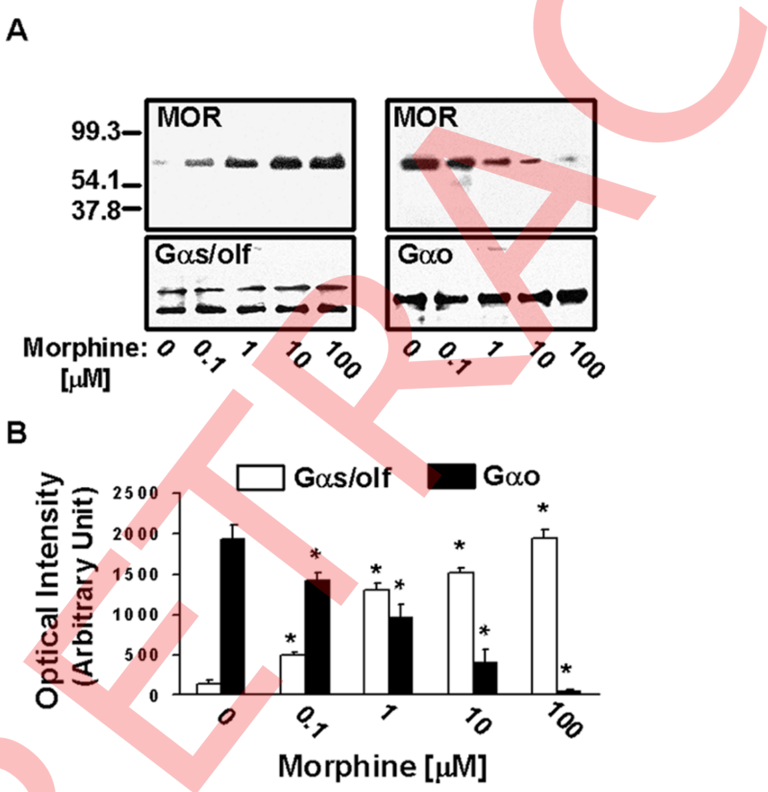
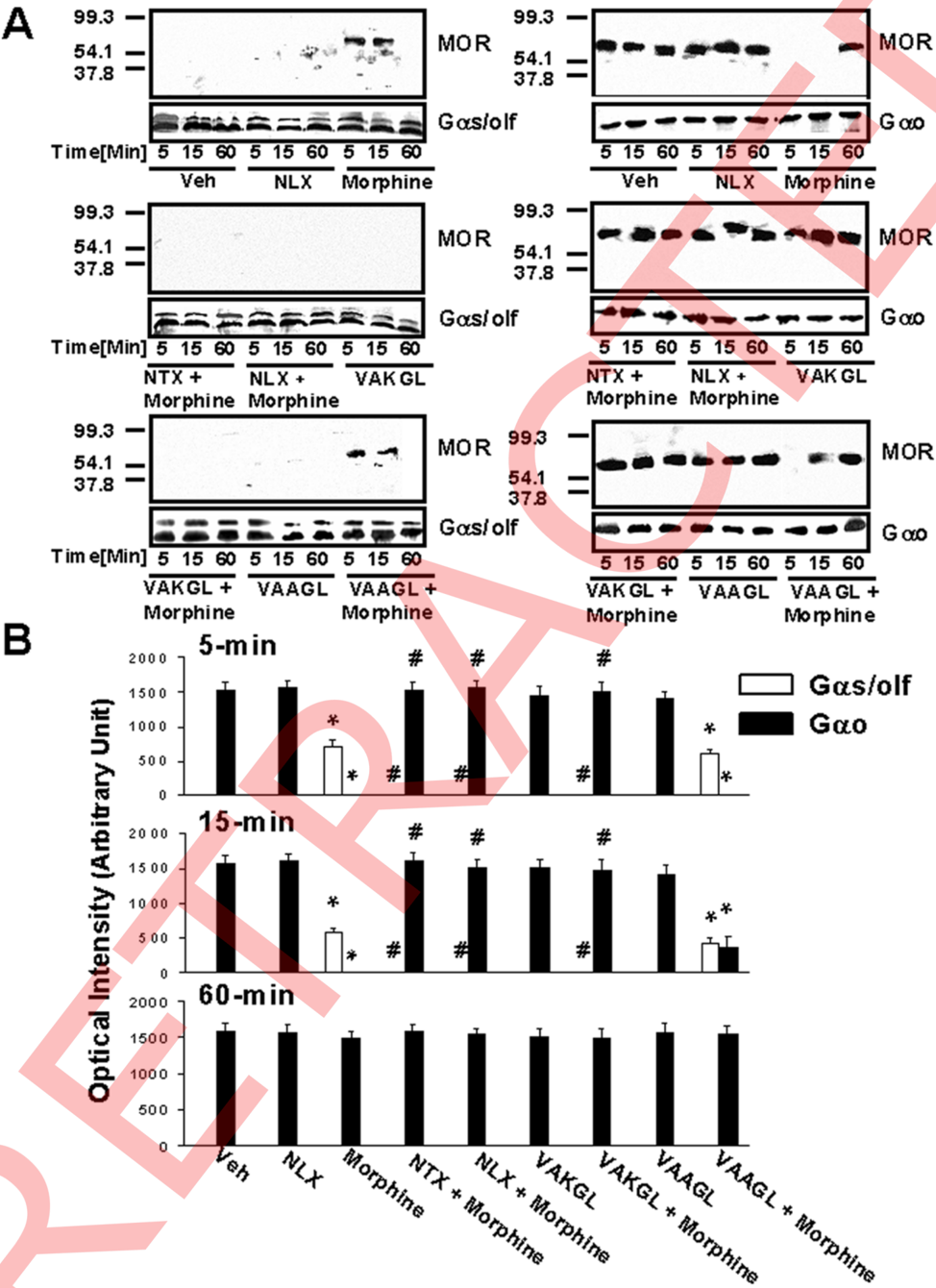
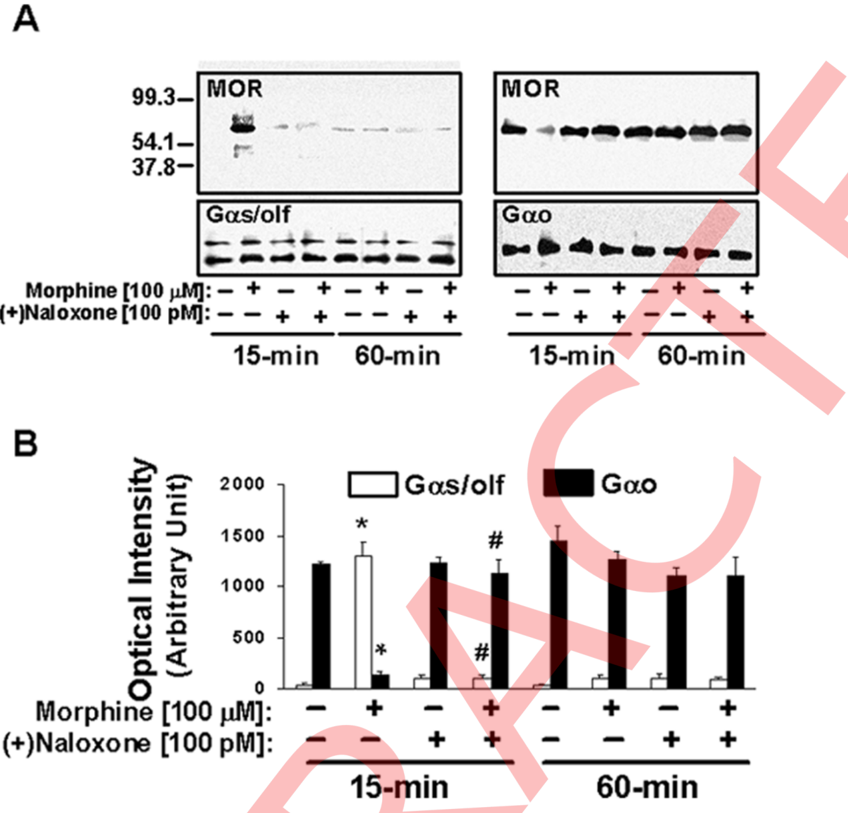
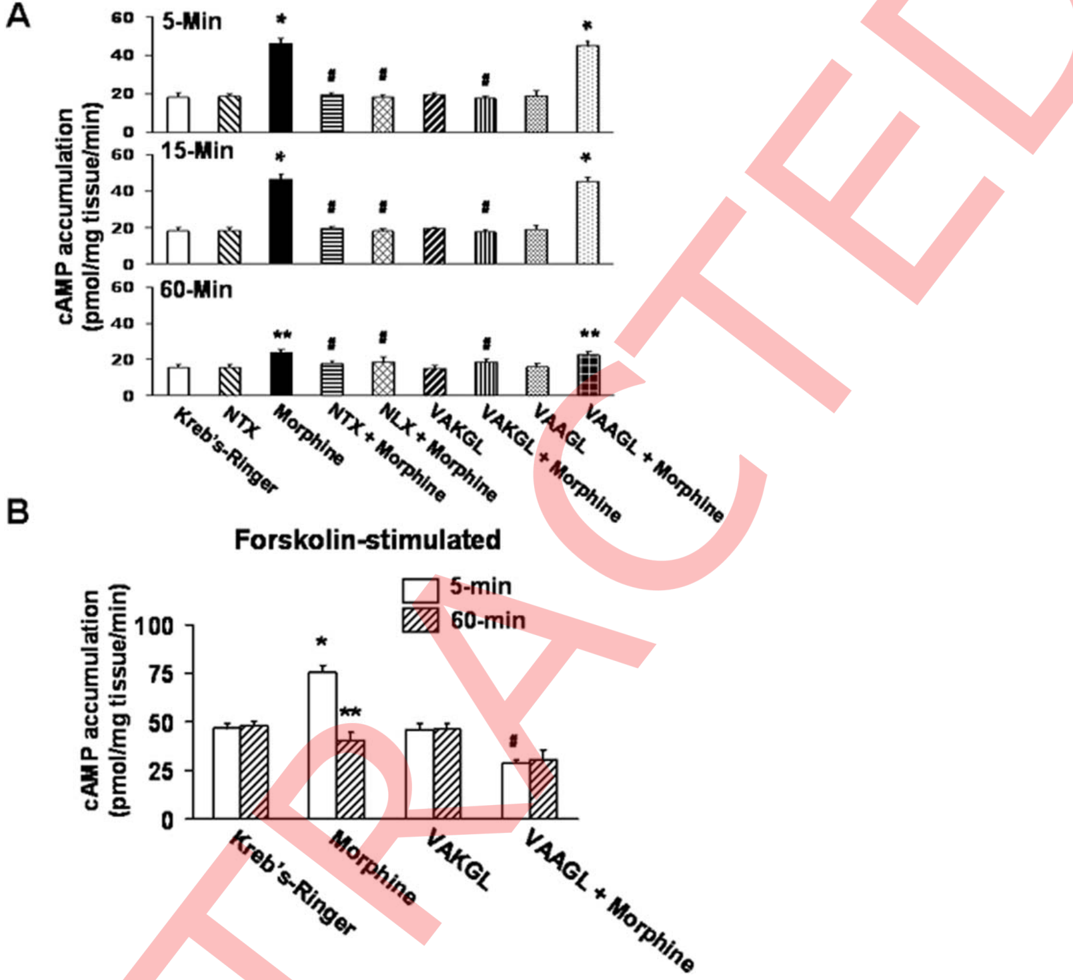
Chronic morphine causes the mu opioid receptor (MOR) to switch its coupling from Gi/o to Gs, resulting in excitatory signaling via both Galphas and its Gbetagamma dimer. Ultra-low-dose naloxone (NLX) prevents this switch and attenuates opioid tolerance and dependence. This protective effect is mediated via a high-affinity interaction of NLX to a pentapeptide region in c-terminal filamin A (FLNA), a scaffolding protein interacting with MOR. In organotypic striatal slice cultures, we now show that acute morphine induces a dose-dependent Go-to-Gs coupling switch at 5 and 15 min that resolves by 1 hr. The acute Gs coupling induced by 100 microM morphine was completely prevented by co-treatment with 100 pM NLX, (+)NLX, or naltrexone (NTX), or their pentapeptide binding site (FLNA(2561-2565)), which we show can act as a decoy for MOR or bind to FLNA itself. All of these co-treatments presumably prevent the MOR-FLNA interaction. Since ultra-low-dose NTX also attenuates the addictive properties of opioids, we assessed striatal cAMP production and CREB phosphorylation at S(133). Correlating with the Gs coupling, acute morphine induced elevated cAMP levels and a several-fold increase in pS(133)CREB that were also completely blocked by NLX, NTX or the FLNA pentapeptide. We propose that acute, robust stimulation of MOR causes an interaction with FLNA that allows an initially transient MOR-Gs coupling, which recovers with receptor recycling but persists when MOR stimulation is repeated or prolonged. The complete prevention of this acute, morphine-induced MOR-Gs coupling by 100 pM NLX/NTX or 10 microM pentapeptide segment of FLNA further elucidates both MOR signaling and the mechanism of action of ultra-low-dose NLX or NTX in attenuating opioid tolerance, dependence and addictive potential.
Overview
CoChat Summary
TL;DR
Acute high-dose morphine causes a transient, dose-dependent switch in mu opioid receptor coupling from Go to Gs in rat striatal slice cultures, accompanied by elevated cAMP and CREB phosphorylation at S133. Ultra-low-dose naloxone/naltrexone or the FLNA pentapeptide VAKGL completely prevents this acute switch and downstream signaling.
Key findings
- Acute morphine (0.1–100 µM, 15 min) produced dose-dependent MOR–Gs coupling with a parallel decrease in MOR–Go coupling; 100 µM morphine caused a complete Go-to-Gs switch at 5 and 15 min that resolved by 60 min, with no Gs coupling detected.
- Co-treatment with 100 pM NLX, NTX, (+)NLX, or 10 µM FLNA2561–2565 pentapeptide (VAKGL) completely prevented the acute morphine-induced Go-to-Gs coupling; the control peptide VAAGL did not. NLX, NTX, or either peptide alone had no effect on MOR coupling.
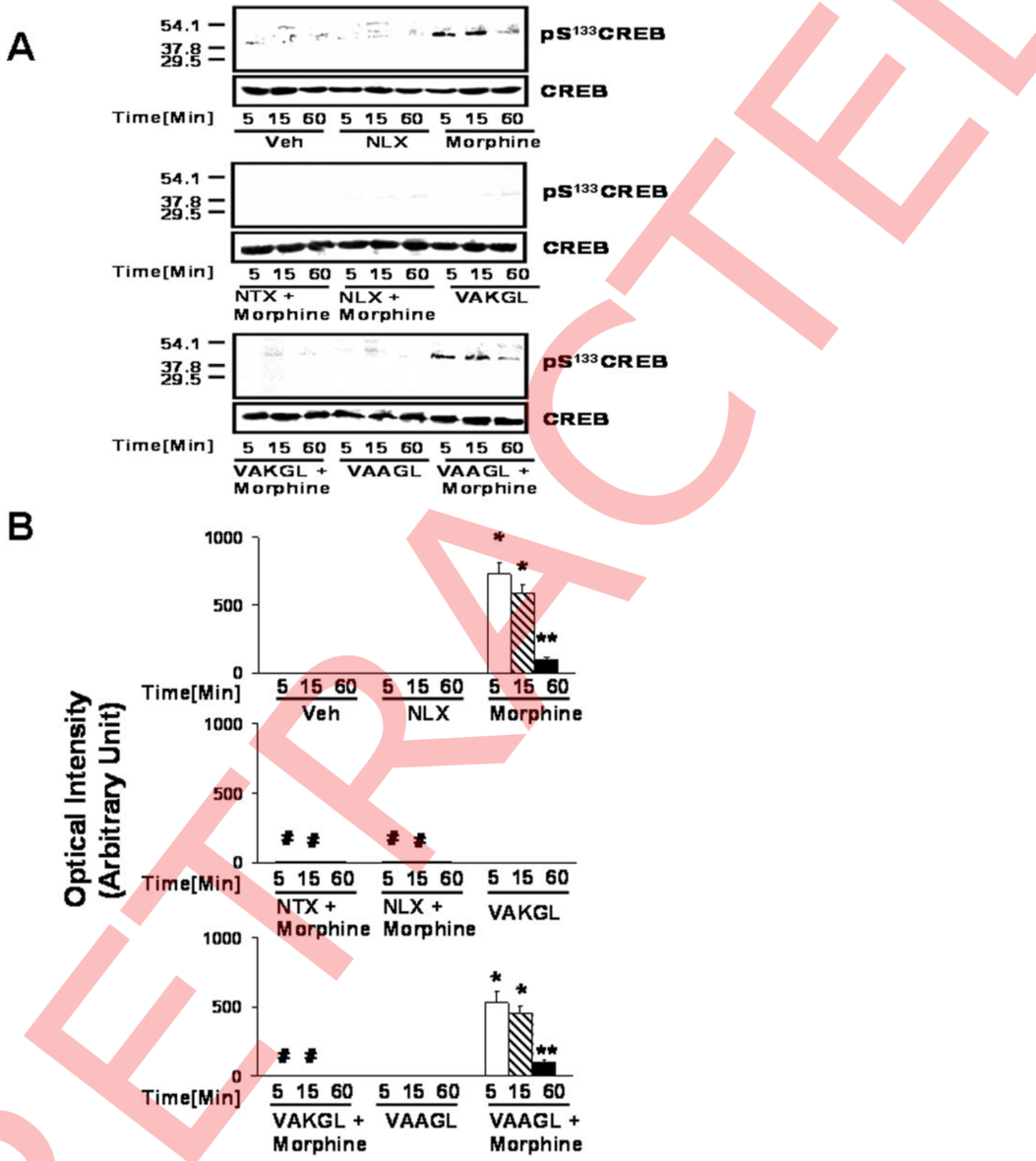
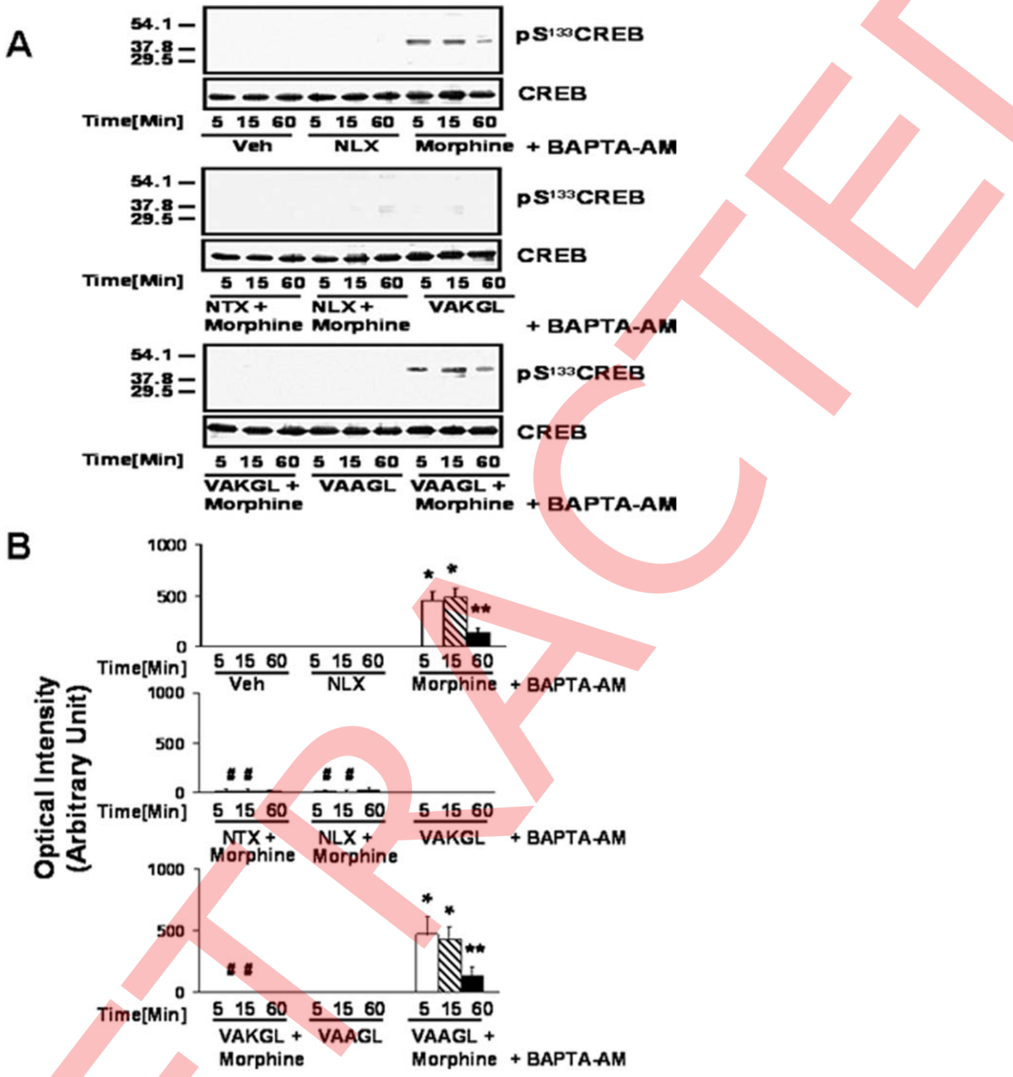
- Acute 100 µM morphine increased cAMP at 5 and 15 min and produced a several-fold increase in pS133CREB; these effects were blocked by 100 pM NLX or NTX or 10 µM VAKGL, but not by VAAGL. BAPTA-AM did not notably diminish morphine-induced CREB activation, suggesting a cAMP/PKA rather than Ca²⁺ pathway.
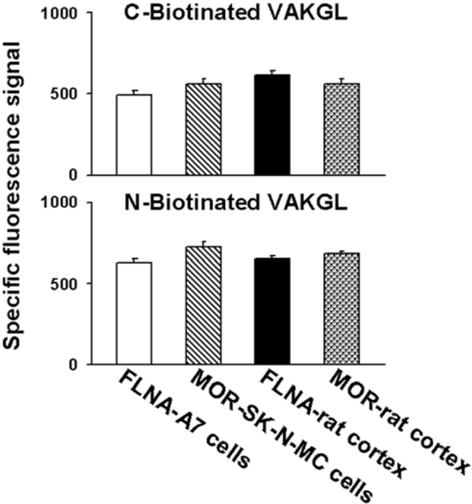
- In a cell-free assay, VAKGL bound both purified MOR and FLNA proteins, suggesting it may disrupt the MOR–FLNA interaction by acting as a decoy for either protein.
Methods
- Organotypic striatal slice cultures from male Sprague Dawley rats (200–250 g); 200-µm slices were cultured for 2 days and treated with morphine, NLX/NTX, VAKGL, VAAGL, or BAPTA-AM, then harvested at 5, 15, or 60 min.
- MOR–G protein coupling was measured by immunoprecipitation with anti-Gαs/olf or anti-Gαo followed by Western blotting for MOR; cAMP was measured by assay with IBMX and/or forskolin; CREB activation was measured by immunoprecipitation of CREB and Western blotting for pS133CREB.
- VAKGL binding to purified MOR and FLNA was tested on streptavidin-coated plates with biotinylated peptide and FITC-conjugated detection (n = 12). Most experiments used n = 4; statistics used two-way ANOVA with Newman-Keuls, two-tailed t tests, and p < 0.05.
Limitations
- The paper states that a true comparison of Gs vs. Go coupling levels cannot be made because the antibodies may have different affinities, and that the anti-Gαs/olf antibody does not distinguish between Gs family members; the detected Gα protein in striatum may be predominantly Golf.
- The paper states that further study is needed to elucidate the precise VAKGL interaction site on FLNA and MOR, and that whether CREB activation directly contributes to acute rewarding effects or initiates homeostatic regulation remains unclear; it also notes that acute rewarding effects are not completely blocked by ultra-low-dose opioid antagonists, suggesting MOR–Gs coupling may only partially contribute.
- Evident from the text: findings are from in vitro organotypic striatal slice cultures using male rats and a high 100 µM morphine concentration, with no behavioral or in vivo outcomes reported.
Model-written summary. Check it against the paper before relying on it.
Integrity signals
Registry
Cites
Statistics
Figures

Verification
Claims the paper makes
1 Valid · 1 Not valid · 34 Not checked · 83 Own results and interpretations
A result the paper reports from its own data — it cites no other source for it, so there is none to check. The quote shows it is in the paper.
In the paper
“Correlating with the Gs coupling, acute morphine induced elevated cAMP levels and a several-fold increase in pS133CREB that were also completely blocked by NLX, NTX or the FLNA pentapeptide.”
§ Naloxone's Pentapeptide Binding Site on Filamin A Blocks Mu Opioid Receptor–Gs Coupling and CREB Activation of Acute Morphine > Abstract
plainstates a cause- Asserted: passes — The authors put it forward as true.
- Checkable: passes — It can be checked against evidence.
- Load-bearing: passes — The paper’s conclusions depend on it.
- Based: passes — The paper gives a reason why it holds.
A result the paper reports from its own data — it cites no other source for it, so there is none to check. The quote shows it is in the paper.
In the paper
“Treatment alone with NLX, NTX or either peptide did not result in pS133CREB detection.”
§ Naloxone's Pentapeptide Binding Site on Filamin A Blocks Mu Opioid Receptor–Gs Coupling and CREB Activation of Acute Morphine > Results > NLX/NTX or the FLNA pentapeptide block acute morphine-induced cAMP production and CREB activation
plain- Asserted: passes — The authors put it forward as true.
- Checkable: passes — It can be checked against evidence.
- Load-bearing: passes — The paper’s conclusions depend on it.
- Based: passes — The paper gives a reason why it holds.
A result the paper reports from its own data — it cites no other source for it, so there is none to check. The quote shows it is in the paper.
In the paper
“Similarly, pre-treatment with the pentapeptide binding site of NLX or NTX on FLNA (VAKGL; FLNA2561–2565) at 10 µM concentration also completely prevented this acute morphine-induced coupling switch by MOR (Fig. 2B).”
- Also stated in: § Acute morphine-induced G protein coupling switch blocked by 100 pM NLX/NTX or 10 µM FLNA pentapeptide · plain
“pre-treatment with the FLNA2561–2565 pentapeptide (VAKGL), but not the control pentapeptide (VAAGL)”
§ Naloxone's Pentapeptide Binding Site on Filamin A Blocks Mu Opioid Receptor–Gs Coupling and CREB Activation of Acute Morphine > Results > Acute morphine-induced G protein coupling switch blocked by 100 pM NLX/NTX or 10 µM FLNA pentapeptide
plainstates a causen = 4 ·- Asserted: passes — The authors put it forward as true.
- Checkable: passes — It can be checked against evidence.
- Load-bearing: passes — The paper’s conclusions depend on it.
- Based: passes — The paper gives a reason why it holds.
- Rests on 2 assumptions not shown here.
- Also stated in: § Acute morphine-induced G protein coupling switch blocked by 100 pM NLX/NTX or 10 µM FLNA pentapeptide · plain
A result the paper reports from its own data — it cites no other source for it, so there is none to check. The quote shows it is in the paper.
In the paper
“In sum, the only significant differences compared to the vehicle condition for both Go and Gs coupling were the 5 and 15 minute timepoints for both morphine and morphine + the control peptide (VAAGL) (p<0.01 for each).”
§ Naloxone's Pentapeptide Binding Site on Filamin A Blocks Mu Opioid Receptor–Gs Coupling and CREB Activation of Acute Morphine > Results > Acute morphine-induced G protein coupling switch blocked by 100 pM NLX/NTX or 10 µM FLNA pentapeptide
plain- Asserted: passes — The authors put it forward as true.
- Checkable: passes — It can be checked against evidence.
- Load-bearing: unclear — It is unclear whether the paper’s conclusions depend on it.
- Based: passes — The paper gives a reason why it holds.
65 more claims
Create a free account to see all 119 claims and to verify the 45 references still open.
- It may state two separate claims as one. 36
- Probably not a substantial claim. 19
Self-check
Percentages, sums and reported differences re-computed from the paper’s own numbers.
Each contradiction between two passages listed here was confirmed by an independent check.
Rated minor: it would not touch a result — a value no result rests on, a p-value that stays on the same side of the significance level, or a conflict that is clerical, resolved elsewhere in the paper, or outside its own findings.
In the paper
§ Naloxone's Pentapeptide Binding Site on Filamin A Blocks Mu Opioid Receptor–Gs Coupling and CREB Activation of Acute Morphine > Methods > Determination of cAMP accumulation
“For the experiment that assesses cAMP production by Go-coupled MOR, slices were incubated with morphine, morphine plus 10 µM VAKGL, or 10 µM VAKGL for 5 or 60 min prior to incubation for 5 min with 10 µM forskolin.”
§ Naloxone's Pentapeptide Binding Site on Filamin A Blocks Mu Opioid Receptor–Gs Coupling and CREB Activation of Acute Morphine > Results > NLX/NTX or the FLNA pentapeptide block acute morphine-induced cAMP production and CREB activation
“B: With forskolin stimulation, morphine increased cAMP accumulation at 15 min but decreased it at 60 min, indicating a reversion back to Go coupling.”
Cited works that were retracted
Works this paper cites that were later retracted, from the retraction notices publishers deposit. Major when the notice came out before this paper was published, unless its text notes the retraction.
A note, not an issue: for example, a cited work that was retracted only after this paper was published, which its authors could not have known.
In the paper
“striatal slice culture data showed that potentially disrupting the MOR–FLNA interaction via NLX’s high-affinity binding to FLNA blocks the chronic morphine-induced G protein coupling switch by MOR [9].”
Cited work 10.1371/journal.pone.0001554 · retracted 2022-03-30 · notice 10.1371/journal.pone.0266627 · this paper published 2009-01-27
Citations
Cites
1 retracted
Wang, H.-Y., Frankfurt, M., & Burns, L. H. (2008) · PLoS ONE · doi:10.1371/journal.pone.0001554 · Cited by 68 · cited 4×
“striatal slice culture data showed that potentially disrupting the MOR–FLNA interaction via NLX’s high-affinity binding to FLNA blocks the chronic morphine-induced G protein coupling switch by MOR [9].”
BackgroundMethodInfluentialSelf-citationRetractedA simple method for organotypic cultures of nervous tissue
Stoppini, L., Buchs, P.-A., & Muller, D. (1991) · Journal of Neuroscience Methods · doi:10.1016/0165-0270(91)90128-m · Cited by 3,089 · cited 1×
“Rat brain slice organotypic culture methods were modified from those published previously [13,14].”
CARLEZONJR, W., DUMAN, R., & NESTLER, E. (2005) · Trends in Neurosciences · doi:10.1016/j.tins.2005.06.005 · Cited by 1,346 · cited 1×
“phosphorylation) in these striatal slice cultures may offer a mechanistic explanation for the attenuation of opioid reward and addictive processes by ultra-low-dose NTX. Found in all cells of the brain, CREB is a transcription factor implicated in addiction as well as learning and memory and several other experience-d…”
BackgroundMolecular mechanisms of drug addiction
Nestler, E. J. (2004) · Neuropharmacology · doi:10.1016/j.neuropharm.2004.06.031 · Cited by 1,108
Filamins as integrators of cell mechanics and signalling
Stossel, T. P., Condeelis, J., Cooley, L., Hartwig, J. H., Noegel, A., Schleicher, M., & Shapiro, S. S. (2001) · Nature Reviews Molecular Cell Biology · doi:10.1038/35052082 · Cited by 1,020 · cited 1×
“motility function, FLNA also regulates cell signaling by interacting with a variety of receptors and signaling molecules [10,11].”
BackgroundOpposing tonically active endogenous opioid systems modulate the mesolimbic dopaminergic pathway.
Spanagel, R., Herz, A., & Shippenberg, T. S. (1992) · Proceedings of the National Academy of Sciences · doi:10.1073/pnas.89.6.2046 · Cited by 1,014
Barrot, M., Olivier, J. D. A., Perrotti, L. I., DiLeone, R. J., Berton, O., Eisch, A. J., Impey, S., Storm, D. R., Neve, R. L., Yin, J. C., et al. (2002) · Proceedings of the National Academy of Sciences · doi:10.1073/pnas.172091899 · Cited by 508 · cited 1×
“This view is supported by nucleus accumbens overexpression of CREB or a dominant-negative CREB mutant respectively reducing or increasing the rewarding effects of opioids in the conditioned place preference test [ 23 ].”
MethodThe many faces of filamin: A versatile molecular scaffold for cell motility and signalling
Feng, Y., & Walsh, C. A. (2004) · Nature Cell Biology · doi:10.1038/ncb1104-1034 · Cited by 503 · cited 1×
“motility function, FLNA also regulates cell signaling by interacting with a variety of receptors and signaling molecules [10,11].”
BackgroundMolecular Neurobiology of Addiction
Nestler, E. J. (2001) · The American Journal on Addictions · doi:10.1080/105504901750532094 · Cited by 412 · cited 1×
“In the striatum, CREB activation has been viewed as a homeostatic adaptation, attenuating the acute rewarding effects of drugs [21,22].”
BackgroundShaw-Lutchman, T. Z., Barrot, M., Wallace, T., Gilden, L., Zachariou, V., Impey, S., Duman, R. S., Storm, D., & Nestler, E. J. (2002) · The Journal of Neuroscience · doi:10.1523/jneurosci.22-09-03663.2002 · Cited by 205 · cited 1×
“However, a regional mapping study showed that opioid withdrawal activates CREB in locus coeruleus, nucleus accumbens and amygdala but inhibits CREB in lateral ventral tegemental area and dorsal raphe nucleus [20].”
Background
Research works printed but not linked: 2
- Shen K-F Crain SM Moate P Boston R de Kater AW 2002 PTI-801, a novel formulation of oxycodone, shows absence of tolerance, physical dependence and naloxone-precipitated withdrawal effects in mice. J Pain 3 49
- Shen K-F Crain SM Moate P Boston R de Kater AW 2002 PTI-555, reverses and prevents morphine-induced tolerance and naloxone-precipitated withdrawal in mice chronically treated with morphine. J Pain 3 50
Cited by
Low-Dose Naltrexone (LDN)—Review of Therapeutic Utilization
Toljan, K., & Vrooman, B. (2018) · Medical Sciences · doi:10.3390/medsci6040082 · Cited by 192
“A crucial element mediating µ-opioid receptor second messaging is the scaffolding protein filament called filamin-A (FLNA) [36,37].”
BackgroundInfluentialWang, X., Zhang, Y., Peng, Y., Hutchinson, M. R., Rice, K. C., Yin, H., & Watkins, L. R. (2016) · British Journal of Pharmacology · doi:10.1111/bph.13394 · Cited by 173
Seyedabadi, M., Ghahremani, M. H., & Albert, P. R. (2019) · Pharmacology & Therapeutics · doi:10.1016/j.pharmthera.2019.05.006 · Cited by 165
Complex roles of filamin-A mediated cytoskeleton network in cancer progression
Yue, J., Huhn, S. C., & Shen, Z. (2013) · Cell & Bioscience · doi:10.1186/2045-3701-3-7 · Cited by 99
“The same research group also designed filamin-A peptide fragments containing the Ultra-low-dose naloxone (NLX) binding site, which blocked the protective effect of NLX on both the MOR–Gs coupling and downstream cAMP accumulation induced by chronic morphine, presumably by interfering with NLX’s binding to filamin-A [13…”
BackgroundTargeting the Toll of Drug Abuse: The Translational Potential of Toll-Like Receptor 4
Bachtell, R., Hutchinson, M., Wang, X., Rice, K., Maier, S., & Watkins, L. (2015) · CNS & Neurological Disorders - Drug Targets · doi:10.2174/1871527314666150529132503 · Cited by 97
Metadata
- Authors
- Wang, H.-Y., & Burns, L. H.
- Affiliations
- City University of New York (US)
- Cassava Sciences (United States) (US)
- Corresponding author
- Burns, Lindsay H.
- Venue
- PLoS ONE
- Publisher
- Public Library of Science (PLoS)
- Published
- 2009-01-27
- Volume
- 4
- Issue
- 1
- Pages
- e4282
- ISSN
- 1932-6203 (ISSN-L)
- PMC
- PMC2628740
- OpenAlex
- W2113754496
- Semantic Scholar
- 714f9374976a6e42127be52cb14fb47f439a6bcb
- Cited by
- 72
- References
- 26
- Citations by year
- 2026: 1 · 2022: 8 · 2021: 4 · 2020: 7 · 2019: 1 · 2018: 5 · 2017: 1 · 2016: 5 · 2015: 5 · 2014: 5 · 2013: 12 · 2012: 6
- FWCI
- 1.69
- Type
- journal article
- Language
- en
- Status
- Retracted
- Update notices
- retraction (2022-03-30)
- Open access
- gold
- doi.org
- Locations
- PLoS ONE (publishedVersion, cc-by)
- PubMed Central (publishedVersion, cc-by)
- PubMed (publishedVersion)
- CUNY Academic Works (City University of New York) (submittedVersion)
- DOAJ (DOAJ: Directory of Open Access Journals) (submittedVersion)
- Topics
- Life Sciences › Biochemistry, Genetics and Molecular Biology › Molecular Biology › Receptor Mechanisms and Signaling
- Life Sciences › Neuroscience › Cellular and Molecular Neuroscience › Neuropeptides and Animal Physiology
- Life Sciences › Neuroscience › Cellular and Molecular Neuroscience › Neurotransmitter Receptor Influence on Behavior
- Keywords
- naloxone, filamin A, mu-opioid receptor, Gs coupling, Gβγ, CREB phosphorylation, cyclic AMP, morphine, opioid tolerance, opioid use disorder, naltrexone, striatum, receptor recycling
- MeSH terms
- Analgesics, Opioid, Animals, Binding Sites, Brain, Contractile Proteins, Male, Microfilament Proteins, Morphine, Naloxone, Narcotic Antagonists, Peptides, Signal Transduction, Rats, Sprague-Dawley, Cyclic AMP Response Element-Binding Protein, Receptors, Opioid, mu, Receptors, G-Protein-Coupled, Rats, Filamins
About these checks
Registry, retraction, Cites and statistics results are computed, not judged, with one exception: a printed reference that no index lists is read once by a model before it counts as a citation error. Claims are extracted by a model and kept only when their quote appears verbatim in the text; each cited source is then checked, with a model’s help, for whether it says what the claim relies on. Those verdicts can be wrong — read the claim’s quote and the cited source before relying on one.
A language model drew the claims from the paper on 2026-11-27, under version 3 of the claim definition (model deepseek-v4.1-flash, prompt extract-v3).
A second model labelled each claim on 2026-11-27 (model jev-1.13-20260917, definition revision gold-guideline-v0.2).
Statistics and arithmetic are recomputed, not judged.
Confidence bands are shown only for fields calibrated on our annotated test set. None is calibrated yet, so no band is shown.
What counts as a claim ›How we measure confidence ›How we check this ›
Are you an author, or do you see a problem with this page? Request a review
Data sources
Bibliographic data: Semantic Scholar, OpenAlex, Crossref.
Contains information from the Semantic Scholar Academic Graph Datasets, made available under the ODC Attribution License (ODC-BY 1.0).
Semantic Scholar’s data is described in: Kinney, R., et al. (2023). The Semantic Scholar Open Data Platform. arXiv:2301.10140.
