

Reinforcement Learning or Active Inference?
Open accessThe DOI matches its Crossref record; 66 of the 67 references it cites were found in a registry or an index.
Abstract
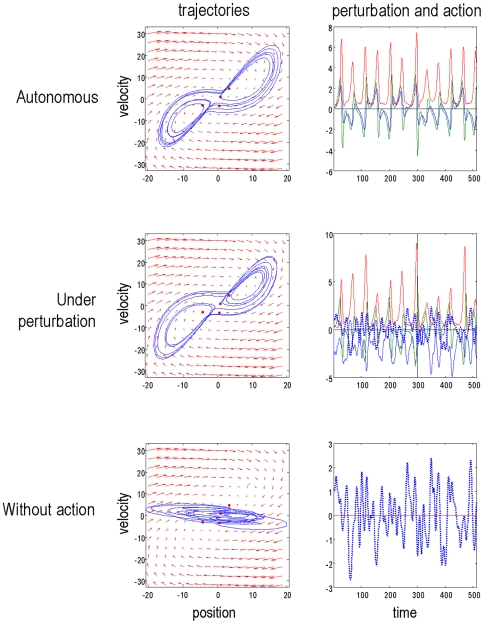
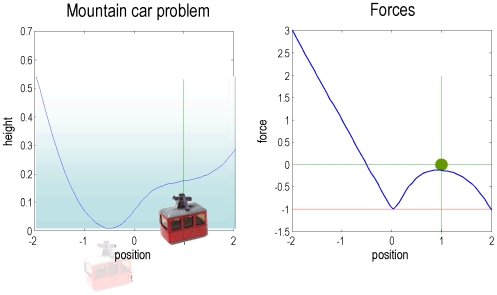
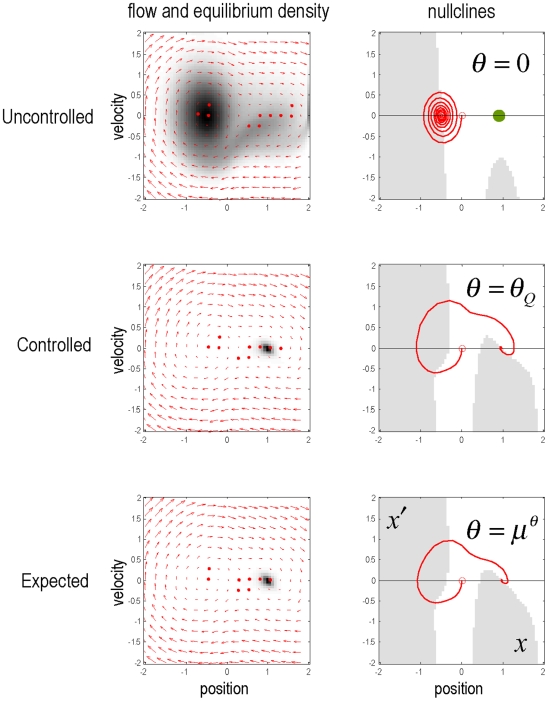
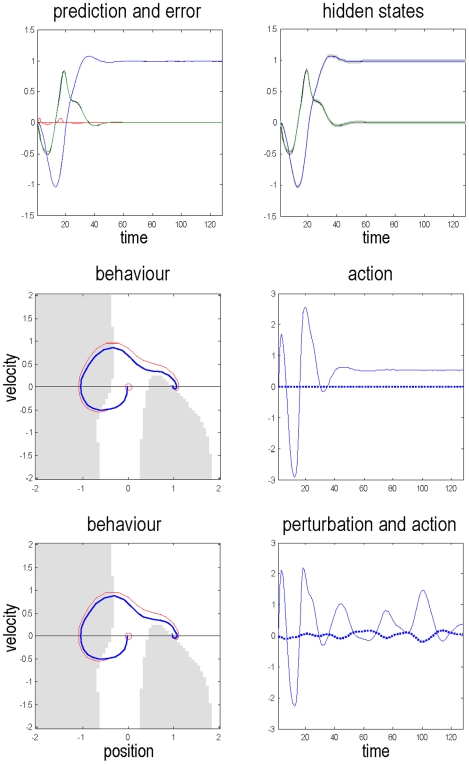
This paper questions the need for reinforcement learning or control theory when optimising behaviour. We show that it is fairly simple to teach an agent complicated and adaptive behaviours using a free-energy formulation of perception. In this formulation, agents adjust their internal states and sampling of the environment to minimize their free-energy. Such agents learn causal structure in the environment and sample it in an adaptive and self-supervised fashion. This results in behavioural policies that reproduce those optimised by reinforcement learning and dynamic programming. Critically, we do not need to invoke the notion of reward, value or utility. We illustrate these points by solving a benchmark problem in dynamic programming; namely the mountain-car problem, using active perception or inference under the free-energy principle. The ensuing proof-of-concept may be important because the free-energy formulation furnishes a unified account of both action and perception and may speak to a reappraisal of the role of dopamine in the brain.
Overview
The claims and statistics of this paper haven’t been checked yet.
Free: it reads the open-access text and checks the first 5 claims that cite a source we can check. Create a free account to check every claim.
Integrity signals
Registry
Cites
Statistics
Figures
Verification
Claims the paper makes
The claims and statistics of this paper haven’t been checked yet.
Free: it reads the open-access text and checks the first 5 claims that cite a source we can check. Create a free account to check every claim.
Claims other papers make about this one
Each is checked against this paper’s own text: does it say what the citing paper says it does?
The source backs part of the claim, not all of it — or backs it for a different population, condition or comparison.
In the citing paper
“Furthermore, this hierarchical elaboration dissolves any apparent mechanistic distinction between the optimization processes that underlie different control or learning schemes, suggesting that they are all manifestations of Active Inference – under various contexts or conditions (Friston et al., 2009).”
From Active Inference, homeostatic regulation and adaptive behavioural control (2015) · cites this paper as Friston et al., 2009
Experimental — accuracy not yet measured
Self-check
Percentages, sums and reported differences re-computed from the paper’s own numbers.
The self-check needs the paper’s full text.
Citations
Cites
Rescorla, R. A. (1972) · Medical Entomology and Zoology · Cited by 9,661
A neural substrate of prediction and reward
Schultz, W., Dayan, P., & Montague, P. R. (1997) · Science · doi:10.1126/science.275.5306.1593 · Cited by 9,388 · cited 1×
“From a neurobiological perceptive, this may call for a reinterpretation of the role of things like dopamine, which are usually thought to encode the prediction error of value [49].”
BackgroundWatkins, C. J. C. H., & Dayan, P. (1992) · Machine Learning · doi:10.1007/bf00992698 · Cited by 9,083
Autopoiesis and Cognition: The Realization of the Living
Maturana, H. R., & Varela, F. J. (1980) · Boston Studies in the Philosophy and History of Science · doi:10.1007/978-94-009-8947-4 · Cited by 5,815
Emergence of simple-cell receptive field properties by learning a sparse code for natural images
Olshausen, B. A., & Field, D. J. (1996) · Nature · doi:10.1038/381607a0 · Cited by 5,694 · cited 1×
“, which has been very useful in understanding things like receptive fields”
BackgroundRao, R. P. N., & Ballard, D. H. (1999) · Nature Neuroscience · doi:10.1038/4580 · Cited by 5,483
A theory of cortical responses.
Friston, K. (2005) · Philosophical Transactions of the Royal Society B: Biological Sciences · doi:10.1098/rstb.2005.1622 · Cited by 4,578 · cited 2×
“Under this specification, optimum behaviour emerges in agents that conform to a free-energy principle, which provides a principled basis for understanding both action and perception [9,10].”
BackgroundMethodSelf-citationPredictive reward signal of dopamine neurons
Schultz, W. (1998) · Journal of Neurophysiology · doi:10.1152/jn.1998.80.1.1 · Cited by 4,564 · cited 1×
“, Parkinson’s disease; [50]) and reinforcement learning [51,52].”
Classical conditioning II: Current research and theory.
Black, A. H., & Prokasy, W. F. (1972) · Appleton-Century-Crofts eBooks · Cited by 4,449
Watkins, C. J. C. H., & Dayan, P. (1992) · Machine Learning · doi:10.1023/a:1022676722315 · Cited by 3,907
Research works printed but not linked: 4
- Hinton GE von Cramp D 1993 Keeping neural networks simple by minimising the description length of weights. In: Proceedings of COLT-93 5 13
- MacKay DJC 1995 Free-energy minimisation algorithm for decoding and cryptoanalysis. Electronics Letters 31 445 447
- Ozaki T 1992 A bridge between nonlinear time-series models and nonlinear stochastic dynamical systems: A local linearization approach. Statistica Sin 2 113 135
- Tipping ME 2001 Sparse Bayesian learning and the Relevance Vector Machine. J. Machine Learning Research 1 211 244
Cited by
Items 301–400 of 436
Interpreting Anxiety Disorders From the Perspective of Interoceptive Computational Models
Lin, Z., Liao, S., Zhu, S., Zhao, Y., Yan, W., Jiang, K., & Qiu, K. (2025) · Brain and Behavior · doi:10.1002/brb3.71019 · Cited by 8
“Within the active inference framework (Paulus et al. 2019), interoceptive percepts reflect a Bayesian “best estimate” derived from prior expectations and sensory evidence (Stephan et al. 2016, Barrett and Simmons 2015, Paulus and Stein 2010, Aupperle et al. 2014, Friston et al. 2009).”
Zellweger, T. M., & Djokovic, D. (2026) · Strategic Entrepreneurship Journal · doi:10.1002/sej.70024 · Cited by 6
Brain rhythms of depression: A predictive processing perspective
Strube, A., & Pizzagalli, D. A. (2026) · Trends in Neurosciences · doi:10.1016/j.tins.2026.06.006 · Cited by 3
Synergizing habits and goals with variational Bayes
Han, D., Doya, K., Li, D., & Tani, J. (2024) · Nature Communications · doi:10.1038/s41467-024-48577-7 · Cited by 10
“We illustrate how RL and AIf, two paradigms traditionally seen as opposing 28 , can work in synergy to foster ef fi cient and fl exible behavior.”
BackgroundDeep Hybrid Models: Infer and Plan in a Dynamic World
Priorelli, M., & Stoianov, I. P. (2025) · Entropy · doi:10.3390/e27060570 · Cited by 5
“Moreover, value functions for motor control might restrict the range of motions an agent can learn [4].”
Katakura, T., Yoshida, M., Hisano, H., Mushiake, H., & Sakamoto, K. (2022) · Frontiers in Computational Neuroscience · doi:10.3389/fncom.2021.784592 · Cited by 3
“As a learning architecture using KLDs, the free-energy principle has recently attracted considerable attention (Friston, 2009, 2010; Friston et al., 2009).”
MethodAn Attention-Based Predictive Agent for Static and Dynamic Environments
Baruah, M., Banerjee, B., & Nagar, A. K. (2022) · IEEE Access · doi:10.1109/access.2022.3149585 · Cited by 3
“Saliency of a location in an environment is a function of its neighborhood and an agent’s internal model (see [21], [22]).”
BackgroundActive Inference Successor Representations
Millidge, B., & Buckley, C. L. (2023) · Communications in computer and information science · doi:10.1007/978-3-031-28719-0_11 · Cited by 3
Deriving Time-Averaged Active Inference from Control Principles
Sennesh, E., Theriault, J. E., van de Meent, J.-W., Barrett, L. F., & Quigley, K. S. (2023) · Communications in computer and information science · doi:10.1007/978-3-031-28719-0_25 · Cited by 5
Deep Active Inference Agent with Continuous Action Space
Fedosov, N., & Voskoboynikov, A. (2023) · IEEE Ural-Siberian Conference on Computational Technologies in Cognitive Science, Genomics and Biomedicine (CSGB) · doi:10.1109/csgb60362.2023.10329840 · Cited by 4
“In this context, Karl Friston has suggested his own elegant probabilistic interpretation of perception and optimal behavior exhibited by living entities [5], [6], and created theories of Free Energy (FE) and Active inference (AI).”
BackgroundPlanning using online evolutionary overfitting
Samothrakis, S., & Lucas, S. M. (2010) · UK Workshop on Computational Intelligence · doi:10.1109/ukci.2010.5625569 · Cited by 4
“[4], [5] require that the brain encodes a generative encoding of its sensory input, as an indispensable part of its function.”
BackgroundSlow dynamics perspectives on the Embodied-Brain Systems Science
Yano, S., Maeda, T., & Kondo, T. (2015) · Neuroscience Research · doi:10.1016/j.neures.2015.11.002 · Cited by 3
The Free-energy Principle: A Unified Theory of Brain Functions
Inui, T. (2018) · The Brain & Neural Networks · doi:10.3902/jnns.25.123 · Cited by 5
The Variational Principles of Action
Friston, K. J. (2017) · Springer tracts in advanced robotics · doi:10.1007/978-3-319-51547-2_10 · Cited by 5
Self-citationThe Perception-Action Loop in a Predictive Agent.
Baruah, M., & Banerjee, B. (2020) · eScholarship (California Digital Library) · Cited by 5
Critical Slowing and Perception
Friston, K. J., Breakspear, M. J., & Deco, G. (2014) · Wiley eBooks · doi:10.1002/9783527651009.ch9 · Cited by 3
Self-citationExplore and Control with Adversarial SurprisePreprint
Fickinger, A., Jaques, N., Parajuli, S., Chang, M., Rhinehart, N., Berseth, G., Russell, S., & Levine, S. (2021) · arXiv (Cornell University) · doi:10.48550/arxiv.2107.07394 · Cited by 9
“Surprise minimizing agents (SMiRL): The free energy principle (Faraji et al., 2018; Friston, 2009; Friston et al., 2009; 2016; Ueltzhöffer, 2018) suggests that biological agents may minimize surprise, or state entropy, in order to remain in safe and stable states.”
BackgroundInfluentialOn the foundation of quantum decision theoryPreprint
Helland, I. S. (2024) · Qeios · doi:10.32388/kcuq4n.2 · Cited by 4
Systematic bias in representation of reaction time distribution
Onagawa, R., Kudo, K., & Watanabe, K. (2024) · Quarterly Journal of Experimental Psychology · doi:10.1177/17470218241234650 · Cited by 2
“…explains various levels of human behaviour, has proposed that an organism’s perception (Bogacz, 2017), attention (Feldman & Friston, 2010), learning (Friston et al., 2009), and behaviour (Friston, 2011; Mirza et al., 2018; Perrinet et al., 2014) must be determined to minimise the cost function,…”
Realizing Synthetic Active Inference Agents, Part II: Variational Message Updates
van de Laar, T., Koudahl, M., & de Vries, B. (2024) · Neural Computation · doi:10.1162/neco_a_01713 · Cited by 10
“Active Inference (AIF) is a corollary of the FEP that describes how agents propose effective actions by minimising an Expected Free Energy (EFE) objective that internalises a Generative Model (GM) of the agent’s environment and a prior belief about desired outcomes (Friston et al., 2009, 2015).”
BackgroundThe sense and control of standing balance in the presence of motor noise
Mensink, L., Nasrabadi, A. M., Rasman, B. G., Blouin, J., & Forbes, P. A. (2025) · Journal of Applied Physiology · doi:10.1152/japplphysiol.00325.2025 · Cited by 3
Adaptive visual selection: Predictive control of visual attention
Treviño, M. (2025) · Neuroscience & Biobehavioral Reviews · doi:10.1016/j.neubiorev.2025.106523 · Cited by 3
Intercultural Cognitive Pragmatics as a tool for understanding autism
Żuromski, D., & Pacholik-Żuromska, A. (2026) · Frontiers in Human Neuroscience · doi:10.3389/fnhum.2026.1729076 · Cited by 2
Visual awareness of stimulus features shapes motor control through action end-state comfort
Montani, V., Pascucci, F., Colombari, E., Savazzi, S., & Cesari, P. (2026) · Scientific Reports · doi:10.1038/s41598-026-43752-w · Cited by 2
Surprise-minimization as a solution to the structural credit assignment problem
Wurm, F., Ernst, B., & Steinhauser, M. (2024) · PLoS Computational Biology · doi:10.1371/journal.pcbi.1012175 · Cited by 4
False Re-Representations in Self-Knowledge
Pacholik-Żuromska, A. (2020) · Logic and Logical Philosophy · doi:10.12775/llp.2020.007 · Cited by 2
A Model of Agential Learning Using Active Inference
Pitliya, R. J., & Murphy, R. A. (2023) · Communications in computer and information science · doi:10.1007/978-3-031-47958-8_8 · Cited by 2
Banerjee, B., & Baruah, M. (2024) · Sensors · doi:10.3390/s24123922 · Cited by 2
“The attention mechanism is a function of the agent’s prediction error [47,48].”
BackgroundNeural Evidence for Action-Related Somatosensory Predictions
Moran, C., Hogendoorn, H., & Landau, A. N. (2026) · Journal of Neuroscience · doi:10.1523/jneurosci.0889-25.2026 · Cited by 2
“This is in line with theoretical accounts such as active inference (Friston et al., 2009, 2011; Friston, 2011; Adams et al., 2013) and ideomotor theory (Elsner et al., 2001; Shin et al., 2010; Hommel, 2013).”
The state of hybrid artificial intelligence for interstellar missions
Ellery, A. A. (2025) · Progress in Aerospace Sciences · doi:10.1016/j.paerosci.2025.101100 · Cited by 3
ANUBIS: Artificial Neuromodulation Using a Bayesian Inference System
Smith, B. J., Saaj, C. M., & Allouis, E. (2012) · Neural Computation · doi:10.1162/neco_a_00376 · Cited by 2
“This approach has been successfully applied to problems such as the mountain car problem (Friston et al., 2009) and categorization of bird song (Friston & Kiebel, 2009).”
MethodPerceptual block merging for quadtree-based partitioning in HEVC using disorderly concealment effect
Jung, C., Chen, Y., & Lin, Q. (2015) · Visual Communications and Image Processing · doi:10.1109/vcip.2015.7457797 · Cited by 2
“0, while preserving the visual quality of the video sequences.”
BackgroundOptimised agent-based modelling of action selection
Seth, A. K. (2011) · Cambridge University Press eBooks · doi:10.1017/cbo9780511731525.007 · Cited by 3
The Variational Principles of Cognition
Friston, K. J. (2017) · Nonlinear systems and complexity · doi:10.1007/978-3-319-53673-6_12 · Cited by 3
Self-citationAn Open-Ended Approach to Piagetian Development of Adaptive Behavior
Harvey, K. (2018) · OALib · doi:10.4236/oalib.1104434 · Cited by 3
“1104434 26 Open Access Library Journal human culture itself as we are “marinated in statistics of an optimal world” during development [82] [114].”
BackgroundWang, S., Wang, S., Gu, K., Guo, X., Ma, S., & Gao, W. (2017) · IEEE International Conference on Visual Communications and Image Processing (VCIP) · doi:10.1109/vcip.2017.8305134 · Cited by 2
“The IGM [27], [28] claims that the brain can best explain the input and suppress the surprise by changing the model states.”
BackgroundMeasures of Intelligence, Perception and Intelligent Agents
Özkural, E. (2022) · Lecture notes in computer science · doi:10.1007/978-3-030-93758-4_18 · Cited by 2
Attachment Theory in an Active Inference Framework: How Does Our Inner Model Take Shape?
Santaguida, E., & Bergamasco, M. (2023) · Communications in computer and information science · doi:10.1007/978-3-031-28719-0_13 · Cited by 3
Nakajima, T. (2021) · Philosophies · doi:10.3390/philosophies6010011 · Cited by 2
Ecological realism, prediction, and a new understanding of perception
Patton, P. E. (2014) · ProQuest Demo Repository · Cited by 2
Perceived time drives physical fatiguePreprint
Matta, P., Duclay, J., Baurès, R., & Alamia, A. (2025) · bioRxiv (Cold Spring Harbor Laboratory) · doi:10.1101/2025.07.13.664573 · Cited by 2
Retrospective surprise: A computational component for active inference
Katahira, K., Kunisato, Y., Okimura, T., & Yamashita, Y. (2019) · Journal of Mathematical Psychology · doi:10.1016/j.jmp.2020.102347 · Cited by 2
Adaptive Pacing in Word Segmentation and the Vowel-Onset-Paced Syllable Inference Model
Pittman-Polletta, B., & Dilley, L. C. (2026) · Cambridge University Press eBooks · doi:10.1017/9781009295888.015 · Cited by 1
Kagan, B. J., & Kitchen, A. C. (2025) · Springer eBooks · doi:10.1007/978-3-031-93623-4_12 · Cited by 2
Why Internal Representations and Their Temporal Dependence Matter for Emotion Inference
Goel, S., & Gendron, M. (2025) · Emotion Review · doi:10.1177/17540739251379801 · Cited by 1
“…to be minimized by feeding back the errors to update future predictions and improve generative models (Friston, 2010) or by the individual taking actions to modify the environment and update the sensory information to match predictions, a process called active inference (Friston et al., 2009).”
Rogowska, A. M., Mikłuszka, M., & Błońska, K. (2026) · Frontiers in Psychology · doi:10.3389/fpsyg.2025.1716671 · Cited by 1
“The Active Inference framework (Friston et al., 2009) provides a foundation for such connections by describing how the brain utilizes interoceptive signals to build models of the self and the world (Yang et al., 2023; Pezzulo et al., 2024a,b).”
Rethinking normativity with the free energy principle in light of interactivism
Piekarski, M. (2026) · Phenomenology and the Cognitive Sciences · doi:10.1007/s11097-025-10135-x · Cited by 1
“In response, Friston, Daunizeau, and Kiebel (2009) argue, among other points, that high-level expectations are inherently ingrained in the organization of the entire organism.”
Pure awareness, entropy, and the foundation of perception
Mago, J., Chandaria, S., Miller, M., & Laukkonen, R. (2026) · Neurocomputing · doi:10.1016/j.neucom.2026.133443 · Cited by 1
f2MOVE: fMRI-compatible haptic object manipulation system for closed-loop motor control studies
Sylaidi, A., Lourenço, P. R., Nageshwaran, S., Lin, C., Rodriguez, M., Festenstein, R., & Faisal, A. A. (2015) · International IEEE/EMBS Conference on Neural Engineering · doi:10.1109/ner.2015.7146821 · Cited by 1
“Common methodological approaches have involved the use of psychophysical experiments and computational theories of inference and policy formation [1],[2],[3],[4],[5],[6].”
BackgroundReward Processing in Motivational and Affective Disorders
Skandali, N. (2016) · Frontiers research topics · doi:10.3389/978-2-88919-986-0 · Cited by 1
Modeling of Human Behavior Within the Paradigm of Modern Physics
Lubashevsky, I. (2017) · Understanding complex systems · doi:10.1007/978-3-319-51706-3_6 · Cited by 1
Wilkins, I. (2023) · Angelaki · doi:10.1080/0969725x.2023.2216557 · Cited by 1
Scientists Invent New Hypotheses, Do Brains?
Fresco, N., & Elber‐Dorozko, L. (2024) · Cognitive Science · doi:10.1111/cogs.13400 · Cited by 1
Perceptual control theory and the free energy principle: a comparison
Kennaway, R. (2025) · Current Opinion in Behavioral Sciences · doi:10.1016/j.cobeha.2025.101575 · Cited by 2
Gradient-Free De Novo Learning
Friston, K. J., Parr, T., Heins, C., Costa, L. D., Salvatori, T., Tschantz, A., Koudahl, M., de Maele, T. V., Buckley, C., & Verbelen, T. (2025) · Entropy · doi:10.3390/e27090992 · Cited by 5
Self-citationBayesian approaches to modelling action selection
Berniker, M., Wei, K., & Kording, K. P. (2011) · Cambridge University Press eBooks · doi:10.1017/cbo9780511731525.010 · Cited by 1
“Taking another approach, recent work has neglected a cost function altogether and reformulated the problem of optimal action selection as a problem of optimal Bayesian inference (Friston, 2009; Friston et al., 2009; Toussaint, 2009, 2010).”
BackgroundNatural Descriptions and Anthropic Bias: Extant Problems In Solomonoff Induction
McGregor, S. (2014) · Lecture notes in computer science · doi:10.1007/978-3-319-08019-2_30 · Cited by 1
“[25] and [9], who consider formalised versions of embodied inference.”
BackgroundLooking Back and Ahead: Adaptation and Planning by Gradient Descent
Murata, S., Sawa, H., Sugano, S., & Ogata, T. (2019) · IEEE International Conference on Development and Learning (ICDL) · doi:10.1109/devlrn.2019.8850693 · Cited by 1
“The active inference scheme with a continuous state space model [1], [2] also works in a similar way.”
BackgroundMethodPacholik-Żuromska, A. (2019) · Filozofia Nauki · doi:10.14394/filnau.2019.0017 · Cited by 1
Friston, K. J. (2022) · Physics of Life Reviews · doi:10.1016/j.plrev.2022.07.007 · Cited by 1
Self-citationThe Bayesian Brain: An Evolutionary Approach to Cognition
Daunizeau, J. (2021) · Elsevier eBooks · doi:10.1016/b978-0-12-819641-0.00149-3 · Cited by 3
Predictive Motor Control Based on a Generative Adversarial NetworkPreprint
Lenninger, M., Choi, W.-H., & Choi, H. (2023) · bioRxiv (Cold Spring Harbor Laboratory) · doi:10.1101/2023.01.17.524156 · Cited by 1
“Studies have demonstrated that predictive processing can explain a wide variety of brain 40 functions, including perception problems such as visual perception or binocular rivalry, or decision-making 41 (Hohwy et al., 2008; Friston et al., 2009).”
GUÉNIN--CARLUT, A., & Paolo, L. D. D. (2024) · OSF Preprints (OSF Preprints) · doi:10.31219/osf.io/rz3ju · Cited by 2
Zhang, S., Tian, Y., Liu, Q., & Wu, H. (2024) · eLife · doi:10.7554/elife.92892.2 · Cited by 2
Power, ritual, and identity - A cognitive study of conversion to the Unification ChurchPreprint
GUÉNIN--CARLUT, A., & Dubourg, I. (2024) · OSF Preprints (OSF Preprints) · doi:10.31219/osf.io/wg36c · Cited by 2
Learning increasingly complex skills through deep reinforcement learning using intrinsic motivation
Aubret, A. (2021) · theses.fr (ABES) · doi:10.70675/6f863351zdd37z4da4z9fa2z5ceed27ddd07 · Cited by 1
Hann, F., Nagy, C. A., Nagy, Z. O., Németh, D., & Pesthy, O. (2026) · eLife · doi:10.7554/elife.111281
Hann, F., Nagy, C. A., Nagy, Z. O., Németh, D., & Pesthy, O. (2026) · eLife · doi:10.7554/elife.111281.1 · Cited by 2
Criteria and awareness in perceptual decision
Fleming, S. M. (2011) · UCL Discovery (University College London)
Foundations towards an integrated theory of intelligence
Tarifi, M. (2012) · University of Florida Digital Collections (University of Florida)
Author’s Response: Constructivism as Possibility?
Füllsack, M. (2013) · Constructivist Foundations
An fMRI-Compatible System for 3DOF Motion Tracking of Objects in Haptic Motor Control Studies
Rodríguez, M., Sylaidi, A., & Faisal, A. A. (2015) · Biosystems & biorobotics · doi:10.1007/978-3-319-26242-0_8
How and why actions are selected: action selection and the dark room problem
Venter, E. (2016) · Kairos · doi:10.1515/kjps-2016-0002
“The function of cognition can be understood in terms of prediction-error minimization because, according to the free energy account, living or- 47 Friston et al., 2009, 12.”
BackgroundMethodTemporal Binding of Action and its Consequences Stimulus-identity prediction and neural correlates
Sinnes, T. (2014) · NVA (Nasjonalt vitenarkiv)
Venter, E. (2014) · ResearchSpace (University of KwaZulu-Natal)
Ultimate Intelligence Part III: Measures of Intelligence, Perception and Intelligent AgentsPreprint
Özkural, E. (2017) · arXiv (Cornell University) · doi:10.48550/arxiv.1709.03879
“The unsupervised, active inference agent approach is proposed instead of reinforcement learning approach in [7], and the authors argue that they did not need to invoke the notion of reward, value or utility.”
BackgroundPuviani, L., & Rama, S. (2018) · Behavioural Brain Research · doi:10.1016/j.bbr.2018.10.019
“Actually, this is not the case in a realistic scenario, since PEs are weighted by neuronal gain (also named precision or confidence) before being processed [29,30,32,31,33].”
The Principles of Adaptation in Recognition and Behavior
Shimazaki, H. (2018) · The Brain & Neural Networks · doi:10.3902/jnns.25.86 · Cited by 2
How Does the Free Energy Principle Inspire Artificial Intelligence?
Oba, S. (2018) · The Brain & Neural Networks · doi:10.3902/jnns.25.113
Foraging fruit flies mix navigational and learning-based decision-making strategiesPreprint
Seidenbecher, S. E., Sanders, J. I., von Philipsborn, A. C., & Kvitsiani, D. (2019) · bioRxiv (Cold Spring Harbor Laboratory) · doi:10.1101/842096
Toward a naturalistically explicable folk psychology
Hougaard, D. S. (2019) · SUNScholar (Stellenbosch University)
Ward, E., Bach, P., McDonough, K. L., & Ganis, G. (2019) · PsyArXiv (OSF Preprints) · doi:10.31234/osf.io/84q7g
Jemison, V. (2021) · International Letters of Social and Humanistic Sciences · doi:10.18052/www.scipress.com/ilshs.90.1
Temporal Structure of Now from a Close-Up View
Lubashevsky, I., & Plavinska, N. (2021) · Understanding complex systems · doi:10.1007/978-3-030-82612-3_2
Model Reduction Through Progressive Latent Space Pruning in Deep Active Inference
Wauthier, S. T., Boom, C. D., Çatal, O., Verbelen, T., & Dhoedt, B. (2022) · Frontiers in Neurorobotics · doi:10.3389/fnbot.2022.795846
“The earliest use of the term “active inference”, as it is used now, in relation to the free energy principle (Friston et al., 2006) dates back to Friston et al. (2009).”
BackgroundThe Bayesian Brain hypothesis: an evolutionary approach to cognition?Preprint
Daunizeau, J. (2022) · PsyArXiv (OSF Preprints) · doi:10.31234/osf.io/vgw6q
Goh, J. O. S. (2022) · Oxford University Press eBooks · doi:10.1093/oxfordhb/9780190057695.013.22 · Cited by 1
Schultz, W. (2019) · Faculty Opinions – Post-Publication Peer Review of the Biomedical Literature · doi:10.3410/f.732084303.793565156
Thornton, C. (2022) · Neuropsychologia · doi:10.1016/j.neuropsychologia.2022.108281 · Cited by 1
Word frequency effects found in free recall are rather due to Bayesian surprise
Musca, S. C., & Chemero, A. P. (2022) · Frontiers in Psychology · doi:10.3389/fpsyg.2022.940950 · Cited by 1
“Later on, predictive coding theory was extended to action and motor control (e.g., Brown et al., 2011; see also free energy theory: Friston and Stephan, 2007; Friston et al., 2009; Friston, 2010) and lately to cognition in general (e.g., Lupyan and Clark, 2015; Spratling, 2016).”
BackgroundRedressing the emperor in causal clothing
Btesh, V. J., Bramley, N. R., & Lagnado, D. A. (2022) · Behavioral and Brain Sciences · doi:10.1017/s0140525x22000176
A comprehensive study on the cognitive mechanisms and neural substrates of hallucination proneness
Johnson, J. F. (2022) · Research Publications (Maastricht University) · doi:10.26481/dis.20221101jj
Yu, F. R., & Yu, A. W. (2022) · Springer eBooks · doi:10.1007/978-3-031-15951-0_6
Servajean, P., & Servajean, R. (2023) · PsyArXiv (OSF Preprints) · doi:10.31234/osf.io/2z97y
An Analytical Model of Active Inference in the Iterated Prisoner’s Dilemma
Demekas, D., Heins, C., & Klein, B. (2023) · Communications in computer and information science · doi:10.1007/978-3-031-47958-8_10 · Cited by 4
Computational modeling and autonomic control
Suksasilp, C., Friston, K. J., & Garfinkel, S. N. (2024) · Elsevier eBooks · doi:10.1016/b978-0-12-820480-1.00076-0
Self-citationZhang, S., Tian, Y., Liu, Q., & Wu, H. (2024) · eLife · doi:10.7554/elife.92892.1
(2024) · Elsevier eBooks · doi:10.1016/b978-0-443-33050-6.09988-2
Metadata
- Authors
- Friston, K. J., Daunizeau, J., & Kiebel, S. J.
- Affiliations
- Wellcome Centre for Human Neuroimaging (GB)
- Corresponding author
- Friston, Karl J.
- Venue
- PLoS ONE
- Publisher
- Public Library of Science (PLoS)
- Published
- 2009-07-29
- Volume
- 4
- Issue
- 7
- Pages
- e6421
- ISSN
- 1932-6203 (ISSN-L)
- PMC
- PMC2713351
- OpenAlex
- W2137411342
- Cited by
- 443
- References
- 67
- Citations by year
- 2026: 26 · 2025: 30 · 2024: 43 · 2023: 37 · 2022: 42 · 2021: 36 · 2020: 45 · 2019: 38 · 2018: 25 · 2017: 19 · 2016: 14 · 2015: 15 · 2014: 20 · 2013: 12 · 2012: 18
- FWCI
- 6.64
- Type
- journal article
- Language
- en
- Open access
- gold
- doi.org
- Locations
- PLoS ONE (publishedVersion, cc-by)
- Europe PMC (PubMed Central) (publishedVersion, cc-by)
- PubMed Central (publishedVersion, cc-by)
- PubMed (publishedVersion)
- Zurich Open Repository and Archive (University of Zurich) (acceptedVersion, cc-by)
- RePEc: Research Papers in Economics (submittedVersion)
- DOAJ (DOAJ: Directory of Open Access Journals) (submittedVersion, cc-by-sa)
- UCL Discovery (University College London) (submittedVersion)
- Max Planck Digital Library (submittedVersion, other-oa)
- MPG.PuRe (Max Planck Society) (submittedVersion, other-oa)
- Zurich Open Repository and Archive (University of Zurich) (submittedVersion, cc-by)
- Zurich Open Repository and Archive (University of Zurich)
- Funders
- Wellcome Trust (WT056750, 088130)
- Topics
- Life Sciences › Neuroscience › Cognitive Neuroscience › Embodied and Extended Cognition
- Physical Sciences › Computer Science › Artificial Intelligence › Reinforcement Learning in Robotics
- Social Sciences › Arts and Humanities › Philosophy › Free Will and Agency
- Keywords
- free energy principle, active inference, reinforcement learning, active perception, causal discovery, self-supervised learning, dynamic programming, mountain car problem, dopamine, perception and action
- MeSH terms
- Humans, Learning, Models, Theoretical
About these checks
Registry, retraction, Cites and statistics results are computed, not judged, with one exception: a printed reference that no index lists is read once by a model before it counts as a citation error. Claims are extracted by a model and kept only when their quote appears verbatim in the text; each cited source is then checked, with a model’s help, for whether it says what the claim relies on. Those verdicts can be wrong — read the claim’s quote and the cited source before relying on one.
Statistics and arithmetic are recomputed, not judged.
Confidence bands are shown only for fields calibrated on our annotated test set. None is calibrated yet, so no band is shown.
What counts as a claim ›How we measure confidence ›How we check this ›
Are you an author, or do you see a problem with this page? Request a review
Data sources
Bibliographic data: Semantic Scholar, OpenAlex, Crossref.
Contains information from the Semantic Scholar Academic Graph Datasets, made available under the ODC Attribution License (ODC-BY 1.0).
Semantic Scholar’s data is described in: Kinney, R., et al. (2023). The Semantic Scholar Open Data Platform. arXiv:2301.10140.
