

Reinforcement Learning or Active Inference?
Open accessThe DOI matches its Crossref record; 66 of the 67 references it cites were found in a registry or an index.
Abstract
This paper questions the need for reinforcement learning or control theory when optimising behaviour. We show that it is fairly simple to teach an agent complicated and adaptive behaviours using a free-energy formulation of perception. In this formulation, agents adjust their internal states and sampling of the environment to minimize their free-energy. Such agents learn causal structure in the environment and sample it in an adaptive and self-supervised fashion. This results in behavioural policies that reproduce those optimised by reinforcement learning and dynamic programming. Critically, we do not need to invoke the notion of reward, value or utility. We illustrate these points by solving a benchmark problem in dynamic programming; namely the mountain-car problem, using active perception or inference under the free-energy principle. The ensuing proof-of-concept may be important because the free-energy formulation furnishes a unified account of both action and perception and may speak to a reappraisal of the role of dopamine in the brain.
Overview
The claims and statistics of this paper haven’t been checked yet.
Free: it reads the open-access text and checks the first 5 claims that cite a source we can check. Create a free account to check every claim.
Integrity signals
Registry
Cites
Statistics
Figures
Verification
Claims the paper makes
The claims and statistics of this paper haven’t been checked yet.
Free: it reads the open-access text and checks the first 5 claims that cite a source we can check. Create a free account to check every claim.
Claims other papers make about this one
Each is checked against this paper’s own text: does it say what the citing paper says it does?
The source backs part of the claim, not all of it — or backs it for a different population, condition or comparison.
In the citing paper
“Furthermore, this hierarchical elaboration dissolves any apparent mechanistic distinction between the optimization processes that underlie different control or learning schemes, suggesting that they are all manifestations of Active Inference – under various contexts or conditions (Friston et al., 2009).”
From Active Inference, homeostatic regulation and adaptive behavioural control (2015) · cites this paper as Friston et al., 2009
Experimental — accuracy not yet measured
Self-check
Percentages, sums and reported differences re-computed from the paper’s own numbers.
The self-check needs the paper’s full text.
Citations
Cites
Rescorla, R. A. (1972) · Medical Entomology and Zoology · Cited by 9,661
A neural substrate of prediction and reward
Schultz, W., Dayan, P., & Montague, P. R. (1997) · Science · doi:10.1126/science.275.5306.1593 · Cited by 9,388 · cited 1×
“From a neurobiological perceptive, this may call for a reinterpretation of the role of things like dopamine, which are usually thought to encode the prediction error of value [49].”
BackgroundWatkins, C. J. C. H., & Dayan, P. (1992) · Machine Learning · doi:10.1007/bf00992698 · Cited by 9,083
Autopoiesis and Cognition: The Realization of the Living
Maturana, H. R., & Varela, F. J. (1980) · Boston Studies in the Philosophy and History of Science · doi:10.1007/978-94-009-8947-4 · Cited by 5,815
Emergence of simple-cell receptive field properties by learning a sparse code for natural images
Olshausen, B. A., & Field, D. J. (1996) · Nature · doi:10.1038/381607a0 · Cited by 5,694 · cited 1×
“, which has been very useful in understanding things like receptive fields”
BackgroundRao, R. P. N., & Ballard, D. H. (1999) · Nature Neuroscience · doi:10.1038/4580 · Cited by 5,483
A theory of cortical responses.
Friston, K. (2005) · Philosophical Transactions of the Royal Society B: Biological Sciences · doi:10.1098/rstb.2005.1622 · Cited by 4,578 · cited 2×
“Under this specification, optimum behaviour emerges in agents that conform to a free-energy principle, which provides a principled basis for understanding both action and perception [9,10].”
BackgroundMethodSelf-citationPredictive reward signal of dopamine neurons
Schultz, W. (1998) · Journal of Neurophysiology · doi:10.1152/jn.1998.80.1.1 · Cited by 4,564 · cited 1×
“, Parkinson’s disease; [50]) and reinforcement learning [51,52].”
Classical conditioning II: Current research and theory.
Black, A. H., & Prokasy, W. F. (1972) · Appleton-Century-Crofts eBooks · Cited by 4,449
Watkins, C. J. C. H., & Dayan, P. (1992) · Machine Learning · doi:10.1023/a:1022676722315 · Cited by 3,907
Research works printed but not linked: 4
- Hinton GE von Cramp D 1993 Keeping neural networks simple by minimising the description length of weights. In: Proceedings of COLT-93 5 13
- MacKay DJC 1995 Free-energy minimisation algorithm for decoding and cryptoanalysis. Electronics Letters 31 445 447
- Ozaki T 1992 A bridge between nonlinear time-series models and nonlinear stochastic dynamical systems: A local linearization approach. Statistica Sin 2 113 135
- Tipping ME 2001 Sparse Bayesian learning and the Relevance Vector Machine. J. Machine Learning Research 1 211 244
Cited by
The free-energy principle: a unified brain theory?
Friston, K. (2010) · Nature Reviews Neuroscience · doi:10.1038/nrn2787 · Cited by 8,120
Self-citationWhatever next? Predictive brains, situated agents, and the future of cognitive science
Clark, A. (2013) · Behavioral and Brain Sciences · doi:10.1017/s0140525x12000477 · Cited by 5,924
The free-energy principle: a rough guide to the brain?
Friston, K. (2009) · Trends in Cognitive Sciences · doi:10.1016/j.tics.2009.04.005 · Cited by 1,831
Self-citationAction and behavior: a free-energy formulation
Friston, K. J., Daunizeau, J., Kilner, J., & Kiebel, S. J. (2010) · Biological Cybernetics · doi:10.1007/s00422-010-0364-z · Cited by 866
“This entails adjusting the parameters to maximize the ensemble density, p(˜ x|m) at the target location, as described in Friston et al. (2009) .”
BackgroundMethodSelf-citationThe Computational Anatomy of Psychosis
Adams, R. A., Stephan, K. E., Brown, H. R., Frith, C. D., & Friston, K. J. (2013) · Frontiers in Psychiatry · doi:10.3389/fpsyt.2013.00047 · Cited by 850
“In short, active inference can be regarded www.frontiersin.org May 2013 | Volume 4 | Article 47 | 9 as equipping a generalized predictive coding scheme with classical reflex arcs: see Friston et al. (2009) and Adams et al. (2013) for details.”
BackgroundSelf-citationAction understanding and active inference
Friston, K., Mattout, J., & Kilner, J. (2011) · Biological Cybernetics · doi:10.1007/s00422-011-0424-z · Cited by 665
“Furthermore , it is exactly the same scheme used in previous illustrations of perceptual inference (Kiebel et al. 2009a), perceptual learning (Friston 2008), reinforcement learning (Friston et al. 2009), active inference (Friston et al. 2010a) and attentional processing (Feldman and Friston 2010).”
InfluentialSelf-citationActive Inference, homeostatic regulation and adaptive behavioural control
Pezzulo, G., Rigoli, F., & Friston, K. (2015) · Progress in Neurobiology · doi:10.1016/j.pneurobio.2015.09.001 · Cited by 650
“or learning schemes, suggesting that they are all manifestations of Active Inference – under various contexts or conditions (Friston et al., 2009).”
InfluentialSelf-citationThe default-mode, ego-functions and free-energy: a neurobiological account of Freudian ideas
Carhart-Harris, R. L., & Friston, K. J. (2010) · Brain · doi:10.1093/brain/awq010 · Cited by 574
“Key examples of this include the Bayesian brain (Knill and Pouget, 2004), predictive-coding (Rao and Ballard, 1998) and the free-energy principle (Friston, 2009).”
BackgroundSelf-citationSelf-organization, free energy minimization, and optimal grip on a field of affordances
Bruineberg, J., & Rietveld, E. (2014) · Frontiers in Human Neuroscience · doi:10.3389/fnhum.2014.00599 · Cited by 538
“10Because under ergodic assumptions, entropy is equal to the average of selfinformation (surprisal), see Friston et al. (2009) for mathematical details.”
Active inference, sensory attenuation and illusions
Brown, H., Adams, R. A., Parees, I., Edwards, M., & Friston, K. (2013) · Cognitive Processing · doi:10.1007/s10339-013-0571-3 · Cited by 488
“In short, active inference can be regarded as equipping a generalised predictive coding scheme with classical reflex arcs: see (Friston et al. 2009, 2010) for details.”
BackgroundSelf-citationPerceptions as Hypotheses: Saccades as Experiments
Friston, K., Adams, R. A., Perrinet, L., & Breakspear, M. (2012) · Frontiers in Psychology · doi:10.3389/fpsyg.2012.00151 · Cited by 462
Self-citationAttention and conscious perception in the hypothesis testing brain
Hohwy, J. (2012) · Frontiers in Psychology · doi:10.3389/fpsyg.2012.00096 · Cited by 396
“Agency, in this framework, is a matter of selectively sampling the world to ensure prediction error minimization across all levels of the cortical prediction hierarchy (Friston et al., 2009, 2011).”
BackgroundToward a neurobiology of delusions
Corlett, P. R., Taylor, J. R., Wang, X.-J., Fletcher, P. C., & Krystal, J. H. (2010) · Progress in Neurobiology · doi:10.1016/j.pneurobio.2010.06.007 · Cited by 394
“Ultimately, both of these possibilities; inappropriate prediction error and an altered signal to noise ratio of the dopamine system; are reflective of poor precision in the estimation of prediction error (Friston et al., 2009; Preuschoff et al., 2006), which will vitiate inference, biasing it toward misrepresenting in…”
BackgroundInfluentialDopamine, affordance and active inference
Friston, K. J., Shiner, T., FitzGerald, T., Galea, J. M., Adams, R., Brown, H., Dolan, R. J., Moran, R., Stephan, K. E., & Bestmann, S. (2012) · PLoS Computational Biology · doi:10.1371/journal.pcbi.1002327 · Cited by 381
Self-citationAn Active Inference Approach to Interoceptive Psychopathology
Paulus, M. P., Feinstein, J. S., & Khalsa, S. S. (2019) · Annual Review of Clinical Psychology · doi:10.1146/annurev-clinpsy-050718-095617 · Cited by 349
“Based on the notion of active inference (Friston et al. 2009), these conceptual models suggest that interoceptive perceptions are dynamically constructed by the brain, meaning that interoception is the result of an iterative process of comparing the brain’s expectation of sensation with the…”
BackgroundThe free energy principle for action and perception: A mathematical review
Buckley, C. L., Kim, C. S., McGregor, S., & Seth, A. K. (2017) · Journal of Mathematical Psychology · doi:10.1016/j.jmp.2017.09.004 · Cited by 363
Hierarchical active inference: A theory of motivated control
Pezzulo, G., Rigoli, F., & Friston, K. J. (2018) · Trends in Cognitive Sciences · doi:10.1016/j.tics.2018.01.009 · Cited by 334
“Technically, this uses Bayesian model selection based on the expected free energy [41].”
Self-citationWhat is optimal about motor control?
Friston, K. (2011) · Neuron · doi:10.1016/j.neuron.2011.10.018 · Cited by 332
Self-citationEmotional Valence and the Free-Energy Principle
Joffily, M., & Coricelli, G. (2013) · PLoS Computational Biology · doi:10.1371/journal.pcbi.1003094 · Cited by 322
“The principle is based upon the realization that perceptual inference and learning [3,4] and active inference [5,6] rest on the same Bayesian scheme.”
BackgroundOptimal control as a graphical model inference problem
Kappen, H. J., Gómez, V., & Opper, M. (2012) · Machine Learning · doi:10.1007/s10994-012-5278-7 · Cited by 297
“The class of KL control problems contains interesting special cases such as the continuous non-linear Gaussian stochastic control problems introduced in Kappen (2005), discrete planning tasks and multi-agent games, as illustrated in this paper.”
Nanoparticle–blood interactions: the implications on solid tumour targeting
Lazarovits, J., Chen, Y. Y., Sykes, E. A., & Chan, W. C. W. (2015) · Chemical Communications · doi:10.1039/c4cc07644c · Cited by 285
Perceptual Quality Metric With Internal Generative Mechanism
Wu, J., Lin, W., Shi, G., & Liu, A. (2013) · IEEE Transactions on Image Processing · doi:10.1109/tip.2012.2214048 · Cited by 258
“Rather than literal translation of the input scene, there exists complicated processing mechanisms in the HVS [20], [21].”
Active inference and agency: optimal control without cost functions
Friston, K., Samothrakis, S., & Montague, R. (2012) · Biological Cybernetics · doi:10.1007/s00422-012-0512-8 · Cited by 241
“An example of learning policies through priors was presented in Friston et al. (2009), where an agent was immersed in a controlled environment that enforced optimal trajectories through state space.”
BackgroundInfluentialSelf-citationConfirmation bias in human reinforcement learning: Evidence from counterfactual feedback processing
Palminteri, S., Lefebvre, G., Kilford, E. J., & Blakemore, S.-J. (2017) · PLOS Computational Biology · doi:10.1371/journal.pcbi.1005684 · Cited by 236
Active inference on discrete state-spaces: A synthesis
Da Costa, L., Parr, T., Sajid, N., Veselic, S., Neacsu, V., & Friston, K. (2020) · Journal of Mathematical Psychology · doi:10.1016/j.jmp.2020.102447 · Cited by 226
“Active inference has been employed to simulate a wide range of complex behaviours, including planning and navigation [1], reading [2], curiosity and abstract rule learning [3], saccadic eye movements [4], visual foraging [5,6], visual neglect [7], hallucinations [8], niche construction [9,10], social conformity [11],…”
MethodSelf-citationThe hierarchically mechanistic mind: A free-energy formulation of the human psyche
Badcock, P. B., Friston, K. J., & Ramstead, M. J. D. (2019) · Physics of Life Reviews · doi:10.1016/j.plrev.2018.10.002 · Cited by 217
“, “I will keep moving until I am rewarded”; [15,52,56]); also see [65–67].”
BackgroundSelf-citationExploration, novelty, surprise, and free energy minimization
Schwartenbeck, P., FitzGerald, T., Dolan, R. J., & Friston, K. (2013) · Frontiers in Psychology · doi:10.3389/fpsyg.2013.00710 · Cited by 207
“The former question is associated with the “dark room problem,” which has been dealt with previously (Friston et al., 2009, 2012).”
BackgroundSelf-citationThe role of prediction in social neuroscience
Brown, E. C., & Brüne, M. (2012) · Frontiers in Human Neuroscience · doi:10.3389/fnhum.2012.00147 · Cited by 190
“Inference can refer to deterministic short-term processes that are largely situated in current behavior and are probabilistic estimations about the state of the world, and are most relevant to prediction errors and concepts modeled with Bayesian statistics (Friston et al., 2009).”
BackgroundMethodPerception and self-organized instability
Friston, K., Breakspear, M., & Deco, G. (2012) · Frontiers in Computational Neuroscience · doi:10.3389/fncom.2012.00044 · Cited by 185
Self-citationSolway, A., & Botvinick, M. M. (2012) · Psychological Review · doi:10.1037/a0026435 · Cited by 182
Active Inference: Demystified and Compared
Sajid, N., Ball, P. J., Parr, T., & Friston, K. J. (2021) · Neural Computation · doi:10.1162/neco_a_01357 · Cited by 145
Self-citationObserving the observer (I): meta-bayesian models of learning and decision-making
Daunizeau, J., den Ouden, H. E. M., Pessiglione, M., Kiebel, S. J., Stephan, K. E., & Friston, K. J. (2010) · PLoS ONE · doi:10.1371/journal.pone.0015554 · Cited by 167
“Note that these theories also consider the role of neuromodulators [54– 55] and the nature of motor outputs; i.e. behavioural responses ([22,56,57,58,59]).”
Self-citationBadcock, P. B., Friston, K. J., Ramstead, M. J. D., Ploeger, A., & Hohwy, J. (2019) · Cognitive, Affective, & Behavioral Neuroscience · doi:10.3758/s13415-019-00721-3 · Cited by 167
Self-citationThe free energy principle made simpler but not too simple
Friston, K., Da Costa, L., Sajid, N., Heins, C., Ueltzhöffer, K., Pavliotis, G. A., & Parr, T. (2023) · Physics Reports · doi:10.1016/j.physrep.2023.07.001 · Cited by 163
“3; see [5,57–59] for some formal accounts of these relationships.”
Self-citationCorcoran, A. W., Pezzulo, G., & Hohwy, J. (2020) · Biology & Philosophy · doi:10.1007/s10539-020-09746-2 · Cited by 161
“This is because perception can only minimise free energy (or, under certain simplifying assumptions, prediction error; Friston 2009; Friston et al.”
BackgroundModulating the immune system through nanotechnology
Dacoba, T. G., Ana, O., Torres, D., Crecente‐Campo, J., & Alonso, M. J. (2017) · Seminars in Immunology · doi:10.1016/j.smim.2017.09.007 · Cited by 160
(2021) · UCL Discovery (University College London) · Cited by 141
Free Energy, Value, and Attractors
Friston, K., & Ao, P. (2012) · Computational and Mathematical Methods in Medicine · doi:10.1155/2012/937860 · Cited by 139
“The free energy formulation uses ideas from statistical physics to explain action in terms of minimising sensory surprise.”
BackgroundMethodSelf-citationJust Noticeable Difference Estimation for Images With Free-Energy Principle
Wu, J., Shi, G., Lin, W., Liu, A., & Qi, F. (2013) · IEEE Transactions on Multimedia · doi:10.1109/tmm.2013.2268053 · Cited by 159
“Rather than literally translating the input scenes, the HVS actively infers the input scenes with an internal generative mechanism (IGM) [1]–[3].”
BackgroundVariational ecology and the physics of sentient systems
Ramstead, M. J. D., Constant, A., Badcock, P. B., & Friston, K. J. (2019) · Physics of Life Reviews · doi:10.1016/j.plrev.2018.12.002 · Cited by 141
Self-citationComputational and dynamic models in neuroimaging
Friston, K. J., & Dolan, R. J. (2010) · NeuroImage · doi:10.1016/j.neuroimage.2009.12.068 · Cited by 131
“However, a recent computational perspective suggests that reinforcement learning can be cast in terms of perceptual learning (Friston et al., 2009).”
Self-citationAbove and beyond the concrete: The diverse representational substrates of the predictive brain
Gilead, M., Trope, Y., & Liberman, N. (2020) · Behavioral and Brain Sciences · doi:10.1017/s0140525x19002000 · Cited by 133
Why do you fear the bogeyman? An embodied predictive coding model of perceptual inference
Pezzulo, G. (2014) · Cognitive, Affective, & Behavioral Neuroscience · doi:10.3758/s13415-013-0227-x · Cited by 128
“Finally, as we discussed, the active-inference theory extends predictive coding from perceptual to action domains (Friston et al., 2009).”
BackgroundComputational Phenotyping in Psychiatry: A Worked Example
Schwartenbeck, P., & Friston, K. (2016) · eneuro · doi:10.1523/eneuro.0049-16.2016 · Cited by 131
Self-citationDecision Threshold Modulation in the Human Brain
Domenech, P., & Dreher, J.-C. (2010) · The Journal of Neuroscience · doi:10.1523/jneurosci.2371-10.2010 · Cited by 125
Dark control: The default mode network as a reinforcement learning agent
Dohmatob, E., Dumas, G., & Bzdok, D. (2020) · Human Brain Mapping · doi:10.1002/hbm.25019 · Cited by 121
“We finally note that FEP and active inference can be reframed in terms of our RL framework.”
BackgroundMethodInfluentialLearning action-oriented models through active inference
Tschantz, A., Seth, A. K., & Buckley, C. L. (2020) · PLOS Computational Biology · doi:10.1371/journal.pcbi.1007805 · Cited by 121
“Active inference proposes that an agent’s goals, preferences and desires are encoded in the generative model as a prior preference for favourable observations (e.g. blood temperature at 37 ◦ ) (Friston et al., 2009).”
BackgroundDeep active inference as variational policy gradients
Millidge, B. (2020) · Journal of Mathematical Psychology · doi:10.1016/j.jmp.2020.102348 · Cited by 115
Predictive Coding: a Theoretical and Experimental Review
Millidge, B., Seth, A., & Buckley, C. L. (2021) · arXiv · doi:10.48550/arxiv.2107.12979 · Cited by 106
“This kind of active inference using predictive coding was first proposed in K. J. Friston et al. (2009), and has been developed in a number further works from both the theoretical (Adams, Shipp, & Friston, 2013; K. J. Friston et al., 2010; Pezzulo, Cartoni, Rigoli, Pio-Lopez, & Friston, 2016;…”
A Novel Adaptive Controller for Robot Manipulators Based on Active Inference
Pezzato, C., Ferrari, R., & Corbato, C. H. (2020) · IEEE Robotics and Automation Letters · doi:10.1109/lra.2020.2974451 · Cited by 104
“The next two subsections describe the approach proposed by Friston [10], [27] to minimise F , using gradient descent.”
An insula hierarchical network architecture for active interoceptive inference
Fermin, A. S. R., Friston, K., & Yamawaki, S. (2022) · Royal Society Open Science · doi:10.1098/rsos.220226 · Cited by 101
“quality of social interactions at home or in public, street navigation while driving or walking, selection of healthy food, learning to play a musical instrument, whether to dribble or pass the ball while playing basketball, an infant learning to walk on a slippery or rough surface [30,31].”
BackgroundSelf-citationAffective Value in the Predictive Mind
Van De Cruys, S. (2017) · Theoretical Philosophy/MIND Group – JGU Mainz · doi:10.15502/9783958573253 · Cited by 100
“In fact, within this view, there are no distinct reward or punishment stimuli (Friston et al. 2009; Wörgötter and Porr 2005).”
BackgroundSiman-Tov, T., Granot, R., Shany, O., Singer, N., Hendler, T., & Gordon, C. R. (2019) · Neuroscience & Biobehavioral Reviews · doi:10.1016/j.neubiorev.2019.08.012 · Cited by 106
Wegner, W., Ilgen, P., Gregor, C., van Dort, J., Mott, A. C., Steffens, H., & Willig, K. I. (2017) · Scientific Reports · doi:10.1038/s41598-017-11827-4 · Cited by 108
Whence the Expected Free Energy?
Millidge, B., Tschantz, A., & Buckley, C. L. (2021) · Neural Computation · doi:10.1162/neco_a_01354 · Cited by 94
Cognitive Dynamics: From Attractors to Active Inference
Friston, K., Sengupta, B., & Auletta, G. (2014) · Proceedings of the IEEE · doi:10.1109/jproc.2014.2306251 · Cited by 98
Self-citationLinson, A., Clark, A., Ramamoorthy, S., & Friston, K. (2018) · Frontiers in Robotics and AI · doi:10.3389/frobt.2018.00021 · Cited by 90
“AIF considers a thermodynamically open, embodied, and environmentally embedded agent (see, e.g., Friston, 2009, 2010; Friston et al., 2010, 2015a,b, 2016, 2017a,b,c).”
BackgroundSelf-citationSmooth pursuit and visual occlusion: active inference and oculomotor control in schizophrenia
Adams, R. A., Perrinet, L. U., & Friston, K. (2012) · PLoS ONE · doi:10.1371/journal.pone.0047502 · Cited by 91
“In short, active inference can be regarded as equipping a generalised predictive coding scheme with classical reflex arcs: see [61,73] for details.”
BackgroundSelf-citationRe-thinking the role of motor cortex: Context-sensitive motor outputs?
Gandolla, M., Ferrante, S., Molteni, F., Guanziroli, E., Frattini, T., Martegani, A., Ferrigno, G., Friston, K. J., Pedrocchi, A., & Ward, N. (2014) · NeuroImage · doi:10.1016/j.neuroimage.2014.01.011 · Cited by 99
“Active inference, on the other hand, suggests that M1 sends predictions of the sensory consequences of a movement to the periphery (Friston et al., 2009).”
BackgroundSelf-citationWorld model learning and inference
Friston, K., Moran, R. J., Nagai, Y., Taniguchi, T., Gomi, H., & Tenenbaum, J. (2021) · Neural Networks · doi:10.1016/j.neunet.2021.09.011 · Cited by 90
“These hierarchical dynamic ‘scaffold’ models (Friston, Daunizeau, & Kiebel, 2009) comprised dynamic states and causes in the environment, as well as slower evolving states representing the certainty or precision of those state estimates and finally even slower evolving parameters that governed the…”
BackgroundSelf-citationHow particular is the physics of the free energy principle?
Aguilera, M., Millidge, B., Tschantz, A., & Buckley, C. L. (2021) · Physics of Life Reviews · doi:10.1016/j.plrev.2021.11.001 · Cited by 103
“Active inference, on the other hand, has seen substantial use in modelling the behaviour of human or animal subjects in various paradigms [14, 15], as well as understanding rational decision-making and behavioural control [21, 22, 23, 24].”
BackgroundEmbodying addiction: A predictive processing account
Miller, M., Kiverstein, J. D., & Rietveld, E. (2019) · Brain and Cognition · doi:10.1016/j.bandc.2019.105495 · Cited by 99
Limongi, R., Jeon, P., Mackinley, M., Das, T. K., Dempster, K., Théberge, J., Bartha, R., Wong, D. Y., & Palaniyappan, L. K. (2020) · Biological Psychiatry · doi:10.1016/j.biopsych.2020.01.021 · Cited by 97
Embodied inference: or "I think therefore I am, if I am what I think"
Friston, K. J. (2011) · Cited by 172
Self-citationActive inference and robot control: a case study
Pio-Lopez, L., Nizard, A., Friston, K., & Pezzulo, G. (2016) · Journal of The Royal Society Interface · doi:10.1098/rsif.2016.0616 · Cited by 84
“It has been applied to a variety of domains, which includes perception–action loops and perceptual learning [3,4]; Bayes optimal sensorimotor integration and predictive control [5]; action selection [6,7] and goal-directed behaviour [8–12].”
MethodSelf-citationThinking avant la lettre: A Review of 4E Cognition
Carney, J. (2020) · Evolutionary Studies in Imaginative Culture · doi:10.26613/esic.4.1.172 · Cited by 120
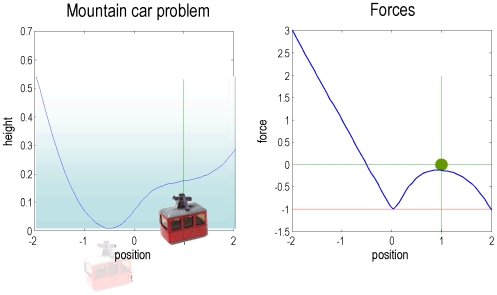
“Friston, Daunizeau, and Kiebel (2009) recognize this problem and show that indirect optimization problems like the mountain car problem can, in principle, be solved using active inference models without the need for the computational apparatus of reinforcement learning or control theory.”
BackgroundA Novel Predictive-Coding-Inspired Variational RNN Model for Online Prediction and Recognition
Ahmadi, A., & Tani, J. (2019) · Neural Computation · doi:10.1162/neco_a_01228 · Cited by 102
Reinforcement Learning through Active Inference
Tschantz, A., Millidge, B., Seth, A. K., & Buckley, C. L. (2020) · arXiv (Cornell University) · doi:10.48550/arxiv.2002.12636 · Cited by 55
“This approach has demonstrated impressive results in domains such as simulated games (Mnih et al., 2015; Silver et al., 2017), robotics (Polydoros & Nalpantidis, 2017; Nagabandi et al., 2019) and industrial applications (Meyes et al., 2017).”
pymdp: A Python library for active inference in discrete state spaces
Heins, C., Millidge, B., Demekas, D., Klein, B., Friston, K., Couzin, I. D., & Tschantz, A. (2022) · Journal of Open Source Software · doi:10.21105/joss.04098 · Cited by 70
“In reinforcement learning this is handled using reward functions but in active inference we instead specify a prior distribution over observations, also known as the ‘prior preferences’ or ‘goal distribution’ [1].”
BackgroundSelf-citationActive inference, eye movements and oculomotor delays
Perrinet, L. U., Adams, R. A., & Friston, K. J. (2014) · Biological Cybernetics · doi:10.1007/s00422-014-0620-8 · Cited by 65
“Figure 3 provides a schematic of the proposed message passing among hierarchically deployed cortical areas.”
BackgroundSelf-citationThe NOLB model: a model of the natural organization of language and the brain
Skipper, J. I. (2015) · Cambridge University Press eBooks · doi:10.1017/cbo9781107323667.006 · Cited by 73
An Active Inference view of cognitive control
Pezzulo, G. (2012) · Frontiers in Psychology · doi:10.3389/fpsyg.2012.00478 · Cited by 68
“The Active Inference framework (Friston et al., 2009; Friston, 2010) argues that the brain’s generative models continuously produce predictions and goals that guide its action (active inference) and perception (predictive coding) through free energy minimization.”
BackgroundFree Energy and Dendritic Self-Organization
Kiebel, S. J., & Friston, K. J. (2011) · Frontiers in Systems Neuroscience · doi:10.3389/fnsys.2011.00080 · Cited by 68
“Using free-energy minimization, we have shown previously that many phenomena in perception, action, and learning can be explained qualitatively in terms of Bayesian inference (Friston et al., 2009; Kiebel et al., 2009b).”
MethodSelf-citationPrediction and perception: Insights for (and from) tinnitus
Hullfish, J., Sedley, W., & Vanneste, S. (2019) · Neuroscience & Biobehavioral Reviews · doi:10.1016/j.neubiorev.2019.04.008 · Cited by 72
“We have mentioned one of these studies already (Friston et al., 2009), which claims that dopamine may not actually encode prediction errors of value (i.”
BackgroundPID Control as a Process of Active Inference with Linear Generative Models
Baltieri, M., & Buckley, C. (2019) · Entropy · doi:10.3390/e21030257 · Cited by 70
“, [6,13,14,23], where cognition and perception are presented as processes of inference to the best explanation, and agents are primarily thought to build sophisticated models of their worlds with only a secondary role for action and behaviour.”
BackgroundThe Interaction between Interoceptive and Action States within a Framework of Predictive Coding
Marshall, A. C., Gentsch, A., & Schütz-Bosbach, S. (2018) · Frontiers in Psychology · doi:10.3389/fpsyg.2018.00180 · Cited by 66
“Here, the theory of hierarchical predictive models that follow the rules of Bayesian inference was originally proposed to account for the perception of stimuli originating outside of the body (Friston, 2005; Friston et al., 2009; Adams et al., 2013).”
BackgroundMotor and Predictive Processes in Auditory Beat and Rhythm Perception
Proksch, S., Comstock, D. C., Médé, B., Pabst, A., & Balasubramaniam, R. (2020) · Frontiers in Human Neuroscience · doi:10.3389/fnhum.2020.578546 · Cited by 78
What is value—accumulated reward or evidence?
Friston, K., Adams, R., & Montague, R. (2012) · Frontiers in Neurorobotics · doi:10.3389/fnbot.2012.00011 · Cited by 67
“See Friston et al. (2009) for an example.”
BackgroundInfluentialSelf-citationDeep active inference agents using Monte-Carlo methods
Fountas, Z., Sajid, N., Mediano, P. A. M., & Friston, K. (2020) · arXiv · doi:10.48550/arxiv.2006.04176 · Cited by 64
“Recent advances have seen deep active inference agents solve more complex, continuous state-space tasks, including Doom [12], the mountain car problem [13–15], and several tasks based on the MuJoCo environment [16], many of which use amortization to scale-up active inference [13–15 , 17].”
BackgroundSelf-citationA Multi-scale View of the Emergent Complexity of Life: A Free-Energy Proposal
Hesp, C., Ramstead, M., Constant, A., Badcock, P., Kirchhoff, M., & Friston, K. (2019) · Springer Proceedings in Complexity · doi:10.1007/978-3-030-00075-2_7 · Cited by 63
Self-citationWhat does the free energy principle tell us about the brain?
Gershman, S. J. (2019) · Neurons Behavior Data analysis and Theory · doi:10.51628/001c.10839 · Cited by 74
Torrecillos, F., Albouy, P., Brochier, T. G., & Malfait, N. (2014) · Journal of Neuroscience · doi:10.1523/jneurosci.4390-13.2014 · Cited by 70
“Only recently have theoretical frameworks been developed that integrate concepts issued from both fields (Trommershäuser et al., 2008; Friston et al., 2009, 2011; Rigoux and Guigon, 2012).”
BackgroundSchiffer, A.-M., Ahlheim, C., Wurm, M. F., & Schubotz, R. I. (2012) · PLoS ONE · doi:10.1371/journal.pone.0036445 · Cited by 65
“. In close keeping with an argument put forward by Friston and colleagues”
BackgroundDivide et impera : subgoaling reduces the complexity of probabilistic inference and problem solving
Maisto, D., Donnarumma, F., & Pezzulo, G. (2015) · Journal of The Royal Society Interface · doi:10.1098/rsif.2014.1335 · Cited by 59
On the Relationship Between Active Inference and Control as Inference
Millidge, B., Tschantz, A., Seth, A. K., & Buckley, C. L. (2020) · Communications in computer and information science · doi:10.1007/978-3-030-64919-7_1 · Cited by 96
Donnarumma, F., Maisto, D., & Pezzulo, G. (2016) · PLOS Computational Biology · doi:10.1371/journal.pcbi.1004864 · Cited by 60
“A second difference with the standard PAI approach is that (akin to Active Inference theory [30]) we do not treat goals as future observations but as states having high (Bayesian) priors.”
BackgroundBayesian Learning Models of Pain: A Call to Action
Tabor, A., & Burr, C. (2019) · Current Opinion in Behavioral Sciences · doi:10.1016/j.cobeha.2018.10.006 · Cited by 57
Kiverstein, J., Miller, M., & Rietveld, E. (2020) · Neuroscience of Consciousness · doi:10.1093/nc/niaa003 · Cited by 55
Commentary: Predictions and the brain: how musical sounds become rewarding
Hansen, N. C., Dietz, M. J., & Vuust, P. (2017) · Frontiers in Human Neuroscience · doi:10.3389/fnhum.2017.00168 · Cited by 59
“Friston and colleagues propose that RPE represents mere surface manifestations of more fundamental computations in the brain (Friston et al., 2009).”
Unifying treatments for depression: an application of the free energy principle
Chekroud, A. M. (2015) · Frontiers in Psychology · doi:10.3389/fpsyg.2015.00153 · Cited by 55
“This process—whereby an agent selectively samples the sensory inputs that it expects—is known as active inference (Friston et al., 2009; Friston and Kiebel, 2009).”
BackgroundCollective behavior from surprise minimization
Heins, C., Millidge, B., Da Costa, L., Mann, R. P., Friston, K. J., & Couzin, I. D. (2024) · Proceedings of the National Academy of Sciences · doi:10.1073/pnas.2320239121 · Cited by 55
Self-citationWhy should any body have a self?
Hohwy, J., & Michael, J. (2017) · doi:10.31234/osf.io/fm4cr · Cited by 54
Bayesian inference, predictive coding and delusions
Adams, R. A., Brown, H. R., & Friston, K. J. (2014) · AVANT. The Journal of the Philosophical-Interdisciplinary Vanguard · doi:10.26913/50302014.0112.0004 · Cited by 51
“In short, active inference can be regarded as equipping a generalised predictive coding scheme with classical reflex arcs: see Friston et al. (2010), Friston et al. (2009) and Adams et al. (2012) for details.”
BackgroundSelf-citationPrecise Worlds for Certain Minds: An Ecological Perspective on the Relational Self in Autism
Constant, A., Bervoets, J., Hens, K., & Van de Cruys, S. (2020) · Topoi · doi:10.1007/s11245-018-9546-4 · Cited by 47
Centre-surround organization of fast sensorimotor integration in human motor hand area
Dubbioso, R., Raffin, E., Karabanov, A. N., Thielscher, A., & Siebner, H. R. (2017) · NeuroImage · doi:10.1016/j.neuroimage.2017.06.063 · Cited by 54
“Somatosensory inputs inform both, reflexive and volitional actions (Friston and Kiebel, 2009; Friston et al., 2009; Hommel, 2009).”
Active inference and the anatomy of oculomotion
Parr, T., & Friston, K. J. (2018) · Neuropsychologia · doi:10.1016/j.neuropsychologia.2018.01.041 · Cited by 51
“We aim to characterise the functional anatomy of eye movement control by appealing to active inference, a principled approach to describing Bayes optimal behaviour (Friston et al., 2009).”
BackgroundMethodSelf-citationMurata, S., Yamashita, Y., Arie, H., Ogata, T., Sugano, S., & Tani, J. (2015) · IEEE Transactions on Neural Networks and Learning Systems · doi:10.1109/tnnls.2015.2492140 · Cited by 61
“As an alternative mechanism to the sensory reflex, we proposed a novel ERS, which can be considered as an extension of the predictive coding schemes used in RNNPB [5], [7] and active inference [9]–[11], for revising the slow dynamics in a forcible manner by means of propagating precision-weighted prediction errors fro…”
MethodLiving models or life modelled? On the use of models in the free energy principle
van Es, T. (2020) · Adaptive Behavior · doi:10.1177/1059712320918678 · Cited by 63
Effects of Category-Specific Costs on Neural Systems for Perceptual Decision-Making
Fleming, S. M., Whiteley, L., Hulme, O. J., Sahani, M., & Dolan, R. J. (2010) · Journal of Neurophysiology · doi:10.1152/jn.01084.2009 · Cited by 45
“A recent theoretical suggestion holds that cost functions and priors perform a common role in perceptual inference (Friston et al. 2009), relying on backward communication of expectations.”
Epistemic Communities under Active Inference
Albarracin, M., Demekas, D., Ramstead, M. J. D., & Heins, C. (2022) · Entropy · doi:10.3390/e24040476 · Cited by 60
“By performing inference with respect to both hidden environment states of the world and the consequences of their own actions, active inference agents can evince behaviour that both (1) achieves their goals or fulfils preferences and (2) actively reduces uncertainty in the agent’s world model [86,97,115].”
Background
Metadata
- Authors
- Friston, K. J., Daunizeau, J., & Kiebel, S. J.
- Affiliations
- Wellcome Centre for Human Neuroimaging (GB)
- Corresponding author
- Friston, Karl J.
- Venue
- PLoS ONE
- Publisher
- Public Library of Science (PLoS)
- Published
- 2009-07-29
- Volume
- 4
- Issue
- 7
- Pages
- e6421
- ISSN
- 1932-6203 (ISSN-L)
- PMC
- PMC2713351
- OpenAlex
- W2137411342
- Cited by
- 443
- References
- 67
- Citations by year
- 2026: 26 · 2025: 30 · 2024: 43 · 2023: 37 · 2022: 42 · 2021: 36 · 2020: 45 · 2019: 38 · 2018: 25 · 2017: 19 · 2016: 14 · 2015: 15 · 2014: 20 · 2013: 12 · 2012: 18
- FWCI
- 6.64
- Type
- journal article
- Language
- en
- Open access
- gold
- doi.org
- Locations
- PLoS ONE (publishedVersion, cc-by)
- Europe PMC (PubMed Central) (publishedVersion, cc-by)
- PubMed Central (publishedVersion, cc-by)
- PubMed (publishedVersion)
- Zurich Open Repository and Archive (University of Zurich) (acceptedVersion, cc-by)
- RePEc: Research Papers in Economics (submittedVersion)
- DOAJ (DOAJ: Directory of Open Access Journals) (submittedVersion, cc-by-sa)
- UCL Discovery (University College London) (submittedVersion)
- Max Planck Digital Library (submittedVersion, other-oa)
- MPG.PuRe (Max Planck Society) (submittedVersion, other-oa)
- Zurich Open Repository and Archive (University of Zurich) (submittedVersion, cc-by)
- Zurich Open Repository and Archive (University of Zurich)
- Funders
- Wellcome Trust (WT056750, 088130)
- Topics
- Life Sciences › Neuroscience › Cognitive Neuroscience › Embodied and Extended Cognition
- Physical Sciences › Computer Science › Artificial Intelligence › Reinforcement Learning in Robotics
- Social Sciences › Arts and Humanities › Philosophy › Free Will and Agency
- Keywords
- free energy principle, active inference, reinforcement learning, active perception, causal discovery, self-supervised learning, dynamic programming, mountain car problem, dopamine, perception and action
- MeSH terms
- Humans, Learning, Models, Theoretical
About these checks
Registry, retraction, Cites and statistics results are computed, not judged, with one exception: a printed reference that no index lists is read once by a model before it counts as a citation error. Claims are extracted by a model and kept only when their quote appears verbatim in the text; each cited source is then checked, with a model’s help, for whether it says what the claim relies on. Those verdicts can be wrong — read the claim’s quote and the cited source before relying on one.
Statistics and arithmetic are recomputed, not judged.
Confidence bands are shown only for fields calibrated on our annotated test set. None is calibrated yet, so no band is shown.
What counts as a claim ›How we measure confidence ›How we check this ›
Are you an author, or do you see a problem with this page? Request a review
Data sources
Bibliographic data: Semantic Scholar, OpenAlex, Crossref.
Contains information from the Semantic Scholar Academic Graph Datasets, made available under the ODC Attribution License (ODC-BY 1.0).
Semantic Scholar’s data is described in: Kinney, R., et al. (2023). The Semantic Scholar Open Data Platform. arXiv:2301.10140.
