

The DOI matches its Crossref record; 54 of the 54 references it cites were found in a registry or an index.
Estrogen Regulates Estrogen Receptors and Antioxidant Gene Expression in Mouse Skeletal Muscle
Open accessAbstract
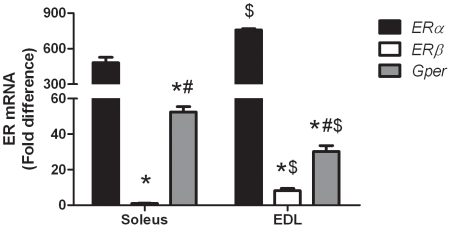
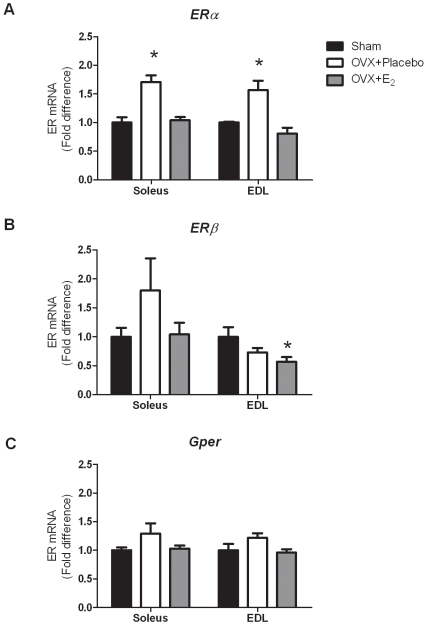
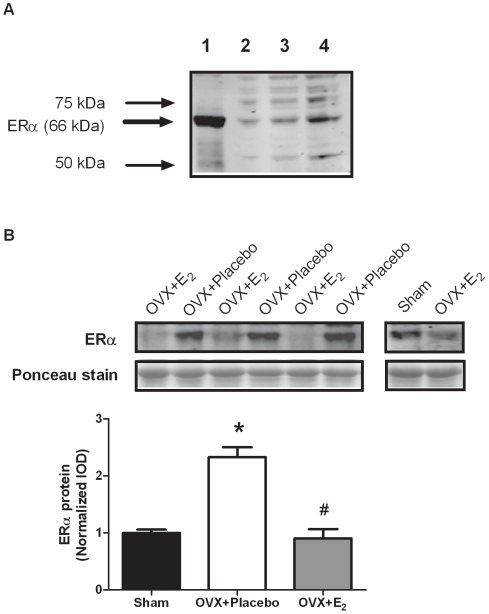
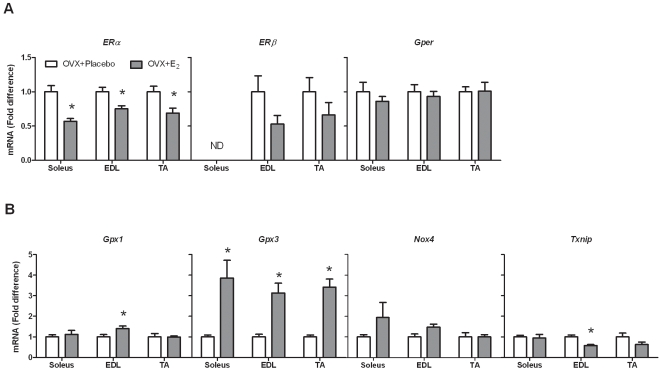
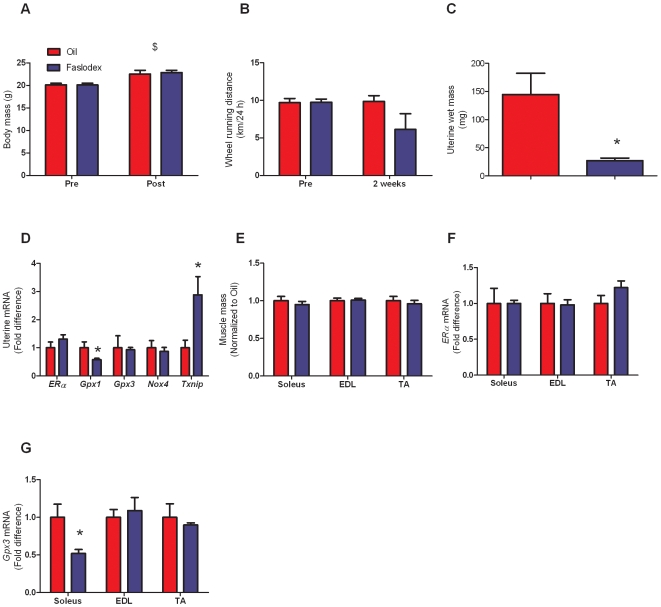
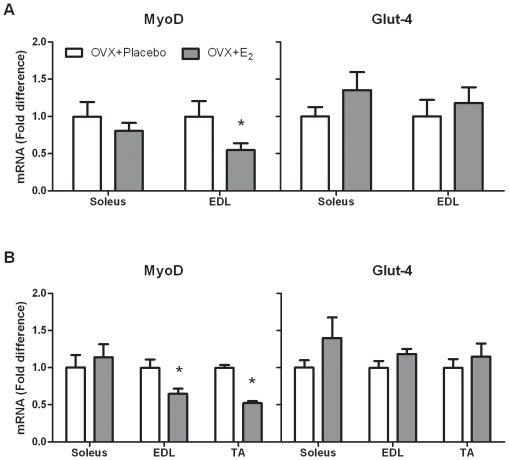
BACKGROUND: Estrogens are associated with the loss of skeletal muscle strength in women with age. Ovarian hormone removal by ovariectomy in mice leads to a loss of muscle strength, which is reversed with 17beta-estradiol replacement. Aging is also associated with an increase in antioxidant stress, and estrogens can improve antioxidant status via their interaction with estrogen receptors (ER) to regulate antioxidant gene expression. The purpose of this study was to determine if ER and antioxidant gene expression in skeletal muscle are responsive to changes in circulating estradiol, and if ERs regulate antioxidant gene expression in this tissue. METHODOLOGY/PRINCIPAL FINDINGS: Adult C57BL/6 mice underwent ovariectomies or sham surgeries to remove circulating estrogens. These mice were implanted with placebo or 17beta-estradiol pellets acutely or chronically. A separate experiment examined mice that received weekly injections of Faslodex to chronically block ERs. Skeletal muscles were analyzed for expression of ER genes and proteins and antioxidant genes. ERalpha was the most abundant, followed by Gper and ERbeta in both soleus and EDL muscles. The loss of estrogens through ovariectomy induced ERalpha gene and protein expression in the soleus, EDL, and TA muscles at both the acute and chronic time points. Gpx3 mRNA was also induced both acutely and chronically in all 3 muscles in mice receiving 17beta-estradiol. When ERs were blocked using Faslodex, Gpx3 mRNA was downregulated in the soleus muscle, but not the EDL and TA muscles. CONCLUSIONS/SIGNIFICANCE: These data suggest that Gpx3 and ERalpha gene expression are sensitive to circulating estrogens in skeletal muscle. ERs may regulate Gpx3 gene expression in the soleus muscle, but skeletal muscle regulation of Gpx3 via ERs is dependent upon muscle type. Further work is needed to determine the indirect effects of estrogen and ERalpha on Gpx3 expression in skeletal muscle, and their importance in the aging process.
Overview
The claims and statistics of this paper haven’t been checked yet.
Run the check — free, no account needed. It reads the open-access text and checks the sources it cites.
Integrity signals
Registry
Cites
Statistics
Figures
Verification
Claims the paper makes
The claims and statistics of this paper haven’t been checked yet.
Run the check — free, no account needed. It reads the open-access text and checks the sources it cites.
Claims other papers make about this one
Each is checked against this paper’s own text: does it say what the citing paper says it does?
In the citing paper
“Skeletal muscle is an estrogen-responsive tissue such that estrogen receptor (ER) mRNA and protein levels change with circulating estrogen levels (7).”
From Sex-Based Differences in Skeletal Muscle Kinetics and Fiber-Type Composition (2015) · cites this paper as [7]
In the citing paper
“OVX leads to an increase in overall body weight and muscle weight (68), and a 70% increase in ERα mRNA with no change in ERβ mRNA (7).”
From Sex-Based Differences in Skeletal Muscle Kinetics and Fiber-Type Composition (2015) · cites this paper as [7]
Self-check
Percentages, sums and reported differences re-computed from the paper’s own numbers.
The self-check needs the paper’s full text.
Citations
Cites
Analysis of Relative Gene Expression Data Using Real-Time Quantitative PCR and the 2−ΔΔCT Method
Livak, K. J., & Schmittgen, T. D. (2001) · Methods · doi:10.1006/meth.2001.1262 · Cited by 180,860
Couse, J. F., Lindzey, J., Grandien, K., Gustafsson, J.-A., & Korach, K. S. (1997) · Endocrinology · doi:10.1210/endo.138.11.5496 · Cited by 978
Carmeci, C., Thompson, D. A., Ring, H. Z., Francke, U., & Weigel, R. J. (1997) · Genomics · doi:10.1006/geno.1997.4972 · Cited by 590
Modulation of Antioxidant Enzyme Expression and Function by Estrogen
Strehlow, K., Rotter, S., Wassmann, S., Adam, O., Grohé, C., Laufs, K., Böhm, M., & Nickenig, G. (2003) · Circulation Research · doi:10.1161/01.res.0000082334.17947.11 · Cited by 483 · cited 1×
“Ovariectomized mice have lower levels of many antioxidant enzymes in the heart, including glutathione peroxidase, catalase, and superoxide dismutase [21,22].”
BackgroundGlutathione peroxidases and redox-regulated transcription factors
Brigelius‐Flohé, R. (2006) · Biological Chemistry · doi:10.1515/bc.2006.166 · Cited by 361
Mechanisms of estrogen signaling and gene expression via GPR30
Prossnitz, E. R., & Maggiolini, M. (2009) · Molecular and Cellular Endocrinology · doi:10.1016/j.mce.2009.03.026 · Cited by 346
Ogawa, S., Chan, J., Gustafsson, J.-A., Korach, K. S., & Pfaff, D. W. (2003) · Endocrinology · doi:10.1210/en.2002-220519 · Cited by 275
Hormone Therapy and Skeletal Muscle Strength: A Meta-Analysis
Greising, S. M., Baltgalvis, K. A., Lowe, D. A., & Warren, G. L. (2009) · The Journals of Gerontology Series A · doi:10.1093/gerona/glp082 · Cited by 252
Self-citationAge-related muscle dysfunction
Thompson, L. V. (2009) · Experimental Gerontology · doi:10.1016/j.exger.2008.05.003 · Cited by 226
Owman, C., Blay, P., Nilsson, C., & Lolait, S. J. (1996) · Biochemical and Biophysical Research Communications · doi:10.1006/bbrc.1996.1654 · Cited by 224
Cited by
Sorted by citations
The role of estrogens in control of energy balance and glucose homeostasis
Mauvais-Jarvis, F., Clegg, D. J., & Hevener, A. L. (2013) · Endocrine Reviews · doi:10.1210/er.2012-1055 · Cited by 1,329
Lonardo, A., Nascimbeni, F., Ballestri, S., Fairweather, D., Win, S., Than, T. A., Abdelmalek, M. F., & Suzuki, A. (2019) · Hepatology · doi:10.1002/hep.30626 · Cited by 1,095
McNulty, K. L., Elliott-Sale, K. J., Dolan, E., Swinton, P. A., Ansdell, P., Goodall, S., Thomas, K., & Hicks, K. M. (2020) · Sports Medicine · doi:10.1007/s40279-020-01319-3 · Cited by 812
Sex-Based Differences in Skeletal Muscle Kinetics and Fiber-Type Composition
Haizlip, K. M., Harrison, B. C., & Leinwand, L. A. (2015) · Physiology · doi:10.1152/physiol.00024.2014 · Cited by 521
The role of androgens and estrogens on healthy aging and longevity
Horstman, A. M., Dillon, E. L., Urban, R. J., & Sheffield-Moore, M. (2012) · The Journals of Gerontology Series A: Biological Sciences and Medical Sciences · doi:10.1093/gerona/gls068 · Cited by 396
Metadata
- Authors
- Baltgalvis, K. A., Greising, S. M., Warren, G. L., & Lowe, D. A.
- Affiliations
- University of Minnesota (US)
- Georgia State University (US)
- Corresponding author
- Baltgalvis, Kristen A.
- Venue
- PLoS ONE
- Publisher
- Public Library of Science (PLoS)
- Published
- 2010-04-13
- Volume
- 5
- Issue
- 4
- Pages
- e10164
- ISSN
- 1932-6203 (ISSN-L)
- PMC
- PMC2854140
- OpenAlex
- W2083315142
- Cited by
- 192
- References
- 54
- Citations by year
- 2026: 9 · 2025: 13 · 2024: 16 · 2023: 11 · 2022: 18 · 2021: 11 · 2020: 10 · 2019: 15 · 2018: 12 · 2017: 7 · 2016: 15 · 2015: 13 · 2014: 8 · 2013: 12 · 2012: 11
- FWCI
- 6.11
- Type
- journal article
- Language
- en
- Open access
- gold
- doi.org
- Locations
- PLoS ONE (publishedVersion, cc-by)
- PubMed Central (publishedVersion, cc-by)
- PubMed (publishedVersion)
- Digital Archive @ GSU (submittedVersion, cc-by)
- DOAJ (DOAJ: Directory of Open Access Journals) (submittedVersion, cc-by-sa)
- Counseling And Psychological Services Dissertations (Georgia State University) (submittedVersion, cc-by)
- Funders
- National Institutes of Health
- National Institute on Aging (K02AG036827, R01AG031743)
- Topics
- Life Sciences › Biochemistry, Genetics and Molecular Biology › Endocrinology › Estrogen and related hormone effects
- Life Sciences › Biochemistry, Genetics and Molecular Biology › Molecular Biology › Muscle Physiology and Disorders
- Health Sciences › Medicine › Physiology (medical) › Exercise and Physiological Responses
- Keywords
- estrogen, estrogen receptor, estrogen receptor alpha, estrogen receptor beta, G protein-coupled estrogen receptor, antioxidant gene expression, glutathione peroxidase 3, skeletal muscle, ovariectomy, estradiol, fulvestrant, muscle aging, soleus muscle, muscle fiber type, oxidative stress
- MeSH terms
- Aging, Animals, Antioxidants, Estradiol, Estrogens, Female, Gene Expression Regulation, Glutathione Peroxidase, Mice, Inbred C57BL, Receptors, Estrogen, Muscle, Skeletal, Estrogen Receptor alpha, Mice
About these checks
Registry, retraction, Cites and statistics results are computed, not judged, with one exception: a printed reference that no index lists is read once by a model before it counts as a citation error. Claims are extracted by a model and kept only when their quote appears verbatim in the text; each cited source is then checked, with a model’s help, for whether it says what the claim relies on. Those verdicts can be wrong — read the claim’s quote and the cited source before relying on one.
Statistics and arithmetic are recomputed, not judged.
Confidence bands are shown only for fields calibrated on our annotated test set. None is calibrated yet, so no band is shown.
What counts as a claim ›How we measure confidence ›How we check this ›
Are you an author, or do you see a problem with this page? Request a review
