

The DOI matches its Crossref record; 36 of the 37 references it cites were found in a registry or an index.
Prestige Affects Cultural Learning in Chimpanzees
Open accessAbstract
Humans follow the example of prestigious, high-status individuals much more readily than that of others, such as when we copy the behavior of village elders, community leaders, or celebrities. This tendency has been declared uniquely human, yet remains untested in other species. Experimental studies of animal learning have typically focused on the learning mechanism rather than on social issues, such as who learns from whom. The latter, however, is essential to understanding how habits spread. Here we report that when given opportunities to watch alternative solutions to a foraging problem performed by two different models of their own species, chimpanzees preferentially copy the method shown by the older, higher-ranking individual with a prior track-record of success. Since both solutions were equally difficult, shown an equal number of times by each model and resulted in equal rewards, we interpret this outcome as evidence that the preferred model in each of the two groups tested enjoyed a significant degree of prestige in terms of whose example other chimpanzees chose to follow. Such prestige-based cultural transmission is a phenomenon shared with our own species. If similar biases operate in wild animal populations, the adoption of culturally transmitted innovations may be significantly shaped by the characteristics of performers.
Overview
The claims and statistics of this paper haven’t been checked yet.
Run the check — free, no account needed. It reads the open-access text and checks the sources it cites.
Integrity signals
Registry
Cites
Statistics
Figures
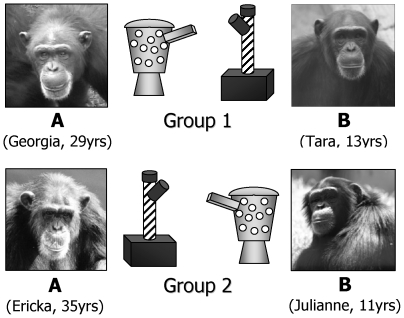
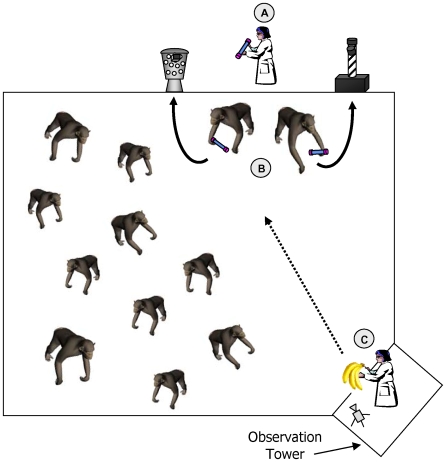
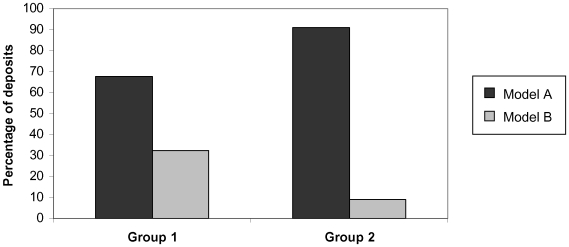
Verification
Claims the paper makes
The claims and statistics of this paper haven’t been checked yet.
Run the check — free, no account needed. It reads the open-access text and checks the sources it cites.
Claims other papers make about this one
Each is checked against this paper’s own text: does it say what the citing paper says it does?
The source backs part of the claim, not all of it — or backs it for a different population, condition or comparison.
In the citing paper
“In human and animal cultural accumulation, this selection is instead learned through prestige cues Barkow et al. [1975], Horner et al. [2010].”
From Artificial Generational Intelligence: Cultural Accumulation in Reinforcement Learning (2024) · cites this paper as Horner et al. [2010]
Experimental — accuracy not yet measured
Self-check
Percentages, sums and reported differences re-computed from the paper’s own numbers.
The self-check needs the paper’s full text.
Citations
Cites
Henrich, J., & Gil-White, F. J. (2001) · Evolution and Human Behavior · doi:10.1016/s1090-5138(00)00071-4 · Cited by 2,500 · cited 4×
“Previous discussions of model preference by non-humans have argued that dominant individuals may be copied by subordinates due to fear of aggression, rather than as a result of freely conferred prestige [25].”
BackgroundInfluentialWhiten, A., Goodall, J., McGrew, W. C., Nishida, T., Reynolds, V., Sugiyama, Y., Tutin, C. E. G., Wrangham, R. W., & Boesch, C. (1999) · Nature · doi:10.1038/21415 · Cited by 2,448
Self-citationLaland, K. N. (2004) · Learning & Behavior · doi:10.3758/bf03196002 · Cited by 1,551
Coevolution: genes, culture, and human diversity
(1992) · Choice Reviews Online · doi:10.5860/choice.29-6353 · Cited by 1,259
Coevolution: Genes, Culture, and Human Diversity
Durham, W. H. (1991) · doi:10.1515/9781503621534 · Cited by 1,117
McGrew, W. C. (1992) · Cambridge University Press eBooks · doi:10.1017/cbo9780511565519 · Cited by 971
Chimpanzee material culture: implications for human evolution
McGrew, W. C. (1993) · Choice Reviews Online · doi:10.5860/choice.31-0304 · Cited by 856
Conformity to cultural norms of tool use in chimpanzees
Whiten, A., Horner, V., & de Waal, F. Β. Μ. (2005) · Nature · doi:10.1038/nature04047 · Cited by 786
Self-citationPrimate Origins of Human Cognition and Behavior
Matsuzawa, T. (2001) · Springer eBooks · doi:10.1007/978-4-431-09423-4 · Cited by 743
On the relation between social dynamics and social learning
Coussi-Korbel, S., & Fragaszy, D. M. (1995) · Animal Behaviour · doi:10.1016/0003-3472(95)80001-8 · Cited by 561
Biro, D., Inoue‐Nakamura, N., Tonooka, R., Yamakoshi, G., Sousa, C., & Matsuzawa, T. (2003) · Animal Cognition · doi:10.1007/s10071-003-0183-x · Cited by 530
The social group of wild chimpanzees in the Mahali Mountains
Nishida, T. (1968) · Primates · doi:10.1007/bf01730971 · Cited by 524
Conditions of innovative behaviour in primates
Kummer, H., & Goodall, J. R. (1985) · Philosophical transactions of the Royal Society of London. Series B, Biological sciences · doi:10.1098/rstb.1985.0020 · Cited by 468
Attention Structure as the Basis of Primate Rank Orders
Chance, M. R. A. (1967) · Man · doi:10.2307/2799336 · Cited by 397
Boesch, C., & Tomasello, M. (1998) · Current Anthropology · doi:10.1086/204785 · Cited by 356
The ape and the sushi master: cultural reflections by a primatologist
(2001) · Choice Reviews Online · doi:10.5860/choice.39-0319 · Cited by 310
Primate Innovation: Sex, Age and Social Rank Differences
Reader, S. M., & Laland, K. N. (2001) · International Journal of Primatology · doi:10.1023/a:1012069500899 · Cited by 298
Prestige and Culture: A Biosocial Interpretation [and Comments and Replies]
Barkow, J. H., Akiwowo, A. A., Barua, T. K., Chance, M. R. A., Chapple, E. D., Chattopadhyay, G. P., Freedman, D. G., Geddes, W. R., Goswami, B. B., Isichei, P. A. C., et al. (1975) · Current Anthropology · doi:10.1086/201619 · Cited by 288
Horner, V., Whiten, A., Flynn, E., & de Waal, F. Β. Μ. (2006) · Proceedings of the National Academy of Sciences · doi:10.1073/pnas.0606015103 · Cited by 264
Self-citationThe Ape And The Sushi Master: Cultural Reflections Of A Primatologist
de Waal, F. Β. Μ. (2008) · Medical Entomology and Zoology · Cited by 261
What makes us human (Homo sapiens)? The challenge of cognitive cross-species comparison.
Boesch, C. (2007) · Journal of comparative psychology · doi:10.1037/0735-7036.121.3.227 · Cited by 259
Emergence of Culture in Wild Chimpanzees: Education by Master-Apprenticeship
Matsuzawa, T., Biro, D., Humle, T., Inoue‐Nakamura, N., Tonooka, R., & Yamakoshi, G. (2008) · Springer eBooks · doi:10.1007/978-4-431-09423-4_28 · Cited by 240
Menzel, E. W. (1973) · Medical Entomology and Zoology · Cited by 201
Ottoni, E., de Resende, B. D., & Izar, P. (2005) · Animal Cognition · doi:10.1007/s10071-004-0245-8 · Cited by 195
Foraging strategies as a function of season and rank among wild female chimpanzees (Pan troglodytes)
Murray, C. M., Eberly, L. E., & Pusey, A. E. (2006) · Behavioral Ecology · doi:10.1093/beheco/arl042 · Cited by 162
Chimpanzees (Pan troglodytes) and the question of cumulative culture: an experimental approach
Marshall‐Pescini, S., & Whiten, A. (2008) · Animal Cognition · doi:10.1007/s10071-007-0135-y · Cited by 161
Self-citationHrubesch, C., Preuschoft, S., & van Schaik, C. P. (2008) · Animal Cognition · doi:10.1007/s10071-008-0183-y · Cited by 157
Phylogenetic analyses of behavior support existence of culture among wild chimpanzees
Lycett, S. J., Mark Collard, A., & McGrew, W. C. (2007) · Proceedings of the National Academy of Sciences · doi:10.1073/pnas.0707930104 · Cited by 148
Spread of arbitrary conventions among chimpanzees: a controlled experiment
Bonnie, K., Horner, V., Whiten, A., & de Waal, F. D. (2007) · Proceedings of the Royal Society of London. Biological Sciences · doi:10.1098/rspb.2006.3733 · Cited by 135
Self-citationWhy Don't Chimpanzees in Gabon Crack Nuts?
McGrew, W. C., Ham, R., WHITE, L. J. T., Tutin, C. E. G., & Fernandez, M. (1997) · International Journal of Primatology · doi:10.1023/a:1026382316131 · Cited by 126
Innovation in wild chimpanzees (Pan troglodytes)
Boesch, C. (1995) · International Journal of Primatology · doi:10.1007/bf02700150 · Cited by 114
Nishida, T., Matsusaka, T., & McGrew, W. C. (2009) · Primates · doi:10.1007/s10329-008-0109-y · Cited by 104
Bonnie, K. E., & de Waal, F. Β. Μ. (2005) · Primates · doi:10.1007/s10329-005-0141-0 · Cited by 104
Self-citationFeeding behaviour of wild chimpanzees : A preliminary report
Goodall, J. (1963) · Medical Entomology and Zoology · Cited by 99
Pongrácz, P., Vida, V., Bánhegyi, P., & Miklósi, Á. (2007) · Animal Cognition · doi:10.1007/s10071-007-0090-7 · Cited by 94
Comparing Social Skills of Children and Apes
de Waal, F. Β. Μ., Boesch, C., Horner, V., & Whiten, A. (2008) · Science · doi:10.1126/science.319.5863.569c · Cited by 41
Self-citation
Cited by
Sorted by citations
Social Learning Strategies: Bridge-Building between Fields
Kendal, R. L., Boogert, N. J., Rendell, L. E., Laland, K. N., Webster, M., & Jones, P. L. (2018) · Trends in Cognitive Sciences · doi:10.1016/j.tics.2018.04.003 · Cited by 663
Cognitive culture: theoretical and empirical insights into social learning strategies
Rendell, L., Fogarty, L., Hoppitt, W. J. E., Morgan, T. J. H., Webster, M. M., & Laland, K. N. (2011) · Trends in Cognitive Sciences · doi:10.1016/j.tics.2010.12.002 · Cited by 549
The evolutionary basis of human social learning
Morgan, T., Rendell, L., Ehn, M., Hoppitt, W., & Laland, K. (2012) · Proceedings of the Royal Society of London. Biological Sciences · doi:10.1098/rspb.2011.1172 · Cited by 350
Chudek, M., Heller, S.-G., Birch, S. A. J., & Henrich, J. (2012) · Evolution and Human Behavior · doi:10.1016/j.evolhumbehav.2011.05.005 · Cited by 315
Hobaiter, C., Poisot, T., Zuberbühler, K., Hoppitt, W., & Gruber, T. (2014) · PLoS Biology · doi:10.1371/journal.pbio.1001960 · Cited by 324
Metadata
- Authors
- Horner, V., Proctor, D., Bonnie, K. E., Whiten, A., & de Waal, F. B. M.
- Affiliations
- Emory University (US)
- Beloit College (US)
- University of St Andrews (GB)
- Corresponding author
- Horner, Victoria
- Venue
- PLoS ONE
- Publisher
- Public Library of Science (PLoS)
- Published
- 2010-05-19
- Volume
- 5
- Issue
- 5
- Pages
- e10625
- ISSN
- 1932-6203 (ISSN-L)
- PMC
- PMC2873264
- OpenAlex
- W2137020248
- Cited by
- 245
- References
- 37
- Citations by year
- 2026: 7 · 2025: 5 · 2024: 23 · 2023: 10 · 2022: 14 · 2021: 15 · 2020: 39 · 2019: 16 · 2018: 20 · 2017: 15 · 2016: 13 · 2015: 20 · 2014: 14 · 2013: 11 · 2012: 9
- FWCI
- 14.87
- Type
- journal article
- Language
- en
- Open access
- gold
- doi.org
- Locations
- PLoS ONE (publishedVersion, cc-by)
- PubMed Central (publishedVersion, cc-by)
- PubMed (publishedVersion)
- Figshare (submittedVersion, cc-by)
- DOAJ (DOAJ: Directory of Open Access Journals) (submittedVersion, cc-by-sa)
- St Andrews Research Repository (St Andrews Research Repository) (submittedVersion, cc-by)
- Funders
- Emory University
- Leverhulme Trust
- National Institutes of Health (RR‐00165)
- Yerkes National Primate Research Center, Emory University (-00165, RR 00165)
- National Center for Research Resources (RR-00 165, P51RR000165)
- Topics
- Life Sciences › Agricultural and Biological Sciences › Ecology, Evolution, Behavior and Systematics › Primate Behavior and Ecology
- Social Sciences › Cultural Studies › Language and cultural evolution
- Social Sciences › Psychology › Developmental and Educational Psychology › Child and Animal Learning Development
- Keywords
- prestige bias, cultural learning, chimpanzees, social learning, cultural transmission, foraging behavior, social status, imitation, animal cognition
- MeSH terms
- Animals, Pan troglodytes, Culture, Humans, Learning, Models, Psychological, Social Dominance
About these checks
Registry, retraction, Cites and statistics results are computed, not judged, with one exception: a printed reference that no index lists is read once by a model before it counts as a citation error. Claims are extracted by a model and kept only when their quote appears verbatim in the text; each cited source is then checked, with a model’s help, for whether it says what the claim relies on. Those verdicts can be wrong — read the claim’s quote and the cited source before relying on one.
Statistics and arithmetic are recomputed, not judged.
Confidence bands are shown only for fields calibrated on our annotated test set. None is calibrated yet, so no band is shown.
What counts as a claim ›How we measure confidence ›How we check this ›
Are you an author, or do you see a problem with this page? Request a review
