

Women Have Higher Protein Content of β-Oxidation Enzymes in Skeletal Muscle than Men
Open accessThe DOI matches its Crossref record; 65 of the 66 references it cites were found in a registry or an index.
Abstract
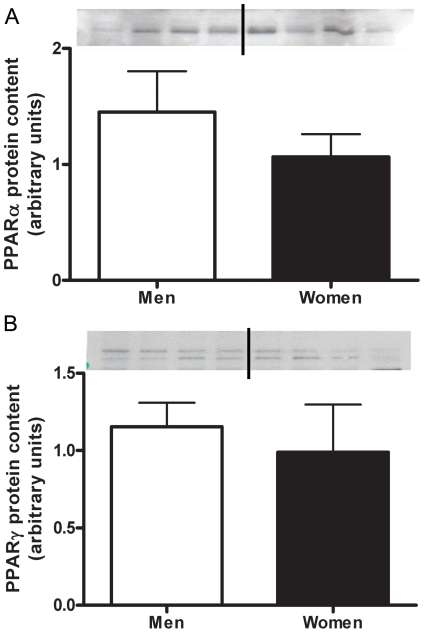
It is well recognized that compared with men, women have better ultra-endurance capacity, oxidize more fat during endurance exercise, and are more resistant to fat oxidation defects i.e. diet-induced insulin resistance. Several groups have shown that the mRNA and protein transcribed and translated from genes related to transport of fatty acids into the muscle are greater in women than men; however, the mechanism(s) for the observed sex differences in fat oxidation remains to be determined. Muscle biopsies from the vastus lateralis were obtained from moderately active men (N=12) and women (N=11) at rest to examine mRNA and protein content of genes involved in lipid oxidation. Our results show that women have significantly higher protein content for tri-functional protein alpha (TFPalpha), very long chain acyl-CoA dehydrogenase (VLCAD), and medium chain acyl-CoA dehydrogenase (MCAD) (P<0.05). There was no significant sex difference in the expression of short-chain hydroxyacyl-CoA dehydrogenase (SCHAD), or peroxisome proliferator activated receptor alpha (PPARalpha), or PPARgamma, genes potentially involved in the transcriptional regulation of lipid metabolism. In conclusion, women have more protein content of the major enzymes involved in long and medium chain fatty acid oxidation which could account for the observed differences in fat oxidation during exercise.
Overview
The claims and statistics of this paper haven’t been checked yet.
Free: it reads the open-access text and checks the first 5 claims that cite a source we can check. Create a free account to check every claim.
Integrity signals
Registry
Cites
Statistics
Figures
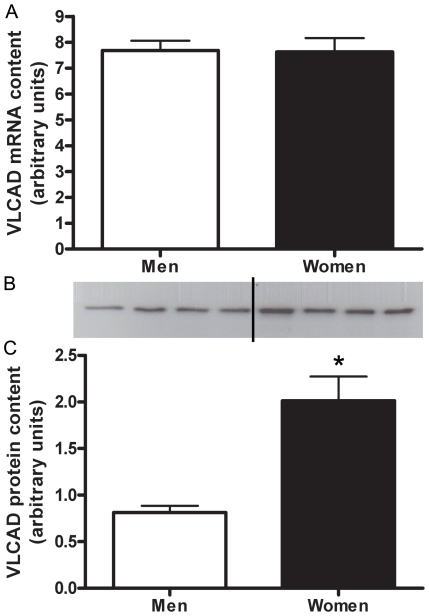
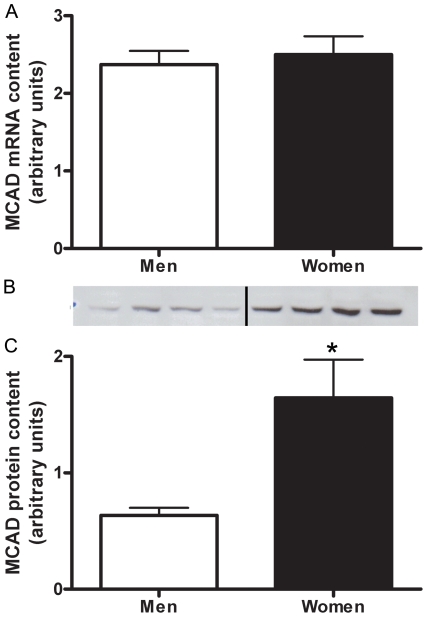
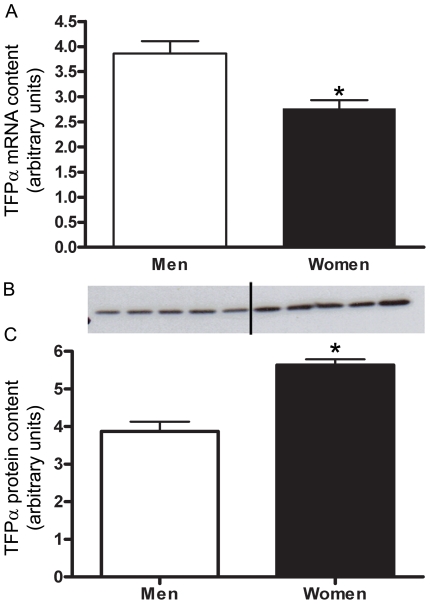
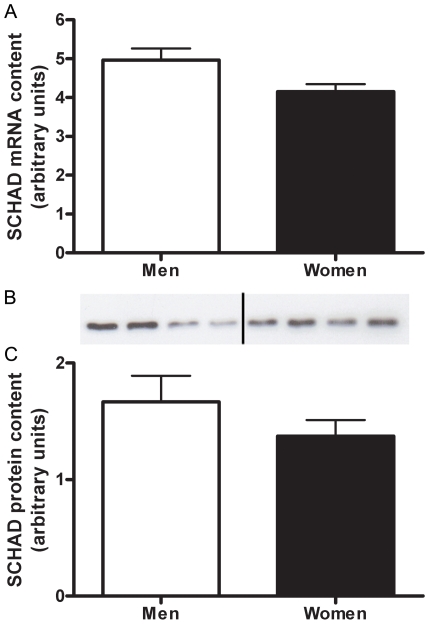
Verification
Claims the paper makes
The claims and statistics of this paper haven’t been checked yet.
Free: it reads the open-access text and checks the first 5 claims that cite a source we can check. Create a free account to check every claim.
Claims other papers make about this one
Each is checked against this paper’s own text: does it say what the citing paper says it does?
The source backs part of the claim, not all of it — or backs it for a different population, condition or comparison.
In the citing paper
“Additionally, beta-oxidative proteins that oxidize LCFA oxidation have been shown to be regulated in part by estrogen [54, 60].”
From Understanding the factors that effect maximal fat oxidation. (2018) · cites this paper as [54]
Experimental — accuracy not yet measuredThe source backs part of the claim, not all of it — or backs it for a different population, condition or comparison.
In the citing paper
“The sex differences in fat oxidation [58, 59] during exercise is attributed to the increased circulation of estrogens [53, 54, 60].”
From Understanding the factors that effect maximal fat oxidation. (2018) · cites this paper as [54]
Experimental — accuracy not yet measuredThe source backs part of the claim, not all of it — or backs it for a different population, condition or comparison.
In the citing paper
“Variability in FAox owing to sex exist due to the inherent hormonal differences specific to men and women [53–56].”
From Understanding the factors that effect maximal fat oxidation. (2018) · cites this paper as [54]
Experimental — accuracy not yet measuredThe source backs part of the claim, not all of it — or backs it for a different population, condition or comparison.
In the citing paper
“The result of increased beta-oxidative proteins is directly related to increased FAox potential [29, 54].”
From Understanding the factors that effect maximal fat oxidation. (2018) · cites this paper as [54]
Experimental — accuracy not yet measured
Self-check
Percentages, sums and reported differences re-computed from the paper’s own numbers.
The self-check needs the paper’s full text.
Citations
Cites
Analysis of Relative Gene Expression Data Using Real-Time Quantitative PCR and the 2−ΔΔCT Method
Livak, K. J., & Schmittgen, T. D. (2001) · Methods · doi:10.1006/meth.2001.1262 · Cited by 180,860 · cited 1×
“Statistical analyses of mRNA expression of the genes were performed by subtracting the linear CT (2) of the house keeping gene (b2-M) from the linear CT of gene of question [30].”
MethodTable of nonprotein respiratory quotient: an update.
Péronnet, F., & Massicotte, D. (1991) · PubMed · Cited by 1,502
Peroxisome proliferator-activated receptor a target genes
Mandard, S., M�ller, M., & Kersten, S. (2004) · Cellular and Molecular Life Sciences (CMLS) · doi:10.1007/s00018-003-3216-3 · Cited by 1,218
Vega, R. B., Huss, J. M., & Kelly, D. P. (2000) · Molecular and Cellular Biology · doi:10.1128/mcb.20.5.1868-1876.2000 · Cited by 1,195 · cited 1×
“PPARa is a transcriptional activator of MCAD, CPTI, CPTII, FABP and FATP [47–48], whereas PPARd transcriptionally activates FABPc, FAT/CD36, LPL, CPTI, and genes involved in b-oxidation [49– 51].”
BackgroundPeroxisome Proliferator-Activated Receptor Alpha Target Genes
Rakhshandehroo, M., Knoch, B., Müller, M., & Kersten, S. (2010) · PPAR Research · doi:10.1155/2010/612089 · Cited by 1,020 · cited 1×
“PPARa is a transcriptional activator of MCAD, CPTI, CPTII, FABP and FATP [47–48], whereas PPARd transcriptionally activates FABPc, FAT/CD36, LPL, CPTI, and genes involved in b-oxidation [49– 51].”
BackgroundYoon, M. J., Lee, G. Y., Chung, J.-J., Ahn, Y. H., Hong, S. H., & Kim, J. B. (2006) · Diabetes · doi:10.2337/db05-1322 · Cited by 546 · cited 1×
“Furthermore, genetic activation of PPARc1 in mouse skeletal muscle protected against high-fat diet-induced insulin resistance, reduced myocyte lipid content and improved muscle oxidative fibers, either directly or indirectly (through the release of adiponectin), increasing genes involved in lipid oxidation and mitocho…”
BackgroundMuscle triglyceride utilization during exercise: effect of training
Hurley, B. F., Nemeth, P. M., Martin, W. H., Hagberg, J. M., Dalsky, G. P., & Holloszy, J. O. (1986) · Journal of Applied Physiology · doi:10.1152/jappl.1986.60.2.562 · Cited by 522 · cited 1×
“We [1,6–8,33–37] and others [2–3,38] consistently match men and women using VO2peak per kg FFM per min because endurance training is known to alter substrate utilization, increasing reliance on lipid sources and reducing the reliance on carbohydrates [5,39–40].”
BackgroundMuscle-specific Pparg deletion causes insulin resistance
Hevener, A. L., He, W., Barak, Y., Le, J., Bandyopadhyay, G., Olson, P., Wilkes, J., Evans, R. M., & Olefsky, J. (2003) · Nature Medicine · doi:10.1038/nm956 · Cited by 492 · cited 1×
“. The most convincing evidence for PPARγ1's role in metabolism is that genetic skeletal muscle PPARγ1 knockout mice are less responsive to thiazolidinedione (a PPARγ inhibitor) treatment compared with wild-type controls, and were more susceptible to insulin resistance”
BackgroundGender differences in substrate for endurance exercise
Tarnopolsky, L. J., MacDougall, J. D., Atkinson, S. A., Tarnopolsky, M. A., & Sutton, J. R. (1990) · Journal of Applied Physiology · doi:10.1152/jappl.1990.68.1.302 · Cited by 470 · cited 4×
“, Pittsburgh, PA) as previously described [1,5,7–8].”
BackgroundResultInfluentialSelf-citationTarnopolsky, M. A., Rennie, C. D., Robertshaw, H. A., Fedak-Tarnopolsky, S. N., Devries, M. C., & Hamadeh, M. J. (2007) · American Journal of Physiology-Regulatory, Integrative and Comparative Physiology · doi:10.1152/ajpregu.00472.2006 · Cited by 457
Self-citation
Research works printed but not linked: 1
- Tarnopolsky MA Rennie CD Robertshaw HA Fedak-Tarnopolsky SN Devries MC 2006 The Influence of Endurance Exercise Training and Sex on Intramyocellular Lipid and Mitochondrial Ultrastructure, Substrate Use, and Mitochondrial Enzyme Activity. Am J Physiol Regul Integr Comp Physiol 17095651
Cited by
The role of estrogens in control of energy balance and glucose homeostasis
Mauvais-Jarvis, F., Clegg, D. J., & Hevener, A. L. (2013) · Endocrine Reviews · doi:10.1210/er.2012-1055 · Cited by 1,329
“These data highlight interesting similarities between E2-replete women and exercisetrained subjects: elevated muscle ER expression (189, 213, 214), heightened insulin sensitivity (208), elevated muscle lipid tolerance (256), and enhanced oxidative capacity (257, 258).”
BackgroundLundsgaard, A.-M., & Kiens, B. (2014) · Frontiers in Endocrinology · doi:10.3389/fendo.2014.00195 · Cited by 289
“The gene and protein expression of TFPα is reported to be higher in women (113, 142), while TFPβ protein seems to be similar in men and women (77).”
BackgroundResultUnderstanding the factors that effect maximal fat oxidation.
Purdom, T., Kravitz, L., Dokladny, K., & Mermier, C. (2018) · Journal of the International Society of Sports Nutrition · doi:10.1186/s12970-018-0207-1 · Cited by 247
“cise is attributed to the increased circulation of estrogens [53, 54, 60].”
BackgroundFletcher, T., Galloway, T. S., Melzer, D., Holcroft, P., Cipelli, R., Pilling, L. C., Mondal, D., Luster, M., & Harries, L. W. (2013) · Environment International · doi:10.1016/j.envint.2013.03.008 · Cited by 190
Browning, J. D., Baxter, J., Satapati, S., & Burgess, S. C. (2012) · Journal of Lipid Research · doi:10.1194/jlr.p020867 · Cited by 160
Metadata
- Authors
- Maher, A. C., Akhtar, M., Vockley, J., & Tarnopolsky, M. A.
- Affiliations
- McMaster University (CA)
- University of Pittsburgh (US)
- Corresponding author
- Tarnopolsky, Mark A.
- Venue
- PLoS ONE
- Publisher
- Public Library of Science (PLoS)
- Published
- 2010-08-06
- Volume
- 5
- Issue
- 8
- Pages
- e12025
- ISSN
- 1932-6203 (ISSN-L)
- PMC
- PMC2917369
- OpenAlex
- W2080407205
- Cited by
- 72
- References
- 66
- Citations by year
- 2026: 6 · 2025: 4 · 2024: 6 · 2023: 5 · 2022: 11 · 2021: 5 · 2020: 3 · 2019: 2 · 2018: 4 · 2017: 4 · 2016: 2 · 2015: 1 · 2014: 3 · 2013: 6 · 2012: 7
- FWCI
- 2.24
- Type
- journal article
- Language
- en
- Open access
- gold
- doi.org
- Locations
- PLoS ONE (publishedVersion, cc-by)
- Europe PMC (PubMed Central) (publishedVersion, cc-by)
- PubMed Central (publishedVersion, cc-by)
- PubMed (publishedVersion)
- D-Scholarship@Pitt (University of Pittsburgh) (acceptedVersion)
- DOAJ (DOAJ: Directory of Open Access Journals) (submittedVersion, cc-by-sa)
- Funders
- National Institutes of Health (DK78775)
- Natural Sciences and Engineering Research Council of Canada
- National Institute of Diabetes and Digestive and Kidney Diseases (R01-DK78775, R01DK078775)
- Topics
- Health Sciences › Nursing › Nutrition and Dietetics › Muscle metabolism and nutrition
- Health Sciences › Medicine › Physiology (medical) › Adipose Tissue and Metabolism
- Life Sciences › Biochemistry, Genetics and Molecular Biology › Molecular Biology › Peroxisome Proliferator-Activated Receptors
- Keywords
- sex differences, skeletal muscle, fatty acid beta-oxidation, fat oxidation, VLCAD, medium-chain acyl-CoA dehydrogenase, PPARα, PPARγ, enzyme protein content, endurance exercise, insulin resistance
- MeSH terms
- Female, Humans, Male, Muscle Proteins, Oxidation-Reduction, RNA, Messenger, Sex Characteristics, Gene Expression Regulation, Enzymologic, Muscle, Skeletal, Acyl-CoA Dehydrogenase, PPAR alpha, PPAR gamma, Lipid Metabolism, Young Adult
About these checks
Registry, retraction, Cites and statistics results are computed, not judged, with one exception: a printed reference that no index lists is read once by a model before it counts as a citation error. Claims are extracted by a model and kept only when their quote appears verbatim in the text; each cited source is then checked, with a model’s help, for whether it says what the claim relies on. Those verdicts can be wrong — read the claim’s quote and the cited source before relying on one.
Statistics and arithmetic are recomputed, not judged.
Confidence bands are shown only for fields calibrated on our annotated test set. None is calibrated yet, so no band is shown.
What counts as a claim ›How we measure confidence ›How we check this ›
Are you an author, or do you see a problem with this page? Request a review
Data sources
Bibliographic data: Semantic Scholar, OpenAlex, Crossref.
Contains information from the Semantic Scholar Academic Graph Datasets, made available under the ODC Attribution License (ODC-BY 1.0).
Semantic Scholar’s data is described in: Kinney, R., et al. (2023). The Semantic Scholar Open Data Platform. arXiv:2301.10140.
