

Serosorting is associated with a decreased risk of HIV seroconversion in the EXPLORE Study Cohort.
Open accessThe DOI matches its Crossref record; 22 of the 22 references it cites were found in a registry or an index.
Abstract
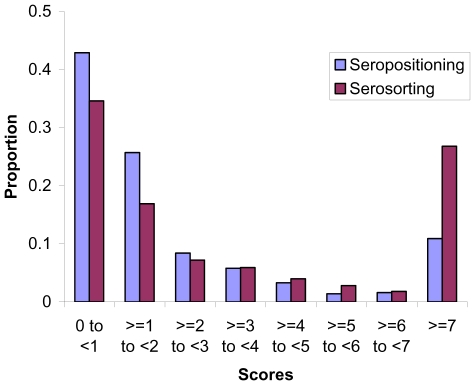
BACKGROUND: Seroadaptation strategies such as serosorting and seropositioning originated within communities of men who have sex with men (MSM), but there are limited data about their effectiveness in preventing HIV transmission when utilized by HIV-negative men. METHODOLOGY/PRINCIPAL FINDINGS: Data from the EXPLORE cohort of HIV-negative MSM who reported both seroconcordant and serodiscordant partners were used to evaluate serosorting and seropositioning. The association of serosorting and seropositioning with HIV seroconversion was evaluated in this cohort of high risk MSM from six U.S. cities. Serosorting was independently associated with a small decrease in risk of HIV seroconversion (OR=0.88; 95%CI, 0.81-0.95), even among participants reporting ≥10 partners. Those who more consistently practiced serosorting were more likely to be white (p=0.01), have completed college (p=<0.0002) and to have had 10 or more partners in the six months before the baseline visit (p=0.01) but did not differ in age, reporting HIV-infected partners, or drug use. There was no evidence of a seroconversion effect with seropositioning (OR 1.02, 95%CI, 0.92-1.14). SIGNIFICANCE: In high risk HIV uninfected MSM who report unprotected anal intercourse with both seroconcordant and serodiscordant partners, serosorting was associated with a modest decreased risk of HIV infection. To maximize any potential benefit, it will be important to increase accurate knowledge of HIV status, through increased testing frequency, improved test technology, and continued development of strategies to increase disclosure.
Overview
The claims and statistics of this paper haven’t been checked yet.
Free: it reads the open-access text and checks the first 5 claims that cite a source we can check. Create a free account to check every claim.
Integrity signals
Registry
Cites
Statistics
Figures
Verification
Claims the paper makes
The claims and statistics of this paper haven’t been checked yet.
Free: it reads the open-access text and checks the first 5 claims that cite a source we can check. Create a free account to check every claim.
Claims other papers make about this one
Each is checked against this paper’s own text: does it say what the citing paper says it does?
The source backs part of the claim, not all of it — or backs it for a different population, condition or comparison.
In the citing paper
“Observational studies have consistently reported that serosorting confers greater risk for HIV infection than consistent condom use but has lower risk compared with anal intercourse without a condom and without serosorting (99–101).”
From Sexually Transmitted Infections Treatment Guidelines, 2021 (2021) · cites this paper as [100]
Experimental — accuracy not yet measured
Self-check
Percentages, sums and reported differences re-computed from the paper’s own numbers.
The self-check needs the paper’s full text.
Citations
Cites
Risk factors for HIV infection among men who have sex with men.
Koblin, B. A., Husnik, M. J., Colfax, G., Huang, Y., Madison, M., Mayer, K., Barresi, P. J., Coates, T. J., Chesney, M. A., & Buchbinder, S. (2006) · AIDS · doi:10.1097/01.aids.0000216374.61442.55 · Cited by 678 · cited 5×
“In all current analyses, we combined the contacts with HIV infected and HIV status unknown partners into a single response category (HIV+/u), both because of the relative infrequency of anal intercourse with HIV infected partners, and because public health messages advise that safest sex practices be used equally with…”
BackgroundMethodInfluentialSelf-citationKoblin, B. A., Chesney, M. A., Husnik, M. J., Bozeman, S., Celum, C. L., Buchbinder, S., Mayer, K., McKirnan, D., Judson, F. N., Huang, Y., et al. (2003) · American Journal of Public Health · doi:10.2105/ajph.93.6.926 · Cited by 325 · cited 1×
“Full methods of the study have been described previously [14].”
MethodSelf-citationKoblin, B. A. (2004) · The Lancet · doi:10.1016/s0140-6736(04)16588-4 · Cited by 308 · cited 1×
“05) that did not reach statistical significance[13].”
Parsons, J. T., Schrimshaw, E. W., Wolitski, R. J., Halkitis, P. N., Purcell, D. W., Hoff, C. C., & Gómez, C. A. (2005) · AIDS · doi:10.1097/01.aids.0000167348.15750.9a · Cited by 302 · cited 1×
“Additionally, the terms strategic positioning or seropositioning have been interchangeably used to describe unprotected anal intercourse between HIV serodiscordant MSM, in which the HIV uninfected partner is preferentially insertive during anal intercourse [7].”
Background(2005) · JAMA: The Journal of the American Medical Association · doi:10.1001/jama.294.6.674 · Cited by 293
Pilcher, C. D., Joaki, G., Hoffman, I. F., Martinson, F. E., Mapanje, C., Stewart, P. W., Powers, K. A., Galvin, S., Chilongozi, D., Gama, S., et al. (2007) · AIDS · doi:10.1097/qad.0b013e3281532c82 · Cited by 290 · cited 1×
“However, since frequent testing alone may be insufficient due to limitations of antibody testing during acute HIV infection and the increased risk of HIV transmission associated with this period[22], improved tests, including pooled RNA testing and more sensitive fourth generation EIA, should become widely available t…”
BackgroundMacKellar, D. A., Valleroy, L. A., Secura, G. M., Behel, S., Bingham, T., Celentano, D. D., Koblin, B. A., LaLota, M., McFarland, W., Shehan, D., et al. (2005) · JAIDS Journal of Acquired Immune Deficiency Syndromes · doi:10.1097/01.qai.0000141481.48348.7e · Cited by 253 · cited 1×
“For one, many men are unaware of their HIV infection status, and also may make assumptions about a partner’s HIV status[15,18,19].”
BackgroundVan De Ven, P., Kippax, S., Crawford, J., Rawstorne, P., Prestage, G., Grulich, A., & Murphy, D. (2002) · AIDS Care · doi:10.1080/09540120208629666 · Cited by 250
Jin, F., Crawford, J., Prestage, G. P., Zablotska, I., Imrie, J., Kippax, S. C., Kaldor, J. M., & Grulich, A. E. (2009) · AIDS · doi:10.1097/qad.0b013e32831fb51a · Cited by 231 · cited 3×
“We found that seropositioning was reported relatively less commonly than serosorting in EXPLORE, as was also seen in the Australian cohort[16].”
BackgroundResultBuchbinder, S. P., Vittinghoff, E., Heagerty, P. J., Celum, C. L., Seage, G. R., Judson, F. N., McKirnan, D., Mayer, K. H., & Koblin, B. A. (2005) · JAIDS Journal of Acquired Immune Deficiency Syndromes · doi:10.1097/01.qai.0000134740.41585.f4 · Cited by 230 · cited 7×
“We evaluated the frequency and predictors of two seroadaptation strategies reported by HIV-negative MSM reporting multiple partners in the EXPLORE cohort: serosorting (defined in our study as preferential condom use during anal intercourse with HIV positive or unknown status partners rather than with HIV negative part…”
BackgroundMethodInfluentialSelf-citation
Cited by
Sexually Transmitted Infections Treatment Guidelines, 2021
Workowski, K. A., Bachmann, L. H., Chan, P. A., Johnston, C. M., Muzny, C. A., Park, I., Reno, H., Zenilman, J. M., & Bolan, G. A. (2021) · MMWR. Recommendations and Reports · doi:10.15585/mmwr.rr7004a1 · Cited by 3,018
Sexually Transmitted Diseases Treatment Guidelines, 2010
(2011) · Annals of Emergency Medicine · doi:10.1016/j.annemergmed.2011.04.006 · Cited by 2,076
Millett, G. A., Peterson, J. L., Flores, S. A., Hart, T. A., Jeffries, W. L., Wilson, P. A., Rourke, S. B., Heilig, C. M., Elford, J., Fenton, K. A., et al. (2012) · The Lancet · doi:10.1016/s0140-6736(12)60899-x · Cited by 724
Successes and challenges of HIV prevention in men who have sex with men
Sullivan, P. S., Carballo-Diéguez, A., Coates, T., Goodreau, S. M., McGowan, I., Sanders, E. J., Smith, A., Goswami, P., & Sanchez, J. (2012) · The Lancet · doi:10.1016/s0140-6736(12)60955-6 · Cited by 382
HIV-related stigma within communities of gay men: a literature review
Smit, P. J., Brady, M., Carter, M., Fernandes, R., Lamore, L., Meulbroek, M., Ohayon, M., Platteau, T., Rehberg, P., Rockstroh, J. K., et al. (2012) · AIDS Care · doi:10.1080/09540121.2011.613910 · Cited by 253
“Some studies have suggested that serosorting may reduce transmission among high-risk HIV-negative gay men (Eaton, Kalichman, O'Connell, & Karchner, 2009 ; Philip, Yu, Donnell, Vittinghoff, & Buchbinder, 2010 ; Wilson et al, 2010 ).”
Arguments for and against HIV self-testing
Stekler, J. D., Wood, B. R., & Ballenger, C. (2014) · HIV/AIDS - Research and Palliative Care · doi:10.2147/hiv.s49083 · Cited by 139
Vallabhaneni, S., Li, X., Vittinghoff, E., Donnell, D., Pilcher, C. D., & Buchbinder, S. P. (2012) · PLoS ONE · doi:10.1371/journal.pone.0045718 · Cited by 113
“e, no partner selection, no sexual position preference, and no condom use), it is nonetheless riskier than not having any UAI [5,9–11].”
BackgroundSelf-citationKurtz, S. P., Buttram, M. E., Surratt, H. L., & Stall, R. D. (2012) · AIDS Education and Prevention · doi:10.1521/aeap.2012.24.3.193 · Cited by 119
Simms, I., Field, N., Jenkins, C., Childs, T., Gilbart, V. L., Dallman, T. J., Mook, P., Crook, P. D., & Hughes, G. (2015) · Eurosurveillance · doi:10.2807/1560-7917.es2015.20.15.21097 · Cited by 95
Mao, L., Kippax, S. C., Holt, M., Prestage, G., Zablotska, I., & de Wit, J. B. F. (2011) · Sexually Transmitted Infections · doi:10.1136/sextrans-2011-050041 · Cited by 57
Seroadaptation among Men Who Have Sex with Men: Emerging Research Themes
Cassels, S. L., & Katz, D. A. (2013) · Current HIV/AIDS Reports · doi:10.1007/s11904-013-0188-2 · Cited by 61
“The EXPLORE study found slightly lower HIV incidence among MSM who condom serosorted, but not among MSM who practiced seropositioning [56].”
Strömdahl, S. K., Hickson, F. C. I., Pharris, A., Sabidó, M., Baral, S., & Thorson, A. E. (2015) · Eurosurveillance · doi:10.2807/1560-7917.es2015.20.15.21096 · Cited by 67
Identifying Resilience Resources for HIV Prevention Among Sexual Minority Men: A Systematic Review
Woodward, E. N., Banks, R. J., Marks, A. K., & Pantalone, D. W. (2016) · AIDS and Behavior · doi:10.1007/s10461-016-1608-2 · Cited by 58
Pando, M. A., Balán, I. C., Marone, R. O., Dolezal, C. L., Leu, C., Squiquera, L., Barreda, V., Fermepín, M. R., Vaulet, L. G., Rey, J. A., et al. (2012) · PLoS ONE · doi:10.1371/journal.pone.0039834 · Cited by 50
“reduction [37], this strategy does not consider the transmission of other STIs [38].”
BackgroundLorente, N., Préau, M., Vernay-Vaïsse, C., Mora, M., Blanche, J., Otis, J., Passeron, A., Gall, J.-M. L., Dhotte, P., Carrieri, P., et al. (2013) · PLoS ONE · doi:10.1371/journal.pone.0061225 · Cited by 50
“This is interesting when one considers that a US study recently showed that 68% of newly diagnosed HIV cases among MSM occur in such partnerships [19], and that other studies have shown that serosorting can decrease the risk of HIV seroconversion [20,21].”
BackgroundKhosropour, C. M., Dombrowski, J. C., Swanson, F., Kerani, R. P., Katz, D. A., Barbee, L. A., Hughes, J. P., Manhart, L. E., & Golden, M. R. (2016) · JAIDS Journal of Acquired Immune Deficiency Syndromes · doi:10.1097/qai.0000000000000947 · Cited by 48
“Ever used methamphetamine 8408 (17) 5986 (17) 2422 (15) ,0.”
Mitchell, J. W. (2012) · AIDS and Behavior · doi:10.1007/s10461-012-0388-6 · Cited by 45
“[54] found that HIVnegative MSMs’ practice of serosorting was associated with a slight decrease in their risk for HIV seroconversion while sero-positioning had no effect toward their risk for HIV.”
Kennedy, C. E., Bernard, L., Muessig, K. E., Konda, K. A., Akl, E. A., Lo, Y.-R. J., Gerbase, A. C., & O’Reilly, K. (2013) · Journal of Sexually Transmitted Diseases · doi:10.1155/2013/583627 · Cited by 40
Golub, S. A. (2014) · AIDS and Behavior · doi:10.1007/s10461-014-0770-7 · Cited by 41
Mbonye, M. K., Nakamanya, S., Birungi, J., King, R. L., Seeley, J., & Jaffar, S. S. (2013) · BMC Public Health · doi:10.1186/1471-2458-13-804 · Cited by 47
Motivational Interviewing Targeting Risky Sex in HIV-Positive Young Thai Men Who Have Sex with Men
Rongkavilit, C., Wang, B., Naar-King, S., Bunupuradah, T., Parsons, J. T., Panthong, A., Koken, J. A., Saengcharnchai, P., & Phanuphak, P. (2015) · Archives of Sexual Behavior · doi:10.1007/s10508-014-0274-6 · Cited by 37
“widespread knowledge of HIV transmission risk, and an existing culture of serostatus disclosure (Philip et al., 2010).”
BackgroundPurcell, D. W., Higa, D. H., Mizuno, Y., & Lyles, C. M. (2017) · AIDS and Behavior · doi:10.1007/s10461-017-1800-z · Cited by 34
Smith, B. D., Jewett, A., Burt, R. D., Zibbell, J. E., Yartel, A. K., & DiNenno, E. A. (2013) · The Journal of Infectious Diseases · doi:10.1093/infdis/jit520 · Cited by 33
“Researchers focusing on the sexual choices of MSM [15, 16] have found serosorting is associated with decreased risk of HIV infection [17] and changes in the sexual behavior of MSM when it is employed as an HIV Table 2.”
Prescription Drug Misuse and Risk Behaviors Among Young Injection Drug Users
Johnson, K. M., Fibbi, M., Langer, D., Silva, K., & Lankenau, S. E. (2013) · Journal of Psychoactive Drugs · doi:10.1080/02791072.2013.785811 · Cited by 40
“These findings support opportunities to extend harm-reduction strategies, such as syringe exchange, methadone maintenance, and seroconcordant injection and sexual partner selection, to injectors of prescription drugs (Metzger & Navaline 2003; Philip et al. 2010).”
Backgroundvan den Boom, W., Konings, R., Davidovich, U., Sandfort, T. G. M., Prins, M., & Stolte, I. G. (2013) · JAIDS Journal of Acquired Immune Deficiency Syndromes · doi:10.1097/qai.0000000000000051 · Cited by 32
“Despite these difficulties in practicing serosorting, some studies suggest that serosorting is effective in preventing HIV infection.(4,10) However, the effectiveness of serosorting seems to be lower when compared with consistent condom use.”
BackgroundThe Spot Study Group, Otis, J., McFadyen, A., Haig, T., Blais, M., Cox, J., BRENNER, B. G., ROUSSEAU, R. J., Émond, G., Roger, M., et al. (2016) · AIDS and Behavior · doi:10.1007/s10461-016-1344-7 · Cited by 37
“In parallel, there has been an increase in the use of behavioral risk-reduction strategies and in particular seroadaptive practices, a term that refers to various non condom-based approaches to sexual risk reduction that are based on knowledge of one’s own HIV status and the status of sexual partners [5, 6, 36, 37].”
BackgroundResultInfluentialKoester, K. A., Erguera, X. A., Dufour, M. K., Udoh, I. C., Burack, J. H., Grant, R. M., & Myers, J. J. (2018) · Frontiers in Public Health · doi:10.3389/fpubh.2018.00250 · Cited by 35
Morris, S., & Little, S. J. (2011) · Current Opinion in HIV and AIDS · doi:10.1097/coh.0b013e3283476c29 · Cited by 35
Hickson, D. A., Mena, L. A., Wilton, L., Tieu, H., Koblin, B. A., Cummings, V., Latkin, C. A., & Mayer, K. H. (2016) · American Journal of Epidemiology · doi:10.1093/aje/kww144 · Cited by 31
“anal sexual episodes and the rate of condomless anal sex in a cross-sectional study among MSM in Soweto, South Africa (32) but not in a multiethnic sample of 4,295 HIV-uninfected MSM in the EXPLORE Study (47).”
BackgroundEvans, J. L., Couture, M.-C., Stein, E. S., Sansothy, N., Maher, L., & Page, K. A. (2013) · Sexually Transmitted Diseases · doi:10.1097/olq.0b013e318286db8a · Cited by 27
“Because PSA is rapidly cleared from the vaginal cavity, the test can only assess misreporting in one direction: the proportion of women who report lack of exposure within the past 48 hours and yet test positive for PSA.16 Additional limitations of using PSA testing to validate self-reported condom use include the inab…”
InfluentialDoyle, C. M., Maheu‐Giroux, M., Lambert, G., Mishra, S., Apelian, H., Messier-Peet, M., Otis, J., Grace, D., Hart, T. A., Moore, D. M., et al. (2020) · AIDS and Behavior · doi:10.1007/s10461-020-02965-4 · Cited by 34
Liboro, R. M., Yates, T., Bell, S., Ranuschio, B., Silva, G. D., Fehr, C. P., Ibáñez-Carrasco, F., & Shuper, P. A. (2021) · International Journal of Environmental Research and Public Health · doi:10.3390/ijerph18168548 · Cited by 29
Condom Distribution in Jail to Prevent HIV Infection
Leibowitz, A. A., Harawa, N. T., Sylla, M., Hallstrom, C. C., & Kerndt, P. R. (2012) · AIDS and Behavior · doi:10.1007/s10461-012-0190-5 · Cited by 28
“88) [33], but in a jail population, the protective effect of such measures is limited because inmates often assess whether a potential partner is HIV-positive based on unreliable information (e.”
BackgroundGoldman, D. P., Juday, T., Seekins, D. W., Linthicum, M. T., & Romley, J. A. (2014) · Health Affairs · doi:10.1377/hlthaff.2013.0830 · Cited by 25
“(40) Another study found that HIV-negative men who engaged in serosorting were about 10 percent less likely to become infected, compared to those who did not serosort.(41)”
BackgroundEaton, L. A., Kalichman, S. C., Kalichman, M. O., Driffin, D. D., Baldwin, R., Zohren, L., & Conway-Washington, C. (2017) · Sexually Transmitted Infections · doi:10.1136/sextrans-2016-052835 · Cited by 28
Correlates of Seroadaptation Strategies Among Black Men Who have Sex with Men (MSM) in 4 US Cities
Wilton, L., Koblin, B. A., Nandi, V., Xu, G., Latkin, C. A., Seal, D. W., Flores, S. A., & Spikes, P. (2015) · AIDS and Behavior · doi:10.1007/s10461-015-1190-z · Cited by 23
“Prior research on seroadaptation practices among MSM have differed in terms of the utility of these practices in modulating outcomes related to HIV incidence and HIV sexual risk behaviors [12, 28].”
Margolis, A. D., Joseph, H. A., Hirshfield, S., Chiasson, M. A., Belcher, L., & Purcell, D. W. (2014) · Sexually Transmitted Diseases · doi:10.1097/olq.0000000000000206 · Cited by 20
Seroadaptation in a Sample of Very Poor Los Angeles Area Men Who Have Sex with Men
Murphy, R., Gorbach, P. M., Weiss, R. E., Hucks‐Ortiz, C., & SHOPTAW, S. J. (2012) · AIDS and Behavior · doi:10.1007/s10461-012-0213-2 · Cited by 25
“For example, while the EXPLORE study found a modest decreased risk of seroconversion among HIV-negative MSM who condom serosorted [15], a study by Jin et al.”
BackgroundLociciro, S., Jeannin, A., & Dubois-Arber, F. (2013) · BMC Public Health · doi:10.1186/1471-2458-13-839 · Cited by 24
“have UAI with partners of the same HIV status–has been specifically studied [10-15], and has been considered to have a protective effect or convey a lower risk of HIV transmission in populations with a high prevalence and frequency of HIV testing [16-19].”
BackgroundMéthy, N., Meyer, L., Bajos, N., & Velter, A. (2017) · PLoS ONE · doi:10.1371/journal.pone.0171493 · Cited by 18
Goodreau, S. M., Maloney, K. M., Sanchez, T., Morris, M., Janulis, P. F., & Jenness, S. M. (2021) · AIDS and Behavior · doi:10.1007/s10461-021-03266-0 · Cited by 19
Predictors of Serosorting and Intention to Serosort Among Men Who Have Sex with Men, San Francisco
Chen, Y., Vallabhaneni, S., Raymond, H. F., & McFarland, W. (2012) · AIDS Education and Prevention · doi:10.1521/aeap.2012.24.6.564 · Cited by 21
Wilkerson, J. M., Noor, S. W. B., Breckenridge, E. D., Adeboye, A. A., & Rosser, B. R. S. (2015) · AIDS Care · doi:10.1080/09540121.2015.1020280 · Cited by 20
Gay and Bisexual Men’s Perceptions of HIV Risk in Various Relationships
Shaver, J., Freeland, R., Goldenberg, T., & Stephenson, R. B. (2018) · American Journal of Men s Health · doi:10.1177/1557988317745759 · Cited by 19
Jones, M. U., Ramadhani, H. O., Adebajo, S. B., Gaydos, C. A., Kokogho, A., Baral, S., Nowak, R. G., Ake, J. A., Liu, H., Charurat, M., et al. (2020) · PLoS ONE · doi:10.1371/journal.pone.0229533 · Cited by 16
Khosropour, C. M., Dombrowski, J. C., Hughes, J. P., Manhart, L. E., Simoni, J. M., & Golden, M. R. (2017) · AIDS and Behavior · doi:10.1007/s10461-017-1682-0 · Cited by 15
Brener, L., Murphy, D., Cama, E. J., & Ellard, J. (2015) · Sexual Health · doi:10.1071/sh14239 · Cited by 15
Irvin, R., Vallabhaneni, S., Scott, H. M., Williams, J. K. Y., Wilton, L., Li, X., Buchbinder, S., & 061, O. B. O. H. (2015) · PLoS ONE · doi:10.1371/journal.pone.0118281 · Cited by 16
Self-citationAkoku, D. A., Tihnje, M. A., Tarh, E. O., Tarkang, E. E., & Mbu, R. E. (2018) · PLoS ONE · doi:10.1371/journal.pone.0208890 · Cited by 15
Lorente, N., Préau, M., Vernay-Vaïsse, C., Mora, M., Blanche, J., Otis, J., Passeron, A., Gall, J.-M. L., Dhotte, P., Carrieri, P., et al. (2013) · PLoS ONE · doi:10.1371/annotation/73d8610b-c201-4889-889e-db0fba5a3ddc · Cited by 13
Hepatitis C serosorting among people who inject drugs in rural Puerto Rico
Duncan, I., Curtis, R., Reyes, J. C., Abadie, R., Khan, B., & Dombrowski, K. (2017) · Preventive Medicine Reports · doi:10.1016/j.pmedr.2017.02.001 · Cited by 12
“In regards to sexual transmission, there is indeed reason to believe that serosorting reduces the risk of HIV infection (Philip et al., 2010), and the practice is recommended for sexual risk by the CDC (Serosorting|HIV Risk Reduction Tool|CDC, 2016).”
BackgroundHughto, J. M. W., Hidalgo, A. P., Bazzi, A. R., Reisner, S. L., & Mimiaga, M. J. (2016) · Sexual Health · doi:10.1071/sh16023 · Cited by 14
Bird, J. D. P., Morris, J. A., Koester, K. A., Pollack, L. M., Binson, D., & Woods, W. J. (2016) · The Journal of Sex Research · doi:10.1080/00224499.2016.1202179 · Cited by 12
Ciaccio, M. D., Delabre, R. M., Vilotitch, A., Corbelli, G. M., Villes, V., Sánchez, A. R., Zantkuijl, P., Sweers, H., Sánchez, F., Meulbroek, M., et al. (2022) · Archives of Sexual Behavior · doi:10.1007/s10508-022-02322-7 · Cited by 11
“Behavioral risk reduction strategies include: anal sex with a HIV-negative partner (without condoms) or a steady partner (with an agreement that anal intercourse outside the couple must be protected), withdrawal before ejaculation, avoiding a receptive position (strategic positioning), and serosorting (choosing partne…”
BackgroundSerovich, J. M., Reed, S., O'Connell, A. A., & Laschober, T. C. (2018) · International Journal of STD & AIDS · doi:10.1177/0956462417752267 · Cited by 13
Kim, H., Harling, G., Vandormael, A. M., Tomita, A. M., Cuadros, D. F., Bärnighausen, T., & Tanser, F. C. (2020) · Journal of the International AIDS Society · doi:10.1002/jia2.25432 · Cited by 11
“intentional seroconcordance) has, however, been mostly limited to high-income settings [12,13].”
BackgroundRodriguez‐Hart, C., Liu, H., Nowak, R. G., Orazulike, I., Zorowitz, S., Crowell, T. A., Baral, S., Blattner, W. A., & Charurat, M. E. (2016) · AIDS and Behavior · doi:10.1007/s10461-016-1311-3 · Cited by 8
“For the dyadic relationships that were seroconcordant, they appear to have a lower risk profile, as observed in prior studies [14, 27].”
Marcus, U., Veras, M. A. D. S. M., Casabona, J., Cáceres, C. F., Lachowsky, N. J., Schink, S. B., & Schmidt, A. J. (2023) · BMC Public Health · doi:10.1186/s12889-023-15946-8 · Cited by 14
Iakunchykova, O. P., Burlaka, V., & King, E. J. (2017) · AIDS and Behavior · doi:10.1007/s10461-017-2002-4 · Cited by 8
Duncan, I., Habecker, P., Hautala, D. S., Khan, B., & Dombrowski, K. (2018) · Journal of Ethnicity in Substance Abuse · doi:10.1080/15332640.2018.1425950 · Cited by 5
Diura-Vere, O., Mokgatle, M. M., & Oguntibeju, O. O. (2023) · International Journal of Environmental Research and Public Health · doi:10.3390/ijerph20053790 · Cited by 5
“Serosorting has been described by different scholars and even among HIV-infected youths and among men who have sex with men [38,39].”
BackgroundResultKhosropour, C. M., Dombrowski, J. C., Katz, D. A., & Golden, M. R. (2017) · Sexually Transmitted Diseases · doi:10.1097/olq.0000000000000677 · Cited by 4
“Copyright © 2017 by the American Sexually Transmitted Diseases As unknown-status partners, (2) using condoms with HIV-positive/ unknown-status partners, (3) having only insertive anal sex with HIV-positive/unknown-status partners, (4) having only oral sex or engaging in mutual masturbation (no anal sex) with HIVpositi…”
Yu, Y., Qin, K., Li, J., & Huang, L. (2024) · Sexuality Research and Social Policy · doi:10.1007/s13178-024-01023-1 · Cited by 4
“…evidence exists on the effect of HIV serosorting on SRBs and HIV infection, with some studies showing a decreased risk (Cassels et al., 2009; Philip et al., 2010), while other studies show no effect or increased risk of SRBs and HIV infections (Golden et al., 2012; Heymer & Wilson, 2010;…”
Seeking Seroharmony: Changing Conceptualisations of Serodifference and Serostatus
Rule, J., & Slavin, S. (2016) · Social aspects of HIV · doi:10.1007/978-3-319-42725-6_4 · Cited by 3
Brief Report: Rethinking Data Collection for HIV Prevention Trials
Harel, O., & Nazzaro, V. (2016) · JAIDS Journal of Acquired Immune Deficiency Syndromes · doi:10.1097/qai.0000000000001005 · Cited by 2
Amoo, O. E., Olaiya, A. P., Sanni, F. O., Samuels, J. O., & Okonkwo, P. (2023) · Babcock University Medical Journal · doi:10.38029/babcockuniv.med.j..v6i1.149 · Cited by 1
“At the same time, Philip et al (53) indicated that this practice is still dangerous because sexual carelessness is bound to happen with intimate”
BackgroundVelter, A. (2017) · theses.fr (ABES) · doi:10.70675/293ea9a4z7a60z4e67zb9a1z0040b71d7d1f · Cited by 1
“Ainsi, annoncer son homosexualité à sa famille ou son entourage est loin d’être facile et peut encore exposer à des actes de rejet [10], bien que le dévoilement de son homosexualité soit devenu constitutif des processus identitaires gays et lesbiens de la fin du 20ème siècle [11].”
BackgroundKok, S. L. (2012) · Summit (Simon Fraser University) · Cited by 2
Discrimination, Xenophobia and Stigmatization
Ullah, A. A., & Huque, A. S. (2014) · Springer eBooks · doi:10.1007/978-981-287-119-0_4
Fernández‐Dávila, P., & Morales-Carmona, A. (2014) · Escritos de Psicología / Psychological Writings · doi:10.24310/espsiescpsi.v7i2.13258 · Cited by 1
Sexually transmitted infections: unravelling transmission & impact
Matser, A. A. (2015) · UvA-DARE (University of Amsterdam) · Cited by 1
Discussions about STI histories and HIV-statuses among Gay men in Ottawa: An HIV prevention analysis
O’Byrne, P. (2018) · The Canadian Journal of Human Sexuality · doi:10.3138/cjhs.2017-0029
“An HIV behavioural randomized controlled trial, involving 4,295 persons in six cities in the United States between 1999 and 2003 replicated this finding (Philip et al., 2010).”
BackgroundDiura-Vere, O., & Mokgatle, M. M. (2017)
Anderson, J. M. (2012) · Carleton University's Institutional Repository (MacOdrum Library, Carleton University) · doi:10.22215/etd/2012-06888
Doyle, C. M., Maheu‐Giroux, M., Lambert, G., Mishra, S., Apelian, H., Messier-Peet, M., Otis, J., Grace, D., Hart, T. A., Moore, D. M., et al. (2024) · doi:10.32920/25438486.v1
Marcus, U., Veras, M., Casabona, J., Caceres, C. F., Lachowsky, N. J., Schink, S. B., & Schmidt, A. J. (2023) · Figshare · doi:10.6084/m9.figshare.23265225
Marcus, U., Veras, M., Casabona, J., Caceres, C. F., Lachowsky, N. J., Schink, S. B., & Schmidt, A. J. (2023) · Figshare · doi:10.6084/m9.figshare.23265237
Marcus, U., Veras, M., Casabona, J., Caceres, C. F., Lachowsky, N. J., Schink, S. B., & Schmidt, A. J. (2023) · Figshare · doi:10.6084/m9.figshare.23265234
Marcus, U., Veras, M., Casabona, J., Caceres, C. F., Lachowsky, N. J., Schink, S. B., & Schmidt, A. J. (2023) · Figshare · doi:10.6084/m9.figshare.23265231
Suarez-Diaz, E. (2013) · theses.fr (ABES) · doi:10.70675/6c951935z7d21z4611za86ezc705646b8f5a
Metadata
- Authors
- Philip, S. S., Yu, X., Donnell, D., Vittinghoff, E., & Buchbinder, S.
- Affiliations
- University of California, San Francisco (US)
- Corresponding author
- Philip, Susan S.
- Venue
- PLoS ONE
- Publisher
- Public Library of Science (PLoS)
- Published
- 2010-09-09
- Volume
- 5
- Issue
- 9
- Pages
- e12662
- ISSN
- 1932-6203 (ISSN-L)
- PMC
- PMC2936578
- OpenAlex
- W1988547464
- Cited by
- 84
- References
- 22
- Citations by year
- 2024: 5 · 2023: 7 · 2022: 1 · 2021: 3 · 2020: 3 · 2018: 6 · 2017: 9 · 2016: 10 · 2015: 7 · 2014: 8 · 2013: 11 · 2012: 10
- FWCI
- 5.18
- Type
- journal article
- Language
- en
- Open access
- gold
- doi.org
- Locations
- PLoS ONE (publishedVersion, cc-by)
- PubMed Central (publishedVersion, cc-by)
- PubMed (publishedVersion)
- DOAJ (DOAJ: Directory of Open Access Journals) (submittedVersion, cc-by-sa)
- Funders
- U.S. Department of Health and Human Services
- University of Washington (U01 AI46749)
- National Institutes of Health
- National Institute of Mental Health
- National Institute on Drug Abuse
- National Institute of Allergy and Infectious Diseases (U01AI047995, U01 AI47981, U01AI046749, AI46749, U01 AI47995, 5-U01-AI46749, U01-AI46749, U01AI047981)
- National Institute of Child Health and Human Development
- Office of AIDS Research
- Topics
- Health Sciences › Medicine › Infectious Diseases › HIV/AIDS Research and Interventions
- Health Sciences › Medicine › Epidemiology › HIV, Drug Use, Sexual Risk
- Life Sciences › Immunology and Microbiology › Virology › HIV Research and Treatment
- Keywords
- serosorting, HIV seroconversion, men who have sex with men, HIV-negative men, serodiscordant partners, unprotected anal intercourse, HIV prevention, HIV testing, HIV status disclosure
- MeSH terms
- Adolescent, Adult, HIV Seropositivity, Humans, Male, Middle Aged, Risk Factors, Sexual Partners, United States, Cohort Studies, Homosexuality, Male, Safe Sex, Unsafe Sex, Young Adult
About these checks
Registry, retraction, Cites and statistics results are computed, not judged, with one exception: a printed reference that no index lists is read once by a model before it counts as a citation error. Claims are extracted by a model and kept only when their quote appears verbatim in the text; each cited source is then checked, with a model’s help, for whether it says what the claim relies on. Those verdicts can be wrong — read the claim’s quote and the cited source before relying on one.
Statistics and arithmetic are recomputed, not judged.
Confidence bands are shown only for fields calibrated on our annotated test set. None is calibrated yet, so no band is shown.
What counts as a claim ›How we measure confidence ›How we check this ›
Are you an author, or do you see a problem with this page? Request a review
Data sources
Bibliographic data: Semantic Scholar, OpenAlex, Crossref.
Contains information from the Semantic Scholar Academic Graph Datasets, made available under the ODC Attribution License (ODC-BY 1.0).
Semantic Scholar’s data is described in: Kinney, R., et al. (2023). The Semantic Scholar Open Data Platform. arXiv:2301.10140.
