

Suppression of Hypoxia-Inducible Factor 1α (HIF-1α) by Tirapazamine Is Dependent on eIF2α Phosphorylation Rather Than the mTORC1/4E-BP1 Pathway
Open accessThe DOI matches its Crossref record; 47 of the 48 references it cites were found in a registry or an index.
Abstract
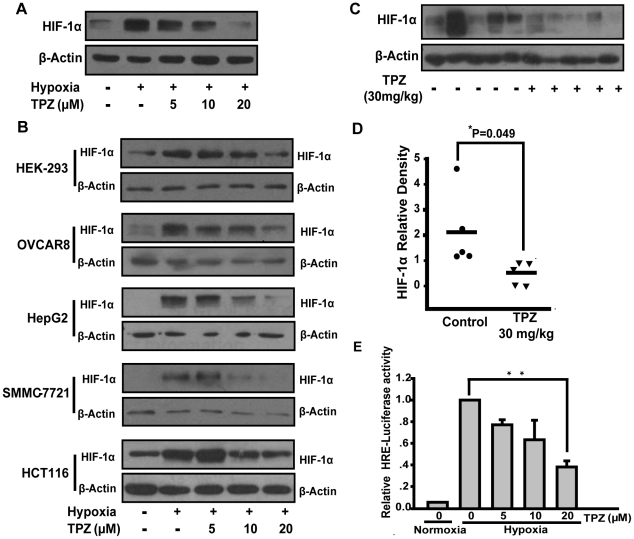
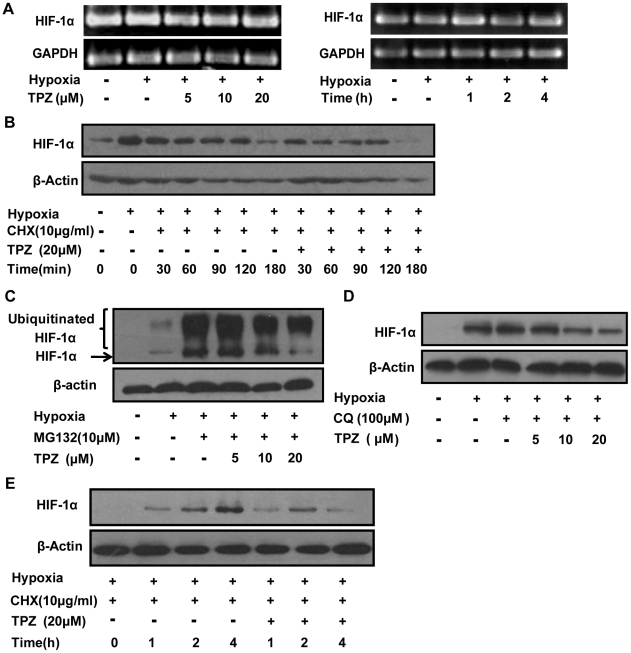
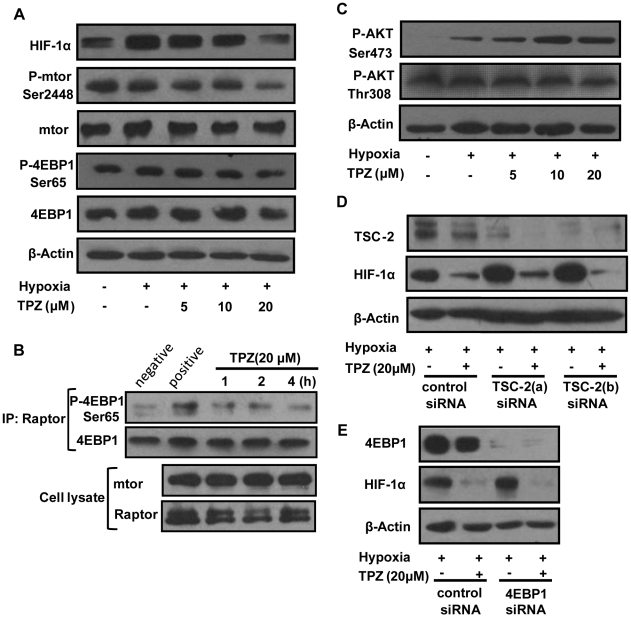
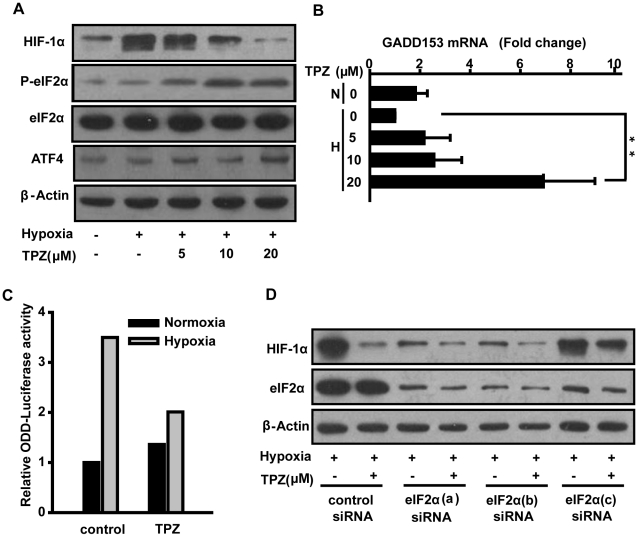
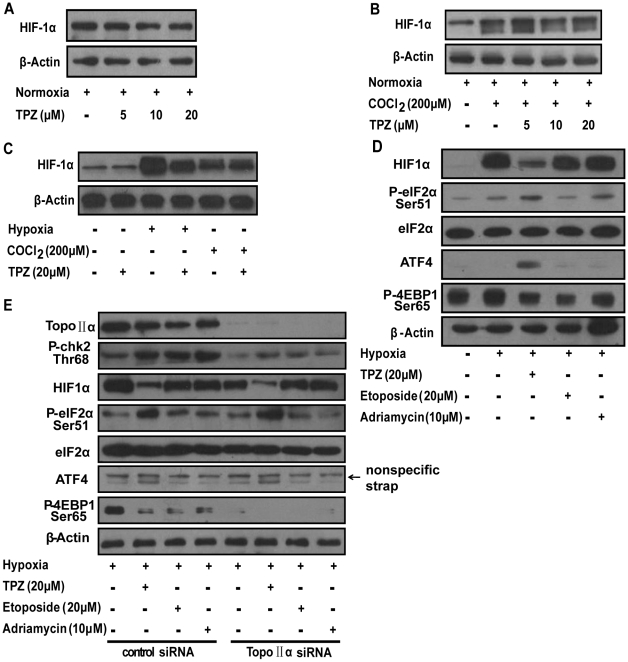
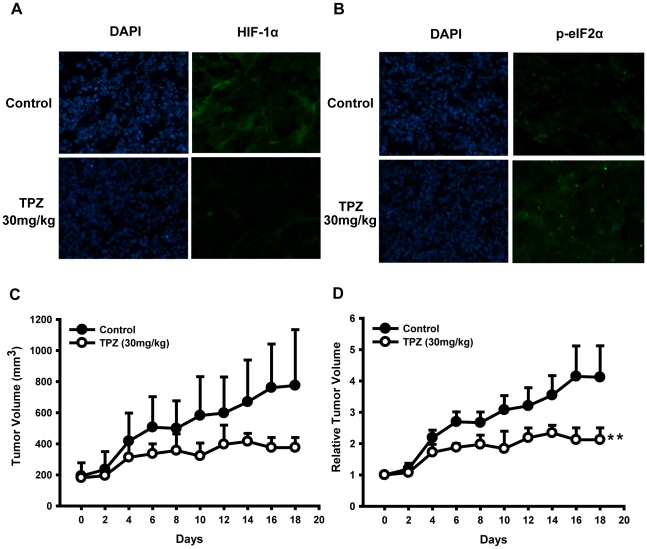
Hypoxia-inducible factor 1 (HIF-1), a heterodimeric transcription factor that mediates the adaptation of tumor cells and tissues to the hypoxic microenvironment, has attracted considerable interest as a potential therapeutic target. Tirapazamine (TPZ), a well-characterized bioreductive anticancer agent, is currently in Phase II and III clinical trials. A major aspect of the anticancer activity of TPZ is its identity as a tumor-specific topoisomerase IIα inhibitor. In the study, for the first time, we found that TPZ acts in a novel manner to inhibit HIF-1α accumulation driven by hypoxia or growth factors in human cancer cells and in HepG2 cell-derived tumors in athymic nude mice. We investigated the mechanism of TPZ on HIF-1α in HeLa human cervical cancer cells by western blot analysis, reverse transcription-PCR assay, luciferase reporter assay and small interfering RNA (siRNA) assay. Mechanistic studies demonstrated that neither HIF-1α mRNA levels nor HIF-1α protein degradation are affected by TPZ. However, TPZ was found to be involved in HIF-1α translational regulation. Further studies revealed that the inhibitory effect of TPZ on HIF-1α protein synthesis is dependent on the phosphorylation of translation initiation factor 2α (eIF2α) rather than the mTOR complex 1/eukaryotic initiation factor 4E-binding protein-1 (mTORC1/4E-BP1) pathway. Immunofluorescence analysis of tumor sections provide the in vivo evidences to support our hypothesis. Additionally, siRNA specifically targeting topoisomerase IIα did not reverse the ability of TPZ to inhibit HIF-1α expression, suggesting that the HIF-1α inhibitory activity of TPZ is independent of its topoisomerase IIα inhibition. In conclusion, our findings suggest that TPZ is a potent regulator of HIF-1α and provide new insight into the potential molecular mechanism whereby TPZ serves to reduce HIF-1α expression.
Overview
The claims and statistics of this paper haven’t been checked yet.
Free: it reads the open-access text and checks the first 5 claims that cite a source we can check. Create a free account to check every claim.
Integrity signals
Registry
Cites
Statistics
Figures
Verification
Claims the paper makes
The claims and statistics of this paper haven’t been checked yet.
Free: it reads the open-access text and checks the first 5 claims that cite a source we can check. Create a free account to check every claim.
Claims other papers make about this one
Each is checked against this paper’s own text: does it say what the citing paper says it does?
The source backs part of the claim, not all of it — or backs it for a different population, condition or comparison.
In the citing paper
“Accumulating evidence now supports the conclusion that inhibition of HIF signaling by these agents occurs in a topoisomerase I- or II-dependent manner [309,310] but is largely independent of their canonical cytotoxic effects [311].”
From HIF inhibition: Current strategies and clinical challenges (2026) · cites this paper as [309]
Experimental — accuracy not yet measured
Self-check
Percentages, sums and reported differences re-computed from the paper’s own numbers.
The self-check needs the paper’s full text.
Citations
Cites
Phosphorylation and regulation of Akt/PKB by the rictor-mTOR complex
Sarbassov, D. D., Guertin, D. A., Ali, S. M., & Sabatini, D. M. (2005) · Science · doi:10.1126/science.1106148 · Cited by 6,216 · cited 2×
“Immunoprecipitates were prepared as previously described [45].”
MethodProlonged Rapamycin Treatment Inhibits mTORC2 Assembly and Akt/PKB
Sarbassov, D. D., Ali, S. M., Sengupta, S., Sheen, J.-H., Hsu, P. P., Bagley, A. F., Markhard, A. L., & Sabatini, D. M. (2006) · Molecular Cell · doi:10.1016/j.molcel.2006.03.029 · Cited by 2,365 · cited 1×
“reports describing the activation of Akt at Ser473 as the result of mTORC1 inhibition [20,21].”
Hypoxia-Inducible Factor-1 (HIF-1)
Ke, Q., & Costa, M. (2006) · Molecular Pharmacology · doi:10.1124/mol.106.027029 · Cited by 1,646
Brugarolas, J., Lei, K., Hurley, R. L., Manning, B. D., Reiling, J. H., Hafen, E., Witters, L. A., Ellisen, L. W., & Kaelin, W. G. (2004) · Genes & Development · doi:10.1101/gad.1256804 · Cited by 1,384 · cited 1×
“The sense strands of siRNAs against 4E-BP1, TSC2, topoisomerase IIa, and eIF2a were as follows: 4E-BP1: GGUACCAGG AUCAUCUAUGTT [40]; TSC2: CAAUGAGUCACAGUCCUUU GA (a) and AAAGU UCACCUACUGCUGGCA (b) [41]; topoisomerase IIa: GGUAUUCCUGUUGUUGAAC [42]; eIF2a: GGCUUGUUAUGGUUAUGAA(a), CCUCGGUAUGUAAUGACUA(b) and GAGAGGCUUGAAA…”
IRE1 Signaling Affects Cell Fate During the Unfolded Protein Response
Lin, J. H., Li, H., Yasumura, D., Cohen, H. R., Zhang, C., Panning, B., Shokat, K. M., LaVail, M. M., & Walter, P. (2007) · Science · doi:10.1126/science.1146361 · Cited by 1,370 · cited 1×
“One branch of the UPR is initiated by activation of the ER-stress sensor PERK, an eIF2a kinase [35].”
A trip to the ER: coping with stress
Rutkowski, D. T., & Kaufman, R. J. (2004) · Trends in Cell Biology · doi:10.1016/j.tcb.2003.11.001 · Cited by 1,355 · cited 1×
“synthesis [23,24].”
mTOR and cancer: insights into a complex relationship
Sabatini, D. M. (2006) · Nature Reviews Cancer · doi:10.1038/nrc1974 · Cited by 1,322 · cited 2×
“TSC1-TSC2 tumor suppressor complex is a key negative regulator of mTORC1 [22].”
Hypoxia signalling through mTOR and the unfolded protein response in cancer
Wouters, B. G., & Koritzinsky, M. (2008) · Nature Reviews Cancer · doi:10.1038/nrc2501 · Cited by 894 · cited 1×
“hypoxia [2,3].”
Sun, S.-Y., Rosenberg, L. M., Wang, X., Zhou, Z., Yue, P., Fu, H., & Khuri, F. R. (2005) · Cancer Research · doi:10.1158/0008-5472.can-05-0917 · Cited by 802 · cited 1×
“reports describing the activation of Akt at Ser473 as the result of mTORC1 inhibition [20,21].”
2ME2 inhibits tumor growth and angiogenesis by disrupting microtubules and dysregulating HIF
Mabjeesh, N. J., Escuin, D., LaVallee, T. M., Pribluda, V. S., Swartz, G. M., Johnson, M. S., Willard, M. T., Zhong, H., Simons, J. W., & Giannakakou, P. (2003) · Cancer Cell · doi:10.1016/s1535-6108(03)00077-1 · Cited by 730 · cited 1×
“methoxyestradiol [31], have been reported to reduce hypoxiainduced HIF-1a accumulation through a translation-dependent”
Cited by
Singhal, R., & Shah, Y. M. (2020) · Journal of Biological Chemistry · doi:10.1074/jbc.rev120.011188 · Cited by 376
“Cycloheximide abrogated the effect of H2S on HIF-1a expression, demonstrating that H2S inhibits HIF-1a translation (94).”
BackgroundPharmacologic Targeting of Hypoxia-Inducible Factors
Semenza, G. L. (2019) · Annual Review of Pharmacology and Toxicology · doi:10.1146/annurev-pharmtox-010818-021637 · Cited by 288
Mi, C., Ma, J., Wang, K. S., Zuo, H. X., Wang, Z., Li, M. Y., Piao, L. X., Xu, G. H., Li, X., Quan, Z. S., et al. (2017) · Journal of Ethnopharmacology · doi:10.1016/j.jep.2017.03.033 · Cited by 124
Quinoxaline 1,4-di-N-Oxides: Biological Activities and Mechanisms of Actions
Cheng, G., Sa, W., Cao, C., Guo, L., Hao, H., Liu, Z., Wang, X., & Yuan, Z. (2016) · Frontiers in Pharmacology · doi:10.3389/fphar.2016.00064 · Cited by 118
“Recently, it is found that TPZ acts in a novel manner to inhibit HIF-1α accumulation, in which HIF-1α translational regulation is involving, dependent on the phosphorylation of translation initiation factor 2a (eIF2a; Zhang et al., 2010).”
BackgroundHutt, D. M., Roth, D. M., Vignaud, H., Cullin, C., & Bouchecareilh, M. (2014) · PLoS ONE · doi:10.1371/journal.pone.0106224 · Cited by 109
Hulea, L., Gravel, S.-P., Morita, M., Cargnello, M., Uchenunu, O., Im, Y. K., Lehuédé, C., Ma, E. H., Leibovitch, M., McLaughlan, S., et al. (2018) · Cell Metabolism · doi:10.1016/j.cmet.2018.09.001 · Cited by 91
Cao, J., Ying, M., Xie, N., Lin, G., Dong, R., Zhang, J., Yan, H., Yang, X., He, Q., & Yang, B. (2014) · Antioxidants and Redox Signaling · doi:10.1089/ars.2013.5446 · Cited by 92
Self-citationZhu, J., Huang, H., Dong, S., Ge, L., & Zhang, Y. (2014) · Theranostics · doi:10.7150/thno.9663 · Cited by 80
“In particular, a series of studies has suggested that it is possible to reduce metabolic flexibility and to reverse the Warburg effect in cancer cells to improve chemotherapeutic sensitivity by inhibiting HIF using NSC-134754, cetuximab, tirapazamine and echinomycin, among others [75-77].”
BackgroundVCP and ATL1 regulate endoplasmic reticulum and protein synthesis for dendritic spine formation
Shih, Y.-T., & Hsueh, Y.-P. (2016) · Nature Communications · doi:10.1038/ncomms11020 · Cited by 82
Hydrogen sulfide inhibits the translational expression of hypoxia‐inducible factor‐1α
Wu, B., Teng, H., Yang, G., Wu, L., & Wang, R. (2012) · British Journal of Pharmacology · doi:10.1111/j.1476-5381.2012.02113.x · Cited by 75
“Certain antitumour compounds decrease HIF-1a translation due to eIF2a phosphorylation (Jung et al., 2009; Zhang et al., 2010).”
BackgroundZhu, H., Yang, W., He, L., Ding, W., Zheng, L., Liao, S., Huang, P. C., Lu, W. P., He, Q., & Yang, B. (2012) · PLoS ONE · doi:10.1371/journal.pone.0052333 · Cited by 64
Self-citationHypoxia After Liver Surgery Imposes an Aggressive Cancer Stem Cell Phenotype on Residual Tumor Cells
Govaert, K. M., Emmink, B. L., Nijkamp, M. W., Cheung, Z. J., Steller, E. J. A., Fatrai, S., de Bruijn, M. T., Kranenburg, O., & Borel Rinkes, I. H. M. (2014) · Annals of Surgery · doi:10.1097/sla.0b013e318295c160 · Cited by 58
Goey, A. K. L., Chau, C. H., Sissung, T. M., Cook, K. M., Venzon, D. J., Castro, A., Ransom, T. R., Henrich, C. J., McKee, T. C., McMahon, J. B., et al. (2016) · Journal of Natural Products · doi:10.1021/acs.jnatprod.5b00846 · Cited by 58
Visible light–initiated radical 1,3-difunctionalization of β,γ-unsaturated ketones
Liu, R., Tian, Y., Wang, J., Wang, Z., Li, X., Zhao, C., Yao, R., Li, S., Yuan, L., Yang, J., et al. (2022) · Science Advances · doi:10.1126/sciadv.abq8596 · Cited by 56
“Moreover, the HCT116 cell line expresses detectable HIF1α proteins under normoxia condition ( 44 , 45 ).”
Ghattass, K., el-Sitt, S., Zibara, K., Rayes, S., Haddadin, M., El-Sabban, M., & Gali-Muhtasib, H. (2014) · Molecular Cancer · doi:10.1186/1476-4598-13-12 · Cited by 8
“Moreover, recent reports have shown that TPZ down regulates HIF-1α by inhibiting its translation through enhanced phosphorylation of AKT and reduction of mTOR phosphorylation [29].”
BackgroundInfluentialLin, G., Gai, R., Chen, Z., Wang, Y., Liao, S., Dong, R., Zhu, H., Gu, Y., He, Q., & Yang, B. (2014) · European Journal of Pharmacology · doi:10.1016/j.ejphar.2014.02.011 · Cited by 49
Self-citationCao, J., He, L., Lin, G., Hu, C., Dong, R., Zhang, J., Zhu, H., Hu, Y., Wagner, C. R., He, Q., et al. (2013) · Biochemical Pharmacology · doi:10.1016/j.bcp.2013.12.002 · Cited by 44
Self-citationHussain, I., Waheed, S., Ahmad, K. A., Pirog, J. E., & Syed, V. (2018) · Journal of Cellular Biochemistry · doi:10.1002/jcb.27063 · Cited by 43
“Tirapazamine inhibited HIF-1α accumulation in HeLa cells by attenuating protein synthesis and had no effect on protein degradation.(26) In colon cancer cells, Brusatol, a natural quassinoid, reduced HIF-1α protein by promoting proteosomal degradation of HIF-1α.”
BackgroundLi, M. Y., Mi, C., Wang, K. S., Wang, Z., Zuo, H. X., Piao, L. X., Xu, G. H., Li, X., Ma, J., & Jin, X. (2017) · Chemico-Biological Interactions · doi:10.1016/j.cbi.2017.06.029 · Cited by 42
Xie, J., Gao, H. Y., Peng, J., Han, Y., Chen, X., Jiang, Q., & Wang, C. (2015) · PubMed · Cited by 39
RetractedEngineered biomimetic nanoreactor for synergistic photodynamic-chemotherapy against hypoxic tumor
Guo, H., Wang, L., Wu, W., Guo, M., Yang, L., Zhang, Z., Cao, L. H., Pu, F., Huang, X., & Shao, Z. (2022) · Journal of Controlled Release · doi:10.1016/j.jconrel.2022.09.020 · Cited by 34
Translational regulator eIF2α in tumor
Zheng, Q., Ye, J., & Cao, J. (2014) · Tumor Biology · doi:10.1007/s13277-014-1789-0 · Cited by 35
Self-citationCucurbitacin B inhibits the translational expression of hypoxia-inducible factor-1α
Ma, J., Jiang, Y. Z., Shi, H. R., Mi, C., Li, J., Nan, J., Wu, X. Z., Lee, J. J., & Jin, X. (2013) · European Journal of Pharmacology · doi:10.1016/j.ejphar.2013.12.005 · Cited by 36
Jiang, L., Shi, S., Shi, Q., Zhang, H., Xia, Y., & Zhong, T. (2018) · Oncology Research Featuring Preclinical and Clinical Cancer Therapeutics · doi:10.3727/096504018x15152056890500 · Cited by 33
Liu, Q., Zhang, J., Luo, X., Ihsan, A., Liu, X., Dai, M., Cheng, G., Hao, H., Wang, X., & Yuan, Z. (2016) · Food and Chemical Toxicology · doi:10.1016/j.fct.2016.04.029 · Cited by 28
“TPZ, a QdNO, is awell-characterized bioreductive anticancer agent that targets topoisomerase II (Hellauer et al., 2005; Peters and Brown, 2002; Zhang et al., 2010).”
BackgroundSelf-citationLi, X., Li, Y., Wang, Y., Liu, F., Liu, Y., Liang, J., Zhan, R., Wu, Y., Ren, H., Zhang, X., et al. (2022) · Experimental and Therapeutic Medicine · doi:10.3892/etm.2022.11287 · Cited by 24
Jampasri, S., Reabroi, S., Tungmunnithum, D., Parichatikanond, W., & Pinthong, D. (2022) · Molecules · doi:10.3390/molecules27175716 · Cited by 26
Interaction of Hydrogen Sulfide with Oxygen Sensing under Hypoxia
Wu, B., Teng, H., Zhang, L., Li, H., Li, J., Wang, L., & Li, H. (2015) · Oxidative Medicine and Cellular Longevity · doi:10.1155/2015/758678 · Cited by 28
Effect of hypoxia on the expression of iron regulatory proteins 1 and the mechanisms involved
Luo, Q., Wang, D., Yu, M., & Zhu, L. (2011) · IUBMB Life · doi:10.1002/iub.419 · Cited by 22
Ding, Z., XU, F., Tang, J., LI, G., Jiang, P., TANG, Z., & Wu, H. (2016) · Neoplasma · doi:10.4149/303_150723n405 · Cited by 22
Cai, T.-Y., Liu, X.-W., Zhu, H., Cao, J., Zhang, J., Ding, L., Lou, J.-S., He, Q.-J., & Yang, B. (2014) · Molecular Cancer Therapeutics · doi:10.1158/1535-7163.mct-13-0490 · Cited by 19
Self-citationLi, B., Zhou, C., Liang, Y., Xu, L., & Xu, M. (2017) · Oncology Letters · doi:10.3892/ol.2017.7537 · Cited by 19
“Zhang et al (10) identified that the median survival time of malignant glioma only increased from 14.6 to 21.7 months following MGMT promoter methylation, which resulted in the down regulation of MGMT. Previous studies have demonstrated that TMZ induces and molecularly regulates the autophagy of…”
InfluentialScherbakov, A. M., Borunov, A. M., Buravchenko, G. I., Andreeva, O. E., Kudryavtsev, I. A., Dezhenkova, L. G., & Shchekotikhin, A. E. (2018) · Cancer Investigation · doi:10.1080/07357907.2018.1453072 · Cited by 21
Investigational Hypoxia-Activated Prodrugs: Making Sense of Future Development
Su, M., Zhang, L., Huang, Z., Shi, J.-J., & Lu, J. (2018) · Current Drug Targets · doi:10.2174/1389450120666181123122406 · Cited by 18
The role of hypoxia related angiogenesis in uterine smooth muscle tumors
Uluer, E. T., İnan, S., Özbilgin, K., Karaca, F., Dicle, N., & Şancı, M. (2014) · Biotechnic & Histochemistry · doi:10.3109/10520295.2014.952339 · Cited by 19
“Two distinct pathways regulate HIF1 α protein synthesis (Magagnin et al. 2008, Zhu et al. 2009, Zhang et al. 2010).”
BackgroundHussain, A., Xie, L., Deng, G., & Kang, X. (2023) · Amino Acids · doi:10.1007/s00726-023-03308-y · Cited by 16
“Moreover, it is known that proline metabolism activates signaling pathways, such as hypoxia-inducible factor (HIF-1) and mTORC1, to promote tumor development and prevent apoptosis (Zhang et al. 2010).”
BackgroundOuyang, W., Torigoe, C., Fang, H., Xie, T., & Frucht, D. M. (2013) · Journal of Biological Chemistry · doi:10.1074/jbc.m113.530006 · Cited by 14
“In this regard, suppression of HIF-1 by tirapazamine has been attributed to eIF2 phosphorylation rather than inactivation of the mTORC1/4E-BP1 pathway (41).”
BackgroundHowe, K. L., Lorentz, R. J., Assa, A., Pinnell, L. J., Johnson‐Henry, K. C., & Sherman, P. M. (2015) · Shock · doi:10.1097/shk.0000000000000333 · Cited by 14
Similarity in the functions of HIF‑1α and HIF‑2α proteins in cervical cancer cells
Jiang, L., Shi, S., Shi, Q., Zhang, H., Hu, R., & Wang, M. (2017) · Oncology Letters · doi:10.3892/ol.2017.6837 · Cited by 20
“The presence of hypoxia is associated with aggressive tumour progression, resistance to chemotherapy and radiation, and poor prognosis (5,6).”
Luo, Y., Liu, Y., Sun, D. Y., Ojcius, D. M., Zhao, J., Lin, X., Wu, D., Zhang, R., Chen, M., Li, L., et al. (2011) · Journal of Biological Chemistry · doi:10.1074/jbc.m111.219931 · Cited by 17
RetractedXiao, R., Jin, L., Xie, N., Luo, P., Gao, W., Tu, P., & Ai, X. (2022) · Frontiers in Pharmacology · doi:10.3389/fphar.2022.1032975 · Cited by 14
Zhou, L., Huang, Y., Zhang, Y., Zhao, Q. D., Zheng, B., Lou, Y., & Zhu, D. (2013) · Experimental Cell Research · doi:10.1016/j.yexcr.2013.03.017 · Cited by 13
Zenjanab, M. K., Salemi, A., Doustmihan, A., Alimohammadvand, S., & Jahanban‐Esfahlan, R. (2025) · Scientific Reports · doi:10.1038/s41598-025-14704-7 · Cited by 13
“Our results are in line with previous reports that TPZ can reduce HIF1A protein level, in a manner independent of its topoisomerase IIα inhibition action 99 (Fig.”
Dihydrotanshinone I inhibits the translational expression of hypoxia-inducible factor-1α
Li, J., Mi, C., Ma, J., Wang, K. S., Lee, J. J., & Jin, X. (2015) · Chemico-Biological Interactions · doi:10.1016/j.cbi.2015.08.006 · Cited by 14
In vivo study of breast carcinoma radiosensitization by targeting eIF4E
Yang, H., Li, L., Shi, M., Wang, J., Feng, X., Zhou, B., Diao, L.-Q., Long, X., Liu, X., & Xu, L. (2012) · Biochemical and Biophysical Research Communications · doi:10.1016/j.bbrc.2012.06.064 · Cited by 10
Zhang, Z., Zhang, K., Wang, R., Zhu, J., Xue, J., Liu, F., Chi, H., Yang, H., Feng, F., Liu, W., et al. (2022) · Chemical Engineering Journal · doi:10.1016/j.cej.2022.140465 · Cited by 10
Xue, T., Feng, W., Yu, H., Zhu, M., Fei, M., Bao, Y., Wang, X., Ma, W., Lv, G., Guan, J., et al. (2017) · BioMed Research International · doi:10.1155/2017/6757898 · Cited by 9
Bussiere, L. D., & Miller, C. L. (2021) · Virology · doi:10.1016/j.virol.2021.02.014 · Cited by 7
Fourie, C., du Plessis, M., Mills, J., & Engelbrecht, A. (2022) · Experimental Cell Research · doi:10.1016/j.yexcr.2022.113334 · Cited by 5
Zhang, L., Diao, Q., Li, B., Yang, X., Wang, T., Chen, R., Jiang, T., & Zhao, X. (2025) · Small · doi:10.1002/smll.202504778 · Cited by 5
HIF inhibition: Current strategies and clinical challenges
Więch-Walów, A., Bartoszewska, S., Barton, A., Czechowicz, P., Dudzik, J., Wielockx, B., Collawn, J. F., & Bartoszewski, R. (2026) · Redox biology · doi:10.1016/j.redox.2026.104220 · Cited by 3
“Accumulating evidence now supports the conclusion that inhibition of HIF signaling by these agents occurs in a topoisomerase I-or II-dependent manner [309, 310] but is largely independent of their canonical cytotoxic effects [311].”
Glucose deprivation impairs hypoxia-inducible factor-1α synthesis
Hubert, M., Stuart, S. E., & Ohh, M. (2024) · Discover Oncology · doi:10.1007/s12672-024-01484-1 · Cited by 5
“It has been demonstrated that interference with both pathways can suppress HIF1α synthesis [28, 29, 61, 62].”
BackgroundBetween Scylla and Charibdis: eIF2α kinases as targets for cancer chemotherapy
Moreno‐Torres, M., & Murguía, J. R. (2011) · Clinical & Translational Oncology · doi:10.1007/s12094-011-0680-3 · Cited by 2
Apoptotic Effects of Resveratrol via mTOR and COX-2 Signal Pathways in MCF-7 Breast Cancer Cells
Lee, S.-H., Lee, H., Park, S.-Y., Park, O. J., & Kim, Y. (2011) · Journal of Life Science · doi:10.5352/jls.2011.21.9.1288 · Cited by 1
“이러 한 결과는 레스베라트롤에 의한 COX-2의 발현감소와 PGE2 생성의 유의성을 보여준다. mTORC1은 암성장의 중요 인자로 알려져 있으며 암세포에서 과발현되어 있는데[10], 최근 연구 에서 mTORC1은 4E-binding protein 1 (4E-BP1)의 인산화를 조절하여 hyposia-inducible factor 1 (HIF-1)을 활성화 시켜 저산소 상태에서 암세포가 적응하고 살아남는데 필요한 유전 자를 발현시키는데 도움이 되는 것으로 알려졌다[21].”
Hulea, L., Gravel, S., Morita, M., Cargnello, M., Uchenunu, O., Im, Y. K., McLaughlan, S., Larsson, O. S., Ohh, M., Ferreira, T., et al. (2018) · SSRN Electronic Journal · doi:10.2139/ssrn.3155732 · Cited by 1
The relationship between HIF-1α and autophagy activity in the hypoxic environment of breast cancer
Mills, J. (2013) · SUNScholar (Stellenbosch University)
Metadata
- Authors
- Zhang, J., Cao, J., Weng, Q., Wu, R., Yan, Y., Jing, H., Zhu, H., He, Q., & Yang, B.
- Affiliations
- Zhejiang University (CN)
- Corresponding author
- He, Qiaojun
- Yang, Bo
- Venue
- PLoS ONE
- Publisher
- Public Library of Science (PLoS)
- Published
- 2010-11-09
- Volume
- 5
- Issue
- 11
- Pages
- e13910
- ISSN
- 1932-6203 (ISSN-L)
- PMC
- PMC2976688
- OpenAlex
- W2062776433
- Cited by
- 56
- References
- 48
- Citations by year
- 2026: 1 · 2025: 2 · 2024: 1 · 2023: 1 · 2022: 7 · 2021: 1 · 2020: 1 · 2019: 1 · 2018: 6 · 2017: 5 · 2016: 5 · 2015: 4 · 2014: 7 · 2013: 7 · 2012: 3
- FWCI
- 1.41
- Type
- journal article
- Language
- en
- Open access
- gold
- doi.org
- Locations
- PLoS ONE (publishedVersion, cc-by)
- PubMed Central (publishedVersion, cc-by)
- PubMed (publishedVersion)
- DOAJ (DOAJ: Directory of Open Access Journals) (submittedVersion, cc-by-sa)
- Figshare (submittedVersion, cc-by)
- Funders
- Chinese Academy of Sciences
- Fundamental Research Funds for the Central Universities
- Natural Science Foundation of Zhejiang Province (Z2090053)
- Topics
- Life Sciences › Biochemistry, Genetics and Molecular Biology › Cancer Research › Cancer, Hypoxia, and Metabolism
- Life Sciences › Biochemistry, Genetics and Molecular Biology › Molecular Biology › PI3K/AKT/mTOR signaling in cancer
- Life Sciences › Biochemistry, Genetics and Molecular Biology › Molecular Biology › Angiogenesis and VEGF in Cancer
- Keywords
- tirapazamine, hypoxia-inducible factor-1α, eIF2α phosphorylation, translational regulation, TOP2A, tumor hypoxia, HeLa cervical cancer cells
- MeSH terms
- Mechanistic Target of Rapamycin Complex 1, Tirapazamine, Animals, Antigens, Neoplasm, Antineoplastic Agents, DNA Topoisomerases, Type II, DNA-Binding Proteins, Female, HeLa Cells, Humans, Liver Neoplasms, Experimental, Mice, Inbred BALB C, Mice, Nude, Phosphoproteins, Phosphorylation, Proteins, Transplantation, Heterologous, Triazines, Blotting, Western, Signal Transduction, Cell Hypoxia, Eukaryotic Initiation Factor-2, Cell Cycle Proteins, Reverse Transcriptase Polymerase Chain Reaction, RNA Interference, Cell Line, Tumor, Multiprotein Complexes, Adaptor Proteins, Signal Transducing, Mice, Hypoxia-Inducible Factor 1, alpha Subunit, Hep G2 Cells, HEK293 Cells, TOR Serine-Threonine Kinases
About these checks
Registry, retraction, Cites and statistics results are computed, not judged, with one exception: a printed reference that no index lists is read once by a model before it counts as a citation error. Claims are extracted by a model and kept only when their quote appears verbatim in the text; each cited source is then checked, with a model’s help, for whether it says what the claim relies on. Those verdicts can be wrong — read the claim’s quote and the cited source before relying on one.
Statistics and arithmetic are recomputed, not judged.
Confidence bands are shown only for fields calibrated on our annotated test set. None is calibrated yet, so no band is shown.
What counts as a claim ›How we measure confidence ›How we check this ›
Are you an author, or do you see a problem with this page? Request a review
Data sources
Bibliographic data: Semantic Scholar, OpenAlex, Crossref.
Contains information from the Semantic Scholar Academic Graph Datasets, made available under the ODC Attribution License (ODC-BY 1.0).
Semantic Scholar’s data is described in: Kinney, R., et al. (2023). The Semantic Scholar Open Data Platform. arXiv:2301.10140.
