

Anhydrobiosis-Associated Nuclear DNA Damage and Repair in the Sleeping Chironomid: Linkage with Radioresistance
Open accessThe DOI matches its Crossref record; 72 of the 73 references it cites were found in a registry or an index.
Abstract
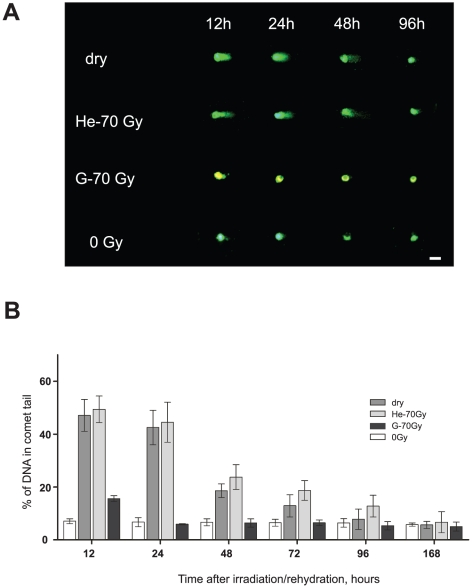
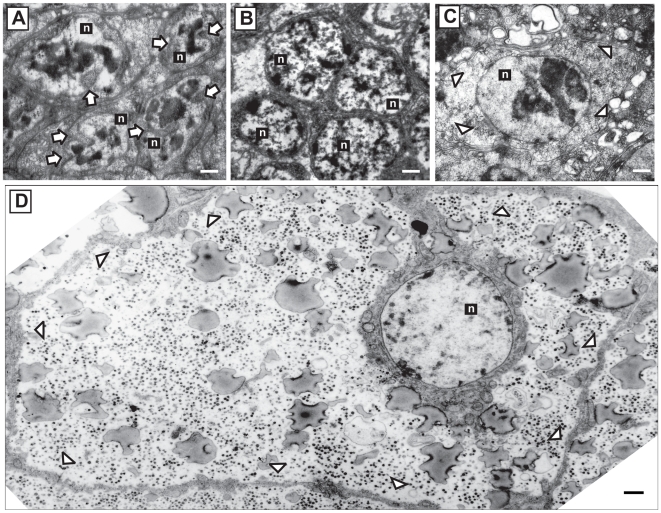
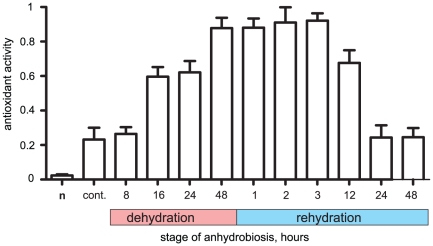
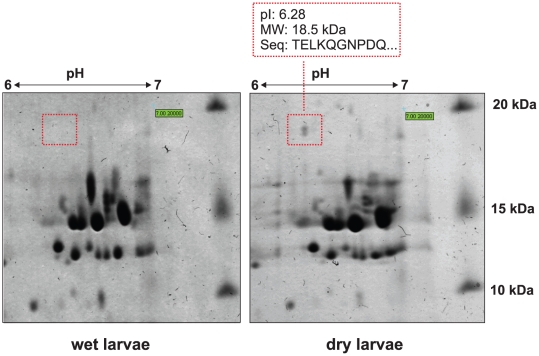
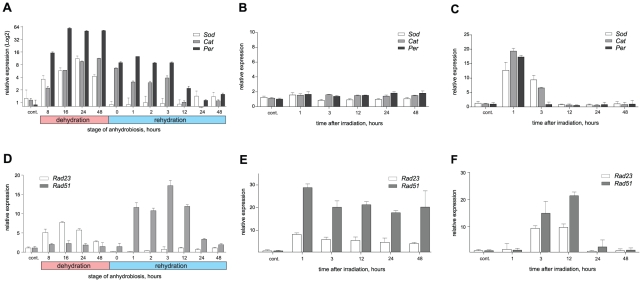
Anhydrobiotic chironomid larvae can withstand prolonged complete desiccation as well as other external stresses including ionizing radiation. To understand the cross-tolerance mechanism, we have analyzed the structural changes in the nuclear DNA using transmission electron microscopy and DNA comet assays in relation to anhydrobiosis and radiation. We found that dehydration causes alterations in chromatin structure and a severe fragmentation of nuclear DNA in the cells of the larvae despite successful anhydrobiosis. Furthermore, while the larvae had restored physiological activity within an hour following rehydration, nuclear DNA restoration typically took 72 to 96 h. The DNA fragmentation level and the recovery of DNA integrity in the rehydrated larvae after anhydrobiosis were similar to those of hydrated larvae irradiated with 70 Gy of high-linear energy transfer (LET) ions ((4)He). In contrast, low-LET radiation (gamma-rays) of the same dose caused less initial damage to the larvae, and DNA was completely repaired within within 24 h. The expression of genes encoding the DNA repair enzymes occurred upon entering anhydrobiosis and exposure to high- and low-LET radiations, indicative of DNA damage that includes double-strand breaks and their subsequent repair. The expression of antioxidant enzymes-coding genes was also elevated in the anhydrobiotic and the gamma-ray-irradiated larvae that probably functions to reduce the negative effect of reactive oxygen species upon exposure to these stresses. Indeed the mature antioxidant proteins accumulated in the dry larvae and the total activity of antioxidants increased by a 3-4 fold in association with anhydrobiosis. We conclude that one of the factors explaining the relationship between radioresistance and the ability to undergo anhydrobiosis in the sleeping chironomid could be an adaptation to desiccation-inflicted nuclear DNA damage. There were also similarities in the molecular response of the larvae to damage caused by desiccation and ionizing radiation.
Overview
The claims and statistics of this paper haven’t been checked yet.
Free: it reads the open-access text and checks the first 5 claims that cite a source we can check. Create a free account to check every claim.
Integrity signals
Registry
Cites
Statistics
Figures
Verification
Claims the paper makes
The claims and statistics of this paper haven’t been checked yet.
Free: it reads the open-access text and checks the first 5 claims that cite a source we can check. Create a free account to check every claim.
Self-check
Percentages, sums and reported differences re-computed from the paper’s own numbers.
The self-check needs the paper’s full text.
Citations
Cites
Antioxidants, Oxidative Damage and Oxygen Deprivation Stress: a Review
BLOKHINA, O. (2003) · Annals of Botany · doi:10.1093/aob/mcf118 · Cited by 4,002 · cited 15×
“In a series of irradiation studies [7,16,36], it has been demonstrated that dried larvae show higher tolerance to both high-LET (directly causing DNA breaks) and low-LET (causing increase of reactive oxygen species (ROS) in the irradiated tissues) irradiation, measured by short-term survival compared with physiologica…”
BackgroundInfluentialDeinococcus radiodurans — the consummate survivor
Cox, M. M., & Battista, J. R. (2005) · Nature Reviews Microbiology · doi:10.1038/nrmicro1264 · Cited by 741 · cited 1×
“Concerning this point, genetic adaptations to anhydrobiosis in the sleeping chironomid show some functional analogies with those of the radiotolerant bacteria Deinococcus radiodurans [23,60], in which both desiccation and irradiation cause severe DNA damage, followed by prolonged DNA recovery period associated with de…”
BackgroundMassive Horizontal Gene Transfer in Bdelloid Rotifers
Gladyshev, E. A., Meselson, M., & Arkhipova, I. R. (2008) · Science · doi:10.1126/science.1156407 · Cited by 499 · cited 1×
“In addition, recent studies have suggested that DNA breaks take place in other anhydrobionts such as bdelloid rotifers [30,65].”
BackgroundRad23 links DNA repair to the ubiquitin/proteasome pathway
Schauber, C., Chen, L., Tongaonkar, P., Vega, I., Lambertson, D., Potts, W., & Madura, K. (1998) · Nature · doi:10.1038/35661 · Cited by 457 · cited 1×
“DNA excision repair and different types of DNA damage recognition [40]; and Rad51 (HM062773), whose protein”
BackgroundProtein Oxidation Implicated as the Primary Determinant of Bacterial Radioresistance
Daly, M. J., Gaidamakova, E. K., Matrosova, V. Y., Vasilenko, A., Zhai, M., Leapman, R. D., Lai, B., Ravel, B., Li, S.-M. W., Kemner, K. M., et al. (2007) · PLoS Biology · doi:10.1371/journal.pbio.0050092 · Cited by 436 · cited 1×
“In addition, being anhydrobiotic confers cross-tolerance to various other extreme environmental stressors, including different types of radiation [7,8,9,10,11,12,13].”
BackgroundOxidative stress and its effects during dehydration
França, M. B., Panek, A. D., & Eleutherio, E. C. A. (2007) · Comparative Biochemistry and Physiology Part A: Molecular & Integrative Physiology · doi:10.1016/j.cbpa.2006.02.030 · Cited by 422 · cited 17×
“water loss on biomolecules upon post dry-state rehydration [3,6].”
BackgroundInfluentialTardigrades survive exposure to space in low Earth orbit
Jönsson, K. I., Rabbow, E., Schill, R. O., Harms-Ringdahl, M., & Rettberg, P. (2008) · Current Biology · doi:10.1016/j.cub.2008.06.048 · Cited by 415
Constraints of tolerance: why are desiccation-tolerant organisms so small or rare?
Alpert, P. (2006) · Journal of Experimental Biology · doi:10.1242/jeb.02179 · Cited by 344 · cited 3×
“The enhanced protection and repair of DNA might also be responsible for the cross-tolerance to ionizing radiation [2,7,10,13, 22,23].”
BackgroundLessons from nature: the role of sugars in anhydrobiosis
Crowe, L. M. (2002) · Comparative Biochemistry and Physiology Part A: Molecular & Integrative Physiology · doi:10.1016/s1095-6433(01)00503-7 · Cited by 329 · cited 1×
“hydrophilic proteins which prevent the biomolecules from irreversible aggregation [1,5,12,21,43].”
BackgroundRecombination at Double-Strand Breaks and DNA Ends
Cromie, G. A., Connelly, J. C., & Leach, D. R. F. (2001) · Molecular Cell · doi:10.1016/s1097-2765(01)00419-1 · Cited by 325
Cited by
Hashimoto, T., Horikawa, D. D., Saito, Y., Kuwahara, H., Kozuka-Hata, H., Shin-I, T., Minakuchi, Y., Ohishi, K., Motoyama, A., Aizu, T., et al. (2016) · Nature Communications · doi:10.1038/ncomms12808 · Cited by 394
Gusev, O., Suetsugu, Y., Cornette, R., Kawashima, T., Logacheva, M. D., Kondrashov, A. S., Penin, A. A., Hatanaka, R., Kikuta, S., Shimura, S., et al. (2014) · Nature Communications · doi:10.1038/ncomms5784 · Cited by 151
Self-citationThe induction of anhydrobiosis in the sleeping chironomid: Current status of our knowledge
Cornette, R., & Kikawada, T. (2011) · IUBMB Life · doi:10.1002/iub.463 · Cited by 127
“catalase and several superoxide dismutase genes were identified, and their expression was upregulated during the desiccation process (19, 21) (Fig.”
BackgroundSelf-citationComparative genomics of bdelloid rotifers: Insights from desiccating and nondesiccating species
Nowell, R. W., Almeida, P., Wilson, C. G., Smith, T., Fontaneto, D., Crisp, A., Micklem, G., Tunnacliffe, A., Boschetti, C., & Barraclough, T. G. (2018) · PLoS Biology · doi:10.1371/journal.pbio.2004830 · Cited by 118
Ecological and Societal Services of Aquatic Diptera
Adler, P. H., & Courtney, G. W. (2019) · Insects · doi:10.3390/insects10030070 · Cited by 118
“These larvae experience severe DNA damage but have an efficient repair mechanism [137].”
BackgroundDNA Protection Protein, a Novel Mechanism of Radiation Tolerance: Lessons from Tardigrades
Hashimoto, T., & Kunieda, T. (2017) · Life · doi:10.3390/life7020026 · Cited by 92
“made 40–50% of DNA fragmented, and this is comparable to DNA damage induced by irradiation with a 70-Gy He ion-beam [52].”
BackgroundHatanaka, R., Hagiwara‐Komoda, Y., Furuki, T., Kanamori, Y., Fujita, M., Cornette, R., Sakurai, M., Okuda, T., & Kikawada, T. (2013) · Insect Biochemistry and Molecular Biology · doi:10.1016/j.ibmb.2013.08.004 · Cited by 85
Self-citationRadiation Tolerance in Tardigrades: Current Knowledge and Potential Applications in Medicine
Jonsson, K. (2019) · Cancers · doi:10.3390/cancers11091333 · Cited by 91
“[79] reported upregulation of genes for DNA repair (Rad23, Rad51) after both desiccation and radiation (4He, γ-ray), and for antioxidants (catalase, Cu/Zn-superoxide dismutase, glutathione peroxidase) after desiccation and γ-radiation, supporting the cross-tolerance hypothesis.”
BackgroundIntroduction to desiccation biology: from old borders to new frontiers
Leprince, O., & Buitink, J. (2015) · Planta · doi:10.1007/s00425-015-2357-6 · Cited by 82
“RNA and DNA undergo structural rearrangements and fragmentation, and chromatin stability is compromised (Leprince et al. 1995; Faria et al. 2005; Potts et al. 2005; Gusev et al. 2010; Dinakar and Bartels 2012).”
Ryabova, A., Cornette, R., Cherkasov, A. V., Watanabe, M., Okuda, T., Shagimardanova, E. I., Kikawada, T., & Gusev, O. (2020) · Proceedings of the National Academy of Sciences · doi:10.1073/pnas.2003650117 · Cited by 79
“At the biochemical level, several groups of biomolecules, including LEA proteins, various anti-oxidants, and heat-shock proteins, act coordinately as anhy-droprotectants (4, 6, 10).”
Self-citationResponses of invertebrates to temperature and water stress: A polar perspective
Everatt, M. J., Convey, P., Bale, J. S., WORLAND, M. R., & Hayward, S. A. L. (2014) · Journal of Thermal Biology · doi:10.1016/j.jtherbio.2014.05.004 · Cited by 74
Beltrán-Pardo, E., Jonsson, K., Harms‐Ringdahl, M., Haghdoost, S., & Wójcik, A. (2015) · PLoS ONE · doi:10.1371/journal.pone.0133658 · Cited by 81
“In the desiccation and radiation tolerant chironomid Polypedilum vanderplanki, radioresistance was associated with repair of damaged DNA, and repair was also indicated after desiccation [27].”
Hespeels, B., Knapen, M. F. C. M., Mambres, D. H., Heuskin, A., Pineux, F., Lucas, S., Koszul, R., & Doninck, K. V. (2014) · Journal of Evolutionary Biology · doi:10.1111/jeb.12326 · Cited by 73
Insects With Survival Kits for Desiccation Tolerance Under Extreme Water Deficits
Thorat, L., & Nath, B. B. (2018) · Frontiers in Physiology · doi:10.3389/fphys.2018.01843 · Cited by 62
Tyson, T., Zamora, G. O., Wong, S. C. K., Skelton, M., Daly, B., Jones, J. T., Mulvihill, E., Elsworth, B., Phillips, M., Blaxter, M., et al. (2012) · BMC Research Notes · doi:10.1186/1756-0500-5-68 · Cited by 67
“vanderplanki [138] and anhydrobiotic tardigrades [139,140], D.”
BackgroundRole of Intrinsic Disorder in Animal Desiccation Tolerance
Janis, B. R., Belott, C. J., & Menze, M. A. (2018) · PROTEOMICS · doi:10.1002/pmic.201800067 · Cited by 51
Gadawski, P., Montagna, M., Rossaro, B., Giłka, W., PESIC, V. M., Grabowski, M., & Magoga, G. (2022) · Diversity and Distributions · doi:10.1111/ddi.13504 · Cited by 48
“…terrestrial animals permanently inhabiting Antarctica, which has the smallest genome of any sequenced insect species so far (Bernabò et al., 2011 ; Gusev et al., 2010 ; Ha & Choi, 2008 ; Kelley et al., 2014 ; Kreiling et al., 2018 ; Lee et al., 2006 ; Mazin et al., 2018 ; Panis et al., 1995;…”
BackgroundMarks, R. A., Ekwealor, J. T. B., Artur, M. A. S., Bondi, L., Boothby, T. C., Carmo, O. M. S., Centeno, D. C., Coe, K. K., Dace, H. J. W., Field, S., et al. (2025) · Nature Communications · doi:10.1038/s41467-025-58656-y · Cited by 55
“…is mitigated by DNA-binding proteins that enhance desiccation protection 136 but there is also evidence of upregulated DNA repair machinery during drying 98 ,suggestingthatbothDNAprotectionandrepaircontributeto establishing the maintenanceof DNA integrity when the cells reach the desiccated state.”
Dry up and survive: the role of antioxidant defences in anhydrobiotic organisms
Rebecchi, L. (2013) · Journal of Limnology · doi:10.4081/jlimnol.2013.s1.e8 · Cited by 46
“…oxygen partial pressure, and light exposure are responsible for the decrease of long-term anhydrobiotic survival as these abiotic factors induce damages that are accumulated in proportion to the time spent in the desiccated state (Neumann et al., 2009; Rebecchi et al., 2009b; Gusev et al., 2010).”
BackgroundKinkar, L., Young, N. D., Sohn, W., Stroehlein, A. J., Korhonen, P. K., & Gasser, R. B. (2020) · PLoS neglected tropical diseases · doi:10.1371/journal.pntd.0008552 · Cited by 38
Beltrán-Pardo, E., Jonsson, K., Wójcik, A., Haghdoost, S., Harms‐Ringdahl, M., Bermúdez‐Cruz, R. M., & Bernal, J. E. (2013) · PLoS ONE · doi:10.1371/journal.pone.0072098 · Cited by 38
“Evidence of DNA repair induced by desiccation and radiation has also been reported in some other desiccation and radiation tolerant animals, such as rotifers [34] and insects [35].”
BackgroundClark-Hachtel, C. M., Hibshman, J. D., Buysscher, T. D., Stair, E. R., Hicks, L. M., & Goldstein, B. (2024) · Current Biology · doi:10.1016/j.cub.2024.03.019 · Cited by 41
Mazin, P., Shagimardanova, E. I., Kozlova, O., Cherkasov, A. V., Sutormin, R. A., Stepanova, V. V., Stupnikov, A., Logacheva, M. D., Penin, A. A., Sogame, Y., et al. (2018) · Proceedings of the National Academy of Sciences · doi:10.1073/pnas.1719493115 · Cited by 39
“The expanded group of thioredoxins and other antioxidant enzymes protect proteins against dehydration-induced oxidative stress (4, 6).”
BackgroundSelf-citationGiovannini, I., Altiero, T., Guidetti, R., & Rebecchi, L. (2017) · Journal of Experimental Biology · doi:10.1242/jeb.160622 · Cited by 28
“…et al., 2016), the increase in the synthesis and activity of these molecules during the egg development of A. antarcticus could be responsible for the different tolerance to UV radiation, similarly to that shown in the larvae of the chironomid Polypedilum vanderplanki (see Gusev et al., 2010).”
Chironomid Midges (Diptera, Chironomidae) Show Extremely Small Genome Sizes
Cornette, R., Gusev, O., Nakahara, Y., Shimura, S., Kikawada, T., & Okuda, T. (2015) · ZOOLOGICAL SCIENCE · doi:10.2108/zs140166 · Cited by 39
“vanderplanki experience massive DNA damage after anhydrobiosis and efficient DNA repair occurs during the few days following rehydration (Gusev et al., 2010).”
BackgroundSelf-citationCurrent findings on the molecular mechanisms underlying anhydrobiosis in Polypedilum vanderplanki
Sogame, Y., & Kikawada, T. (2016) · Current Opinion in Insect Science · doi:10.1016/j.cois.2016.10.008 · Cited by 30
Self-citationHespeels, B., Li, X., Flot, J., Pigneur, L., Malaisse, J., Silva, C. D., & Doninck, K. V. (2015) · PLoS ONE · doi:10.1371/journal.pone.0131313 · Cited by 29
“Anhydrobiosis is not common among metazoans and is often restricted to particular developmental stages such as the resting eggs of the monogonont rotifers [8] and Daphnia [9], the cysts of some crustaceans such as Artemia [10], and the larvae of a few insect species, including chironomids [11].”
BackgroundRyabova, A., Mukae, K., Cherkasov, A., Cornette, R., Shagimardanova, E., Sakashita, T., Okuda, T., Kikawada, T., & Gusev, O. (2016) · Extremophiles · doi:10.1007/s00792-016-0888-9 · Cited by 20
Self-citationThorat, L., Oulkar, D. P., Banerjee, K., Gaikwad, S. M., & Nath, B. B. (2017) · Scientific Reports · doi:10.1038/s41598-017-03572-5 · Cited by 26
JÖNSSON, I. K., Beltrán-Pardo, E., Haghdoost, S., Wójcik, A., Bermúdez‐Cruz, R. M., Bernal, J. E., & Harms‐Ringdahl, M. (2013) · Journal of Limnology · doi:10.4081/jlimnol.2013.s1.e9 · Cited by 22
“Such antioxidant activities have been reported in radiation and desiccation tolerant chironomid larvae after irradiation (Gusev et al., 2010) and also in the eutardigrade Paramacrobiotus richtersi (Murray, 1911) in connection with desiccation (Rizzo et al., 2010).”
BackgroundPark, H. K., Lee, D., Lee, H., & Hong, S. (2020) · Materials Horizons · doi:10.1039/c9mh01448a · Cited by 24
Cornette, R., Yamamoto, N., Yamamoto, M., Kobayashi, T., Na, P., Gusev, O., Shimura, S., Kikawada, T., Pemba, D. F., & Okuda, T. (2017) · Systematic Entomology · doi:10.1111/syen.12248 · Cited by 20
“Furthermore, important production of reactive oxygen species is associated with desiccation stress and anhydrobiotic larvae express a large array of antioxidants and repair enzymes to cope with this oxidative stress (Cornette et al., 2010; Gusev et al., 2010b; Cornette & Kikawada, 2011).”
BackgroundSelf-citationYamada, T., Suetsugu, Y., Deviatiiarov, R. M., Gusev, O., Cornette, R., Nesmelov, A. A., Hiroi, N. F., Kikawada, T., & Funahashi, A. (2018) · Scientific Reports · doi:10.1038/s41598-018-36124-6 · Cited by 24
Self-citationKikuta, S., Watanabe, S. J., Sato, R., Gusev, O., Nesmelov, A. A., Sogame, Y., Cornette, R., & Kikawada, T. (2017) · Scientific Reports · doi:10.1038/s41598-017-06945-y · Cited by 21
Self-citationAntioxidant Response during the Kinetics of Anhydrobiosis in Two Eutardigrade Species
Giovannini, I., Corsetto, P. A., Altiero, T., Montorfano, G., Guidetti, R., Rizzo, A. M., & Rebecchi, L. (2022) · Life · doi:10.3390/life12060817 · Cited by 19
“In addition, a similar up-regulation of the catalase gene during the desiccation process and a successive decrease of its expression during rehydration were detected in the larvae of the desiccation tolerant insect Polypedilum vanderplanki [29,71,72], indicating that catalase and antioxidants—synthetized before enteri…”
BackgroundDNA Replication and Repair in Halophiles
Kish, A., & DiRuggiero, J. (2012) · Springer eBooks · doi:10.1007/978-94-007-5539-0_7 · Cited by 16
Moris, V. C., Bruneau, L., Berthe, J., Heuskin, A., Penninckx, S., Ritter, S., Weber, U. A., Durante, M., Danchin, É., Hespeels, B., et al. (2024) · BMC Biology · doi:10.1186/s12915-023-01807-8 · Cited by 19
“vanderplanki insect larvae proteins of HR (Rad23 and 465 Rad51) were upregulated both after desiccation and high- and low-LET radiation [86], while in 466 tardigrades all major repair pathways appear expressed [87].”
BackgroundBeltrán-Pardo, E., JÖNSSON, I. K., Wójcik, A., Haghdoost, S., Bermúdez‐Cruz, R. M., & Bernal, J. E. (2013) · Journal of Limnology · doi:10.4081/jlimnol.2013.s1.e10 · Cited by 15
“Our results complement the comet assay studies (Neumann et al., 2009; Gusev et al., 2010) that revealed the DNA damage caused by desiccation and radiation, by showing that the homologous repair system is activated when double strand breaks are present in somatic cells.”
BackgroundResultInfluentialWestover, C. D., Najjar, D., Meydan, C., Grigorev, K. A., Veling, M. T., Chang, R. L., Chin, C. R., Butler, D., Afshin, E. E., Silver, P. A., et al. (2020) · bioRxiv (Cold Spring Harbor Laboratory) · doi:10.1101/2020.11.10.373571 · Cited by 18
Nesmelov, A. A., Cornette, R., Gusev, O., & Kikawada, T. (2018) · Advances in experimental medicine and biology · doi:10.1007/978-981-13-1244-1_14 · Cited by 14
Self-citationYoshida, Y., Shaikhutdinov, N., Kozlova, O., Itoh, M., Tagami, M., Murata, M., Nishiyori-Sueki, H., Kojima-Ishiyama, M., Noma, S., Cherkasov, A. V., et al. (2022) · NAR Genomics and Bioinformatics · doi:10.1093/nargab/lqac029 · Cited by 20
“We have previously observed extensive DNA damage during larvae anhydrobiosis and the induction of Rad51, an activator of double strand break repair during recovery (9).”
BackgroundSelf-citationSeasonal changes in recombination characteristics in a natural population of Drosophila melanogaster
Aggarwal, D. D., Rybnikov, S., Sapielkin, S., Rashkovetsky, E., Frenkel, Z., Singh, M., Michalak, P., & Korol, A. B. (2021) · Heredity · doi:10.1038/s41437-021-00449-2 · Cited by 12
Yoshida, Y., & Tanaka, S. (2022) · Insects · doi:10.3390/insects13060557 · Cited by 12
Chironomus ramosus larvae exhibit DNA damage control in response to gamma radiation
Datkhile, K. D., Gaikwad, P. S., Ghaskadbi, S., Mukhopadhyaya, R., & Nath, B. B. (2015) · International Journal of Radiation Biology · doi:10.3109/09553002.2015.1062572 · Cited by 12
“Resistance to radiation here is suggested to be a consequence of their evolutionary adaptation to survive desiccation as both radiation and desiccation are DNA damage stressors (Gusev et al. 2010).”
BackgroundLi, X., Fang, C., Zhao, J.-P., Zhou, X., Ni, Z., & Niu, D. (2020) · BMC Genomics · doi:10.1186/s12864-020-06865-8 · Cited by 12
“Desiccation is a widely observed cause of DSB formation in bacteria, plants and animals, including bdelloid rotifers [33-35, 64-72].”
BackgroundTracing the serendipitous genesis of radiation resistance
Ujaoney, A. K., Anaganti, N., Padwal, M. K., & Basu, B. (2023) · Molecular Microbiology · doi:10.1111/mmi.15208 · Cited by 12
“…spores, mycospores, yeasts, plants, anhydrobiotic chironomid larvae, nematodes, tardigrades, etc. are more radio-resistant than respective vegetative forms, as radioly-sis of water is diminished in practically dry environments (Gusev et al., 2010; Moeller et al., 2014; Schill et al., 2009).”
BackgroundInfluentialShared Features Underlying Compact Genomes and Extreme Habitat Use in Chironomid Midges
Nell, L. A., Weng, Y., Phillips, J. S., Botsch, J. C., Book, K. R., Einarsson, Á., Ives, A. R., & Schoville, S. D. (2024) · Genome Biology and Evolution · doi:10.1093/gbe/evae086 · Cited by 12
“The extent to which shared genomic features underlie the extreme physiology and diverse habitat use of chirono-mids is largely unknown.”
Horizontal Gene Transfer in Metazoa: Examples and Methods
Yoshida, Y., Nowell, R. W., Arakawa, K., & Blaxter, M. (2019) · Springer eBooks · doi:10.1007/978-3-030-21862-1_7 · Cited by 11
Anderson, J. M., & Hand, S. C. (2021) · Journal of Experimental Biology · doi:10.1242/jeb.238204 · Cited by 10
Everatt, M. J., WORLAND, M. R., Convey, P., Bale, J. S., & Hayward, S. A. L. (2013) · Physiological Entomology · doi:10.1111/phen.12011 · Cited by 9
Richaud, M., Shrivastava, R., Xirodimas, D. P., Galas, S., & Bailly, A. (2025) · Science Advances · doi:10.1126/sciadv.adx9669 · Cited by 11
Yoshida, Y., Hirayama, A., & Arakawa, K. (2024) · Proceedings of the Japan Academy Series B · doi:10.2183/pjab.pjab.100.023 · Cited by 8
Advances in induced anhydrobiosis for cell and gamete storage
Loi, P., Palazzese, L., Moncada, M., Sterzo, M. L., Iuso, D., Czernik, M., Wakayama, T., & Kikawada, T. (2025) · Trends in biotechnology · doi:10.1016/j.tibtech.2025.02.010 · Cited by 9
Self-citationRenault, D., Puzin, C., Foucreau, N., Bouchereau, A., & Pétillon, J. (2016) · Journal of Insect Physiology · doi:10.1016/j.jinsphys.2016.05.005 · Cited by 7
Lapointe, M., Laframboise, T., Pirkkanen, J., Tai, T. C., Lees, S. J., Maria, S. R. S., Tharmalingam, S., Boreham, D. R., & Thome, C. (2024) · Health Physics · doi:10.1097/hp.0000000000001804 · Cited by 6
Environmental Adaptations: Radiation Tolerance
Jonsson, K., Levine, E. B., Wójcik, A., Haghdoost, S., & Harms‐Ringdahl, M. (2018) · Zoological monographs · doi:10.1007/978-3-319-95702-9_12 · Cited by 10
Trends and Emerging Hotspots in Toxicology of Chironomids: A Comprehensive Bibliometric Analysis
Liu, W., Pei, W.-X., Shao, Z.-M., Nie, J.-X., Cao, W., & Yan, C. (2025) · Insects · doi:10.3390/insects16060639 · Cited by 7
“Another common physical treatment method is dehydration, and Polypedilum vanderplanki has received more attention due to its strong dehydration ability, living in arid Africa [121–123].”
Cornette, R., Indo, H. P., Iwata, K.-I., Hagiwara‐Komoda, Y., Nakahara, Y., Gusev, O., Kikawada, T., Okuda, T., & Majima, H. J. (2023) · Mitochondrion · doi:10.1016/j.mito.2023.11.002 · Cited by 7
Self-citationZhirov, S. V., Na, P., Cornette, R., Shimura, S., Gusev, O., Pemba, D. F., Kikawada, T., & Okuda, T. (2015) · Comparative Cytogenetics · doi:10.3897/compcytogen.v9i2.9104 · Cited by 5
“In addition, desiccation-rehydration cycles are known to induce severe lesions to DNA and subsequent repair (Gusev et al. 2010).”
BackgroundInfluentialSelf-citationLife-On-Hold: Lanthanoids Rapidly Induce a Reversible Ametabolic State in Mammalian Cells
Суббот, А. М., Kondratieva, S., Novikov, I. A., Gogoleva, N. E., Kozlova, O., Chebotar, I. V., Gazizova, G. R., Ryabova, A. V., Vorontsova, M. V., Kikawada, T., et al. (2021) · Biology · doi:10.3390/biology10070607 · Cited by 5
Self-citationPossible roles of CAHS proteins from Tardigrade in osmotic stress tolerance in mammalian cells
Bino, T., Goto, Y., Maryu, G., Arakawa, K., & Aoki, K. (2024) · Cell Structure and Function · doi:10.1247/csf.24035 · Cited by 5
“…abundant (LEA) proteins (Goyal et al. , 2005; Kikawada et al. , 2006; MacRae, 2016), heat shock proteins (Cornette et al. , 2010; King and MacRae, 2015), and ROS scavenging (Gusev et al. , 2010; Rizzo et al. , 2010) have been proposed as mechanisms of desiccation tolerance (Janis et al. , 2018).”
Nilsson, C., JÖNSSON, I. K., & Pallon, J. (2013) · Journal of Limnology · doi:10.4081/jlimnol.2013.s1.e11 · Cited by 4
“on insect larvae (Gusev et al., 2010) and rotifers (Glady-”
BackgroundKondratyeva, S. A., Voronina, T. A., Nesmelov, A. A., Miyata, Y., Tokumoto, S., Cornette, R., Vorontsova, M. V., Kikawada, T., Gusev, O., & Shagimardanova, E. I. (2022) · Biology · doi:10.3390/biology11040487 · Cited by 9
“vanderplanki during desiccation, successfully mitigating oxidative damage during desiccation [10,39].”
BackgroundSelf-citationMoris, V. C., Bruneau, L., Berthe, J., Heuskin, A., Penninckx, S., Ritter, S., Weber, U. A., Durante, M., Danchin, É., Hespeels, B., et al. (2023) · bioRxiv (Cold Spring Harbor Laboratory) · doi:10.1101/2023.06.16.545282 · Cited by 4
LEA4 Protein Is Likely to Be Involved in Direct Protection of DNA Against External Damage
Ryabova, A., Cherkasov, A. V., Yamaguchi, R., Cornette, R., Kikawada, T., & Gusev, O. (2016) · BioNanoScience · doi:10.1007/s12668-016-0275-0 · Cited by 3
“vanderplanki larvae both in dry and rehydrated state was shown an outstanding endurance to various abiotic stresses, as extreme fluctuation of temperatures, hypoxia, hydrostatic pressures, chemicals, vacuum, and different types of ionizing or electromagnetic radiation exposure [7].”
BackgroundSelf-citationPolkowski, T., Mroczkowska, A., Kotrys, B., Górecki, A., Hrynowiecka, A., Żarski, M., Błaszkiewicz, M., Nitychoruk, J. A., Czajkowska, M., Lauterbach, S., et al. (2025) · Climate of the past · doi:10.5194/cp-21-1779-2025 · Cited by 2
“…which implies a high efficiency of population reproduction, faster colonisation rate and high fertility (Lencioni, 2004; Nondula et al., 2004; Do-nato and Paggi, 2008; Orel and Semenchenko, 2019; Lack-mann et al., 2020), as well as a short DNA chain (Gusev et al., 2010; Cornette et al., 2015) .”
Belott, C. J., Gusev, O., Kikawada, T., & Menze, M. A. (2024) · Cell Stress and Chaperones · doi:10.1016/j.cstres.2024.04.002 · Cited by 3
Self-citationAdineta vaga under fire: simulating the impact of radiation
Perrot, A., Hespeels, B., Doninck, K. V., & Heuskin, A. (2023) · Hydrobiologia · doi:10.1007/s10750-023-05324-1 · Cited by 1
“…that induces cellular damages ( e.g. , protein aggregation and denaturation), DNA damages, leakage of cellular membranes and generation of reactive oxygen species (ROS) (Potts, 1994; Mattimore & Battista, 1996; Shirkey, 2003; Alpert, 2005; Gusev et al., 2010; Crowe, 2014; Hespeels et al., 2014).”
Deviatiiarov, R. M., Shagimardanova, E. I., & Kikawada, T. (2016) · BioNanoScience · doi:10.1007/s12668-016-0312-z · Cited by 2
Self-citationInvolvement of Heat Shock Proteins in Invertebrate Anhydrobiosis
Nesmelov, A. A., Shagimardanova, E. I., Kikawada, T., & Gusev, O. (2018) · Heat shock proteins · doi:10.1007/978-3-319-90725-3_10 · Cited by 2
Self-citationDíaz-Castillo, C. (2017) · Wiley eBooks · doi:10.1002/9780470015902.a0027509 · Cited by 1
Tardigrades Dramatically Upregulate DNA Repair Pathway Genes in Response to Ionizing RadiationPreprint
Clark-Hachtel, C. M., Hibshman, J. D., Buysscher, T. D., & Goldstein, B. (2023) · bioRxiv (Cold Spring Harbor Laboratory) · doi:10.1101/2023.09.07.556677 · Cited by 1
Yoshida, Y., Hirayama, A., & Arakawa, K. (2024) · bioRxiv (Cold Spring Harbor Laboratory) · doi:10.1101/2024.02.01.578372 · Cited by 1
de Paz, M., & José, P. (2014) · Revista 100cias@uned
Okuda, T. (2012) · Springer eBooks · doi:10.1007/978-94-007-3010-6_134
Self-citationStress ecophysiology of polar terrestrial invertebrates and the impact of climate change
Everatt, M. J. (2014) · University of Birmingham Institutional Research Archive (University of Birmingham)
LeBlanc, B. M. (2020) · Louisiana State University · doi:10.31390/gradschool_dissertations.5269
<2012年度アフリカ学会学術大会「アフリカ生物学フォーラム」報告>アフリカ学としての生物学をかんがえる
太郎, 足., 奥田隆, 大輔, 清., 祐二, 竹., 若菜, 椎., & 山極, 寿. (2012) · Journal of African Studies · doi:10.11619/africa.2012.81_45
Belott, C. J. (2021) · ThinkIR: The University of Louisville's Institutional Repository (University of Louisville) · doi:10.18297/etd/3778
de Moraes, V. N. (2023) · Digital Library of Theses and Dissertations (Universidade de São Paulo) · doi:10.11606/t.17.2023.tde-29062023-134910
Shagimardanova, E. I., Sharipova, M. R., Rizvanov, A. A., Захаров, И. С., & Gusev, O. (2012) · Genes and Cells
Self-citationHiki, Y., Yamada, T., Cornette, R., Gusev, O., Shagimardanova, E., Kikawada, T., & Funahashi, A. (2026) · Biochemical and Biophysical Research Communications · doi:10.1016/j.bbrc.2026.153267
Self-citationDesiccation tolerance mechanisms in the green lineage and beyond
Schuster, J. M., & VanBuren, R. (2026) · New Phytologist · doi:10.1111/nph.71466
“For example, RAD51-mediated double-strand breakrepairsupportsrecoveryfromdesiccation-relatedstressacross species,withrehydration-inducedexpressionin Polypedilum vanderplanki and reduced germination and survival in maize mutants (Li et al ., 2007; Gusev et al ., 2010).”
Bucher, M. J., Rivera-Madera, A., & Green, E. R. (2026) · Infection and Immunity · doi:10.1128/iai.00557-25
“Prior to cytoplasmic vitrification, desiccation-tolerant organisms also induce the production of DNA repair and oxidative stress response proteins (67), allowing the cell to rapidly manage the stress that ensues as the vitrified state collapses under rehydration.”
Skubała, K., Chowaniec, K., Mrozek, T., Bąkała, J., Podgórski, P., Latkowska, E., Myśliwa‐Kurdziel, B., Boroń, P., Lenart-Boroń, A. M., Bulanda, K., et al. (2026) · Plant Physiology and Biochemistry · doi:10.1016/j.plaphy.2026.111756
“This leads to sudden and uncontrolled dehydration that disrupts the membrane structure, concentrates solutes to harmful levels, and accelerates damage to proteins and nucleic acids (Gusev et al., 2010).”
Haplotype-resolved genome of a dry-preservable cell line reveals chromosome evolution and DNA damage
Yoshida, Y., & Kikawada, T. (2026) · Life Science Alliance · doi:10.26508/lsa.202603719
“Nevertheless, persistent DNA damage up to 72 h after rehydration in larvae suggests that genome protection during desiccation can be incomplete (Gusev et al, 2010).”
Self-citation
Metadata
- Authors
- Gusev, O., Nakahara, Y., Vanyagina, V., Malutina, L., Cornette, R., Sakashita, T., Hamada, N., Kikawada, T., Kobayashi, Y., & Okuda, T.
- Affiliations
- Kazan Federal University (RU)
- Institute of Agrobiological Sciences (JP)
- Japan Atomic Energy Agency (JP)
- Central Research Institute of Electric Power Industry (JP)
- Corresponding author
- Okuda, Takashi
- ORCID
- Venue
- PLoS ONE
- Publisher
- Public Library of Science (PLoS)
- Published
- 2010-11-16
- Volume
- 5
- Issue
- 11
- Pages
- e14008
- ISSN
- 1932-6203 (ISSN-L)
- PMC
- PMC2982815
- OpenAlex
- W2068642632
- Cited by
- 87
- References
- 73
- Citations by year
- 2026: 5 · 2025: 6 · 2024: 8 · 2023: 6 · 2022: 5 · 2021: 4 · 2020: 6 · 2019: 3 · 2018: 8 · 2017: 6 · 2016: 6 · 2015: 6 · 2014: 5 · 2013: 7 · 2012: 5
- FWCI
- 4.42
- Type
- journal article
- Language
- en
- Open access
- gold
- doi.org
- Locations
- PLoS ONE (publishedVersion, cc-by)
- PubMed Central (publishedVersion, cc-by)
- PubMed (publishedVersion)
- DOAJ (DOAJ: Directory of Open Access Journals) (submittedVersion, cc-by-sa)
- zvestiya of the National Academy of Sciences of Belarus (National Academy of Sciences of Belarus) (submittedVersion)
- Funders
- Japan Society for the Promotion of Science (21688004)
- Topics
- Life Sciences › Agricultural and Biological Sciences › Ecology, Evolution, Behavior and Systematics › Tardigrade Biology and Ecology
- Health Sciences › Medicine › Radiology, Nuclear Medicine and Imaging › Effects of Radiation Exposure
- Physical Sciences › Environmental Science › Ecology › Physiological and biochemical adaptations
- Keywords
- anhydrobiosis, nuclear DNA damage, DNA repair, radioresistance (biology), chironomid larvae, desiccation stress, ionizing radiation, gamma radiation, chromatin structure, DNA fragmentation, DNA double-strand breaks, antioxidant enzymes, reactive oxygen species, cross-tolerance, rehydration
- MeSH terms
- Animals, Catalase, Cell Nucleus, Chironomidae, Dehydration, DNA Damage, DNA Repair, Glutathione Peroxidase, Larva, Molecular Sequence Data, Radiation Tolerance, Superoxide Dismutase, Electrophoresis, Gel, Two-Dimensional, Sequence Analysis, DNA, DNA, Complementary, Reverse Transcriptase Polymerase Chain Reaction, Comet Assay, Microscopy, Electron, Transmission, DNA Fragmentation
About these checks
Registry, retraction, Cites and statistics results are computed, not judged, with one exception: a printed reference that no index lists is read once by a model before it counts as a citation error. Claims are extracted by a model and kept only when their quote appears verbatim in the text; each cited source is then checked, with a model’s help, for whether it says what the claim relies on. Those verdicts can be wrong — read the claim’s quote and the cited source before relying on one.
Statistics and arithmetic are recomputed, not judged.
Confidence bands are shown only for fields calibrated on our annotated test set. None is calibrated yet, so no band is shown.
What counts as a claim ›How we measure confidence ›How we check this ›
Are you an author, or do you see a problem with this page? Request a review
Data sources
Bibliographic data: Semantic Scholar, OpenAlex, Crossref.
Contains information from the Semantic Scholar Academic Graph Datasets, made available under the ODC Attribution License (ODC-BY 1.0).
Semantic Scholar’s data is described in: Kinney, R., et al. (2023). The Semantic Scholar Open Data Platform. arXiv:2301.10140.
