

Role of Sphingomyelin Synthase in Controlling the Antimicrobial Activity of Neutrophils against Cryptococcus neoformans
Open accessThe DOI matches its Crossref record; 75 of the 77 references it cites were found in a registry or an index.
Abstract
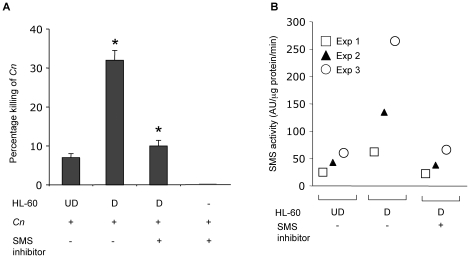
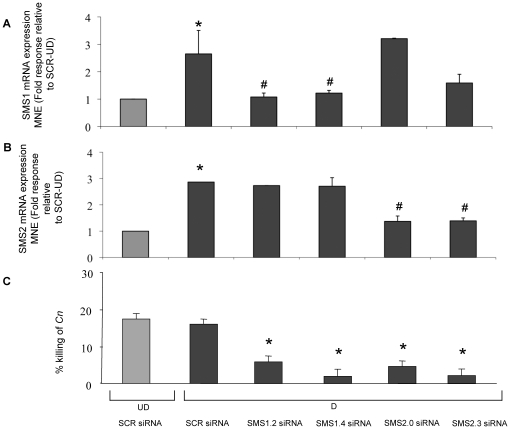
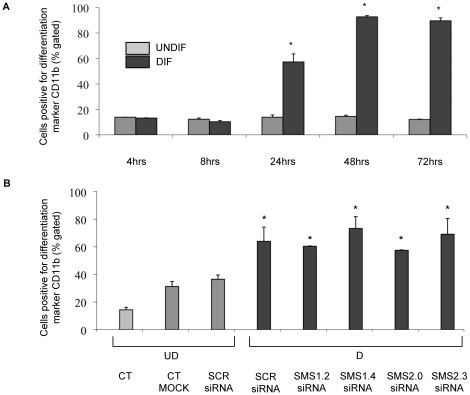
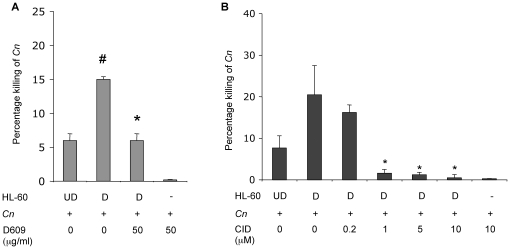
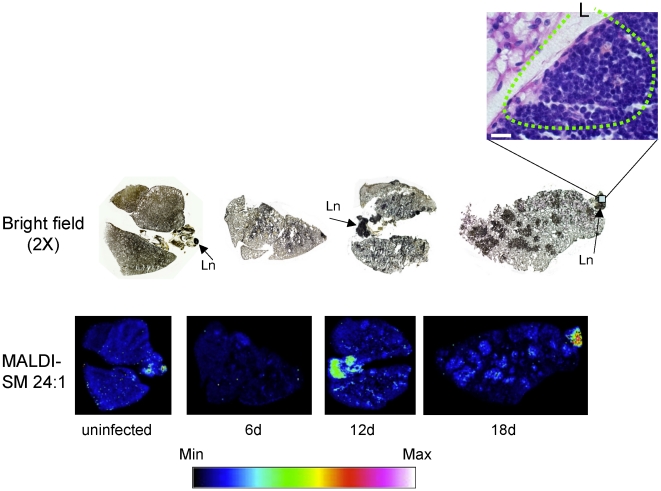
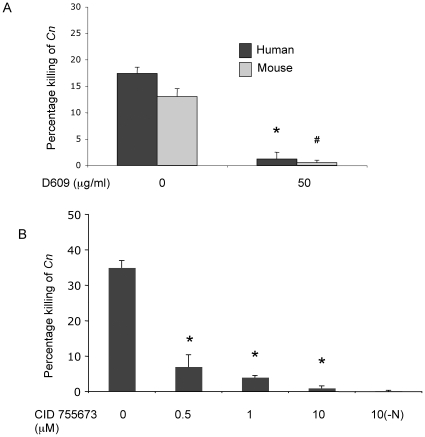
The key host cellular pathway(s) necessary to control the infection caused by inhalation of the environmental fungal pathogen Cryptococcus neoformans are still largely unknown. Here we have identified that the sphingolipid pathway in neutrophils is required for them to exert their killing activity on the fungus. In particular, using both pharmacological and genetic approaches, we show that inhibition of sphingomyelin synthase (SMS) activity profoundly impairs the killing ability of neutrophils by preventing the extracellular release of an antifungal factor(s). We next found that inhibition of protein kinase D (PKD), which controls vesicular sorting and secretion and is regulated by diacylglycerol (DAG) produced by SMS, totally blocks the extracellular killing activity of neutrophils against C. neoformans. The expression of SMS genes, SMS activity and the levels of the lipids regulated by SMS (namely sphingomyelin (SM) and DAG) are up-regulated during neutrophil differentiation. Finally, tissue imaging of lungs infected with C. neoformans using matrix-assisted laser desorption-ionization mass spectrometry (MALDI-MS), revealed that specific SM species are associated with neutrophil infiltration at the site of the infection. This study establishes a key role for SMS in the regulation of the killing activity of neutrophils against C. neoformans through a DAG-PKD dependent mechanism, and provides, for the first time, new insights into the protective role of host sphingolipids against a fungal infection.
Overview
The claims and statistics of this paper haven’t been checked yet.
Free: it reads the open-access text and checks the first 5 claims that cite a source we can check. Create a free account to check every claim.
Integrity signals
Registry
Cites
Statistics
Figures
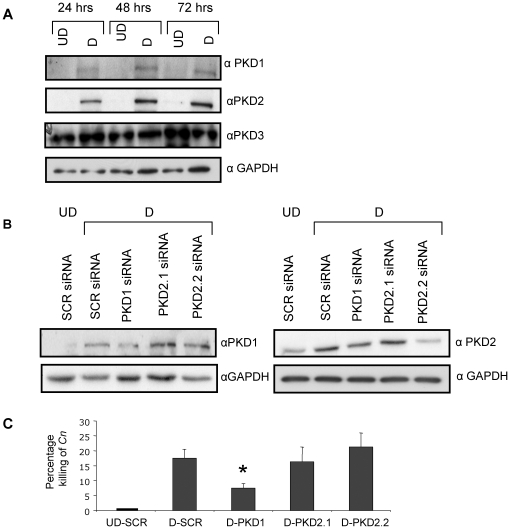
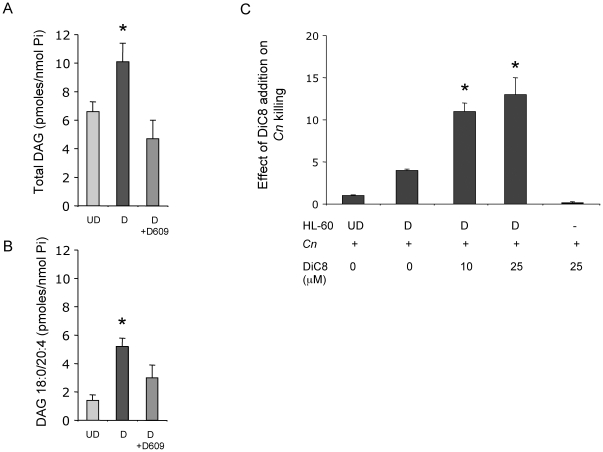
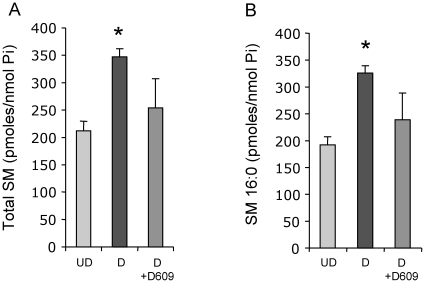
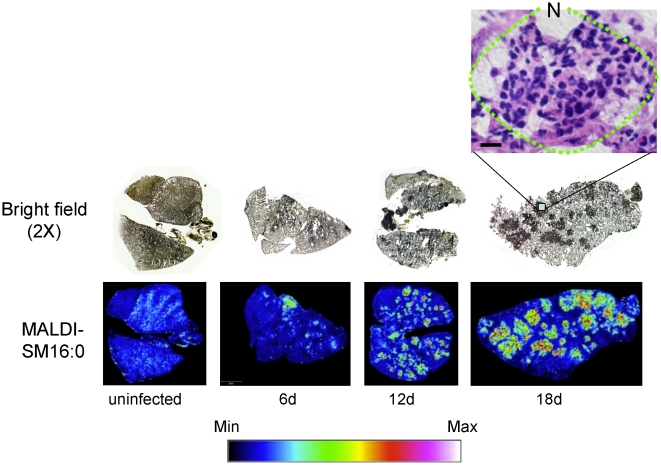
Verification
Claims the paper makes
The claims and statistics of this paper haven’t been checked yet.
Free: it reads the open-access text and checks the first 5 claims that cite a source we can check. Create a free account to check every claim.
Claims other papers make about this one
Each is checked against this paper’s own text: does it say what the citing paper says it does?
The cited source doesn’t support the claim as written.
In the citing paper
“In vitro, neutrophils were found to effectively kill cryptococci [74–81], although it was also reported that C. neoformans can negatively regulate the extracellular killing activity of these cells [82, 83].”
From Mechanisms of fungal dissemination (2021) · cites this paper as [76]
Checked by a reasoning model — may be wrong.
Experimental — accuracy not yet measured
Self-check
Percentages, sums and reported differences re-computed from the paper’s own numbers.
The self-check needs the paper’s full text.
Citations
Cites
Principles of bioactive lipid signalling: lessons from sphingolipids
Hannun, Y. A., & Obeid, L. M. (2008) · Nature Reviews Molecular Cell Biology · doi:10.1038/nrm2329 · Cited by 3,333 · cited 1×
“This may suggest a compensatory mechanism by other sphingolipid metabolizing enzymes involved in the production of this sphingolipid [66].”
BackgroundRegulation and Function of NF-κB Transcription Factors in the Immune System
Vallabhapurapu, S., & Karin, M. (2009) · Annual Review of Immunology · doi:10.1146/annurev.immunol.021908.132641 · Cited by 2,588 · cited 2×
“In fact, it has been shown that SM itself can enhance NFkB activation [33], and NFkB is a transcription factor and a well-known regulator of a variety of host immune cellular responses against infection [39].”
BackgroundNeutrophil granules and secretory vesicles in inflammation
Faurschou, M., & Borregaard, N. (2003) · Microbes and Infection · doi:10.1016/j.micinf.2003.09.008 · Cited by 1,162 · cited 1×
“Neutrophils produce numerous antimicrobial granules and enzymes over the course of differentiation and release them extracellularly [21,22] [71].”
BackgroundIdentification of a family of animal sphingomyelin synthases
Huitema, K., van den Dikkenberg, J., Brouwers, J. F., & Holthuis, J. C. (2004) · The EMBO Journal · doi:10.1038/sj.emboj.7600034 · Cited by 611 · cited 12×
“An intriguing sphingolipid metabolizing activity is carried out by sphingomyelin synthase (SMS), which is encoded by two genes: SMS1 and SMS2 [27,28,29].”
BackgroundInfluentialMerrill Jr., A. H., Sullards, M. C., Allegood, J. C., Kelly, S., & Wang, E. (2005) · Methods · doi:10.1016/j.ymeth.2005.01.009 · Cited by 594 · cited 1×
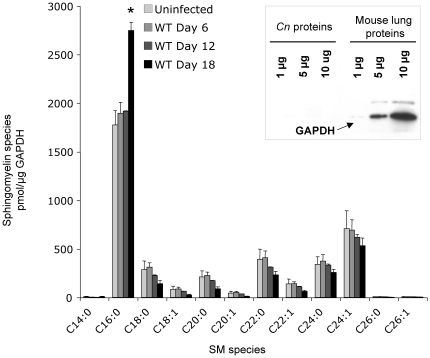
“This was not surprising because these two species have been shown to be the most abundant in many cellular types and tissues [47,48,49,50,51,52,53].”
BackgroundBielawski, J., Szulc, Z. M., Hannun, Y. A., & Bielawska, A. (2006) · Methods · doi:10.1016/j.ymeth.2006.05.004 · Cited by 541 · cited 1×
“extracted and analyzed using established protocols in the facility [34,35].”
MethodSame-sex mating and the origin of the Vancouver Island Cryptococcus gattii outbreak
Fraser, J. A., Giles, S. S., Wenink, E. C., Geunes-Boyer, S. G., Wright, J. R., Diezmann, S., Allen, A., Stajich, J. E., Dietrich, F. S., Perfect, J. R., et al. (2005) · Nature · doi:10.1038/nature04220 · Cited by 499 · cited 1×
“although immunocompetent subjects can also be affected [5].”
BackgroundRole of Ceramide in Cellular Senescence
Venable, M. E., Lee, J. Y., Smyth, M. J., Bielawska, A., & Obeid, L. M. (1995) · Journal of Biological Chemistry · doi:10.1074/jbc.270.51.30701 · Cited by 465 · cited 1×
“This was not surprising because these two species have been shown to be the most abundant in many cellular types and tissues [47,48,49,50,51,52,53].”
BackgroundPhagosome Extrusion and Host-Cell Survival after Cryptococcus neoformans Phagocytosis by Macrophages
Alvarez, M., & Casadevall, A. (2006) · Current Biology · doi:10.1016/j.cub.2006.09.061 · Cited by 414 · cited 1×
“neoformans infection [6,13,14,15,16,17,18,19,20], very little is known on the mechanisms by which neutrophils neutralize C.”
BackgroundLiljedahl, M., Maeda, Y., Colanzi, A., Ayala, I., Van Lint, J., & Malhotra, V. (2001) · Cell · doi:10.1016/s0092-8674(01)00228-8 · Cited by 364
Research works printed but not linked: 2
- Sanfelice F 1894 Contributo alla morfologia e biologia dei blastomiceti che si sviluppano nei succhi di alcuni frutti. Ann Igien 4 463 495
- Busse O 1894 Uber parasitare zelleinschlusse und ihre zuchtung. Zentralbl Bakteriol 16 175 180
Cited by
Sphingolipid and Glycosphingolipid Metabolic Pathways in the Era of Sphingolipidomics
Merrill, A. H. (2011) · Chemical Reviews · doi:10.1021/cr2002917 · Cited by 785
Functional roles of sphingolipids in immunity and their implication in disease
Lee, M., Lee, S. Y., & Bae, Y.-S. (2023) · Experimental & Molecular Medicine · doi:10.1038/s12276-023-01018-9 · Cited by 176
Mechanisms of fungal dissemination
Strickland, A. B., & Shi, M. (2021) · Cellular and Molecular Life Sciences · doi:10.1007/s00018-020-03736-z · Cited by 127
Miyamoto, S., Hsu, C., Hamm, G. R., Darshi, M., Diamond-Stanic, M. K., Declèves, A., Slater, L., Pennathur, S., Stauber, J., Dorrestein, P. C., et al. (2016) · EBioMedicine · doi:10.1016/j.ebiom.2016.03.033 · Cited by 130
“(Qureshi et al., 2010) reported that SM(d18:1/16:0) is concentrated in the Cryptococcus neoformans-infected mouse lung by mass spectrometry imaging, and that inhibition of SMS impairs the killing ability of cultured neutrophils.”
BackgroundCryptococcus and Phagocytes: Complex Interactions that Influence Disease Outcome
Leopold Wager, C. M., Hole, C. R., Wozniak, K. L., & Wormley, F. L. (2016) · Frontiers in Microbiology · doi:10.3389/fmicb.2016.00105 · Cited by 105
“In addition, melanized C. neoformans cells are able to abrogate the killing activity of neutrophils by interfering with sphingomyelin synthase (SMS) activity, which is required for cryptococcal killing by neutrophils (Qureshi et al., 2010, 2011).”
BackgroundRoles of Ceramides and Other Sphingolipids in Immune Cell Function and Inflammation
Albeituni, S., & Stiban, J. (2019) · Advances in experimental medicine and biology · doi:10.1007/978-3-030-21735-8_15 · Cited by 123
Ericson, J. A., Duffau, P., Yasuda, K., Ortiz-Lopez, A., Rothamel, K., Rifkin, I. R., Monach, P. A., & ImmGen Consortium (2014) · PLoS ONE · doi:10.1371/journal.pone.0108553 · Cited by 101
“Four other genes (Chi3l1, Clec5a, Mgam, and Sgms2) have been studied in neutrophils but also in other leukocytes [41–46].”
BackgroundZheng, K., Chen, Z., Feng, H., Chen, Y., Zhang, C., Yu, J., Luo, Y., Zhao, L., Jiang, X., & Shi, F. (2019) · Cell Death and Disease · doi:10.1038/s41419-019-1303-0 · Cited by 92
Sphingomyelin Synthases Regulate Protein Trafficking and Secretion
Subathra, M., Qureshi, A., & Luberto, C. (2011) · PLoS ONE · doi:10.1371/journal.pone.0023644 · Cited by 69
“Interestingly, in a parallel study, we found that SMS1 and SMS2 regulate extracellular killing of the fungus Cryptococcus neoformans by neutrophils [55] by regulating the presence/activity of an antifungal factor in the medium.”
BackgroundSelf-citationRole and Function of Sphingomyelin Biosynthesis in the Development of Cancer
D’Angelo, G., Moorthi, S., & Luberto, C. (2018) · Advances in cancer research · doi:10.1016/bs.acr.2018.04.009 · Cited by 68
Self-citationMarimuthu, S., Korrapati, M. C., Howell, L. A., Arthur, J. M., Shayman, J. A., Schnellmann, R. G., & Siskind, L. J. (2015) · American Journal of Physiology-Renal Physiology · doi:10.1152/ajprenal.00150.2015 · Cited by 70
Zhang, M., Sun, D., Liu, G., Wu, H., Zhou, H., & Shi, M. (2016) · Journal of Leukocyte Biology · doi:10.1189/jlb.4ab0715-281r · Cited by 42
“In vitro, neutrophils are able to kill Cn via an intracellular [6, 7] or extracellular killing mechanism [8].”
BackgroundNormile, T. G., Bryan, A. M., & Poeta, M. D. (2020) · Frontiers in Immunology · doi:10.3389/fimmu.2020.581750 · Cited by 42
“neoformans has also been reported in modulating the extracellular killing ability of neutrophils (217, 218).”
BackgroundSun, D., Zhang, M., Liu, G., Wu, H., Zhu, X., Zhou, H., & Shi, M. (2016) · Infection and Immunity · doi:10.1128/iai.01197-15 · Cited by 39
“neoformans via intracellular (1, 2) or extracellular (6) killing mechanisms.”
BackgroundInnate Immune Responses to Cryptococcus
Heung, L. J. (2017) · Journal of Fungi · doi:10.3390/jof3030035 · Cited by 47
“neoformans in vitro [157,200], and treatment of mice with human recombinant granulocyte-colony stimulating factor (G-CSF) in combination with fluconazole improves survival from intracerebral infection [201].”
BackgroundFungal Infection in the Brain: What We Learned from Intravital Imaging
Shi, M., & Mody, C. H. (2016) · Frontiers in Immunology · doi:10.3389/fimmu.2016.00292 · Cited by 33
Sun, D., Zhang, M., Liu, G., Wu, H., Li, C., Zhou, H., Zhang, X., & Shi, M. (2016) · European Journal of Immunology · doi:10.1002/eji.201546239 · Cited by 28
Mass spectrometry coupled to imaging techniques: the better the view the greater the challenge
Barceló‐Coblijn, G., & Fernández, J. A. (2015) · Frontiers in Physiology · doi:10.3389/fphys.2015.00003 · Cited by 28
“Fortunately there have been advances in many other techniques that will be extremely useful to improve our knowledge in lipid biology (Muro et al., 2014).”
BackgroundSphingolipids as Regulators of the Phagocytic Response to Fungal Infections
Bryan, A. M., Poeta, M. D., & Luberto, C. (2015) · Mediators of Inflammation · doi:10.1155/2015/640540 · Cited by 29
“Indeed, PKD is a key regulator of protein trafficking and secretion, and it has been shown to control neutrophil secretion of antifungal factors [8, 105].”
BackgroundSelf-citationRole of Glucose in the Expression of Cryptococcus neoformans Antiphagocytic Protein 1, App1
Williams, V., & Poeta, M. D. (2011) · Eukaryotic Cell · doi:10.1128/ec.00252-10 · Cited by 32
Luberto, C., Haley, J. D., & Poeta, M. D. (2019) · Chemistry and Physics of Lipids · doi:10.1016/j.chemphyslip.2019.01.001 · Cited by 27
Self-citationBastos, A. E. P., Marinho, H. S., Cordeiro, A. M., de Soure, A. M., & de Almeida, R. F. M. (2012) · Chemistry and Physics of Lipids · doi:10.1016/j.chemphyslip.2012.06.002 · Cited by 23
“Sterol fluorescent analogues lso pose several experimental constraints (Scheidt et al., 2003). herefore, the study of yeast membranes requires other fluorescent robes sensitive to erg and to the presence of lo domains, capale of not responding strongly to the presence of gel domains, and ble to…”
BackgroundThe biological functions of sphingolipids in plant pathogenic fungi
Zhu, X., Li, L., Bao, J., Wang, J., Daskalov, A., Liu, X., Poeta, M. D., & Lin, F. (2023) · PLoS Pathogens · doi:10.1371/journal.ppat.1011733 · Cited by 23
Vaccine protection by Cryptococcus neoformans Δsgl1 is mediated by γδ T cells via TLR2 signaling
Normile, T. G., Chu, T. H., Sheridan, B. S., & Poeta, M. D. (2022) · Mucosal Immunology · doi:10.1038/s41385-022-00570-3 · Cited by 29
“…mice or pharmacological depletion of sphingomyelin from the plasma membrane, has been shown to impair T cell receptor signaling 110 , inhibit phagocytosis of C. neoformans 105 , decrease the antimicrobial activity of neutrophils against C. neoformans 111 , and attenuate NF-κ B activation 112 .”
Cryptococcus Neoformans Modulates Extracellular Killing by Neutrophils
Qureshi, A., Grey, A., Rose, K. L., Schey, K. L., & Del Poeta, M. (2011) · Frontiers in Microbiology · doi:10.3389/fmicb.2011.00193 · Cited by 20
Self-citationDancing cheek to cheek: Cryptococcus neoformans and phagocytes
Zhang, M., Sun, D., & Shi, M. (2015) · SpringerPlus · doi:10.1186/s40064-015-1192-3 · Cited by 19
“Inhibition of sphingomyelin synthase (SMS) also profoundly impairs the ability of neutrophils to kill Cn, which are independent of phagocytosis (Qureshi et al. 2010).”
BackgroundGood, C. J., Butrico, C. E., Colley, M. E., Emmerson, L. N., Gibson-Corley, K. N., Cassat, J. E., Spraggins, J. M., & Caprioli, R. M. (2024) · Cell chemical biology · doi:10.1016/j.chembiol.2024.09.005 · Cited by 26
Sudarkina, O. Y., Filippenkov, I. B., Brodsky, I. B., Limborska, S. A., & Dergunova, L. V. (2015) · Molecular and Cellular Biochemistry · doi:10.1007/s11010-015-2427-x · Cited by 14
“The levels of SMS1 and SMS2 mRNA and total enzymatic activity of cell or tissue lysates have been measured [7–13].”
MethodStie, J., & Fox, D. (2012) · PLoS ONE · doi:10.1371/journal.pone.0049402 · Cited by 12
Extracellular Vesicles From Fungal Infection in Humans: A Key Player in Immunological Responses
Rezende, C. P., dos Santos, P. W. D. S., Piraine, R. E. A., Silvestrini, V. C., Barbosa, J. C. J., Valera, F. C. P., Tamashiro, E., Gondim, G. G. P., Quintana, S. M., Calado, R. T., et al. (2025) · Journal of Extracellular Biology · doi:10.1002/jex2.70065 · Cited by 16
Greenberg, D. E., Sturdevant, D. E., Marshall‐Batty, K. R., Chu, J., Pettinato, A. M., Virtaneva, K. I., Lane, J., Geller, B. L., Porcella, S. F., Gallin, J. I., et al. (2015) · Infection and Immunity · doi:10.1128/iai.00778-15 · Cited by 12
“Class C genes, altered primarily in CGD but not normal PMN, included several factors that might represent an attempt to control microbial growth, such as hepcidin (HAMP) (increased 3-fold), an antimicrobial peptide and hormone that decreases bioavailable iron in the circulation, and sphingomyelin synthase 2 (SGMS2) (i…”
BackgroundCryptococcus and Cryptococcosis
Godinho, R. M. D. C., Oliveira, D. L., Albuquerque, P. C., Dutra, F. F., Almeida‐Paes, R., Rodrigues, M. L., & Fonseca, F. L. (2017) · Springer eBooks · doi:10.1007/978-3-319-64113-3_6 · Cited by 10
Ganesh, K., Gomes, S. M., Vasishta, S., Poojary, G., Thimmappa, P. Y., Peesapati, S., Kabekkodu, S. P., Mallya, S. P., Guruprasad, K. P., Singh, A., et al. (2026) · Journal of Translational Medicine · doi:10.1186/s12967-026-07696-z · Cited by 7
“Sphingomyelin and diacylglycerol, intermediates of the sphingolipid pathway are elevated along with sphingomyelin synthase during neutrophil differentiation and regulates infiltration and phagocytic activity [60].”
In situ lipidomics of Staphylococcus aureus osteomyelitis using imaging mass spectrometryPreprint
Good, C. J., Butrico, C. E., Colley, M. E., Gibson-Corley, K. N., Cassat, J. E., Spraggins, J. M., & Caprioli, R. M. (2023) · bioRxiv (Cold Spring Harbor Laboratory) · doi:10.1101/2023.12.01.569690 · Cited by 4
“51,52 SMs have also been linked to direct activation of the transcription regulator NF-kB in leukocytes.”
BackgroundYau, L., Chan, W.-H., Li, Y.-X., Zhan, Y., Huang, J. Q., Lin, X., Li, S., Yang, J.-L., Pan, H., Wang, X., et al. (2023) · Journal of Thoracic Disease · doi:10.21037/jtd-23-125 · Cited by 22
“Thus, Cer (d18:1/18:0) can be served as an auxiliary diagnostic marker for PC. Previous studies have suggested that neutrophils can counteract Cryptococcus through sphingomyelinase activity (29).”
Extracellular vesicles produced during fungal infection in humans are immunologically activePreprint
Rezende, C. P., dos Santos, P. W. D. S., Piraine, R. E. A., Silvestrini, V. C., Barbosa, J. C. J., Valera, F. C. P., Tamashiro, E., Gondim, G. G. P., Quintana, S. M., Calado, R. T., et al. (2024) · bioRxiv (Cold Spring Harbor Laboratory) · doi:10.1101/2024.03.20.585987 · Cited by 3
“Qureshi et al., showed the production of different species of sphingomyelin in phagocytic cells and lymphocytes and its high levels at the site of fungal infection, providing insights into the roles of sphingomyelin in host-294 controlled infection processes (42).”
BackgroundFujii, S., Horie, N., Ikegami, S., Imamura, H., Zhu, W., Ikegaya, H., Mazda, O., Pezzotti, G., & Takahashi, K. A. (2025) · International Journal of Molecular Sciences · doi:10.3390/ijms26178572 · Cited by 3
Preparation of human tissue protein extracts enriched with the sphingomyelin synthase 1
Sudarkina, O. Y., & Dergunova, L. V. (2015) · Molecular Genetics Microbiology and Virology · doi:10.3103/s0891416815020081 · Cited by 1
Liu, W. Y., Chen, J., Wang, T., Gong, Y., Chen, Y., Li, Y., Yan, X., Duan, H., Wang, X., & Zhang, M. (2025) · Infection and Immunity · doi:10.1128/iai.00145-25 · Cited by 1
“Moreover, several in vivo studies have demonstrated that CD146 deficiency leads to decreased neutrophil recruitment after M. pneumoniae lung infection (33), whereas intravascular clearance of C. neoformans is dependent on neutrophil killing activity (34–36).”
Advances in cryptococcal infections-associated immunopathology and potential therapeutic strategies
Павловна, С. Н., Saha, S., Gurina, R., Kuznetsova, O., Zhabo, N., Avdonina, M., & Pilshchikova, O. (2026) · Frontiers in Pharmacology · doi:10.3389/fphar.2026.1776489
“In addition, melanized C. neoformans cells prevent neutrophil death by blocking sphingomyelin synthase (SMS) activity, a process required for neutrophil-mediated killing of the fungus (Qureshi et al., 2010; Qureshi et al., 2011).”
Cryptococcus–Neutrophil Interaction
Qureshi, A., & Poeta, M. D. (2011) · Topics in current genetics · doi:10.1007/978-3-642-22916-9_13
Self-citation
Metadata
- Authors
- Qureshi, A., Subathra, M., Grey, A., Schey, K., Del Poeta, M., & Luberto, C.
- Affiliations
- Medical University of South Carolina (US)
- Vanderbilt University (US)
- Venue
- PLoS ONE
- Publisher
- Public Library of Science (PLoS)
- Published
- 2010-12-28
- Volume
- 5
- Issue
- 12
- Pages
- e15587
- ISSN
- 1932-6203 (ISSN-L)
- PMC
- PMC3011003
- OpenAlex
- W2044753755
- Cited by
- 41
- References
- 77
- Citations by year
- 2026: 2 · 2025: 3 · 2024: 2 · 2023: 4 · 2022: 1 · 2021: 1 · 2020: 1 · 2019: 3 · 2018: 1 · 2017: 2 · 2016: 4 · 2015: 9 · 2014: 1 · 2012: 2
- FWCI
- 1.63
- Type
- journal article
- Language
- en
- Open access
- gold
- doi.org
- Locations
- PLoS ONE (publishedVersion, cc-by)
- Europe PMC (PubMed Central) (publishedVersion, cc-by)
- PubMed Central (publishedVersion, cc-by)
- PubMed (publishedVersion)
- DOAJ (DOAJ: Directory of Open Access Journals) (submittedVersion, cc-by-sa)
- Figshare (submittedVersion, cc-by)
- Funders
- National Science Foundation (0132573)
- American Cancer Society
- Burroughs Wellcome Fund
- Medical University of South Carolina (C06 RR015455)
- National Institutes of Health (1c06rr015455-01a1, Project 6, AI72142)
- National Heart, Lung, and Blood Institute (N01-HV-28282)
- National Institute of Allergy and Infectious Diseases (AI56168, R21AI078493, R01AI072142, AI78493, R56AI072142, R01AI056168, AI72142)
- National Center for Research Resources (RR 015455, P20RR017677, RR 17677, C06 RR-015455)
- Office of Experimental Program to Stimulate Competitive Research (EPS-0132573)
- Topics
- Health Sciences › Medicine › Infectious Diseases › Fungal Infections and Studies
- Life Sciences › Biochemistry, Genetics and Molecular Biology › Molecular Biology › Sphingolipid Metabolism and Signaling
- Health Sciences › Medicine › Infectious Diseases › Antifungal resistance and susceptibility
- Keywords
- sphingomyelin synthase, Cryptococcus neoformans, neutrophils, antifungal activity, protein kinase D, diacylglycerol, sphingolipid pathway, granulocytic differentiation, fungal infection, host defense, pulmonary infection, neutrophil infiltration
- MeSH terms
- Animals, Anti-Infective Agents, Antifungal Agents, Cell Differentiation, Ceramides, Cryptococcus neoformans, Diglycerides, Humans, Lung, Mice, Inbred CBA, Neutrophils, Protein Kinase C, Sphingolipids, Transferases (Other Substituted Phosphate Groups), HL-60 Cells, Mice
About these checks
Registry, retraction, Cites and statistics results are computed, not judged, with one exception: a printed reference that no index lists is read once by a model before it counts as a citation error. Claims are extracted by a model and kept only when their quote appears verbatim in the text; each cited source is then checked, with a model’s help, for whether it says what the claim relies on. Those verdicts can be wrong — read the claim’s quote and the cited source before relying on one.
Statistics and arithmetic are recomputed, not judged.
Confidence bands are shown only for fields calibrated on our annotated test set. None is calibrated yet, so no band is shown.
What counts as a claim ›How we measure confidence ›How we check this ›
Are you an author, or do you see a problem with this page? Request a review
Data sources
Bibliographic data: Semantic Scholar, OpenAlex, Crossref.
Contains information from the Semantic Scholar Academic Graph Datasets, made available under the ODC Attribution License (ODC-BY 1.0).
Semantic Scholar’s data is described in: Kinney, R., et al. (2023). The Semantic Scholar Open Data Platform. arXiv:2301.10140.
