

Genetic Predisposition for Type 2 Diabetes, but Not for Overweight/Obesity, Is Associated with a Restricted Adipogenesis
Open accessThe DOI matches its Crossref record; 23 of the 23 references it cites were found in a registry or an index.
Abstract
BACKGROUND: Development of Type 2 diabetes, like obesity, is promoted by a genetic predisposition. Although several genetic variants have been identified they only account for a small proportion of risk. We have asked if genetic risk is associated with abnormalities in storing excess lipids in the abdominal subcutaneous adipose tissue. METHODOLOGY/PRINCIPAL FINDINGS: We recruited 164 lean and 500 overweight/obese individuals with or without a genetic predisposition for Type 2 diabetes or obesity. Adipose cell size was measured in biopsies from the abdominal adipose tissue as well as insulin sensitivity (HOMA index), HDL-cholesterol and Apo AI and Apo B. 166 additional non-obese individuals with a genetic predisposition for Type 2 diabetes underwent a euglycemic hyperinsulinemic clamp to measure insulin sensitivity. Genetic predisposition for Type 2 diabetes, but not for overweight/obesity, was associated with inappropriate expansion of the adipose cells, reduced insulin sensitivity and a more proatherogenic lipid profile in non-obese individuals. However, obesity per se induced a similar expansion of adipose cells and dysmetabolic state irrespective of genetic predisposition. CONCLUSIONS/SIGNIFICANCE: Genetic predisposition for Type 2 diabetes, but not obesity, is associated with an impaired ability to recruit new adipose cells to store excess lipids in the subcutaneous adipose tissue, thereby promoting ectopic lipid deposition. This becomes particularly evident in non-obese individuals since obesity per se promotes a dysmetabolic state irrespective of genetic predisposition. These results identify a novel susceptibility factor making individuals with a genetic predisposition for Type 2 diabetes particularly sensitive to the environment and caloric excess.
Overview
The claims and statistics of this paper haven’t been checked yet.
Free: it reads the open-access text and checks the first 5 claims that cite a source we can check. Create a free account to check every claim.
Integrity signals
Registry
Cites
Statistics
Figures
Verification
Claims the paper makes
The claims and statistics of this paper haven’t been checked yet.
Free: it reads the open-access text and checks the first 5 claims that cite a source we can check. Create a free account to check every claim.
Claims other papers make about this one
Each is checked against this paper’s own text: does it say what the citing paper says it does?
The source backs part of the claim, not all of it — or backs it for a different population, condition or comparison.
In the citing paper
“It has been shown that nonobese subjects with type 2 diabetes mellitus (T2D) and nondiabetic subjects with a genetic predisposition for T2D (first-degree relatives: FDR) have an unwarranted hypertrophic expansion of subcutaneous adipose tissue (SAT) [10].”
From Adipose Tissue: A Novel Target of the Incretin Axis? A Paradigm Shift in Obesity-Linked Insulin Resistance (2024) · cites this paper as [10]
Experimental — accuracy not yet measuredIn the citing paper
“These two patterns appear tightly entwined: the link between obesity and adipose cell size is undoubtedly curvilinear, and as numerous elegant investigations have been demonstrated in studies [8,9,10], the formation of new adipocytes is triggered when the increase in adipocyte size arrives at a plateau [7].”
From Adipose Tissue: A Novel Target of the Incretin Axis? A Paradigm Shift in Obesity-Linked Insulin Resistance (2024) · cites this paper as [10]
Self-check
Percentages, sums and reported differences re-computed from the paper’s own numbers.
The self-check needs the paper’s full text.
Citations
Cites
Matthews, D. R., Hosker, J. P., Rudenski, A. S., Naylor, B. A., Treacher, D. F., & Turner, R. C. (1985) · Diabetologia · doi:10.1007/bf00280883 · Cited by 31,502 · cited 1×
“Blood samples were drawn for measurements of fasting lipids, glucose and insulin levels as reported [6,16] and HOMA index, which is an indirect measure of insulin sensitivity, was calculated [18].”
MethodObesity is associated with macrophage accumulation in adipose tissue
Weisberg, S. P., McCann, D., Desai, M., Rosenbaum, M., Leibel, R. L., & Ferrante, A. W. (2003) · Journal of Clinical Investigation · doi:10.1172/jci200319246 · Cited by 10,041 · cited 1×
“secretion of adipokines including reduced adiponectin levels and local infiltration of inflammatory cells which inhibits normal adipogenesis and differentiation of preadipocytes [9–12].”
BackgroundGlobal and societal implications of the diabetes epidemic
Zimmet, P., Alberti, K. G. M. M., & Shaw, J. (2001) · Nature · doi:10.1038/414782a · Cited by 5,883 · cited 1×
“Type 2 diabetes is undergoing a global epidemic mainly driven by a concomitant epidemic in obesity [1].”
BackgroundAbdominal obesity and metabolic syndrome
Després, J.-P., & Lemieux, I. (2006) · Nature · doi:10.1038/nature05488 · Cited by 4,354 · cited 2×
“The expanded adipose tissue mass in obesity promotes insulin resistance which, in turn, induces Type 2 diabetes in genetically susceptible individuals [2,3].”
BackgroundDynamics of fat cell turnover in humans
Spalding, K. L., Arner, E., Westermark, P. O., Bernard, S., Buchholz, B. A., Bergmann, O., Blomqvist, L., Hoffstedt, J., Näslund, E., Britton, T., et al. (2008) · Nature · doi:10.1038/nature06902 · Cited by 2,357 · cited 1×
“[7] recently showed that the number of abdominal subcutaneous adipose cells becomes established around puberty and that adipose cell expansion becomes the predominant event for subsequent fat accumulation.”
BackgroundSelf-citationKrotkiewski, M., Björntorp, P., Sjöström, L., & Smith, U. (1983) · Journal of Clinical Investigation · doi:10.1172/jci111040 · Cited by 1,456 · cited 6×
“Accumulation of excess lipids in the adipose tissue can, in principle, be induced by an expansion of the number of differentiated adipose cells (hyperplastic obesity) and/or by adipose cell enlargement (hypertrophic obesity) [5,6].”
BackgroundMethodInfluentialSelf-citationGlucose Transporters and Insulin Action — Implications for Insulin Resistance and Diabetes Mellitus
Shepherd, P. R., & Kahn, B. B. (1999) · New England Journal of Medicine · doi:10.1056/nejm199907223410406 · Cited by 1,295 · cited 1×
“This was initially described in patients with Type 2 diabetes [13,14], but is now well established to precede the development of Type 2 diabetes and to be associated with insulin resistance and a dysmetabolic state also in non-obese individuals [10,11,15].”
BackgroundClinical risk factors, DNA variants, and the development of type 2 diabetes
Lyssenko, V., Jonsson, A., Almgren, P., Pulizzi, N., Isomaa, B., Tuomi, T., Berglund, G., Altshuler, D., Nilsson, P., & Groop, L. (2008) · New England Journal of Medicine · doi:10.1056/nejmoa0801869 · Cited by 938
Weyer, C., Foley, J. E., Bogardus, C., Tataranni, P. A., & Pratley, R. E. (2000) · Diabetologia · doi:10.1007/s001250051560 · Cited by 799 · cited 13×
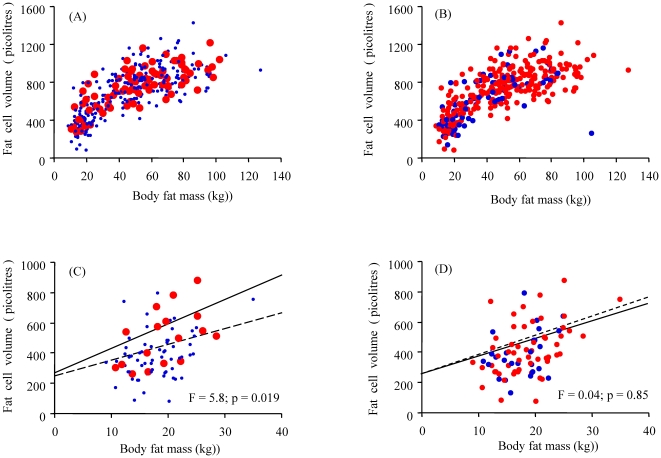
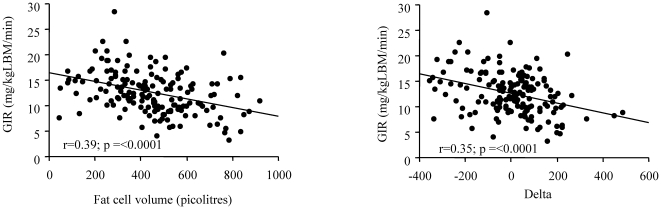
“Individuals with a genetic predisposition for a high BMI showed no evidence of an inappropriate expansion of cell size in relation to amount of body fat measured as delta-value (Table 1).”
ResultInfluentialAdipocyte Turnover: Relevance to Human Adipose Tissue Morphology
Arner, E., Westermark, P. O., Spalding, K. L., Britton, T., Rydén, M., Frisén, J., Bernard, S., & Arner, P. (2010) · Diabetes · doi:10.2337/db09-0942 · Cited by 645
Self-citation
Cited by
Items 101–148 of 148
Desiderio, A., Pastorino, M., Campitelli, M., Prevenzano, I., Palma, F. D. E. D., Spinelli, R., Parrillo, L., Longo, M., Milone, M., Miele, C., et al. (2024) · The FASEB Journal · doi:10.1096/fj.202401470r · Cited by 10
“22 Briefly, SAT biopsies obtained from the periumbilical region were subjected to collagenase digestion (0.9 mg.mL −1 ; Roche Diagnostics, Indianapolis, IN, USA) for 45 min at 37°C, filtered through a 250-μ m nylon mesh and centrifuged for 15 min at 1500 g (20°C).”
InfluentialThe color of fat and its central role in the development and progression of metabolic diseases
Gaggini, M., Carli, F., & Gastaldelli, A. (2017) · Hormone Molecular Biology and Clinical Investigation · doi:10.1515/hmbci-2017-0060 · Cited by 12
“It is likely that other factors are involved, possibly a genetic predisposition to type 2 diabetes or in general to ectopic fat deposition [3], [35], [37], [38].”
BackgroundŠiklová, M., Šrámková, V., Koc, M., Krauzová, E., Čížková, T., Ondrůjová, B., Wilhelm, M., Varaliová, Z., Kuda, O., Kračmerová, J., et al. (2024) · Obesity · doi:10.1002/oby.23969 · Cited by 9
“Several studies have suggested that SAT hypertrophy in FDR individuals of patients with T2DM is based on a limited capacity for adipogenesis [10, 11].”
BackgroundResultInfluentialMolecular Mechanisms Involved in Insulin Resistance: Recent Updates and Future Challenges
Singh, A., Ghai, N., & Bedi, P. M. S. (2022) · IntechOpen eBooks · doi:10.5772/intechopen.104806 · Cited by 9
Davis, G. R., Stephens, J. M., & Nelson, A. G. (2015) · The Journal of Strength and Conditioning Research · doi:10.1519/jsc.0000000000000894 · Cited by 10
“These individuals are at a greater risk for developing type 2 diabetes compared with the offspring of nondiabetic (ND) parents because of a greater genetic predisposition to the disease (3).”
BackgroundNoll, C., Labbé, S. M., Pinard, S., Shum, M., Bilodeau, L., Chouinard, L. A., Phoenix, S., Lecomte, R., Carpentier, A. C., & Gallo‐Payet, N. (2015) · Adipocyte · doi:10.1080/21623945.2015.1115582 · Cited by 8
“In this rat model of early type 2 diabetes, we also observed a significant shift toward larger adipocytes in visceral and subcutaneous adipose tissue depots,(12) also reminiscent of the adipocyte phenotype observed in patients with prediabetes.(13,14) In our rat model of early type 2 diabetes, a 6-week treatment with…”
ResultRelationship between family history of type 2 diabetes and serum FGF 21
Davis, G. R., Deville, T., Guillory, J., Bellar, D. M., & Nelson, A. G. (2017) · European Journal of Clinical Investigation · doi:10.1111/eci.12835 · Cited by 9
Yang, C., Zhang, J., Wu, T., Zhao, K., Wu, X., Shi, J., Sun, W. Y., & Kong, X. (2021) · Frontiers in Genetics · doi:10.3389/fgene.2021.627347 · Cited by 10
“Compared with VAT, the enlargement of the SAT can be beneficial to patients by improving insulin sensitivity and reducing the risk of type II diabetes (Hoffstedt et al., 2010; Arner et al., 2011; Dalmas et al., 2015).”
Skårn, S. N., Flaa, A., Kjeldsen, S. E., Rostrup, M., Brunborg, C., Reims, H. M., Fossum, E., Høieggen, A., & Aksnes, T. A. (2015) · Journal of Hypertension · doi:10.1097/hjh.0000000000000632 · Cited by 8
“Decreased adiponectin level is associated with both lower insulin sensitivity and higher triglyceride levels [42], in addition to the association with both family history of diabetes and family history of hypertension [11,43].”
BackgroundDe la dysfonction du tissu adipeux blanc aux phénotypes anatomocliniques de l’obésité
Ziegler, O., Böhme, P., & Valet, P. (2017) · Obésité · doi:10.1007/s11690-017-0555-z · Cited by 10
Health and Obesity: Not Just Skin Deep
Arner, E., & Arner, P. (2013) · Science · doi:10.1126/science.342.6158.558-b · Cited by 7
Self-citationHonda, M., Tsuboi, A., Minato-Inokawa, S., Takeuchi, M., Kurata, M., Wu, B., Kazumi, T., & Fukuo, K. (2022) · Scientific Reports · doi:10.1038/s41598-022-16890-0 · Cited by 6
Deleted in breast cancer 1 plays a functional role in adipocyte differentiation
Moreno‐Navarrete, J. M., Moreno, M., Vidal, M., Ortega, F. J., Serrano, M., Xifra, G., Ricart, W., & Fernández‐Real, J. M. (2015) · American Journal of Physiology-Endocrinology and Metabolism · doi:10.1152/ajpendo.00286.2014 · Cited by 6
Suppressive Effects of an Ishige okamurae extract on 3T3-L1 Preadipocyte Differentiation
Cha, S., & Cheon, Y. (2013) · Development & Reproduction · doi:10.12717/dr.2013.17.4.451 · Cited by 5
“It is suggested that reduction in the recruited preadipocyte is due to an apparent genetic impairment in the ability to recruit and differentiate (Gustafson & Smith, 2012; Arner et al., 2011; Jansson et al., 2003).”
BackgroundHenninger, J., Rawshani, A., Hammarstedt, A., & Eliasson, B. (2017) · BMC Endocrine Disorders · doi:10.1186/s12902-017-0191-5 · Cited by 8
“, displayed higher HOMA-IR, ie lower insulin sensitivity, in the FDR group than in non-FDR subjects [13, 14, 38].”
BackgroundSelf-citationOn the origin of human adipocytes and the contribution of bone marrow-derived cells
Rydén, M. (2016) · Adipocyte · doi:10.1080/21623945.2015.1134403 · Cited by 5
Honda, M., Tsuboi, A., Minato-Inokawa, S., Takeuchi, M., Kurata, M., Takayoshi, T., Hirota, Y., Wu, B., Kazumi, T., & Fukuo, K. (2022) · Journal of Diabetes Research · doi:10.1155/2022/7153238 · Cited by 4
“Genome-wide association studies have shown that restricted adipogenesis was characteristic of individuals with first-degree relatives with type 2 diabetes [11, 12].”
BackgroundKotzé-Hörstmann, L. M., Bedada, D. T., Johnson, R., Mabasa, L., & Gijsen, H. S. (2022) · Food & Function · doi:10.1039/d2fo02440c · Cited by 4
Genetic Vulnerability to Diabetes and Obesity: Does Education Offset the Risk?
Liu, S. Y., Walter, S., Marden, J. R., Rehkopf, D. H., Kubzansky, L. D., Xuan, T. T., & Glymour, M. M. (2015) · International Journal of Epidemiology · doi:10.1093/ije/dyv096.525 · Cited by 3
Wafer, R., Tandon, P., & Minchin, J. E. N. (2026) · eLife · doi:10.7554/elife.107327 · Cited by 3
Review Article: An Adipocentric View of the Metabolic Syndrome and Cardiovascular Disease
Dennedy, M. C., & Vidal‐Puig, A. (2014) · Current Cardiovascular Risk Reports · doi:10.1007/s12170-014-0379-4 · Cited by 3
WISP-2 - A Novel Adipokine Related to Obesity and Insulin resistance
Grünberg, J. R. (2015) · Gothenburg University Publications Electronic Archive (Gothenburg University) · Cited by 5
Khalil, M. A. M., Sadagah, N. M., Mahmood, H. H. K., Ezzi, A. I. A. W., Alghamdi, S. A. M., Alsulami, F. S. H., Basha, A. A., Ahmed, M., Sharabas, I. N. E., Ragab, H. A. A. A., et al. (2025) · Journal of Transplantation · doi:10.1155/joot/4990973 · Cited by 1
“Tis abnormal distribution of fat amplifes the metabolic consequences of obesity [20].”
Différences entre tissu adipeux sous-cutané et tissu adipeux viscéral
Lafontan, M. (2013) · Springer eBooks · doi:10.1007/978-2-8178-0332-6_23 · Cited by 5
Putnam, K. (2012) · UKnowledge (University of Kentucky) · Cited by 1
Discovery of a stem-like multipotent cell fate.
Paffhausen, E. S., Alowais, Y., Chao, C. W., Callihan, E. C., Creswell, K. M., & Bracht, J. R. (2018) · Europe PMC (PubMed Central) · Cited by 1
Wafer, R., Tandon, P., & Minchin, J. E. N. (2026) · eLife · doi:10.7554/elife.107327.2
Adipose Tissue Expansion for Improving Glycemic Control
Dhurandhar, N. V. (2013) · Springer eBooks · doi:10.1007/978-1-4471-2834-2_23
Adipose Tissue and Skeletal Muscle Plasticity in Obesity and Metabolic Disease
Ukropec, J., & Ukropcov, B. (2012) · InTech eBooks · doi:10.5772/28506
Characterization of apoptosis resistance in human preadipocytes and adipocytes
Nagel, S. A. (2011) · OPen Access Repositorium der Universität Ulm (OPARU) (Ulm University) · doi:10.18725/oparu-2336
Hypertrophic Obesity and Subcutaneous Adipose Tissue Dysfunction
Meiliana, A., & Wijaya, A. (2014) · The Indonesian Biomedical Journal · doi:10.18585/inabj.v6i2.33 · Cited by 1
Prediction of cardiovascular risk markers during long-term follow-up of young men
Skårn, S. N. (2015) · NVA (Nasjonalt vitenarkiv)
Lifestyle and cardio-metabolic health
Cassidy, S. (2016)
Association of Alcohol Consumption with Glucose Homeostasis: A Systematic Review and Meta-analysis
Taghdiri, S. (2017) · TSpace (University of Toronto) · Cited by 1
Optimización de la evaluación anestesiológica del paciente con obesidad mórbida
Moreira, S. I. F. D. S. (2020) · Gredos (University of Salamanca) · doi:10.14201/gredos.145335
Walker, M., Yu, X., & Gastaldelli, A. (2022) · doi:10.1093/med/9780198870197.003.0248
Urinary PGF- 2α and Carotid intima Media Thickness in Simple Obese Children: a Cross-sectional Study
ElBakry, N. M., & Ahmed, A. M. M. (2022) · The Egyptian Journal of Hospital Medicine · doi:10.21608/ejhm.2022.244535
“Table (3): Comparison IMT between obese &control groups”
BackgroundGenetic risk for severe mental illness does not influence adipose tissue functions.Preprint
Clarke, V. E., Ward, J., Havyarimana, E., Lyall, D. M., Arner, P., Dahlman, I., & Strawbridge, R. J. (2022) · Research Square · doi:10.21203/rs.3.rs-2337781/v1
Self-citationWafer, R., Tandon, P., & Minchin, J. E. N. (2025) · bioRxiv (Cold Spring Harbor Laboratory) · doi:10.1101/2025.04.20.649706
“…in diabetic obese patients (relative to non-diabetic obese) ( Muir et al., 2016 ), and genetic predisposition for type 2 diabetes, but not obesity, is associated with an impaired ability to recruit new adipose cells to store excess lipids in the subcutaneous adipose tissue ( Arner et al., 2011 ).”
Wafer, R., Tandon, P., & Minchin, J. E. N. (2025) · eLife · doi:10.7554/elife.107327.1
Use of UCHL1 Gene Expression to Estimate Adipocyte Size
Schormair, K., Zhong, J., Rico, L. D. M., Wang, N., Dahlman, I. A., Arner, P., & Kerr, A. G. (2025) · Diabetes · doi:10.2337/db25-0222
Self-citationThe Relationship Between Insulin Resistance and Cancer in Humans
Adeva‐Andany, M. M., Adeva-Contreras, L., Ameneiros-Rodríguez, E., Carneiro-Freire, N., Vila-Altesor, M., & Funcasta-Calderón, R. (2025) · Hormone and Metabolic Research · doi:10.1055/a-2715-0775
Mosleth, E. F., Liland, K. H., Barajas-Olmos, F. M., Orozco, L., Lysenko, A., Ofstad, R., Mellgren, G., & Dankel, S. N. (2025) · Research Square · doi:10.21203/rs.3.rs-7053974/v1
Splicing across adipocyte differentiation is highly dynamic and impacted by the metabolic phenotype
Farris, K. M., Andersen, E., Donkin, I., Versteyhe, S., Kristiansen, V. B., Simpson, S. J., Barrès, R., & Nóbrega, M. A. (2025) · iScience · doi:10.1016/j.isci.2025.114119 · Cited by 2
Longo, M., Zatterale, F., Spinelli, R., Naderi, J., Parrillo, L., Florese, P., Nigro, C., Leone, A., Moccia, A., Desiderio, A., et al. (2024) · Figshare · doi:10.6084/m9.figshare.26615683
Self-citationLongo, M., Zatterale, F., Spinelli, R., Naderi, J., Parrillo, L., Florese, P., Nigro, C., Leone, A., Moccia, A., Desiderio, A., et al. (2024) · Figshare · doi:10.6084/m9.figshare.26615680
Self-citationLongo, M., Zatterale, F., Spinelli, R., Naderi, J., Parrillo, L., Florese, P., Nigro, C., Leone, A., Moccia, A., Desiderio, A., et al. (2024) · Figshare · doi:10.6084/m9.figshare.26615686
Self-citationArner, P., Sørensen, T. I. A., & Andersson, D. P. (2026) · EBioMedicine · doi:10.1016/j.ebiom.2026.106299
Self-citation
Metadata
- Authors
- Arner, P., Arner, E., Hammarstedt, A., & Smith, U.
- Affiliations
- Karolinska Institutet (SE)
- University of Gothenburg (SE)
- Corresponding author
- Smith, Ulf
- Venue
- PLoS ONE
- Publisher
- Public Library of Science (PLoS)
- Published
- 2011-04-12
- Volume
- 6
- Issue
- 4
- Pages
- e18284
- ISSN
- 1932-6203 (ISSN-L)
- PMC
- PMC3075240
- OpenAlex
- W2013246050
- Cited by
- 146
- References
- 23
- Citations by year
- 2026: 2 · 2025: 11 · 2024: 8 · 2023: 5 · 2022: 17 · 2021: 8 · 2020: 7 · 2019: 5 · 2018: 8 · 2017: 14 · 2016: 6 · 2015: 16 · 2014: 10 · 2013: 14 · 2012: 13
- FWCI
- 9.40
- Type
- journal article
- Language
- en
- Open access
- gold
- doi.org
- Locations
- PLoS ONE (publishedVersion, cc-by)
- Europe PMC (PubMed Central) (publishedVersion, cc-by)
- PubMed Central (publishedVersion, cc-by)
- PubMed (publishedVersion)
- DOAJ (DOAJ: Directory of Open Access Journals) (submittedVersion, cc-by-sa)
- Funders
- Karolinska Institutet
- Novo Nordisk
- Vetenskapsrådet
- Novo Nordisk Fonden
- Topics
- Health Sciences › Medicine › Endocrinology, Diabetes and Metabolism › Adipokines, Inflammation, and Metabolic Diseases
- Health Sciences › Medicine › Physiology (medical) › Adipose Tissue and Metabolism
- Health Sciences › Medicine › Endocrinology, Diabetes and Metabolism › Diabetes, Cardiovascular Risks, and Lipoproteins
- Keywords
- type 2 diabetes, genetic susceptibility, obesity, adipogenesis, insulin sensitivity, subcutaneous abdominal fat, ectopic fat deposition, dysmetabolic syndrome, atherosclerosis risk, caloric excess
- MeSH terms
- Adipose Tissue, Diabetes Mellitus, Type 2, Humans, Obesity, Genetic Predisposition to Disease, Overweight
About these checks
Registry, retraction, Cites and statistics results are computed, not judged, with one exception: a printed reference that no index lists is read once by a model before it counts as a citation error. Claims are extracted by a model and kept only when their quote appears verbatim in the text; each cited source is then checked, with a model’s help, for whether it says what the claim relies on. Those verdicts can be wrong — read the claim’s quote and the cited source before relying on one.
Statistics and arithmetic are recomputed, not judged.
Confidence bands are shown only for fields calibrated on our annotated test set. None is calibrated yet, so no band is shown.
What counts as a claim ›How we measure confidence ›How we check this ›
Are you an author, or do you see a problem with this page? Request a review
Data sources
Bibliographic data: Semantic Scholar, OpenAlex, Crossref.
Contains information from the Semantic Scholar Academic Graph Datasets, made available under the ODC Attribution License (ODC-BY 1.0).
Semantic Scholar’s data is described in: Kinney, R., et al. (2023). The Semantic Scholar Open Data Platform. arXiv:2301.10140.
