

The DOI matches its Crossref record; 34 of the 35 references it cites were found in a registry or an index.
DNA Methylation Profiles of the Brain-Derived Neurotrophic Factor (BDNF) Gene as a Potent Diagnostic Biomarker in Major Depression
Open accessAbstract
Major depression, because of its recurring and life-threatening nature, is one of the top 10 diseases for global disease burden. Major depression is still diagnosed on the basis of clinical symptoms in patients. The search for specific biological markers is of great importance to advance the method of diagnosis for depression. We examined the methylation profile of 2 CpG islands (I and IV) at the promoters of the brain-derived neurotrophic factor (BDNF) gene, which is well known to be involved in the pathophysiology of depression. We analyzed genomic DNA from peripheral blood of 20 Japanese patients with major depression and 18 healthy controls to identify an appropriate epigenetic biomarker to aid in the establishment of an objective system for the diagnosis of depression. Methylation rates at each CpG unit was measured using a MassArray® system (SEQUENOM), and 2-dimensional hierarchical clustering analyses were undertaken to determine the validity of these methylation profiles as a diagnostic biomarker. Analyses of the dendrogram from methylation profiles of CpG I, but not IV, demonstrated that classification of healthy controls and patients at the first branch completely matched the clinical diagnosis. Despite the small number of subjects, our results indicate that classification based on the DNA methylation profiles of CpG I of the BDNF gene may be a valuable diagnostic biomarker for major depression.
Overview
The claims and statistics of this paper haven’t been checked yet.
Run the check — free, no account needed. It reads the open-access text and checks the sources it cites.
Integrity signals
Registry
Cites
Statistics
Figures
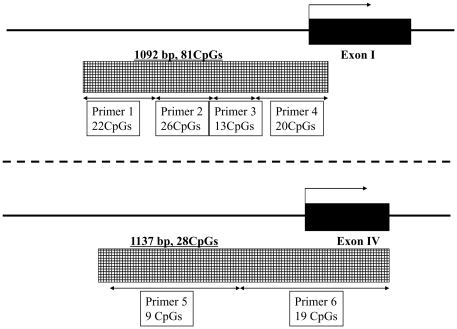
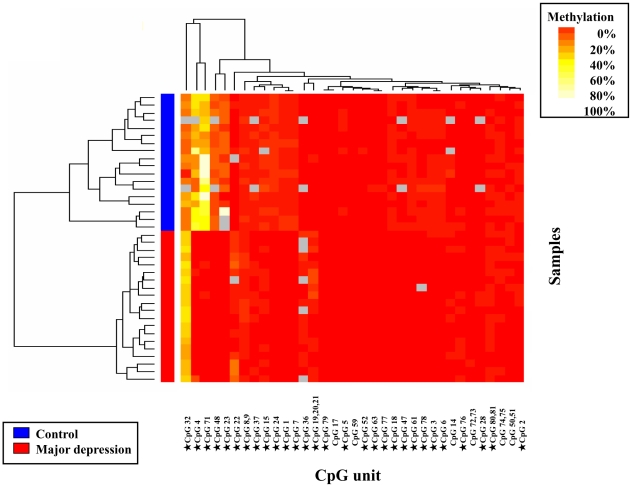
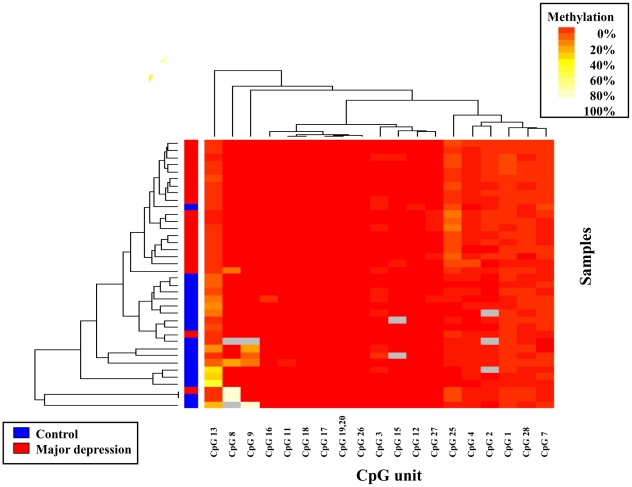
Verification
Claims the paper makes
The claims and statistics of this paper haven’t been checked yet.
Run the check — free, no account needed. It reads the open-access text and checks the sources it cites.
Claims other papers make about this one
Each is checked against this paper’s own text: does it say what the citing paper says it does?
The source backs part of the claim, not all of it — or backs it for a different population, condition or comparison.
In the citing paper
“In depression, studies report low peripheral BDNF levels and higher promoter methylation, while antidepressants and electroconvulsive therapy (ECT) increase BDNF expression and reverse methylation”
From The clinical use of epigenetics in psychiatry: a narrative review of epigenetic mechanisms, key candidate genes, and precision psychiatry (2025) · cites this paper as [63]
Experimental — accuracy not yet measuredIn the citing paper
“and altered patterns of BDNF DNA methylation has been found in patients with cognitive impairments [ 167 , 169 , 170 ].”
From DNA methylation: a mechanism linking environmental chemical exposures to risk of autism spectrum disorders? (2016) · cites this paper as [169]
In the citing paper
“The DNA methylation profile of two CpG islands in the BDNF (BDNF-I and -IV) promoter and exon I was significantly different between depressed patients and healthy controls.”
From Epigenetic mechanisms of major depression: Targeting neuronal plasticity (2018) · cites this paper as [127]
Self-check
Percentages, sums and reported differences re-computed from the paper’s own numbers.
The self-check needs the paper’s full text.
Citations
Cites
(1998) · The Journal of Clinical Psychiatry · Cited by 19,139
(1998) · PubMed · Cited by 10,216
Murray, C. J. L., & López, A. D. (1997) · The Lancet · doi:10.1016/s0140-6736(96)07492-2 · Cited by 7,007
The mini international neuropsychiatric interview
Lecrubier, Y., Sheehan, D. V., Hergueta, T., & Weiller, E. (1998) · European Psychiatry · doi:10.1016/s0924-9338(99)80239-9 · Cited by 5,899
Lopez, A. D., Mathers, C. D., Ezzati, M., Jamison, D. T., & Murray, C. J. (2006) · The Lancet · doi:10.1016/s0140-6736(06)68770-9 · Cited by 5,630
Cross-national epidemiology of major depression and bipolar disorder
Weissman, M. M. (1996) · JAMA: The Journal of the American Medical Association · doi:10.1001/jama.1996.03540040037030 · Cited by 2,302
Carroll, B. J. (1981) · Archives of General Psychiatry · doi:10.1001/archpsyc.1981.01780260017001 · Cited by 2,243
Sustained hippocampal chromatin regulation in a mouse model of depression and antidepressant action
Tsankova, N. M., Berton, O., Renthal, W., Kumar, A., Neve, R. L., & Nestler, E. J. (2006) · Nature Neuroscience · doi:10.1038/nn1659 · Cited by 1,780
DNA Methylation-Related Chromatin Remodeling in Activity-Dependent Bdnf Gene Regulation
Martinowich, K., Hattori, D., Wu, H., Fouse, S., He, F., Hu, Y., Fan, G., & Sun, Y. E. (2003) · Science · doi:10.1126/science.1090842 · Cited by 1,405
Epigenetic therapy of cancer: past, present and future
Yoo, C. B., & Jones, P. A. (2006) · Nature Reviews Drug Discovery · doi:10.1038/nrd1930 · Cited by 1,307
Cited by
Sorted by citations
Babenko, O., Kovalchuk, I., & Metz, G. A. S. (2015) · Neuroscience & Biobehavioral Reviews · doi:10.1016/j.neubiorev.2014.11.013 · Cited by 513
DNA methylation of BDNF as a biomarker of early-life adversity
Kundakovic, M., Gudsnuk, K., Herbstman, J. B., Tang, D., Perera, F. P., & Champagne, F. A. (2015) · Proceedings of the National Academy of Sciences · doi:10.1073/pnas.1408355111 · Cited by 426
Neural basis of major depressive disorder: Beyond monoamine hypothesis
Boku, S., Nakagawa, S., Toda, H., & Hishimoto, A. (2018) · Psychiatry and Clinical Neurosciences · doi:10.1111/pcn.12604 · Cited by 402
Smith, A. K., Kilaru, V., Klengel, T., Mercer, K. B., Bradley, B., Conneely, K. N., Ressler, K. J., & Binder, E. B. (2015) · American Journal of Medical Genetics Part B: Neuropsychiatric Genetics · doi:10.1002/ajmg.b.32278 · Cited by 355
Brain-derived neurotrophic factor in mood disorders and antidepressant treatments
Castrén, E., & Kojima, M. (2017) · Neurobiology of Disease · doi:10.1016/j.nbd.2016.07.010 · Cited by 337
Metadata
- Authors
- Fuchikami, M., Morinobu, S., Segawa, M., Okamoto, Y., Yamawaki, S., Ozaki, N., Inoue, T., Kusumi, I., Koyama, T., Tsuchiyama, K., & Terao, T.
- Affiliations
- Hiroshima University (JP)
- Nagoya University (JP)
- Hokkaido University (JP)
- Oita University (JP)
- Corresponding author
- Morinobu, Shigeru
- ORCID
- Venue
- PLoS ONE
- Publisher
- Public Library of Science (PLoS)
- Published
- 2011-08-30
- Volume
- 6
- Issue
- 8
- Pages
- e23881
- ISSN
- 1932-6203 (ISSN-L)
- PMC
- PMC3166055
- OpenAlex
- W2074918990
- Cited by
- 378
- References
- 35
- Citations by year
- 2026: 3 · 2025: 11 · 2024: 15 · 2023: 10 · 2022: 21 · 2021: 57 · 2020: 24 · 2019: 29 · 2018: 27 · 2017: 34 · 2016: 34 · 2015: 32 · 2014: 38 · 2013: 24 · 2012: 18
- FWCI
- 10.53
- Type
- journal article
- Language
- en
- Open access
- gold
- doi.org
- Locations
- PLoS ONE (publishedVersion, cc-by)
- Europe PMC (PubMed Central) (publishedVersion, cc-by)
- PubMed Central (publishedVersion, cc-by)
- PubMed (publishedVersion)
- Institutional Repositories DataBase (IRDB) (acceptedVersion, other-oa)
- RePEc: Research Papers in Economics (submittedVersion)
- DOAJ (DOAJ: Directory of Open Access Journals) (submittedVersion, cc-by-sa)
- Figshare (submittedVersion, cc-by)
- Hiroshima University Institutional Repository (submittedVersion, other-oa)
- Hiroshima University Acedemic Information Repository (Hiroshima University) (submittedVersion, cc-by)
- Funders
- Japan Society for the Promotion of Science (21591478)
- Core Research for Evolutional Science and Technology
- Topics
- Life Sciences › Biochemistry, Genetics and Molecular Biology › Molecular Biology › Epigenetics and DNA Methylation
- Health Sciences › Medicine › Pharmacology (medical) › Treatment of Major Depression
- Life Sciences › Biochemistry, Genetics and Molecular Biology › Genetics › Genetic Associations and Epidemiology
- Keywords
- major depressive disorder, DNA methylation, brain-derived neurotrophic factor, BDNF gene, epigenetic biomarkers, diagnostic biomarkers, CpG islands, promoter methylation, peripheral blood DNA, depression diagnosis
- MeSH terms
- Adult, Major Depressive Disorder, Depressive Disorder, Major, Exons, Female, Humans, Male, Middle Aged, Promoter Regions, Genetic, Biomarkers, Case-Control Studies, CpG Islands, DNA Methylation, Brain-Derived Neurotrophic Factor, Epigenesis, Genetic
About these checks
Registry, retraction, Cites and statistics results are computed, not judged, with one exception: a printed reference that no index lists is read once by a model before it counts as a citation error. Claims are extracted by a model and kept only when their quote appears verbatim in the text; each cited source is then checked, with a model’s help, for whether it says what the claim relies on. Those verdicts can be wrong — read the claim’s quote and the cited source before relying on one.
Statistics and arithmetic are recomputed, not judged.
Confidence bands are shown only for fields calibrated on our annotated test set. None is calibrated yet, so no band is shown.
What counts as a claim ›How we measure confidence ›How we check this ›
Are you an author, or do you see a problem with this page? Request a review
