

Bone Marrow-Derived Cells from Male Donors Do Not Contribute to the Endometrial Side Population of the Recipient
Open accessThe DOI matches its Crossref record; 53 of the 53 references it cites were found in a registry or an index.
Abstract
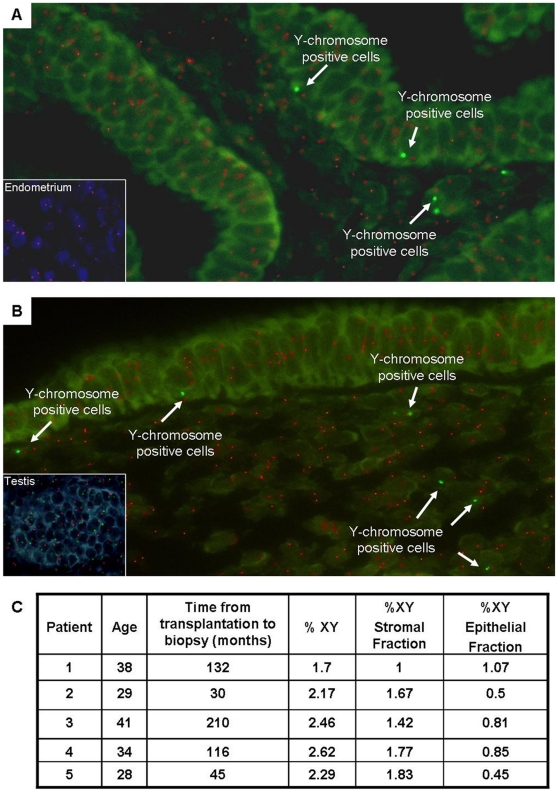
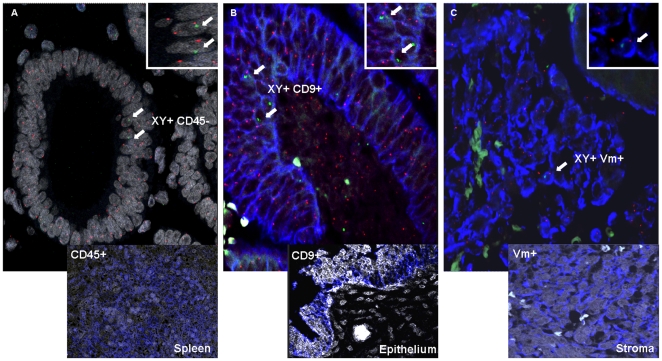
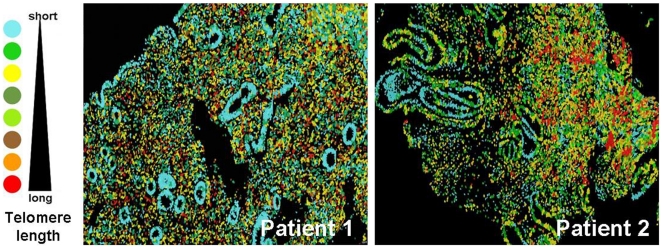
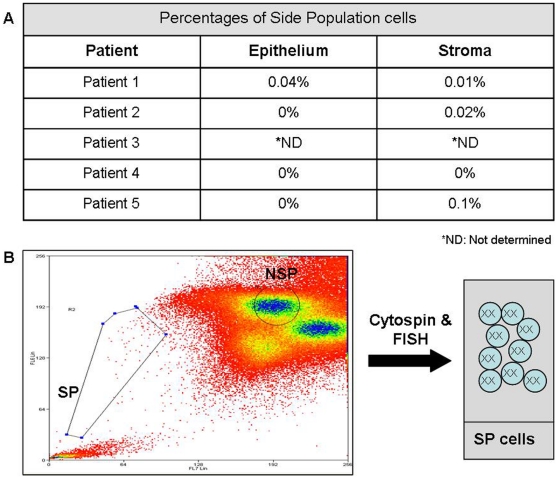
Accumulated evidence demonstrates the existence of bone marrow-derived cells origin in the endometria of women undergoing bone marrow transplantation (BMT). In these reports, cells of a bone marrow (BM) origin are able to differentiate into endometrial cells, although their contribution to endometrial regeneration is not yet clear. We have previously demonstrated the functional relevance of side population (SP) cells as the endogenous source of somatic stem cells (SSC) in the human endometrium. The present work aims to understand the presence and contribution of bone marrow-derived cells to the endometrium and the endometrial SP population of women who received BMT from male donors. Five female recipients with spontaneous or induced menstruations were selected and their endometrium was examined for the contribution of XY donor-derived cells using fluorescent in situ hybridization (FISH), telomapping and SP method investigation. We confirm the presence of XY donor-derived cells in the recipient endometrium ranging from 1.7% to 2.62%. We also identify 0.45-0.85% of the donor-derived cells in the epithelial compartment displaying CD9 marker, and 1.0-1.83% of the Vimentin-positive XY donor-derived cells in the stromal compartment. Although the percentage of endometrial SP cells decreased, possibly being due to chemotherapy applied to these patients, they were not formed by XY donor-derived cells, donor BM cells were not associated with the stem cell (SC) niches assessed by telomapping technique, and engraftment percentages were very low with no correlation between time from transplant and engraftment efficiency, suggesting random terminal differentiation. In conclusion, XY donor-derived cells of a BM origin may be considered a limited exogenous source of transdifferentiated endometrial cells rather than a cyclic source of BM donor-derived stem cells.
Overview
The claims and statistics of this paper haven’t been checked yet.
Free: it reads the open-access text and checks the first 5 claims that cite a source we can check. Create a free account to check every claim.
Integrity signals
Registry
Cites
Statistics
Figures
Verification
Claims the paper makes
The claims and statistics of this paper haven’t been checked yet.
Free: it reads the open-access text and checks the first 5 claims that cite a source we can check. Create a free account to check every claim.
Claims other papers make about this one
Each is checked against this paper’s own text: does it say what the citing paper says it does?
The cited source says what the claim attributes to it.
In the citing paper
“Later studies suggested that BMDSCs may differentiate into stroma or epithelium but do not contribute to the endometrial progenitor population (Cervello et al., 2012).”
From Endometriosis and nuclear receptors (2019) · cites this paper as Cervello et al., 2012
Self-check
Percentages, sums and reported differences re-computed from the paper’s own numbers.
The self-check needs the paper’s full text.
Citations
Cites
Multilineage potential of adult human mesenchymal stem cells
Pittenger, M. F., Mackay, A. M., Beck, S. C., Jaiswal, R. K., Douglas, R., Mosca, J. D., Moorman, M. A., Simonetti, D. W., Craig, S., & Marshak, D. R. (1999) · Science · doi:10.1126/science.284.5411.143 · Cited by 21,052 · cited 1×
“Bone marrow (BM) cells are able to differentiate into multiple nonhematopoietic cells”
BackgroundIsolation and functional properties of murine hematopoietic stem cells that are replicating in vivo.
Goodell, M. A., Brose, K., Paradis, G., Conner, A. S., & Mulligan, R. C. (1996) · The Journal of experimental medicine · doi:10.1084/jem.183.4.1797 · Cited by 2,903 · cited 1×
“The side population (SP) phenotype, defined as cells capacity to extrude the DNA binding dye (Hoechst 33342) via the ATPbinding cassette transporter, was originally described as a marker of bone marrow stem cells (SC) [22].”
BackgroundChimerism of the Transplanted Heart
Quaini, F., Urbanek, K., Beltrami, A. P., Finato, N., Beltrami, C. A., Nadal-Ginard, B., Kajstura, J., Leri, A., & Anversa, P. (2002) · New England Journal of Medicine · doi:10.1056/nejmoa012081 · Cited by 1,264
Liver from bone marrow in humans
Theise, N. D., Nimmakayalu, M., Gardner, R., Illei, P. B., Morgan, G., Teperman, L., Henegariu, O., & Krause, D. S. (2000) · Hepatology · doi:10.1053/jhep.2000.9124 · Cited by 1,210 · cited 1×
“tocytes [32], neurons [33], cardiomyocytes [34] and skin [35–”
BackgroundHepatocytes and Epithelial Cells of Donor Origin in Recipients of Peripheral-Blood Stem Cells
Körbling, M., Katz, R. L., Khanna, A., Ruifrok, A. C., Rondon, G., Albitar, M., Champlin, R. E., & Estrov, Z. (2002) · New England Journal of Medicine · doi:10.1056/nejmoa3461002 · Cited by 757
Isolation and in vitro expansion of human colonic stem cells
Jung, P., Sato, T., Merlos-Suárez, A., Barriga, F. M., Iglesias, M., Rossell, D., Auer, H., Gallardo, M., Blasco, M. A., Sancho, E., et al. (2011) · Nature Medicine · doi:10.1038/nm.2470 · Cited by 709 · cited 1×
“those cells of different telomeric lengths, as recently used to identify somatic stem cells in adult tissues and organs like skin [43] and human colon [47].”
BackgroundClonogenicity of Human Endometrial Epithelial and Stromal Cells1
Chan, R. W. S., Schwab, K. E., & Gargett, C. E. (2004) · Biology of Reproduction · doi:10.1095/biolreprod.103.024109 · Cited by 653
Endometrial regenerative cells: A novel stem cell population
Meng, X., Ichim, T. E., Zhong, J., Rogers, A., Yin, Z., Jackson, J., Wang, H., Ge, W., Bogin, V., Chan, K. W., et al. (2007) · Journal of Translational Medicine · doi:10.1186/1479-5876-5-57 · Cited by 630 · cited 1×
“In physiological terms, the transient infiltration of BM-derived cells occurs in each menstrual cycle [11,37].”
BackgroundTransplanted bone marrow generates new neurons in human brains
Mezey, É., Key, S., Vogelsang, G., Szalayova, I., Lange, G. D., & Crain, B. (2003) · Proceedings of the National Academy of Sciences · doi:10.1073/pnas.0336479100 · Cited by 567
Schwab, K. E., & Gargett, C. E. (2007) · Human Reproduction · doi:10.1093/humrep/dem265 · Cited by 545
Cited by
Cyclic Decidualization of the Human Endometrium in Reproductive Health and Failure
Gellersen, B., & Brosens, J. J. (2014) · Endocrine Reviews · doi:10.1210/er.2014-1045 · Cited by 1,139
Endometrial stem/progenitor cells: the first 10 years
Gargett, C. E., Schwab, K. E., & Deane, J. A. (2015) · Human Reproduction Update · doi:10.1093/humupd/dmv051 · Cited by 561
“Subsequent studies using the Y-chromosome as a marker of bone marrow-derived cells in the endometrium of patients receiving sex-mismatched bone marrow transplants also reported contributions to epithelia and stroma, albeit at more modest levels of ,10% (Ikoma et al., 2009; Cervelló et al., 2012).”
BackgroundResultSantamaria, X., Cabanillas, S., Cervelló, I., Arbona, C., Raga, F., Ferro, J., Palmero, J., Remohí, J., Pellicer, A., & Simón, C. (2016) · Human Reproduction · doi:10.1093/humrep/dew042 · Cited by 342
Self-citationEndometriosis and nuclear receptors
Yilmaz, B. D., & Bulun, S. E. (2019) · Human Reproduction Update · doi:10.1093/humupd/dmz005 · Cited by 243
“Later studies suggested that BMDSCs may differentiate into stroma or epithelium but do not contribute to the endometrial progenitor population (Cervello et al., 2012).”
BackgroundEndometrial regeneration and endometrial stem/progenitor cells
Gargett, C. E., Nguyen, H. P. T., & Ye, L. (2012) · Reviews in Endocrine and Metabolic Disorders · doi:10.1007/s11154-012-9221-9 · Cited by 241
“derived XY endometrial cells were found in the non-SP rather than the SP progenitor cell population [97].”
BackgroundAlawadhi, F., Du, H., Cakmak, H., & Taylor, H. S. (2014) · PLoS ONE · doi:10.1371/journal.pone.0096662 · Cited by 229
Endometrial reconstruction from stem cells
Gargett, C. E., & Ye, L. (2012) · Fertility and Sterility · doi:10.1016/j.fertnstert.2012.05.004 · Cited by 191
“This was confirmed in mouse bone marrow transplant studies (reviewed in Gargett andMasuda (6) and Du and Taylor (43)) and in a human study of female recipients of male donor bone marrow transplants, in which male XYþ endometrial cells were identified in the non-SP rather than SP cells (47).”
BackgroundAutologous stem cell transplantation in refractory Asherman′s syndrome: A novel cell based therapy
Singh, N., Mohanty, S., Seth, T., Shankar, M., Bhaskaran, S., & Dharmendra, S. (2014) · Journal of Human Reproductive Sciences · doi:10.4103/0974-1208.138864 · Cited by 174
Potential role of endometrial stem/progenitor cells in the pathogenesis of early-onset endometriosis
Gargett, C. E., Schwab, K. E., Brosens, J. J., Puttemans, P., Benagiano, G., & Brosens, I. (2014) · Molecular Human Reproduction · doi:10.1093/molehr/gau025 · Cited by 168
Cervelló, I., Gil-Sanchis, C., Santamaría, X., Cabanillas, S., Díaz, A., Faus, A., Pellicer, A., & Simón, C. (2015) · Fertility and Sterility · doi:10.1016/j.fertnstert.2015.08.032 · Cited by 161
Self-citationUterine stem cells: from basic research to advanced cell therapies
Santamaria, X., Mas, A., Cervelló, I., Taylor, H., & Simon, C. (2018) · Human Reproduction Update · doi:10.1093/humupd/dmy028 · Cited by 147
Self-citationStem cell-based therapy for ameliorating intrauterine adhesion and endometrium injury
Song, Y., Liu, P., Tan, J., Zou, C., Li, Q., Li‐Ling, J., & Xie, H. (2021) · Stem Cell Research & Therapy · doi:10.1186/s13287-021-02620-2 · Cited by 151
Bioengineered uterine tissue supports pregnancy in a rat model
Hellström, M., Moreno-Moya, J. M., Bandstein, S., Bom, E., Akouri, R., Miyazaki, K., Maruyama, T., & Brännström, M. (2016) · Fertility and Sterility · doi:10.1016/j.fertnstert.2016.03.048 · Cited by 144
Cyclical endometrial repair and regeneration
Salamonsen, L. A., Hutchison, J. C., & Gargett, C. E. (2021) · Development · doi:10.1242/dev.199577 · Cited by 148
Toward the use of endometrial and menstrual blood mesenchymal stem cells for cell-based therapies
Ulrich, D., Muralitharan, R., & Gargett, C. E. (2013) · Expert Opinion on Biological Therapy · doi:10.1517/14712598.2013.826187 · Cited by 131
“Currently, it is not known if these incorporating bone marrowderived cells are hematopoietic stem cells, MSCs, myeloid cells or endothelial progenitor cells, but they do not contribute to the SP [62].”
BackgroundPatterson, A. L., Zhang, L., Arango, N. A., Teixeira, J., & Pru, J. K. (2013) · Stem Cells and Development · doi:10.1089/scd.2012.0435 · Cited by 115
“demonstrated that although bone marrow-derived cells engraft in the endometrium of transplant recipients, they do not contribute to the side population [10].”
Mechanisms of Regeneration and Fibrosis in the Endometrium
Ang, C. J., Skokan, T. D., & McKinley, K. L. (2023) · Annual Review of Cell and Developmental Biology · doi:10.1146/annurev-cellbio-011723-021442 · Cited by 140
Endometrial Stem Cell Markers: Current Concepts and Unresolved Questions
Tempest, N., Maclean, A., & Hapangama, D. K. (2018) · International Journal of Molecular Sciences · doi:10.3390/ijms19103240 · Cited by 111
“SP cells were not shown to be formed by XY donor-derived cells [77].”
BackgroundAsherman’s Syndrome: it may not be all our fault
Santamaría, X., Isaacson, K., & Simón, C. (2018) · Human Reproduction · doi:10.1093/humrep/dey232 · Cited by 121
Self-citationMas, A., Cervelló, I., Gil-Sanchis, C., Faus, A., Ferro, J., Pellicer, A., & Simón, C. (2012) · Fertility and Sterility · doi:10.1016/j.fertnstert.2012.04.044 · Cited by 104
Self-citationEpithelial-to-mesenchymal transition and stem cells in endometrial cancer
Mirantes, C., Espinosa, Í., Ferrer, I., Dolcet, X., Prat, J., & Matías‐Guiu, X. (2013) · Human Pathology · doi:10.1016/j.humpath.2013.04.009 · Cited by 111
“Different groups have shown endometrial chimerism in endometrial glands and stroma of women who were given male or HLA-mismatched bone marrow transplants [50–52].”
BackgroundStrategies to manage refractory endometrium: state of the art in 2016
García-Velasco, J. A., Acevedo, B., Alvarez, C., Álvarez, M., Bellver, J., Fontes, J., Landeras, J. J., Manau, D., Martínez, F., Muñoz, E., et al. (2016) · Reproductive BioMedicine Online · doi:10.1016/j.rbmo.2016.02.001 · Cited by 90
“In fact in female recipients of male donor bone marrow transplants, male XY endometrial cells have been identified (Cervelló et al., 2012; Ikoma et al., 2009).”
BackgroundMorelli, S. S., Rameshwar, P., & Goldsmith, L. T. (2013) · Biology of Reproduction · doi:10.1095/biolreprod.113.107987 · Cited by 77
“Our findings in murine endometrium resemble results from reports describing long-term engraftment of human endometrium with BMDCs [8, 10, 11], which suggests translational potential of our model.”
ResultResearch progress of stem cell therapy for endometrial injury
Cen, J., Zhang, Y., Bai, Y., Ma, S., Zhang, C., Jin, L., Duan, S., Du, Y., & Guo, Y. (2022) · Materials Today Bio · doi:10.1016/j.mtbio.2022.100389 · Cited by 84
Deane, J. A., Gualano, R. C., & Gargett, C. E. (2013) · Current Opinion in Obstetrics & Gynecology · doi:10.1097/gco.0b013e32836024e7 · Cited by 65
Stem cells in reproductive medicine: ready for the patient?: Figure 1
Vassena, R., Eguizábal, C., Heindryckx, B., Sermon, K., Simón, C., van Pelt, A. M. M., Veiga, A., & Zambelli, F. (2015) · Human Reproduction · doi:10.1093/humrep/dev181 · Cited by 76
“They contribute mainly to the formation of endometrial stromal compartment cells and to a much lesser extent to the glandular and luminal epithelium (Du and Taylor, 2007; Mints et al., 2008; Ikoma et al., 2009; Cervello et al., 2012).”
BackgroundSelf-citationLiu, Y., Tal, R., Pluchino, N., Mamillapalli, R., & Taylor, H. S. (2017) · Journal of Cellular and Molecular Medicine · doi:10.1111/jcmm.13294 · Cited by 68
Forte, A., Cipollaro, M., & Galderisi, U. (2013) · Clinical Science · doi:10.1042/cs20130099 · Cited by 66
Endometrial stem/progenitor cells: Properties, origins, and functions
Hong, I. (2022) · Genes & Diseases · doi:10.1016/j.gendis.2022.08.009 · Cited by 74
Bone marrow stem cells do not contribute to endometrial cell lineages in chimeric mouse models
Ong, Y. R., Cousins, F. L., Yang, X., Mushafi, A. A. A. A., Breault, D. T., Gargett, C. E., & Deane, J. A. (2018) · Stem Cells · doi:10.1002/stem.2706 · Cited by 56
Structure, Function, and Evaluation of the Female Reproductive Tract
Lessey, B. A., & Young, S. L. (2019) · Elsevier eBooks · doi:10.1016/b978-0-323-47912-7.00009-3 · Cited by 66
Stem Cells and Endometrial Regeneration: From Basic Research to Clinical Trial
Zhu, X., Péault, B., Yan, G., Sun, H., Hu, Y., & Ding, L. (2018) · Current Stem Cell Research & Therapy · doi:10.2174/1574888x14666181205120110 · Cited by 55
Gil-Sanchís, C., Cervelló, I., Khurana, S., Faus, A., Verfaillie, C. M., & Simón, C. (2015) · Fertility and Sterility · doi:10.1016/j.fertnstert.2015.02.030 · Cited by 51
Self-citationEndometrial Side Population Cells: Potential Adult Stem/Progenitor Cells in Endometrium1
Masuda, H., Maruyama, T., Gargett, C. E., Miyazaki, K., Matsuzaki, Y., Okano, H., & Tanaka, M. (2015) · Biology of Reproduction · doi:10.1095/biolreprod.115.131490 · Cited by 49
“However, this report demonstrated that the proportion of fESPs in these women was very low compared to nontransplanted women, possibly because of chemotherapies that they received [63], and their endometria might not have functioned appropriately under abnormal physiological conditions.”
ResultPatterson, A. L., & Pru, J. K. (2013) · Cell Cycle · doi:10.4161/cc.25917 · Cited by 50
“Furthermore, Cervellό et al.4 concluded that although bone marrow-derived cells do engraft in the endometrium of transplant recipients at a very low percentage, they do not contribute to the side population and are therefore unlikely to contribute to endometrial tissue in a stem/progenitor cell capacity.”
BackgroundGil-Sanchís, C., Cervelló, I., Mas, A., Faus, A., Pellicer, A., & Simón, C. (2013) · Molecular Human Reproduction · doi:10.1093/molehr/gat014 · Cited by 51
Self-citationStem Cells and the Endometrium: From the Discovery of Adult Stem Cells to Pre-Clinical Models
de Miguel–Gómez, L., López-Martínez, S., Francés‐Herrero, E., Rodríguez‐Eguren, A., Pellicer, A., & Cervelló, I. (2021) · Cells · doi:10.3390/cells10030595 · Cited by 51
Self-citationImplications of telomeres and telomerase in endometrial pathology
Hapangama, D. K., Kamal, A., & Saretzki, G. (2016) · Human Reproduction Update · doi:10.1093/humupd/dmw044 · Cited by 43
“Data from a previous study which employed in situ assessment of endometrial TLs also demonstrated that glandular epithelium of the endometrial functionalis possesses the shortest TL (Cervello et al., 2012) (Fig.”
ResultThe potential perinatal origin of placentation disorders in the young primigravida
Brosens, I. A., Benagiano, G., & Brosens, J. J. (2015) · American Journal of Obstetrics and Gynecology · doi:10.1016/j.ajog.2015.01.013 · Cited by 46
Menstrual Blood-Derived Stem Cells: In Vitro and In Vivo Characterization of Functional Effects
Oliveira, M. C., Lippert, T., Nguyen, H., Kaelber, S., Sanberg, P. R., & Borlongan, C. V. (2016) · Advances in experimental medicine and biology · doi:10.1007/978-3-319-45457-3_9 · Cited by 40
Mouhayar, Y., & Sharara, F. I. (2017) · Journal of Assisted Reproduction and Genetics · doi:10.1007/s10815-017-0922-6 · Cited by 40
Microphysiological Modeling of the Human Endometrium
Campo, H., Murphy, A. R., Yıldız, Ş., Woodruff, T. K., Cervelló, I., & Kim, J. J. (2020) · Tissue Engineering Part A · doi:10.1089/ten.tea.2020.0022 · Cited by 36
Self-citationWang, S., Shi, C., Cai, X., Wang, Y., Chen, X., Han, H., & Shen, H. (2021) · Mediators of Inflammation · doi:10.1155/2021/5573594 · Cited by 40
The thin endometrium in assisted reproductive technology: An ongoing challenge
Eftekhar, M., Tabibnejad, N., & Tabatabaie, A. (2017) · Middle East Fertility Society Journal · doi:10.1016/j.mefs.2017.12.006 · Cited by 41
Very small embryonic-like stem cells are the elusive mouse endometrial stem cells- a pilot study
Gunjal, P., Bhartiya, D., Metkari, S., Manjramkar, D. D., & Patel, H. (2015) · Journal of Ovarian Research · doi:10.1186/s13048-015-0138-2 · Cited by 33
“Resident stem cells may play a major role in regeneration rather than the bone marrow cells because the engraftment of XY donor derived cells of bone marrow origin has been found to be very poor (<10%) in endometrial glands and stroma [71].”
BackgroundCurrent understanding of somatic stem cells in leiomyoma formation
Mas, A., Cervelló, I., Gil-Sanchís, C., & Simón, C. (2014) · Fertility and Sterility · doi:10.1016/j.fertnstert.2014.04.051 · Cited by 31
“The best characterized source of SSCs in the adult organism is the bone marrow (4, 75), although they are present in several tissues, including other hematopoietic organs (76), the central nervous system (77, 78), liver (79), pancreas (80), retina (81), skeletal muscle (82, 83), lung (84), human endometrium (10, 11, 8…”
BackgroundSelf-citationAbuwala, N., & Tal, R. (2021) · Current Opinion in Obstetrics & Gynecology · doi:10.1097/gco.0000000000000702 · Cited by 29
Endometrial stem/progenitor cells
Maruyama, T. (2014) · Journal of obstetrics and gynaecology research · doi:10.1111/jog.12501 · Cited by 27
“Importantly, in women who underwent bone marrow transplantation from a male donor, XY endometrial cells were identified in the non-SP, but not in the SP progenitor fraction.(41) Most glands are exclusively of donor or recipient origin, though some chimerism is present within individual glands.”
BackgroundEndometriosis: A Role for Stem Cells
Dhesi, A. S., & Morelli, S. S. (2015) · Women s Health · doi:10.2217/whe.14.57 · Cited by 29
Regenerative Medicine Approaches in Bioengineering Female Reproductive Tissues
Sittadjody, S., Criswell, T. L., Jackson, J. D., Atala, A., & Yoo, J. J. (2021) · Reproductive Sciences · doi:10.1007/s43032-021-00548-9 · Cited by 27
Wang, J., Zhan, H., Wang, Y., Zhao, L., Huang, Y., & Wu, R. (2024) · Stem Cell Research & Therapy · doi:10.1186/s13287-024-03989-6 · Cited by 34
“A similar engraftment was observed in the endometrium of patients receiving sex-mismatched bone marrow trans-plants [80, 81].”
BackgroundSantamaría, X., LIU, J. H., Aghajanova, L., Isaacson, K., Movilla, P. R., Fernandez, H., Capmas, P., Donnez, J., & Simón, C. (2020) · Fertility and Sterility · doi:10.1016/j.fertnstert.2020.01.022 · Cited by 22
Self-citationStem cell and endometriosis: new knowledge may be producing novel therapies.
Yang, J., & Huang, F. (2014) · Europe PMC (PubMed Central) · Cited by 27
Modern management of thin lining
Mouhayar, Y., & Sharara, F. I. (2016) · Middle East Fertility Society Journal · doi:10.1016/j.mefs.2016.09.001 · Cited by 22
Bazoobandi, S., Tanideh, N., Rahmanifar, F., Zare, S., Koohi‐Hosseinabadi, O., Razeghian‐Jahromi, I., Dianatpour, M., Ahmadi, M., Khoradmehr, A., Nabipour, I., et al. (2020) · Stem Cells International · doi:10.1155/2020/8849537 · Cited by 19
The role of stem cells in uterine involution
Spooner, M. K., Lenis, Y. Y., Watson, R., Jaimes, D., & Patterson, A. L. (2021) · Reproduction · doi:10.1530/rep-20-0425 · Cited by 19
“Some reports suggest that non-immune BM-derived cells, presumably MSCs, engraft in the endometrium and become stromal, GE and LE cells by transdifferentiation (Taylor 2004, Du & Taylor 2007, Ikoma et al. 2009, Cervell ό et al. 2012, Morelli et al. 2013, Gil-Sanchis et al. 2015, Tal et al. 2019).”
BackgroundInfluentialKazemirad, N., & Lorzadeh, N. (2018) · American Journal of Perinatology · doi:10.1055/s-0038-1646948 · Cited by 17
Simón, C. (2012) · Fertility and Sterility · doi:10.1016/j.fertnstert.2012.05.021 · Cited by 14
Self-citationStem Cells in Endometrium and Endometriosis
Ulukuş, M. (2015) · Women s Health · doi:10.2217/whe.15.43 · Cited by 14
Othman, E. R., Meligy, F. Y., Sayed, A. A.-R., El‐Mokhtar, M. A., & Refaiy, A. M. (2018) · Reproductive Sciences · doi:10.1177/1933719117697124 · Cited by 14
“Bone marrow–derived cells did not contribute to endometrial side population of putative stem cells.(61) The concept of bone marrow cell transdifferentiation is now questionable.”
BackgroundPeripheral blood stem cell transplants do not result in endometrial stromal engraftment
Wolff, E. F., Uchida, N., Donahue, R. E., Metzger, M. E., Hsieh, M. M., Libfraind, L., Hill, M. J., & Tisdale, J. F. (2012) · Fertility and Sterility · doi:10.1016/j.fertnstert.2012.09.045 · Cited by 12
Vasculogenesis of decidua side population cells of first-trimester pregnancy
Wang, Q., Shen, L., Huang, W., Song, Y., Xiao, L. Y., Xu, W., & Liu, Y. (2013) · Stem Cell Research & Therapy · doi:10.1186/scrt200 · Cited by 11
“Furthermore, they found that bone marrow derived stem cells may be a limited source of transdifferentiated endometrial cells, but SP cells in the endometrium maybe play a key role for the mature endometrium [27].”
BackgroundAdvances in improving fertility in women through stem cell-based clinical platforms
Vanni, V. S., Viganò, P., Papaleo, E., Mangili, G., Candiani, M., & Giorgione, V. (2017) · Expert Opinion on Biological Therapy · doi:10.1080/14712598.2017.1305352 · Cited by 11
Singh, M., Jain, M., Bose, S., Halder, A., Nag, T. C., Dinda, A. K., & Mohanty, S. (2021) · Cell Death Discovery · doi:10.1038/s41420-020-00351-6 · Cited by 9
Öztürk, Ş., Sönmez, P. K., Özdemır, İ., Topdağı, Y. E., & Tuğlu, M. İ. (2019) · Çukurova medical journal (Online)/Çukurova medical journal · doi:10.17826/cumj.573200 · Cited by 7
Wang, D., Wu, X.-M., Chen, J.-S., Cai, Z.-G., An, J., Zhang, M., Li, Y., Li, F., Hou, R., & Liu, Y. (2022) · Conservation Physiology · doi:10.1093/conphys/coac004 · Cited by 8
“Moreover, some studies revealed that eMSCs are likely to be derived from bone marrow (Cervello et al., 2012; Cervello et al., 2015), but the real origin of red panda eMSCs needs further studies.”
BackgroundHuman Endometrial Reconstitution From Somatic Stem Cells: The Importance of Niche-Like Cells
López-Pérez, N., Gil-Sanchís, C., Ferrero, H., Faus, A., Díaz, A., Pellicer, A., Cervelló, I., & Simón, C. (2019) · Reproductive Sciences · doi:10.1177/1933719118766251 · Cited by 9
Self-citationAgustina‐Hernández, M., Francés‐Herrero, E., Gómez‐Álvarez, M., Alonso-Frías, P., Romeu, M., Miralles, A. M., Ferrero, H., Bueno-Fernández, C., & Cervelló, I. (2024) · Frontiers in Bioengineering and Biotechnology · doi:10.3389/fbioe.2024.1495338 · Cited by 9
Self-citationThe Structure, Function, and Evaluation of the Female Reproductive Tract
Lessey, B. A., & Young, S. L. (2013) · Elsevier eBooks · doi:10.1016/b978-1-4557-2758-2.00010-x · Cited by 12
Regenerating the uterus: translational advances in endometrial bioengineering and immunotherapeutics
Lee, D., Kang, Y., & Song, H. (2025) · Seminars in Immunopathology · doi:10.1007/s00281-025-01063-8 · Cited by 6
“Comparable engraftment was observed in the endometrium of patients receiving sex-mis-matched bone marrow transplants [17, 18].”
López, A. G., Montesinos, J. J., & Arce, S. R. A. (2017) · Veterinaria México OA · doi:10.21753/vmoa.4.3.441 · Cited by 3
Regenerative Medicine and Tissue Engineering in Reproductive Medicine
Cervelló, I., Medrano, J. V., & Simón, C. (2015) · Elsevier eBooks · doi:10.1016/b978-0-12-800548-4.00010-3 · Cited by 4
Self-citationLüdke, A., Hatta, K., Yao, A., & Li, R. (2022) · Cells · doi:10.3390/cells11142182 · Cited by 4
“These BM-derived stem cells (BMDSC) are a type of mesenchymal stem cell that is able to traffic out of the BM into different types of non-hematopoietic tissues [41,42].”
BackgroundReply: Bone marrow-derived endometrial cells: what you see is what you get
Santamaría, X., Mas, A., Cervelló, I., Taylor, H. S., & Simón, C. (2018) · Human Reproduction Update · doi:10.1093/humupd/dmy042 · Cited by 4
Self-citationBiotechnological Potential of Stem Cells
Pandey, D. (2017) · Journal of Stem Cell Research & Therapeutics · doi:10.15406/jsrt.2017.03.00090 · Cited by 3
Bazoobandi, S., Tanideh, N., Rahmanifar, F., Zare, S., Koohi‐Hosseinabadi, O., Razeghian‐Jahromi, I., Dianatpour, M., Khodabandeh, Z., Ahmadi, M., Khoradmehr, A., et al. (2020) · doi:10.21203/rs.3.rs-23917/v1 · Cited by 3
Meisl, L. M., Teufel, I. A., Singh, A. R., Staebler, A., Henes, M., Brucker, S. Y., Rall, K., & Koch, A. (2026) · Frontiers in Cell and Developmental Biology · doi:10.3389/fcell.2026.1830798 · Cited by 2
“These findings are consistent with previous observations by Cervelló et al., who demonstrated that BMDCs do not incorporate into the recipient endometrial side population (Cervelló et al., 2012).”
Characteristic and Regenerative Potential of Human Endometrial Stem Cells and Progenitors
Ghamari, A., Daghigh, F., Mohebbi, A., Rahimi, Y., Shojaie, L., & Zolbin, M. M. (2021) · Springer eBooks · doi:10.1007/978-981-16-0301-3_3 · Cited by 4
Review Article Cell origin of endometriosis: contribution by the fallopian tube epithelium
Zeng, Y., Wang, Y., Cragun, J. M., Chambers, S. K., & Zheng, W. (2013) · Cited by 8
Trophoblast, amniotic fluid, endometrium, and bone marrow
Simón, C., Pellicer, A., & Pera, R. A. R. (2013) · Cambridge University Press eBooks · doi:10.1017/cbo9781139540742.011 · Cited by 2
Self-citationThe role of stem cells in the pathogenesis of endometriosis (а review)
Farkhat, K. N., Савилова, А. М., Makiyan, Z., & Adamyan, L. V. (2016) · Russian Journal of Human Reproduction · doi:10.17116/repro201622120-27 · Cited by 5
Adult stem cells in the human endometrium
Gargett, C. E., Cervelló, I., Nguyen, H. P. T., & Simón, C. (2013) · Cambridge University Press eBooks · doi:10.1017/cbo9781139540742.012 · Cited by 2
Self-citationCharacteristics and Therapeutic Potential of Menstrual Blood-Derived Stem Cells
Achmad, N., & Götte, M. (2014) · Springer eBooks · doi:10.1007/978-1-4471-6542-2_7 · Cited by 1
“Although Cervello et al (2012) could recently confirm the presence of XY donor-derived cells in recipient endometrium in a different collective of bone-marrow transplanted patients, their data suggested that bone-marrow derived cells did not contribute to the endometrial side population of the…”
BackgroundStem Cell Therapy to Approach Refractory Asherman’s Syndrome
Santamaría, X. (2022) · Springer eBooks · doi:10.1007/978-3-030-47767-7_24 · Cited by 1
Endocrine Aspects of Endometrial Stem Cell Function in Reproductive-Age Women
Götte, M., & Kiesel, L. (2013) · Journal für Kardiologie (Krause & Pachernegg GmbH) · Cited by 2
Existence of Mesenchymal-Like Somatic Stem Cells in the Porcine Uterus
Miernik, K., & Karasiński, J. (2014) · Springer eBooks · doi:10.1007/978-1-4471-6542-2_19
The effect of bone-marrow transplantation on decidua formation in pseudopregnant rats
Domnina, A. P., Mikhailov, V. M., & Nikolsky, N. N. (2014) · Cell and Tissue Biology · doi:10.1134/s1990519x14040038
Stem/Progenitor Cells in the Human Endometrium
Maruyama, T. (2016) · Springer eBooks · doi:10.1007/978-4-431-55972-6_9 · Cited by 1
Regenerative Medicine in Patients With Asherman’s Syndrome and Endometrial Atrophy
Santamaría, X. (2018) · Elsevier eBooks · doi:10.1016/b978-0-12-801238-3.64913-9 · Cited by 1
Hysteroscopy and Stem Cell Therapy to Approach Refractory Asherman’s Syndrome
Santamaría, X., & Isaacson, K. (2018) · Springer eBooks · doi:10.1007/978-3-319-57559-9_65
Endometrial stem cells: the clinical application (a review)
Мелкозерова, О. А., Башмакова, Н. В., & Schedrina, I. D. (2018) · Russian Journal of Human Reproduction · doi:10.17116/repro20182405163
“Рядом авторов [20, 21, 23, 24] показано, что клоногенные клетки человека, имеющие фенотип CD146+PDGFR-β+ и SUSD2+, представляют собой стромальные субпопуляции клеток эндометрия и демонстрируют те же свойства in vitro, что и MSC костномозгового происхождения [19, 25, 26].”
InfluentialAppointment of Carlos Simón as Editor of Preconceptional Care and Biology for AJOG
Romero, R. J. (2020) · American Journal of Obstetrics and Gynecology · doi:10.1016/j.ajog.2020.02.001
Bragança, C. M. C. (2013) · Portuguese National Funding Agency for Science, Research and Technology (RCAAP Project by FCT) · doi:10.34626/2fxe-we94 · Cited by 1
Three-dimensional modelling of the human peri-implantation endometrium
Rawlings, T. M. (2026) · Warwick Research Archive Portal (University of Warwick) · doi:10.82444/warw.33812119
Stem Cell Transplantation for Endometrial Regeneration in Humans
de Miguel–Gómez, L., Pellicer, A., & Cervelló, I. (2022) · Stem cell biology and regenerative medicine · doi:10.1007/978-3-030-90111-0_10 · Cited by 1
Self-citationA biomechanical assessment of tissue-engineered polymer neo-uteri after orthotopic implantation
Nordberg, R. C., Magalhaes, R. S., Cervelló, I., Williams, J. K., Atala, A., & Loboa, E. G. (2023) · F&S Science · doi:10.1016/j.xfss.2023.12.005 · Cited by 1
Self-citationAsherman׳s Syndrome and Endometrial Atrophy
Pardo‐Figuerez, M., & Santamaría, X. (2024) · Elsevier eBooks · doi:10.1016/b978-0-443-21477-6.00263-7
Impact of Thin Endometrium in Frozen Embryo Transfer: Thesis Summary Article
Sakthi, A. (2025) · Clinical Journal of Obstetrics and Gynecology · doi:10.29328/journal.cjog.1001187
Wen, Y., Wang, X., Zhao, D., Zhou, T., Zong, Z., Gao, J., Zhang, J., Zhang, S., Gu, G., & Zhang, Z. (2026) · Fundamental Research · doi:10.1016/j.fmre.2026.01.002
Metadata
- Authors
- Cervelló, I., Gil-Sanchis, C., Mas, A., Faus, A., Sanz, J., Moscardó, F., Higueras, G., Sanz, M. A., Pellicer, A., & Simón, C.
- Affiliations
- Universitat de València (ES)
- Hospital Universitari i Politècnic La Fe (ES)
- Corresponding author
- Simón, Carlos
- Venue
- PLoS ONE
- Publisher
- Public Library of Science (PLoS)
- Published
- 2012-01-19
- Volume
- 7
- Issue
- 1
- Pages
- e30260
- ISSN
- 1932-6203 (ISSN-L)
- PMC
- PMC3261882
- OpenAlex
- W2054794301
- Cited by
- 99
- References
- 53
- Citations by year
- 2026: 3 · 2025: 2 · 2024: 3 · 2023: 2 · 2022: 6 · 2021: 9 · 2020: 5 · 2019: 3 · 2018: 10 · 2017: 8 · 2016: 8 · 2015: 10 · 2014: 10 · 2013: 14 · 2012: 6
- FWCI
- 6.10
- Type
- journal article
- Language
- en
- Open access
- gold
- doi.org
- Locations
- PLoS ONE (publishedVersion, cc-by)
- PubMed Central (publishedVersion, cc-by)
- PubMed (publishedVersion)
- DOAJ (DOAJ: Directory of Open Access Journals) (submittedVersion, cc-by-sa)
- Funders
- Ministerio de Ciencia e Innovación
- Topics
- Life Sciences › Biochemistry, Genetics and Molecular Biology › Cell Biology › Mesenchymal stem cell research
- Health Sciences › Medicine › Hematology › Hematopoietic Stem Cell Transplantation
- Health Sciences › Medicine › Reproductive Medicine › Reproductive Biology and Fertility
- Keywords
- bone marrow-derived cells, endometrium, bone marrow transplantation, donor-derived cells, endometrial stem cells, CD9, vimentin, engraftment, transdifferentiation, endometrial regeneration, stem cell niche
- MeSH terms
- Adult, Bone Marrow Cells, Endometrium, Female, Fluorescent Antibody Technique, Humans, Male, Tissue Donors, Vimentin, Bone Marrow Transplantation, In Situ Hybridization, Fluorescence, Leukocyte Common Antigens, Tetraspanin 29
About these checks
Registry, retraction, Cites and statistics results are computed, not judged, with one exception: a printed reference that no index lists is read once by a model before it counts as a citation error. Claims are extracted by a model and kept only when their quote appears verbatim in the text; each cited source is then checked, with a model’s help, for whether it says what the claim relies on. Those verdicts can be wrong — read the claim’s quote and the cited source before relying on one.
Statistics and arithmetic are recomputed, not judged.
Confidence bands are shown only for fields calibrated on our annotated test set. None is calibrated yet, so no band is shown.
What counts as a claim ›How we measure confidence ›How we check this ›
Are you an author, or do you see a problem with this page? Request a review
Data sources
Bibliographic data: Semantic Scholar, OpenAlex, Crossref.
Contains information from the Semantic Scholar Academic Graph Datasets, made available under the ODC Attribution License (ODC-BY 1.0).
Semantic Scholar’s data is described in: Kinney, R., et al. (2023). The Semantic Scholar Open Data Platform. arXiv:2301.10140.
