

Evidence of the Most Stretchable Egg Sac Silk Stalk, of the European Spider of the Year Meta menardi
Open accessThe DOI matches its Crossref record; 61 of the 61 references it cites were found in a registry or an index.
Abstract
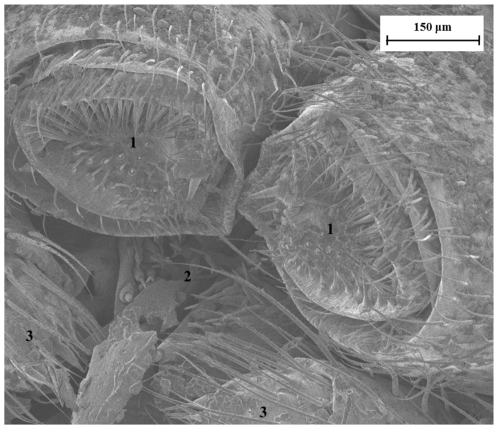
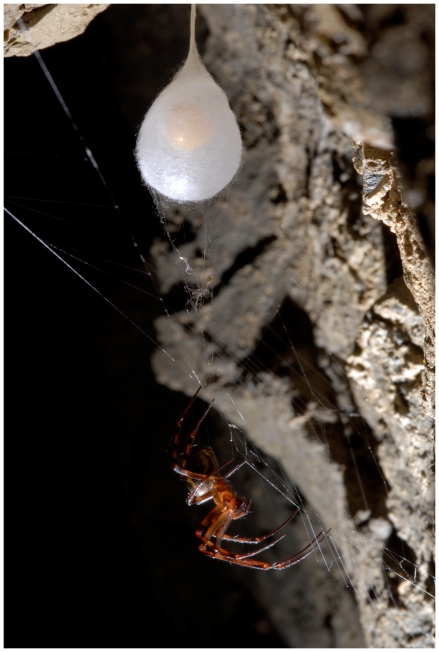
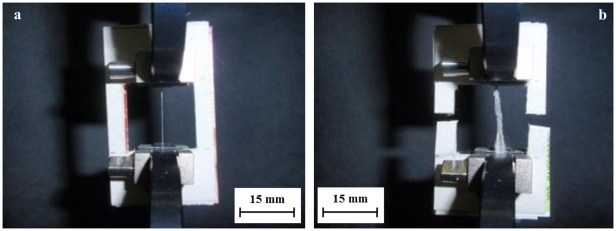
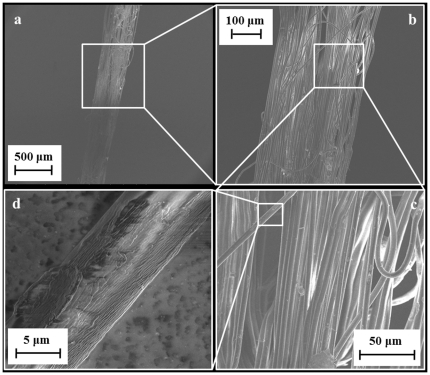
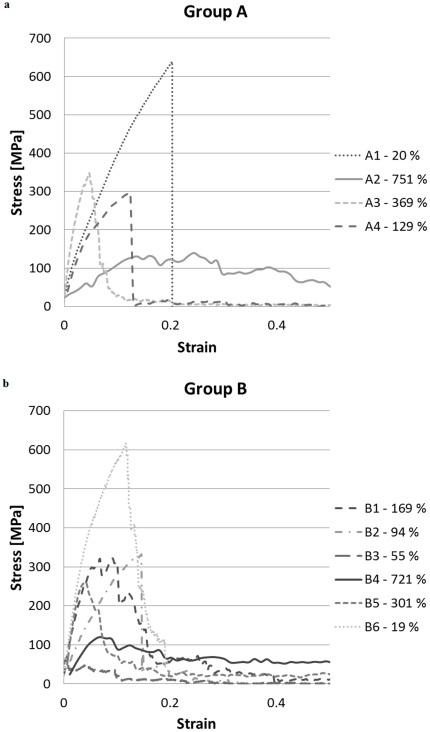
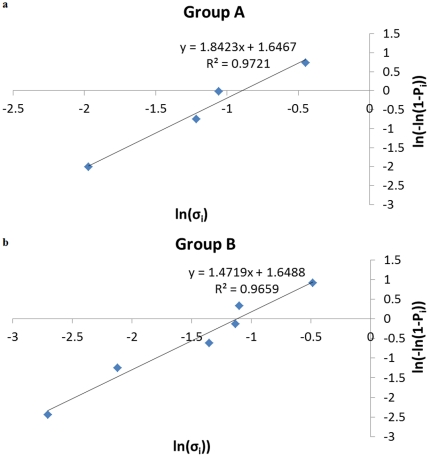
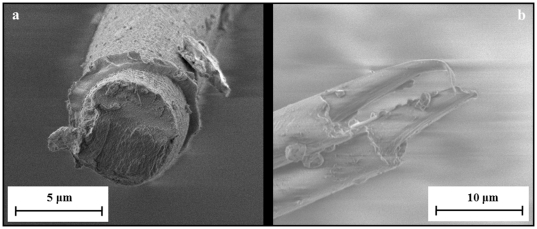
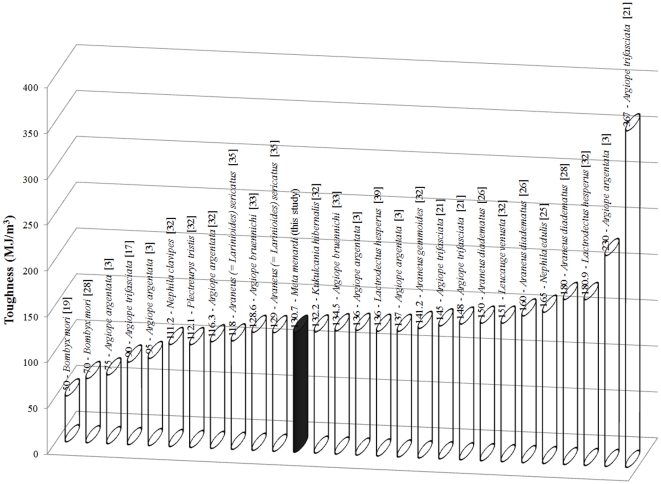
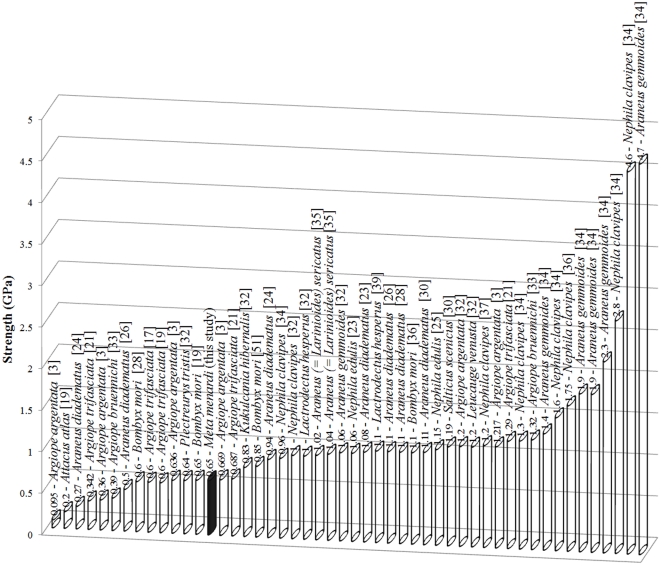
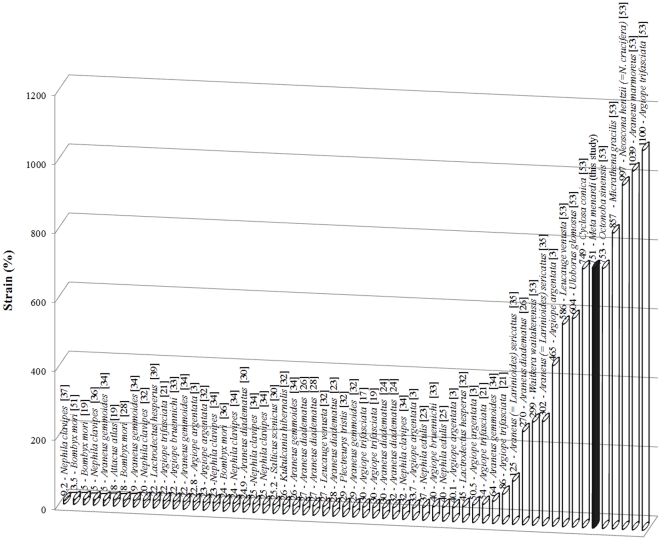
Spider silks display generally strong mechanical properties, even if differences between species and within the same species can be observed. While many different types of silks have been tested, the mechanical properties of stalks of silk taken from the egg sac of the cave spider Meta menardi have not yet been analyzed. Meta menardi has recently been chosen as the "European spider of the year 2012", from the European Society of Arachnology. Here we report a study where silk stalks were collected directly from several caves in the north-west of Italy. Field emission scanning electron microscope (FESEM) images showed that stalks are made up of a large number of threads, each of them with diameter of 6.03 ± 0.58 µm. The stalks were strained at the constant rate of 2 mm/min, using a tensile testing machine. The observed maximum stress, strain and toughness modulus, defined as the area under the stress-strain curve, are 0.64 GPa, 751% and 130.7 MJ/m(3), respectively. To the best of our knowledge, such an observed huge elongation has never been reported for egg sac silk stalks and suggests a huge unrolling microscopic mechanism of the macroscopic stalk that, as a continuation of the protective egg sac, is expected to be composed by fibres very densely and randomly packed. The Weibull statistics was used to analyze the results from mechanical testing, and an average value of Weibull modulus (m) is deduced to be in the range of 1.5-1.8 with a Weibull scale parameter (σ(0)) in the range of 0.33-0.41 GPa, showing a high coefficient of correlation (R(2) = 0.97).
Overview
The claims and statistics of this paper haven’t been checked yet.
Free: it reads the open-access text and checks the first 5 claims that cite a source we can check. Create a free account to check every claim.
Integrity signals
Registry
Cites
Statistics
Figures
Verification
Claims the paper makes
The claims and statistics of this paper haven’t been checked yet.
Free: it reads the open-access text and checks the first 5 claims that cite a source we can check. Create a free account to check every claim.
Claims other papers make about this one
Each is checked against this paper’s own text: does it say what the citing paper says it does?
The source backs part of the claim, not all of it — or backs it for a different population, condition or comparison.
In the citing paper
“Discrete examples of exceptional strength in natural materials are perhaps most prevalent in the silk of spiders [9,10], with tensile strength values of up to 4.5 GPa recorded in the literature [11].”
From Extreme strength observed in limpet teeth (2015) · cites this paper as [11]
Experimental — accuracy not yet measuredThe source backs part of the claim, not all of it — or backs it for a different population, condition or comparison.
In the citing paper
“These observations highlight an absolute material tensile strength that is the highest recorded for a biological material, outperforming the high strength of spider silk currently considered to be the strongest natural material, and approaching values comparable to those of the strongest man-made fibres.”
From Extreme strength observed in limpet teeth (2015) · cites this paper as [11]
Experimental — accuracy not yet measured
Self-check
Percentages, sums and reported differences re-computed from the paper’s own numbers.
The self-check needs the paper’s full text.
Citations
Cites
Foelix, R. F. (1982) · Cited by 1,586
Nanoconfinement controls stiffness, strength and mechanical toughness of β-sheet crystals in silk
Keten, S., Xu, Z., Ihle, B., & Buehler, M. J. (2010) · Nature Materials · doi:10.1038/nmat2704 · Cited by 1,391 · cited 1×
“and have been studied extensively during the last five decades. In particular, dragline silk is noted for its unique strength and toughness. Because of the complex structure of spider silk, large scale synthetic production still remains a challenge and can only be achieved through a controlled self-assembly of the mac…”
BackgroundSelf-citationThe mechanical design of spider silks: from fibroin sequence to mechanical function
Gosline, J. M., Guerette, P. A., Ortlepp, C. S., & Savage, K. N. (1999) · Journal of Experimental Biology · doi:10.1242/jeb.202.23.3295 · Cited by 1,165
The structure and properties of spider silk
Gosline, J. M., DeMont, M. E., & Denny, M. W. (1986) · Endeavour · doi:10.1016/0160-9327(86)90049-9 · Cited by 611 · cited 3×
“The specimens were pulled until they completely broke at a constant rate of 2 mm/min, coherently with the parameter setting of previous studies [20,23,24,25,29,33,34,48].”
BackgroundResult(1987) · Springer eBooks · doi:10.1007/978-3-642-71552-5 · Cited by 439
Nova, A., Keten, S., Pugno, N. M., Redaelli, A., & Buehler, M. J. (2010) · Nano Letters · doi:10.1021/nl101341w · Cited by 414 · cited 1×
“One study used a simple coarse-grained model to simulate the mechanical deformation of silk in which the silk constitutive unit was a combination of two domains representing the a-chains and b-pleated sheets [46].”
MethodSelf-citationGosline, J. M., Denny, M. W., & DeMont, M. E. (1984) · Nature · doi:10.1038/309551a0 · Cited by 392 · cited 1×
“The b-sheet rich crystalline units are responsible for the toughness of the silk thread while the remaining, apparently amorphous regions, have a rubber like behavior [45].”
BackgroundThe elaborate structure of spider silk: Structure and function of a natural high performance fiber
Römer, L., & Scheibel, T. (2008) · Prion · doi:10.4161/pri.2.4.7490 · Cited by 382
The Physical Properties of Spider’s Silk and Their Role in the Design of Orb-Webs
Denny, M. (1976) · Journal of Experimental Biology · doi:10.1242/jeb.65.2.483 · Cited by 345
Agnarsson, I., Kuntner, M., & Blackledge, T. A. (2010) · PLoS ONE · doi:10.1371/journal.pone.0011234 · Cited by 324 · cited 1×
“A recent study has discovered a dragline silk which is twice as tough as any other previously described silk: this silk belongs to Caerostris darwini Kuntner & Agnarsson, which is a spider which constructs its orb web suspended above streams, rivers and lakes [47].”
Background
Cited by
Extreme strength observed in limpet teeth
Barber, A. H., Lu, D., & Pugno, N. M. (2015) · Journal of the Royal Society Interface · doi:10.1098/rsif.2014.1326 · Cited by 212
Self-citationBio-mimetic mechanisms of natural hierarchical materials: A review
Chen, Q., & Pugno, N. M. (2013) · Journal of the Mechanical Behavior of Biomedical Materials · doi:10.1016/j.jmbbm.2012.10.012 · Cited by 196
“Other authors (Pugno and Lepore, 2008a,2008b; Pugno et al., 2011; Lepore et al., 2008,2012a) investigated the adhesive time of male/female geckos on different rough surfaces and found that the time to failure obeys a Weibull statistical distribution and optimal angle for the maximal adhesion in…”
BackgroundSelf-citationFundamental research questions in subterranean biology
Mammola, S., Amorim, I. R., Bichuette, M. E., Borges, P. A. V., Cheeptham, N., Cooper, S. J., Culver, D. C., Deharveng, L., Eme, D., Ferreira, R. L., et al. (2020) · Biological reviews/Biological reviews of the Cambridge Philosophical Society · doi:10.1111/brv.12642 · Cited by 157
“…such as autism (Yoshizawa et al., 2018), diabetes (Riddle et al., 2018), and cancer (Gatenby, Gillies, & Brown, 2011), to investigate the engineering potential of biologically inspired materials (Lepore et al., 2012), and to discover new drugs and pharmaceutical products (Cheeptham et al., 2013).”
BackgroundMammola, S., Lunghi, E., Bilandžija, H., Cardoso, P., Grimm, V., Schmidt, S. I., Hesselberg, T., & Martínez, A. (2021) · Ecology and Evolution · doi:10.1002/ece3.7556 · Cited by 122
“…2019), ethology (Parzefall, 1982), and evolution (Juan et al., 2010), ultimately reaching conclusions relevant to disciplines as diverse as medicine (Riddle et al., 2018; Stockdale et al., 2018; Yoshizawa et al., 2018), engineering (Lepore et al., 2012), and exobiology (Northup et al., 2011).”
BackgroundSpider silk reinforced by graphene or carbon nanotubes
Lepore, E., Bosia, F., Bonaccorso, F., Bruna, M., Taioli, S., Garberoglio, G., Ferrari, A. C., & Pugno, N. M. (2017) · 2D Materials · doi:10.1088/2053-1583/aa7cd3 · Cited by 66
“We observe an increment of the mechanical properties with respect to the pristine silk, up to a fracture strength ~5.4 GPa and a toughness modulus ~1570 J/g, the highest reported to date for any fibre.”
BackgroundSelf-citation
Metadata
- Authors
- Lepore, E., Marchioro, A., Isaia, M., Buehler, M. J., & Pugno, N. M.
- Affiliations
- Politecnico di Torino (IT)
- University of Turin (IT)
- Massachusetts Institute of Technology (US)
- Corresponding author
- Pugno, Nicola M.
- Venue
- PLoS ONE
- Publisher
- Public Library of Science (PLoS)
- Published
- 2012-02-08
- Volume
- 7
- Issue
- 2
- Pages
- e30500
- ISSN
- 1932-6203 (ISSN-L)
- PMC
- PMC3275603
- OpenAlex
- W2067922507
- Cited by
- 39
- References
- 61
- Citations by year
- 2025: 2 · 2024: 3 · 2023: 3 · 2022: 2 · 2021: 2 · 2020: 3 · 2019: 4 · 2018: 1 · 2017: 6 · 2016: 2 · 2015: 7 · 2014: 1 · 2013: 1 · 2012: 1
- FWCI
- 1.30
- Type
- journal article
- Language
- en
- Open access
- gold
- doi.org
- Locations
- PLoS ONE (publishedVersion, cc-by)
- PubMed Central (publishedVersion, cc-by)
- PubMed (publishedVersion)
- Unitn Eprints Research (Università Degli Studi di Trento) (acceptedVersion, other-oa)
- Institutional Research Information System (Università degli Studi di Trento) (submittedVersion, cc-by)
- Institutional Research Information System University of Turin (University of Turin) (submittedVersion, other-oa)
- DOAJ (DOAJ: Directory of Open Access Journals) (submittedVersion, cc-by-sa)
- DSpace@MIT (Massachusetts Institute of Technology) (submittedVersion, cc-by-nc)
- PORTO@Iris (submittedVersion)
- PORTO Publications Open Repository TOrino (Politecnico di Torino) (submittedVersion)
- Queen Mary Research Online (Queen Mary University of London) (submittedVersion, cc-by)
- Funders
- European Commission (2007–2013, FP7 2007-2013, FP7/2007, 279985)
- Istituto Nazionale di Ricerca Metrologica
- Office of Naval Research (N000141010562, N00014)
- Topics
- Physical Sciences › Materials Science › Biomaterials › Silk-based biomaterials and applications
- Life Sciences › Agricultural and Biological Sciences › Ecology, Evolution, Behavior and Systematics › Spider Taxonomy and Behavior Studies
- Life Sciences › Agricultural and Biological Sciences › Insect Science › Silkworms and Sericulture Research
- Keywords
- Meta menardi, spider silk, silk mechanical properties, stretchability, toughness, tensile strength, cave spiders, Weibull analysis
- MeSH terms
- Animals, Europe, Materials Testing, Spiders, Tensile Strength, Silk
About these checks
Registry, retraction, Cites and statistics results are computed, not judged, with one exception: a printed reference that no index lists is read once by a model before it counts as a citation error. Claims are extracted by a model and kept only when their quote appears verbatim in the text; each cited source is then checked, with a model’s help, for whether it says what the claim relies on. Those verdicts can be wrong — read the claim’s quote and the cited source before relying on one.
Statistics and arithmetic are recomputed, not judged.
Confidence bands are shown only for fields calibrated on our annotated test set. None is calibrated yet, so no band is shown.
What counts as a claim ›How we measure confidence ›How we check this ›
Are you an author, or do you see a problem with this page? Request a review
How to cite
Cite CoChat for the checks on this page, and the paper for its own findings.
- This page
- CoChat. (2026). Citation check: Evidence of the Most Stretchable Egg Sac Silk Stalk, of the European Spider of the Year Meta menardi. https://app.cochat.ai/papers/10.1371/journal.pone.0030500
- The paper
- Lepore, E., Marchioro, A., Isaia, M., Buehler, M. J., & Pugno, N. M. (2012). Evidence of the Most Stretchable Egg Sac Silk Stalk, of the European Spider of the Year Meta menardi. PLoS ONE. https://doi.org/10.1371/journal.pone.0030500
Data sources
Bibliographic data: Semantic Scholar, OpenAlex, Crossref.
Contains information from the Semantic Scholar Academic Graph Datasets, made available under the ODC Attribution License (ODC-BY 1.0).
Semantic Scholar’s data is described in: Kinney, R., et al. (2023). The Semantic Scholar Open Data Platform. arXiv:2301.10140.
